How Big Is The Bullseye In Olympic Archery: Essential Guide
The bullseye in Olympic Archery, also known as the inner 10 ring, is a small but crucial target. For recurve archery at the Olympics, the entire target face is 122 cm in diameter, with the bullseye (gold ring) being 12.2 cm across. Hitting this precise 12.2 cm circle is key to scoring an “X” shot, which is used as a tie-breaker. For more on this, see our guide on Do Sparrows Fly South for the Winter? Migration Facts Explained. For more on this, see our guide on Do Electric Field Lines Point From High To Low Potential.

Morrell
Morrell Big High Roller Foam Archery Target…
- Precision Training Aid: Elevate your archery skills with a cube target featuring 21 visible bullseyes for diverse practice and ski…
- High-Speed Arrow Stopping: Engineered to halt arrows up to 500 fps from compound bows and crossbows, ensuring quick and efficient…
- Durable Construction: Crafted from high-density, self-healing foam, this waterproof target withstands numerous shots and resists p…
As an Amazon Associate I earn from qualifying purchases.
Ever wondered what it takes to hit that tiny, golden center in Olympic archery? It might look impossible from afar, but understanding the target is the first step to appreciating the incredible skill involved. Many beginners get frustrated, thinking their shots are wide of the mark without realizing just how small the bullseye truly is. This guide will break down the size of that vital target and explain its importance in Olympic archery, making it easier for you to visualize your own archery goals. We’ll cover everything you need to know, from the target’s dimensions to how scoring works.
Deconstructing the Olympic Archery Target: More Than Just a Bullseye
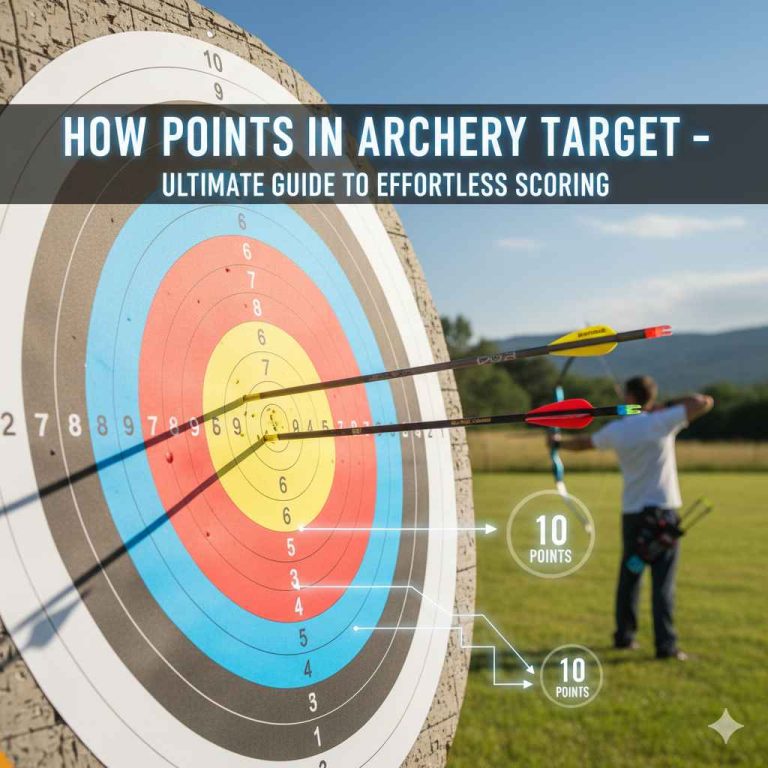
The target you see in Olympic archery isn’t just a single bullseye; it’s a series of concentric rings, each with a specific point value. This multi-ringed system is designed to reward precision and create a clear scoring hierarchy. Understanding these zones is fundamental to comprehending the sport.
The Target Face: Dimensions and Zones
Olympic archery famously uses a large target face, measuring a substantial 122 centimeters (approximately 48 inches) in diameter. This impressive size might seem counterintuitive given the precision required, but it allows for a wider range of scoring zones and accommodates varying distances. The target is divided into ten scoring zones, radiating from the center outwards.
The rings are colored as follows:
- Gold (Inner): Rings 10 and 9
- Red (Outer): Rings 8 and 7
- Blue (Middle): Rings 6 and 5
- Black (Outer): Rings 4 and 3
- White (Innermost): Rings 2 and 1
The “Bullseye” – The High-Value Rings
In common archery parlance, the “bullseye” usually refers to the very center of the target. In Olympic archery, this corresponds to the innermost gold rings. Scoring a “10” means hitting the 10-ring, which is the innermost ring of the gold section. The even more critical zone for tie-breaking and ultimate precision is the “X” ring, which is centered within the 10-ring.
The “X” Ring: The Ultimate Precision Zone
The “X” ring is not a separate scoring value but a smaller, central circle within the 10-ring. When an archer scores a perfect 10, an “X” shot is recorded if the arrow lands within this even smaller central zone. The “X” doesn’t add extra points to the score; instead, it serves as the primary tie-breaker in competitions. If multiple archers have the same score, the archer with the most “X” shots wins. This highlights how crucial absolute center accuracy is at the elite level.

The Size of the Olympic Archery Bullseye
Now, let’s get to the heart of the matter: how big is this critical “bullseye” area?
Diameter of the 10-Ring and X-Ring
The entire target face is 122 cm in diameter. The scoring zones are precisely measured:
- The 10-ring, the gold ring closest to the true center, has a diameter of 12.2 cm (approximately 4.8 inches). This is what most people would consider the “bullseye” in terms of high score.
- The “X” ring, nested within the 10-ring, has a considerably smaller diameter of 6.1 cm (approximately 2.4 inches).
This means that to score a potential 10 points, your arrow must land within a 12.2 cm circle. To achieve that coveted “X” for tie-breaking purposes, your arrow must be within a mere 6.1 cm circle at the very center. This size is comparable to a small grapefruit or a large man’s handspan, which puts the challenge into perspective.
Table: Key Target Dimensions for Olympic Recurve Archery
To make these numbers crystal clear, here’s a quick reference table. All measurements are for the diameter of the respective rings.
| Target Zone | Diameter (cm) | Diameter (inches, approx.) | Color Ring |
|---|---|---|---|
| Entire Target Face | 122 cm | 48 inches | N/A |
| 10-Ring | 12.2 cm | 4.8 inches | Gold |
| X-Ring (center of 10-ring) | 6.1 cm | 2.4 inches | N/A (within Gold 10-ring) |
| 9-Ring | 24.4 cm | 9.6 inches | Gold |
| 8-Ring | 36.6 cm | 14.4 inches | Red |
As you can see, even the 10-ring is a fairly small target, and the X-ring is incredibly precise. When you’re practicing, visualizing these dimensions can help you understand the level of accuracy required.
The Importance of the Bullseye in Scoring and Competition
Hitting the bullseye isn’t just about bragging rights; it’s the core of competitive archery. The point system is designed to reward accuracy, and the bullseye represents the pinnacle of archery prowess.
Point System Breakdown
Each ring on the target represents a different point value. Arrows are scored based on which ring they land in. The higher the point value, the closer the arrow is to the center.
- 10 Points: Arrow lands in the 10-ring.
- 9 Points: Arrow lands in the 9-ring.
- 8 Points: Arrow lands in the 8-ring.
- And so on down to 1 point…
The gold rings (10 and 9) are the highest scoring areas. A perfect score for a single end (a set of arrows shot at one time) requires all arrows to land in the 10-ring.
Tie-Breaking with the X-Ring
In archery, matches can often come down to a single point, or even a tie score between competitors. This is where the “X” ring plays its crucial role. While not awarded extra points beyond the 10, the number of “X” shots is used to break ties. If two archers finish with the same total score, the archer who shot more “X”s will rank higher. This emphasizes consistency and the ability to hit the absolute dead center, even when a 10 is already achieved. For example, if Archer A has 70 points with 5 “X”s and Archer B has 70 points with 3 “X”s, Archer A wins the tie-breaker.
Distance and Target Size
It’s important to remember that Olympic archery is shot at a standard distance of 70 meters (about 76.5 yards). This distance significantly increases the challenge of hitting the relatively small bullseye. At longer distances, even minute errors in form or equipment can cause an arrow to miss the target entirely or land far from the center. The generous size of the target face (122 cm) is designed to be challenging yet achievable at this distance, offering a clear scoring progression for every shot. For context, World Archery, the international federation for archery, sets these standards. You can find detailed rules and target specifications on their official website.
Factors Affecting Your Ability to Hit the Bullseye
Hitting that small 12.2 cm bullseye consistently is the dream of every archer. However, many factors come into play, and for beginners, improving accuracy takes time, practice, and attention to detail.
1. Archery Form and Consistency
Your shooting form is the bedrock of accuracy. Every element, from your stance to your follow-through, needs to be consistent.
- Stance: A stable, balanced stance provides a solid foundation.
- Grip: A relaxed grip on the bow prevents torque that can throw off your shot.
- Anchor Point: Consistently drawing the bowstring to the exact same spot on your face (your anchor point) is vital for repeatable shots.
- Aiming: Proper use of your bow sight or aiming point.
- Release: A clean, smooth release of the string allows the arrow to fly true.
- Follow-Through: Maintaining your form after the shot ensures the bow doesn’t move prematurely.
Small deviations in any of these areas can result in arrows landing outside the desired rings.
2. Equipment Setup and Maintenance
Your archery equipment plays a significant role. Even small misalignments can lead to inaccurate shots.
- Bow Tuning: Ensuring your bow is properly tuned, meaning the arrow leaves the bow straight and true. This involves checking the nock point, tiller, and cam timing (for compound bows, though Olympic archery uses recurve).
- Arrow Selection: Using arrows that are the correct spine (stiffness) for your bow’s draw weight and length.
- String and Cables: Maintaining your bowstring and cables in good condition.
- Sight and Rest: Properly adjusting and ensuring your arrow rest and sight are securely mounted and aligned.
Regularly inspecting and tuning your equipment can make a noticeable difference in accuracy. Organizations like USA Archery provide resources on equipment standards and bow maintenance, which can be incredibly helpful for archers looking to optimize their gear. You can explore their resources at usarchery.org.
3. Environmental Factors
Even with perfect form and equipment, external conditions can affect your shots.
- Wind: Wind is a major factor in outdoor archery. Archers must learn to read the wind and make adjustments to their aim, often aiming slightly into or with the wind depending on its strength and direction.
- Light Conditions: Varying light can affect how you perceive your aim point and sight.
- Temperature: Extreme temperatures can affect equipment and physical comfort, indirectly impacting performance.
- Rain: Wet conditions can affect grip and sight visibility.
Archers develop strategies to compensate for these factors, but they add another layer of complexity to consistently hitting the bullseye.
4. Mental Game
Archery is as much a mental sport as it is physical.
- Focus: Maintaining concentration throughout the shooting process, block out distractions.
- Pressure: Managing the stress and pressure of competition, especially when aiming for the bullseye.
- Confidence: Believing in your ability to make the shot.
- Visualization: Mentally rehearsing a perfect shot can build confidence and improve execution.
A strong mental game is what separates good archers from great ones, especially when those tight groupings are needed to hit the bullseye.
Tips for Beginners Aiming for the Bullseye
Don’t get discouraged if you’re not hitting the bullseye yet! Every expert archer was once a beginner. Here are some practical tips to help you improve your accuracy and get closer to that center target.
Start Close, Then Move Back
When you’re first learning, it’s best to start shooting at a closer distance than the 70 meters used in the Olympics. Begin at 10 or 15 meters. This allows you to focus on developing good form without the added challenge of distance. As your groups tighten and you become more consistent, gradually increase the distance. This progressive approach builds a strong foundation.
Focus on Form First, Then Aiming
Prioritize developing a solid, repeatable shooting form over trying to hit a specific spot. Concentrate on your stance, draw, anchor, and release. Once your form is consistent, your arrows will start grouping together naturally. Then, you can begin to refine your aiming process and make minor adjustments to bring those groups towards the center. Remember, consistency in form leads to consistency in where your arrows land.
Mark Your Target Face
To understand your shot placement and identify areas for improvement, mark your target. If your arrows are consistently landing high and to the left, you know you need to adjust your sight or your aim accordingly. You can also use different colored markers or small stickers to track your progress or denote specific shooting drills.
Practice with Different Drills
Vary your practice routine to keep things engaging and to work on specific skills.
- Grouping Drills: Shoot a set number of arrows (e.g., 5 or 6) aiming for the smallest possible group. Then, adjust your sight based on the center of that group.
- Alignment Drills: Practice drawing to your anchor point repeatedly without shooting, focusing on the precise feel and placement.
- Focus Drills: Practice maintaining concentration on a single point on the target for extended periods.
Archery clubs and coaches often have specific drills they recommend for different skill levels.
Get Feedback from Experienced Archers or Coaches
One of the fastest ways to improve is to have an experienced eye watch you shoot. A good coach can spot flaws in your form that you might not even be aware of. They can provide personalized advice and guidance, helping you correct bad habits before they become ingrained. Many archery clubs offer beginner lessons or coaching sessions.
Understand Your Equipment
Take the time to learn about your bow and arrows. Read the manuals, watch tutorials (from reputable sources!), and talk to your local archery shop. Understanding how your equipment works and how to maintain it will give you confidence and help you troubleshoot issues that might be affecting your accuracy.
Be Patient and Celebrate Small Wins
Improving in archery takes time and dedication. Don’t expect to hit the bullseye on your first try, or even your hundredth. Celebrate small victories – tighter groups, a better release, more consistent anchoring. Each small improvement is a step closer to your goal. Enjoy the process of learning and the satisfaction of seeing your skills develop.
Olympic Archery – The 70 Meter Challenge
The Olympic Games feature the recurve bow, shot at a distance of 70 meters. This distance amplifies the precision required and makes the size of the bullseye even more significant.
Recurve Bows vs. Other Types
Olympic archery uses only recurve bows. These are traditional bows without sights or mechanical aids, although an external sight is permitted. This contrasts with compound bows, which use a system of pulleys and cams to reduce the holding weight, and are used in other archery disciplines but not the Olympics. The simplicity of the recurve bow places a greater emphasis on the archer’s physical strength, form, and mental control.
Why 70 Meters?
The 70-meter distance is a standard set by World Archery for major international competitions. It provides a significant challenge that accurately measures an athlete’s skill and stamina. At this range, factors like wind, arrow trajectory, and the archer’s ability to make micro-adjustments become critically important. It ensures that only the most skilled and consistent archers can consistently score in the higher rings, including the bullseye.
The Target in Real-World Olympic Competition
When you watch the Olympics, you see athletes shooting at these large targets from 70 meters away. The visual of an arrow hitting the 12.2 cm gold ring from that distance is truly remarkable. Each shot is scrutinized, and the “X” count is often the deciding factor in close matches. The pressure of performing these precise shots under the world’s spotlight is immense, showcasing the mental fortitude of Olympic archers.

Frequently Asked Questions (FAQ)
Here are some common questions aspiring archers have about the Olympic archery bullseye.
What is the actual size of the Olympic archery bullseye in diameter?
The bullseye, specifically the 10-ring in Olympic archery, has a diameter of 12.2 cm (approximately 4.8 inches). The even smaller X-ring within it is 6.1 cm (approximately 2.4 inches) in diameter.
Is the bullseye the only scoring ring in Olympic archery?
No, the target has ten scoring rings of different colors and point values. The bullseye refers to the two innermost gold rings, the 10-ring and the 9-ring. The center of the 10-ring is called the X-ring and is used for tie-breakers.
What is the distance for Olympic archery events?
Olympic archery (recurve) is shot at a standard distance of 70 meters (approximately 76.5 yards).
What is an “X” shot in archery?
An “X” shot means the arrow landed in the X-ring, which is the very center of the 10-ring. It doesn’t add extra points but is used as a tie-breaker, meaning it determines the winner if archers have the same total score.
Related pick: Check today's price on Amazon