How It’s Made Carbon Arrows: Essential Guide
Carbon arrows are made through a precise process involving rolling carbon fiber fabric around a mold, curing it with resin, and finishing it with components like nocks and points. This detailed guide breaks down each step, making it easy for beginners to understand how these essential archery tools are crafted.
Ever wondered what makes a carbon arrow fly so true and hit so hard? It’s all in how it’s made! As a beginner archer, understanding your equipment helps you appreciate its performance and even troubleshoot if something goes awry. Don’t worry, we’re not diving into complex engineering here. We’ll explore the fascinating journey from raw materials to the finished arrow you hold in your hand. It’s simpler than you might think, and knowing the basics will boost your confidence. Let’s get started on uncovering the secrets behind your carbon arrows!
The Magic Behind Carbon Arrows: A Beginner’s Look
As a beginner in archery, you’re likely drawn to carbon arrows for their strength, speed, and accuracy. But have you ever paused to think about how these sleek shafts actually come to life? It’s a blend of advanced materials and meticulous manufacturing. Understanding the process helps demystify your gear and appreciate the technology behind every shot. Let’s break down this fascinating “how it’s made” journey in a way that’s easy to grasp, so you can feel more connected to your archery experience.
From Raw Material to Rocket: The Carbon Arrow Manufacturing Process
Creating a carbon arrow is a bit like baking a high-tech cake. You start with key ingredients, mix them just right, and bake them under specific conditions. The result is a strong, lightweight, and precise tool perfect for your archery adventures.
Step 1: The Carbon Fiber Fabric
The star of the show is carbon fiber. This isn’t just ordinary plastic; it’s a material made of incredibly thin strands of carbon atoms bonded together. These strands are woven into a fabric, much like you’d see with cloth. For arrows, we use special types of carbon fiber fabric that are designed for strength and stiffness. The weave pattern and the type of carbon fiber cloth used significantly impact the arrow’s final characteristics, like how stiff or how forgiving it is.
Step 2: Impregnating with Resin
The carbon fiber fabric needs something to hold it all together and make it rigid. That’s where resin comes in. This is typically an epoxy or a thermosetting polymer. Think of it as the glue that binds the carbon fibers. The fabric is carefully impregnated with this liquid resin. This is a critical step; too much resin makes the arrow heavy and brittle, while too little can leave gaps and weaken the structure. Manufacturers use precise methods to ensure the resin saturates the fabric evenly.
Step 3: The Rolling Process
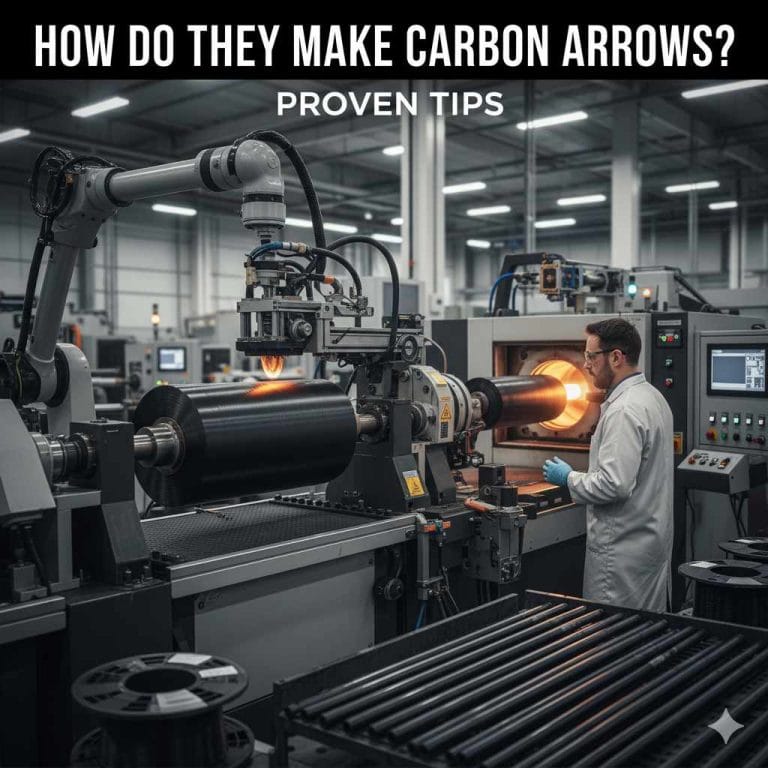
Now, the resin-impregnated carbon fiber fabric is ready to be shaped. It’s carefully rolled onto a mandrel, which is essentially a long, thin, hollow rod. This rod acts as a mold. The fabric is wrapped around the mandrel in specific layers and orientations. The direction of the carbon fibers is crucial for the arrow’s strength and stiffness. This process builds up the wall thickness of the arrow shaft. Some high-end arrows might even use different types of carbon or winding patterns for different parts of the shaft to optimize performance.
Step 4: Curing the Shaft
Once the carbon fiber is wrapped around the mandrel, it needs to be hardened. This is called curing. The wrapped mandrels are placed in a special oven or a curing system. Heat and sometimes pressure are applied to cure the resin. As the resin cures, it transforms from a liquid into a solid, rigid material, permanently bonding the carbon fibers together. This process gives the arrow shaft its incredible strength and durability while maintaining its lightweight nature. The curing temperature and time are precisely controlled to ensure the best possible material properties.
Step 5: Removing the Mandrel
After the resin has fully cured, the mandrel inside the arrow shaft needs to be removed. This can be done in a couple of ways. In some processes, the mandrels are designed to be extracted. In others, especially with dissolvable mandrels, a chemical process might be used to remove them. The goal is to get a perfectly hollow, smooth-walled carbon shaft. This hollow nature is vital for arrow weight and for allowing components like the nock and point to be inserted later.
Step 6: Straightening and Cutting
Even with precise manufacturing, slight imperfections can occur. The cured shafts are then inspected for straightness. If any shaft isn’t perfectly straight, it undergoes a straightening process, often using heat and controlled pressure. Once confirmed straight, the long, continuous shafts are cut to specific arrow lengths. The length of an arrow is crucial for proper fit with your bow and is determined by your draw length. This cutting process must be incredibly precise to maintain consistent lengths across all arrows in a batch.
Step 7: Adding Components (Nocks, Inserts, Fletchings, Points)
The final stage is where the raw shaft becomes a usable arrow. This involves adding several essential components:
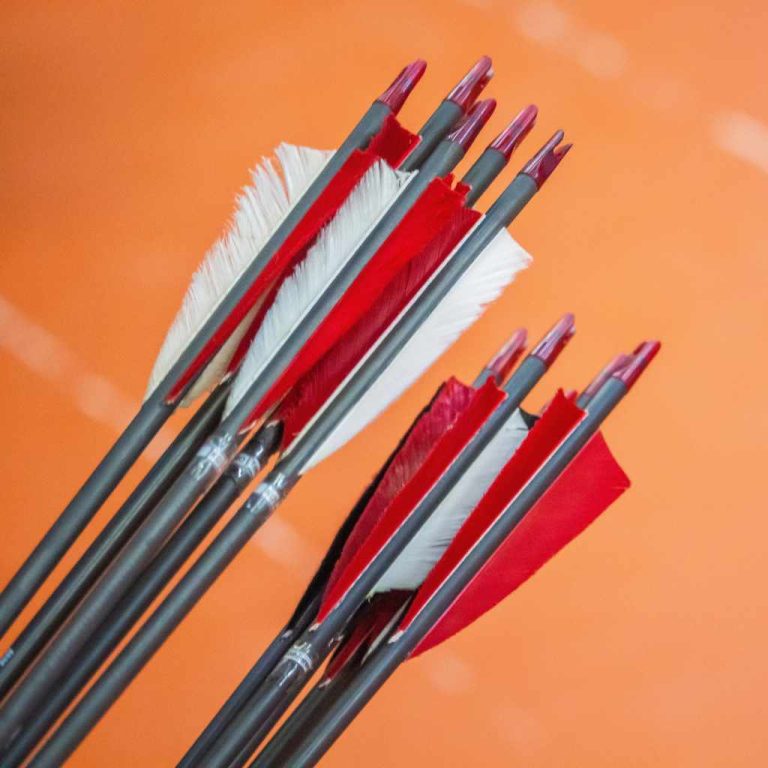
- Nock: This small piece fits into the back of the arrow and connects it to the bowstring. Nocks are usually made of durable plastic.
- Insert: A small, typically metal or reinforced plastic piece that is glued into the front of the shaft. It provides a solid base for screwing in or gluing on the arrow point.
- Fletchings: These are the vanes or feathers attached to the back of the arrow. They are crucial for stabilizing the arrow in flight, ensuring it flies straight towards your target.
- Point (Broadhead or Field Point): This is the tip of the arrow. Field points are used for practice and target shooting, while broadheads are used for hunting. Points can be screwed into the insert or glued in place.
Each of these components is carefully aligned and attached, often with specialized glues, to ensure the arrow’s balance and aerodynamic integrity. Proper alignment of fletchings (this is called ‘indexing’) is especially important for consistent flight.
Key Materials in Carbon Arrow Production
Understanding the materials used is fundamental to appreciating how carbon arrows are made. Here’s a quick rundown:
| Material | Role in Arrow Construction | Why it’s Important |
|---|---|---|
| Carbon Fiber Fabric | Forms the main structure of the arrow shaft. | Provides exceptional strength-to-weight ratio, stiffness, and durability. |
| Resin (Epoxy/Polymer) | Acts as a binder, holding carbon fibers together and filling voids. | Ensures structural integrity, enhances durability, and creates a smooth finish. |
| Mandrel | A core mold around which the carbon fabric is wrapped. | Defines the internal diameter and shape of the arrow shaft during manufacturing. |
| Nock | Attaches the arrow to the bowstring. | Ensures secure connection to the string and proper release for consistent shot ignition. |
| Insert | A collar at the front of the shaft to attach the point. | Provides a robust connection point for the arrow point, preventing shaft damage. |
| Fletchings (Vanes/Feathers) | Stabilize the arrow in flight. | Keep the arrow flying straight and true towards the target. |
| Arrow Point (Field Point/Broadhead) | The front tip attached to the arrow. | Dictates the arrow’s trajectory and impact on the target. |
Quality Control: Ensuring Your Arrows Fly True
Manufacturing isn’t just about following steps; it’s about ensuring every arrow meets high standards. Throughout the process, manufacturers implement rigorous quality control checks. This includes:
- Straightness Testing: Using lasers or specialized machines to ensure shafts are perfectly straight. A common industry standard may be +/- 0.003 inches or +/- 0.001 inches for premium arrows, indicating very little deviation from a perfect line.
- Weight Matching: Ensuring arrows within a dozen are very close in weight, usually within a few grains. This consistency is vital for predictable flight paths.
- Spine Testing: Spine refers to the stiffness of an arrow shaft. Each arrow is tested to make sure it has the correct spine rating, which is crucial for matching the arrow to your bow’s draw weight and your shooting style.
- Visual Inspection: Checking for any surface defects, bubbles, or inconsistencies in the carbon weave or finish.
These checks ensure that when you buy a dozen arrows, they perform consistently, helping you improve your accuracy shot after shot. For more on arrow spine and why it matters, you can check out resources from reputable archery organizations like USA Archery.
Why Carbon Arrows are Superior for Beginners (and Beyond!)
So, why go through all this trouble to make carbon arrows? For beginners, they offer a fantastic starting point, and for experienced archers, they remain the go-to choice. Here’s why:
Pros of Carbon Arrows
- Durability: Carbon shafts are incredibly strong and resistant to spine breaks or bending compared to traditional materials like wood or even some aluminum alloys. They can often withstand impacts that would damage other arrow types.
- Straightness: They are manufactured to be very straight, which is critical for accuracy. Even after impacts, they tend to retain their straightness better than other materials.
- Weight: Carbon arrows are lightweight, allowing for faster arrow speeds. This means a flatter trajectory, making it easier for beginners to aim and hit targets at various distances.
- Consistency: The mass-production techniques ensure that each arrow in a batch is made to very tight tolerances, meaning they behave very similarly in flight.
- Variety: They come in a wide range of spine stiffnesses, lengths, and weights, allowing archers to fine-tune their setup for specific bows and shooting styles.
Potential Cons (Usually Minor for Beginners)
- Cost: Generally, carbon arrows can be more expensive than basic aluminum or wooden arrows. However, their durability often makes them more cost-effective in the long run.
- Brittleness on Impact: While very strong, a severe impact (like hitting a rock directly) can sometimes cause carbon arrows to fracture or splinter rather than bend. This is why regular inspection for damage is important.
Caring for Your Carbon Arrows
Now that you know how they’re made, taking care of them is simple. Regular inspection is key to safety and performance. Before each shooting session, check your arrows:
- Inspect for Cracks or Splinters: Run your fingers along the shaft, especially after a strong impact. Look for any signs of damage. Damaged arrows should be retired immediately for safety reasons.
- Check the Nock: Ensure the nock is not cracked or damaged. A damaged nock can misalign the arrow on the string, affecting your shot.
- Verify the Point: For screw-in points, make sure they are snug. For glued points, check that they are securely attached.
- Inspect Fletchings: Make sure vanes or feathers are intact and properly attached. Damaged fletchings will cause the arrow to fly erratically.
Storing your arrows in an arrow case when not in use will protect them from damage and keep them organized.
Frequently Asked Questions About How Carbon Arrows Are Made
Q1: What is the primary material used to make carbon arrows?
Carbon arrows are primarily made from carbon fiber, a material composed of extremely thin strands of carbon atoms, which are then bonded together with a resin (like epoxy) to form a rigid shaft.
Q2: How do manufacturers ensure carbon arrows are straight?
During production, carbon arrow shafts are cured around a precisely shaped mandrel. After curing, they undergo rigorous straightening processes using controlled heat and pressure, followed by laser or mechanical testing to verify their straightness within very tight tolerances.
Q3: Is the resin important in carbon arrow making?
Yes, the resin is crucial! It acts as the binder that holds the carbon fibers together, giving the shaft its overall strength, durability, and smooth finish. The type and amount of resin used significantly affect the arrow’s performance.
Q4: What happens to the mandrel after the arrow shaft is made?
The mandrel, which is the core mold around which the carbon fiber is wrapped, is removed from the inside of the cured arrow shaft. This creates the hollow interior essential for an arrow’s construction and allows for the attachment of nocks and inserts.
Q5: Why are carbon arrows so strong but also lightweight?
Carbon fiber itself has an exceptional strength-to-weight ratio. When combined with precisely applied resin and carefully oriented carbon strands, it creates a structure that is both incredibly stiff and durable yet very light. This allows for faster arrow speeds and flatter trajectories.
Q6: How are the front and back ends of a carbon arrow prepared for components?
The back end of the shaft is precisely cut and often slightly reamed to accept the nock. The front end is similarly cut, and an insert (usually made of aluminum, brass, or reinforced plastic) is glued or press-fit into the shaft to provide a durable threaded connection for arrow points.
Conclusion: Your Arrows, Your Journey
Understanding how your carbon arrows are made opens up a new level of appreciation for this incredible piece of archery equipment. From the meticulous selection of carbon fiber and resin to the precision of rolling, curing, and finishing, each step contributes to the arrow’s ability to perform consistently and reliably. Knowing this process empowers you as a beginner to make informed choices, care for your gear properly, and ultimately, shoot with more confidence. Every time you nock an arrow, remember the advanced blend of material science and craftsmanship that brings it to its full potential, helping you on your journey to becoming a skilled archer. Keep practicing, keep learning, and most importantly, keep enjoying the sport!