How Are Carbon Arrows Made: Essential Guide
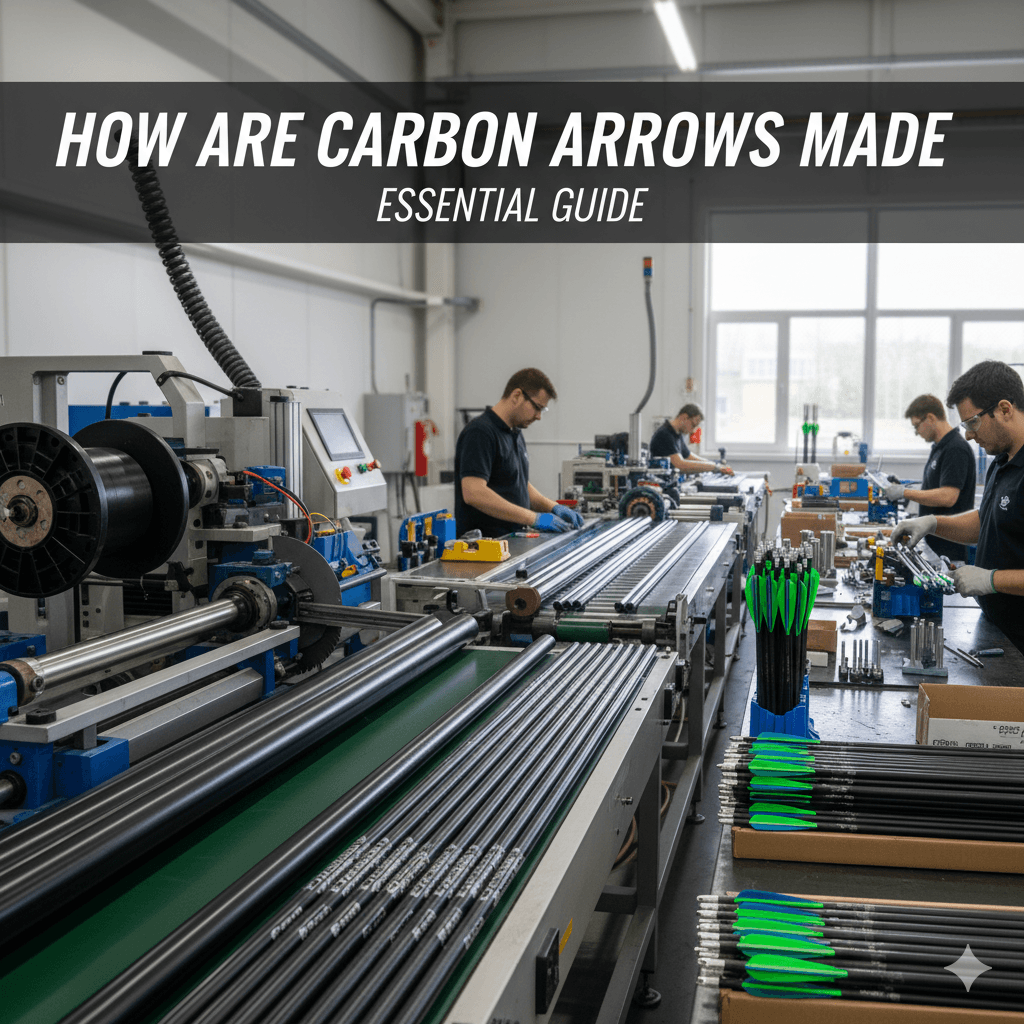
Carbon arrows are made through a sophisticated process involving winding carbon fibers around a mandrel, curing them with resin, and then meticulously finishing them with nocks, points, and vanes. This high-tech manufacturing ensures their strength, accuracy, and durability for archers of all levels.
Ever wondered what goes into those sleek, powerful arrows you use at the range or in the field? If you’re new to archery, you might have heard about carbon arrows and how they differ from older types, like wood or aluminum. These modern marvels fly true and hit hard, but their magic comes from a surprisingly complex creation process. It’s easy to feel a bit mystified by how these arrows get their incredible strength and straightness. But don’t worry!
As your guide to all things archery, I’m here to break down exactly how carbon arrows are made, step-by-step, in a way that’s easy to understand. Get ready to peek behind the curtain and appreciate the craftsmanship that goes into every shot. Let’s dive into the fascinating world of carbon arrow manufacturing!
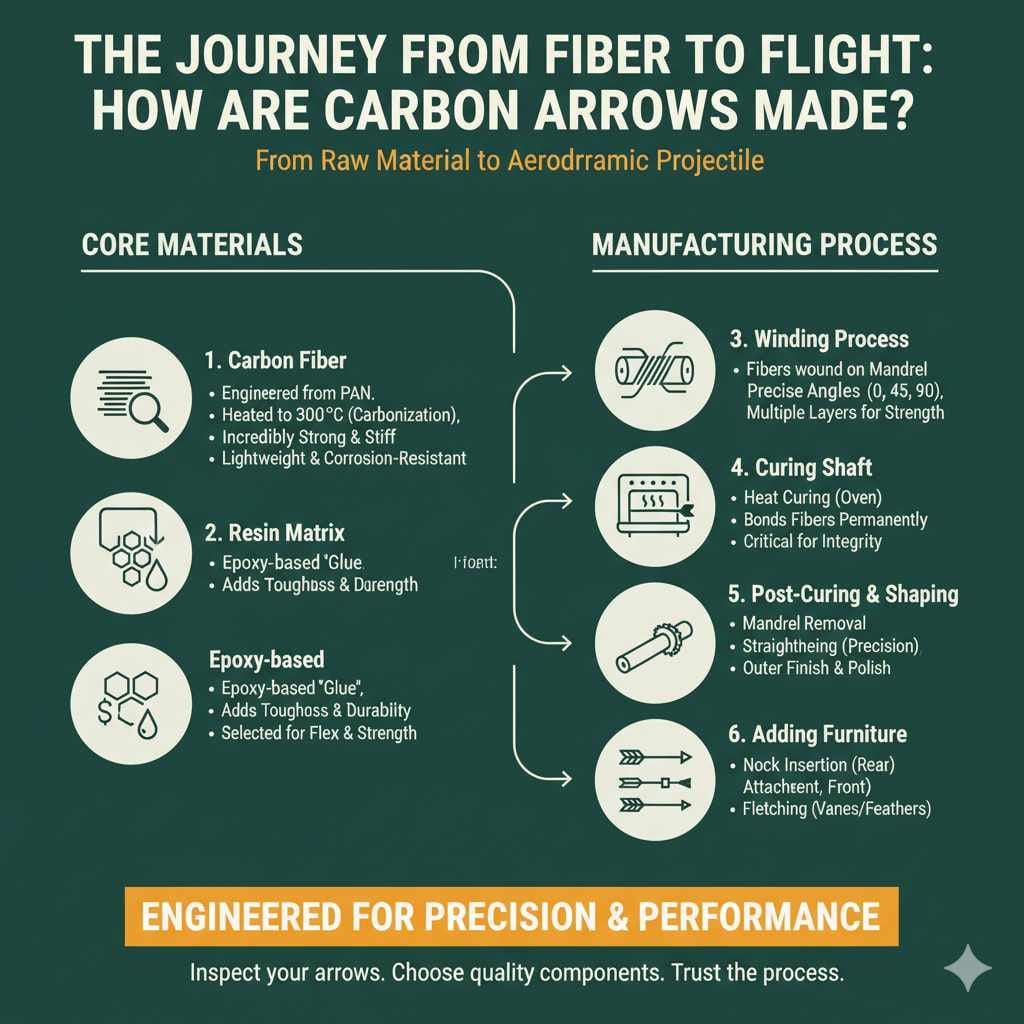
The Journey from Fiber to Flight: How Are Carbon Arrows Made?
Carbon arrows have revolutionized archery with their lightweight strength, speed, and durability. Unlike the traditional materials of wood or aluminum, carbon arrows are engineered products, born from advanced composite technology. Their creation is a blend of science and precision manufacturing, resulting in arrows that consistently perform under pressure.
Understanding this process not only deepens your appreciation for your equipment but can also help you make more informed choices when buying arrows. We’ll walk through each stage, from the raw materials to the finished product, making sure you grasp the essentials without getting bogged down in overly technical details. It’s a journey that transforms humble carbon fibers into aerodynamic projectiles ready for action.
1. The Core Material: Carbon Fiber Production
Everything begins with carbon fiber. This isn’t something you can just find lying around; it’s a highly engineered material. Carbon fiber is made from long, thin strands of carbon atoms bonded together extremely strongly. To create these strands, a precursor material, usually polyacrylonitrile (PAN), is heated to very high temperatures (around 3000°C or 5432°F) in the absence of oxygen. This process, called carbonization, burns away all the non-carbon atoms, leaving behind pure carbon in a crystalline structure.
The result is fibers that are:
- Incredibly Strong: Much stronger than steel by weight.
- Very Stiff: Resists bending and deformation.
- Lightweight: Significantly lighter than aluminum or steel.
- Corrosion Resistant: Won’t rust or degrade easily.
These raw carbon fibers are then typically bundled together into tows or yarns, which are the basic building blocks used in arrow manufacturing.
2. Selecting the Right Resin (The “Glue” of the Arrow)
Carbon fibers themselves are brittle on their own. To turn them into a usable arrow shaft, they need to be bound together. This is where a resin, usually an epoxy, comes in. The resin acts as a matrix, holding the carbon fibers in place and transferring the stress from one fiber to another.
Choosing the right resin is crucial:
- It needs to bond well with the carbon fibers.
- It must be tough and durable to withstand the impact of shooting and handling.
- It should cure hard and maintain its structural integrity over time and temperature variations.
Manufacturers carefully select and blend resins to achieve the desired properties for their specific arrow models – balancing flexibility, strength, and weight.
3. The Winding Process: Creating the Shaft’s Structure
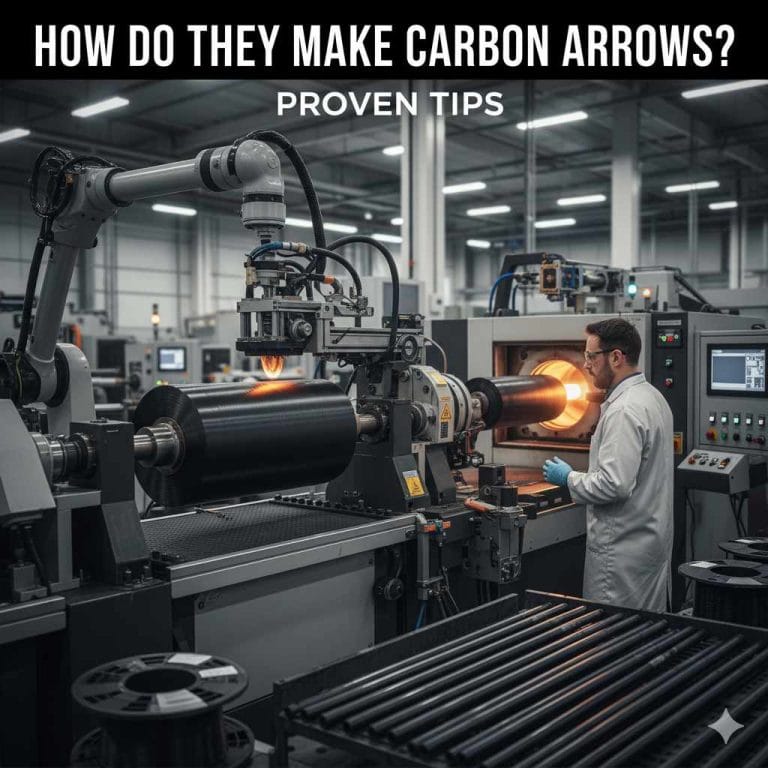
This is where the arrow shaft really starts to take shape. The carbon fibers, often pre-impregnated with resin (a process called “pre-preg” or “wet winding”), are carefully wound around a thin, cylindrical metal rod called a mandrel. The mandrel dictates the internal diameter and ensures the arrow is perfectly straight.
The winding is done with extreme precision:
- Fiber Direction: Fibers are wound at specific angles (often around 0, 45, and 90 degrees) to create a shaft that is strong in all directions. Winding at different angles distributes stress, preventing the arrow from breaking on impact or when shot. Think of it like building a structure with cross-bracing for maximum stability.
- Tension: The tension on the fibers during winding is meticulously controlled. Too loose, and the shaft won’t be strong enough; too tight, and you risk damaging the fibers or creating internal stresses.
- Multiple Layers: Usually, multiple layers of these carbon fibers are wound around the mandrel, creating the desired wall thickness and overall strength of the arrow shaft.
This entire winding process is often automated to ensure consistency and accuracy. A common method is using a filament winding machine that precisely lays down the carbon fiber strands.
4. Curing the Shaft: Making it Hard and Permanent
Once the carbon fibers are wound around the mandrel and saturated with resin, the “green” shaft needs to be cured. This process hardens the resin, permanently bonding the carbon fibers together and to the mandrel.
The most common method is heat curing:
- Baking Ovens: The wound mandrels are placed in specialized ovens. The controlled heat initiates and accelerates the chemical reaction within the epoxy resin, causing it to cross-link and harden.
- Pressure: Sometimes, additional pressure is applied during curing. This helps to ensure that the resin fully saturates the fibers and eliminates any air bubbles, which could weaken the shaft.
- Precise Temperatures and Times: Manufacturers follow exact temperature profiles and curing times. Deviating from these can result in an under-cured, weak shaft or an over-cured, brittle shaft.
This curing stage is absolutely critical for the arrow shaft’s structural integrity and its ability to withstand the forces it will experience in use.
5. Post-Curing Steps: Shaping and Finishing
After curing, the arrow shafts are essentially solid tubes around the mandrels. Several key steps follow to transform them into finished shafts:
a) Mandrel Removal:
This might sound tricky, but there are several ways mandrels are removed. Some mandrels are made of materials that can be dissolved or collapsed. Others might be designed to be lubricated and then pulled out. Ensuring the mandrel is removed without damaging the inside of the carbon shaft requires careful engineering.
b) Straightening:
Even with precise winding, slight imperfections or stresses can cause a shaft to be less than perfectly straight. Arrows are then subjected to straightening processes, often using heat and precision machinery to gently bend them into a near-perfectly straight line. This is vital for accuracy. Deviations of even a few thousandths of an inch can affect arrow flight.
c) Cutting to Length:
Archer’s draw lengths vary, and so do arrow preferences. Arrow shafts are cut to the desired lengths using high-precision cutting machines. This step also ensures the ends of the shaft are clean and perfectly perpendicular to the shaft axis. Manufacturers usually offer a range of standard lengths, or some custom arrow builders can cut them to your exact specifications.
d) Outer Finishing:
The exterior of the shaft is then smoothed and polished. Any rough edges from cutting or minor surface imperfections are removed. Many carbon arrows have a clear-coat finish to protect the carbon weave and the graphics, while others have painted finishes. This step not only enhances the arrow’s appearance but also its durability against abrasion.
6. Adding the “Furniture”: Nocks, Points, and Vanes
The bare shaft is almost there, but it needs its essential components to be a functional arrow:
a) Nock Insertion:
At the rear of the arrow shaft, a nock is installed. The nock is the small piece that clips onto the bowstring, holding the arrow in place before the shot. Nocks can be “glue-in” or “outsert” types, where a small collar is glued into or onto the shaft, and the nock then screws or clicks into this collar. Many modern arrows use components that are inserted into the shaft’s ID (internal diameter).
b) Point Attachment:
At the front of the arrow, a point (or “broadhead” for hunting) is attached. Like nocks, points can be “glue-in” or “outsert” types. Glue-in points are epoxied directly into the shaft’s front end, while outserts involve a metal or plastic sleeve that fits over the shaft’s exterior, allowing screw-in points or broadheads. This front weight is crucial for arrow balance and flight stability – it’s known as the “front of center” (FOC) weight.
c) Fletching (Vanes/Feathers):
Finally, vanes (small, fin-like stabilizers made of plastic) or feathers are attached to the rear of the shaft, usually along with a side winder or a specialized jig. These fletchings are critical for guiding the arrow through the air and keeping it flying straight. They act like the fins on a rocket, providing stability. Most modern arrows use plastic vanes because they are more durable and less affected by moisture than traditional feathers.
The exact placement and alignment of nocks and vanes are crucial. Misaligned fletching can cause the arrow to fly erratically.
Quality Control: The Unseen Hero of Carbon Arrows
Throughout the manufacturing process, rigorous quality control checks are essential. This ensures every arrow meets the manufacturer’s standards for straightness, weight consistency, and durability.
Common QC steps include:
- Straightness Tests: Arrows are spun on precision rollers to check for any wobbles or deviations from perfect straightness.
- Weight Checks: Each arrow is weighed to ensure it falls within a tight tolerance range for its designated spine (stiffness).
- Visual Inspections: Shafts are examined for any visible defects like cracks, delamination, or surface blemishes.
- Spine Testing: This measures the arrow shaft’s stiffness. Each arrow is expected to have a specific spine value for proper tuning with a bow.
These checks are what guarantee that when you buy a dozen arrows from a reputable brand, they will all perform very similarly. You can learn more about arrow spine and why it matters from resources like the Archery Trade Association (ATA).
A Comparison Table: Understanding Arrow Materials
To help you appreciate why carbon arrows are so popular, let’s look at how they stack up against other common arrow materials.
| Feature | Carbon Arrows | Aluminum Arrows | Wood Arrows | Composite/Hybrid Arrows |
|---|---|---|---|---|
| Strength | Very High | High (but can bend) | Low (prone to breaking) | Very High |
| Weight | Light to Medium | Medium | Light to Medium | Variable (can be very light) |
| Durability | Excellent (resists bending/breaking) | Good (but can bend permanently) | Poor (splinters, breaks easily) | Excellent |
| Straightness | Excellent (precision manufactured) | Excellent (manufactured straight) | Variable (requires careful selection/sanding) | Excellent |
| Cost | Medium to High | Low to Medium | Low | High |
| Consistency | Very High | High | Low | Very High |
| Typical Use | Hunting, Target Archery, 3D | Target Archery, Beginner Hunting | Traditional Archery, Hobby | High-Performance Hunting, Target |
As you can see, carbon arrows offer a fantastic balance of properties that make them suitable for a wide range of archery disciplines.
Why the Manufacturing Process Matters to You
So, why should you care about how your carbon arrows are made? It boils down to performance and reliability:
- Accuracy: The precision winding and strict straightening processes ensure your arrows fly true. Straight, consistent shafts are fundamental to good accuracy.
- Speed: The light weight and stiff nature of carbon fiber allow for faster arrow speeds, meaning a flatter trajectory and less holdover needed for longer shots.
- Durability: While they can break from extreme impact, carbon arrows are much more resilient to bending and splintering than aluminum or wood. This means they can often withstand impacts with targets or even the ground without being ruined.
- Consistency: Mass-produced carbon arrows under strict quality control mean that each arrow in a dozen behaves almost identically. This consistency is key for developing good shooting habits and achieving repeatable results.
When you factor in the advanced materials and complex manufacturing, the price of quality carbon arrows starts to make a lot of sense.
DIY Arrow Building vs. Factory Production
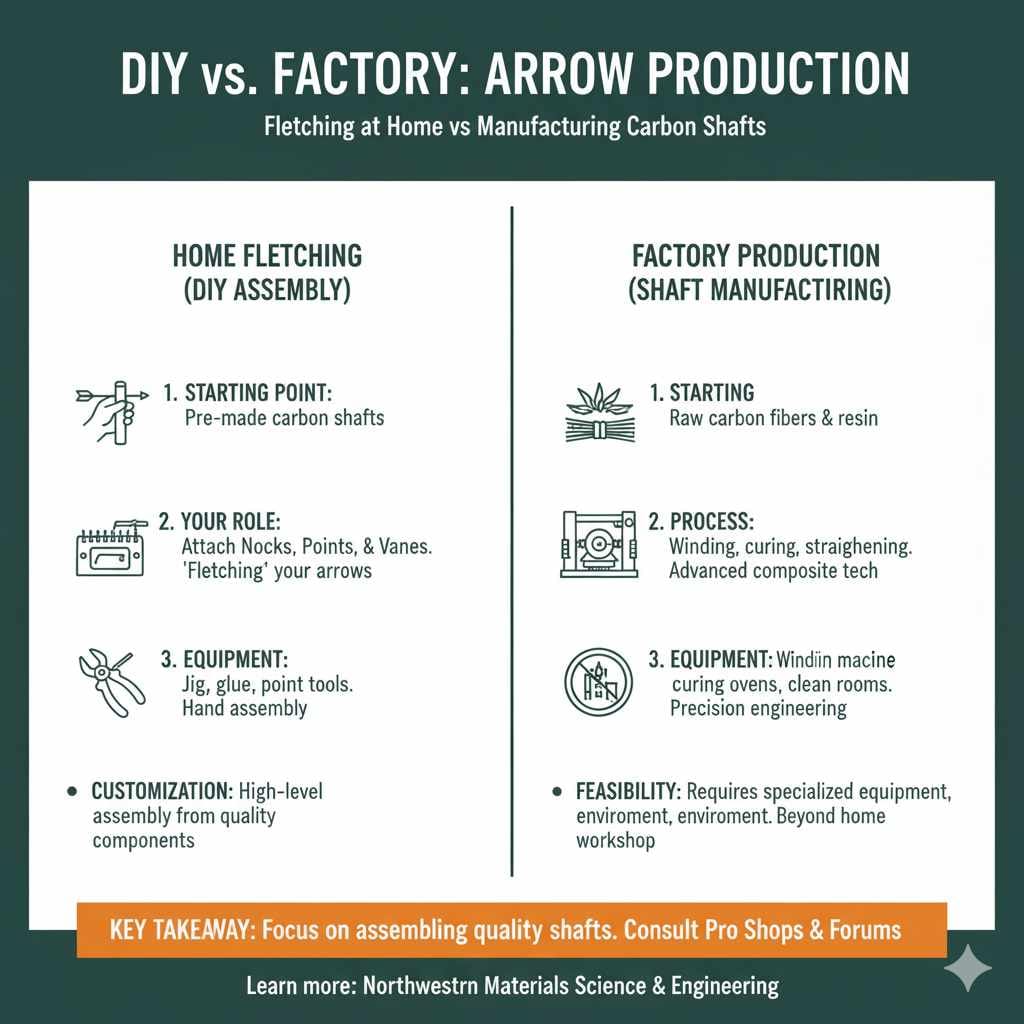
For many, the idea of building their own arrows is appealing. While you can certainly add nocks, points, and vanes to pre-made carbon shafts at home – a practice often called “fletching” your arrows – manufacturing the carbon shaft itself from raw fibers and resin is typically beyond the scope of a home workshop. The equipment required, such as specialized winding machines, curing ovens, and precision straightening tools, along with the need for strict environmental controls (like dust-free rooms), makes it a factory-level endeavor.
If you’re interested in the custom side of arrow building, look into how you can assemble arrows from quality shafts. You can learn a lot from resources like experienced archery shops or dedicated archery forums. University programs in materials science and engineering, such as those at Northwestern University’s Materials Science and Engineering department, explore the underlying principles of composite materials that make arrow construction possible.
Frequently Asked Questions (FAQ) about Carbon Arrow Manufacturing
Let’s tackle some common questions beginners might have about the making of carbon arrows.
Q1: Are all carbon arrows made the same way?
No, while the core principles of winding carbon fibers and curing with resin are the same, manufacturers use different types of carbon fibers, resins, winding techniques, and proprietary methods to create arrows with varying properties like stiffness (spine), weight, and durability.
Q2: Why are some carbon arrows more expensive than others?
Higher-priced carbon arrows often use premium carbon fibers, more advanced resin systems, tighter manufacturing tolerances, and more rigorous quality control. They may also feature more complex spine testing for exceptional consistency or incorporate specific construction techniques for enhanced durability or speed.
Q3: Can carbon arrows break easily?
Modern carbon arrows are remarkably strong and durable for their weight. While they can break from extreme force (like a direct impact with a solid object at high speed), they are far less likely to bend or splinter than aluminum or wood arrows. Most “breakages” happen from severe impacts rather than normal use.
Q4: What does “spine” mean for a carbon arrow?
Spine refers to the stiffness of the arrow shaft. It’s measured by how much a shaft deflects when a specific weight is applied. A higher spine number means a stiffer arrow. Choosing the correct spine is crucial for your arrow to fly straight and group well with your bow’s draw weight and length.
Q5: How do I identify the front and back of a carbon arrow shaft?
You can usually tell the front by the point (the tip) and the back by the nock (where it attaches to the bowstring). If you have a bare shaft, the front is where you would glue on a point or outsert, and the back is where you would insert a nock or nock adapter. Most finished arrows are clearly marked this way.
Q6: What is “FOC” and how does it relate to arrow construction?
FOC stands for “Front of Center,” which is the percentage of the arrow’s total weight that is concentrated in the front half. A higher FOC is generally achieved by using heavier points or outserts. Proper FOC is essential for arrow stability in flight. The manufacturing process, particularly the selection of inserts and the shaft’s weight, contributes to the final FOC.