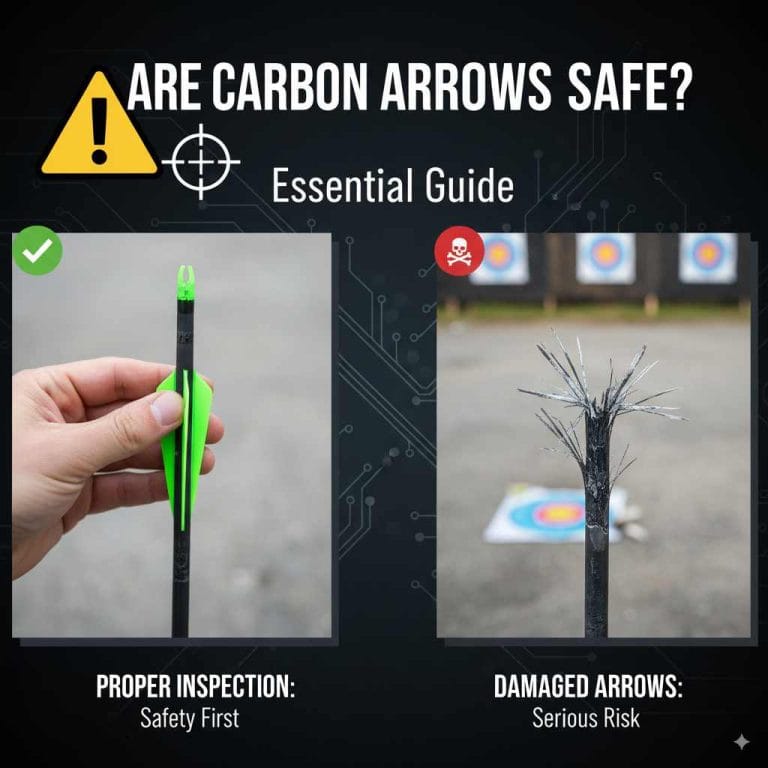
Proven Steps: How To Make A Carbon Arrow Saw
Making a carbon arrow saw is straightforward when using a Dremel tool with a reinforced cut-off wheel. Measure precisely, secure the arrow firmly, and use slow, steady passes to achieve a clean, straight cut, minimizing dangerous carbon dust exposure.

As an Amazon Associate I earn from qualifying purchases.
Welcome, fellow archer! Getting arrows cut to the exact spine and length you need is key to great shooting. When you buy bulk carbon shafts, they often need sawing down. Trying to cut stiff carbon shafts by hand can be tough and often results in jagged edges. That’s why many of us turn to a power tool, like a Dremel, for a quick, clean cut. Don’t worry if this sounds complicated. I’m Salman, and I’m here to break down exactly how to use your Dremel to make a perfect, safe carbon arrow cut. We will go step-by-step so you can tune your gear confidently.
Why Cutting Carbon Arrows Yourself Is Necessary
Most archers need custom-length arrows. Store-bought arrows are often too long for a beginner’s draw length or for specific competitive rules. Cutting them yourself offers three huge advantages:
- Perfect Fit: You match the arrow exactly to your draw length, which improves safety and accuracy.
- Cost Savings: Buying full-length carbon shafts in bulk is usually cheaper than buying pre-cut arrows.
- Quick Tuning: If you find your setup flies better with a slightly shorter arrow, you can adjust it tomorrow morning!
Safety First: Dealing with Carbon Dust
Before we touch any tools, we must talk about safety. Cutting carbon fiber creates very fine dust. Inhaling this dust is a serious health risk over time. It’s microscopic and can irritate the lungs. Think of it like fiberglass—you need protection!
Essential Safety Gear Checklist
Never skip these items when cutting carbon arrows:
- Respirator (N95 Minimum): A simple dust mask is not enough. Use a proper respirator designed for fine particles.
- Safety Glasses or Goggles: Protect your eyes from flying debris.
- Gloves: Cuts on carbon can be sharp!
Crucial Tip: Always cut outdoors or in a very well-ventilated area where dust cannot settle inside your home. You can also wet the surface slightly (a damp cloth nearby) to help keep dust down, though this must be done carefully around electrical tools.
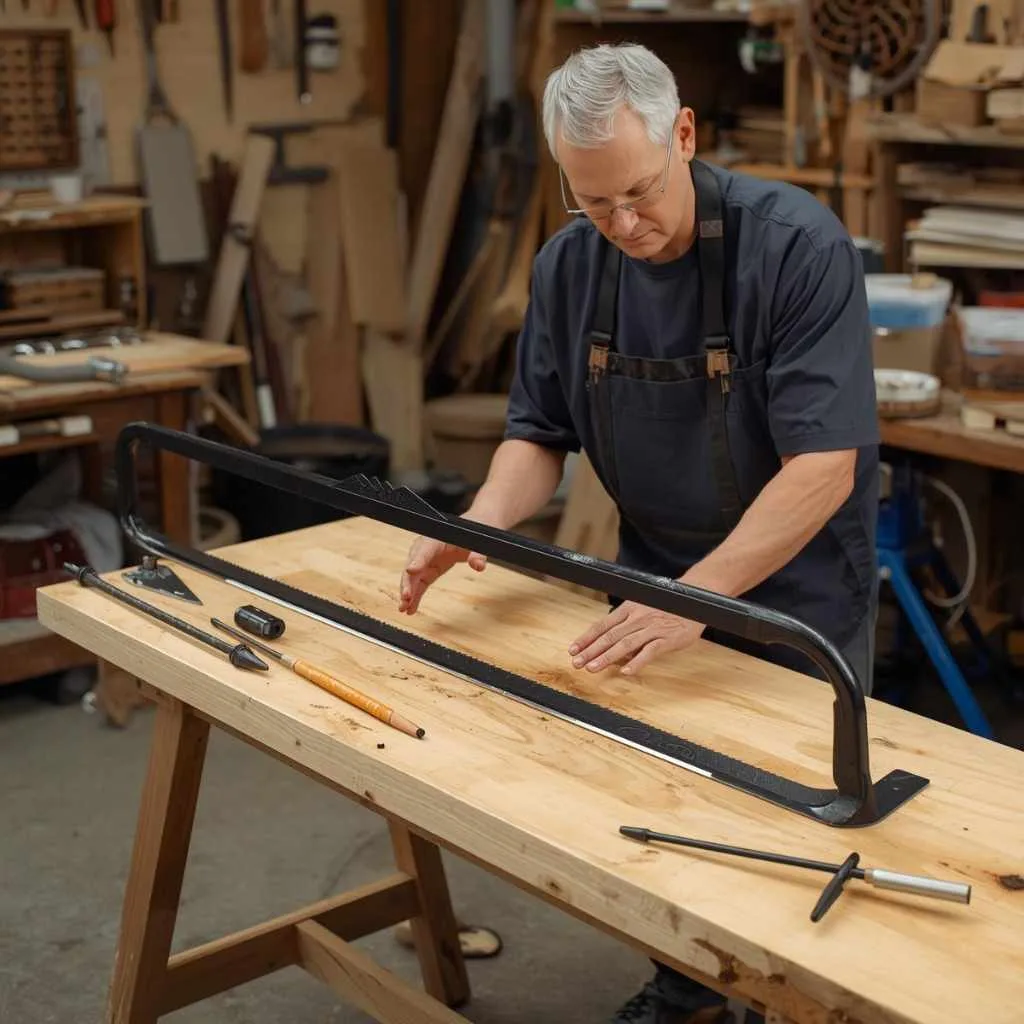
Tools and Materials Needed for Cutting Carbon Arrows
When people ask how to make a carbon arrow saw using common tools, the Dremel (or similar rotary tool) is the answer. It’s small, fast, and precise enough for this job.
Required Equipment List
| Tool/Material | Purpose | Notes for Beginners |
|---|---|---|
| Dremel or Rotary Tool | The cutting mechanism. | Ensure it has variable speed control. |
| Reinforced Cut-Off Wheel | The actual blade that slices the carbon. | Buy the ones specifically reinforced for cutting hard materials. |
| Measuring Tape or Ruler | For accurate length marking. | Use a high-quality, sharpie-friendly ruler. |
| Sharpie Marker | To mark the exact cut line. | The finer the tip, the better the precision. |
| Clamping System (Vise or Saw Guide) | To hold the arrow absolutely still. | This is the most important step for a straight cut! |
| Sandpaper/Emery Board | For smoothing the finished edge. | Medium to fine grit (around 220 grit). |
Step-by-Step Guide: Making the Perfect Cut
We are going to tackle this in four main phases: Measuring, Marking, Cutting, and Finishing. Follow these steps carefully, and you’ll have a perfectly tuned arrow ready for fletching.
Phase 1: Measuring and Marking for Accuracy
Precision in measuring determines the flight quality of your arrow. An inch off can mean disaster downrange.
1. Determine Your True Arrow Length
This is the most crucial starting point. For bowhunting or the most common target setups, arrow length is measured from the base of the nock groove (the back end where the string sits) to the tip of the bundled point insert. Do not measure to the tip of the actual broadhead or field point yet.
- If using a release aid: Measure from the nock groove to the farthest point your front-facing knuckle extends when you are at full draw, holding the string.
- If shooting off fingers: Measure from the nock groove to the middle of your front-most knuckle when at full draw.
It is always better to cut slightly long first, as carbon arrows cannot be lengthened! You can always trim more later.
2. Mark the Cut Line
Once you have your target measurement, you must mark the shaft clearly:
- Place the arrow on a flat surface.
- Measure your calculated length from the nock groove.
- Use a fine-tipped Sharpie to draw a complete circle around the shaft at that exact spot.
- Pro Tip for Square Cuts: To ensure your line is perfectly perpendicular (square) to the arrow’s spine, use a small carpenter’s square or wrap a piece of painter’s tape tightly around the shaft at the line mark. Use the edge of the tape as your guide.
Phase 2: Setting Up Your Saw Station (Dremel Preparation)
A wobbly, vibrating arrow will result in a crooked cut and potential shaft damage.
1. Prepare the Dremel
Attach a fresh, reinforced cut-off wheel to the Dremel tool.
- Speed Setting: Set your Dremel to a medium-high speed, but avoid the absolute maximum setting, as too much speed generates excessive heat, which can weaken the carbon fibers unevenly. A speed setting around 20,000 RPM is generally a good starting point.
2. Secure the Arrow (The Non-Negotiable Step)
Your arrow must be held absolutely immobile. Vibrations cause chipping and crooked lines.
The best setup involves a small bench vise or a specialized arrow cutting jig. If you are using a standard vise:
- Pad the jaws of the vise with thick cloth, electrical tape, or thin strips of rubber to prevent crushing the delicate carbon wall.
- Clamp the arrow securely, but not too tightly, well behind your cutting mark (at least 2–3 inches past where the saw will pass).
- Ensure the arrow is perfectly level in the vise so your cut will be across the shaft, not angled downwards or upwards.
If you are new to this, consider watching videos on YouTube from established custom shops, as the clamping setup is often the area where beginners struggle most. A secure grip ensures you translate the Dremel’s rotary motion into a smooth linear cut across the shaft.
Phase 3: Making the Cut
This is where patience pays off. Carbon cuts best when the tool does the work slowly.
- Put on all safety gear (Respirator and Glasses!).
- Hold the Dremel firmly. Turn the tool on and let it reach full operating speed before touching the carbon.
- Gently bring the cutting wheel down precisely onto your marked line. Do not press hard! Let the speed of the wheel do the cutting. Pushing too hard overheats the resin holding the carbon fibers together.
- Use slow, steady rotation, allowing the cut-off wheel to slowly grind through the material. You should see a thin, steady stream of dust, not a plume of smoke.
- As you approach the final thickness, slow your feed rate even more. This prevents tearing the fibers right at the finish line. You may notice the depth of cut deepening slightly as the arrow gets weaker near the end—this is normal.
- Cut completely through until the arrow separates. Always cut on the “waste” side of your marked line.
Because you are cutting through a tube, you might experience a slight splintering or tearing on the backside (exit side). We address this in the next step.
Phase 4: Finishing and Smoothing the Edge
The raw carbon edge is unsafe and will damage your arrow rest or your bow’s components.
1. Cleaning the Cut Surface
Once separated, inspect the cut:
- Use a light touch to sand down any rough spots or burrs on the outside edge.
- If there is any slight fraying on the inside edge (where the string nock will sit), use a piece of fine sandpaper wrapped around a pencil to gently smooth the interior surface.
2. Chamfering the Edge
A “chamfer” is a slight bevel or angle cut around the edge. This smooths the transition and prevents the arrow from catching on your arrow rest or window.
Take your 220-grit sandpaper (or a fine emery board) and gently round every sharp edge on both the outside and inside perimeter of the cut.
Reference: For more technical specifications on arrow spine selection and tuning, organizations like the National Archery in the Schools Program (NASP) often provide excellent, safety-focused literature, though specific cutting techniques vary by tool.
Advanced Technique: Ensuring Spine Integrity
When you cut an arrow shaft (whether carbon or aluminum), you shorten it. Shortening an arrow makes it stiffer, meaning its spine rating increases (e.g., a .300 spine arrow moves closer to a .290 spine when shortened).
While a small trim usually won’t drastically spike the spine rating, it’s something the advanced tuner must consider. For beginners, focus on keeping the cut perfectly straight.
When Cutting Affects Spine
If you are cutting off three inches or more from a very stiff arrow, you might want to check with the manufacturer’s spine chart. Generally, cuts of less than 1.5 inches are tolerated without needing a full re-spine assessment for typical setup adjustments.
The most important factor in maintaining overall shaft integrity is heat management during the sawn process. Too much heat weakens the epoxy resin binding the layers of carbon together, leading to potential catastrophic failure down the range. This reinforces why slow, controlled passes are superior to rapid sawing.
What If You Don’t Have A Dremel? Alternative Cutting Methods
While the Dremel is the preferred method for clean home cutting, sometimes archers need alternatives. Here is a look at other ways to approach cutting carbon, though achieving the same precision is harder.
| Method | Pros | Cons & Safety Note |
|---|---|---|
| Fine Tooth Hacksaw | Accessible, cheap, easily done outdoors. | High risk of splintering and very slow. Requires much more effort to keep straight. Dust control is still necessary. |
| Oscillating Multi-Tool | Quick cutting power, can be stabilized well. | Usually overkill; too powerful for fine work. High risk of overheating the carbon quickly. |
| Professional Arrow Saw (Hobby Shop) | Perfect, square cut every time. No set-up hassle. | Costs money per cut or requires a shop membership. Availability may be limited. |
For nearly all home tuning needs, the Dremel setup remains the best blend of speed, cost, and accuracy, provided you respect the dust hazard.
Post-Cutting Checklist: Preparing for Fletching
The arrow is cut! Don’t immediately glue on your vanes. The shaft end needs to be perfectly clean and ready to accept the insert or tip hardware.
Steps Before Nock Installation:
- Clean the Inside: Use a clean, dry cloth to wipe out any dust that may have settled inside the shaft tube after cutting.
- Check for Cracks: Visually inspect the entire circumference near the cut. If you see any large chips or cracks extending more than a millimeter or two into the shaft wall, that shaft may be compromised. It is safest to discard it or dedicate it to non-critical practice only.
- Install Components: Now is the time to insert the point collar, tip adapter, or whatever hardware your manufacturer requires for the front end of the shaft.
- Final Weigh and Tune: After installing the point, always weigh the finished arrow. If you need to match two arrows perfectly, the scale is your final judge.
Proper preparation guarantees that when you install your helical vanes or offset blades, the glue adheres perfectly to a smooth, clean surface. A poor surface prep leads to lost vanes mid-flight, which ruins your grouping!
Troubleshooting Common Carbon Sawing Issues
Even with the best intentions, things sometimes go slightly wrong. Here are fixes for the most common amateur mistakes when using a Dremel on carbon.
Problem 1: The Cut is Not Square (Angled)
Cause: The arrow was not clamped evenly, or the Dremel wobbled during the cut because you pressed too hard.
Fix: If the angle is slight (less than 1 degree), you can often fix it by sanding the longer side against a perfectly flat surface (like a piece of granite or thick glass) using 150-grit sandpaper. Keep checking the angle with a square until corrected. If the angle is severe, discard the shaft.
Problem 2: Excessive Chipping or Fraying Near the Cut
Cause: Too much pressure was applied, or the cut-off wheel was worn out, causing tearing instead of slicing.
Fix: Sand down the chipped fiber immediately to prevent it from catching on the bow rest. You must use a fresh, reinforced wheel next time before proceeding with any more arrows from that batch.
Problem 3: The Dremel Overheated (Smell of Burning Plastic)
Cause: You were cutting too fast or pushing the tool too hard.
Fix: Immediately stop cutting and let the arrow cool completely. Inspect the area where the heat concentrated. If it feels soft or smells strongly like melted resin, the structural integrity is compromised. It should be retired immediately. Heat damage is often irreversible concerning flight performance.
Final Thoughts on Arrow Building Confidence
Learning how to make a carbon arrow saw cut using a Dremel is a rite of passage for serious archers optimizing their equipment. You are taking control of tuning, which is fantastic for your shooting journey. Remember, archery equipment relies on consistency. By being slow, steady, and prioritizing clamping stability and dust safety, you will achieve professional-grade results right in your workshop.
Frequently Asked Questions (FAQ) for Beginner Arrow Builders
Q1: Can I use a standard wood-cutting disc on my Dremel for carbon arrows?
A: No, absolutely not. You must use a reinforced, abrasive cut-off wheel designed for hard materials (like metal or tile). Wood blades will shatter instantly upon hitting the hardness of carbon fiber.
Q2: How slow should I cut the arrow?
A: As slow as you can comfortably manage while maintaining continuous contact with the wheel. The goal is to grind the material away with heat and abrasion, not push through it. Think of it as controlled grinding, not sawing.
Q3: Do I have to wear a respirator, or will a regular face mask work?
A: You must wear a proper respirator (N95 or higher). Carbon dust particles are extremely fine and can bypass standard cloth or surgical masks, causing long-term respiratory issues.
Q4: If I cut my arrow too short, what can I do?
A: Unfortunately, nothing can safely repair an arrow cut too short. Carbon shafts cannot easily be lengthened. This is why it is vital to cut conservatively, erring on the side of being too long on your first attempt until you confirm your tuning preferences.
Q5: How far from the initial mark should I clamp the arrow in the vise?
A: Clamp the arrow securely at least 2 to 3 inches past your cut line, on the side you are keeping. This provides a stable base and prevents the vibration of the cut from shaking the whole structure loose.
Q6: Does cutting carbon change the stiffness (spine) of the arrow?
A: Yes, shortening any arrow makes it slightly stiffer. For example, trimming half an inch off a 340 spine arrow might bring its effective spine closer to 335. For minor adjustments, this is usually fine, but major trims could require re-spining the arrow.</p
Related pick: Check today's price on Amazon