How Long Have Carbon Arrows Been Around? A History
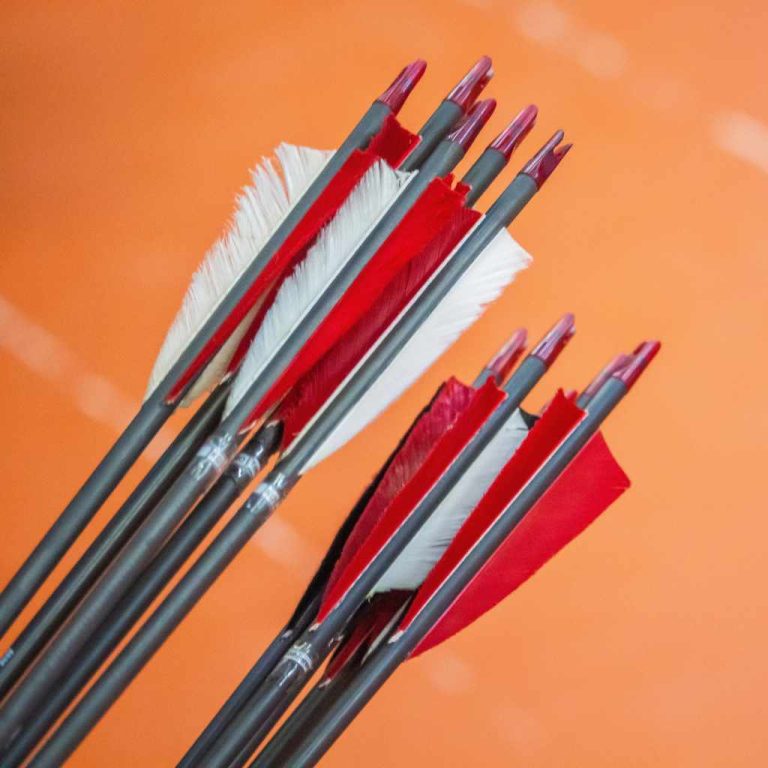
Carbon arrows have been a significant part of modern archery for roughly four decades, emerging in the early 1980s and quickly revolutionizing the sport with their superior performance and durability compared to traditional materials like wood and aluminum.
Have you ever wondered about the arrows you’re using or seen in action? They look sleek, fly true, and seem like they’ve always been part of archery. But how long have these amazing carbon arrows actually been around? It’s a question many beginners ask as they dive deeper into this exciting sport. You might think they’re ancient, but the truth is quite recent. Understanding their history helps us appreciate not just the technology, but the journey archery has taken. Don’t worry if you’re new to this; I’m here to guide you through it, making it simple and clear. We’ll uncover the facts, understand why carbon became king, and what it means for your shooting. Get ready to arrow in on the history of carbon arrows!
The Evolution of the Arrow: From Wood to Carbon
Archery, in its essence, is one of humanity’s oldest skills. For millennia, arrows were crafted from natural materials. Think of the earliest hunters using sharpened sticks, then progressing to sturdy shafts made from wood like cedar, pine, or ash. These natural materials were the backbone of archery for thousands of years. They were readily available and, with skilled hands, could be fashioned into effective projectiles. However, wood arrows had their limitations. They were susceptible to variations in grain, prone to warping with moisture, and could break unpredictably, especially under the stresses of modern, powerful bows. Anyone who has shot old wooden arrows knows the frustration of a splintered shaft or an arrow that just won’t group well.
As technology advanced, so did arrow materials. In the mid-20th century, aluminum arrows burst onto the scene. This was a big leap! Aluminum offered much greater consistency and durability than wood. Each arrow could be manufactured to precise specifications, leading to more predictable flight and less variation in arrow spine (the stiffness of the arrow). Archers using compounds bows, with their increasing draw weights and speeds, found aluminum to be a significant improvement. They held up better to impacts and offered a smoother, faster flight. Yet, aluminum still had its downsides. While robust, it could bend or dent without breaking, rendering an arrow useless or dangerous. Plus, for the absolute fastest bows, even aluminum was nearing its performance limit.
This brings us to the era where the carbon arrow truly began its ascent. The dream was an arrow that combined the speed potential of a very lightweight material with the strength and forgiveness needed for consistent shooting. This is where carbon fiber technology, which had been developing for decades in aerospace and other industries, found its perfect application in archery. The search for the ultimate arrow was on, and carbon was poised to answer the call.

The Dawn of Carbon Arrows: When Did They Arrive?
So, answering the big question: How long have carbon arrows been around? Carbon arrows made their commercial debut and started gaining significant traction in the archery world in the early to mid-1980s. This wasn’t an overnight sensation. These early carbon arrows were often expensive and sometimes less durable than later models. However, their potential was immediately clear to shooters and manufacturers alike. They offered a glimpse into a future of archery where arrows could be lighter, faster, and straighter than ever before.
The first few years were a period of refinement. Manufacturers experimented extensively with different carbon fiber weaves, resin systems, and manufacturing processes. The goal was to create arrows that were not only exceptionally strong and lightweight but also consistent in their spine, straightness, and weight. This consistency is crucial for accurate shooting. Even a tiny imperfection in an arrow can send it wildly off course, especially at longer distances or with high-speed bows. The early pioneers in carbon arrow technology worked tirelessly to overcome these challenges.
By the late 1980s and into the 1990s, carbon arrows had largely surpassed aluminum as the material of choice for serious target archers and hunters. Their advantages became undeniable. They were significantly lighter than comparable aluminum arrows, allowing archers to shoot heavier arrows for better momentum (penetration) or faster arrows for a flatter trajectory, reducing the need for significant aiming adjustments. They were also less prone to catastrophic failure; instead of bending like aluminum, carbon arrows tend to break more cleanly, often giving an audible warning or simply experiencing a reduced performance that could be detected before a critical shot.
The transition wasn’t instantaneous or absolute. Wood and aluminum arrows still have their places, particularly in traditional archery or for recreational shooters who prefer the feel or cost. But for competitive shooters, serious hunters, and anyone seeking the best possible performance from their bow, carbon arrows quickly became the standard. This rapid adoption cemented their place in modern archery history.
Why Carbon Took Over: The Proven Archery Facts
The rise of carbon arrows wasn’t just a trend; it was driven by a set of undeniable performance advantages that offered tangible benefits to archers of all levels. These are the core reasons why they revolutionized the sport:
1. Lighter Weight, Higher Speed
Carbon fiber is an incredibly light yet strong material. This means that carbon arrows can be manufactured to be significantly lighter than their aluminum counterparts of equivalent stiffness. In archery, lighter arrows generally mean higher initial velocity when shot from a bow. Faster arrows offer a flatter trajectory, meaning they drop less over distance. This makes aiming much simpler, especially for beginners who are still learning their trajectory lines. For hunters, a faster arrow means less time in the air before reaching the target, reducing the chance of the animal moving, and also less lead needed on a moving target.
For competitive archers, speed translates to a smaller margin of error. If you misjudge the distance slightly, a faster arrow will be less affected by gravity than a slower one. This consistency in flight path is a hallmark of performance-driven archery.
2. Superior Strength and Durability
While both aluminum and carbon arrows are strong, they fail in different ways. Aluminum arrows can bend or dent quite easily, even from minor impacts or if they hit another arrow in the target. A bent arrow is practically impossible to tune and will fly erratically, often leading to painful misses or damaged equipment. Carbon arrows, however, are much more resistant to bending. When they do fail, it’s typically a clean break rather than a bend. This means a carbon arrow is more likely to remain straight and fly true for longer, even if it experiences some rough handling or impacts. For hunters, this durability is crucial, as arrows may be carried in challenging terrain for extended periods.
Furthermore, the consistent structure of carbon fiber composites means they are less prone to inconsistencies that can arise from the manufacturing of metal alloys. This predictability adds another layer of reliability.
3. Consistency and Straightness
Modern manufacturing techniques for carbon arrows allow for incredibly tight tolerances. This means that every arrow in a dozen can be made to be nearly identical in terms of weight, spine (stiffness), and straightness. This uniformity is a dream for archers focused on precision. When every arrow behaves the same way, it eliminates a major variable in achieving tight groups on the target. Unlike wood, which has natural grain variations, or aluminum, which can have microscopic imperfections, carbon fibers are laid up in a controlled manner to ensure a predictable and repeatable product. Companies like Easton Archery, a pioneer in arrow manufacturing, have been instrumental in driving these precision standards.
4. Resilience to Environmental Factors
Wood arrows can be highly sensitive to changes in humidity. A humid day can cause wood shafts to swell slightly, changing their stiffness and affecting their flight. Conversely, very dry conditions can make them brittle. Aluminum arrows are generally more stable but can experience microscopic fatigue over time with repeated impacts. Carbon arrows largely resist these environmental influences. They typically maintain their straightness and spine integrity whether it’s a hot, humid day at the range or a cold, dry morning in the field. This makes them reliable in a much wider range of conditions, which is invaluable for both recreational and professional archers.
5. Improved Performance with Modern Bows
As modern compound bows became more powerful, with higher draw weights and faster arrow speeds, the materials used for arrows needed to keep pace. Carbon arrows offered the best combination of lightweight design and structural integrity to handle these demands. They could withstand the immense forces generated by powerful bows without deforming or breaking, transferring energy efficiently to the arrow and thus to the target. This synergy between advanced bow technology and advanced arrow materials propelled archery performance to new heights.
Carbon Arrow Development Timeline (Early Years)
The journey of the carbon arrow from concept to mainstream success involved several key stages. While precise dates for every innovation are hard to pin down, the general progression looks something like this:
| Era | Key Developments and Characteristics | Impact on Archery |
|---|---|---|
| Pre-1980s | Dominated by wood and aluminum arrows. Wood was traditional but inconsistent. Aluminum offered better consistency and durability but had limitations with high-speed bows. | Foundation of archery. Performance dictated by material limitations. High variability in arrow quality. |
| Early 1980s (Approx. 1982-1985) | First commercially available carbon arrows appear. Initial models are expensive, sometimes brittle, but demonstrate high tensile strength and lightweight properties. Early versions often used simpler carbon layups. | Introduction of a revolutionary material. Archery community notices potential for speed and reduced weight. Expensive for most hobbyists. |
| Mid to Late 1980s | Manufacturing processes improve. Carbon fiber composites become more refined with better resin systems and layered structures. Durability and consistency increase significantly. Prices begin to decrease slightly but remain premium. | Carbon arrows start to gain a foothold in competitive archery. Archers experience noticeable improvements in arrow flight and speed. Aluminum still prevalent for many. |
| Early 1990s | Carbon arrows become the dominant choice for serious target archers and hunters. Advanced composite technologies lead to highly consistent and robust arrows. Wider variety of spine options introduced. Prices become more accessible. | Carbon arrows become the standard. They unlock new levels of accuracy and arrow speed, pushing the boundaries of bow performance. Major manufacturers heavily invest in carbon technology. |
| Mid-1990s Onwards | Further innovations arise: multi-layered composites for enhanced durability, internal components (like inserts and nocks) become more sophisticated, and specialized carbons for different disciplines (target, hunting, outdoor). | Continuous refinement of the carbon arrow. Focus on optimizing weight, stiffness, straightness, and durability for specific archery applications. |
This period of rapid development shows how quickly the archery industry embraced and refined carbon technology. The early pioneers were instrumental in proving the benefits and paving the way for the widespread adoption we see today.
Comparing Arrow Materials: A Visual Guide
To truly appreciate the significance of carbon arrows, let’s quickly look at how they stack up against their predecessors. Understanding these differences can help you make informed decisions about your own archery journey.
- Wood Arrows:
- Pros: Traditional feel, aesthetically pleasing, historically significant, can be very straight when perfectly made.
- Cons: Inconsistent, prone to warping with humidity, can splinter or break unpredictably, slower arrow speed for equivalent weight.
- Best For: Traditional archery, historical reenactments, casual recreational shooting where extreme precision isn’t the primary goal.
- Aluminum Arrows:
- Pros: Good consistency and straightness, durable against breakage (though can bend), relatively affordable, historically significant in modern archery.
- Cons: Can bend or dent easily, heavier than carbon for equivalent stiffness, less resilient to impact damage compared to carbon, can develop fatigue.
- Best For: Budding target archers, some hunting applications (though less common now), beginners on a budget, recurve and traditional bows where extreme speed isn’t paramount.
- Carbon Arrows:
- Pros: Lightweight for high speed, excellent straightness and consistency, highly durable and resistant to bending, resilient to environmental changes, best performance with modern bows.
- Cons: Can be more expensive initially, can shatter upon major impact (less common now with better construction), can be harder to “tune” for some specific bow setups compared to a forgiving aluminum arrow.
- Best For: Competitive target archery, modern hunting, high-performance compound bows, anyone seeking maximum accuracy and flight consistency.
- Composite (Carbon/Aluminum) Arrows:
- Pros: Combines benefits of both materials; aluminum core for straightness, carbon outer for lightweight strength and reduced deflection. Often considered the most accurate arrow available.
- Cons: Typically the most expensive option, can be complex to repair if damaged.
- Best For: Elite-level target archers, especially in disciplines requiring the utmost precision and minimal arrow flex.
The choice of arrow material is a personal one, but for those looking to squeeze the most performance out of their equipment, the benefits of carbon are hard to ignore. The clarity and consistency they offer are invaluable for developing good shooting habits.
The Impact of Carbon Arrows on Archery Today
The introduction and widespread adoption of carbon arrows didn’t just change what archers shoot; it changed how they shoot and the potential outcomes achievable. The technological advancements driven by carbon fiber have had a profound and lasting impact on the sport:
1. Higher Performance Standards
With faster, straighter, and more consistent arrows, archers can achieve higher levels of accuracy and speed. This has pushed the envelope in competitive archery, leading to tighter groupings and more challenging shooting scenarios being commonplace. Records that once seemed impossible are now regularly broken, in part due to the improved consistency of equipment, including arrows.
2. Accessibility and Education
While early carbon arrows were expensive, mass production and competition among manufacturers have made them more affordable over time. This increased accessibility means more beginners can start their archery journey with equipment that offers a good chance of success, rather than being immediately frustrated by the limitations of less consistent materials. Furthermore, the focus on “tuning” arrows to a bow setup, which became more critical with carbon, has also educated archers about the physics of arrow flight and the importance of proper equipment setup.
3. Hunting Effectiveness
For hunters, carbon arrows have been a game-changer. Their speed means a flatter trajectory, making distance estimation less critical. Their durability ensures they can withstand the rigors of the field. Most importantly, their penetration power, combined with modern broadheads, allows for cleaner, more ethical harvests. The reliability of a carbon arrow in challenging conditions is a significant factor for any hunter.
4. Material Science Advancement
The archery industry’s push for better carbon arrows has also spurred innovation in material science generally. Techniques developed for arrow manufacturing often find applications in other sporting goods and even in industrial uses. This ripple effect highlights how specialized sports can drive broader technological progress.
The evolution of the arrow is a microcosm of archery’s own journey – blending ancient principles with cutting-edge innovation. Carbon arrows are a testament to this ongoing evolution.

Frequently Asked Questions (FAQ)
Q1: Are carbon arrows always better than aluminum?
Not always, but for most modern archery applications, they offer significant advantages. Aluminum arrows can still be a good choice for beginners, traditional bows, or budget-conscious shooters due to their affordability and decent durability. However, for speed, accuracy, and consistency, especially with compound bows, carbon generally performs better.
Q2: Can carbon arrows shatter unexpectedly?
While early carbon arrows could be brittle and shatter upon impact, modern manufacturing has greatly improved their durability. Today, carbon arrows are more likely to develop micro-cracks that might reduce performance before a catastrophic failure. It’s good practice to inspect your arrows for any signs of damage (like cracks or excessive scuffing) after each shot, especially if they hit a hard object, to prevent unforeseen issues.
Q3: Are carbon arrows safe for kids?
Yes, carbon arrows can be safe for children, but proper supervision and the right equipment are key. For younger children or beginners, it’s best to start with shorter, lighter arrows made from durable materials, which could include composite or even specific beginner-friendly carbon arrows. Always ensure the arrows are appropriate for the child’s bow and that they understand safe archery practices.
Q4: How long do carbon arrows typically last?
The lifespan of a carbon arrow varies greatly depending on usage, the type of shooting, and whether they are frequently impacted. A carbon arrow used for target practice with good fletching hit or consistent target penetration might last for hundreds or even thousands of shots. However, if an arrow experiences damage, like hitting a rock, a hard surface, or another arrow at high speed, it might need to be retired much sooner. Regular inspection is more important than a set time limit.
Q5: Do I need special equipment to shoot carbon arrows?
Generally, no. You can shoot carbon arrows from almost any modern bow that is appropriately spined for them. The bow itself doesn’t need to be “special” for carbon arrows. However, achieving optimal performance often involves “tuning” your bow to shoot those specific carbon arrows consistently, which is a standard practice in archery regardless of arrow material.