Do Carbon Arrows Go Bad Over Time? Signs to Watch For
Do Carbon Arrows Go Bad? Yes, and knowing the signs is key to safe and accurate shooting. Inspect your arrows regularly for damage like cracks, splinters, or bent shafts, which can occur from impacts or wear. Addressing these issues promptly ensures your arrows perform reliably and prevent potential accidents on the range.
Hey there, future archery champion! As you get more into shooting your bow, you’ll find that your arrows are just as important as the bow itself. Sometimes, us beginners worry if our trusty carbon arrows might be past their prime. It’s a great question to ask, because a damaged arrow isn’t just inaccurate – it can be unsafe. Don’t you worry, though! We’re going to walk through this together. I’ll show you exactly what to look for, making sure your arrows are always ready for a perfect shot. Let’s dive in and make sure your gear is in top shape!
Why Arrow Condition Matters
Think of your arrows like the bullets for your bow. If they’re not in good shape, they won’t fly straight, and that can be frustrating on the range. More importantly, a damaged arrow can be dangerous. When you shoot, an arrow experiences a lot of force. If it has a hidden crack or weakness, it could break mid-flight or upon release. This can send pieces flying in unexpected directions, which is a big safety no-no for you and anyone around you. Keeping your arrows in good condition means better accuracy, consistent shooting, and a safer experience for everyone involved in archery.
Understanding Carbon Arrows
Carbon arrows are super popular in archery today. They’re made from layers of carbon fiber wrapped around a core, often with a resin binder. This makes them lightweight, fast, and incredibly strong when they’re new and undamaged. They don’t bend like aluminum arrows can, which is a big plus. However, carbon is brittle, meaning it can break or crack when it takes a hard hit. Unlike wood or aluminum, these cracks aren’t always visible to the naked eye, which is why we need to be good at inspecting them.

When Do Carbon Arrows Go Bad?
Carbon arrows don’t have an expiration date in the traditional sense, but they absolutely can “go bad” or become unsafe to shoot. This happens when the structural integrity of the shaft is compromised. This can be due to:
- Impacts with hard objects (like rocks, trees, or even other arrows).
- Repeated stress from shooting.
- Environmental factors (though less common for carbon than some other materials).
- Manufacturing defects (rare, but possible).
The key is that damage, even small, can create weak points that might fail under the stress of being shot from a bow.
Essential Signs Your Carbon Arrows Are Compromised
Spotting damage on carbon arrows is crucial. It’s all about combining visual inspection with a tactile feel. Here are the main things to look for:
1. Cracks and Fractures
This is the most critical sign. Carbon can develop hairline cracks that aren’t always obvious.
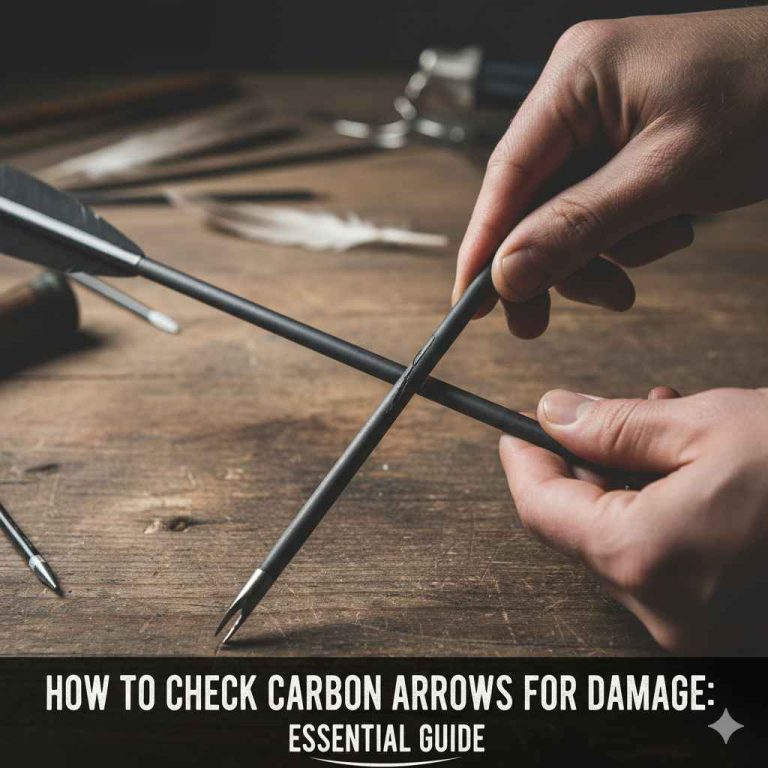
- Visual Check: Take each arrow and slowly rotate it under good light. Look for any lines, zigzags, or spiderweb-like patterns on the shaft. Pay special attention to areas where the arrow hits the ground or other objects.
- Tactile Check: Gently run your fingertips along the entire length of the arrow shaft. You can often feel a slight roughness or a raised line where a crack has formed, even if it’s hard to see.
- The “Flex” Test (Use with Caution): Some archers gently flex an arrow away from their body. If you hear a “snap” or “crack” sound, or feel a distinct crunching sensation, the arrow is compromised and should be discarded. Important Safety Note: Do NOT over-flex the arrow, as this itself can cause damage or lead to failure. This test should be done very cautiously and is more effective if you’ve handled many arrows and know what a “good” one feels like compared to a “bad” one.
2. Splinters and Delamination
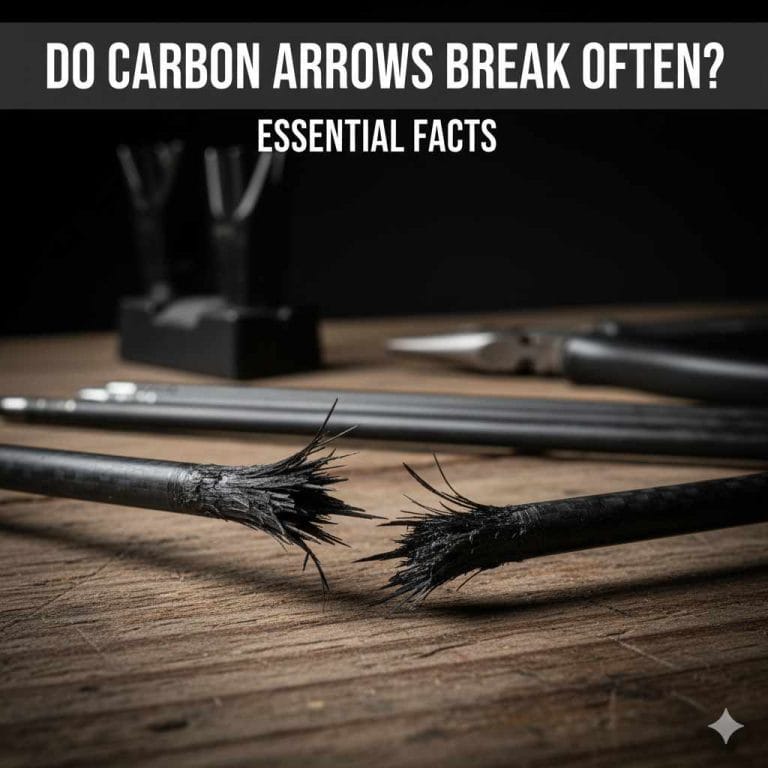
Carbon fiber is made of many thin layers. Sometimes, these layers can separate, creating splinters or areas where the carbon looks like it’s peeling apart.
- Visual Check: Look for any ragged edges, loose fibers, or areas where the surface finish seems to be lifting or flaking off.
- Tactile Check: Again, running your fingers along the arrow can help you feel these rough spots or protruding fibers. These are clear indicators of damage.
3. Bent or Warped Shafts
While carbon is generally stiff, extreme impacts or heat can cause a shaft to bend or warp.
- Visual Check: Roll the arrow on a flat surface, like a table or the floor. Watch closely to see if it wobbles or doesn’t roll true. Any deviation indicates a bend.
- Nock Check: A bent shaft can cause the nock (the part that clips onto the bowstring) to sit at an angle. Check that the nock is perfectly aligned with the shaft.
4. Damaged Nocks
The nock is vital for holding the arrow on the bowstring. If it’s loose, cracked, or misaligned, the arrow won’t be properly seated.
- Visual Check: Inspect the nock for any cracks, chips, or signs of stress. Ensure it spins freely but isn’t wobbly or loose.
- Fit with String: The nock should fit snugly onto your bowstring yet be easy to clip on and off. If it’s too tight, too loose, or feels strained, it might need replacing or indicate shaft damage. Many nocks are replaceable, but if the shaft itself is damaged where the nock inserts, the entire arrow is likely compromised.
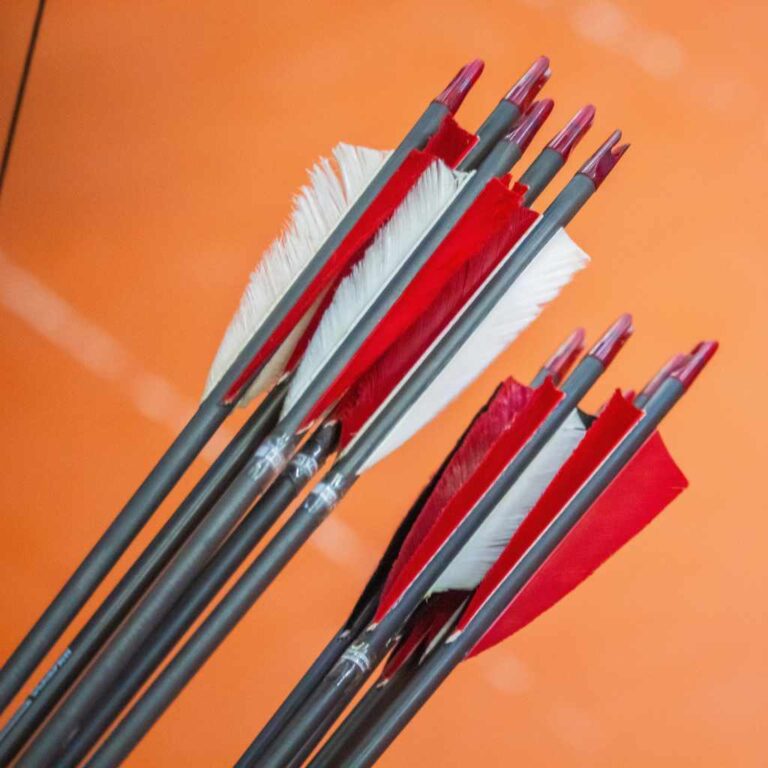
5. Damaged Fletchings (Vanes)
While fletchings (the feathers or plastic vanes) primarily affect arrow flight and accuracy, severely damaged or torn vanes can sometimes be a symptom of an impact that might have also damaged the shaft.
- Visual Check: Look for vanes that are torn, bent, detached, or peeling.
- Remedy: Fletchings can often be repaired or replaced using fletching glue or an arrow refletching tool. However, if you notice significant vane damage, it’s a good time to double-check the shaft for underlying issues.
6. Damaged Broadheads or Field Points
The tip of your arrow, whether it’s a field point for practice or a broadhead for hunting, needs to be secure.
- Visual Check: Ensure the point is screwed in tightly. Check for bent or broken blades on broadheads, or if the point itself is damaged or loose. A wobbly point can indicate threads are stripped or the shaft is damaged.
- Remedy: Points are usually replaceable. If you can’t get a new point to thread securely into the insert at the front of the arrow, or if the insert itself is loose or damaged, the arrow may be beyond repair.
Inspection Routine: Making it a Habit
The best way to catch damage is to make inspecting your arrows a regular part of your archery routine. Don’t wait until you notice a problem with accuracy or safety.
Before You Shoot Each Time
- Quick Visual Scan: As you grab your arrows for a practice session or hunt, give each one a quick look-over. Are there any obvious cracks or rough spots?
- Spin Test: Briefly spin each arrow on a flat surface to check for wobbles.
After a Hard Impact or Rough Landing
- Thorough Inspection: If an arrow hits a tree, a rock, another arrow, or lands particularly hard, give it a complete inspection using the steps outlined above (visual, tactile, and careful flex if you choose).
Regular Deep Dive (e.g., Monthly or Before a Big Hunt/Event)
- Set aside time to carefully inspect every arrow in your quiver. This is when you’ll catch those subtle hairline fractures.
Tools to Help Inspection
While your eyes and fingers are your primary tools, a few simple things can make inspection easier:
- Good Lighting: A bright light source (sunlight or a strong lamp) is essential for spotting hairline cracks.
- Clean Arrows: Wipe down your arrows with a soft cloth to remove dirt and debris that might hide damage.
- Flat Surface: A table or workbench is perfect for rolling arrows to check for straightness.
- Magnifying Glass (Optional): For those really tiny hairline cracks, a magnifying glass can be a great help.
What to Do with Damaged Arrows
This is the most important part: When in doubt, throw it out. Once you identify damage that compromises the shaft’s integrity, that arrow should no longer be used.
Here’s a breakdown of how to handle it:
| Type of Damage | Action | Why? |
|---|---|---|
| Visible Cracks/Fractures | Discard Immediately | Structural integrity is compromised, high risk of catastrophic failure. |
| Significant Splinters/Delamination | Discard Immediately | Weakens the shaft, potential for dangerous breakage. |
| Noticeable Bend/Warp | Discard Immediately | Will cause inconsistent flight and potential nock issues. |
| Cracked or Loose Nock (cannot be fixed/replaced securely) | Discard Arrow | Incorrect nock fit leads to dry firing or poor arrow launch. |
| Damaged Insert/Loose Point (cannot be fixed securely) | Discard Arrow | Arrow won’t fly true, can separate from bow. |
| Minor Fletching Damage (shaft is perfect) | Repair/Replace Vanes | Improves flight, but only if the shaft is confirmed sound. |
| Slightly rough patch (no visible crack, feels minor) | Extra careful inspection, consider replacement | Could be a precursor to a crack; err on the side of caution. |
Don’t try to “fix” cracked carbon shafts. They cannot be reliably repaired. Trying to save a damaged arrow is not worth the risk to your safety or the equipment.
When to Replace Arrows (Beyond Damage)
Even if your arrows seem perfectly fine, there are other reasons they might need replacing:
- Changing Draw Weight or Length: If you get a new bow with a significantly different draw weight or length, your current arrows might not be the correct spined for it. A bent arrow can sometimes be disguised by poor flight caused by improper spine. The spine chart for your bow is crucial here.
- Consistent Poor Accuracy: If you’re shooting the same group repeatedly and it’s not where you expect, and you’ve ruled out your form and bow tuning, your arrows might be worn out, inconsistently spined, or subtly damaged.
- Wear and Tear Over Time: Even with careful use, arrows experience stress. If you’ve been shooting the same set of arrows for a very long time, and they’ve seen thousands of shots and numerous impacts, even without obvious damage, their perfect straightness and uniformity might have degraded.
- Moving to a Different Discipline: For competitive archery, having perfectly matched arrows is key. If you’re serious about competition, you may eventually want a set of arrows that are as identical as possible.

FAQ: Your Carbon Arrow Questions Answered
Q1: How long do carbon arrows typically last?
A1: There’s no set lifespan. It depends heavily on how you use and care for them. With careful shooting and minimal hard impacts, a set of arrows can last for years. However, a single bad impact can render an arrow unusable immediately.
Q2: Can I repair a cracked carbon arrow shaft?
A2: No, carbon arrow shafts cannot be reliably repaired once cracked. Any attempts to patch or reinforce a cracked shaft will likely not hold up under the stress of shooting and could be dangerous.
Q3: What happens if I shoot a damaged carbon arrow?
A3: You risk the arrow breaking apart during or immediately after being shot. This can cause injury to yourself or others, damage your bow, and lead to very unpredictable arrow flight and accuracy.
Q4: My arrow hit a rock and seems okay, do I need to worry?
A4: It’s always a good idea to perform a thorough inspection after any significant impact. Hairline cracks are often invisible to the naked eye and can develop after what seems like a minor hit. Better safe than sorry!
Q5: What’s the best way to store my carbon arrows?
A5: Store them in an arrow case or tube, away from extreme temperatures and direct sunlight if possible. This protects them from accidental impacts and damage during transport and storage.
Q6: Should I worry about humidity affecting my carbon arrows?
A6: Carbon arrows are generally very resilient to humidity. Unlike some other materials, they don’t tend to swell or degrade significantly due to moisture. So, normal outdoor shooting conditions are usually fine.
Q7: Are expensive carbon arrows more durable or less likely to go bad?
A7: While manufacturing quality can differ, even the most expensive carbon arrows are still susceptible to damage from impacts. Durability is more about the construction and materials quality, but even premium arrows can crack if they hit something solid. Regular inspection is key for all carbon arrows, regardless of price.
Keeping Your Archery Adventure Safe and Fun
So, there you have it! Keeping your carbon arrows in top shape is all about being observant and a little bit proactive. By making regular inspections a habit, you ensure that every shot you take is safe and as accurate as possible. It’s a simple step that makes a huge difference in your archery experience. Remember, good equipment care isn’t just about performance; it’s about keeping yourself and everyone around you safe.
Don’t let the fear of damaged arrows sideline your passion. With a few simple checks, you can confidently reach for your quiver, knowing your gear is ready. Happy shooting, and may your arrows always fly true!