How A Lacrosse Chest Protector Should Fit
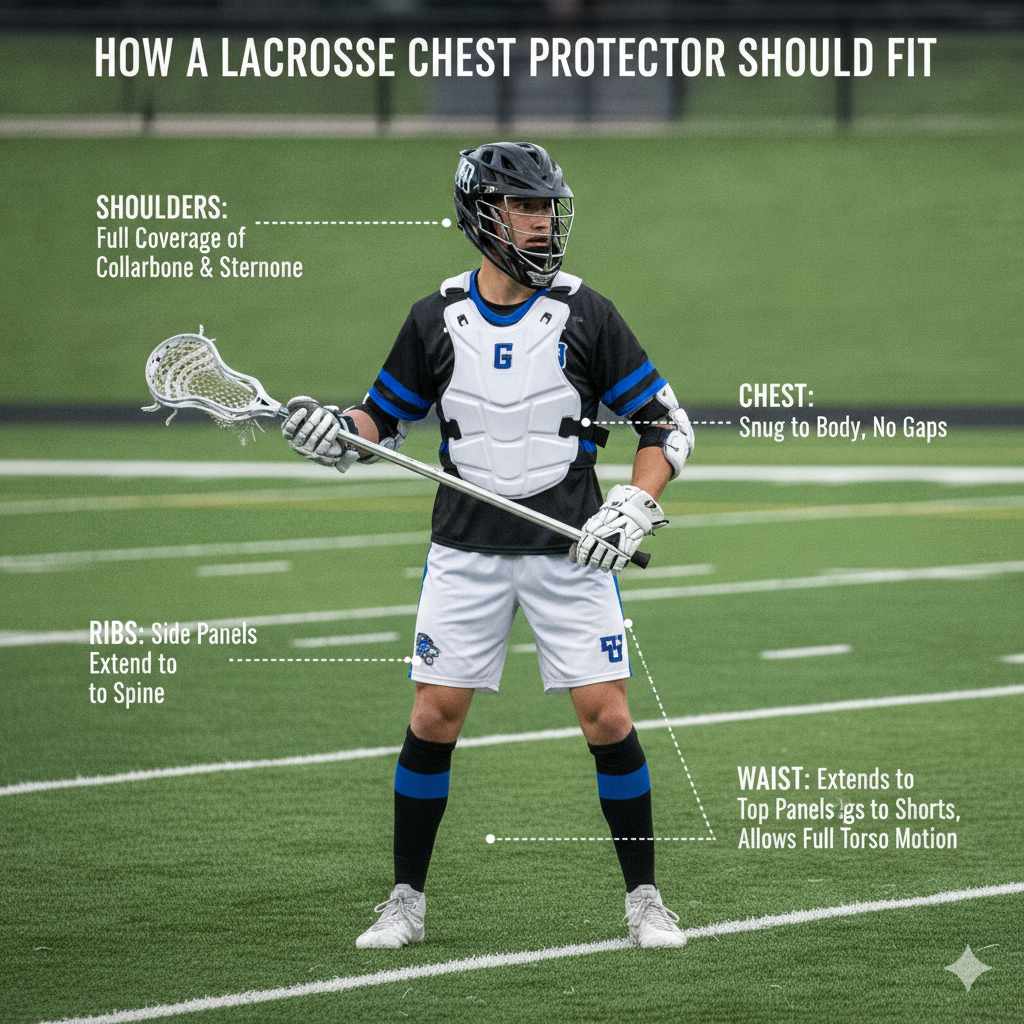
A lacrosse chest protector should fit snugly around your torso, covering the sternum, ribs, and collarbones without any gaps. It should allow for full range of motion in your arms and shoulders and stay in place during play. Key areas to check are shoulder strap fit, sternum coverage, and freedom of movement.
Understanding Lacrosse Chest Protector Fit
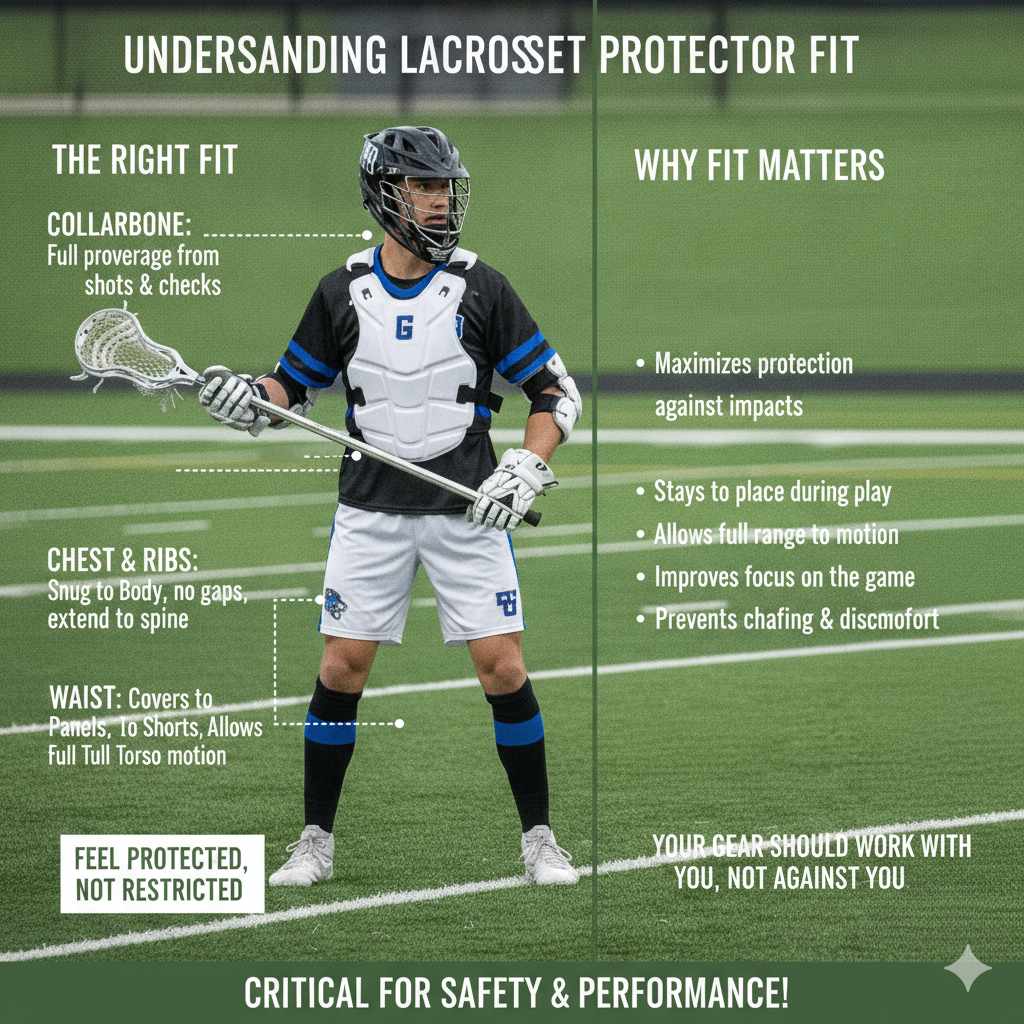
When you’re on the lacrosse field, your chest protector is your first line of defense. It guards your ribs and chest against hard checks and fast shots. But if it doesn’t fit well, it can’t do its job right.
A good fit means it covers the right areas without shifting or restricting your movement. It needs to be snug but not constricting. This might seem simple, but there are a few key details that matter a lot.
Think of it like a well-tailored jacket. It looks better and feels better because it’s made for you. A chest protector is the same.
When it fits properly, you can focus on the game. You’re not worried about it slipping down or bunching up. This focus is key to playing well.
We’ll break down what makes a chest protector fit like it should.
The Science and Feel of a Proper Fit
A proper fit isn’t just about comfort. It’s about making sure the protective padding is exactly where it needs to be. This is vital for absorbing impact.
If the padding is too high, it might not protect your lower ribs. If it’s too low, it can get in the way of your waist or lower abdomen.
The materials used also play a role. Most protectors use foam and plastic. These need to sit flat against your body.
Wrinkles or gaps mean less protection. Manufacturers design these with your body in mind. They account for how you move and where you’re most likely to get hit.
Your job is to make sure the protector lines up with your body.
Let’s talk about movement. Lacrosse is a fast sport. You need to run, dodge, shoot, and throw.
Your chest protector should move with you. It shouldn’t feel stiff or pull in weird ways. This is where trying it on and moving around is super important.
It’s not just about standing still.
My Own Experience: The Day My Protector Failed Me
I remember it vividly. It was a hot summer tournament game. I was wearing a chest protector I’d had for a while.
I thought it fit okay. It felt a little loose, but I figured it was fine. I’d just pull the straps tighter when I could.
During a fast break, I got leveled with a pretty solid check right in the chest.
Instead of feeling the solid impact protection I expected, the protector shifted upwards. Suddenly, a good chunk of my sternum was exposed. The force still hurt, but the worry of what could have happened was worse.
My heart was pounding. I realized right then how crucial that snug, consistent fit truly is. It wasn’t just about comfort anymore; it was about being properly shielded.
That day taught me a lesson I’ve never forgotten about gear fit.
Key Fit Checkpoints
Shoulder Straps: They should sit flat and securely on your shoulders. Not too tight that they dig in, but not so loose they slide off. Most protectors have adjustable straps.
Look for ones that offer a good range of adjustment.
Sternum Coverage: The main protective plate should cover the middle of your chest, right over your breastbone. There should be no gaps between the plate and your body. This area takes a lot of direct hits.
Collarbone Protection: Many protectors have wings or extensions that cover your collarbones. These should lie flat and overlap your shoulder pads without being restrictive. This is another common hit zone.
Rib Guard Fit: The sides of the protector should hug your ribs. They shouldn’t stick out or feel floppy. You need protection all around your torso.
Trying On for the Perfect Fit: A Step-by-Step Guide
When you get a new lacrosse chest protector, trying it on is more than just slipping it over your head. It’s a process. You need to check several things while wearing it.
This helps you understand how it will feel and perform during a game.
First, put on the undergarments you usually wear for games. This might be a compression shirt or a t-shirt. Then, put on the chest protector.
Adjust the shoulder straps first. They should allow the protector to sit at the right height on your chest. You want it to cover your sternum fully.
Then, secure any waist straps or Velcro closures. These help keep it from shifting.
Now, move. Raise your arms overhead. Twist your torso from side to side.
Bend forward. Do some jumping jacks. Mimic actions you do in a game.
Does the protector stay in place? Does it pinch or bind anywhere? Can you breathe deeply?
If you feel any restrictions, it’s probably not the right fit. You might need a different size or even a different model.
Understanding Sizing Charts: Your First Step
Every brand has its own sizing chart. These are usually based on chest measurements. It’s crucial to measure yourself accurately.
Use a flexible measuring tape. Wrap it around the fullest part of your chest, usually just under your arms. Keep the tape level.
Compare your measurement to the chart. Remember, these are often guidelines. Some players prefer a slightly tighter fit, while others like a bit more room.
Your measurement will give you a starting point. For youth players, this step is even more important. Kids grow, so you want to ensure a good fit now, but also consider how quickly they might outgrow it.
Don’t be afraid to call the store or manufacturer if you’re unsure. They can often help guide you based on your measurements and playing style. It’s better to ask questions now than to buy something that doesn’t fit later.
Fit Comparison: Youth vs. Adult
Youth Sizing: Often more focused on basic protection and ease of adjustment. Comfort and a snug fit are key, as young players may not articulate discomfort well. Size charts are usually based on smaller measurements.
Adult Sizing: Adult sizes build on youth standards. They often include more advanced padding and features. The fit needs to accommodate a wider range of adult body types.
Adjustable straps are paramount here too.
Key Difference: While both need to be secure, adult protectors might offer more coverage and specialized padding due to the higher impact levels in adult play. For youth, ensuring the gear doesn’t hinder movement is often the top priority so they can learn the game comfortably.
Common Pitfalls to Avoid When Fitting
There are a few common mistakes people make when trying on a chest protector. One is not wearing the right base layer. If you plan to wear a thick hoodie under it (which you shouldn’t for lacrosse!), it will feel different.
Always test with your game-day gear.
Another mistake is not moving enough. Standing still won’t tell you how it performs during a fast break or a quick dodge. You need to simulate game movements.
Also, don’t just trust the tag size. Some brands run big or small. Trying it on is the best way to know for sure.
Lastly, people sometimes overlook the collarbone area. This is a common spot for injuries. Make sure the protector offers good coverage there and doesn’t create a gap when you move your arms.
A protector that only covers the chest isn’t enough.
Quick Scan Table: Fit Issues & Solutions
| Problem | Possible Cause | Solution |
| Protector slips down | Shoulder straps too loose; Waist strap not secured | Tighten shoulder straps; Ensure waist strap is snug |
| Padding shifts during play | Protector too large; Not enough adjustment points | Try a smaller size; Look for models with more strap adjustments |
| Restricts arm movement | Protector too bulky; Shoulder pads interfering | Try a slimmer fit model; Adjust shoulder pads |
| Gaps in chest or rib coverage | Incorrect size; Protector not sitting right | Re-measure chest; Adjust protector height and straps |
| Collarbone exposed | Protector not long enough; Shoulder straps misaligned | Check protector length; Ensure shoulder straps are flat and in place |
The Feel of Freedom: Range of Motion is Key
Lacrosse requires a huge range of motion. You need to reach for ground balls, whip your arms around for a shot, and twist your body to throw a pass. Your chest protector should never feel like it’s holding you back.
This is a really important part of what makes a lacrosse chest protector functional.
When you try one on, simulate these movements. Reach as high as you can. Can you swing your arms forward and backward without the protector bunching up or feeling tight across your shoulders?
Twist from your waist. Does the protector stay put or does it pull away from your ribs?
If you feel any restriction, it’s a problem. This could be because the protector is too small, too stiff, or designed in a way that doesn’t allow for your body’s natural movement. Some newer designs are made with flexible panels in key areas to help with this.
Always prioritize gear that lets you play your game without feeling hindered.
What “Snug” Really Means
Not Tight: Snug doesn’t mean it should feel like a tourniquet. You should be able to take a full, deep breath without feeling restricted. You should be able to flex your muscles underneath it without it feeling like it’s cutting into you.
Not Loose: It means it shouldn’t have a lot of extra fabric or padding that can shift around. When you move, the protector should move with you. There should be no significant gaps between the padding and your body.
Secure: The primary goal is that it stays in place. When you get checked or take a fall, the protector needs to remain covering the vital areas it was designed to protect.
When to Worry: Signs Your Protector Doesn’t Fit Right
You’ve got your protector on. You’ve adjusted the straps. Now, pay attention to how it feels during a practice or even just a good warm-up.
Are there any areas that constantly dig in? Do you find yourself readjusting it every few minutes? These are signs it doesn’t fit well.
Another red flag is if you feel a sharp impact where the protector should have cushioned it. This means the padding isn’t sitting right. Or if you notice the protector is riding up your chest, leaving your sternum exposed, that’s a major problem.
You should never feel like you have less protection than you did before putting it on.
If you’re a parent looking at youth gear, watch your child. Do they seem uncomfortable? Are they constantly fidgeting with it?
Kids are often more honest about discomfort through their actions than their words. If they’re not playing as freely, the gear might be the issue.
Quick Fixes for Minor Fit Issues
Straps Too Long: If the shoulder or waist straps are too long and flapping around, you can sometimes tuck them securely or use Velcro to keep them neat. If they’re too short to adjust properly, you might need a bigger size.
Slight Bunching: Sometimes padding can bunch up. Try taking the protector off and smoothing out the internal padding. Then put it back on and adjust the straps to hold it flat.
Rubbing: If a specific seam or edge is rubbing, try wearing a slightly thicker base layer or look for protectors with softer edge finishes. If it’s a consistent problem, it might be a design flaw for your body type.
Material and Design Influence on Fit
The materials and design of a chest protector significantly impact how it fits and feels. Some protectors are made with a single, hard plastic shell. Others use a combination of foam padding and segmented plastic plates.
The latter often offers more flexibility.
The way the padding is integrated also matters. Is it sewn in? Is it removable?
Removable padding can sometimes lead to shifting if not secured properly. Designs that offer a contoured fit to the body’s natural curves tend to feel more secure and less bulky.
Think about the ventilation too. While not directly about fit, better ventilation can make you feel more comfortable, which can make a slightly less-than-perfect fit feel more tolerable. But, comfort should never come at the expense of protection.
Always prioritize how well it covers and stays put.
The Role of Different Protection Levels
Lacrosse chest protectors come in different protection levels. These are often designated by things like “youth,” “intermediate,” or “elite.” Higher protection levels typically mean thicker padding and more robust plastic plating. This can sometimes affect the fit.
A more protective model might be bulkier. This bulk can sometimes lead to a less streamlined fit, especially for players with smaller frames. It’s important to match the protection level to the player’s needs and age group.
Youth leagues often have specific rules about what gear is allowed.
When trying on a higher protection model, pay extra attention to mobility. Does the added padding restrict your reach or swing? Sometimes, the trade-off for more protection is a slightly less flexible feel.
You need to find the balance that works for you.
Choosing the Right Protection Level
Youth/Beginner: Focus on essential chest and sternum protection. Should be lightweight and allow maximum freedom of movement for learning the game. Fit is paramount for comfort and confidence.
Intermediate: Offers more robust padding and coverage for older youth and developing players. Still emphasizes flexibility but adds more impact absorption for harder shots and checks.
Advanced/Elite: Designed for high-level play with maximum protection. Features advanced materials and thicker padding for serious players who face high-speed shots and aggressive physical play. Fit must still allow for peak performance.
Adjusting Straps for Optimal Security
The adjustable straps on a chest protector are your best friends. They are there for a reason. Don’t just tighten them enough to hold the protector on.
You need to use them to achieve a truly secure fit.
Start with the shoulder straps. They should pull the protector up so it sits correctly on your chest. Then, use the side or waist straps to cinch it closer to your body.
This prevents it from swinging or shifting side-to-side. You want it to feel like a second skin, not a loose shield.
Experiment with the tightness. You want it snug enough that it won’t move during play, but not so tight that it restricts breathing or circulation. The goal is security without discomfort.
This balance is key. Make sure any excess strap material is tucked away so it doesn’t get caught on anything.
What to Look for in Different Brands
Different brands have different design philosophies. Some focus on a slimmer, more athletic fit. Others might offer a more robust, traditional feel.
Warrior, STX, Maverik, and Cascade are popular brands, each with their own nuances.
Read reviews from other players. What do they say about the fit of a particular model? Some brands are known for running smaller or larger.
This can help you decide if you should order a size up or down from what the chart suggests.
Don’t get too hung up on brand names alone. The best brand is the one that makes a protector that fits your body well and meets your protection needs. What works for a professional player might not work for a beginner, and vice versa.
Focus on the fit and feel first.
Real-World Testing: The Practice Field Advantage
The best way to know if a chest protector fits well is to use it in a real practice session. Wear it for a full hour or two. Do all the drills.
Play some scrimmage. This is where you’ll really discover any issues.
Did it stay put when you were running hard? Did it feel comfortable even when you were sweating? Did you have to readjust it multiple times?
Was there any chafing or digging?
These questions only get answered during active play. If you buy a protector and only try it on at home, you might be surprised when you get on the field. Investing that extra time in practice testing is well worth it for your comfort and safety.
My Last Piece of Advice: Trust Your Gut (and Your Body)
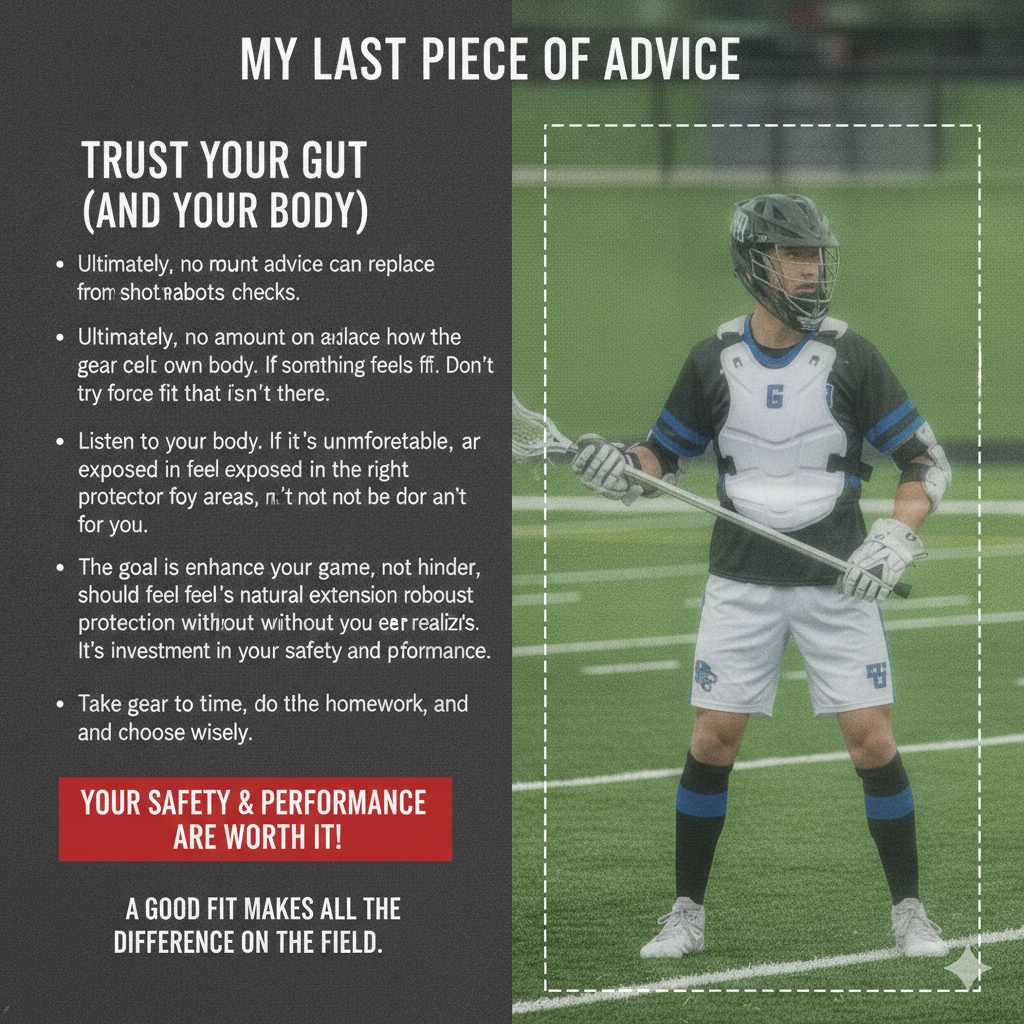
Ultimately, no amount of advice can replace how the gear feels on your own body. If something feels off, it probably is. Don’t try to force a fit that isn’t there.
Listen to your body. If it’s uncomfortable, or if you feel exposed in key areas, it’s not the right protector for you.
The goal is to enhance your game, not hinder it. A well-fitting lacrosse chest protector should feel like a natural extension of your body, offering robust protection without you even realizing it’s there. It’s an investment in your safety and your performance.
Take your time, do your homework, and choose wisely.
Frequently Asked Questions About Lacrosse Chest Protector Fit
How do I measure for a lacrosse chest protector?
You’ll need a flexible measuring tape. Wrap it around the fullest part of your chest, just under your arms. Keep the tape level and snug, but not tight.
Compare this measurement to the specific brand’s sizing chart. This is your starting point for finding the right size.
Can a chest protector be too tight?
Yes, a chest protector can be too tight. It should be snug to stay in place, but not so tight that it restricts your breathing, circulation, or causes discomfort. You need to be able to move freely and take deep breaths during the game.
What if my protector feels loose but the size is correct?
If your protector feels loose despite being the correct size according to the chart, you likely need to adjust the straps more securely. Ensure shoulder straps are set correctly and use the side or waist straps to cinch the protector closer to your torso. Some models may also just have a different cut that doesn’t suit your body shape.
Should my chest protector cover my collarbones?
Yes, a good lacrosse chest protector should offer some coverage for your collarbone area, often with extensions or “wings” that overlap your shoulder pads. This is a vulnerable area for hits, and proper collarbone protection is important.
How much room should I have for movement?
You should have complete freedom of movement for all typical lacrosse actions: reaching, throwing, shooting, and running. The protector should move with your body without pulling, bunching, or restricting your range of motion in any direction.
Is it okay if there’s a small gap between the protector and my skin?
Ideally, there should be no significant gaps between the protective padding and your body. Small gaps can occur with segmented designs, but large gaps, especially over vital areas like the sternum or ribs, reduce the effectiveness of the protection and should be avoided.
How often should I check the fit of my chest protector?
You should check the fit every time you put it on, especially if it’s a new piece of gear. After a few wears, you’ll get a better feel for it. It’s also a good idea to check it at the beginning of each season and if you notice any shifting or discomfort during play.
Conclusion
Finding the right fit for your lacrosse chest protector is essential. It’s about more than just comfort; it’s about making sure you’re protected where it matters most. Pay close attention to shoulder straps, sternum coverage, and your full range of motion.
Don’t be afraid to try on different sizes and brands until you find one that feels secure, allows you to move freely, and gives you confidence on the field.