Bauer One.7 vs One.9: Essential Gear Showdown
The Bauer One.7 vs One.9 showdown comes down to price versus premium features. The One.9 offers superior protection, lighter weight, and better fit customization, making it better for dedicated players, while the One.7 is an excellent, reliable value choice for recreational or newer goalies seeking solid performance without the highest cost.
Welcome to the rink! Choosing new goalie gear can feel like the hardest shot you’ll ever face. You see two fantastic-looking chest and arm protectors—the Bauer One.7 and the Bauer One.9—and the differences aren’t always clear. It’s frustrating when you want the best protection but don’t want to overspend on features you don’t need yet. Don’t worry; we are going to break down these two models simply. We’ll focus on what matters most to new and intermediate goalies: protection, mobility, and value. By the end of this guide, you will know exactly which piece of gear will help you stop pucks confidently and safely. Let’s dive into this essential gear showdown!
Understanding Bauer Goalie Protection Lines: The Quick Overview
Bauer organizes its goalie gear into performance tiers. Think of it like a ladder. The higher the number, generally the higher the performance, the lighter the materials, and the higher the price tag. The One.7 sits as a strong mid-level option, perfect for serious recreational players. The One.9 sits just below the top-tier models, offering professional-level technology at a slightly more accessible price point for dedicated amateurs.
When comparing the bauer one.7 vs one.9 chest protector, you are comparing durability and premium features versus excellent baseline protection.
Why Chest and Arm Protection Matters So Much
As a beginner, your main job is to stop the puck! A good chest and arm protector (or C/A) does three crucial things:
- Absorption: It spreads the impact of a hard shot across a larger area so you don’t feel every single one.
- Coverage: It ensures there are no frustrating gaps where a puck can sneak through to your armpits, shoulders, or stomach.
- Mobility: It needs to let you move your arms freely to block, track the puck, and quickly get into your stance without feeling like you are wearing a mattress.
The differences between the 1.7 and 1.9 often come down to the quality of the foam used (which impacts weight and shock absorption) and the adjustability of the fit.

Deep Dive: Bauer One.7 Chest and Arm Protector
The Bauer One.7 is often the sweet spot for the dedicated hobbyist. It delivers solid, dependable protection designed to handle the speed of modern shots while keeping the cost reasonable. It is built for reliability.
Key Features and Construction of the One.7
The One.7 focuses on durable materials that offer great protection without needing the cutting-edge, ultra-light technology found in the top lines. This means it might feel a touch bulkier than its higher-end sibling, but it will certainly get the job done safely.
Protection Elements
- Foam Density: Uses a high-density foam designed for excellent shock absorption. It’s tough and reliable against direct impacts.
- Arm Coverage: Features segmented arms. This means the arm pieces are broken into smaller sections, allowing for decent flexibility when reaching or hugging the post.
- Sternum Protection: Includes a standard, effective sternum guard to protect your collarbone area, which is vital when dropping into the butterfly.
Mobility and Fit
The fit system prioritizes simplicity and security. It focuses on keeping the unit snugly in place so it doesn’t shift during play.
- Adjustment System: Typically uses a straightforward buckle and Velcro system on the arms and back. Easy to adjust, but maybe not as finely tunable as the 1.9.
- Sleeve Adjustment: The cuffs usually have a basic adjustment to prevent them from riding up over your gloves.
Who is the Bauer One.7 Best For?
This model is perfect if you:
- Play recreational or lower-level league hockey (e.g., beer league, Mite/Squirt/Peewee leagues).
- Are new to the goaltending position and need reliable, confidence-building protection.
- Are budget-conscious but refuse to compromise on core safety features.
In-Depth Look: Bauer One.9 Chest and Arm Protector
Stepping up to the One.9 means you are looking for performance enhancements—specifically, lighter weight and greater freedom of movement. This gear uses more advanced foam integration and better fit adjustments derived from Bauer’s top-tier lines.
Key Features and Construction of the One.9
The One.9 bridge the gap between pure value and elite performance. Goalies who move frequently or who face very hard shots benefit most from the improvements here.
Protection Elements
- Advanced Foam Integration: Often incorporates lighter composite materials or specialized foam layering that absorbs energy more efficiently. This usually results in a noticeable reduction in overall weight compared to the 1.7.
- Arm Segments: The arm segmentation is typically more refined. This means more joints and hinges in the arm structure, allowing the arm pads to move much more naturally with your body, whether you are extending for a glove save or dropping down low.
- Shoulder Floaters: The shoulder floats (the pads sitting over your shoulders) are often designed to cover gaps better while remaining less bulky, maximizing your reach.
Mobility and Fit Customization
This is where the One.9 often shines brightest. Better mobility translates directly into quicker reaction times.
- Adjustable Fit System: Expect more advanced strapping, often including elastic/bungee cord adjustments or more substantial Velcro panels, allowing for a highly customized torso fit.
- Anchor Points: The attachment points for the arm pads to the torso might be more reinforced or adjustable, ensuring the arm protection stays exactly where you want it, maximizing net coverage in your stance.
- Liner Material: Often features moisture-wicking liners that dry faster, keeping you more comfortable during long practices.
Who is the Bauer One.9 Best For?
The One.9 is the smarter choice if you:
- Play competitive hockey regularly (A/AA levels or higher travel teams).
- Notice that your current gear feels heavy or restricts your reach.
- Are looking for gear that mimics professional fit systems but at a slightly lower price point than the absolute top models.
Bauer One.7 vs One.9: Head-to-Head Comparison Table
To make the choice crystal clear, let’s look at the main differences side-by-side. Pay close attention to the weight and adjustability sections.
| Feature | Bauer One.7 | Bauer One.9 |
|---|---|---|
| Performance Tier | Mid-Level / Performance Value | Upper Mid-Level / High Performance |
| Weight | Standard Density Foam (Slightly Heavier) | Lighter, Advanced Foam Integration |
| Mobility & Flexibility | Good, Segmented Arms | Excellent, More Segments and Hinges |
| Fit Customization | Standard Buckle/Velcro Adjustments | More Advanced Strapping, Better Torso Fit |
| Primary Focus | Durability and Reliable Protection | Lightness, Mobility, and Refined Coverage |
| Price Point (Relative) | More Affordable | Higher Investment |
Making the Right Choice for Your Game: Practical Considerations
When comparing the bauer one.7 vs one.9 chest protector, the “better” option depends entirely on where you are in your goalie journey. We need to look beyond the features list and consider how you actually play.
Factor 1: Your Shot Velocity and Game Frequency
If you are just starting out, maybe taking 100 shots a week in practice or just playing shinny, the One.7 offers more than enough stopping power. The foams are designed to last through that level of impact.
However, if you play three times a week, face hard slapshots regularly, or are preparing for high-stakes tournaments, the incremental improvement in the One.9’s impact dispersal and lighter weight becomes essential. Spending a bit more now can mean less fatigue later in the game and better protection against higher velocity pucks. Remember, the National Safety Council often emphasizes proper protective equipment fitting and quality for injury prevention in sports.
Factor 2: Fit and Comfort (The Most Important Test)
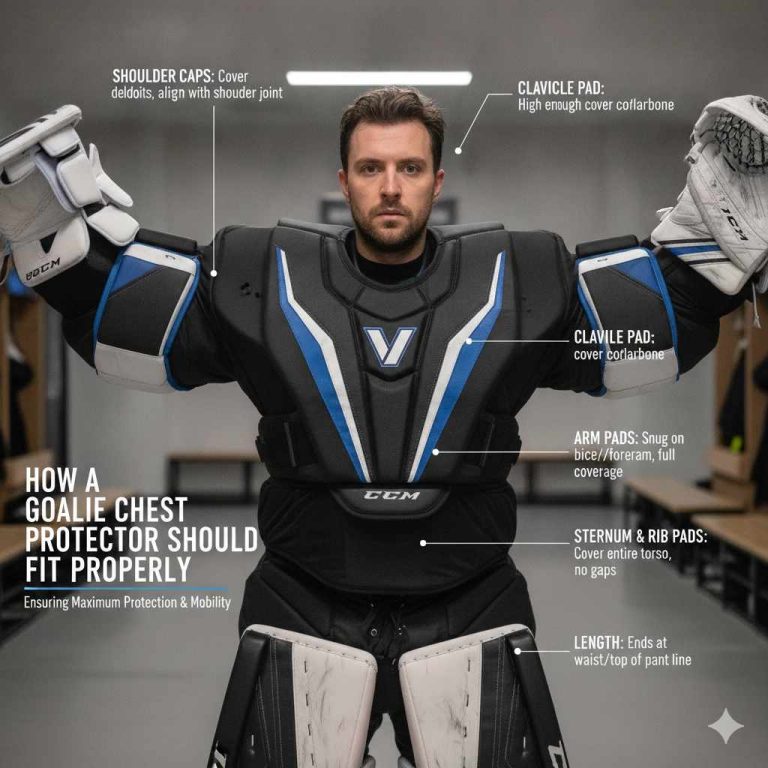
No matter how good the technology is, if the gear doesn’t fit your body shape, it won’t protect you well. Gaps are the enemy!
How to Check the Fit (Applies to Both Models)
- The Reach Test: Raise both arms straight out in front of you, as if you are hugging the top corners of the net. Does the chest unit ride up significantly, exposing your stomach or waist? If so, the fit is too loose or the torso length is wrong.
- The Butterfly Test: Get down on your knees in a butterfly stance. Do the arm pads buckle or fold in an awkward way that prevents your elbow caps from sealing against your pads? The One.9’s advanced segmentation is designed to minimize this issue.
- Strap Security: Can you tighten the straps securely without feeling like the gear is crushing your ribs? If the One.7 requires you to cinch the straps too tightly just to keep the shoulder floats aligned, the One.9’s superior adjustment system might be worth the upgrade.
Factor 3: Weight and Fatigue
This is a subtle but powerful difference. Goalie gear is heavy, and that weight adds up, especially over a full period. The advancements in the One.9 often translate to shedding a pound or two compared to the 1.7, primarily through better foam construction in the arms and belly area.
If you struggle with fatigue late in the third period, that weight reduction can translate into quicker recovery time between shots, allowing you to reset your stance faster. For younger players growing quickly, lighter gear also reduces strain on developing joints.
Essential Gear Check: Chest Protectors and Sizing for Beginners
Whether you pick the 1.7 or the 1.9, getting the size right is non-negotiable. Ill-fitting gear is dangerous gear.
Step-by-Step Guide to Sizing Your Chest and Arm Protector
Always measure yourself wearing your goalie jersey and elbow pads, as this reflects how you will actually wear it on the ice.
- Measure Torso Length: Measure from the very top of your shoulder (where the shoulder pad rests) down to your naval (belly button). This gives you a baseline for the torso length measurement.
- Measure Arm Length: Measure from the center of your sternum, across the shoulder, down the outside of the arm to where your wrist bone is. This helps determine if the arms are long enough to meet your glove correctly.
- Try It On (The Hang Test): When you put the protector on and strap it up loosely, the bottom of the torso pad should hang about 1 to 1.5 inches below your naval. The shoulder caps should sit directly on top of your actual shoulders.
- Check the Elbow Gap: Ensure the protective cup where your elbow pads sit is perfectly centered. When you bend your arm, the goal pad should still overlap the cuff of your catcher or blocker slightly.
- Adjust the Straps: Tighten the back strap first until it’s snug. Then adjust the arm straps. The arm protectors should feel secure but allow you to fully rotate your arms without the entire unit shifting upwards.
The Mobility Factor: Why Arm Segmentation Matters
One of the clearest technological divides between the 1.7 and 1.9 lines is how the arms move. Modern goaltending requires incredible flexibility in the arms for quick glove saves and stick handling.
Comparing Arm Movement: 1.7 vs 1.9
| Movement Area | Bauer One.7 Approach | Bauer One.9 Approach |
|---|---|---|
| Elbow Hinge | Fewer, larger foam sections; movement is slightly restricted at sharp angles. | More, smaller segments allowing for tighter bends and quicker recovery. |
| Shoulder Flotation | Solid padding that covers well but can feel stiff when reaching high. | Lighter, potentially floating pads that move more independently with the shoulder blade. |
| Wrist Cuff | Simple Velcro closure. | Often includes elastic bands or tighter fit systems to prevent ride-up. |
If you find yourself frequently having to readjust your arms after making a save, the investment in the One.9’s enhanced flexibility will pay dividends in frustration reduction!
Safety First: Ensuring Compliance and Durability
When buying any hockey equipment, safety compliance is paramount. While Bauer gear is inherently safe, understanding the standards ensures you are protected according to industry best practices.
All modern Bauer chest protectors sold in North America are designed to meet the standards set by organizations like HECC (Hockey Equipment Certification Council). This ensures they meet baseline safety requirements for impact resistance. You can often find the certification sticker inside the liner of the garment.
For further reading on equipment safety standards in the US, you can always reference resources like the official website for USA Hockey, which details required protective measures for players at all levels, including goalies.
The difference in durability between the 1.7 and 1.9 often relates to the external fabric wear and tear. The 1.9 often uses slightly tougher, more abrasion-resistant materials where frequent contact occurs, meaning it might hold its aesthetic and structural integrity longer if subjected to heavy wear.
Maintenance Tips for Extending the Life of Your C/A
Whether you chose the One.7 or the One.9, proper care keeps your gear protective, light, and smelling less like an old gym bag. This simple maintenance routine adds years to your investment.
Caring for Your Chest Protector (The Essentials)
- Always Air Dry: After every use, hang your chest protector by the shoulder straps in a well-ventilated area. Never leave it stuffed in your bag. Moisture is the enemy; it degrades the foam and encourages bacteria growth.
- Wipe Down Regularly: Use a mild, diluted fabric cleaner or a dedicated sports equipment spray (like Nilodor or Odor-X) on the interior liner every few uses to kill surface bacteria.
- Check Straps Before Each Use: Before putting the gear on, quickly inspect all Velcro and buckles. Make sure the plastic pieces aren’t cracked and the Velcro is still gripping strongly. Loose straps are the #1 cause of poor fit during play.
- Deep Clean Annually: Once a year, you can carefully hand-wash the exterior with cool water and mild soap, rinsing thoroughly. Do NOT machine wash or use harsh detergents, as these can break down the protective foams.

Frequently Asked Questions (FAQ) for New Goalies
Q1: Can a beginner use the Bauer One.9 protector?
Yes, absolutely! A beginner can certainly use the One.9. If your budget allows, it offers better long-term mobility and lighter weight, which helps establish good habits early on. You won’t be held back by the gear.
Q2: Is the Bauer One.7 significantly heavier than the One.9?
It is usually noticeably heavier, but not drastically so. The weight difference is often between 1 to 1.5 pounds total. For newer or smaller goalies, this small difference in weight can feel substantial over a full game.
Q3: Do these chest protectors fit the same way underneath a jersey?
Generally, the One.9 is designed to offer better coverage while maintaining a slightly lower profile in certain areas (like the biceps) to achieve a tighter fit under a tight game jersey. The One.7 might feel a bit bulkier under the arms.
Q4: How do I know if my current chest protector size is wrong?
If the pads are too short, you will constantly have a gap between your stomach and your pants. If they are too long, the arm pads will sag below your glove cuff. Always check that the arm cups cover your elbow pads completely.
Q5: Will the One.7 protect me from hard shots just as well as the One.9?
Yes — for most recreational and lower-level competitive play, the One.7 offers more than enough protection against hard shots. Its high-density foam is designed to absorb direct impacts safely and effectively.
However, if you regularly face higher-velocity slapshots (especially from older teens or adult competitive players), the One.9’s advanced foam layering and lighter build help disperse energy more efficiently and reduce sting. At higher levels, that subtle difference becomes noticeable — especially over long games or frequent practices.
Conclusion
Both the Bauer One.7 and One.9 are built to protect you — and that’s what matters most. The One.7 delivers dependable safety and value for developing goalies, while the One.9 elevates performance with lighter materials, better mobility, and refined fit customization. The “better” option isn’t about the higher number — it’s about matching the gear to your level, budget, and ambitions. Choose the protector that lets you move confidently, seal the gaps, and focus on stopping pucks — because in the crease, confidence is everything.