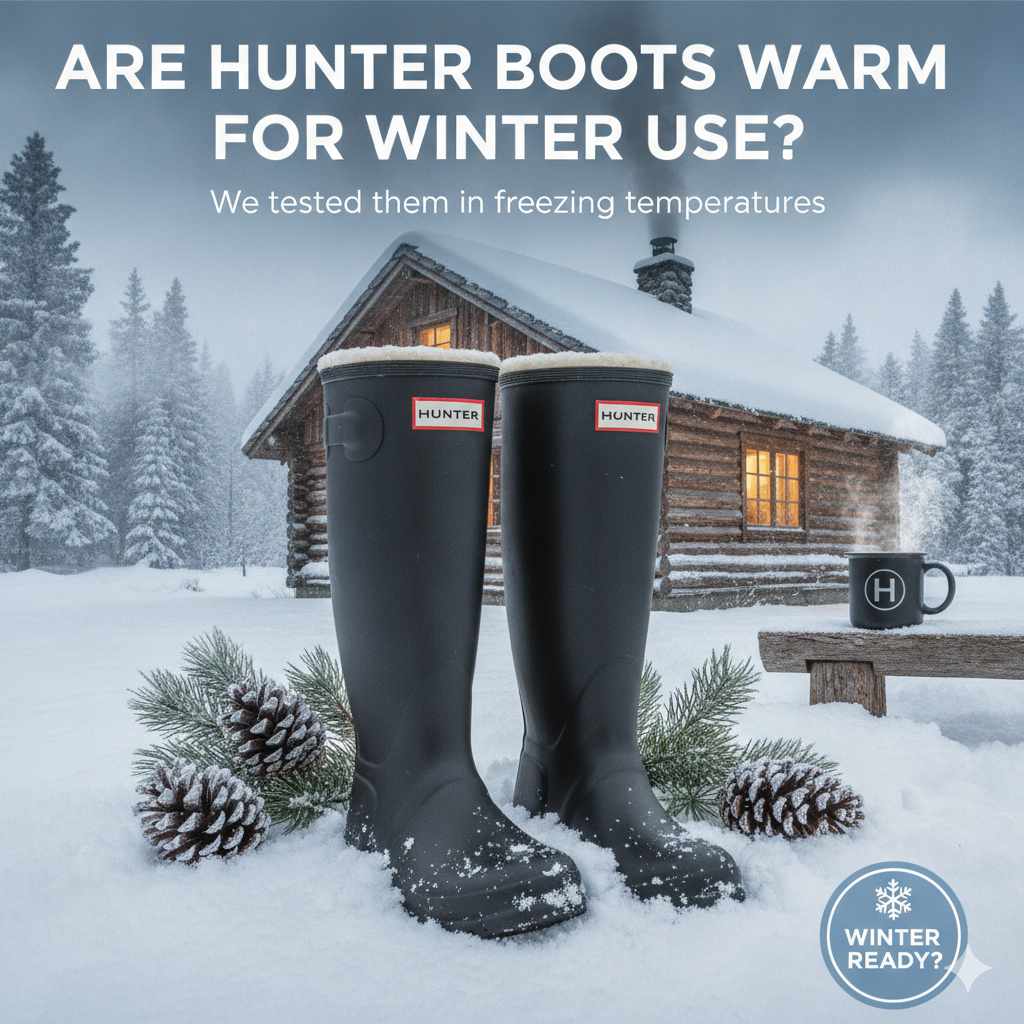
Are Hunter Boots Warm For Winter Use?
Hunter boots are generally not designed for deep winter warmth. They offer excellent waterproofing and are great for rain or mild, wet conditions. For true winter warmth, you need insulated boots.
Hunter boots can be made warmer with thick socks and liners, but they lack built-in insulation found in specialized winter footwear.
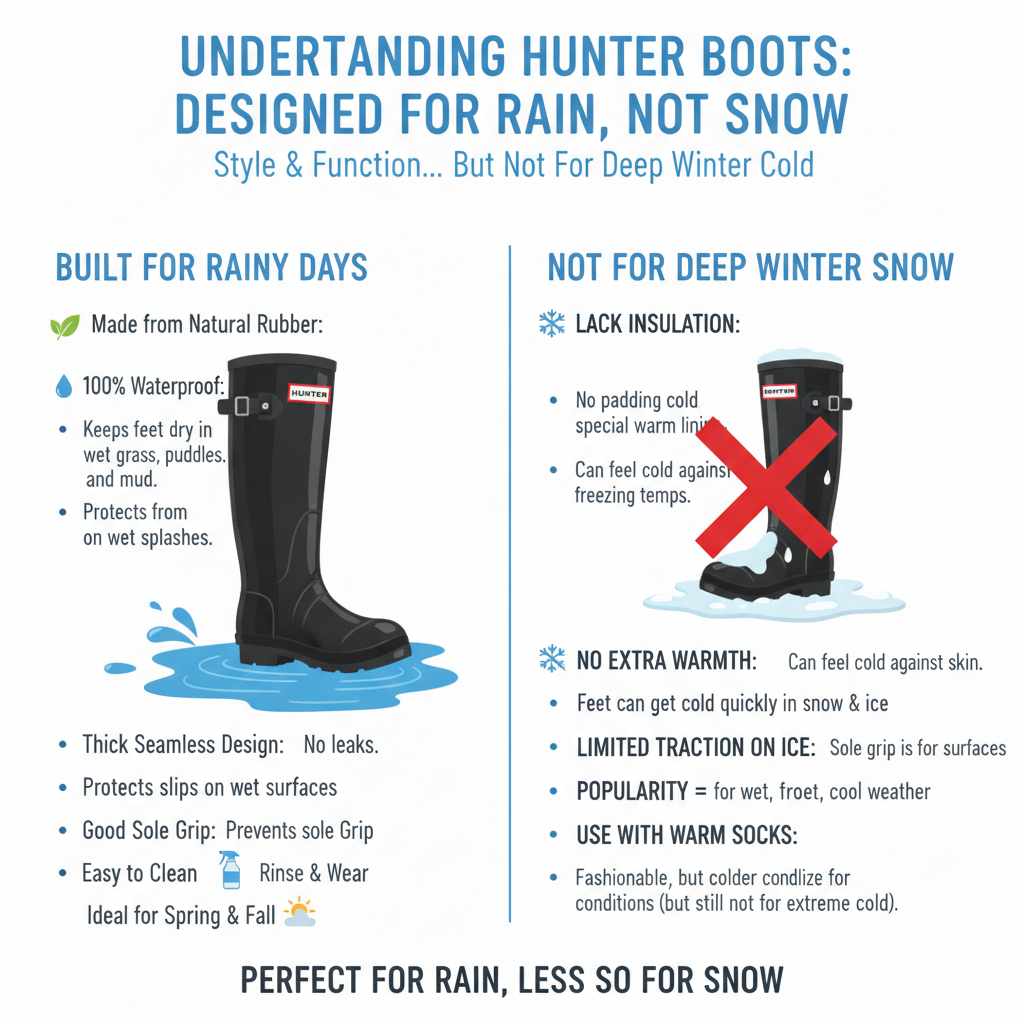
Understanding Hunter Boots: Designed for Rain, Not Snow
Hunter boots are famous. You see them everywhere. People love their stylish look.
They come in many colors and styles. The classic Original Tall boot is iconic. These boots are made from natural rubber.
This rubber is very good at keeping water out. That’s their main job. They are built for rainy days.
Think wet grass, puddles, and muddy paths.
The design is simple and effective for rain. The rubber is thick and seamless. This means water cannot seep in.
The tall shaft covers your calf. This stops water from splashing over the top. They have a good grip on the sole.
This helps prevent slips on wet surfaces. They are also easy to clean. Just rinse them off, and they look new again.
Many people wear them in spring and fall. They are perfect for those damp, chilly days. They protect your feet from getting wet.
Getting wet feet in cool weather can be miserable. Hunter boots solve that problem well. They offer comfort for wet conditions.
They also have a certain fashion appeal. Many celebrities wear them. This adds to their popularity.
But here’s the key difference. They are not built with warmth in mind. They don’t have padding.
They don’t have special insulating materials inside. The rubber itself isn’t a good insulator. It can actually feel cold against your skin.
Especially when the outside temperature drops very low. This is a crucial point for winter use.
So, while they are fantastic for their intended purpose, that purpose isn’t deep winter cold. Their popularity sometimes makes people assume they are all-weather. But this isn’t quite true.
Especially when snow and ice are involved. Or when temperatures dip way below freezing. That’s where other types of boots shine.
My Own Hunter Boot Experience in a Chilly Spell
I remember a particular November day a few years back. The forecast called for a sharp drop in temperature. We had rain the day before.
Now it was just very cold. I had plans to walk my dog in the park. I grabbed my favorite red Hunter boots.
They looked so cheerful. I figured they’d keep my feet dry from any lingering dampness.
Within twenty minutes, I started to feel it. A distinct chill was creeping into my toes. The rubber felt like ice against my socks.
I tried wiggling my toes. It didn’t help much. My feet were getting colder.
I was only out for about an hour. But by the end, my feet were quite uncomfortable. I felt a bit foolish.
I had prioritized style over function.
That day was a real learning moment. It showed me the limits of these boots. They are wonderful for wet, mild days.
But when the temperature really plummets, they fall short. I learned to layer them properly. I also learned to pick different boots for colder weather.
It’s about matching your footwear to the conditions. And my Hunter boots, while lovely, aren’t the best choice for a true winter day.
What Makes a Boot Warm for Winter? The Science Behind It
Winter boots need special features. These features keep your feet cozy. The most important thing is insulation.
This is material that traps body heat. Think of down feathers in a jacket. Or the lining in a good winter coat.
Winter boots use materials like fleece. They might use wool or synthetic fills. These materials create pockets of air.
Air is a great insulator. It doesn’t transfer heat easily. So, the trapped air keeps your foot’s warmth in.
It also helps keep the outside cold out. Hunter boots lack this type of material. They are just rubber.
Rubber conducts heat. This means it can transfer heat away from your foot. And it can let cold in.
Waterproofing is also key for winter. But it’s different from rain. Winter waterproofing needs to stop snow and slush.
It also needs to be breathable. If your feet sweat, that moisture needs to escape. Trapped moisture makes your feet colder.
Hunter boots are waterproof. But they don’t have breathability features. So, if you sweat, the moisture stays inside.
The sole of a winter boot matters too. It needs good grip for ice. But it also needs to be thick.
A thick sole creates a barrier. It separates your foot from the cold ground. The ground can be very cold in winter.
Hunter boot soles are usually thinner. They don’t offer much insulation from the ground.
Sizing is another factor. Winter boots often have extra room. This allows for thick socks.
It also allows for air circulation. Too tight a boot restricts blood flow. This makes your feet colder.
Hunter boots tend to fit snugly. This is great for keeping water out. But it can be a problem for warmth.
So, what makes a boot warm? It’s a combination. It’s insulation material.
It’s breathability. It’s a thick, insulated sole. And it’s a fit that allows for good socks and air.
Hunter boots excel at waterproofing. They do not excel at insulation or breathability for cold.
Hunter Boot vs. Winter Boot: Key Differences
Hunter Boots:
- Primary Use: Rain, mud, wet conditions.
- Material: Natural rubber.
- Insulation: None built-in.
- Breathability: Low.
- Temperature Rating: Best for mild to cool weather.
- Waterproofing: Excellent for surface water.
Winter Boots:
- Primary Use: Snow, ice, cold temperatures.
- Material: Often synthetic, leather, with rubber soles.
- Insulation: Built-in (fleece, wool, synthetic fill).
- Breathability: Designed to allow moisture out.
- Temperature Rating: Rated for specific cold levels (e.g., -20°F).
- Waterproofing: Often waterproof and slush-proof.
Can You Make Hunter Boots Warmer for Winter?
Yes, you can make them warmer. But there are limits. It’s like putting a light sweater on a t-shirt for a blizzard.
It helps a little. But it’s not a true winter solution. The best way to add warmth is with socks.
Very thick socks are your friend here.
Wool socks are excellent. They trap heat well. Even when they get a bit damp.
Look for thick, chunky wool socks. Merino wool is a good choice. It’s warm and not scratchy.
You can also find fleece-lined socks. These add an extra layer of soft warmth.
Another option is to add liners. Hunter makes fleece boot liners. These are designed to go inside their boots.
They add a layer of insulation. This can make a noticeable difference. They fit snugly.
They cover your ankles and calves. They really do boost the warmth. They are a popular accessory for Hunter boots.
You can also look for thermal insoles. These are inserts you put at the bottom of the boot. They add cushioning.
They also add a layer of insulation. This helps protect your feet from the cold ground. Some thermal insoles are made of materials like foil.
These reflect body heat back up.
However, it’s important to be realistic. Adding these things helps. But it won’t transform your Hunter boots.
Into serious snow boots. They will still lack the deep insulation. They won’t have the superior grip for ice.
And the rubber will still feel cold. If you plan on spending a lot of time outdoors in the snow or very cold weather, these are not your best bet.
Think about how much time you’ll be outside. If it’s just a quick dash to the car. Or a short walk on a paved path.
Then adding thick socks might be enough. But if you’re building snowmen. Or shoveling snow.
Or hiking in the cold. You’ll want specialized winter footwear.
Quick Tips to Boost Hunter Boot Warmth
Use Thick Socks: Opt for wool or fleece-lined socks. Avoid thin cotton socks, as they hold moisture and make feet colder.
Add Boot Liners: Hunter offers fleece liners designed specifically for their boots. These add a significant layer of warmth.
Consider Thermal Insoles: Inserts can add cushioning and an extra insulating barrier from the cold ground.
Layer Wisely: If layering socks, ensure the fit isn’t too tight, as this can restrict blood flow.
When Are Hunter Boots Okay for Winter?
Hunter boots can be okay for winter. But only in certain situations. These are usually mild winter days.
Or days when the main concern is wetness. Not extreme cold. Think of early winter.
Before the deep freezes set in. Or late winter. When the snow starts to melt.
They are great for slushy conditions. When the snow turns to watery mush. They keep your feet perfectly dry.
This is a big win. Wet feet in any weather are uncomfortable. In slush, they prevent that.
If you’re walking on cleared sidewalks. Or just running errands. And the temperature is above freezing.
They might be fine.
They are also good if you’ll be mostly indoors. Or driving. And only step outside for short periods.
The cold won’t have much time to affect your feet. If you live in a region with very mild winters. Where temperatures rarely dip below 30°F.
Then Hunter boots might work for you.
Consider your own body. Some people naturally have colder feet than others. If you’re someone who gets cold easily.
Even on a moderately cool day. You’ll probably find Hunter boots too cold for winter. If you have good circulation.
And your feet tend to stay warm. You might get away with them more often.
The key is the type of winter day. Are we talking about a blizzard? Or a damp, chilly afternoon?
For the latter, Hunter boots are a solid choice. For the former, they are not. You need to assess the actual conditions.
And your own needs.
Mild Winter Scenarios for Hunter Boots
Slushy Commutes: Perfect for keeping feet dry on wet, melting snow or ice.
Early/Late Winter: When temperatures hover just above freezing and rain is the main concern.
Short Outdoor Trips: Ideal for quick errands or walking to a car when you won’t be outside long.
Regions with Mild Winters: If your winters are generally not severe and rarely go below freezing.
When You Absolutely Need Real Winter Boots
There are times when Hunter boots just won’t cut it. These are the serious cold days. Days with snow.
Days with ice. Days where you need protection. And warmth.
Real winter boots are designed for this. They are built tough.
If the temperature drops below 20°F. You should probably switch to winter boots. Especially if you’ll be outside for more than a few minutes.
The cold can become dangerous. Frostbite is a real risk. Your feet need serious protection.
Snow is another big factor. If there’s a lot of snow. Or if you’re walking in deep snow.
Hunter boots aren’t tall enough. Snow can get in the top. They also don’t have the right tread for packed snow or ice.
You need boots designed for traction.
Consider the activities you’ll do. Are you going skiing? Or snowboarding?
Or ice fishing? These activities require specialized footwear. Your Hunter boots won’t be suitable.
Even for a simple winter hike. The ground can be uneven. It can be icy.
You need grip and support. And serious warmth.
Think about the materials. True winter boots often have insulation. They might have waterproof membranes like Gore-Tex.
They have thick, grippy soles. Some are rated for extreme cold. They are made to withstand harsh conditions.
Hunter boots are not.
If your goal is to keep your feet warm and safe. In true winter conditions. Then investing in a good pair of winter boots is essential.
It’s not about fashion. It’s about comfort and health. Your feet will thank you.
Signs You Need Dedicated Winter Boots
Temperatures Below 20°F: The risk of cold-related foot issues increases significantly.
Deep Snow or Ice: Hunter boots lack the height, insulation, and traction needed.
Extended Outdoor Time: If you’ll be outside for more than a short period.
Outdoor Winter Activities: Such as hiking, snowshoeing, or shoveling snow.
Poor Circulation: If you are prone to cold feet even in mild conditions.
Comparing Hunter Boots to Other Winter Footwear
It’s helpful to see how Hunter boots compare. To other types of boots people wear in winter. This gives you a better idea of their place.
In your footwear collection.
Insulated Snow Boots: These are the gold standard for winter. They have thick insulation. They are waterproof.
They have aggressive treads. They are often rated for very low temperatures. Brands like Sorel, Columbia, and Bogs make excellent ones.
They are bulky. But they are warm and protective.
Mukluks or Pac Boots: These are traditional winter boots. They often have removable liners. They are very warm.
Designed for extreme cold. They are great for deep snow. They are usually softer and more flexible than stiff snow boots.
Waterproof Hiking Boots: Some hiking boots are waterproof. And have some insulation. They offer good ankle support.
And good traction. They can be a good option for winter hikes. If it’s not too cold.
Or if you wear very warm socks.
Lined Ankle Boots: Many fashion ankle boots come with faux fur lining. They look stylish. They offer a bit more warmth than unlined boots.
But they are rarely waterproof. And offer little protection against deep cold or snow.
Hunter Boots: As we’ve discussed, they are primarily rain boots. They offer no real insulation. They are best for wet, mild conditions.
Or when dressed up with thick socks and liners for slightly cooler, damp days.
When you look at them side-by-side, the differences are clear. Hunter boots fill a specific niche. They are the best rain boots.
But they are not the best winter boots. If winter warmth is your priority, you need to look elsewhere.
Footwear Comparison Chart
| Boot Type | Primary Use | Insulation Level | Waterproofing | Best for Winter Temps |
|---|---|---|---|---|
| Hunter Boots | Rain, Mud, Wet | None | Excellent | Above 30°F (mild damp) |
| Insulated Snow Boots | Snow, Cold, Ice | High | Excellent | Down to -20°F or lower |
| Waterproof Hiking Boots | Trails, Mixed Weather | Low to Medium | Good | Down to 15°F (with warm socks) |
| Lined Fashion Boots | Casual, Dry Cold | Low | Poor to Fair | Above 40°F (dry) |
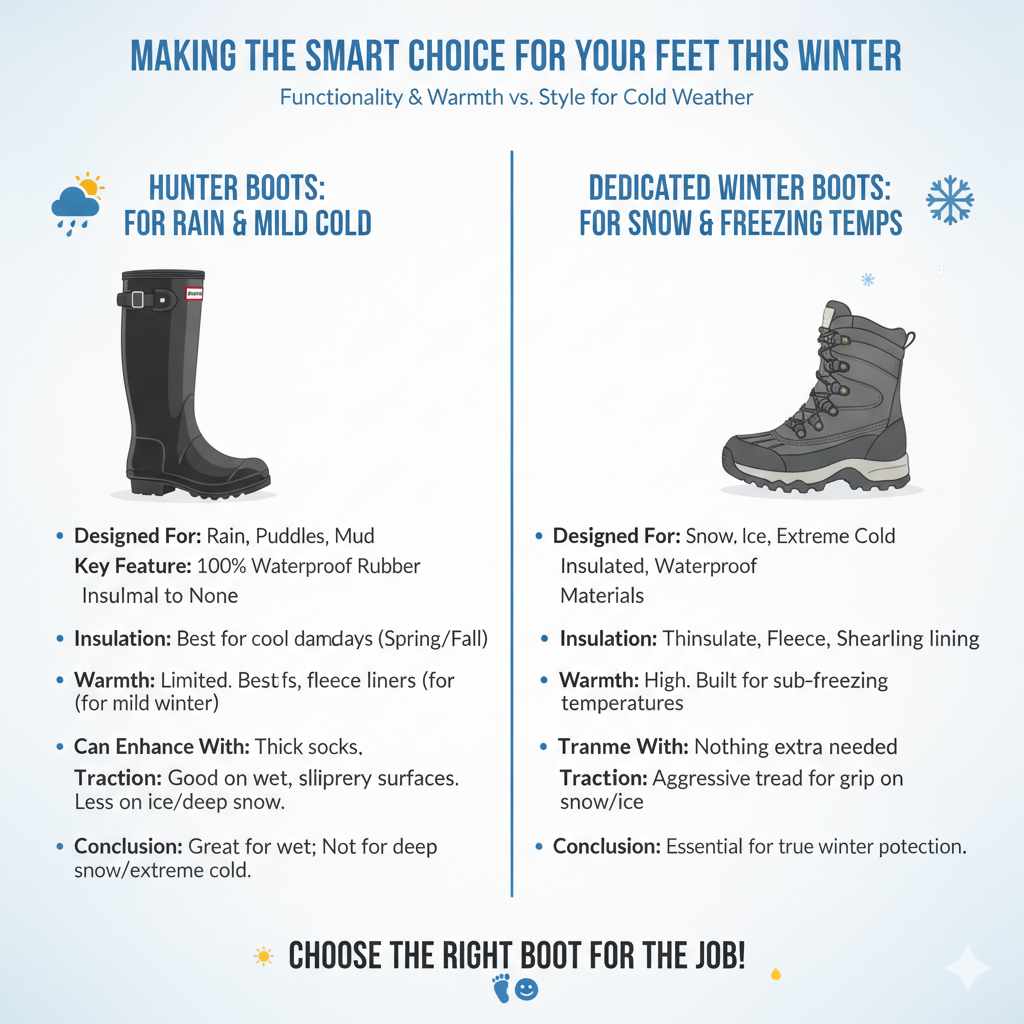
Making the Smart Choice for Your Feet This Winter
So, are Hunter boots warm enough for winter? The answer is generally no, not for serious winter conditions. They are fantastic for what they are designed for.
Keeping your feet dry in the rain. And looking stylish while doing it.
But when the temperature drops significantly. When snow and ice become a problem. You need boots with real insulation.
Boots built to handle the cold. You can enhance the warmth of Hunter boots. With thick socks and liners.
This can make them better for cooler, damp days.
However, for true winter protection. For deep snow, ice, and freezing temperatures. You’ll need to invest in dedicated winter boots.
These boots offer the insulation, traction, and warmth needed. To keep your feet safe and comfortable.
Think about where you live. And what your winter activities are. This will guide your choice.
Don’t let a stylish boot trick you. Functionality is key when it comes to winter weather. Keep your feet happy.
And warm. Choose the right boot for the job.
Frequently Asked Questions About Hunter Boots and Winter Warmth
Are Hunter boots good for snow?
Hunter boots are not ideal for deep snow. They are waterproof, which is good for slush. But they lack insulation.
They also don’t have the deep treads needed for traction on snow and ice. They can be worn in light snow if you add thick socks and liners, but they aren’t designed for it.
Can I wear thick socks with Hunter boots in winter?
Yes, wearing thick socks with Hunter boots is highly recommended if you plan to wear them in cooler weather. Wool or fleece-lined socks will add a layer of warmth and help trap body heat. This can make a noticeable difference, but it won’t make them true winter boots.
How cold can it get before Hunter boots are too cold?
Generally, if the temperature drops below 30-35°F (0-2°C), you’ll start to feel the cold in unlined Hunter boots. If you add thick socks and liners, you might be comfortable in slightly cooler temperatures, but for prolonged exposure or temperatures below 20°F (-7°C), they are too cold.
Do Hunter boots keep your feet dry in the snow?
Hunter boots will keep your feet dry from surface moisture like slush or wet ground. However, if you step into deep snow, it can easily get over the top. Also, they don’t have breathability, so if your feet sweat inside, that moisture can make them feel colder and damper.
What is the best way to add warmth to Hunter boots?
The best ways to add warmth are by wearing thick wool socks and using Hunter’s official fleece boot liners. Adding thermal insoles can also help insulate your feet from the cold ground. These methods increase comfort but do not fundamentally change the boot’s thermal properties.
Are there specific Hunter boots designed for winter?
Hunter does offer some styles that have more insulation than the classic Original boot. Look for terms like “insulated,” “fleece-lined,” or specific winter collections they might release. These are designed to be warmer than their standard rain boots but might still not match the performance of heavy-duty winter boots from specialized brands.
Conclusion
Hunter boots are a stylish staple for rainy days. They excel at keeping your feet dry. But for genuine winter warmth and protection, they usually fall short.
Consider adding liners and thick socks for cooler days. But for deep cold and snow, opt for specialized winter boots. Your comfort and safety depend on the right choice.