Are Coast Guard Helicopters Armed? Full Facts Explained
It’s a question that pops into your head when you see one of those impressive machines slicing through the sky. You know they’re involved in serious missions, but are they packing heat?
Thinking about Coast Guard helicopters and their gear can bring up a mix of curiosity and maybe a little bit of unease. After all, they’re there to help, but sometimes helping means dealing with tough situations. Let’s break down what’s really going on with their armaments and why it matters.
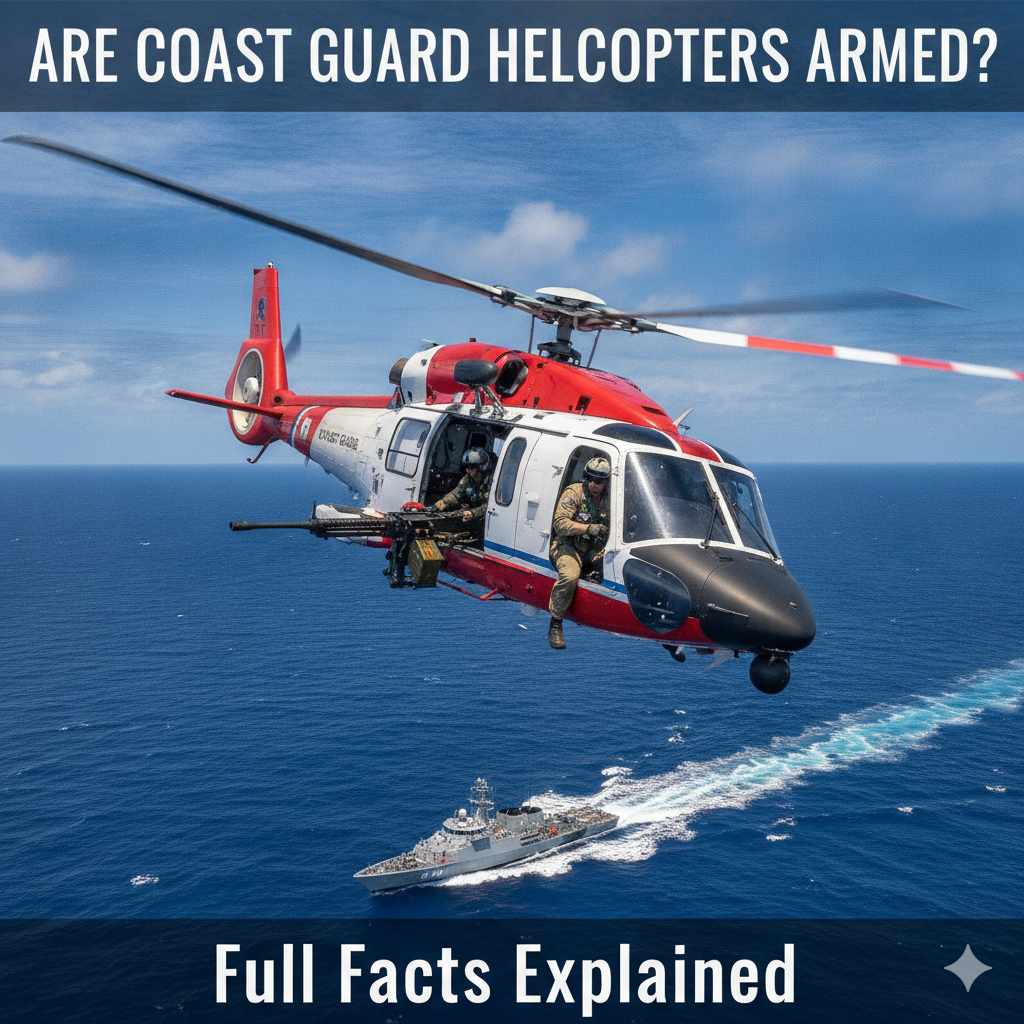
The U.S. Coast Guard uses armed helicopters for specific missions, primarily for self-defense and to support law enforcement and interdiction operations where threats are present. While not all helicopters are armed, those that are carry weapons like machine guns or specialized munitions. This arming is a carefully considered part of their operational necessity.
Understanding Coast Guard Helicopter Armaments
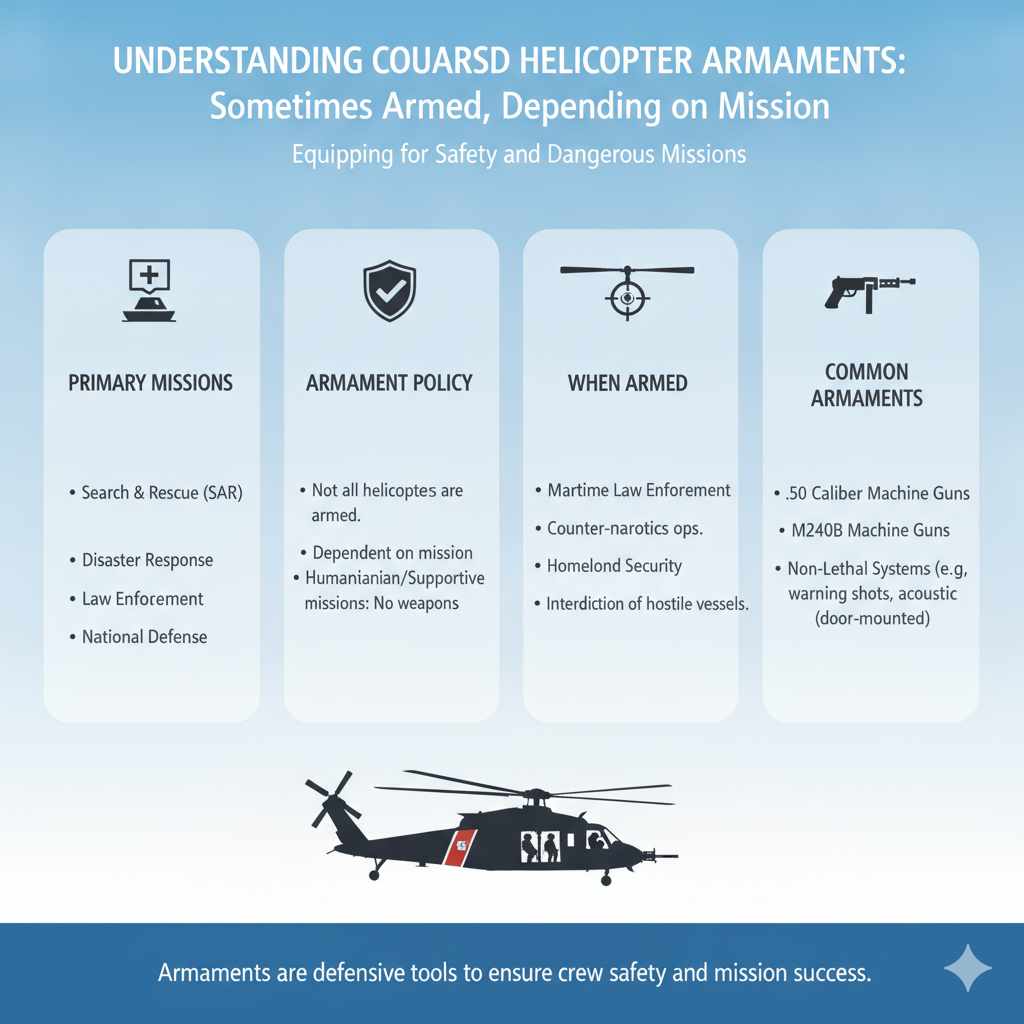
So, are Coast Guard helicopters armed? The short answer is: sometimes, and it depends on the mission. It’s not like every chopper that flies out is a gunship.
The U.S. Coast Guard uses its helicopters for a wide range of tasks. These include search and rescue, disaster response, maritime law enforcement, and national defense.
For many of these jobs, like searching for a lost boater or delivering aid after a storm, they don’t need any weapons. Their mission is purely humanitarian or supportive. However, when their duties involve confronting potential threats or protecting national interests, arming becomes a necessary consideration.
This isn’t about offensive power in the way you might think of a military aircraft. It’s more about having the tools to ensure the safety of the crew and to effectively carry out dangerous missions. Think of it as equipping them for the worst-case scenario when they might encounter hostile individuals or vessels.
Why Arming is Sometimes Necessary
The Coast Guard operates in a unique space. It’s a military branch, but it also has law enforcement authority. This dual role means they often find themselves in situations where they need to enforce laws at sea.
This can involve stopping drug smugglers, intercepting illegal fishing boats, or deterring piracy.
In these scenarios, the people they are dealing with might be armed and dangerous. The Coast Guard crew needs to be able to protect themselves and their aircraft. A helicopter is a valuable and expensive asset, and the lives of the crew are paramount.
Without defensive measures, attempting to interdict a vessel suspected of smuggling illegal narcotics could be incredibly dangerous. The helicopter might be fired upon. The crew needs the ability to respond if their lives or the success of the mission are threatened.
This is where the armaments come into play.
Types of Armament
When Coast Guard helicopters are armed, they typically carry specific types of weapons. These are usually mounted in a way that allows for defensive fire or to disable a target without necessarily causing catastrophic damage.
- Door Guns: Often, helicopters are equipped with machine guns mounted on the sides. These allow the crew to fire from the open doors.
- Forward-Firing Weapons: In some specialized cases, helicopters might have weapons like cannons or other armaments that can be fired forward.
- Non-Lethal Options: Sometimes, armaments might include less-lethal options to warn or disable a target without deadly force.
The specific weapons depend on the helicopter model and the intended mission profile.
A Personal Experience with Mission Readiness
I remember a time when I was working on a story about maritime security. I got a chance to visit a Coast Guard air station. The helicopters sitting on the tarmac looked impressive.
They were clean, powerful machines, ready for anything.
I was talking to a pilot, a seasoned guy named Commander Eva Rostova. She was explaining the different types of missions they handle. We were standing near an MH-60 Jayhawk helicopter.
It looked pretty standard. But then she pointed to something.
Near the open side door, there was a mount. It wasn’t holding a weapon then, but she explained it was designed for a .50 caliber machine gun. She spoke plainly about needing to be ready.
“We go out to help people,” she said, her voice calm but firm. “But sometimes, helping means facing down folks who don’t want to be caught. We need to protect ourselves, our aircraft, and the mission.”
She described a situation where they were on a drug interdiction patrol. A go-fast boat was spotted. As they approached, the boat’s crew started throwing things overboard and then, alarmingly, began shooting at the helicopter.
The pilot had to take evasive action, and the door gunner provided covering fire to deter the attack.
It wasn’t a Hollywood firefight, but it was real. The helicopter wasn’t there to start a war. It was there to enforce the law and ensure safety.
The weapons were a tool for defense and mission completion in a hostile environment. It really hammered home the point that the Coast Guard’s role is complex and requires them to be prepared for a variety of threats, not just the weather.
The Different Helicopter Models and Their Roles
The U.S. Coast Guard operates several types of helicopters, and their armaments vary based on their primary roles. Understanding these different models helps clarify why some are armed and others are not.
Coast Guard Helicopter Fleet Overview
MH-60 Jayhawk
Primary Use: Long-range search and rescue, law enforcement, maritime interdiction, homeland security.
Armament: Often equipped for self-defense and law enforcement missions. Can carry door-mounted machine guns (e.g., M240B or .50 caliber).
MH-65 Dolphin
Primary Use: Shorter-range search and rescue, port security, law enforcement.
Armament: Can be armed for law enforcement and self-defense, typically with door-mounted machine guns.
U.S. Military Auxiliary Fleet (Not Primary CG Aircraft)
Primary Use: The Coast Guard also utilizes helicopters from other branches of the U.S. military for specific, often more specialized or deployed, missions where their heavier armament may be leveraged.
Armament: Varies greatly depending on the military platform.
The MH-60 Jayhawk and MH-65 Dolphin are the workhorses of the Coast Guard aviation fleet. The “MH” designation itself is important. It signifies that these helicopters are “Multi-mission” aircraft, meaning they are designed and equipped to handle a variety of tasks, including those requiring armaments.
The Jayhawk, with its longer range, is frequently used for offshore patrols, drug interdictions, and extensive search and rescue operations far from shore. The Dolphin is often seen in more coastal operations, port security, and shorter-range rescue missions. Both can be outfitted with weapons systems depending on the specific orders for a flight or patrol.
It’s crucial to understand that these armaments are not always installed. They are typically added or removed based on the mission briefing. If a helicopter is assigned to a routine search and rescue mission in calm waters with no expected threats, it will likely fly without any weapons.
The decision to arm is a tactical one made by mission commanders.
When Are They Typically Armed?
Several types of operations significantly increase the likelihood that a Coast Guard helicopter will be armed:
High-Risk Mission Scenarios
- Drug Interdiction: The Coast Guard plays a massive role in stopping illegal drugs from entering the United States. This often involves pursuing and boarding vessels that may be actively resisting. Armed helicopters provide crucial support and a deterrent.
- Illegal Migrant Interdiction: Similar to drug interdiction, stopping large groups of migrants attempting to reach the U.S. illegally can involve dealing with dangerous sea conditions and potentially desperate individuals.
- Counter-Piracy Operations: In certain international waters, Coast Guard units may be involved in anti-piracy efforts. Pirates are often heavily armed and pose a direct threat.
- National Security Patrols: Protecting critical infrastructure, naval assets, or sensitive maritime areas can require an armed presence to deter or respond to threats.
- Search and Rescue in Hostile Environments: While rare, if a rescue operation takes place in an area known to be dangerous or occupied by hostile forces, armaments would be a safety measure.
For example, during a counter-narcotics patrol in the Caribbean, an MH-60 Jayhawk might be tasked with supporting a cutter. Its role could be to patrol the waters ahead of the ship, search for suspicious vessels, and be ready to respond if a target is identified. If the target vessel refuses to stop or poses a threat, the helicopter crew needs the means to defend themselves and potentially disable the fleeing craft.
The decision to arm is based on intelligence and risk assessment. If there’s a high probability of encountering resistance, armament is authorized. If the mission is purely humanitarian, like rescuing stranded hikers on a remote mountain, weapons would be unnecessary and would add weight and complexity to the aircraft.
What Does This Mean for the Public?
For most people, the Coast Guard is a symbol of safety and rescue. You see them on TV saving people from sinking boats or helping during hurricanes. This image is fundamentally correct and a core part of their mission.
However, understanding that their helicopters can be armed doesn’t change their primary purpose. It just highlights the complex reality of maritime law enforcement and national security. When you see a Coast Guard helicopter, it’s performing its duty, whatever that may be.
If it’s armed, it’s likely because the crew is facing a situation where protecting lives and enforcing laws requires them to have that capability. It’s a tool that allows them to do their job safely and effectively in challenging circumstances. It means they are prepared to deal with dangerous situations to keep our shores safer.
Normal vs. Concerning Observations
| Observation | Likely Scenario | When to Consider More |
|---|---|---|
| Coast Guard helicopter flying overhead during a storm or major rescue operation. | Standard search and rescue or disaster response. Focus is on saving lives. | None needed. This is their core job. |
| Coast Guard helicopter escorting a vessel or performing a low, slow pass over a suspicious boat. | Law enforcement or interdiction patrol. The helicopter may be armed for self-defense or to deter non-compliance. | Observe from a distance. Do not interfere with Coast Guard operations. |
| You hear reports of Coast Guard aircraft engaged in a pursuit or boarding action. | High-stakes law enforcement or interdiction. Armament is highly likely for crew and mission protection. | Stay informed through official channels. Avoid being in the operational area if possible. |
| A Coast Guard helicopter appears to be flying very erratically or firing weapons without an obvious threat. | Extremely rare and likely an emergency situation, training exercise with strict safety protocols, or a misunderstanding. | Report to local authorities or the Coast Guard if you witness something genuinely concerning that poses a risk to public safety. However, assume mission necessity first. |
Real-World Scenarios and Why Armament Matters
Let’s look at a couple of real-world scenarios to understand the practical application of armaments on Coast Guard helicopters.
Scenario 1: The Smuggler’s Run. Imagine a Coast Guard MH-65 Dolphin flying a patrol near the Florida Keys. They spot a small, fast boat heavily laden with what appears to be contraband. As the Dolphin approaches to assess the situation and potentially hail the vessel, the occupants of the small boat begin to jettison packages overboard, attempting to get rid of evidence.
Suddenly, one of the occupants pulls out a firearm and fires a shot in the direction of the helicopter. This is where the armament becomes critical. The Dolphin, equipped with a door-mounted M240B machine gun, can use its weapon system to suppress the threat.
The gunner can fire warning shots or provide suppressing fire to deter further aggression, allowing the pilot to maneuver safely and the crew to potentially board the vessel later or call for additional support. Without this capability, the Coast Guard crew would be extremely vulnerable, and the mission to stop illegal drugs might fail.
Scenario 2: Offshore Interdiction. An MH-60 Jayhawk is on a long-range interdiction mission hundreds of miles offshore, working with a Coast Guard cutter. They have been tracking a large fishing trawler suspected of engaging in illegal fishing and possibly trafficking. As they move in for a closer look, the trawler attempts to evade.
The Jayhawk crew is tasked with providing aerial support, observing the trawler’s movements, and being ready to respond if the situation escalates. If the trawler crew becomes hostile, perhaps by ramming the cutter or attempting to flee into international waters where jurisdiction is complex, the Jayhawk’s armed crew can provide a visible deterrent and, if necessary, disable the vessel’s propulsion to prevent escape. This isn’t about aggression; it’s about ensuring the Coast Guard can enforce U.S.
laws and international agreements even when faced with resistance on the high seas.
These scenarios highlight that the armaments are not for offensive warfare but are essential tools for law enforcement and protection in environments where threats are real and unpredictable. They allow the Coast Guard to uphold their responsibilities effectively and safely.
Quick Checks and What to Do
You’re not likely to be in a situation where you need to make split-second decisions about Coast Guard helicopter armaments. However, if you ever find yourself in proximity to a Coast Guard operation, especially one that seems tense, here are a few simple guidelines:
Navigating Coast Guard Operations
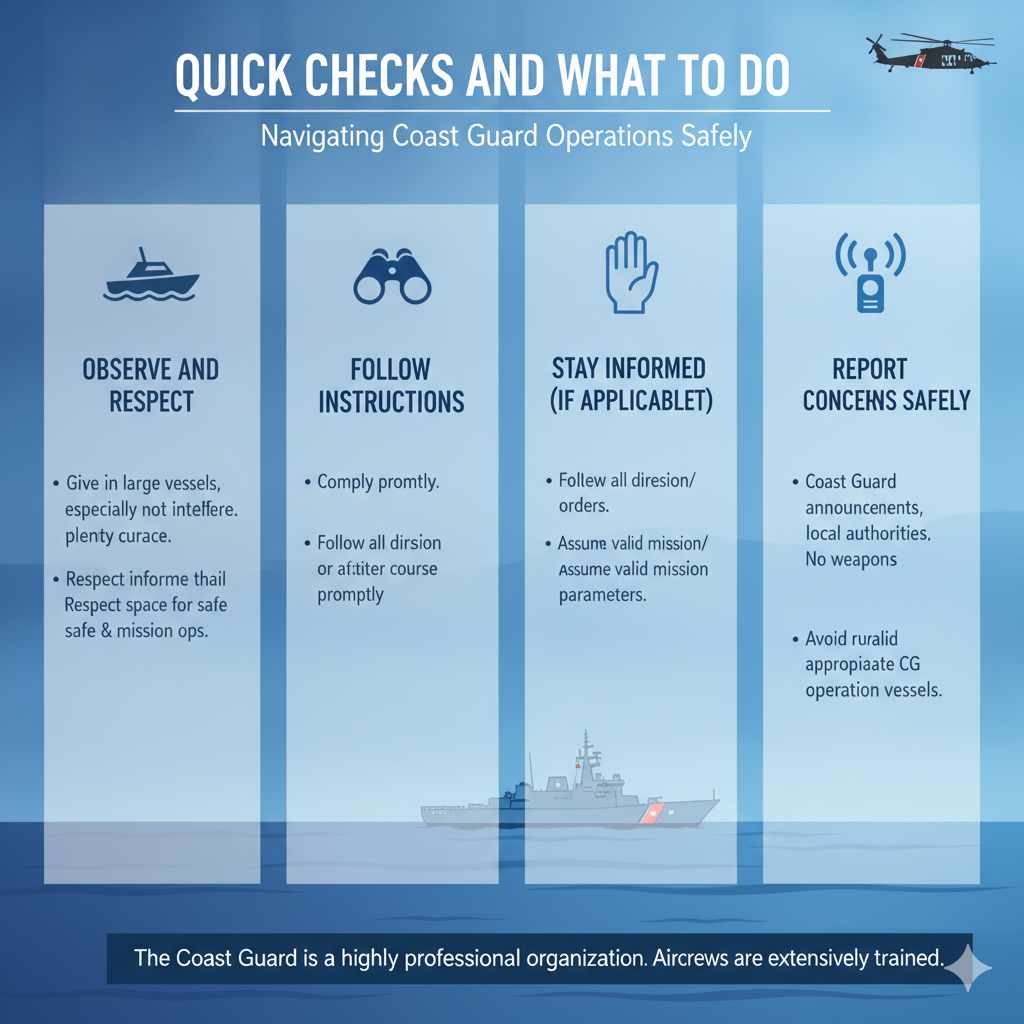
- Observe and Respect: If you see a Coast Guard helicopter, especially one that might be armed, maintain a safe distance. Do not approach them or try to interfere with their operations.
- Follow Instructions: If Coast Guard personnel give you directions or orders, follow them promptly and without question. They are operating under specific mission parameters.
- Stay Informed (If Applicable): If you are involved in a situation where Coast Guard operations are ongoing (e.g., a maritime event, a coastal security exercise), rely on official announcements from the Coast Guard or local authorities for information.
- Report Concerns Safely: If you witness something that you genuinely believe is a safety risk or a misuse of authority, report it to the appropriate Coast Guard command or local law enforcement. However, always assume a valid operational reason for their actions first.
It’s important to remember that the Coast Guard is a highly professional organization. Their aircrews undergo extensive training not only in flying and rescue techniques but also in the rules of engagement and the responsible use of force. The decision to employ weapons is never taken lightly.
Frequently Asked Questions About Coast Guard Helicopters
Here are some common questions people have about Coast Guard helicopters and their capabilities:
Are all Coast Guard helicopters armed?
No, not all Coast Guard helicopters are armed. Armament is mission-dependent. Helicopters assigned to law enforcement, interdiction, or national security patrols are more likely to be equipped with weapons than those performing purely humanitarian missions like search and rescue.
What kinds of weapons do Coast Guard helicopters carry?
The most common armaments are door-mounted machine guns, such as the M240B (7.62mm) or .50 caliber heavy machine guns. These are primarily for self-defense and to support law enforcement actions.
Do they use these weapons offensively?
The primary role of armaments on Coast Guard helicopters is defensive and for law enforcement support. They are used to deter threats, protect the crew and aircraft, and disable vessels that are actively resisting lawful orders, rather than for offensive combat operations.
Can a Coast Guard helicopter fire on a boat that is just trying to escape?
The use of force is governed by strict rules of engagement. If a vessel is simply trying to escape without posing a threat, lethal force is generally not authorized. However, if the escape attempt involves dangerous maneuvers, endangering lives, or if the vessel is known to be involved in illicit activities and is resisting lawful interdiction, then graduated force, including disabling fire, might be considered.
What happens if a Coast Guard helicopter fires its weapons?
Any use of force by Coast Guard personnel is subject to thorough review. If a weapon is fired, an investigation is conducted to ensure adherence to rules of engagement and policies. This process ensures accountability and maintains public trust.
Are the weapons on Coast Guard helicopters the same as military helicopters?
While there can be overlap in the types of weapons (e.g., .50 caliber machine guns), the way they are employed and the rules of engagement differ. Military helicopters might be configured for direct combat, whereas Coast Guard armaments are typically focused on law enforcement, self-defense, and disabling fleeing vessels.
How are decisions made about arming a helicopter?
The decision is made by mission commanders based on risk assessment, intelligence, and the nature of the operation. Factors include the likelihood of encountering hostile individuals, the presence of contraband or illegal activity, and the need to protect crew members and assets.
Final Thoughts on Readiness
So, yes, U.S. Coast Guard helicopters can be armed. It’s not a constant state of affairs, but a carefully considered operational requirement.
It speaks to the broad scope of their duties, from saving lives in harsh weather to enforcing laws at sea against dangerous adversaries.
Understanding this aspect of their operations helps paint a more complete picture of the Coast Guard’s vital role in keeping our coasts and waters safe. They are prepared for whatever the maritime world throws at them.