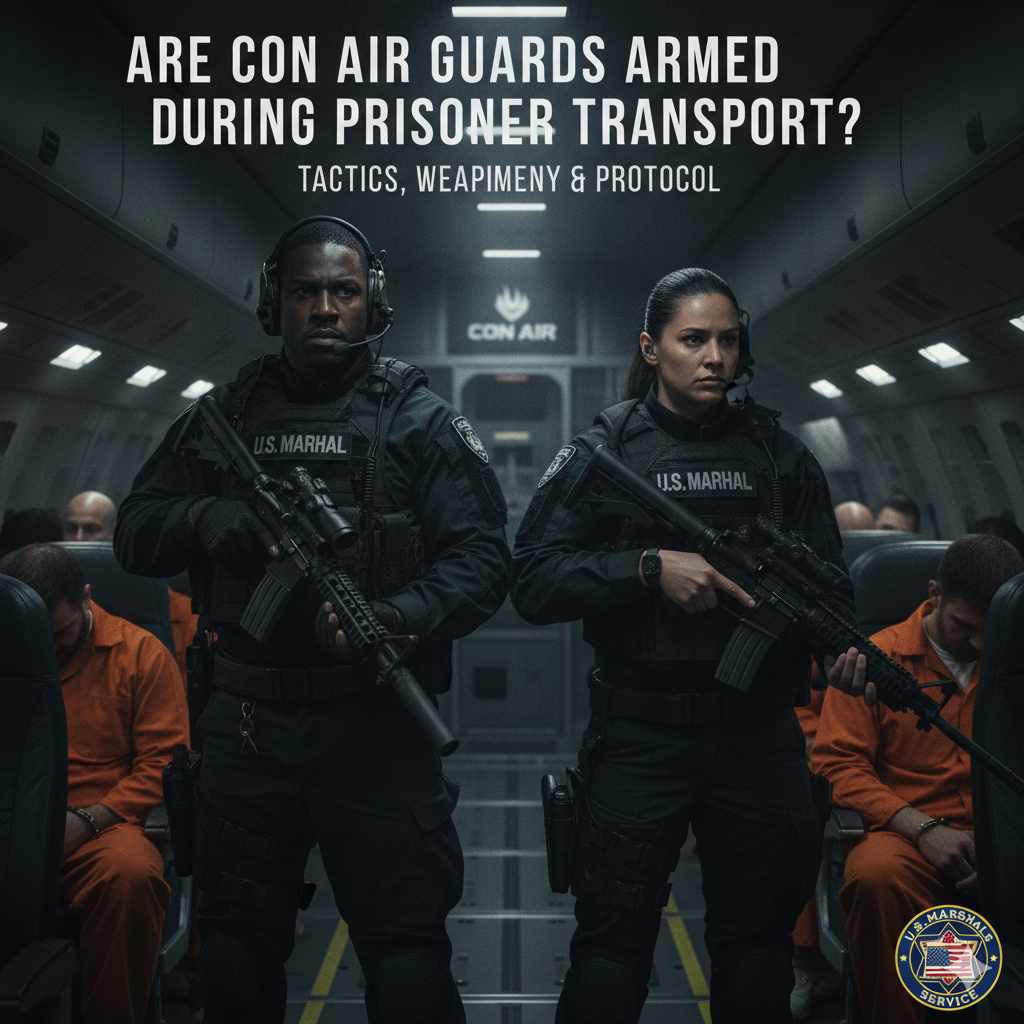
Are Con Air Guards Armed During Prisoner Transport?
Con Air guards are not typically armed with firearms during prisoner transport. Security relies on a layered approach including highly trained personnel, strict protocols, and a controlled environment, rather than individual guard weaponry.
For a related rules or safety question, Are Tomb Guards Armed At The Unknown Soldier? gives readers more context before making assumptions.
For a related rules or safety question, Are Guards In U.S. Embassies Armed? gives readers more context before making assumptions.
For a related rules or safety question, Are Federal Prison Guards Armed On Duty? gives readers more context before making assumptions.
Understanding the U.S. Marshals Service Aviation Program
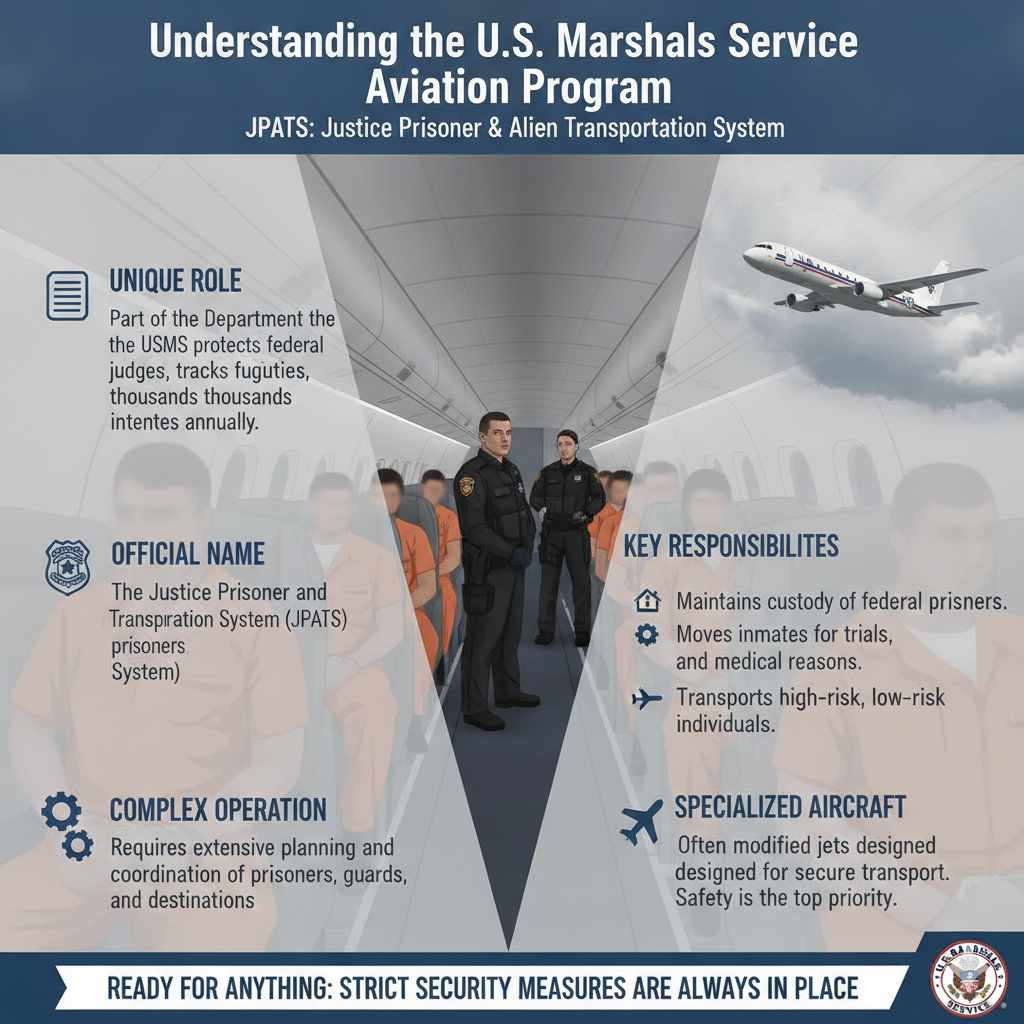
When people say “Con Air,” they usually mean the U.S. Marshals Service (USMS) Aviation Directorate. This is the main group that flies prisoners.
They move thousands of inmates every year across the country. The goal is to get prisoners from one jail or court to another safely. This happens for various reasons, like trials or prison transfers.
The USMS is part of the Department of Justice. They have a big job. They are responsible for a lot of things.
This includes protecting federal judges and witnesses. They also track down fugitives. So, flying prisoners is just one piece of their puzzle.
It’s a very important piece, though.
The program is called the Justice Prisoner and Alien Transportation System (JPATS). This is the official name. It’s been running for many years.
It’s a very complex operation. It requires a lot of planning and coordination. Think about all the moving parts.
You have the prisoners, the guards, the pilots, and the destination. Everything needs to work perfectly.
The types of prisoners flown vary greatly. Some might be low-risk. Others could be extremely dangerous.
This is why the security measures are so strict. They have to be ready for anything. The program operates aircraft.
These are often modified jets. They are designed specifically for this purpose. Safety is the top priority at all times.
Security Layers in Prisoner Transport
The idea that armed guards might be needed on every flight is common. But the reality is different. The U.S.
Marshals have a very detailed system. It’s all about layers of security. This makes it very hard for a prisoner to escape or cause trouble.
First, there are the people involved. The guards themselves are highly trained. They are not just regular guards.
They are deputy U.S. Marshals or contract security officers. They undergo special training.
This training focuses on handling difficult inmates. It also covers emergency procedures. They learn how to de-escalate situations.
They also know how to use restraint techniques.
The prisoners are also screened very carefully. Before they even get near a plane, they are searched. This is done thoroughly.
They check for weapons or anything that could be used as one. They might use metal detectors. They might also use pat-downs.
The goal is to remove any threats before they become a problem.
The aircraft themselves are also part of the security. They are not like your average commercial plane. They have special features.
These are designed to keep prisoners contained. They often have reinforced seating. There are also secure holding areas within the cabin.
This limits a prisoner’s movement and access.
There are also rules about who can be on the flight. It’s not a free-for-all. Only authorized personnel are allowed on board.
This includes the flight crew and the security team. The number of guards on a flight depends on the risk level of the prisoners. More dangerous prisoners mean more guards.
Why Individual Guard Firearm Use is Limited
You might ask why the guards don’t just carry guns. It seems like a simple solution. But it’s more complicated than that.
Having firearms on board an aircraft can create its own risks. There are many reasons for this.
One big concern is accidental discharge. In a confined space like an airplane cabin, a stray bullet could be disastrous. It could hit a guard, another prisoner, or even a crew member.
It could also damage the aircraft. This would put everyone in extreme danger.
Another issue is the potential for a weapon to be taken. If a prisoner managed to get hold of a guard’s firearm, it would be a very serious situation. This would turn a transport issue into a major security crisis.
The layers of security are designed to prevent this from ever happening.
The focus is on containment and control, not on armed confrontation. The guards are trained to use their training and the plane’s design to manage prisoners. They use handcuffs, leg restraints, and belly chains.
These are very effective. They prevent prisoners from moving freely or attacking anyone.
Think about it like this: the plane is a flying jail cell. The guards are the wardens of that cell. Their job is to maintain order within that space.
They are trained for that specific environment. They are not out in the field facing immediate threats. They are in a controlled setting.
So, while it might seem counterintuitive, the lack of individual firearms for guards is part of the overall strategy. It’s a calculated decision based on risk assessment. The U.S.
Marshals Service has decades of experience. They have refined these methods over time. Their system is proven to be effective.
This is not to say that the guards are defenseless. They are highly trained in physical control. They are also trained in using less-lethal force if absolutely necessary.
But their primary tools are their skills and the controlled environment of the aircraft.
JPATS Security Snapshot
- Personnel: Highly trained Deputy U.S. Marshals or contract security officers.
- Prisoner Screening: Thorough searches for weapons and contraband before boarding.
- Aircraft Design: Modified jets with secure holding areas and reinforced features.
- Restraints: Use of handcuffs, leg restraints, and belly chains.
- Protocol: Strict rules and procedures for boarding, flight, and disembarking.
The Role of Training and Expertise
The people who work on JPATS flights are not just anyone. They are selected for their skills. They are then put through rigorous training.
This is a critical part of the security. Their expertise is what keeps the system working.
Deputy U.S. Marshals, for instance, are federal law enforcement officers. They have extensive training in firearms, defensive tactics, and prisoner handling.
When they are assigned to the Aviation Directorate, they receive even more specialized training. This includes aircraft-specific procedures.
They learn how to manage a diverse group of prisoners. This could include individuals with mental health issues. It could also include those with a history of violence.
The training teaches them how to read body language. It helps them identify potential problems before they happen. They are taught how to communicate effectively, even under stress.
Contract security officers also go through a similar vetting process. They must meet specific qualifications. Then, they receive training from the U.S.
Marshals Service. This ensures they all operate under the same high standards. Consistency is key in these operations.
A big part of their training involves emergency response. What happens if there’s a medical emergency? What if a prisoner becomes violent?
What if there’s a mechanical issue with the plane? They are drilled on these scenarios. They practice responding quickly and efficiently.
This training isn’t a one-time thing. It’s ongoing. Security threats can change.
Tactics can evolve. The Marshals Service ensures its personnel stay up-to-date. They have regular refreshers and advanced training sessions.
This keeps their skills sharp and their knowledge current.
The expertise of these individuals is their primary weapon. It’s their calm demeanor, their quick thinking, and their knowledge of procedure that prevent most issues. They are professionals.
They handle tense situations every day. This makes the absence of firearms on each guard less concerning to those who understand the system.
Guard Training Focus Areas
Subject: Prisoner Management Techniques
Focus: De-escalation, physical restraints, situational awareness.
Subject: Aircraft Security Protocols
Focus: Boarding, in-flight procedures, emergency landings.
Subject: Medical Emergency Response
Focus: First aid, recognizing distress, coordinating with medical professionals.
The Role of Air Marshals
Now, it’s important to distinguish between the guards responsible for the prisoners and Air Marshals. Air Marshals are different. They are federal agents whose specific job is to fly on commercial flights.
They are there to prevent terrorism and other crimes in the air.
These Air Marshals are armed. They are highly trained law enforcement officers. They carry firearms.
Their mission is to protect the aircraft and its passengers from threats. So, on a commercial flight, you might have armed personnel.
But on a JPATS flight, the primary security is handled by the USMS personnel directly involved with the prisoners. The focus is different. It’s about managing a contained group of inmates.
It’s not about preventing a surprise attack from an unknown entity in the general passenger area.
The U.S. Marshals Service does have its own Aviation Support section. These are specialized teams.
They can provide additional security if needed. This might happen for very high-risk transports. But even then, the primary guards on the plane are typically not armed with firearms.
The presence of Air Marshals on unrelated flights highlights how security measures are tailored to specific threats and environments. A flight carrying the general public has different security needs than a flight dedicated to moving inmates. The USMS understands this distinction clearly.
So, when you think about “Con Air,” remember it’s a specialized operation. It has its own rules and its own methods. It’s not just a random airplane with guards.
It’s a carefully managed system designed for a specific purpose. And that purpose prioritizes a different set of security tools.
Factors Influencing Security Levels
Not all prisoner transports are the same. The level of security and the number of personnel involved can change. Several factors play a role in this.
The U.S. Marshals Service assesses each situation carefully.
The risk assessment of the prisoners is key. Are they violent offenders? Do they have a history of escape attempts?
Are they considered a flight risk? The answers to these questions determine how many guards are assigned. It also affects the types of restraints used.
The destination and the purpose of the transport also matter. Are they going to a maximum-security prison? Are they being moved for a court appearance in a high-profile case?
These details can influence security planning.
The type of aircraft being used can also be a factor. Some planes might be better suited for high-risk transports. They might have more secure compartments or better visibility for the guards.
The presence of any special intelligence is also considered. If there’s information suggesting a potential threat, more security might be deployed. This could include additional personnel or special equipment.
Even the route and the time of day can be taken into account. This is all part of a comprehensive security plan. It’s designed to minimize risks at every step.
For example, a flight carrying a single, low-risk inmate to a local jail will have a very different security setup than a flight carrying multiple dangerous individuals to different federal penitentiaries. The U.S. Marshals Service is adept at tailoring their approach.
This flexibility is a strength. It allows them to adapt to changing circumstances. It ensures that resources are used effectively.
Most importantly, it helps maintain the safety of everyone involved. It’s a dynamic process, not a static one.
Risk Factor Checklist (Internal Assessment)
Prisoner Profile:
- Prior escape attempts: Yes/No
- History of violence: Yes/No
- Gang affiliation: Yes/No
- Mental health concerns: Yes/No
Transport Details:
- Number of inmates: 1 to 5+
- Security classification: Low, Medium, High, Maximum
- Duration of flight: Short, Medium, Long
Real-World Scenarios and Observations
I remember a time years ago when I had a friend who worked for a private security firm. They sometimes contracted with government agencies for prisoner transport. He told me stories, always carefully vague, about the lengths they went to.
He emphasized that it was less about brute force and more about meticulous planning.
He described how the guards knew the plane inside and out. They knew every nook and cranny. They had specific roles.
One guard might be positioned near the front. Another would be at the back. They communicated constantly, often with subtle hand signals.
He once mentioned a situation where a prisoner started acting up. It wasn’t violent, but it was disruptive. Instead of a big, loud confrontation, the guards worked together.
They used their training. They calmly moved the prisoner. They spoke to him in a low voice.
Within minutes, the situation was under control. No shouting. No panic.
Just professional handling.
What struck me most was his description of the plane itself. He said it felt more like a secure facility than a passenger jet. The seating was different.
The windows might have been smaller or reinforced. There were no overhead bins for passengers to access easily. Everything was designed to prevent escape or unauthorized movement.
He also talked about the importance of the crew. The pilots and flight attendants on these flights were not typical commercial airline staff. They were often former military or had specialized training themselves.
They were part of the security team in a broader sense. They knew the protocols. They knew what to do in an emergency.
This personal account really drove home the point. The absence of firearms on individual guards isn’t a sign of lax security. It’s a sign of a highly specialized and well-rehearsed system.
The focus is on preventing problems before they start and managing them effectively if they do arise, all within a controlled environment.
What This Means for the Public
For the average person, the security protocols around “Con Air” don’t directly affect daily life. You’re not going to encounter these flights at your local airport. They operate on private, often unmarked, aircraft.
They use secure facilities for boarding and disembarking.
However, understanding these security measures can be reassuring. It shows that there are dedicated professionals working to maintain safety. It highlights that government agencies have robust plans for managing challenging situations.
The focus on training, protocol, and the controlled environment is designed for a specific purpose: to move prisoners safely and securely. It’s a system built on expertise and risk management. It’s not based on the idea of armed guards having to shoot their way through a problem.
If you ever see news reports or hear discussions about prisoner transport, you can now have a clearer picture. It’s not just about putting inmates on a plane. It’s a complex logistical and security operation.
The U.S. Marshals Service takes its responsibility very seriously.
The emphasis on non-firearm solutions in this context is a testament to effective security planning. It shows that there are multiple ways to ensure safety. Sometimes, the best approach involves sophisticated training and strict procedures rather than relying solely on weapons.
When to Be Concerned (and When Not To Be)
It’s natural to feel a bit uneasy when thinking about prisoners being transported. But in the context of the U.S. Marshals Service JPATS program, excessive worry is usually not needed.
You generally do not need to be concerned about the security of these flights. The system is designed by experienced professionals. They have a proven track record.
The goal is always to prevent incidents. They have multiple layers of security to achieve this.
When might there be cause for concern? It would be if there were credible reports of a breakdown in security protocols. For instance, if there was a confirmed escape attempt during transport.
Or if there were widespread, verified complaints about mistreatment or inadequate safety measures. But these are rare occurrences, and the USMS has systems in place to investigate and address them.
The general public doesn’t typically interact with these flights. They are not a part of commercial air travel. So, the security measures in place are not something you need to factor into your own travel plans or safety concerns.
The system is robust. It is constantly reviewed and updated. The U.S.
Marshals Service is accountable for its operations. They work with other law enforcement agencies. This ensures a high standard of safety and security.
You can trust that trained professionals are managing these transports.
Quick Tips for Understanding Prisoner Transport Security
Here are a few key takeaways to remember:
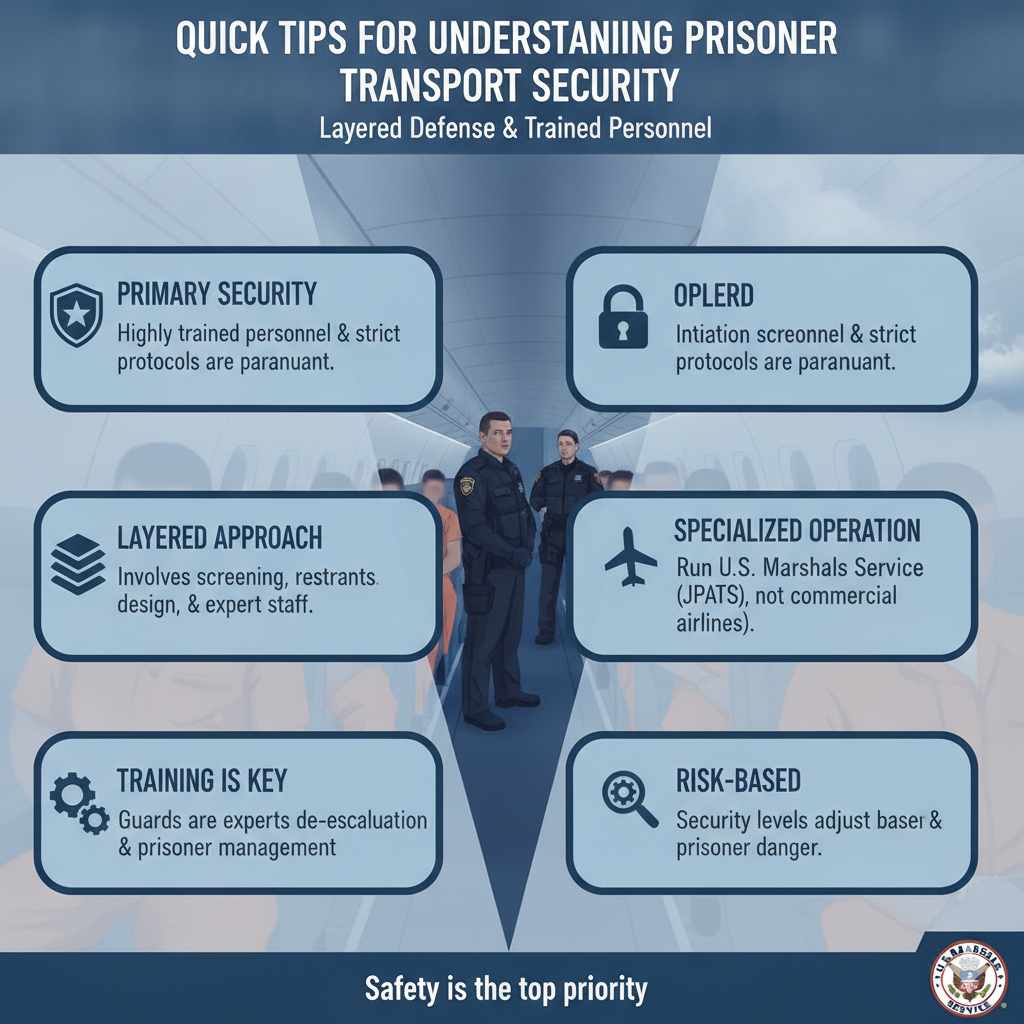
- Primary Security: It comes from highly trained personnel and strict protocols, not individual guard firearms.
- Layered Approach: Security involves screening, restraints, aircraft design, and expert staff.
- Specialized Operation: “Con Air” is run by the U.S. Marshals Service (JPATS), not commercial airlines.
- Training is Key: Guards are expertly trained in de-escalation and prisoner management.
- Risk-Based: Security levels are adjusted based on the danger posed by the prisoners.
Frequently Asked Questions About “Con Air” Security
Are the guards on “Con Air” flights allowed to carry weapons?
Typically, the guards directly responsible for the prisoners on U.S. Marshals Service flights (JPATS) are not armed with firearms. Their security relies on extensive training, specialized aircraft, and strict protocols, rather than individual guard weaponry.
What kind of training do these guards receive?
The guards, often Deputy U.S. Marshals or contract security officers, undergo rigorous specialized training. This includes prisoner management, de-escalation techniques, physical restraints, and aircraft-specific emergency procedures.
Why aren’t firearms used if prisoners are dangerous?
The risk of accidental discharge in a confined aircraft, the potential for a weapon to be taken by a prisoner, and the focus on containment are key reasons. Security prioritizes prevention and control through training and environment, rather than armed confrontation.
How do they control dangerous prisoners without guns?
Control is achieved through a combination of highly trained personnel, effective restraint devices like handcuffs and leg chains, secure aircraft design, and strict adherence to operational protocols. Their expertise in managing difficult situations is the primary tool.
Are “Air Marshals” on these flights?
Air Marshals are typically found on commercial passenger flights to prevent terrorism. The guards on U.S. Marshals Service prisoner transport flights are specialized personnel focused on inmate management, and they are not usually armed with firearms.
What happens if there’s an emergency during a flight?
The flight crews and security personnel are trained to handle various emergencies, including medical issues and security breaches. They follow strict protocols to ensure the safety of everyone on board, often coordinating with ground authorities.
Final Thoughts on “Con Air” Security
It’s clear that the security for prisoner transport, often called “Con Air,” is a highly sophisticated operation. The U.S. Marshals Service employs a multi-layered strategy.
This relies heavily on trained personnel and controlled environments.
While the idea of armed guards might seem like the obvious solution, the reality is more nuanced. The program’s success comes from its emphasis on prevention, expert management, and the secure design of its operations. It’s a system built for safety and efficiency.