Armed Forces vs National Guard: What’s the Real Difference?
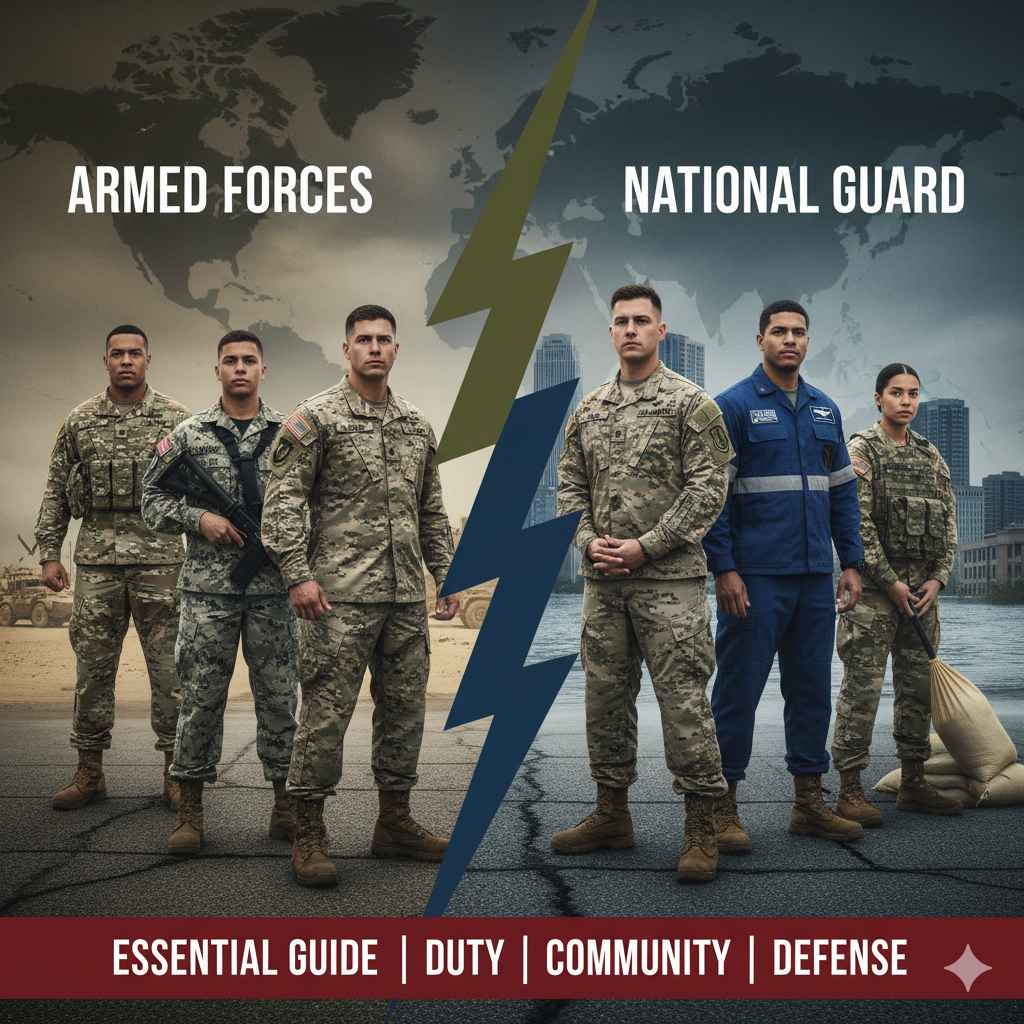
The National Guard is legally part of the U.S. Armed Forces, not separate from it — the real distinction is Active Duty (full-time, federal-only) vs. the Guard (part-time, dual state/federal command). Active Duty forces deploy globally under federal command for extended periods; the Guard serves both state emergencies and federal missions, offering a bridge between civilian life and military service. For a very different kind of armed-duty comparison, see how ceremonial vs. active-duty status changes weapon readiness for British Royal Guards.
Have you ever wondered about the difference between the military branches and the National Guard? It’s a common point of confusion for people new to military concepts. When you hear about service, you often hear terms like “Army” or “Marines,” but then the “National Guard” pops up, and things get fuzzy. Don’t worry! This isn’t as complicated as it sounds. We are here to break down these terms clearly, using simple language so you can understand exactly who does what. By the end of this guide, you will know the roles, commitments, and benefits of each. Let’s clear up this mystery together!
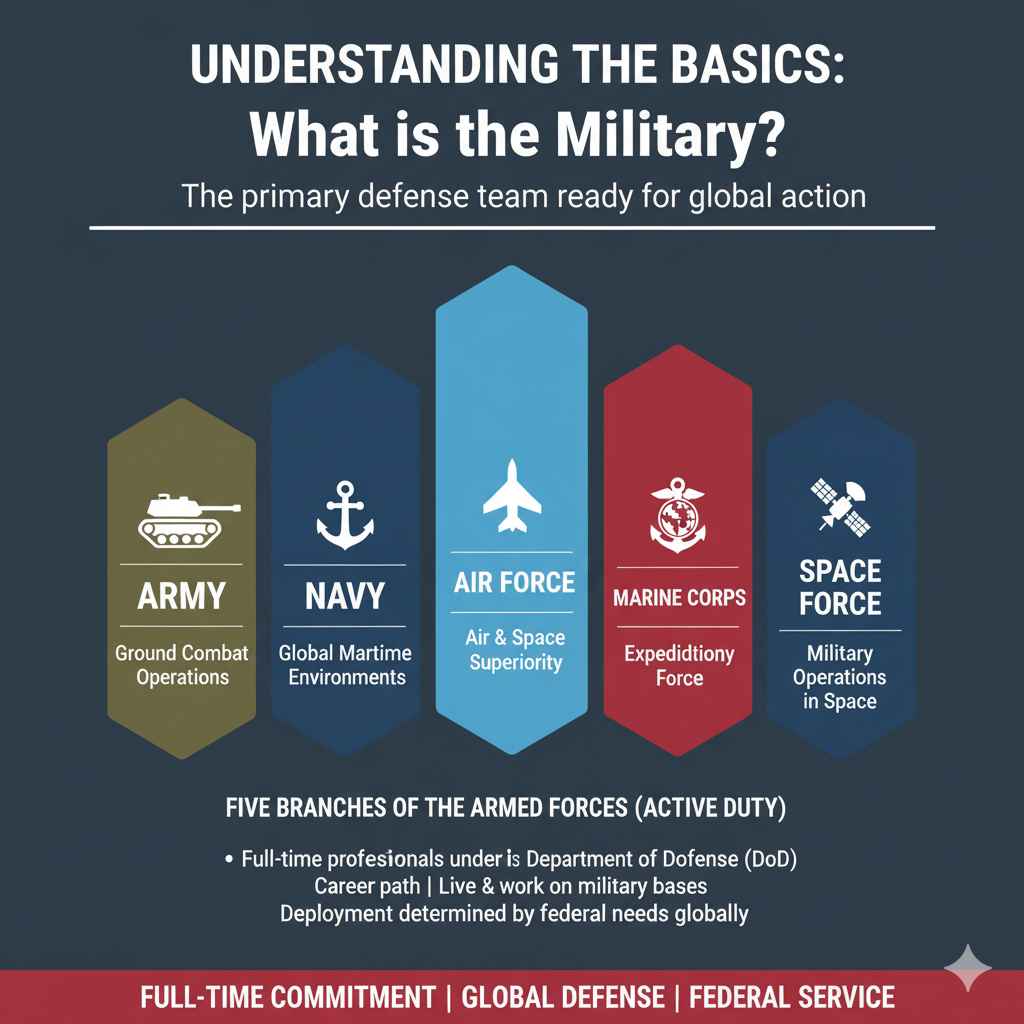
Understanding the Basics: What is the Military?
When most people talk about the military, they are usually thinking about the larger structure called the Armed Forces. These are the full-time professionals who dedicate their lives to service. Think of them as the primary defense team ready for global action.
The Five Branches of the Armed Forces (Active Duty)
The term “Armed Forces” generally refers to the uniformed services operating under the Department of Defense (DoD). These members are full-time employees of the federal government.
Here are the main branches under this umbrella:
- Army: Primarily focused on ground combat operations.
- Navy: Operates on the seas and in global maritime environments.
- Air Force: Responsible for air and space superiority.
- Marine Corps: An expeditionary force, often working closely with the Navy.
- Space Force: The newest branch, focused on military operations in space.
These branches offer a career path where military service is your full-time job. You live and work on military bases, and your deployment schedule is determined by federal needs around the world.
What Exactly is the National Guard?
The National Guard is unique because it is often described as having a “dual role.” It is America’s oldest fighting force, with roots going back to the original colonial militias. Unlike the fully federalized Active Duty forces, the Guard answers to two bosses: the State Governor and the President of the United States.
The Dual Mission of the National Guard
This dual identity is the key feature separating the Guard from the Active Duty components.
1. State Mission (The Governor’s Call)
When a natural disaster strikes—like a hurricane, major flood, or civil disturbance—the Governor of the state can call up the National Guard units within their jurisdiction. In this role, they are serving their community and state.
For example, if a major blizzard hits Texas, the Texas National Guard units are activated by the Governor to help with search and rescue, opening shelters, and clearing roads. This is domestic support.
2. Federal Mission (The President’s Call)
The President can activate the National Guard for federal missions. This means they can be deployed overseas to support ongoing military operations, just like Active Duty troops. However, they usually serve in shorter, defined deployments (often one year or less).
The Guard components are organized into the Army National Guard and the Air National Guard, aligning with the larger Army and Air Force structures.
Key Differences: Armed Forces vs. National Guard
To help you see the contrast clearly, let’s look at the major decision points that separate these service options. This is where beginners often need the most clarity.
Commitment and Full-Time Status
The biggest lifestyle difference is the commitment level required.
- Active Duty (Armed Forces): This is a full-time career commitment. Members live on base, receive their full pay and benefits year-round, and are on call 24/7 for federal deployment worldwide.
- National Guard/Reserves: This is typically a part-time commitment. Service members usually drill one weekend per month and attend two weeks of training each year. They hold civilian jobs during the week.
Deployment Frequency and Location
Where you might serve and how often you might leave home differs significantly.
Active Duty members are stationed at a specific duty station but can be deployed anywhere in the world on short notice. The Guard structure allows members to remain close to their homes and families most of the time, only leaving for shorter federal tours or state emergencies.
For more official details on federal mobilization policies, you can always refer to the Department of Defense website regarding reserve component mobilization authorities, though we aim to keep this discussion simple here.
Chain of Command
Who gives the orders is a critical distinction.
- Active Duty: Always under federal control and answers up the chain of command ending with the President.
- National Guard: Under the Governor’s command for state duty. Under the President’s command for federal duty.
Comparison Table: Guard vs. Active Duty
This table summarizes the core differences in commitment and structure.
| Feature | Active Duty (Armed Forces) | National Guard |
|---|---|---|
| Primary Status | Full-Time Employment | Part-Time Service (with full-time potential) |
| Primary Commander | The President (Federal) | State Governor (State) or President (Federal) |
| Typical Drill Schedule | None (Always working) | One weekend per month, two weeks per year |
| Primary Focus | Global Readiness and Federal Missions | State Support & Federal Contingency |
| Duty Station | Assigned military base | Typically live at home; drill at local armory/base |
Benefits and Compensation: What Does Each Offer?
Both paths offer excellent benefits, but the way they are delivered differs based on the commitment level.
Active Duty Benefits
Because Active Duty is a full-time job, the compensation package is comprehensive and immediate.
- Salary: Consistent monthly base pay, plus allowances (housing, food).
- Healthcare: Full medical, dental, and vision coverage (Tricare) immediately upon entry for the service member and dependents.
- Retirement: Eligibility for full military retirement after 20 years of service.
- Housing: Access to on-base housing or substantial Basic Allowance for Housing (BAH) payments.
National Guard Benefits
Guard members earn pay and benefits based on their time served (drill days and training periods), plus significant educational support.
Guard members earn retirement credits based on their service time, but they generally need 20 “retirement points” (which takes many years of drills and annual training) to qualify for a retirement pension.
Key Guard Educational Benefits
The Guard is extremely popular for those wanting to pursue higher education while serving.
- GI Bill: Guard members earn eligibility for the Post-9/11 GI Bill based on their total active duty time (usually federal deployments).
- State Tuition Assistance: Many states offer tuition assistance programs that help pay for college tuition even before federal eligibility kicks in. This is a major perk often unavailable to Active Duty personnel.
- Student Loan Repayment: Specific Guard enlistment contracts often offer student loan repayment options up to a certain amount.
Choosing Your Path: Which Option Is Right for You?
Deciding between Active Duty and the National Guard is a personal choice based on your life goals, financial needs, and tolerance for relocation.
Consider Active Duty If:
If you want to jump into military life completely, Active Duty might be your fit.
- You want military service to be your full-time career from day one.
- You are ready to relocate often based on assignments.
- You prioritize immediate, comprehensive healthcare coverage for your family.
- You prefer a structured, high-tempo environment where you are deployed globally.
Consider the National Guard If:
The Guard is often the perfect choice for those balancing service with other responsibilities.
- You want to serve your country while staying near your home community and current job/school.
- You are currently enrolled in college and need to maintain a flexible schedule.
- You desire federal benefits but prefer not to commit to frequent, long-term overseas deployments right away.
- You are interested in state-level emergency response roles (like flood relief or disaster management).
The Reserves vs. The National Guard: A Quick Note
While we are focused on Active Duty versus the Guard, it is helpful to briefly mention the Reserves, as they are often grouped together. Both the Guard and Reserves are “Reserve Components,” meaning they are part-time.
The key difference is that the Reserves are exclusively federal forces, answering only to the President, while the Guard maintains that dual state/federal identity.
| Component | Primary Chain of Command | Focus |
|---|---|---|
| Active Duty | Federal (DoD) | Global Operations |
| National Guard | State Governor & Federal (President) | State Emergencies & Federal Missions |
| Reserves (e.g., Army Reserve) | Federal (President) | Federal Contingency Support (No State Mission) |
Step-by-Step: How Does a Guard Member Get Deployed Federally?
It’s important to know that even though Guard members drill locally, they can still deploy overseas. Here is a simplified look at how that process works when the President calls upon them.
1. Federal Mobilization Order
The President authorizes the Secretary of Defense to call up specific National Guard units needed for a federal mission (e.g., an overseas contingency operation or a national emergency).
2. State Governor Approval
Even though the mobilization is federal, the state’s Adjutant General must process the order through the Governor. If the Governor disagrees with the deployment’s necessity for national security, they can occasionally protest, though federal authority usually prevails in matters of national defense.
3. Pre-Deployment Training (AT/Annual Training Conversion)
Once mobilized, the unit will usually go to a larger federal base for 30 to 90 days of intense training (called “Pre-Mobilization Training”). This brings the unit up to the same standards and equips them for the specific mission they are about to undertake, often involving training alongside Active Duty units.
4. Deployment
The unit deploys overseas or to a specified federal location for the duration of the mission, which can range from a few months to a year. During this time, the Guard members are serving under federal pay and command, essentially operating as Active Duty for that period.
5. Return to Home Station
After the mission concludes, the unit returns home, demobilizes, and resumes their normal state-level training schedules.
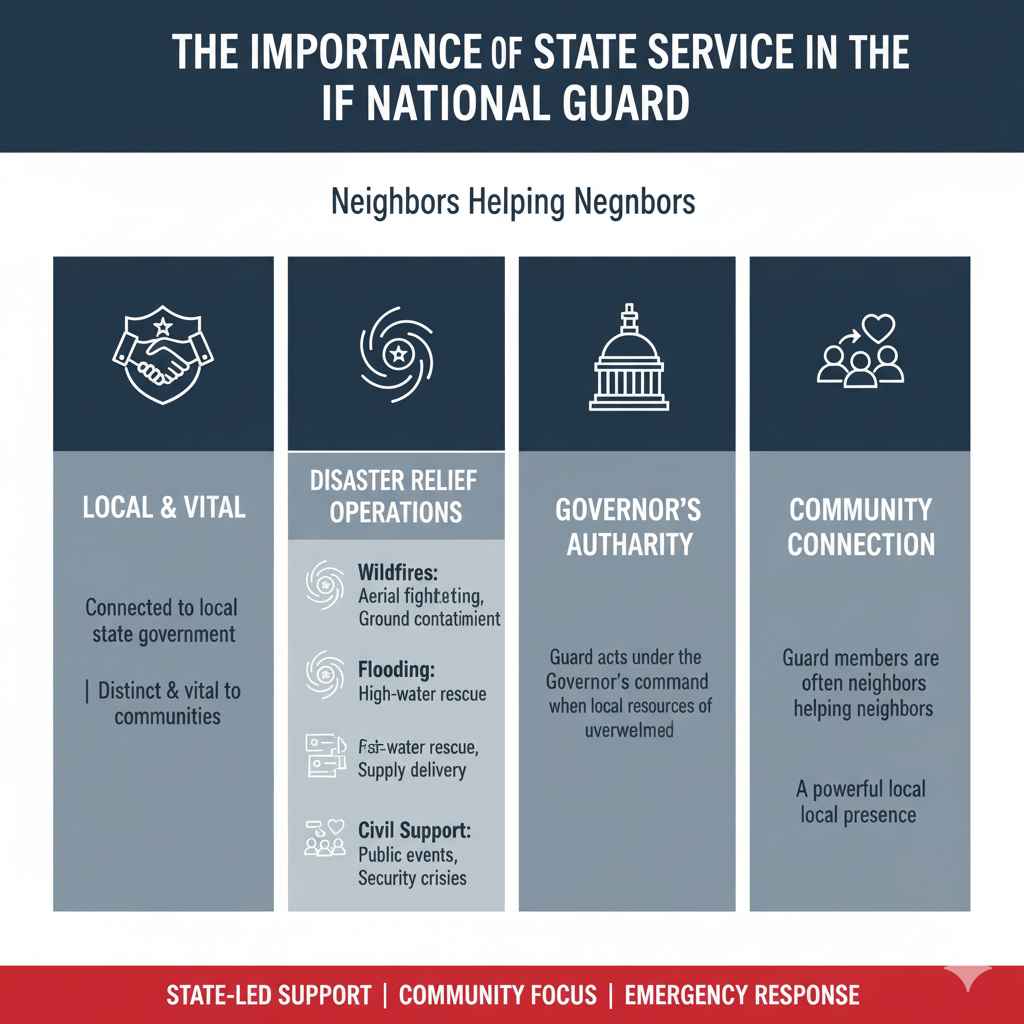
The Importance of State Service in the National Guard
The connection to the local state government is what makes the National Guard truly distinct and vital to communities across the United States.
Disaster Relief Operations
This is the most visible role of the Guard for most citizens. When local resources are overwhelmed, the Guard steps in.
- Wildfires: Deploying helicopters for aerial firefighting or ground teams for containment.
- Flooding: Using high-water vehicles to rescue stranded civilians and deliver supplies.
- Civil Support: Assisting law enforcement during major public events or security crises under the Governor’s authority.
This local presence means Guard members are often neighbors helping neighbors—a powerful aspect of their service that Active Duty units cannot typically provide unless specifically attached to a local emergency command structure.
Summary of Time Commitment: A Practical View
Let’s translate the time commitments into rough annual hours so you can compare them side-by-side.
| Activity | Active Duty (Per Year) | National Guard (Per Year Estimate) |
|---|---|---|
| Regular Drill/Unit Training | ~2080 hours (Full-Time) | ~192 hours (12 weekends x 16 hours) |
| Annual Training (AT) | Included in Full Time | ~80 hours (2 weeks x 40 hours) |
| Federal/State Deployments | ~2080 hours (Variable) | 0 to ~1040+ hours (Highly variable |
This comparison shows that the Guard member dedicates about 272 standard training hours annually, plus whatever time they spend on activation/deployment, contrasting sharply with the 2,080+ hours of a full-time Active Duty service member.
Frequently Asked Questions (FAQ) for Beginners
Here are some straightforward answers to common questions about the Armed Forces and the National Guard.
Q0: Is the National Guard technically part of the U.S. Armed Forces?
A: Yes. Legally, the National Guard is a reserve component of the U.S. Armed Forces (Title 10 U.S. Code), alongside the Reserves and Active Duty. The term “Armed Forces vs. National Guard” in everyday conversation usually means “full-time Active Duty vs. the part-time, dual-status Guard,” not that the Guard falls outside the Armed Forces altogether.
Q1: Can I transfer from the National Guard to Active Duty?
A: Yes, it is possible. This process is often called “transferring to Active Duty” or “enlisting active.” It requires you to meet the active duty standards for your desired branch and secure a release from your current state’s Guard command. It’s a common path for those who decide they want a full-time military career after starting part-time.
Q2: Does the National Guard deploy overseas?
A: Absolutely. When mobilized by the President, National Guard units deploy overseas for federal missions just like the Active Duty forces. However, Guard deployments are often shorter in duration than those experienced by Active Duty units.
Q3: Do National Guard members get paid the same as Active Duty members?
A: No. When drilling part-time, Guard members are paid based on their rank and time in service for the hours worked (the drill weekend or annual training). When mobilized for federal duty, they are paid the same basic pay and allowances as their Active Duty counterparts for the duration of the mobilization.
Q4: Which option is better for college tuition assistance right now?
A: The National Guard often provides more immediate educational support through state-specific tuition assistance programs, which can be used right away while you are drilling part-time. Active Duty members must complete basic training and may need to wait slightly longer for their federal education benefits (like the GI Bill) to fully kick in.
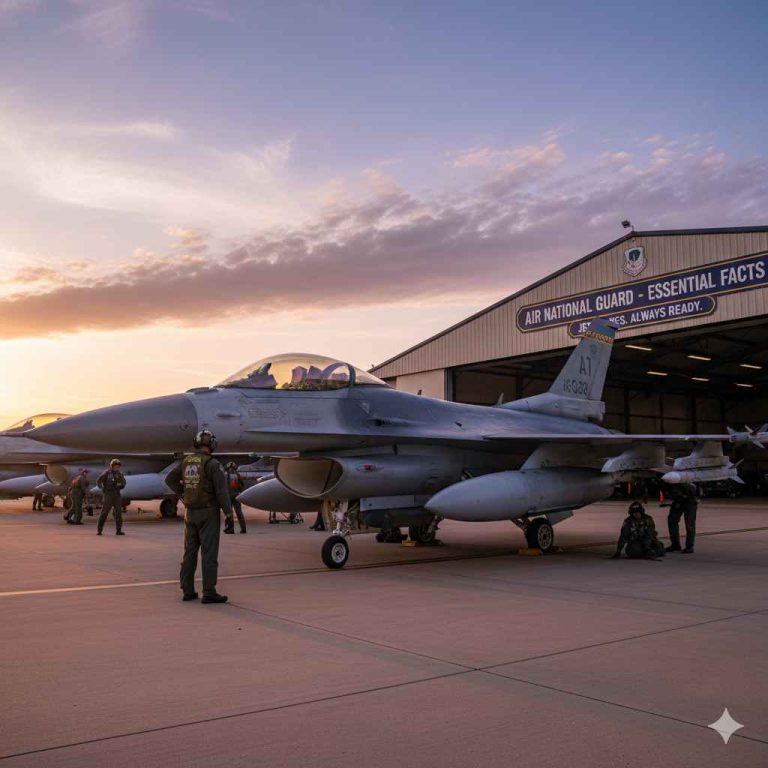
Q5: If I join the Army National Guard, can I still fly jets?
A: Yes, if you join the Air National Guard! The Air National Guard has many roles that involve flying, maintaining aircraft, or supporting air missions. However, if you join the Army National Guard, your roles will be focused on ground combat support, maintenance, logistics, or medical support for ground forces.
Q6: What happens if my Governor refuses to let the National Guard deploy for a federal mission?
A: While rare, a Governor can refuse a federal call-up if they feel their state mission is compromised. However, under specific federal laws (Title 10 USC), the President has the authority to federalize the Guard regardless of the Governor’s wishes if the national security need is deemed critical enough.
Conclusion: Making Your Informed Choice
Deciding how to serve your country is a huge step, and understanding the roles of the Armed Forces versus the National Guard is the first key piece of knowledge you need. Remember, neither path is “better”; they are simply different paths designed to meet different needs—both yours and the nation’s.
If your goal is immediate, full-time dedication, comprehensive federal housing, and a career built entirely around military deployments, the Active Duty Armed Forces is the clear fit. If, however, you want to build a strong civilian career, stay rooted in your local community, serve your state during emergencies, and gain military experience with a part-time commitment, the National Guard offers that unique and valuable structure. Take your time, talk to recruiters from both sides, and choose the path that aligns best with your personal roadmap. Welcome to the world of service!