A Arm Guards Vs High Clearance: Essential Showdown
A Arm Guards vs High Clearance: For beginners, understanding the difference between arm guards and high clearance in archery relates to protecting your forearm versus ensuring your bowstring clears your arm. Arm guards protect against string slap, while high clearance is crucial for preventing string interference, especially with larger bows or when using heavy jackets.
Welcome, fellow archer! Choosing the right gear can feel like navigating a maze when you’re just starting out. Today, we tackle a common point of confusion: the difference between needing an arm guard and needing high clearance on your bow. You might be wondering, “Does my string hit my sleeve, or does it hit my actual arm?” Don’t worry! This choice directly impacts your comfort, safety, and accuracy. We are going to break down exactly what these terms mean in simple steps so you can choose the right protection and setup for your archery journey. Let’s clear up this confusion right now!
Understanding the Basics: What Are Arm Guards and High Clearance?


To start strong, we need clear definitions. These two concepts sound similar because they both deal with what happens between the bowstring and your arm, but they solve very different problems.
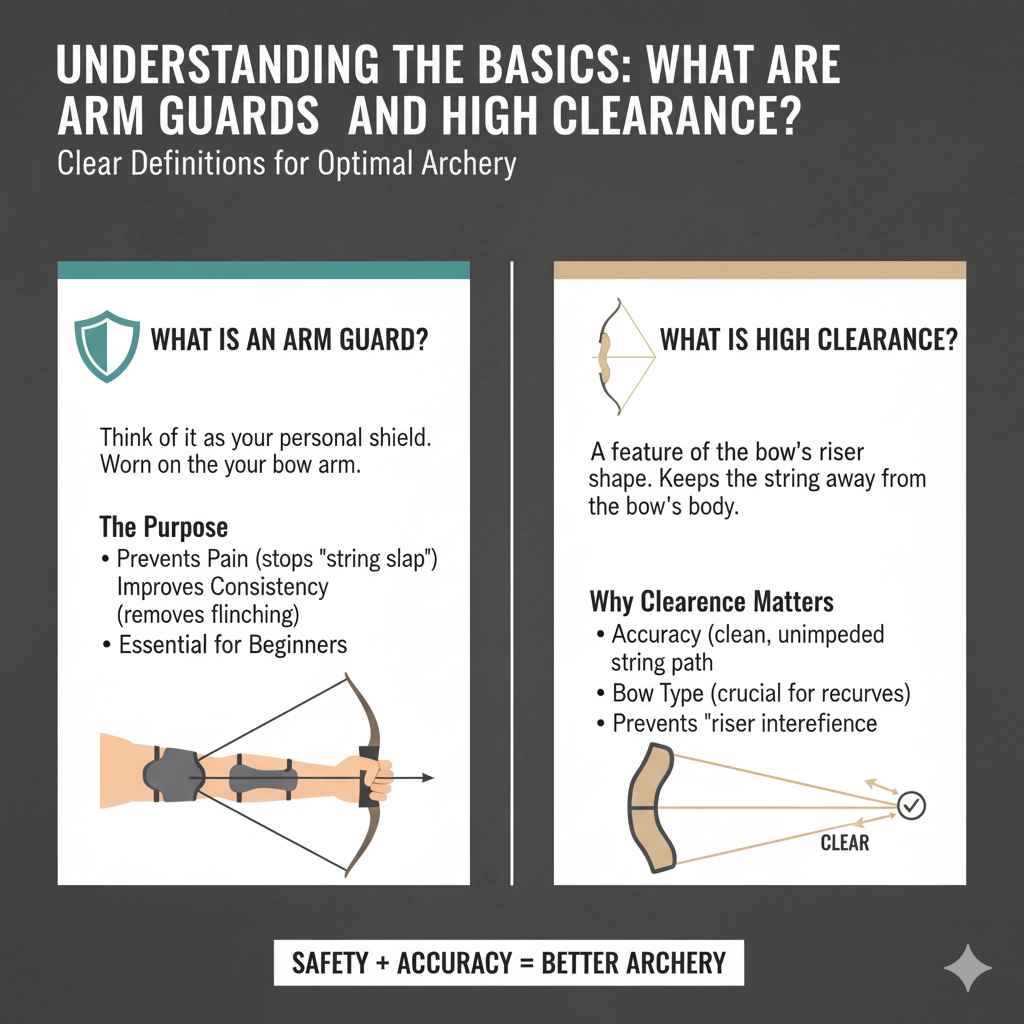
What is an Arm Guard?
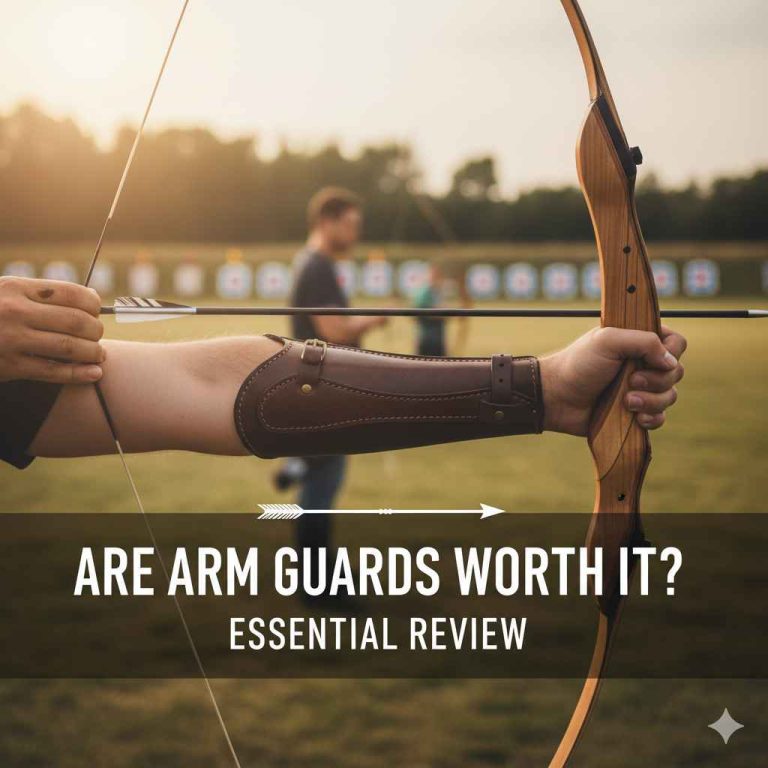
Think of an arm guard as your personal shield. It is a simple piece of protective gear worn on the inside of your bow arm (the arm holding the bow).
The Purpose of an Arm Guard
The primary job of an arm guard is safety and comfort. When you release the string, if it slaps your forearm, it stings! This is called “string slap.”
Prevents Pain: It stops the painful sting of the string hitting bare skin or thin clothing.
Improves Consistency: If you flinch from anticipating the sting, your shot placement suffers. The guard removes that fear.
Essential for Beginners: Nearly every new archer needs one until their form is perfectly consistent.
What is High Clearance?
High clearance isn’t a piece of equipment you wear; it’s a feature or characteristic of the bow itself, specifically how far the bow’s riser (the middle handle section) is shaped to keep the bowstring away from the bow’s body during the shot.
Imagine drawing your bowstring back. As you let go, the string snaps forward very quickly. If the string hits the side of the bow handle or riser before it gets to your face, your shot will go wildly off target. This is called “string contact” or “riser interference.”
Why Clearance Matters
Accuracy: High clearance ensures the string path is clean and unimpeded.
Bow Type: Recurve bows often require more clearance measurement than traditional longbows because they have more complex riser shapes, especially modern take-down recurves.
A Arm Guards vs High Clearance: The Essential Showdown
This is where we compare them directly. They are not interchangeable solutions; they solve different physical problems during the shot sequence.
Problem One: String Slap (The Arm Guard Solution)
String slap happens after the string leaves your fingers and travels toward your face or anchor point. It affects the shooter directly.
When you need an Arm Guard:
1. When shooting with lighter draw weights (where the string moves slower, giving it more time to drift toward your arm).
2. When wearing bulky clothing, like thick jackets in winter.
3. When your anchor point or release technique is inconsistent, causing the string path to wander outwards.
4. If you feel any noticeable impact or vibration on your forearm upon release.
Problem Two: String Interference (The High Clearance Solution)
String interference happens during the initial acceleration of the string. It affects the bow’s performance and shot consistency.
When you need High Clearance:
1. When using a modern recurve bow with intricate riser designs.
2. When shooting arrows with very stiff spines (less flexible) that cause the arrow to flex more during the shot (archer’s paradox), pushing the string further out toward the bow limbs.
3. If you notice your arrow flight is erratic, and you hear or see the string brushing the riser on release.
4. When using specialized stabilizing systems that might push the bow limbs outward slightly.
Comparison Table: Quick Reference
To make this crystal clear, here is a simple breakdown of when you focus on which element:
| Feature | Arm Guard | High Clearance |
|---|---|---|
| What it Protects | Your Forearm/Skin | The Bowstring Path |
| When is it Needed? | When the string might hit your body on follow-through. | When the string might hit the bow riser on release. |
| Type of Gear | Worn Equipment (Accessory) | Bow Design Feature (Structural) |
| Primary Benefit | Safety and Comfort | Accuracy and Consistency |
How to Check If You Need an Arm Guard: A Simple Drill
As a beginner, checking for string slap is step one. You don’t want to guess; you want to test safely.
Step-by-Step String Slap Test
This test is best performed at a very short distance (3 to 5 yards) into a soft target, or even aiming at the ground just in front of your target butt.
- Safety Check: Ensure your range is clear, and you are wearing safety glasses.
- Draw and Anchor: Draw your bow to your normal anchor point. Look closely at the space between the bowstring and your forearm.
- Execute the Shot: Release the arrow. Focus entirely on what happens after the release.
- Check for Impact: Immediately after the string passes, gently feel your forearm where the string travels. Do you feel a light tap, a definite sting, or nothing at all?
- Listen Closely: Sometimes you don’t feel it, but you hear a distinct “thwack” sound, which means the string hit your sleeve or arm.
- Result Analysis: If you felt or heard contact, you absolutely need an arm guard. If you felt nothing, try the test again wearing a slightly thicker layer of clothing, like a light fleece, to simulate winter wear.
If you find you need an arm guard, choosing one is easy! Look for one that straps on securely and covers the area from your wrist up to about two inches below your elbow crease. You can find great, simple leather or synthetic guards online or at any local pro shop.
How to Check for High Clearance Issues
Checking for high clearance issues is harder because it involves observing the bow’s action during the shot. This is often where newer archers struggle with accuracy.
Observing the Shot Sequence
You need a trusted spotter or, ideally, a slow-motion video recording. Filming your shot sequence is one of the best investments you can make in your archery development, even using a modern smartphone. Resources like the National Field Archery Association (NFAA) often provide tutorials on filming form checks.
What to Look For on Video
1. The Initial Move: As the string travels forward, watch the string path relative to the bow handle (riser).
2. The Contact Point: Is there any moment where the string visibly touches the riser, the sight window area, or the limb bolts?
3. The Fletching Check: Sometimes, the string hits the fletching (vanes) of the arrow just as it leaves the bow. This is also a clearance issue, usually related to the arrow rest setup, but high clearance in the riser can contribute.
Understanding Riser Measurements for Beginners
While you don’t need to measure millimeters yet, understanding that bows have different “stack heights” is helpful.
Low Stack/Low Brace Height: Often seen on older or very simple longbows. The string path is very close to the handle.
High Stack/High Brace Height: Modern recurves often push the string out further using specialized cutouts in the riser. This provides more inherent clearance.
If you are shooting a traditional longbow, you may find that simply using a higher brace height (the distance between the string and the deepest part of the bow grip when strung) gives you the clearance you need, as long as the arrow rest allows it. For modern bows, this is mostly built-in by the manufacturer.
Choosing the Right Gear for Your Style
Your choice between focusing on arm protection or riser clearance depends entirely on your equipment and current form status.
When to Prioritize Arm Guards
If you are shooting traditional gear (longbows or simple self-bows) or using a very light beginner recurve set up, you are more likely to experience string slap than riser interference, especially since traditional bows have wide-open risers by design.
Traditional Focus: Safety first. Get a good, comfortable arm guard immediately.
Flexibility: If you switch between light and heavy draw weights, the arm guard adapts easily.
When to Prioritize High Clearance Considerations
If you have invested in a modern Olympic-style recurve setup, your bow almost certainly has decent clearance built-in. However, if you are getting inconsistent shots that make your arrow fly sideways, you need to look at clearance issues involving your arrow rest tuning, which is related to the overall geometry of the bow’s “window.”
Key Tune-Up Checks Related to Clearance:
Arrow Rest Adjustment: Ensure your arrow rest isn’t sticking out too far or too little.
Nocking Point Height: An incorrectly set nocking point can cause severe arrow flex (archer’s paradox), increasing the chance of string-to-fletching contact.
If you suspect a clearance issue on a modern bow, it’s wise to visit a pro shop for a quick tune-up. They can check your tiller and nocking point settings using precision tools. You can read more about the importance of tuning from established sources like USA Archery, which stresses proper equipment setup for safety and performance.
Safety First: Integration of Both Elements
The best archers use every tool available to make their experience safe and enjoyable. You should never assume you don’t need one just because you have the other.
The Worst-Case Scenario
Imagine this: You have a modern recurve with great riser clearance, so the string never hits the riser. Great! But you decide to shoot without an arm guard while wearing a loose-fitting shirt. The string catches the cuff of your shirt just as it passes, jerking the bow arm violently forward. This can cause you to lose your grip entirely, resulting in a dangerous “dry fire” or the bow swinging wildly.
Conversely, imagine a perfect string path (high clearance), but you are using a very low draw weight for practice. If you let your form relax slightly, the string might still gently graze your bare forearm, causing a small sting that ruins your confidence for the next shot.
The Golden Rule for Beginners
Until you have hundreds of hours of consistent practice under your belt, use both elements if necessary:
1. Wear the Arm Guard: Always wear one for safety and comfort during form practice.
2. Check the Clearance: Periodically check your string path for riser interference, especially if you switch arrow types or upgrade your bow.
Troubleshooting Common Beginner Issues
Let’s address a few common hiccups that beginners confuse with arm guard or clearance problems.
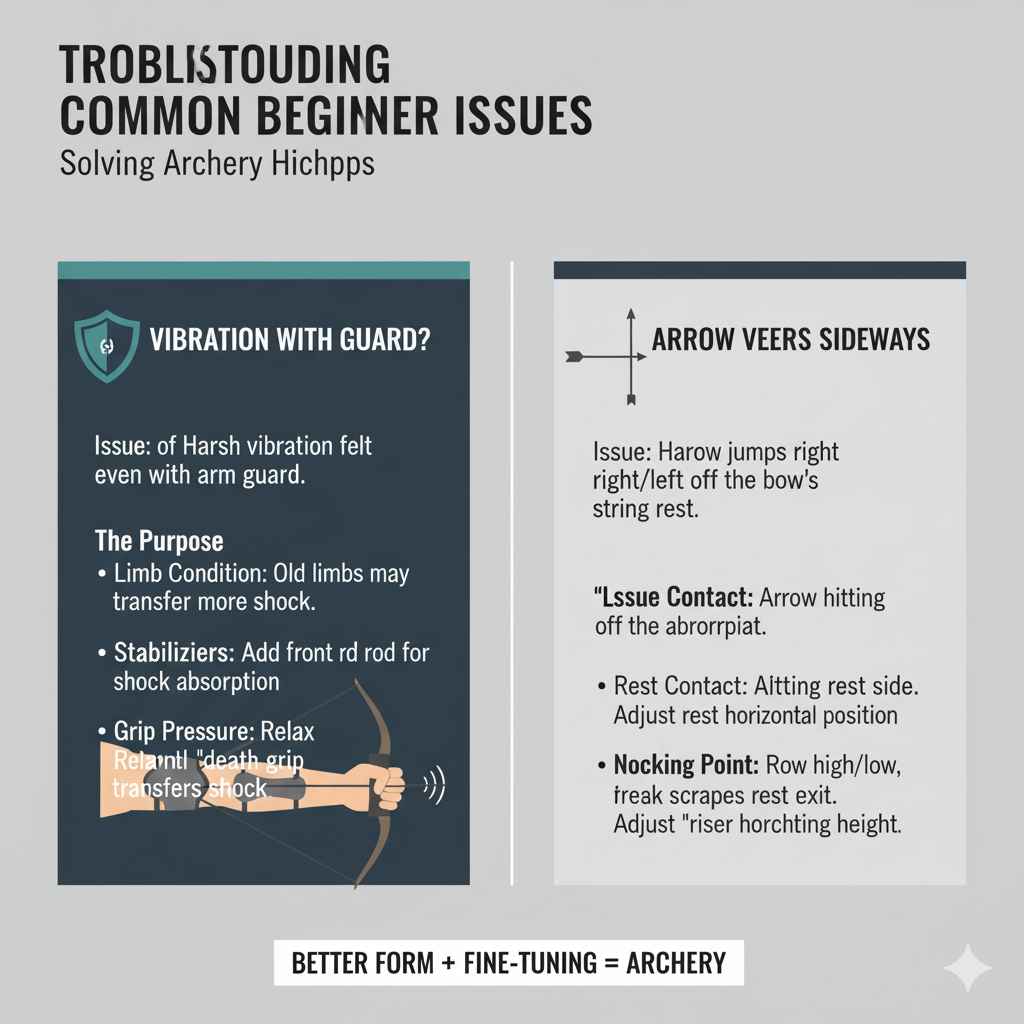
I Still Feel Vibration After Wearing a Guard
If you have an arm guard and still feel harsh vibration, the issue might not be contact, but shock absorption.
Limb Condition: Are your limbs new or old? Old limbs can sometimes transfer more shock.
Stabilizers: Adding a stabilizer (the rod that sticks out the front) can dramatically reduce vibration transfer to your hand, which feels better than just protecting the arm.
Grip Pressure: Are you squeezing the bow grip too hard? Relax your grip! A death grip transfers all the bow’s vibration directly into your hand.
My Arrow Veers Right or Left Immediately
If the arrow jumps sideways right off the rest, it’s almost always a tuning issue, not a fundamental clearance issue with the riser itself.
Rest Contact: This often means the arrow is touching the side of the rest upon exit. You need to adjust the rest’s horizontal position.
Nocking Point: If the nocking point is too high or too low, the arrow points slightly up or down as it leaves the string, causing it to scrape the rest on the way out.
FAQ: Frequently Asked Questions for New Archery Hobbyists
Q1: Can I shoot a longbow without an arm guard?
Maybe, but it’s not recommended when starting. Longbows have very little space between the string and the bow arm. If your form wavers even slightly, you will get string slap. Always wear one until you are sure of your form.
Q2: Do compound bows need high clearance checks?
Compound bows generally have excellent built-in clearance due to their complex cam systems and wider risers. String interference with the riser is rare, but always check if you notice the string hitting anything other than the vanes when shooting.
Q3: Is it better to fix clearance issues or just wear a thicker sleeve?
It is always better to fix the underlying clearance issue (tuning the arrow rest or using a bow with better clearance). Relying on thick clothing hides the problem and can lead to inconsistent performance, especially if you shoot in different weather conditions.
Q4: How tight should my arm guard straps be?
The straps should be snug enough that the guard does not rotate or move when you draw and release the string, but loose enough that they don’t cut off your circulation or restrict your muscle movement. You should be able to slide one finger comfortably under the strap.
Q5: What is the Archer’s Paradox and how does it relate?
The Archer’s Paradox is the slight sideways bending of the arrow as it passes the bow riser upon release. Stiff arrows bend less; weak arrows bend more. Excessive bending increases the chance of the arrow fletching scraping the riser or the string—a clearance issue.
Q6: What is Brace Height?
Brace height is the measurement from the string to the deepest part of the bow handle when the bow is strung but not drawn. A higher brace height usually pushes the string further away from the riser, improving clearance but potentially making the draw feel slightly stiffer.
Conclusion: Moving Forward with Confidence
The showdown between Arm Guards and High Clearance really boils down to this: one protects your body from the string (Arm Guard), and the other protects the string’s path from the bow (High Clearance). As a beginner, your focus should always be safety first, which means prioritizing that arm guard until you are absolutely certain your form prevents string slap.
Once comfort is established, move on to ensuring your setup allows for a clean, unimpeded flight path for the arrow. Remember that archery is a journey of small improvements. By understanding these two essential concepts, you’ve taken a huge step toward building a consistent, safe, and much more enjoyable shooting routine.