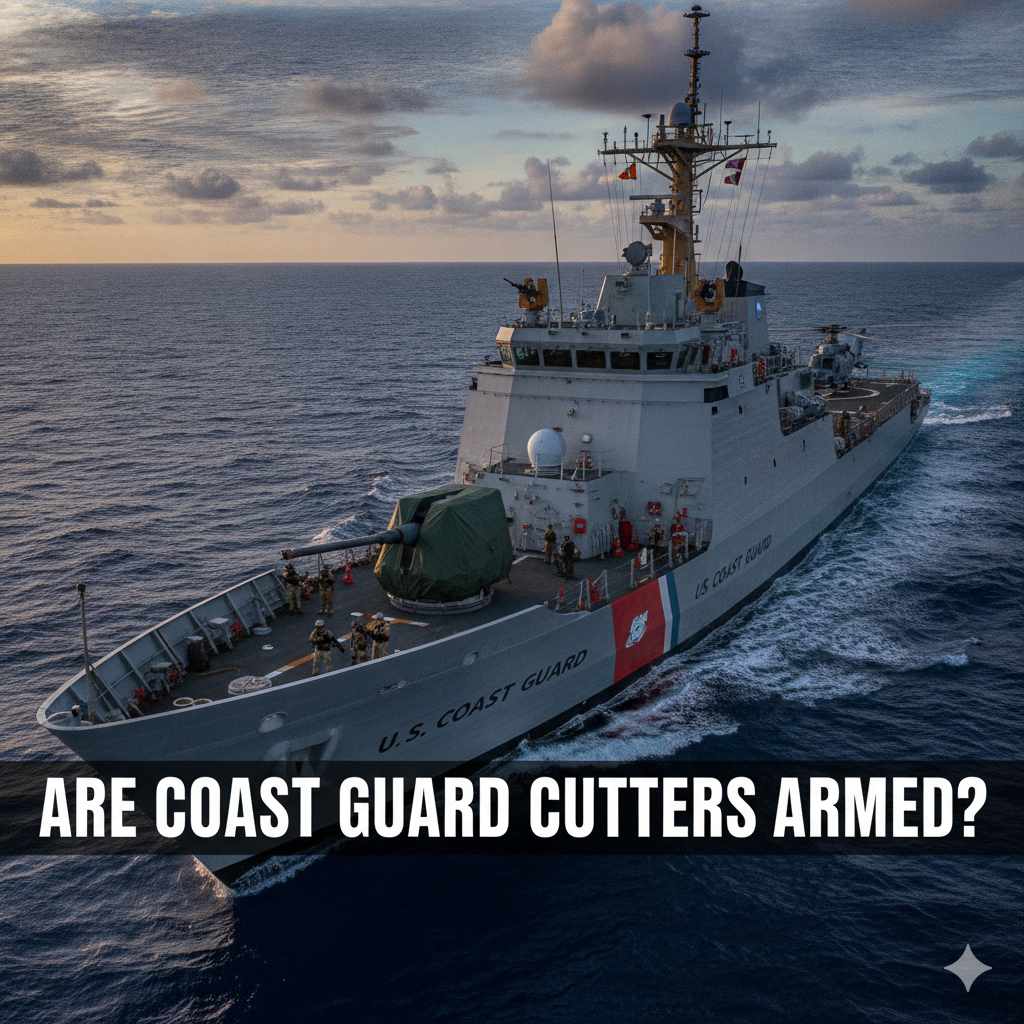
Are Coast Guard Cutters Armed?
This article will explore the armaments found on Coast Guard cutters. We’ll look at why they carry weapons and how they are used. You’ll learn about the different types of guns and their purposes.
We aim to give you a clear picture of their defensive and offensive power.
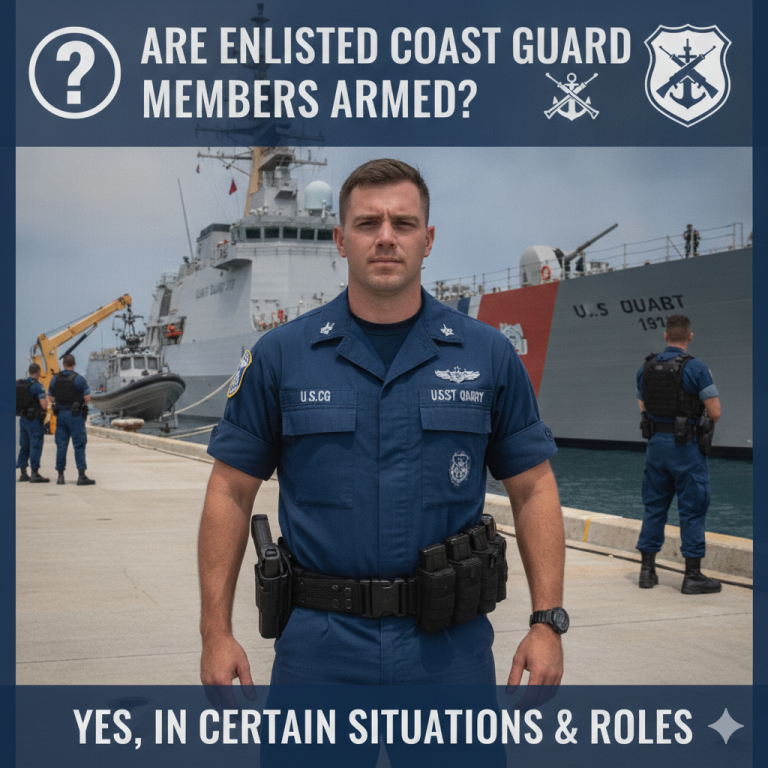
The U.S. Coast Guard cutters are armed. They carry various weapons, including machine guns and cannons, to enforce laws, protect national security, and respond to threats at sea. The specific armament varies by cutter class and mission.
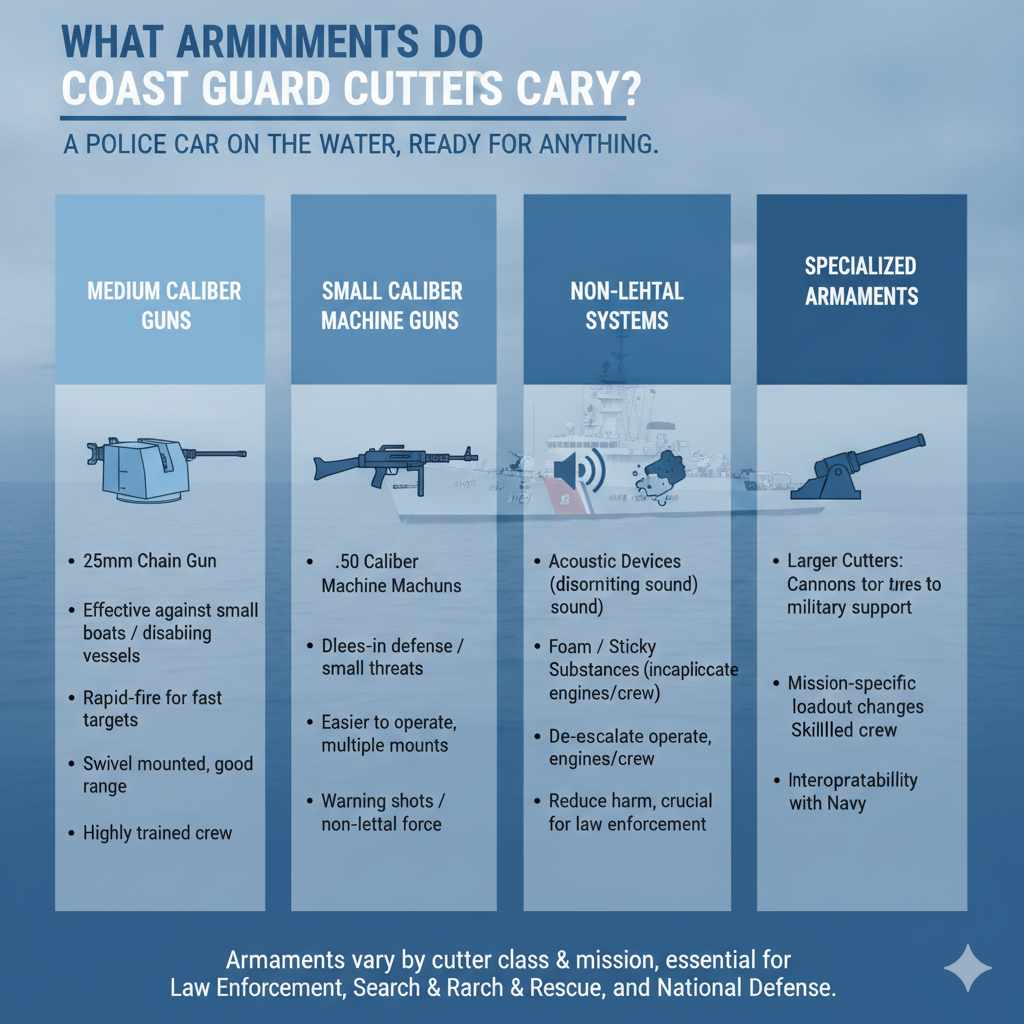
What Armaments Do Coast Guard Cutters Carry?
Coast Guard cutters are equipped with a range of armaments. These are not just for show. They are vital tools for carrying out the Coast Guard’s missions.
These missions include law enforcement, search and rescue, and national defense. The type and size of the weapons depend on the cutter’s role and class.
Think of them as a police car, but on a much larger scale and in a more unpredictable environment. They need to be able to handle many situations. This can range from stopping drug smugglers to protecting against larger threats.
Medium Caliber Guns
Many cutters carry medium caliber guns. The most common is the 25mm chain gun. This gun is very effective.
It can be used against small boats or to disable larger vessels. It fires rapidly. This makes it good for dealing with fast-moving targets.
These guns are mounted on swivels. This allows them to track targets easily. They have a good range.
This means the cutter can engage threats from a safe distance. The crew operating these guns are highly trained. They undergo rigorous training to ensure safe and effective use.
Small Caliber Machine Guns
You’ll also find smaller caliber machine guns. These are often .50 caliber machine guns. They are very versatile.
They are used for close-in defense. They can also be used against smaller threats. This includes things like small boats or even to deter pirates.
These guns are easier to operate than the larger cannons. They are often mounted in various locations on the ship. This gives good coverage.
They are a key part of the cutter’s defensive capabilities. They are also used for non-lethal force options, like warning shots.
Non-Lethal Systems
It’s not all about heavy firepower. The Coast Guard also uses non-lethal systems. These are important for law enforcement.
They allow for disabling a target without causing fatal injury. One example is the use of acoustic devices. These can create disorienting sounds.
Another system is the use of foam or sticky substances. These can incapacitate a vessel’s engine or crew. These tools are crucial.
They help de-escalate situations. They also reduce the risk of harm to everyone involved. This is especially important in drug interdictions.
Specialized Armaments
Some larger cutters may have more specialized armaments. This can include cannons up to 57mm. These are used for more serious threats.
They can also be used in support of military operations. The specific loadout can change based on the mission profile.
These larger guns are powerful. They require a skilled crew to operate. They have a significant impact.
The Coast Guard works closely with the Navy. This ensures interoperability when needed. It also allows for access to advanced weapon systems.
Why Do Coast Guard Cutters Need Guns?
The reasons Coast Guard cutters are armed go deep into their duties. The Coast Guard is a military branch. It operates under the Department of Homeland Security during peacetime.
In wartime, it can be transferred to the Navy. This military status alone suggests a need for arms.
But it’s their day-to-day jobs that truly necessitate weapons. They are on the front lines. They enforce U.S.
laws on the water. This includes stopping illegal drug smuggling. They also interdict illegal arms and human trafficking.
These activities often involve dangerous individuals.
Law Enforcement at Sea
Imagine a drug cartel’s boat fleeing at high speed. The Coast Guard cutter must pursue and stop it. They need to do this safely.
They also need to prevent the drugs from reaching shore. Guns are a tool to achieve this. They can be used to disable a fleeing vessel’s engines.
This is not about aggression. It’s about enforcement. It’s about protecting communities from the harms of illegal drugs.
The use of force is a last resort. But it must be an option. The threat of disabling fire can often convince suspect vessels to stop.
National Security and Defense
Cutters also play a role in national defense. They patrol U.S. waters.
They protect vital infrastructure like ports and offshore energy platforms. They monitor maritime traffic. This helps detect potential threats.
These threats could be anything from foreign military vessels to terrorist groups.
In certain areas, especially international waters, piracy is a real concern. Cutters can act as deterrents. They can also respond to distress calls from merchant ships under attack.
Their armaments provide a layer of security for international shipping lanes.
Maritime Interdiction Operations
The Coast Guard is often involved in interdicting illegal activities. This can include illegal fishing. It can also include smuggling of weapons or other illicit goods.
These operations can be complex. They may involve boarding other vessels. They may also involve situations where resistance is encountered.
Having armaments allows the Coast Guard to respond effectively. It ensures they can assert authority. It also protects their crews.
Boarding operations are inherently risky. The presence of firearms provides a necessary safety margin.
A Personal Experience with Coast Guard Readiness
I remember one blustery afternoon a few years back. I was on a small fishing boat off the coast of Florida. The waves were getting choppy.
We were getting ready to head back in. Suddenly, a much larger vessel appeared on the horizon. It was sleek and fast.
It was a Coast Guard cutter.
As it drew closer, I noticed the prominent gun mount on its bow. It wasn’t something I’d paid much attention to before. But seeing it up close, with the spray of the ocean and the sheer size of the cutter, it felt very real.
The crew on deck looked focused and alert. It struck me then, with a bit of a chill, how much power they wielded. It wasn’t menacing, but it was a stark reminder of their purpose: to maintain order and safety in a vast, sometimes unruly ocean.
It made me feel safer, honestly, knowing they were out there.
Different Types of Cutters and Their Armament
The U.S. Coast Guard operates various classes of cutters. Each class is designed for specific missions.
Therefore, their armament varies. This allows the Coast Guard to be flexible. It can deploy the right vessel for the right job.
The larger the cutter, generally the heavier the armament. This makes sense. Larger vessels can handle more recoil.
They also need more protection. Smaller vessels focus on different threats.
National Security Cutters (NSCs)
These are the largest cutters in the fleet. They are considered the flagships. NSCs are designed for extended offshore operations.
They are built for the most challenging missions. This includes national defense and homeland security patrols.
An NSC is equipped with a 57mm Davide/Bofors gun. This is a very capable weapon. It can engage surface targets at a significant range.
They also carry multiple .50 caliber machine guns. These are for close-in defense and boardings. They can also carry other defensive weapons as needed.
Legend-Class National Security Cutters (WMSLs)
These are the 418-foot Legend-class cutters. They are the backbone of offshore operations. They are the first of the new generation of large cutters.
They are designed to replace older vessels.
They have a 57mm Davide/Bofors main gun. This is the primary offensive and defensive weapon. They also have two .50 caliber machine guns.
These are mounted on the bridge wings. They also have smaller weapons like the M240 machine gun for specific roles. These cutters can also deploy helicopters.
This gives them a wider range of capabilities.
Hamilton-Class High-Endurance Cutters (WHECs)
These are older but still very capable cutters. They have served the Coast Guard for decades. They are being replaced by the NSCs.
However, they remain vital assets.
Hamilton-class cutters typically carry one 76mm Davide/Bofors gun. This is a powerful naval gun. It can engage a wide range of targets.
They also have several .50 caliber machine guns. They were designed with combat in mind. They are robust and adaptable.
Bertholf-Class Cutters (WMSLs)
These are the first two ships of the Legend class. They are the flagship vessels. The WMSL stands for Legend-class National Security Cutter.
They are built for sustained forward presence. They can operate in harsh environments.
Their main weapon is the 57mm Davide/Bofors rapid-fire gun. This is mounted forward. It’s very effective.
They also have numerous M2HB .50 caliber machine guns. These are strategically placed. They provide excellent defensive coverage.
These cutters are designed for multi-mission capabilities.
Reliance-Class Medium Endurance Cutters (WMECs)
These cutters are smaller than the NSCs. They are used for a variety of missions. This includes law enforcement and search and rescue.
They operate closer to shore than the NSCs. They are still well-armed for their roles.
WMECs typically feature a 25mm chain gun. This is mounted on the fantail. They also carry several .50 caliber machine guns.
These are placed around the ship. The 25mm gun is effective against small craft. It is also used for defensive purposes.
Fast Response Cutters (FRCs)
These are the newest and smallest cutters in the fleet. They are designed for rapid response. They are used for near-shore patrols and interdiction.
They are very agile and fast.
FRCs are equipped with a 25mm chain gun. This is mounted forward. They also have two .50 caliber machine guns.
These are placed on the wings. Despite their size, they are well-armed. They are highly effective for their intended missions.
They are built to be easily deployable.
Cutters at a Glance
Role: Patrol, law enforcement, defense.
Weapons: Vary by class.
Common Arms: 57mm, 25mm guns, .50 cal machine guns.
How Are Weapons Used on Cutters?
The use of weapons on Coast Guard cutters is carefully governed. There are strict rules of engagement. These rules ensure that force is used only when necessary.
They also ensure it is used appropriately. The goal is always to achieve the mission with the least amount of force possible.
It’s a delicate balance. The crew must be prepared to defend themselves. They must also uphold the law.
This requires a high level of judgment and training.
Rules of Engagement (ROE)
ROE are the rules that govern when and how U.S. forces can engage a target. For the Coast Guard, these rules are based on U.S.
law. They also consider international maritime law. They outline when deadly force is authorized.
Deadly force is only permitted when there is a reasonable belief that it is necessary. This is to prevent imminent death or serious bodily harm. It can also be used to prevent the commission of a violent felony.
This includes acts like drug smuggling that endanger lives.
Disabling Fire
Often, the goal is not to destroy a vessel. It is to stop it. This is where disabling fire comes in.
A warning shot might be fired across the bow. If the vessel continues to flee, then fire may be directed at its engines or rudder.
This is a targeted approach. It aims to neutralize the threat. It seeks to avoid unnecessary damage or harm.
It requires skilled marksmanship. It also requires good judgment from the commanding officer.
Boarding Operations
When the Coast Guard boards a suspect vessel, safety is paramount. The boarding team carries firearms. These are usually handguns and submachine guns.
The cutter’s larger weapons provide overwatch. This means they are ready to intervene if needed.
The presence of armed personnel is a deterrent. It helps ensure the safety of the boarding team. It also helps ensure the safety of the crew on the vessel being boarded.
The intent is to gain control of the situation peacefully.
Self-Defense
The primary reason for any weapon is self-defense. Coast Guard crews operate in dangerous environments. They can encounter individuals involved in serious criminal activity.
They can also face unexpected threats. The armaments on a cutter ensure that the crew can protect themselves.
This protection extends to protecting the cutter itself. A well-armed vessel is less likely to be attacked. It can deter aggression.
It is a fundamental aspect of maritime security.
Use of Force Pyramid
Level 1: Officer Presence (Being there)
Level 2: Verbal Warnings (Commands)
Level 3: Empty Hand Control (If boarding)
Level 4: Less Lethal Force (Pepper spray, etc.)
Level 5: Lethal Force (Firearms)
Force is escalated only as needed.
When is it Normal to See Guns on Cutters?
It’s perfectly normal to see guns on Coast Guard cutters. In fact, it would be unusual if they were not armed. They are law enforcement vessels operating in a realm where enforcement often requires credible threat of force.
Think about it this way: If a police car on land had no way to stop a fleeing suspect or protect itself, it would be ineffective. The maritime environment is even more challenging.
Routine Patrols
During routine patrols, the guns are secured. But they are ready for immediate deployment. This is standard procedure.
The crew is trained to bring them online quickly if the situation demands it. You might see crew members near the weapon stations.
They are not typically pointed at civilian vessels during normal operations. Their presence is a readiness indicator. It shows the cutter is prepared for its duties.
This includes everything from intercepting drug runners to responding to distress calls.
Law Enforcement Operations
When a cutter is actively engaged in a law enforcement operation, the guns become more prominent. This is when they might be manned. They might be aimed at a suspect vessel.
This is part of the process of asserting authority and ensuring compliance.
Even then, the emphasis is on de-escalation. The goal is to stop the illegal activity. The use of force is always a measured response.
It is not a first resort.
Training Exercises
The Coast Guard conducts regular training. This includes weapons drills. You might see cutters practicing with their guns.
This ensures crews remain proficient. It also tests the readiness of the weapon systems. These exercises are crucial for maintaining operational effectiveness.
These drills are often conducted in designated training areas. They are done with safety as the highest priority. They are a necessary part of ensuring the crew is prepared for real-world scenarios.
When to Be Concerned About Cutter Armaments
Generally, there is no reason for the average mariner or citizen to be concerned about the armaments on Coast Guard cutters. They are operated by trained professionals. They follow strict protocols.
Their purpose is to protect and serve.
However, understanding when and why they might be used can provide context.
Aggressive Maneuvering
If a cutter is maneuvering aggressively towards your vessel. Or if it seems to be attempting to box you in. This could be a precursor to a law enforcement stop.
It’s important to remain calm. Follow any instructions given.
Panicking or attempting to flee will only escalate the situation. The cutter’s armaments are there to enforce laws. They are not for harassing innocent boaters.
Direct Threats or Non-Compliance
If a vessel is actively resisting a lawful order. Or if it is engaged in clearly illegal activity and attempting to escape. This is when the cutter’s weapons might be made ready.
This is a signal of intent to enforce the law.
If you are a law-abiding citizen, you have nothing to fear. The Coast Guard’s primary mission is safety and security for all. They are trained to distinguish between threats and legitimate maritime traffic.
International Waters and Piracy Concerns
In certain parts of the world, piracy is a significant threat. Coast Guard cutters operating in these areas will be on high alert. Their armaments will be ready for immediate use.
This is a different context. It is about protecting against active criminal attacks.
If you are a mariner in such regions, understanding these threats is important. The Coast Guard presence in these areas is a vital security measure.
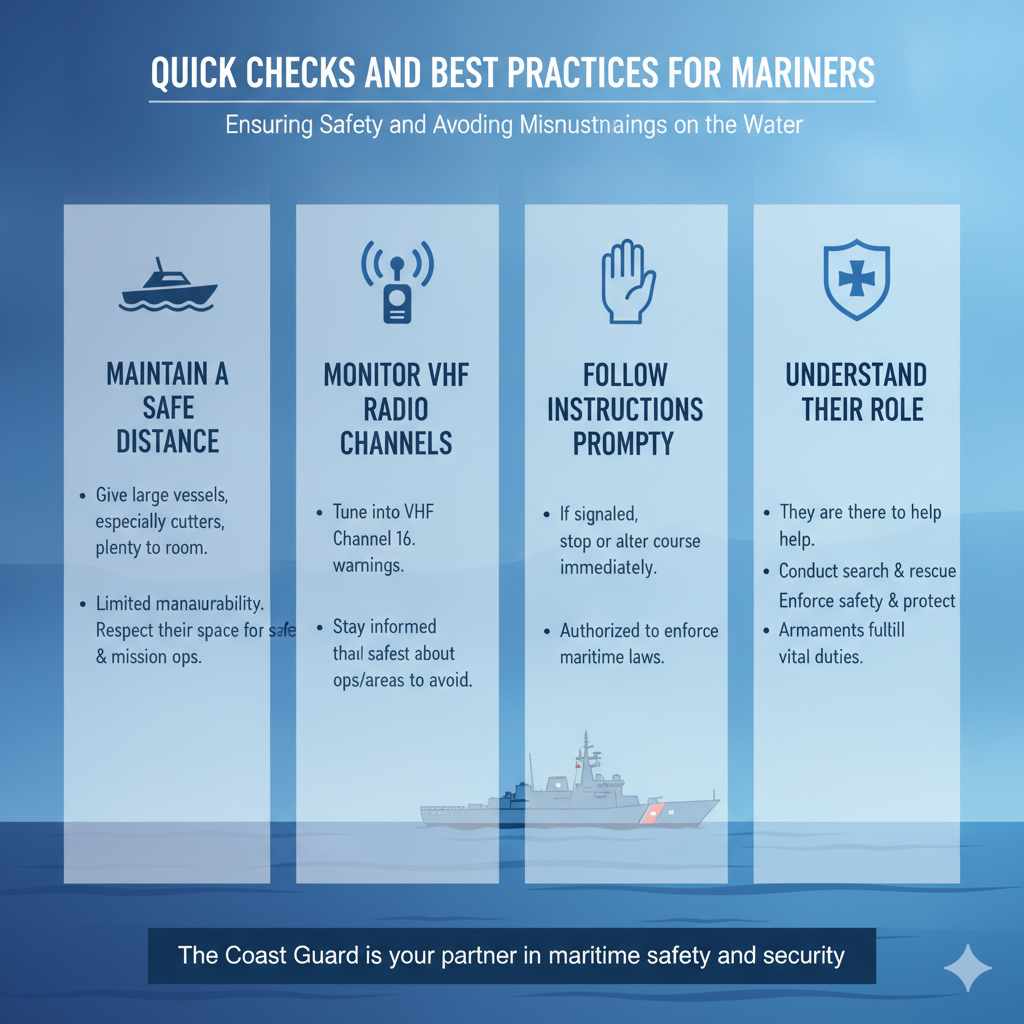
Quick Checks and Best Practices for Mariners
For those who frequent the water, knowing how to interact with Coast Guard vessels is key. It ensures safety and avoids misunderstandings.
Maintain a Safe Distance
Always give large vessels, especially cutters, plenty of room. They have limited maneuverability. They are also operating under specific mission parameters.
Respecting their space is crucial.
Monitor VHF Radio Channels
Coast Guard vessels often communicate on VHF Channel 16. Listening to this channel can give you advance warning. You might hear about upcoming operations or areas to avoid.
It’s a good practice for all boaters.
Follow Instructions Promptly
If a Coast Guard vessel signals you to stop or alter course, do so immediately. Compliance is the safest course of action. They are authorized to enforce maritime laws.
Understand Their Role
Remember that the Coast Guard is there to help. They conduct search and rescue. They enforce safety regulations.
They protect our waters. Their armaments are a tool to help them fulfill these vital duties.
Myth vs. Reality: Cutter Armaments
Myth: Coast Guard guns are for attacking civilian boats.
Reality: Coast Guard weapons are for law enforcement, defense, and interdiction. They are used only under strict rules and as a last resort.
Myth: All cutters have the same weapons.
Reality: Armament varies greatly by cutter class and mission profile. Larger cutters have heavier weapons.
Myth: Coast Guard crews are overly aggressive with their weapons.
Reality: Crews are highly trained in de-escalation and the judicious use of force. Their primary goal is safety.
Frequently Asked Questions About Coast Guard Cutters and Arms
Are Coast Guard cutters always armed?
Yes, Coast Guard cutters are always armed. They carry various weapons systems. These are essential for their law enforcement and national security missions.
The specific types of weapons vary by the cutter’s class and intended role.
What is the main gun on most Coast Guard cutters?
The most common main gun on medium to large Coast Guard cutters is the 25mm chain gun or the 57mm Davide/Bofors gun. Smaller patrol boats might carry .50 caliber machine guns as their primary armament.
Can Coast Guard cutters fire on other U.S. vessels?
The Coast Guard can only use deadly force against U.S. vessels under very specific circumstances. This is typically when there is an imminent threat of death or serious bodily harm to themselves or others, or to prevent the commission of a violent felony.
They follow strict rules of engagement.
Do Coast Guard cutters have missile systems?
No, Coast Guard cutters do not typically carry missile systems. Their armaments are focused on coastal and maritime law enforcement and security. They rely on cannons and machine guns.
For heavy combat, they would operate in conjunction with the Navy.
How are Coast Guard weapons used for drug interdiction?
During drug interdiction, if a suspect vessel refuses to stop, Coast Guard cutters may use their weapons to disable the vessel’s engines or rudder. This is done to prevent the escape of the vessel and the illegal cargo. Warning shots may be fired first.
Are Coast Guard weapons the same as Navy weapons?
While there is some overlap in weapon systems, the Coast Guard’s armaments are generally tailored for law enforcement and interdiction. Navy weapons are designed for full-scale warfare. Some larger Coast Guard cutters may use naval-grade guns, but their deployment context is different.
Conclusion
The question of are Coast Guard cutters armed has a clear answer: yes. These vessels are equipped with various weapons. This arming is fundamental to their diverse and critical missions.
From enforcing laws at sea to protecting national security, their armaments are a necessary tool. They are operated with strict protocols. The goal is always safety and effective execution of duty.
Knowing this helps us appreciate the vital work the Coast Guard does every day.