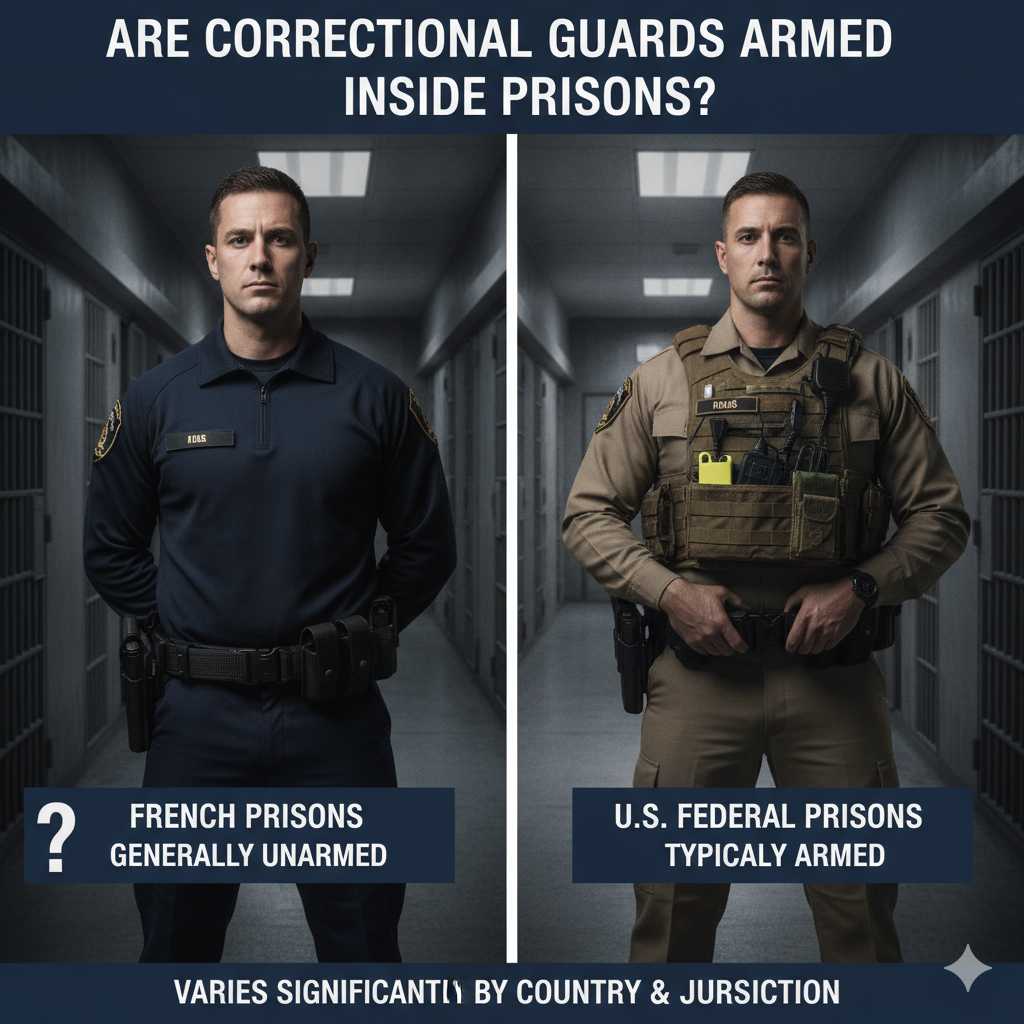
Are Correctional Guards Armed Inside Prisons?
Correctional officers are generally armed inside U.S. prisons, though policies vary by state and facility type. They carry firearms to maintain order, prevent escapes, and protect themselves and others during emergencies or violent incidents. Less-lethal options are also common.
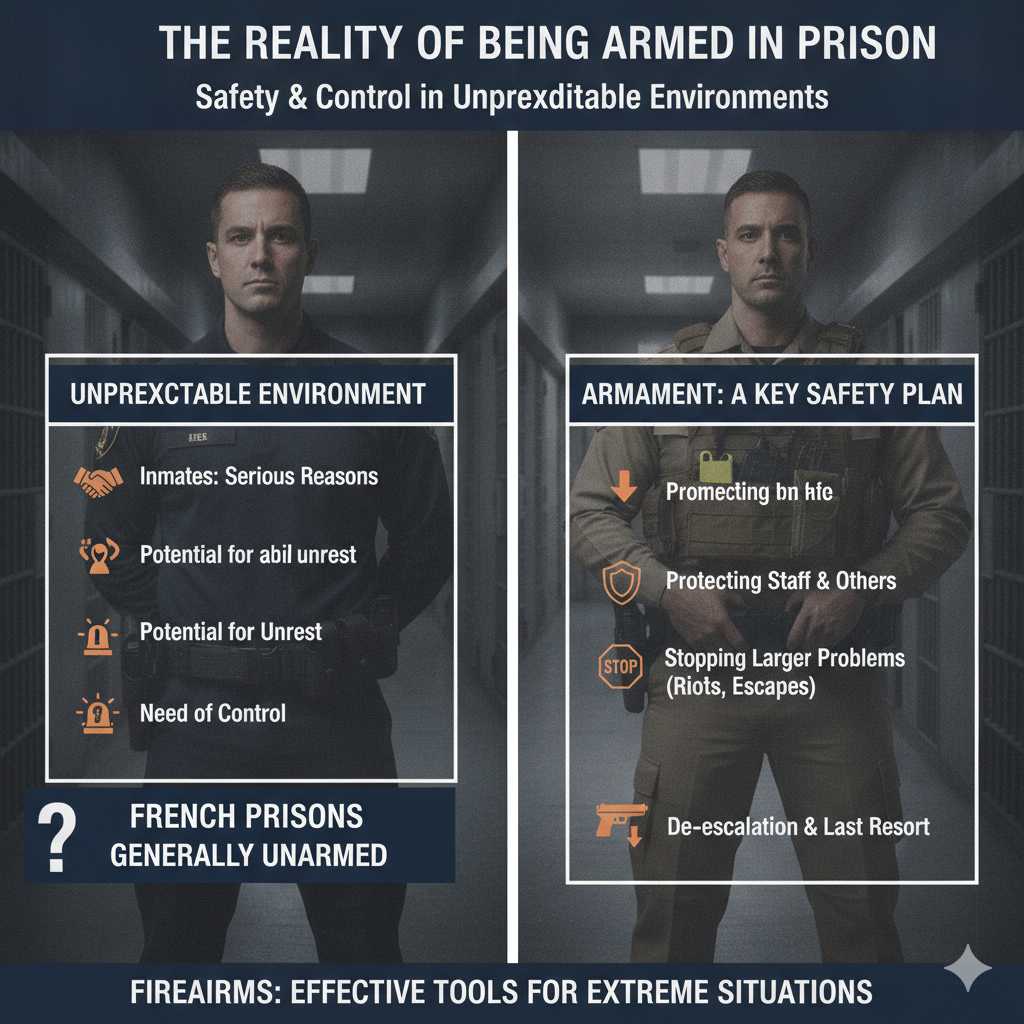
The Reality of Being Armed in Prison
Inmates are in prison for serious reasons. This means the environment can be unpredictable. Because of this, correctional staff need ways to protect themselves and others.
Being armed is a key part of this safety plan. It’s not just about facing inmate threats. It’s also about stopping larger problems before they start.
Think about it this way: if something goes wrong, like a riot or an escape attempt, officers need tools to gain control. Firearms are often seen as the most effective tool for these extreme situations. They provide a clear way to de-escalate or stop a threat when words and other methods fail.
Why Guards Carry Weapons
The main reason correctional guards carry weapons is for security. Prisons are not like the outside world. They hold people who have committed crimes.
These individuals may be dangerous. They might try to harm staff or other inmates. They could also try to escape.
Weapons help guards do their jobs safely. They can stop violence. They can prevent break-outs.
It’s about having the power to enforce rules. It’s also about making sure everyone stays alive and safe.
The law also plays a role. Many prison systems have rules saying officers must be armed. This ensures a consistent level of safety.
It shows that the state takes prison security very seriously. Every officer is trained to use their weapon. They know when and how to use it properly.
This training is intense and ongoing.
Types of Weapons Used
Most often, you’ll see correctional officers carrying firearms. These are usually handguns. They are easy to carry and use in close quarters.
Some facilities might also use shotguns or rifles. These are for specific situations or guard towers.
But it’s not just guns. Many officers also carry less-lethal weapons. These are important.
They can stop a threat without causing permanent harm. Examples include:
- Tasers: These use electric shocks to incapacitate someone.
- Pepper spray (OC spray): This irritates the eyes and lungs.
- Batons: These are used for striking or controlling movement.
These other tools are used first, when possible. They help avoid deadly force. But the presence of a firearm is a strong backup.
It’s there for the worst-case scenarios.
Variations by Facility and State
It’s important to know that not all prisons are the same. Rules can differ. Some states might have stricter rules about arming officers than others.
Federal prisons often have different policies than state prisons. Even within a state, different types of facilities might have unique guidelines.
For example, a maximum-security prison where inmates are considered very dangerous will likely have all officers armed. A lower-security facility, like a work camp, might have different rules. Some minimum-security areas might have fewer armed officers present at all times.
The specific role of the officer also matters. A guard in a control room might be armed. A guard working in a kitchen or workshop might also carry a weapon.
But a guard doing administrative tasks outside the main inmate areas might not always be armed. Policies are designed to match the risk level.
Arming Policies: Key Differences
Federal Prisons: Typically require all correctional officers to be armed with a firearm and other defensive tools.
State Prisons: Policies vary widely. Most require officers to be armed, but specific weapon types and when they are carried can differ.
Local Jails: Often have different rules than state or federal prisons. Many jail deputies are armed, but policies may focus more on immediate control than long-term security.
Minimum Security: Some facilities may have fewer armed personnel visible, relying more on supervision and perimeter security.
When Are Guards Armed?
Correctional officers are generally armed at all times when they are on duty within the prison perimeter. This includes:
- Patrolling cell blocks
- Supervising inmate movement
- Working in yards or recreation areas
- Responding to incidents
- Transporting inmates (though specialized units handle this)
Even when officers are not actively holding their weapons, the weapons are usually secured on their person, like in a holster. This means they are ready to be used instantly if needed. The goal is to have immediate response capabilities.
There might be very specific, controlled environments where an officer might temporarily not be armed. This would be in areas where inmate access is highly restricted and the risk is extremely low. These are rare exceptions and are carefully managed.
For the vast majority of interactions with inmates, officers are armed.
The Role of Training
Being armed is one thing. Knowing how to use a weapon safely and effectively is another. All correctional officers undergo extensive training.
This training covers:
- Firearm use and maintenance
- Use-of-force policies and laws
- De-escalation techniques
- Self-defense
- Emergency response procedures
This training is not a one-time event. Officers must participate in regular re-training. They also go through target practice.
This ensures their skills stay sharp. They learn to make quick decisions under extreme pressure. The focus is always on using the minimum force necessary.
The training also covers the ethical and legal responsibilities that come with carrying a weapon. Officers are taught to use their judgment carefully. They must understand when force is justified.
This is a critical part of maintaining trust and order within the system.
Personal Experience: A Close Call
I remember one shift early in my career at a medium-security prison. It was a quiet afternoon. I was doing my rounds in a corridor.
Suddenly, I heard shouting from one of the cells. Two inmates were having a fierce argument.
It escalated quickly. One inmate grabbed a makeshift weapon. It looked like a sharpened piece of metal.
He lunged at the other inmate. My heart jumped. I drew my service weapon.
My training kicked in instantly. I yelled commands, telling them to stop.
The sudden appearance of my firearm and my loud voice startled them both. They froze. Other officers arrived within seconds.
We were able to separate the inmates without anyone getting seriously hurt. That day really showed me why being armed is so important. It’s not just about potential threats; it’s about being ready to prevent harm in a split second.
Infographic: Officer Preparedness
Tools of the Trade:
- Firearm: Primary tool for defense and control.
- Handcuffs: For immediate restraint.
- Baton: For physical control and defense.
- Pepper Spray: Less-lethal option for incapacitation.
- Body Armor: Protection against stabbing or blunt force.
- Communication Device: For calling for backup.
Searches and Pat-Downs
When correctional officers conduct searches of inmates or their living spaces, being armed is crucial. These searches can sometimes uncover contraband or lead to confrontations. An officer performing a search needs to feel secure.
They need to know they have the means to defend themselves if an inmate becomes resistant or aggressive.
Imagine an officer searching a cell. They might find something illegal. The inmate could react unpredictably.
The officer’s firearm is a deterrent. It also provides a way to control the situation if it turns violent. This ensures that the search process itself doesn’t become a major safety risk.
Searches are a vital part of prison security. They help prevent weapons, drugs, and other dangerous items from circulating. The officers conducting these searches rely on their training and their equipment, including their weapons, to do their jobs effectively and safely.
During Emergencies
Emergencies in a prison setting can range from medical crises to riots. In any of these situations, armed correctional officers are on the front lines. Their presence is critical for maintaining control and restoring order.
They work with other security teams to manage the crisis.
If there’s a medical emergency, armed officers secure the area. This allows medical staff to work without interference. If there’s a disturbance, they are the first responders.
They assess the threat level. They use their training to de-escalate or contain the situation. In severe cases, they might have to use their weapons to protect lives.
The ability to respond quickly and decisively is paramount. This is why officers are always armed and ready. They are the primary defense against chaos.
Their role is to ensure that even in the most difficult moments, safety and security are upheld.
Emergency Response Flow
Alarm Sounds:
Initial Response: Officers assess the situation based on their training and immediate observations.
Secure Area: Armed officers move to contain the threat or secure the scene.
De-escalation: Officers attempt to calm the situation using commands and presence.
Backup Arrives: Additional armed officers and specialized teams join the response.
Resolution: The situation is brought under control using appropriate force.
Contraband and Weapon Detection
Prisons constantly battle against contraband. This includes drugs, cell phones, and weapons. Correctional officers are trained to look for signs of smuggling.
They also use tools to detect hidden items.
When officers are armed, it acts as a deterrent to inmates who might try to bring weapons into or create weapons within the facility. An inmate knowing that the guards are armed might think twice before attempting to assault an officer or start a fight.
Technology also plays a role. Metal detectors, X-ray scanners, and K-9 units help find contraband. But the eyes and ears of armed officers are still the primary defense.
They are present throughout the facility, making constant checks.
When is Force Justified?
This is a very serious topic. Correctional officers are taught to use force only when necessary. This means when they or someone else is in danger.
The use of force must be reasonable and proportional to the threat.
Here’s a simple breakdown of when force might be justified:
- Self-defense: If an officer is physically attacked.
- Defense of others: If an officer sees another person being attacked.
- Preventing escape: If an inmate is actively trying to escape and poses a threat.
- Preventing serious harm: If an inmate is about to cause severe injury to themselves or others.
- Maintaining order: During riots or significant disturbances where control is lost.
The decision to use deadly force, like firing a gun, is always the last resort. It is only considered when there is an imminent threat of death or serious bodily injury. Every incident where force is used is investigated thoroughly.
Use of Force Continuum (Simplified)
Level 1: Presence
Officer’s uniform and demeanor can de-escalate situations.
Level 2: Verbal Commands
Clear instructions to comply.
Level 3: Empty Hand Techniques
Control holds, strikes (minor force).
Level 4: Less-Lethal Weapons
Taser, pepper spray, baton.
Level 5: Deadly Force
Firearm use to stop an imminent lethal threat.
The Psychological Aspect
Carrying a weapon is a heavy responsibility. Correctional officers deal with a lot of stress. They are constantly aware of potential dangers.
This can take a toll on their mental well-being.
They need strong support systems. This includes peer support, counseling, and family. The training they receive also helps them cope.
It teaches them to manage fear and make good decisions. It’s a tough job that requires a lot of mental strength.
Many officers develop a sense of duty and pride. They see themselves as guardians. They are protecting society from dangerous individuals.
This sense of purpose helps them face the daily challenges. But it doesn’t make the job easy. The constant vigilance is a significant burden.
Public Perception vs. Reality
Movies and TV shows often portray prison guards as either overly brutal or completely ineffective. The reality is much more nuanced. Most correctional officers are dedicated professionals.
They follow strict rules and protocols.
They are trained to be firm but fair. They deal with difficult people every day. Their job is to maintain order and safety in a challenging environment.
The presence of weapons is a tool to help them achieve this. It is a necessary part of the correctional system.
It’s easy to judge from the outside. But living and working in a prison is very different. The officers on the inside are making split-second decisions.
They are balancing control with the safety of everyone. Their armament is a reflection of the serious nature of their work.
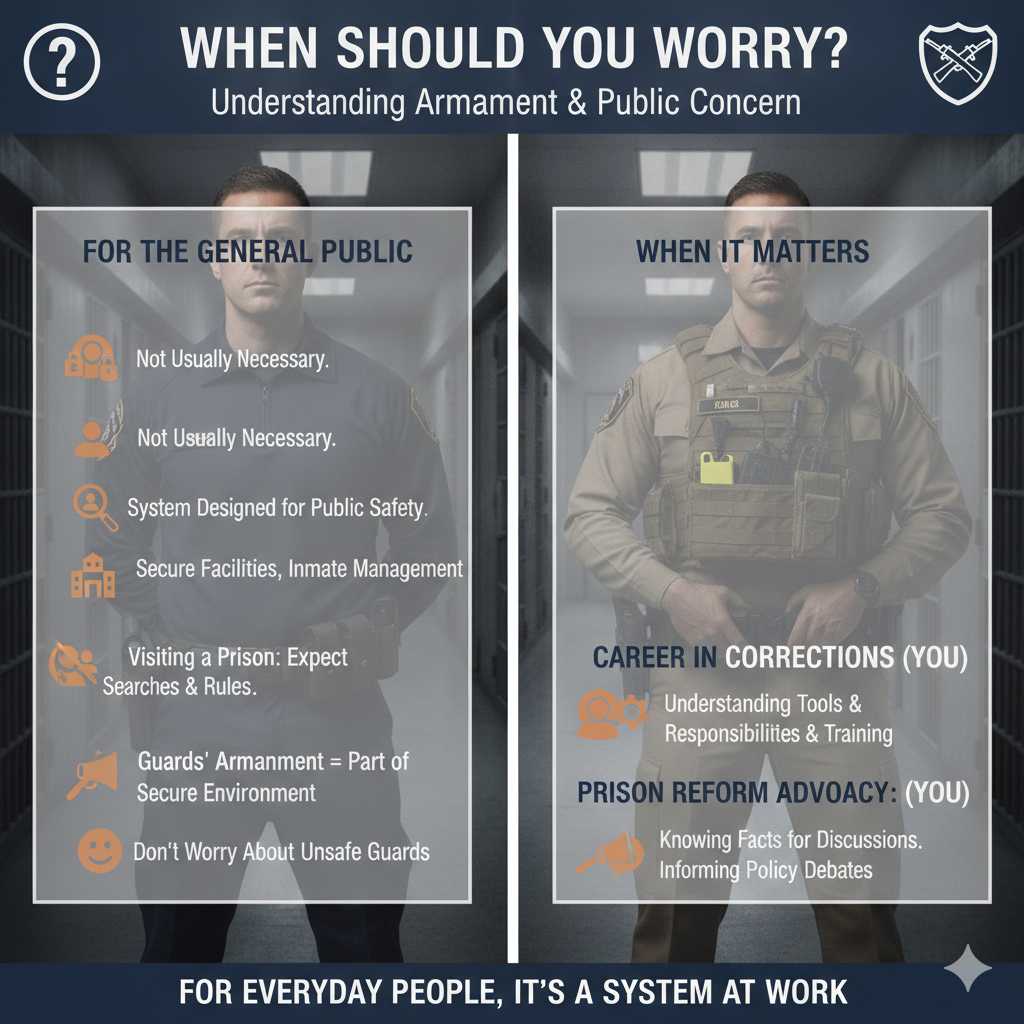
When Should You Worry?
For the general public, worrying about whether guards are armed isn’t usually necessary. This is a matter of prison policy and safety. The systems are designed to keep the public safe by managing inmates within secure facilities.
If you are visiting a prison, you will be searched. You will follow strict rules. The guards’ armament is part of that secure environment.
You don’t need to worry about them being unsafe. Their training and policies are there to prevent issues.
The only time you might need to think about this is if you are considering a career in corrections. Then, understanding the tools and responsibilities is key. Or, if you are an advocate for prison reform, knowing the facts helps in discussions.
For everyday people, it’s a system at work.
Quick Checks for Prison Visitors
- Follow Instructions: Always listen to the correctional officers.
- No Contraband: Do not bring anything into the prison that is not allowed.
- Be Polite: Treat all staff with respect.
- Report Issues: If you see something concerning (e.g., a guard acting unprofessionally), report it through the proper channels, not to inmates.
Frequently Asked Questions
What happens if an inmate tries to attack an armed guard?
If an inmate attacks an armed guard, the guard is trained to use appropriate force to defend themselves and others. This can range from using less-lethal options to deadly force if there is an imminent threat of serious harm or death.
Do guards carry weapons when transporting inmates?
Yes, when inmates are moved outside the prison, they are typically escorted by armed officers. Specialized transportation units often handle this, and they are equipped with firearms and other security measures to prevent escapes or assaults.
Are there any prisons where guards are not armed?
It’s very rare for guards in secure correctional facilities not to be armed at all. While some minimum-security settings or specific administrative roles might have different protocols, armed personnel are a standard part of prison safety and order.
How do prisons ensure guards use their weapons responsibly?
Prisons have strict policies and extensive training on the use of force. Officers must adhere to use-of-force continuums and are subject to thorough investigations for any incident involving their weapon. Regular re-training and practice sessions reinforce responsible use.
What are considered “less-lethal” weapons for guards?
Less-lethal weapons are tools that can incapacitate a person without causing death or permanent injury. Common examples include tasers, pepper spray (OC spray), and batons. These are often used before resorting to deadly force.
Conclusion
In conclusion, correctional guards inside U.S. prisons are almost always armed. This is a vital safety measure.
It helps them control dangerous situations. It protects staff, inmates, and the public. Policies vary, but the intent remains the same: to maintain order and security.