Are Coast Guard Officers Armed While On Duty?
The question of whether Coast Guard officers carry firearms while on duty is a common one. Many people see Coast Guard members in uniform and wonder about their tools. It’s natural to be curious about the responsibilities and equipment of those who protect our shores and waterways. This article will clear things up. We will explore their policies, the training involved, and why they are armed. Understanding this helps us appreciate the full scope of their vital mission.
For a related rules or safety question, Armed Guard At Bank Vs UnArmed: Essential Showdown gives readers more context before making assumptions.
For a closely related bow or archery topic, Are Arm Floaties Coast Guard Approved? Essential gives readers a useful next step.
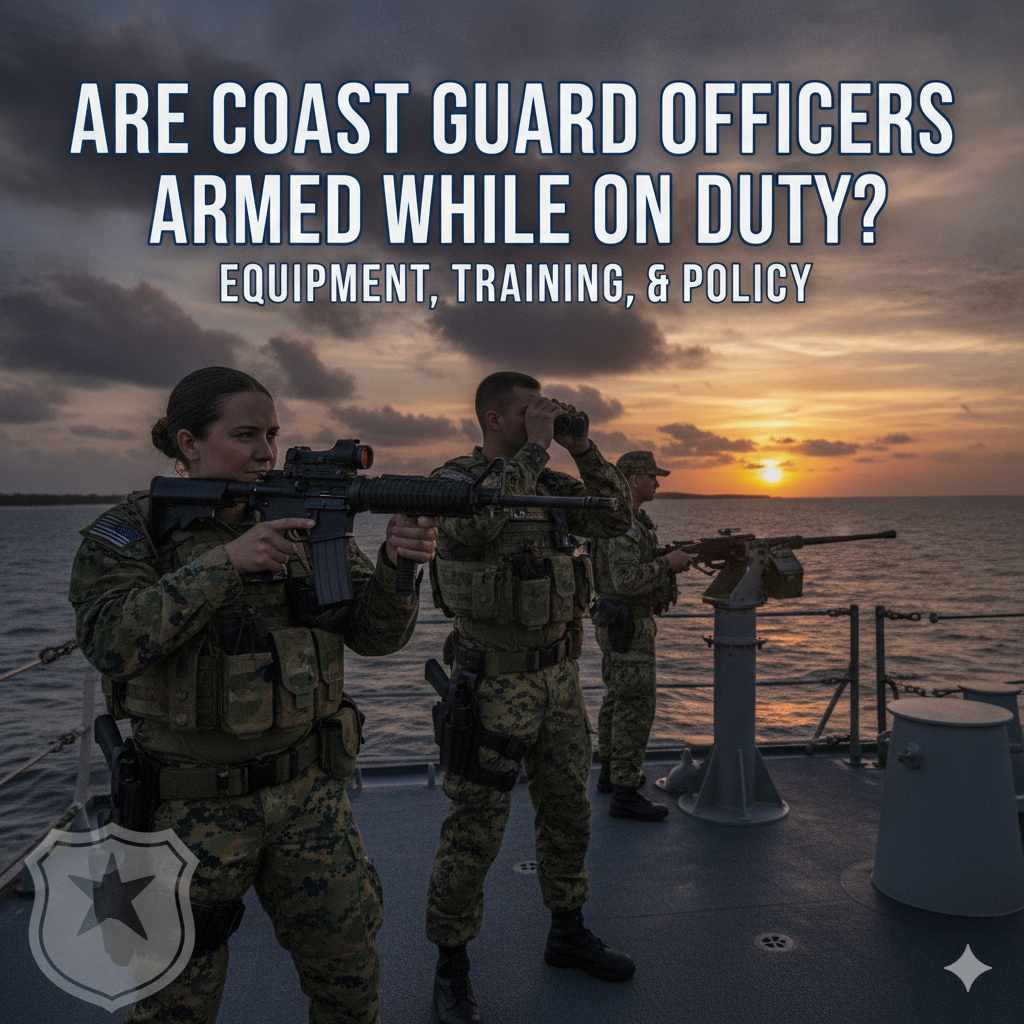
Yes, Coast Guard officers are armed while on duty. They carry firearms to perform their duties safely and effectively. This includes law enforcement, security, and national defense missions. Their armament is a critical part of their operational readiness.
Coast Guard Armament: A Closer Look
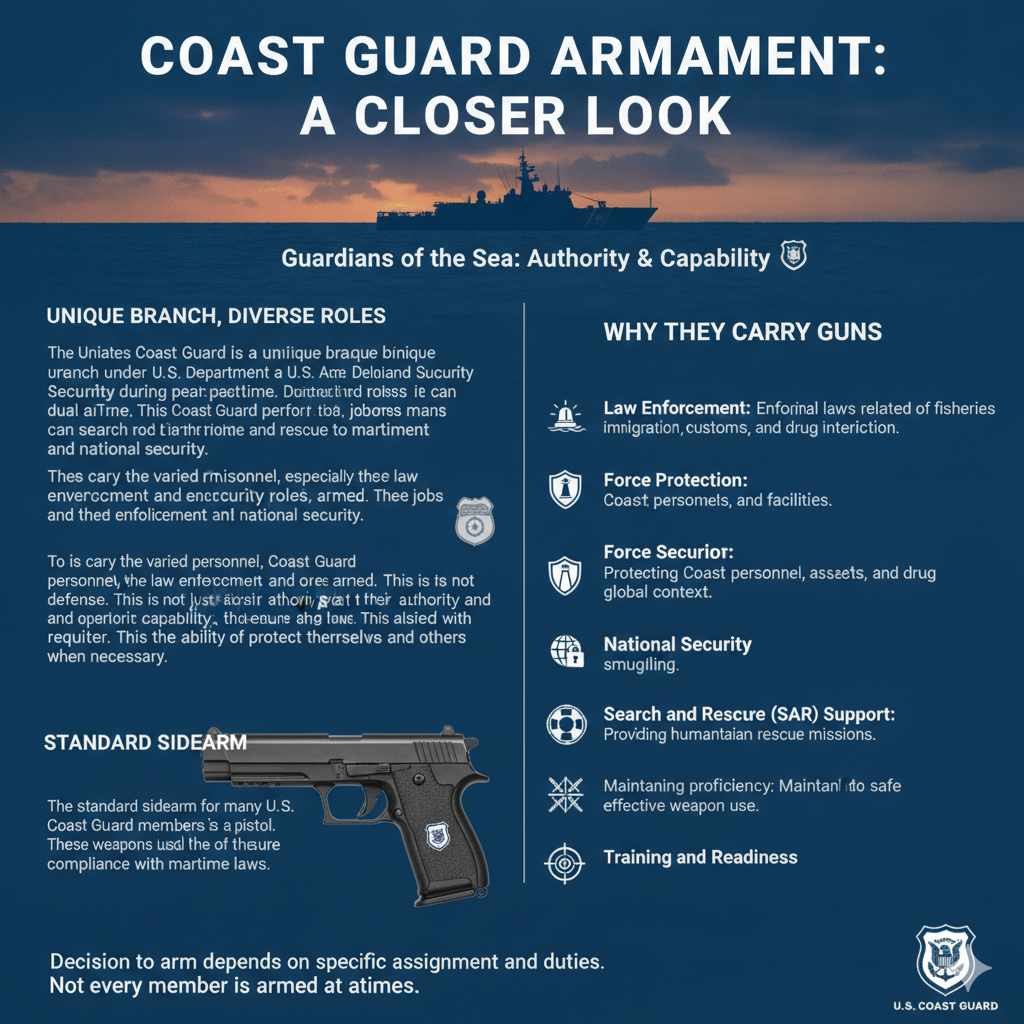
The United States Coast Guard is a unique branch of the U.S. Armed Forces. It operates under the Department of Homeland Security during peacetime. During wartime, it can be transferred to the Department of the Navy. This dual role means the Coast Guard performs many different jobs. These jobs range from search and rescue to maritime law enforcement and national security.
To carry out these varied missions, Coast Guard personnel, especially those in law enforcement and security roles, are armed. This is not just about defense. It is a fundamental part of their authority and operational capability. They are entrusted with enforcing laws on the water. This requires the ability to protect themselves and others when necessary.
The type of firearm carried can vary. However, the standard sidearm for many U.S. Coast Guard members is a pistol. This is similar to other law enforcement agencies in the United States. These weapons are used when there is a threat to life or property. They are also used to ensure compliance with maritime laws.
Why They Carry Guns
There are several key reasons why Coast Guard officers are armed:
Law Enforcement: The Coast Guard is the primary maritime law enforcement agency in the U.S. They enforce federal laws related to fisheries, immigration, customs, and drug interdiction. These situations can sometimes involve dangerous individuals or vessels.
Force Protection: Protecting Coast Guard personnel, assets, and facilities is crucial. This includes guarding ports, vessels, and shoreside installations from potential threats.
National Security: In a global context, maritime security is vital. The Coast Guard plays a role in preventing terrorism and smuggling. This often involves confronting potential adversaries.
Search and Rescue (SAR) Support: While SAR is primarily a humanitarian mission, there can be risks involved. Having a firearm can provide an officer with a sense of security if they encounter dangerous situations or individuals during a rescue operation.
Training and Readiness: Regular training with firearms is essential for maintaining proficiency. This ensures officers can use their weapons safely and effectively if called upon.
The decision to arm a particular officer or crew depends on their specific assignment and the nature of their duties. Not every Coast Guard member is armed at all times. But for those involved in missions that require it, carrying a firearm is standard practice.
My First Patrol: A Moment of Truth
I remember my first patrol as a new Petty Officer. The air was crisp, and the sun was just starting to dip below the horizon, painting the sky in shades of orange and purple. We were assigned to a cutter patrolling the international waters off the coast. Our mission was counter-narcotics. My hands felt a little clammy as I checked my issued sidearm. It felt heavy, a stark reminder of the responsibility I was taking on.
We received word about a suspicious vessel. As we approached, the adrenaline kicked in. The skipper gave the order to prepare for a boarding. My heart pounded in my chest as I followed my team onto the smaller pursuit boat. The waves slapped against the hull, adding to the tension. When we got close, the captain of the other boat started making erratic movements. He looked agitated.
In that moment, the training kicked in. I focused on my role, my hand resting near my holster. The captain of the suspicious boat eventually complied, but the situation was tense. It was a real eye-opener. This wasn’t just a job; it was about enforcing laws and keeping people safe. The weight of that firearm wasn’t just physical; it was the weight of potential action, of duty, and of trust placed in me. That experience solidified why carrying a firearm is not just a choice for many in the Coast Guard; it’s a necessity for their mission.
Understanding Coast Guard Firearm Policies
The Coast Guard has strict policies regarding the use of firearms. These policies are designed to ensure that firearms are used only when absolutely necessary and with appropriate restraint. The use of deadly force is governed by specific rules of engagement and legal frameworks.
The core principle is that deadly force is only authorized when there is a reasonable belief that it is necessary to defend oneself or others from an imminent threat of death or serious bodily harm. This is a high bar. It means that firearms are not used for minor infractions or to intimidate.
Training and Proficiency
All Coast Guard personnel who are authorized to carry firearms undergo rigorous training. This training covers:
Firearms Safety: This is the absolute first priority. Officers learn how to handle, store, and maintain their weapons safely.
Marksmanship: They practice extensively to become proficient shooters. This includes shooting from various positions and under different conditions.
Use of Force Scenarios: Training includes simulations of real-world situations where the use of force might be necessary. This helps officers make sound decisions under pressure.
Legal Aspects: They are taught the legal standards and policies governing the use of deadly force. This ensures they understand when and how they can use their weapon.
De-escalation Techniques: Training also emphasizes de-escalation. The goal is always to resolve a situation without resorting to force if possible.
This comprehensive training ensures that Coast Guard officers are well-prepared and responsible when carrying firearms. It is about competence and judgment, not just the ability to shoot.
Factors Influencing Armament Decisions
The decision to arm a specific Coast Guard officer or unit is not arbitrary. Several factors come into play, ensuring that armament aligns with mission requirements and risk assessments.
Mission Type Matters
Law Enforcement Patrols: High likelihood of being armed. This includes interdiction of illegal drugs, weapons, or undocumented migrants. Encountering armed suspects is a real possibility.
Search and Rescue: Generally less likely to be armed unless the SAR mission is in a high-risk area or involves known dangerous elements. Primary focus is on saving lives.
Port Security: Officers assigned to protect critical infrastructure like ports and naval bases are almost always armed. These are high-value targets.
Aviation Operations: Aircrews may or may not be armed depending on the specific flight mission and its associated risks.
Location and Threat Level
The geographic area of operation also influences armament. Operations in areas known for piracy, drug trafficking, or political instability will naturally involve more armed personnel. The Coast Guard constantly assesses threat levels in different regions to adjust its operational posture and armament policies accordingly.
Individual Role and Responsibility
Not all roles within the Coast Guard require carrying a firearm. Support staff, administrative personnel, and those in purely logistical roles typically do not carry weapons. Armament is generally reserved for those in direct operational, law enforcement, or security positions.
Real-World Scenarios: When Firearms Are Used
The use of firearms by Coast Guard members, while governed by strict policy, does occur in specific, high-stakes scenarios. These are rarely publicized unless they involve significant outcomes, but they illustrate the practical application of armament.
Counter-Drug Operations
Scenario: Interdicting a suspected drug-smuggling vessel in international waters. The vessel may be uncooperative, attempting to flee, or even pose a threat with weapons.
Firearm Use: Officers may use firearms to warn the vessel to stop, disable its engines, or in extreme cases, to protect themselves and their crew from armed smugglers.
Maritime Security Missions
Scenario: A Coast Guard vessel is tasked with securing a high-interest vessel or a sensitive area. An unauthorized vessel approaches aggressively.
Firearm Use: Warning shots or aimed fire might be used to deter the unauthorized vessel and prevent a breach of security.
Boarding Operations with Resistance
Scenario: A routine boarding for safety or law enforcement purposes encounters significant resistance. The individuals onboard may become violent or attempt to use weapons themselves.
Firearm Use: Officers would use their firearms to control the situation, protect themselves, and subdue any immediate threats.
It’s important to remember that these are situations where de-escalation has failed or is not possible due to an immediate, grave danger. The training emphasizes using the minimum force necessary to achieve the objective and ensure safety.
Myth vs. Reality: Common Misconceptions
There are a few common misunderstandings about Coast Guard armament. Let’s clear those up.
Contrast Matrix
Myth: All Coast Guard members carry guns all the time.
Reality: Only personnel assigned to specific roles, like law enforcement or security, are typically armed. Their duties dictate the need.
Myth: Coast Guard firearms are for aggressive boarding actions only.
Reality: Firearms are for protection and law enforcement. While used in boardings, their primary purpose is to ensure safety and authority when threats exist.
Myth: Coast Guard officers have unlimited authority to use their firearms.
Reality: Strict rules of engagement and use-of-force policies govern firearm use. They must justify any use of deadly force.
The Role of Non-Lethal Options
It’s also worth noting that the Coast Guard, like other law enforcement agencies, increasingly employs non-lethal options. These can include tasers, pepper spray, and expandable batons. These tools are often used first to de-escalate situations before resorting to firearms. This shows a commitment to using the least amount of force necessary.
When Coast Guard Officers Might NOT Be Armed
While many on duty are armed, there are plenty of situations where Coast Guard personnel are not carrying firearms. Understanding these exceptions helps paint a more complete picture.
Quick-Scan Table: When Coast Guard Personnel Aren’t Armed
| Duty Type | Reason for No Firearm |
| Search and Rescue (Standard) | Primary focus is humanitarian aid, low risk of confrontation. |
| Training Exercises (Non-Combat) | Simulations may not require live weapons; safety protocols differ. |
| Administrative Roles | Office-based work far from operational threats. |
| Ceremonial Duties | Public relations and parades do not involve law enforcement or security risks. |
| Aviation Support (Non-Security) | Ground crew or maintenance roles. |
The key differentiator is the direct requirement of the mission. If the mission involves law enforcement, security, or a credible threat to life, armament is likely. For missions focused purely on service, rescue, or support without inherent risk, firearms are not issued.
What This Means for You as a Citizen
For most citizens, the armament of Coast Guard officers is a reassuring presence. It signifies that there are trained professionals ready to enforce laws and protect national interests at sea.
If you encounter a Coast Guard vessel or personnel performing official duties, remember they are there to help or to ensure safety and security. Always comply with their lawful orders. If you are involved in an incident at sea or on navigable waters, their presence with firearms is a sign of their authority and the seriousness of their mission.
It’s unlikely that a civilian will directly interact with an armed Coast Guard officer unless there’s a specific enforcement action. In routine situations, like reporting a hazard or needing assistance, the armament of the officers present is not something you would typically need to be concerned about. Their primary goal is to resolve the situation safely and effectively, with or without the need to display or use their firearm.
Quick Tips for Maritime Encounters
If you find yourself in a situation where you encounter Coast Guard personnel, especially during an enforcement action, here are a few simple tips:
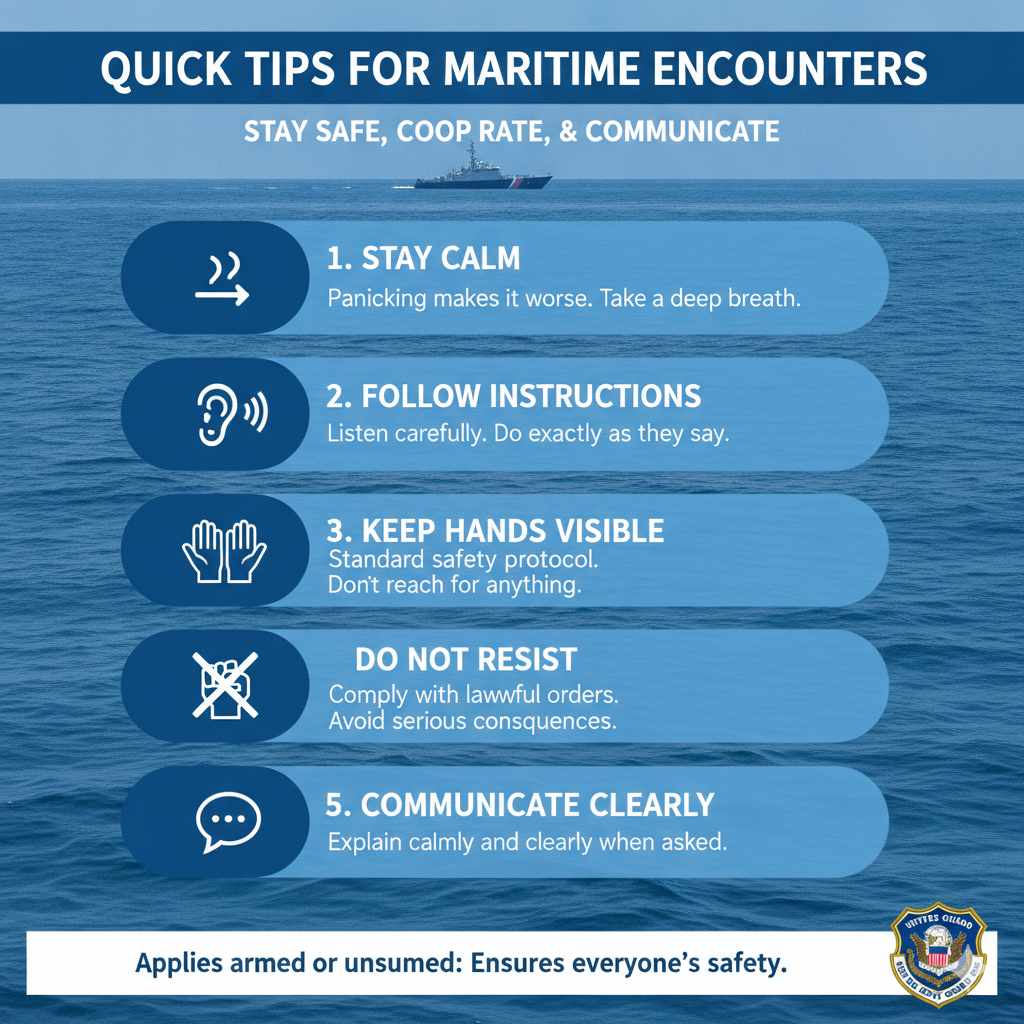
Stay Calm: Panicking can make any situation worse. Take a deep breath.
Follow Instructions: Listen carefully to their commands and do exactly as they say. They are trained for these scenarios.
Keep Hands Visible: This is a standard safety protocol. Let them see your hands so they know you are not reaching for a weapon.
Do Not Resist: Resisting lawful orders can lead to more serious consequences and potential use of force.
Communicate Clearly: If you need to explain something, do so calmly and clearly when given the opportunity.
These tips apply whether they are armed or not, but they are especially important if firearms are present. It ensures everyone’s safety.
Frequently Asked Questions
Are all Coast Guard members considered law enforcement officers?
No, not all Coast Guard members are considered law enforcement officers (LEOs). While the entire Coast Guard operates under federal law and has law enforcement authority in certain contexts, only specific ratings and commands are designated as LEOs with the full authority to carry firearms and enforce federal laws on the water.
What is the standard firearm used by the Coast Guard?
The standard sidearm for many Coast Guard law enforcement personnel is the SIG Sauer P229. However, specific weapon systems can vary based on unit assignment and mission requirements.
Can Coast Guard officers use their firearms to stop a fleeing vessel?
Yes, under specific circumstances, Coast Guard officers may be authorized to use deadly force to stop a fleeing vessel if it poses an imminent threat of death or serious bodily harm to the vessel’s crew, other vessels, or the Coast Guard personnel themselves. This is governed by strict rules of engagement.
What happens if a Coast Guard officer uses their firearm?
Any incident involving the discharge of a firearm, especially involving injury or death, undergoes a thorough investigation. This process ensures adherence to policies, rules of engagement, and legal standards. Investigations are conducted by the Coast Guard itself and potentially by other federal agencies.
Does the Coast Guard use firearms for force protection at bases?
Yes, Coast Guard installations and bases have security personnel who are armed to protect personnel and property. This is a critical part of force protection, especially for high-value or sensitive locations.
Are there situations where Coast Guard officers are armed but not on a law enforcement mission?
Yes. While law enforcement is a primary driver, armament can also be for general security and force protection. For instance, personnel on a vessel transiting through a high-risk area (like pirate-prone waters) might be armed for self-defense even if not actively engaged in an interdiction.
Final Thoughts on Coast Guard Armament
The armament of Coast Guard officers is a crucial aspect of their mission. It enables them to perform vital law enforcement, security, and national defense duties. Their rigorous training and strict policies ensure that firearms are used responsibly and only when necessary. This allows them to protect our shores and waterways effectively, keeping everyone safer. Understanding this aspect of their service helps us appreciate their dedication and preparedness.