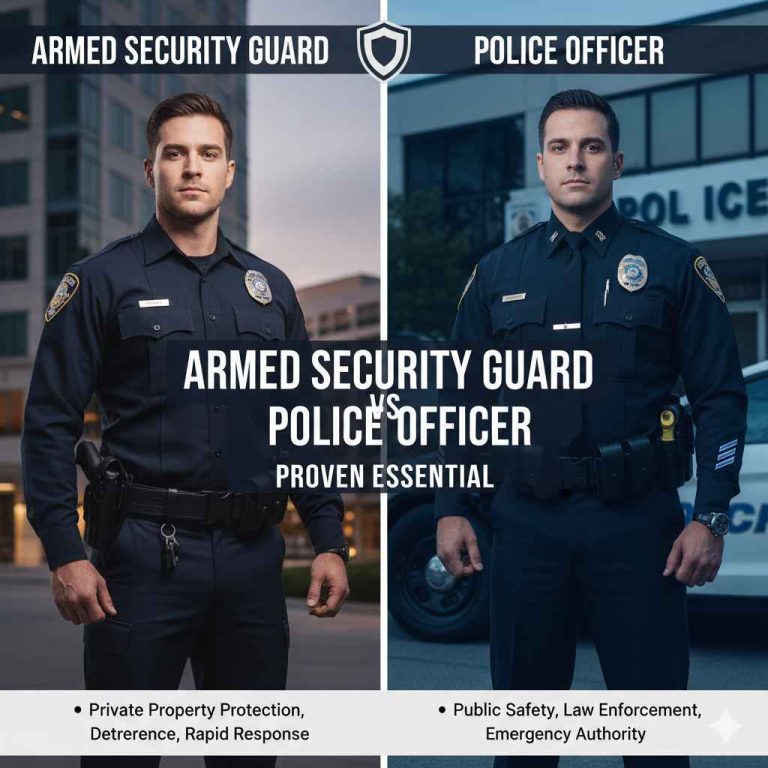
Armed Security Guard Vs UnArmed Guards: Proven Best
Choosing between armed security guard vs unarmed security guards depends entirely on your specific risk level and site needs. Unarmed guards are best for visibility and deterrence in low-risk areas, while armed guards offer the necessary force capability for high-threat environments where immediate lethal response might be required. Always assess the threat landscape first.**
Welcome! Deciding on the right kind of security team can feel like aiming at a target in low light—it’s confusing, and you don’t want to miss the mark. Many people wonder: Do I really need an armed guard, or will an unarmed guard do the job? This question often causes stress for property managers and business owners.
Don’t worry. Picking the right protection doesn’t need to be complicated. We will break down exactly what each type of guard offers, what they cost, and when you should choose one over the other. Think of me as your coach walking you through the range. By the end of this guide, you will know exactly which security setup gives you the best peace of mind for your unique situation.
Understanding the Core Difference: Armed vs. Unarmed Security
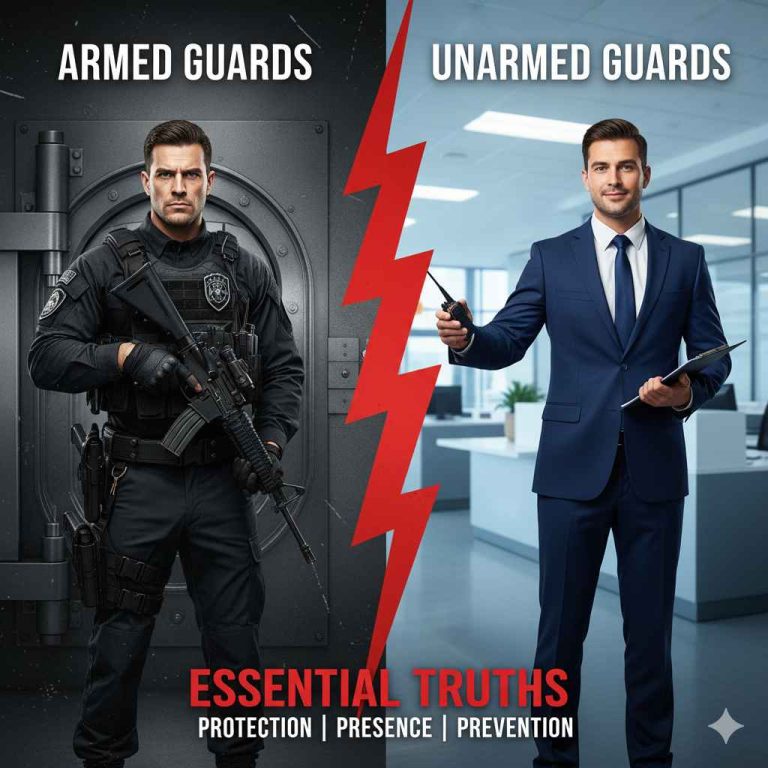
The main difference between armed security guard vs unarmed security guards is simple: the presence of a firearm. However, this difference touches on training, legal permissions, cost, and overall mission.
What is an Unarmed Security Guard?
An unarmed security guard is a visible deterrent. Their primary tools are their presence, professional appearance, training in observation, and communication skills. They are excellent for establishing control and discouraging casual theft or trespassing.
Think of them as the first line of visible defense. They are trained to observe, report incidents, enforce basic rules (like checking badges at a door), and call the police if a serious situation develops. They generally do not have the legal authority to detain someone aggressively or use force beyond basic citizen’s arrest principles, depending on local laws.
What is an Armed Security Guard?
An armed security guard is equipped with a firearm, usually a handgun, as part of their official duty gear. Carrying this weapon requires extensive background checks, rigorous training, state licensing specific to firearms, and often regular requalification.
Their role goes beyond simple observation. They are authorized (by law and their contract) to use deadly force if they, or the people they are protecting, face an imminent threat of serious bodily harm or death. This level of protection is reserved for sites with high perceived threats.

The Role and Responsibilities: What Each Guard Actually Does
While both guards wear uniforms and patrol, their day-to-day actions and limitations are very different. Understanding these roles helps you match the resource to the need.
Key Responsibilities of Unarmed Guards
Unarmed guards focus heavily on preventative measures and access control. They are highly effective for routine tasks where de-escalation through presence is the goal.
- Access Control: Checking IDs, issuing visitor badges, and ensuring only authorized personnel enter secure areas.
- Patrol and Observation: Walking assigned routes to look for unlocked doors, suspicious activity, or safety hazards (like tripping risks).
- Reporting: Documenting all incidents, suspicious persons, or maintenance needs clearly and promptly.
- Traffic Management: Directing customer or employee parking when needed.
- Customer Service: Answering basic questions and directing visitors—they are often the “face” of security.
Key Responsibilities of Armed Guards
Armed guards handle everything an unarmed guard does, but they carry the added responsibility and legal liability of carrying a firearm. Their presence often changes the dynamic of a situation immediately.
- High-Risk Deterrence: Their visibility alone often stops sophisticated criminals or organized retail theft rings.
- Asset Protection: Guarding high-value items, cash transports, or sensitive materials.
- Emergency Response: Being the first responder capable of neutralizing an immediate, life-threatening threat until local law enforcement arrives.
- Executive Protection: Providing close protection for individuals whose lives might be at risk.
Comparing Capabilities: The Critical Decision Matrix
To make the best choice between armed security guard vs unarmed security guards, we need to look at what they bring to the table in terms of capability and deterrence. This comparison helps clarify where your budget should go.
Deterrence Factor
Deterrence works in two ways: passive (just being there) and active (the perceived ability to respond).
- Unarmed: Excellent passive deterrence. A uniform signals rules are being watched. However, they offer low deterrence against determined, prepared criminals.
- Armed: Superior active deterrence. Most criminals will avoid a location where they know security can legally match their level of potential force.
Training and Certification
This is a significant differentiator. While all professional security officers must complete basic licensing, armed guards require specialized, continuous training.
For example, in many U.S. states, armed guards must meet specific training hours annually related to firearm proficiency, use-of-force laws, and legal updates. You can often find state-specific requirements through official sources, such as checking the licensing board guidelines provided by your Secretary of State’s office or local law enforcement training academies.
Legal Authority and Liability
This area is critical and often misunderstood. Unarmed guards generally have the same arrest powers as any civilian (citizen’s arrest), which should be used cautiously. Armed guards, while authorized to carry weapons, still operate under very strict use-of-force laws.
Using a firearm introduces massive legal liability. Security companies employing armed guards must carry much higher insurance policies because the risk associated with improper use of force is so high. If you hire armed security, ensure their training protocols are top-notch.
Cost Analysis: Armed vs. Unarmed Security Rates
Security is an investment, and the cost difference between armed and unarmed personnel directly reflects the increased training, insurance, and regulatory burden associated with carrying a weapon.
Generally, you can expect the hourly rate for an armed guard to be 25% to 50% higher than that of an unarmed guard covering the same shift.
| Factor | Unarmed Guard | Armed Guard |
|---|---|---|
| Base Hourly Rate (Estimate) | $20 – $35 per hour | $30 – $55+ per hour |
| Training Overhead | Basic licensing and site-specific training. | Extensive state licensing, firearms training, range time, and insurance. |
| Insurance Premium | Lower general liability coverage. | Significantly higher liability coverage due to potential lethal force incidents. |
| Best for | Low-risk environments, access control, customer service areas. | High-value assets, potential for violent confrontations, executive protection. |
When is Unarmed Security the Proven Best Choice?
For many typical commercial and retail settings, an unarmed guard is not just enough; it’s often the better, more balanced choice. If your primary goal is visible presence and administrative control, go unarmed.
Ideal Scenarios for Unarmed Guards:
- Retail Stores (Standard): When the main threat is shoplifting and you want a friendly face greeting customers, an unarmed guard deters opportunistic theft effectively.
- Office Buildings & Lobby Security: Managing entry/exit during business hours. They maintain professionalism while keeping unauthorized individuals out.
- Construction Sites (Perimeter Watch): Protecting equipment from casual theft overnight. The guard acts as an excellent deterrent and first reporter of trespassers.
- Events with Low Anticipated Conflict: Festivals, concerts, or internal corporate gatherings where orderly flow and adherence to rules are the main concern.
The key benefit here is relationship building. Unarmed guards are often perceived as less intimidating, making them better for environments where blending in and communicating positively is important for the brand experience.
When is Armed Security the Proven Best Choice?
Armed security is not chosen because it looks tougher; it is chosen when the risk assessment absolutely demands the capability to respond to a lethal threat. This is where the investment becomes necessary for safety.
When Armed Guards Are Essential:
- Banks and Financial Institutions: Protecting large amounts of cash and dealing with high-value transactions makes them prime targets for armed robbery.
- Jewelry Stores and High-Value Retail: Locations displaying easily convertible, high-value goods.
- Sensitive Infrastructure: Power plants, data centers, or utilities where sabotage could have widespread public impact.
- Executive or VIP Protection Details: Protecting individuals facing specific, credible threats of violence.
- Locations with Known Gang or Organized Criminal Activity: Situations where intruders are likely to be armed themselves or prepared for confrontation.
In these cases, relying solely on an unarmed guard to wait for police arrival during a dynamic, violent event could lead to catastrophic results. Armed guards provide the necessary immediate counter-measure.
The Crucial First Step: Conducting a Security Risk Assessment
Before you can confidently choose armed security guard vs unarmed security guards, you must know what you are guarding against. This process is called a Security Risk Assessment. Think of this like scouting the terrain before setting up an archery target.
Steps to Determine Your Security Needs:
- Identify Assets: What exactly needs protection? (People, cash, proprietary data, physical property?)
- Analyze Threat Level: What is the likelihood of an attack? (Low—petty theft; Medium—vandalism/protest; High—armed robbery/terrorism). Look at local crime statistics for comparable businesses in your area.
- Evaluate Vulnerabilities: How easy is it for someone to access your asset? (Are there multiple entry points? Poor lighting? Weak locks?)
- Review Existing Controls: What security measures do you already have? (Cameras, alarms, fences?)
- Determine Response Time: How long would it take local police to arrive if an alarm goes off? If the response time is long (e.g., 15 minutes in a rural area), you need a stronger on-site response capability.
If your assessment shows high threats and long police response times, armed security moves from being an option to a necessity. If threats are low and your goal is general oversight, save the budget for enhanced technology and unarmed personnel.
Focusing on Soft Skills: Where Unarmed Guards Excel
It is easy to fixate on firepower, but the best security often comes down to communication. Unarmed guards typically receive more focused training on customer service and de-escalation techniques.
The Power of Presence and Communication
In many business environments, the goal is to facilitate business, not interrupt it with heavy enforcement. An unarmed guard is often better suited for this:
- They act as a visible deterrent without escalating tension during minor disputes.
- They are often the primary liaison between the public and management, requiring high emotional intelligence.
- They can enforce rules (like no smoking or loitering) often without needing to draw attention to weaponry, keeping the environment calm.
Their training emphasizes techniques like verbal judo—using words to control a situation before it requires physical intervention. This is invaluable in public-facing roles.
Training Deep Dive: The Difference in Preparation
To truly appreciate the investment in armed security guard vs unarmed security guards, look closely at what their respective training entails.
Unarmed Guard Training Focus:
Training is centered on awareness and legal boundaries for interaction.
- Emergency Procedures (Fire, Medical Aid)
- Report Writing and Documentation Standards
- Observation and Surveillance Techniques
- Basic First Aid/CPR
- Rules of Engagement (When they can and cannot physically intervene)
Armed Guard Training Focus:
Armed guard training includes all the above, plus significant, high-stakes specialized training.
- Firearms Qualification: Regular, documented proficiency tests on the specific weapon carried.
- Use of Force Continuum: Detailed instruction on when and how force escalation is legally justified, emphasizing that lethal force is the absolute last resort.
- Tactical Response Scenarios: Practice drills for active threat situations, coordinating with actual police protocols.
- Weapon Retention and Safety: Ensuring the weapon does not fall into unauthorized hands.
Because of this specialized, high-risk training, armed guards command higher wages and require closer supervision from their employing agencies.
Technology Integration: A Force Multiplier for Both
The best security plan today rarely relies solely on personnel. Technology acts as a force multiplier, making even an unarmed guard incredibly effective.
When comparing armed security guard vs unarmed security guards, consider how technology can fill the gaps:
- CCTV and Analytics: Modern cameras that use AI to detect unusual loitering or packages left unattended can alert an unarmed guard instantly, allowing them to respond before a threat develops.
- Advanced Access Control: Biometric scanners or keycard systems remove the need for a guard to manually check every ID, freeing them up for patrols.
- Two-Way Radios/Body Cameras: These ensure real-time communication and create an objective record of all interactions, vital for both guard professionalism and liability defense.
If you are budget-conscious, sometimes upgrading your cameras and alarm response monitoring system is a more cost-effective deterrent than upgrading personnel from unarmed to armed.
Legal Considerations: Jurisdiction Matters
Security regulations are highly localized. What is true for a guard in California may not apply in Texas or New York. This is especially true regarding firearms possession.
Before contracting any armed service, you must confirm that the security company:
- Holds the necessary state licensing for armed security contracts.
- Ensures every guard is individually licensed to carry in that specific state/jurisdiction.
- Maintains the required levels of insurance coverage specific to armed response liabilities.
For up-to-date state requirements regarding guard licensing, it is always best to consult the official portal for your state’s Department of Public Safety or equivalent regulatory body.

Pros and Cons Summary Table
Here is a final look at the primary advantages and disadvantages to help you weigh the decision on armed security guard vs unarmed security guards.
| Type of Guard | Pros | Cons |
|---|---|---|
| Unarmed Guard | Lower hourly cost, excellent for visible deterrence, fosters positive public interaction, less legal liability risk. | Cannot legally stop a determined, armed intruder, lower deterrence against professional threats. |
| Armed Guard | Highest level of immediate threat neutralization, superior deterrence against violent crime, required for many high-value assets. | Significantly higher cost, higher potential for legal liability, requires highly specialized training, may intimidate the public or staff. |
Frequently Asked Questions (FAQ) for Beginners
Q1: Does an unarmed guard have the right to detain someone?
A: Yes, but only under the laws governing a “citizen’s arrest,” just like any regular citizen. They should only detain someone if they witness a crime and the suspect needs to be held briefly for police arrival. Active physical restraint should be a last resort.
Q2: Will having armed guards attract more criminals?
A: In most cases, no. Armed guards typically deter serious criminals rather than attract them. Professional criminals usually avoid targets where immediate armed resistance is present. However, in very low-crime or community-focused environments, visibly armed guards may create a perception that the location is high-risk. That’s why risk assessment is crucial before deployment.
Q3: Can an armed guard use their firearm whenever they feel threatened?
A: Absolutely not. Armed guards must follow strict use-of-force laws defined by state regulations and legal precedent. Deadly force is only justified when there is an imminent threat of serious bodily harm or death. Misuse can result in criminal charges and civil lawsuits. Organizations such as Occupational Safety and Health Administration emphasize workplace safety planning to reduce situations where force might escalate in the first place.
Q4: Is armed security always better than unarmed security?
A: No. “Better” depends entirely on the environment. For example, a corporate office lobby focused on visitor management benefits more from professional, customer-service-oriented unarmed guards. A bank handling large cash volumes may require armed protection. Over-securing a low-risk site can increase costs unnecessarily and potentially create discomfort among employees or customers.
Q5: Can I combine armed and unarmed guards at the same site?
A: Yes, and this hybrid model is common. Many facilities use unarmed guards for access control and patrol duties while stationing armed guards in high-risk zones (such as cash rooms or overnight shifts). This approach balances cost efficiency with elevated protection where it truly matters.
Conclusion
The debate between armed security guard vs unarmed security guards is not about which is stronger — it’s about which is appropriate.
- Choose unarmed guards for visibility, deterrence, customer interaction, and low-risk oversight.
- Choose armed guards when protecting high-value assets or responding to credible threats where immediate defensive capability is necessary.
The proven best choice always begins with a proper risk assessment. Match the guard’s capability to your real-world threat level, not fear or assumption.
When security aligns with risk, you gain protection, control, and true peace of mind — without overspending or under-preparing.