
Did The State Department Release Ukraine Aid: Proven Facts
Yes, the State Department, as part of the U.S. government, ultimately released aid to Ukraine. In 2019, aid was temporarily delayed by the White House but was fully released in September of that year. Since the 2022 full-scale invasion, the U.S. has consistently authorized and delivered billions of dollars in aid to Ukraine.
For a closely related bow or archery topic, Did Queen Release New Music After Live Aid? gives readers a useful next step.
For a closely related bow or archery topic, Did the Pentagon Release the Aid to Ukraine: Essential gives readers a useful next step.
Understanding U.S. aid to Ukraine can feel confusing. News reports often mention different agencies, dollar amounts, and political debates. You might hear about a hold on aid one minute and a new package the next. This can make it hard to know what the real story is. Many people wonder if the promised support ever actually reaches its destination.
The good news is that the facts are clear once you break them down. The process involves different parts of the U.S. government, and certain events have created confusion. But the core answer is straightforward.
In this guide, we will walk through the proven facts about U.S. aid to Ukraine. We will look at key moments, explain how the process works, and clear up common questions. You will get a simple, step-by-step understanding of what happened and what is happening now.
Understanding U.S. Aid to Ukraine: What It Is
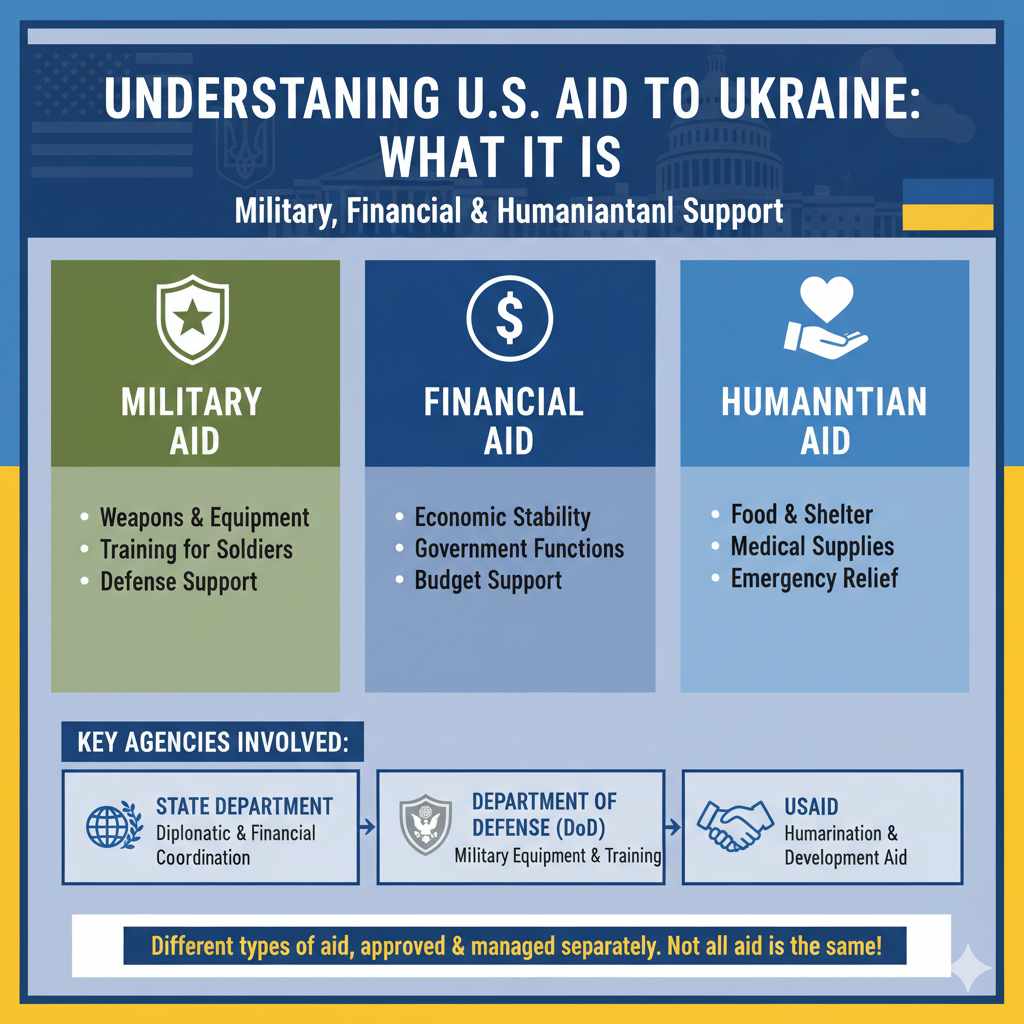
Before diving into specific events, it helps to know what “aid to Ukraine” means. U.S. support isn’t just one thing; it comes in several forms. The main goal is to help Ukraine defend itself, keep its government running, and care for its people. The three main types of aid are military, financial, and humanitarian.
The State Department plays a key role, especially in coordinating diplomatic and financial support. However, it works alongside other major agencies, like the Department of Defense (DoD) and the U.S. Agency for International Development (USAID), to deliver this help.
Here’s a simple breakdown of the different kinds of aid:
| Type of Aid | What It Includes | Lead U.S. Agencies |
|---|---|---|
| Military Aid | Weapons, ammunition, vehicles, training, and intelligence support. | Department of Defense (DoD), State Department |
| Financial Aid | Direct funding to help the Ukrainian government operate (pay pensions, salaries, etc.). | Department of the Treasury, USAID, State Department |
| Humanitarian Aid | Food, shelter, medical supplies, and support for refugees and displaced people. | USAID, State Department |
Each type of aid is approved and managed differently, which is why news headlines can sometimes seem contradictory. One type of aid might be flowing smoothly while another is being debated in Congress.
The 2019 Hold on Aid: A Closer Look
Much of the confusion about whether aid was released stems from events in 2019. This single event received major media attention and led to a presidential impeachment inquiry. Understanding what happened here is key to knowing the full story.
Here are the basic facts:
- Congress Approved the Aid: In 2019, a bipartisan majority in Congress approved nearly $400 million in security assistance for Ukraine. This money was meant to help Ukraine defend itself against Russian aggression in its eastern regions.
- A Hold Was Placed on the Funds: In July 2019, the White House Office of Management and Budget (OMB) placed a hold on this aid. This meant the approved money could not be sent to Ukraine. The State Department and Department of Defense were instructed not to release the funds.
- The Hold Was Temporary: The hold lasted for 55 days. During this time, government officials from various departments questioned the reason for the hold and warned that the money would expire if not sent soon.
- The Aid Was Released: On September 11, 2019, the hold was lifted. The administration released the aid, and the funds were sent to Ukraine before the fiscal year deadline.
So, while the aid was temporarily stopped, it was ultimately released. The controversy was not about whether the aid was eventually sent, but about why it was delayed in the first place. The delay was linked to requests for Ukraine to announce investigations into political rivals, which sparked intense political and legal debate.
Key Events in the 2019 Aid Release Timeline
To make sense of the 2019 situation, looking at a timeline is very helpful. It shows the clear progression from the aid being approved to when it was finally released.
- May 23, 2019: The Department of Defense officially certifies to Congress that Ukraine has made enough progress on anti-corruption reforms to receive the military aid. This was a necessary legal step.
- June 18, 2019: The Pentagon announces its plan to provide $250 million of the aid package to Ukraine. The remaining funds were managed by the State Department.
- July 18, 2019: The Office of Management and Budget (OMB) places the first official hold on the aid, just days before a scheduled phone call between the U.S. and Ukrainian presidents.
- July 25, 2019: President Trump has a phone call with Ukrainian President Volodymyr Zelenskyy. The transcript of this call later became a central piece of the impeachment inquiry.
- August 2019: Throughout the month, government officials express growing concern about the hold. They worried the delay was improper and that the funds would expire at the end of the fiscal year on September 30.
- September 11, 2019: The White House lifts the hold on the aid. The State Department and Department of Defense are cleared to release the nearly $400 million in funds to Ukraine.
This timeline shows a clear delay, followed by a release. The facts confirm that the money was not permanently withheld but was used as leverage for a period of time before being sent.
The Government Accountability Office (GAO) Ruling
After the 2019 hold on aid, many questioned its legality. The U.S. Constitution gives Congress the power to appropriate funds. The executive branch is generally required to spend that money as Congress directs. An independent, non-partisan agency called the Government Accountability Office (GAO) investigated the matter.
In January 2020, the GAO released its official legal decision. It was clear and direct.
The GAO concluded that the OMB’s hold on the aid was illegal. They found that it violated the Impoundment Control Act (ICA). This law limits the president’s ability to withhold funds that Congress has approved for a specific purpose.
Here’s a simple summary of the GAO’s findings:
- Faithful Execution of the Law: The GAO stated that the President must “take care that the laws be faithfully executed.” This means when Congress directs money to be spent, the executive branch must do so.
- No Legal Justification: The OMB argued the hold was a “programmatic delay” to see if the aid was necessary. The GAO rejected this, stating the reason given was not a legally permitted one for withholding funds.
- A Violation, Not a Policy Disagreement: The report made it clear that this was not just a policy difference but a violation of the law. You can read the full decision on the GAO’s website.
This ruling is a key “proven fact.” It confirms that while the aid was eventually released, the act of withholding it was found to be unlawful by the U.S. government’s own watchdog.
Aid to Ukraine After the 2022 Invasion
The conversation around aid to Ukraine changed dramatically after Russia launched its full-scale invasion in February 2022. The nearly $400 million discussed in 2019 is a small fraction of the support provided since then. Since 2022, the U.S. has committed tens of billions of dollars in assistance.
This new phase of aid has been much more consistent and public. Congress has passed several large aid packages, which the President has signed into law. The State Department and Department of Defense then work to deliver this aid as quickly as possible. These packages are often announced publicly and include detailed lists of the equipment and support being sent.
The scale of this support is immense. Here is a table to give an idea of the total U.S. aid committed to Ukraine from early 2022 through mid-2023.
| Category of Aid (Since Feb 2022) | Approximate Value Committed | Examples |
|---|---|---|
| Military Assistance | Over $40 billion | HIMARS rocket systems, Patriot missile batteries, tanks, artillery shells, drones. |
| Financial & Budget Support | Over $25 billion | Direct payments to the Ukrainian government to fund public services. |
| Humanitarian Assistance | Over $2 billion | Food, clean water, healthcare, and emergency shelter for displaced people. |
This ongoing aid is delivered through several established mechanisms, ensuring a steady flow of support. For more details, the U.S. Department of State provides regular updates on security cooperation with Ukraine.
How Is Aid Delivered and Tracked Today?
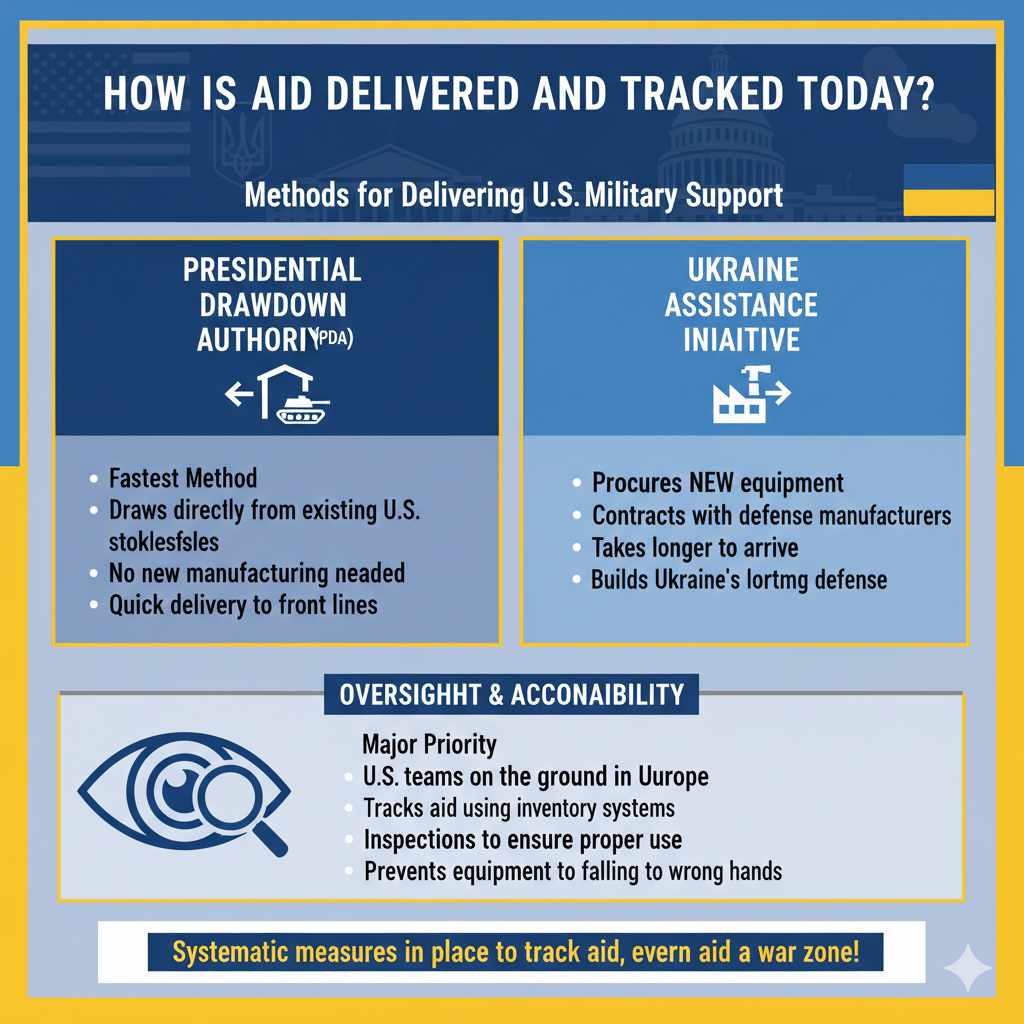
With so much aid flowing to Ukraine, many people rightly ask how it gets there and how it is tracked. The U.S. government has specific, established methods for delivering aid, especially military support.
The two primary methods are:
- Presidential Drawdown Authority (PDA): This allows the President to send military equipment and supplies directly from existing U.S. stockpiles. It is the fastest way to get aid to the front lines because it does not require new manufacturing contracts.
- Ukraine Security Assistance Initiative (USAI): Under USAI, the U.S. government procures new equipment and capabilities from defense manufacturers. This aid takes longer to arrive but helps build Ukraine’s long-term defense capabilities without depleting U.S. stocks.
Oversight is a major priority. The U.S. government has teams on the ground in Ukraine and Europe to track the aid, particularly weapons. They use inventory systems and conduct inspections to ensure the equipment is used for its intended purpose and to prevent it from falling into the wrong hands. While no system is perfect in a war zone, these accountability measures are a core part of the aid process.
The Role of the State Department vs. the Department of Defense
It’s common to hear just “U.S. aid,” but different departments handle different pieces of the puzzle. The State Department’s role is crucial, but it’s not the only agency involved. Here’s how their responsibilities generally break down:
| Agency | Primary Role in Ukraine Aid |
|---|---|
| State Department | Manages Foreign Military Financing (FMF), which gives Ukraine money to buy U.S. defense equipment. It also leads humanitarian aid efforts and coordinates the overall diplomatic strategy. |
| Department of Defense (DoD) | Manages the direct transfer of military hardware through PDA and USAI. It also handles the logistics of shipping equipment and training Ukrainian soldiers on how to use it. |
Think of it this way: The State Department often manages the policy and financing, while the DoD handles the military hardware and logistics. They work in close partnership to execute the U.S. government’s strategy.
Frequently Asked Questions (FAQ)
So, was the Ukraine aid ever released?
Yes, absolutely. The aid that was temporarily held in 2019 was fully released in September 2019. Since the full-scale invasion in 2022, the U.S. has continuously delivered tens of billions of dollars in aid through multiple packages approved by Congress.
Who stopped the aid in 2019?
The hold on aid in 2019 was directed by the White House through the Office of Management and Budget (OMB). While the State Department and Pentagon were instructed to carry out the hold, the decision came from the executive office of the President.
Did the State Department block the aid?
No. The State Department was instructed by the White House to withhold the aid. In fact, testimony during the impeachment inquiry revealed that many State Department officials were concerned about the hold and worked to get it lifted.
Why was the 2019 hold on aid controversial?
It was controversial for two main reasons. First, the non-partisan Government Accountability Office ruled that the hold was illegal. Second, it was linked to requests that Ukraine’s president announce investigations into the U.S. president’s political rivals, raising concerns about the use of foreign aid for political purposes.
How much aid has the U.S. given Ukraine since 2022?
The United States has committed over $75 billion in total assistance to Ukraine since the beginning of the 2022 invasion. This includes military, financial, and humanitarian support.
Is all U.S. aid to Ukraine weapons?
No. A significant portion of the aid is financial support to keep the Ukrainian government functioning, such as paying for pensions, first responders, and healthcare workers. Another part is humanitarian aid, which includes food, shelter, and medical supplies for civilians.
Who approves U.S. aid to Ukraine?
The U.S. Congress has the “power of the purse” and must approve or appropriate all funds for foreign aid. After Congress approves an aid package, the President’s administration, through agencies like the State Department and DoD, is responsible for implementing it and delivering the aid.
Conclusion
So, did the State Department release Ukraine aid? The proven facts show a clear answer: yes. While a specific aid package was controversially and illegally delayed for 55 days in 2019, it was ultimately released in full. That single event, however, created lasting confusion for many people.
Since the full-scale invasion of Ukraine in 2022, the U.S. response has been entirely different. The State Department, in concert with the Department of Defense and other agencies, has facilitated a historic and ongoing flow of military, financial, and humanitarian support. This aid is approved by Congress in large packages and delivered through established, transparent channels.
Understanding the facts requires separating the 2019 political controversy from the massive, sustained aid effort that began in 2022. By looking at the timeline, the different types of aid, and the roles of each government branch, the picture becomes clear. The U.S. has been, and continues to be, the single largest provider of assistance to Ukraine.


