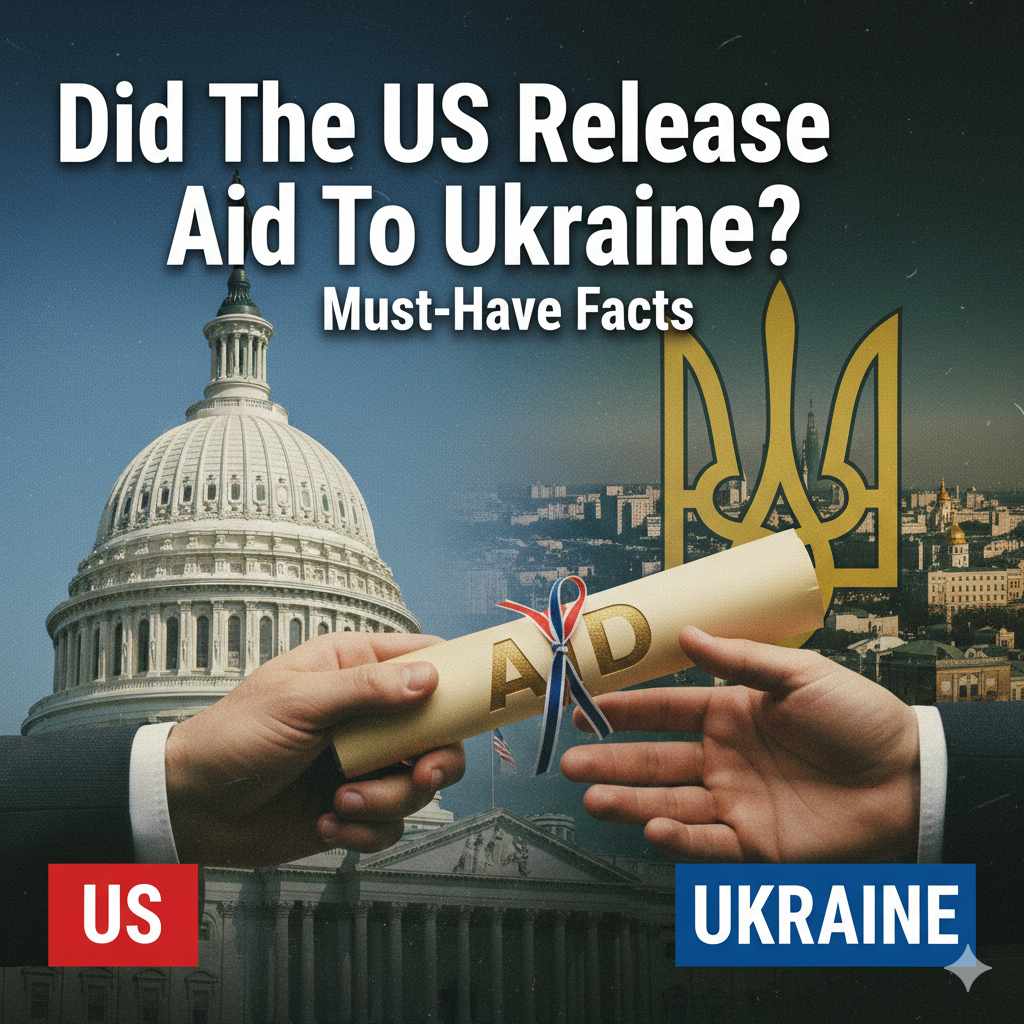
Did The Us Release Aid To Ukraine? Must-Have Facts
Yes, the United States released a major aid package to Ukraine in April 2024. After months of debate, Congress passed and the President signed a $61 billion bill. This funding provides critical military equipment, economic support, and humanitarian assistance to help Ukraine defend itself.
If you follow the news, you have likely heard about U.S. aid for Ukraine. The headlines can be confusing. One day, aid is blocked. The next, it is approved. It is hard to know what is actually happening. Many people feel lost in the complex debates and big numbers.
You are not alone if you find this topic confusing. The process involves many steps, from political debates to global logistics. But understanding it is important. This aid directly impacts events happening thousands of miles away.
This guide will make it simple. We will break down everything you need to know. We will explain what was approved, what it includes, and how it gets to Ukraine. You will get clear facts without the complicated jargon.
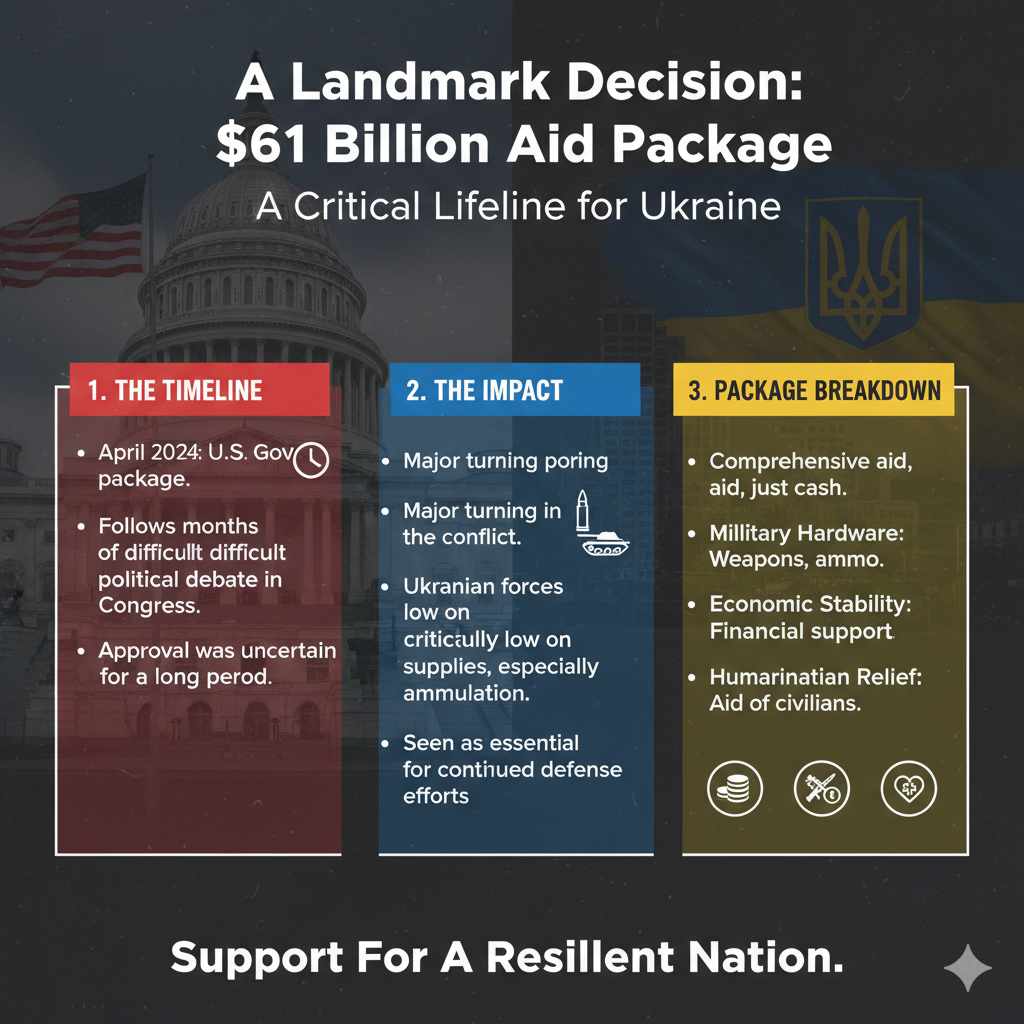
A Landmark Decision: The $61 Billion Aid Package
In April 2024, a major turning point occurred. The U.S. government approved a new, large-scale aid package for Ukraine valued at nearly $61 billion. This decision came after a long and difficult period of political debate in the U.S. Congress that lasted for several months. For a while, it was uncertain if the aid would ever be approved.
The approval was a significant event. Ukrainian forces were running low on essential supplies, especially ammunition. The delay in aid had created serious challenges on the battlefield. This new package was seen as a critical lifeline, providing Ukraine with the resources needed to continue its defense efforts.
The funding is not just one lump sum of cash. It is a comprehensive package designed to address several urgent needs. It covers military hardware, economic stability, and humanitarian relief for civilians affected by the conflict. Each part of the package plays a vital role in supporting Ukraine as a whole.
What’s Inside the Aid Package? A Closer Look
To understand the impact of the $61 billion, it helps to see how it is divided. The funds are allocated to three main areas. Each area targets a different aspect of the challenges Ukraine is facing.
Military and Security Assistance
This is the largest part of the package. The primary goal is to provide the Ukrainian military with the weapons and equipment it needs to defend its territory. This funding is crucial for replenishing supplies that have been used up in intense fighting. Key items funded by this portion include:
- Ammunition: This is one of the most critical needs. It includes artillery shells, mortar rounds, and bullets for small arms. Without a steady supply of ammunition, it is impossible to hold defensive lines.
- Air Defense Systems: These systems, like Patriot missiles, are vital for protecting Ukrainian cities, troops, and critical infrastructure from air strikes and missile attacks.
- Artillery and Long-Range Missiles: Systems like HIMARS and ATACMS allow Ukrainian forces to strike targets far behind enemy lines, disrupting supply chains and command centers.
- Armored Vehicles: This includes tanks, infantry fighting vehicles, and other armored carriers that provide protection and mobility for troops on the front lines.
Economic and Financial Support
War is incredibly expensive and destructive. It disrupts a country’s entire economy. This part of the aid helps the Ukrainian government continue to function. It ensures that essential public services do not collapse. This financial support helps pay for:
- Government Salaries: Paying the salaries of teachers, doctors, first responders, and other public servants.
- Pensions: Ensuring that elderly citizens continue to receive their pension payments.
- Infrastructure Repair: Funding to help repair damaged energy grids, water systems, and transportation networks.
This support is often provided through grants or loans. It is meant to prevent an economic collapse, which would be just as devastating as a military defeat. It provides stability for the Ukrainian people during a time of immense uncertainty.
Humanitarian Aid
The conflict has created a massive humanitarian crisis. Millions of people have been forced to flee their homes, and many are in desperate need of basic necessities. This portion of the aid is focused on helping civilians affected by the war. It funds things like:
- Food and Clean Water: Providing essential supplies to communities where access has been cut off.
- Shelter: Helping displaced families find safe places to live.
- Medical Supplies: Supplying hospitals with medicine, equipment, and other critical items to treat the sick and wounded.
- Support for Refugees: Assisting both those displaced within Ukraine and those who have fled to neighboring countries.
A Timeline of US Aid to Ukraine Since 2022
The April 2024 package is the latest in a series of significant aid commitments from the United States since the full-scale invasion began in February 2022. Understanding the history of this support provides important context for the most recent decision. The U.S. has consistently been the largest single donor of aid to Ukraine.
Here is a simplified look at some of the key moments in U.S. aid delivery:
| Date / Period | Key Action or Package | Significance |
|---|---|---|
| February – March 2022 | Initial Emergency Response | Immediately after the invasion, the U.S. sent anti-tank Javelin and anti-air Stinger missiles. This aid was crucial in helping Ukraine defend its capital, Kyiv. |
| Summer 2022 | Introduction of HIMARS | The delivery of High Mobility Artillery Rocket Systems (HIMARS) gave Ukraine the ability to strike high-value Russian targets deep behind the front lines, changing the dynamics of the war. |
| Late 2022 – Early 2023 | Advanced Systems Approved | The U.S. approved sending advanced Patriot air defense systems and Abrams tanks. This signaled a long-term commitment to providing more sophisticated weaponry. |
| Late 2023 – Early 2024 | Aid Stalemate in Congress | New funding was held up for months due to political disagreements in the U.S. This period led to severe ammunition shortages for Ukrainian forces on the front lines. |
| April 2024 | $61 Billion Supplemental Bill | After a long delay, a major bipartisan bill was passed, releasing a massive amount of military, economic, and humanitarian aid to address Ukraine’s urgent needs. |
How Does This Aid Actually Reach Ukraine?
Approving the money is just the first step. Getting weapons, equipment, and funds to Ukraine is a complex logistical challenge. The process involves several stages and two main methods for delivering military hardware.
Here is a step-by-step breakdown of how it generally works:
- Authorization and Appropriation: First, the U.S. Congress must pass a law that authorizes the spending and allocates the funds, known as appropriation. The President then signs this bill into law, making the money officially available. This is what happened in April 2024.
- Planning and Allocation: Government agencies, primarily the Department of Defense and the Department of State, decide exactly how the money will be used. They identify Ukraine’s most urgent needs and match them with available U.S. resources.
- Sourcing the Equipment: This is where the two main pathways come in. The U.S. uses a combination of both to get aid out as quickly and efficiently as possible.
- Presidential Drawdown Authority (PDA): This is the fastest method. It allows the President to take weapons and equipment directly from existing U.S. military stockpiles and send them to a foreign partner. As the U.S. Department of State explains, this is used for urgent needs because it does not require new contracts or production time. The equipment can often be shipped within days or weeks.
- Ukraine Security Assistance Initiative (USAI): This method involves the U.S. government buying brand-new equipment from defense contractors for Ukraine. USAI is used for longer-term needs. While it takes more time for the equipment to be manufactured and delivered, it doesn’t deplete U.S. military stocks.
- Logistics and Delivery: Once the equipment is ready, it is transported to Europe. This is usually done by military cargo planes and ships. From staging bases in allied countries like Poland and Germany, the aid is then moved across the border into Ukraine by land. This final leg of the journey is carefully coordinated to ensure it arrives safely.
The Impact of the Aid: Why Is It So Important?
The release of this aid has far-reaching consequences. It is not just about sending weapons; it is about influencing the direction of the war, ensuring regional stability, and upholding international principles. The impact is felt in several key areas.
For Ukraine’s Defense
For Ukraine, this aid is a matter of survival. Before the package was approved, Ukrainian soldiers were rationing artillery shells, sometimes being out-fired ten to one. This made it extremely difficult to defend their positions. The new influx of ammunition and equipment allows them to strengthen their defensive lines, better protect their cities from air attacks, and potentially mount counter-offensives. It boosts morale for both the military and the civilian population, showing them they are not alone in their fight.
For European Security
Many European nations view the war in Ukraine as a direct threat to their own security. They believe that if Russia is successful in Ukraine, it may be emboldened to threaten other countries in Eastern Europe, including NATO members. By helping Ukraine defend itself, the U.S. and its allies are also investing in their own security. A strong and stable Ukraine acts as a buffer and helps deter further aggression on the continent. This is why many European countries have also provided significant aid packages of their own.
For US Interests
From the perspective of the United States, providing aid serves several strategic interests. It allows the U.S. to weaken a major geopolitical adversary without committing its own troops to combat. It also reinforces the U.S. role as a leader in a global alliance system and upholds the principle that international borders should not be changed by force. According to a report from the Council on Foreign Relations, a significant portion of the money allocated for aid is actually spent inside the United States, funding American jobs to produce the weapons and equipment being sent abroad.
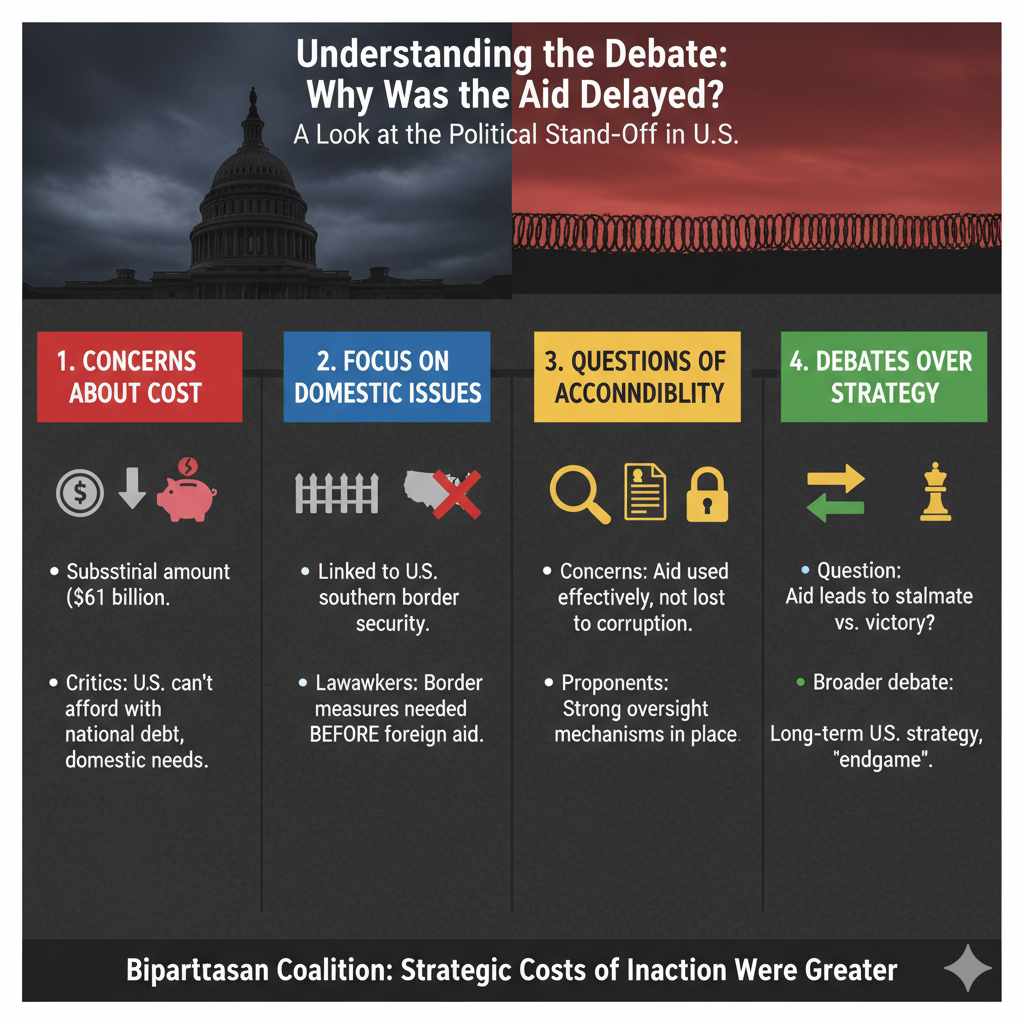
Understanding the Debate: Why Was the Aid Delayed?
The months-long delay in approving the aid was a result of intense political debate within the United States. There were several reasons why some lawmakers were hesitant to approve the funding. Understanding these points of view is important for a complete picture of the situation.
- Concerns About Cost: The amount of money being sent to Ukraine is substantial. Some critics argued that the U.S. could not afford to spend so much overseas, especially with a large national debt and pressing needs at home.
- Focus on Domestic Issues: A key part of the debate was linking Ukraine aid to other political priorities, particularly security at the U.S. southern border. Some lawmakers insisted that new border security measures must be passed before they would vote for more foreign aid.
- Questions of Accountability: There were concerns about making sure the aid was being used effectively and not being lost to corruption. Proponents of the aid countered that there were strong oversight mechanisms in place, but this remained a point of contention.
- Debates Over Strategy: Some questioned whether continued aid would lead to a stalemate rather than a clear victory. This led to a broader debate about the long-term U.S. strategy for the conflict and what a realistic “endgame” would look like.
Ultimately, a bipartisan coalition of lawmakers concluded that the strategic costs of not helping Ukraine were far greater than the financial costs of the aid package, leading to its eventual passage.
What Types of Weapons and Equipment are Included?
The military aid provided by the U.S. is diverse, covering a wide range of needs on the modern battlefield. While the exact contents of each shipment are often not fully disclosed for security reasons, we know the general categories of equipment that have been prioritized. The following table provides examples of key systems and their roles.
| Equipment Category | Specific Examples | Purpose on the Battlefield |
|---|---|---|
| Air Defense | Patriot, NASAMS, Stinger | To shoot down enemy missiles, drones, and aircraft, protecting cities and troops. |
| Artillery | HIMARS, M777 Howitzers | To strike enemy positions, equipment, and supply lines from a long distance. |
| Armored Vehicles | Abrams Tanks, Bradley Fighting Vehicles | To provide protected mobility for soldiers and to engage enemy armor. |
| Anti-Tank Weapons | Javelin, TOW Missiles | To allow infantry to destroy enemy tanks and armored vehicles effectively. |
| Ammunition | 155mm Shells, Small Arms Rounds | The fuel for the fight. Essential for all firearms, from rifles to heavy artillery. |
| Drones | Switchblade, Phoenix Ghost | For reconnaissance (scouting) and for conducting precise strikes on targets. |
This mix of equipment is designed to give Ukrainian forces the tools they need to defend their territory against a larger and more powerful invading force. Each system plays a specific role in a combined-arms approach to modern warfare.
FAQ: Your Questions on US Aid to Ukraine Answered
Is the aid all cash sent to Ukraine?
No, this is a common misconception. The vast majority of the military aid is not cash. It is the value of the weapons, equipment, and ammunition taken from U.S. stocks or purchased from manufacturers. The economic aid is financial support, but it is often tied to specific requirements and oversight.
How does the U.S. make sure the aid is used correctly?
There are several layers of oversight. The U.S. has personnel in Ukraine to help track equipment. The Department of Defense Office of Inspector General conducts audits and investigations. Furthermore, much of the equipment has tracking and reporting requirements to ensure it is used for its intended purpose.
Has the U.S. sent troops to fight in Ukraine?
No. The United States has not sent combat troops to Ukraine. U.S. policy has been firm on providing equipment and support to help Ukraine defend itself, but to avoid a direct military conflict between U.S. and Russian forces.
How does U.S. aid compare to what other countries give?
The United States is the largest single-country donor of military aid to Ukraine. However, European countries, when combined, have committed a massive amount of aid as well, especially in financial and humanitarian support. Relative to the size of their economies, some European nations like Estonia and Latvia have contributed more than the U.S.
What happens when this aid runs out?
The current aid package is expected to last through 2024 and into 2025, but the long-term future is uncertain. Future aid will depend on the situation on the battlefield and political developments in the U.S. and other allied countries. The goal is to provide Ukraine with enough support to put it in a strong position for any future negotiations.
Is the economic aid a loan or a grant?
The latest package includes a mix. Some of the economic support is structured as a loan, which Ukraine would be expected to repay in the future. However, there are provisions that could allow for this debt to be forgiven later. Other forms of aid, especially humanitarian support, are provided as grants with no expectation of repayment.
Does this aid package end the war?
No, the aid package itself is not expected to end the war. Its purpose is to prevent a Ukrainian collapse and give its military the means to continue defending the country effectively. The hope is that by strengthening Ukraine’s position, it can create the conditions for a just and lasting peace settlement in the future.
Conclusion: A Critical Lifeline at a Pivotal Moment
So, did the U.S. release aid to Ukraine? The answer is a clear yes. The approval of the $61 billion package in April 2024 marked a decisive moment, ending months of uncertainty and providing Ukraine with a much-needed infusion of support.
This aid is comprehensive, covering everything from advanced missile systems and artillery shells to the funds needed to keep Ukraine’s government running and provide food and shelter for its people. We have seen that the process of delivering this aid is a massive logistical operation, designed to get resources to the front lines as quickly as possible.
While the political debate in the U.S. was challenging, the final decision reflects a broad consensus that supporting Ukraine is vital not only for its own sovereignty but also for broader international security. The aid is a lifeline that gives Ukraine a fighting chance to defend its future and helps ensure stability in a volatile world. The path ahead remains difficult, but this support provides a crucial foundation for the challenges to come.