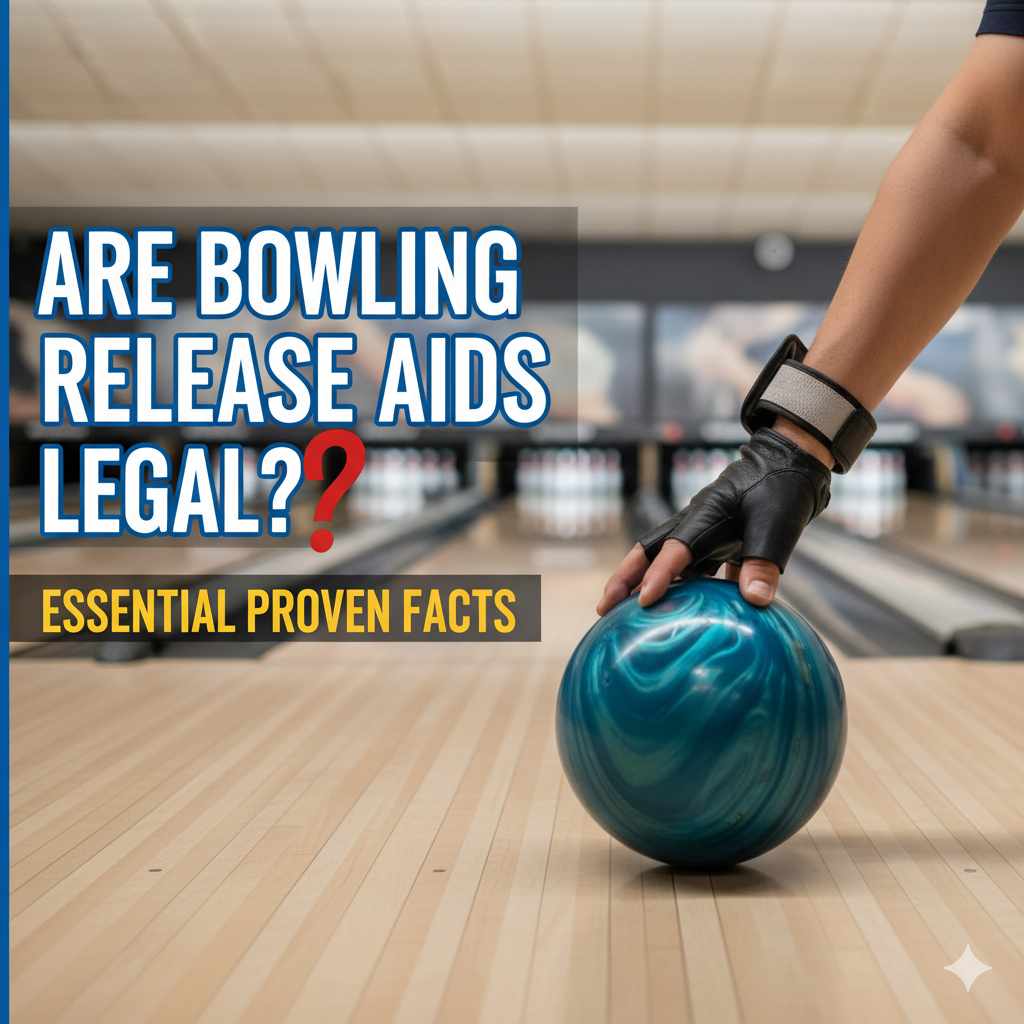
Yes, bowling release aids are legal for practice and recreational bowling. However, most mechanical release aids—devices with moving parts that help your release—are illegal in competitions and leagues sanctioned by the United States Bowling Congress (USBC). Simple wrist supports and gloves are usually permitted, but always check the official USBC rules before using any device in a sanctioned event.
Have you ever seen a bowler wearing a strange-looking contraption on their wrist? Maybe you’ve wondered if it’s a secret weapon for getting more strikes. These gadgets are often called release aids, and they bring up a big question: are they allowed?
It can be confusing, especially when you’re just starting out. You want to improve your game, but you also want to play fair. Don’t worry, you’re in the right place! We’re going to break down everything you need to know about bowling release aids, what makes them legal or illegal, and how you can improve your release the right way. Let’s get you rolling with confidence.
What is a Bowling Release Aid?
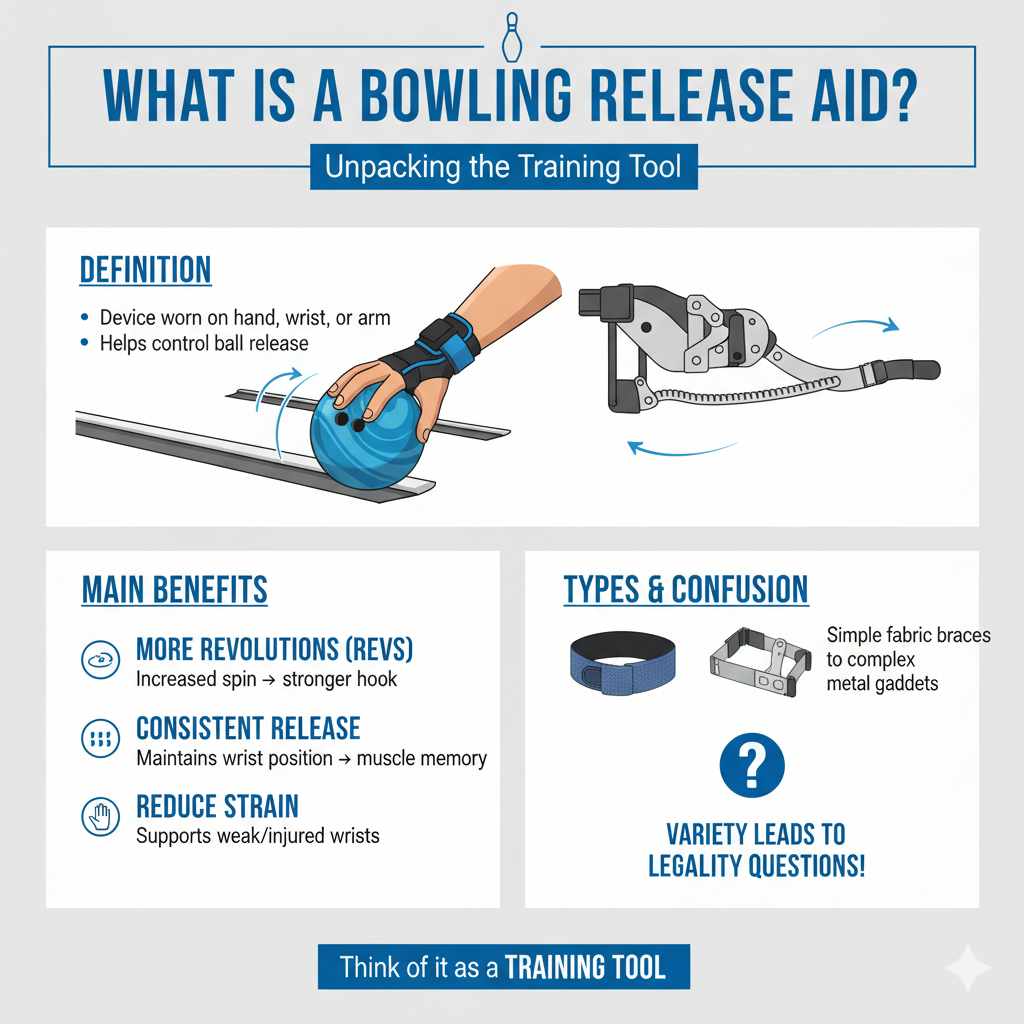
First, let’s clear up what we’re talking about. A bowling release aid is any device worn on your hand, wrist, or arm designed to help control the way you release the bowling ball. Think of it as a training tool. Its main job is to support your wrist and guide your hand into a powerful and consistent release position.
These aids are meant to help bowlers do a few key things:
- Create More Revolutions (Revs): They help you get more spin on the ball, which can lead to a stronger hook and more pin action.
- Maintain a Consistent Release: By keeping your wrist in the same position for every shot, they help build muscle memory.
- Reduce Strain: For bowlers with weak or injured wrists, these devices can provide much-needed support and prevent pain.
There are many different types, from simple fabric braces to complex metal gadgets with hinges and straps. It’s this variety that leads to all the confusion about what’s legal and what’s not.
The Big Question: Legal for Fun vs. Legal for Competition
Here’s the most important thing to understand: the rules change depending on where you are bowling. The answer to “Are bowling release aids legal?” is both yes and no.
For Recreational or “Open” Bowling
If you’re just bowling for fun with friends or family, you can generally use whatever you want. Most bowling alleys don’t have strict rules about equipment during open play. As long as the device doesn’t damage the lanes or equipment, you’re probably good to go. This is the perfect time to experiment with a training aid to see if it helps you understand the feel of a proper release.
For Sanctioned Leagues and Tournaments
This is where the rules get serious. Almost all competitive leagues and tournaments in the United States are governed by the United States Bowling Congress (USBC). The USBC has a detailed rulebook that ensures the game is fair for everyone.
According to the USBC, any device that is part of the bowler’s delivery and meets any of the following criteria is illegal:
- It incorporates a mechanical design with moving parts that lock into place.
- It has a mechanism that allows it to be adjusted during the delivery.
- It provides a force to the bowler’s hand or arm that is greater than the force provided by a conventional wrist support.
In simple terms, if your device has hinges, springs, or any moving parts that actively help you release the ball, it’s banned from competition. The USBC wants the game to be about a player’s physical skill, not about who has the best gadget.
Legal Support vs. Illegal Aid: How to Tell the Difference
The line between a legal wrist “support” and an illegal release “aid” can seem blurry. A simple wrist brace is designed to prevent your wrist from breaking backward. It offers stability. An illegal aid often goes a step further, mechanically forcing your hand into a certain position or adding extra force to your release.
Let’s look at a simple comparison to make it clearer.
| Feature | Legal Support (Example: Simple Brace) | Illegal Aid (Example: Mechanical Positioner) |
|---|---|---|
| Main Purpose | To stabilize and prevent wrist hyperextension. | To mechanically assist or force a specific release motion. |
| Moving Parts | None. Usually made of fabric, leather, and sometimes a solid, non-moving metal splint. | Often has hinges, springs, or locking mechanisms. |
| Adjustability | Can be tightened with Velcro straps before bowling, but not during the swing. | May have dials or levers that can change position during the delivery. |
| USBC View | Generally permitted as a medical or supportive device. | Banned because it artificially enhances the bowler’s skill. |
Common Bowling Equipment and Its Legality Status
To give you a better idea, let’s break down some common pieces of equipment you’ll see at the lanes.
1. Standard Wrist Braces and Supports
These are the most common devices you’ll see. They typically slide over your hand and are secured with Velcro straps. Many have a metal spoon-like piece on the top or bottom to keep your wrist straight.
- Are they legal? Yes, for the most part. As long as they don’t have moving parts and are purely for support, the USBC allows them. They are seen as a way to prevent injury, much like a knee brace in other sports.
2. Bowling Gloves
Bowling gloves are usually made of leather and might have a padded palm or a textured grip. Some also have a bit of built-in wrist support.
- Are they legal? Yes. A standard bowling glove is perfectly legal. Its primary purpose is to improve grip, absorb sweat, and prevent blisters. As long as it doesn’t contain any mechanical parts, it’s fine for competition.
3. Mechanical Release Aids and Wrist Positioners
This is the category that is almost always illegal in competition. These devices are easy to spot. They often look like a robotic exoskeleton for your hand, with hinges at the wrist and knuckle joints.
- Are they legal? No, not for USBC-sanctioned play. These devices are designed to do the work for you by cocking your wrist and then “snapping” it forward at the point of release. This violates the core USBC rule about equipment not artificially enhancing performance.
4. Bowling Tape and Finger Inserts
Bowlers use special tape on their thumbs and fingers to adjust the fit of the ball and prevent skin irritation. Finger inserts are soft rubber or vinyl grips placed inside the finger holes.
- Are they legal? Absolutely. Tape and inserts are considered standard equipment adjustments and are 100% legal in all forms of bowling. They help you hold onto the ball securely, which is a fundamental part of the sport.
How to Check if Your Equipment is USBC Approved
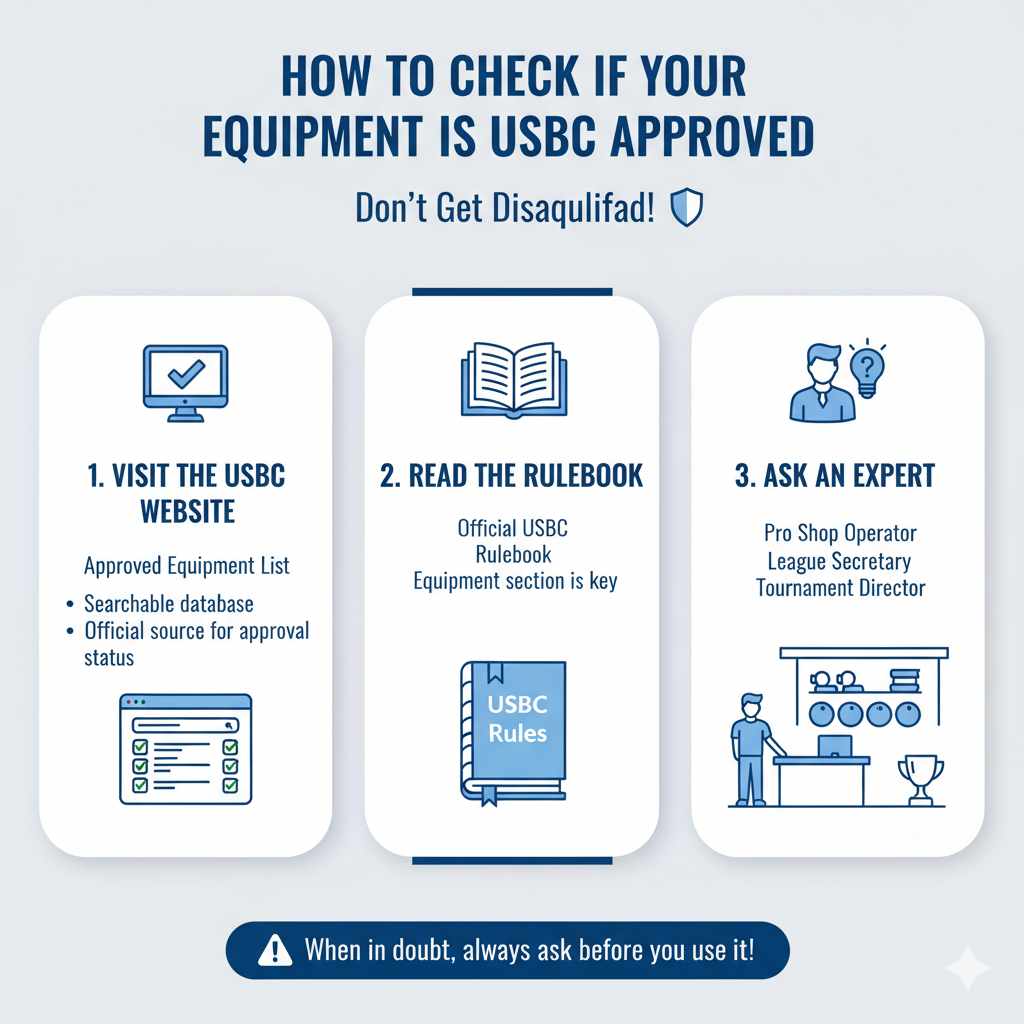
If you’re ever in doubt about a piece of equipment, the best thing to do is check the official source. You don’t want to be disqualified from a league or tournament because of an honest mistake.
- Visit the USBC Website: The USBC maintains an Approved Equipment List on their website. You can search for specific products to see if they are approved for competition.
- Read the Rulebook: While it can be dense, the official USBC Rulebook is the ultimate authority. Familiarizing yourself with the equipment section can save you a lot of trouble.
- Ask an Expert: Your local pro shop operator is an amazing resource. They are usually very knowledgeable about USBC rules and can tell you if a device is legal. Your league secretary or tournament director are also great people to ask.
When in doubt, always ask before you use it in competition. It’s better to be safe than sorry!
Great Alternatives to Improve Your Game (The Legal Way)
While mechanical aids might seem like a shortcut to a better score, they can become a crutch that prevents you from developing real, lasting skill. The good news is there are plenty of USBC-approved ways to improve your release and boost your average.
1. Get Your Bowling Ball Professionally Fitted
This is the single most important thing you can do for your game. A ball that is custom-drilled to your hand will feel more comfortable and allow you to release it smoothly and consistently without having to grip it too hard. This alone can revolutionize your release.
2. Practice Simple Drills
Drills build muscle memory the right way. Instead of relying on a gadget, you teach your body how to perform the correct motion naturally.
| Drill Name | How to Do It | What It Improves |
|---|---|---|
| One-Step Drill | Stand about one step back from the foul line. Take one step and deliver the ball, focusing only on your arm swing and release. | Timing, balance, and feeling the release point without worrying about your footwork. |
| Foul Line Drill | Stand at the foul line with no approach. Swing the ball back and forth like a pendulum and release it smoothly onto the lane. | Promotes a free, relaxed arm swing and helps you stay “behind” the ball for a powerful release. |
| No-Step Drill | Same as the Foul Line Drill, but you are focusing on the wrist and hand position at the bottom of the swing. Try to “uncoil” your wrist. | Builds strength and muscle memory for creating revolutions. |
3. Consider Coaching
A few lessons with a certified bowling coach can be invaluable. A coach can analyze your delivery and give you personalized feedback. They can spot small issues you would never notice on your own and provide drills specifically tailored to help you improve.
4. Work on Your Physical Fitness
Bowling is a sport, and being in good physical shape helps. Simple exercises can make a huge difference in your ability to control the ball.
- Wrist Curls: Use a light dumbbell to strengthen your wrist flexors.
- Grip Strengtheners: Squeezing a grip tool can improve your hand strength, helping you hold the ball with less effort.
- Core Exercises: Planks and bridges build core stability, which is essential for good balance during your approach.
Frequently Asked Questions (FAQ)
1. Can I use my hinged wrist device during my Friday night league?
Almost certainly not. If your league is USBC-sanctioned, any device with hinges, springs, or other moving parts designed to aid the release is illegal. It’s best to use a simple, non-mechanical wrist support or nothing at all.
2. What’s the main difference between a legal wrist support and an illegal release aid?
A legal wrist support is passive; it simply stabilizes your wrist to prevent it from bending too far back. An illegal release aid is active; it has mechanical parts that actively help or force your hand and wrist into a specific motion during the release.
3. Are all bowling gloves legal for competition?
Most standard bowling gloves are legal. As long as the glove does not have any built-in mechanical features that would alter your release, it is permitted by the USBC. They are primarily for grip and protection.
4. Where can I find the official USBC rules on equipment?
You can find the most up-to-date information on the official USBC website, bowl.com. They have a section for equipment specifications and a searchable database of approved products.
5. Why does the USBC ban mechanical release aids?
The USBC bans these devices to ensure fair competition. Bowling is intended to be a sport of skill, and the rules are designed to prevent technology from giving players an unfair advantage. The outcome should be determined by the bowler’s ability, not their equipment.
6. Is it okay to use an illegal release aid for practice?
Yes, absolutely. Using a mechanical aid during practice can be a great way to learn the feeling of a correct release. It can help build muscle memory. Just remember that you won’t be able to use it during sanctioned competition, so you should also practice without it to build natural skill.
7. Is bowling tape legal in tournaments?
Yes, all types of bowling tape (thumb tape, finger tape, etc.) are completely legal. They are considered a normal part of a bowler’s equipment to adjust grip and prevent skin injuries.
Conclusion: Focus on Skill, Not Gadgets
So, are bowling release aids legal? For a fun afternoon at the alley, go ahead and experiment. But if you have dreams of joining a league or winning a tournament, you need to leave the mechanical aids in your bag. The USBC rules are clear: the game is about you and the ball, without any help from springs or hinges.
Instead of searching for a quick fix, embrace the journey of learning the sport. A properly fitted ball, some dedicated practice with proven drills, and maybe a little guidance from a coach will do more for your scores in the long run. You’ll build a repeatable, powerful release that is all your own—and 100% legal. Now get out there and enjoy the amazing feeling of watching your ball crash into the pins!