
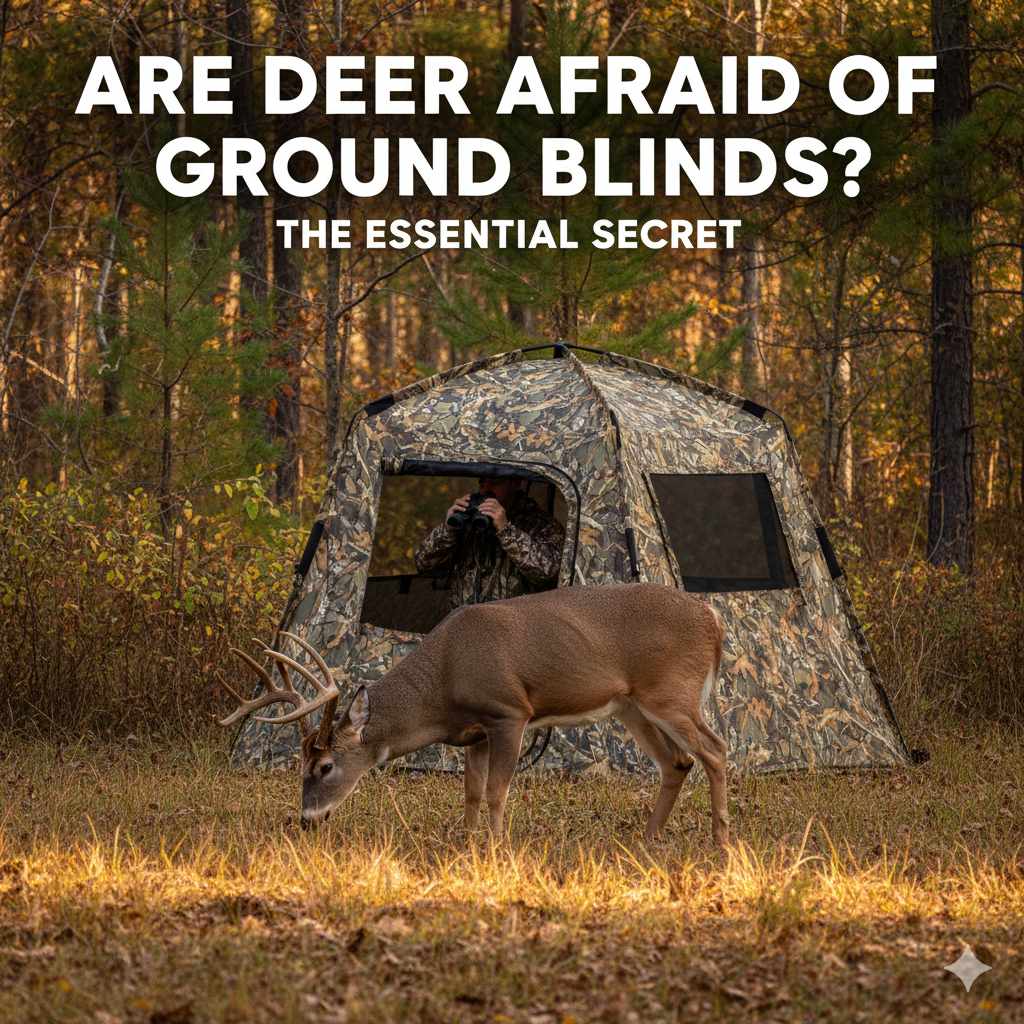
No, deer are not inherently afraid of ground blinds themselves. They are afraid of new, out-of-place objects that suddenly appear in their environment. The essential secret is to make your blind look like a natural part of the scenery by setting it up early and “brushing it in” with local vegetation, completely erasing its silhouette.
Hello, fellow archers and hunters! Salman here. If you’ve ever set up a ground blind only to watch deer give it a wide berth, you’ve probably asked yourself this exact question. It’s a common frustration, but I’m here to tell you the problem isn’t the blind—it’s how we present it to the deer.
Think of it from a deer’s perspective. Their home is a familiar place. They know every log, bush, and tree. When a big, boxy shape suddenly pops up overnight, it’s like a strange piece of furniture appearing in your living room. It screams “danger!” But don’t worry. There’s a simple, essential secret to making your blind practically invisible to deer.
In this guide, I’ll walk you through the exact steps to transform your ground blind from a deer-spooking monster into just another boring old bush. Let’s get you hidden and ready for that perfect shot.
Why Deer Notice Your Ground Blind in the First Place
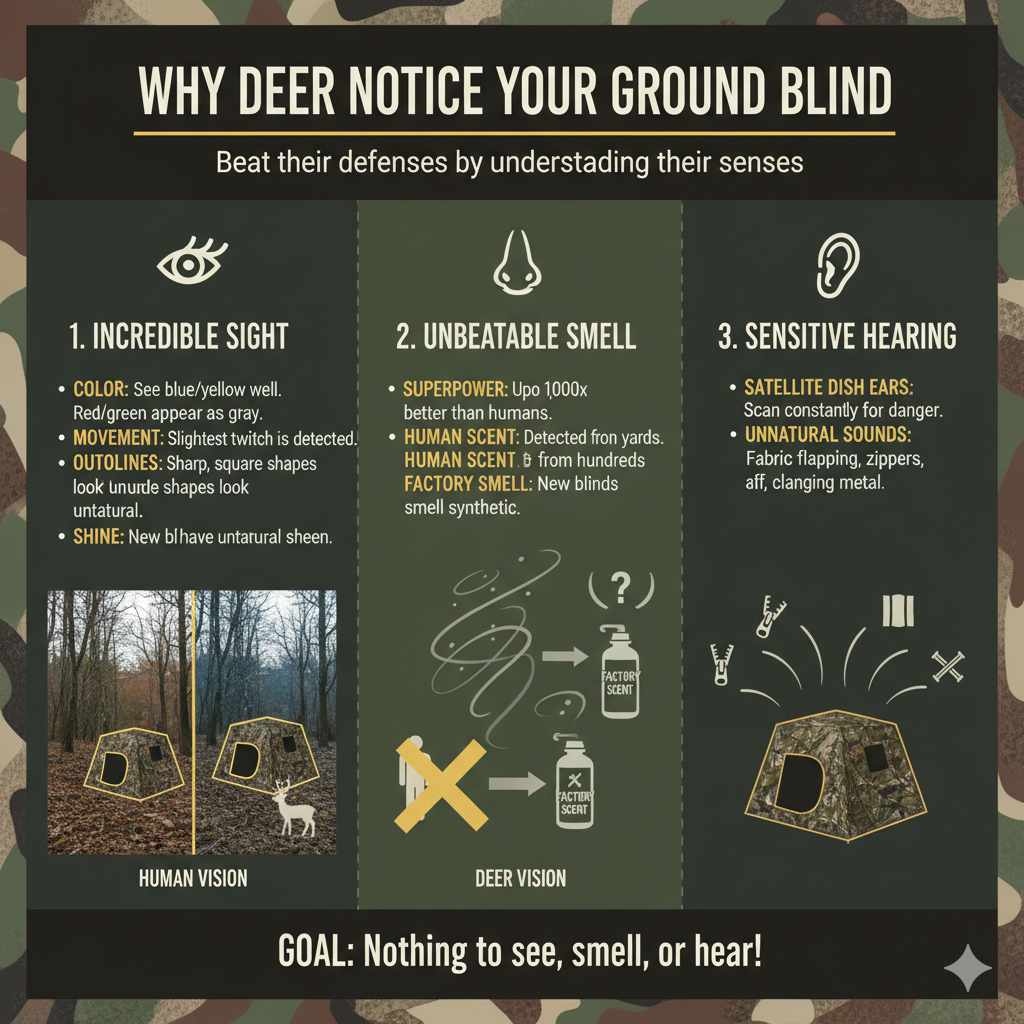
To beat a deer’s defenses, you first have to understand them. Deer are masters of survival, and they rely on three incredible senses to detect threats. Your ground blind can trigger all of them if you’re not careful.
1. Their Incredible Sense of Sight
Deer don’t see colors the way we do. They see shades of blue and yellow well, but reds and greens look like shades of gray. However, their eyes are exceptional at detecting two things:
- Movement: Even the slightest twitch can give you away.
- Outlines and Silhouettes: A perfect, sharp, square shape doesn’t exist in nature. The hard lines of a pop-up blind stick out against the soft, irregular shapes of trees and bushes. This is the biggest visual red flag for a deer.
A brand-new blind, even with a camouflage pattern, can have a slight sheen or shine in the sunlight, which also looks unnatural to a deer.
2. Their Unbeatable Sense of Smell
A deer’s nose is its superpower. Experts suggest a deer’s sense of smell can be up to 1,000 times better than a human’s. They can detect human scent from hundreds of yards away, especially if the wind is in their favor. When you set up a blind, you leave your scent all over it and the surrounding area. New blinds also have a “factory smell” from the synthetic materials and dyes used to make them.
3. Their Sensitive Hearing
A deer’s ears are like rotating satellite dishes, constantly scanning for sounds of danger. The rustle of a jacket, the clang of a metal pole, or the zipper on a blind window can all signal that something is wrong. The fabric of a new blind flapping in the wind can also create an unfamiliar sound that puts deer on high alert.
The goal is simple: appeal to these senses in a way that tells the deer, “Nothing to see, smell, or hear here!”
The Essential Secret: Make Your Blind Part of the Landscape
Here it is, the most important part of this guide: You must erase the blind’s presence. It needs to blend in so well that it becomes just another feature of the woods. This process involves two key steps: setting it up early and brushing it in.
Step 1: Get It Out Early (The Acclimation Period)
Time is your best friend. The longer a blind sits in one spot, the more the deer will accept it as part of their normal environment. If possible, set up your blind at least one to two weeks before you plan to hunt from it.
This “acclimation period” does a few things:
- It allows the local deer to see it, get used to it, and realize it poses no threat.
- It gives time for your human scent to wash away with rain and wind.
- It helps the factory smell of the blind fade and take on the natural smells of the woods.
If you set up a blind the morning of your hunt, you’re introducing a giant, new, human-smelling object into a deer’s living room and hoping it doesn’t notice. That’s a recipe for an empty freezer.
Step 2: Brush It In (The Art of Disappearing)
This is where the magic happens. “Brushing in” your blind means using natural vegetation from the immediate area to break up its outline and make it disappear. Don’t just throw a few branches on top. Your goal is to make it look like a random, overgrown bush.
Here’s how to do it right:
- Gather Local Materials: Use what’s around you. If you’re in a pine forest, use pine branches. If you’re near a field, use long grasses and weeds. Using vegetation from another area can introduce strange smells.
- Break Up the Outline: Focus on the hard edges—the roofline and the vertical corners. These are the most unnatural shapes. Use branches, leaves, and grasses to soften and hide these lines.
- Use the Brush Loops: Most modern ground blinds come with built-in loops or straps. These are designed specifically for tucking in branches and vegetation. Use them!
- Build It Up in Layers: Start with larger branches to break up the main shape, then add smaller branches and leaves to fill in the gaps.
- Don’t Overdo It: You want it to look natural, not like a pile of debris. The goal is to make it look like a thicket you can’t see through, not a beaver dam. Make sure you leave clear shooting lanes for yourself.
- Check It From a Deer’s Perspective: After you’re done, walk 30-40 yards away and look at your blind from different angles. Does it still look like a box? If so, add more cover to the areas that stand out.
| Brushing-In Checklist | Why It Matters |
|---|---|
| Gather natural vegetation from the immediate area. | Ensures the blind smells and looks like its surroundings. |
| Focus on breaking up the roofline and corners. | These are the most unnatural, boxy shapes that alert deer. |
| Use the blind’s built-in brush loops. | Securely holds vegetation in place, even in wind. |
| Add more cover than you think you need. | Makes the blind appear dense and solid, not hollow. |
| View your work from 40 yards away. | Helps you spot any hard edges or unnatural shapes you missed. |
A Step-by-Step Guide to a Deer-Proof Blind Setup
Now, let’s put it all together. Follow these steps for a perfect setup every time.
1. Choose the Perfect Location
Where you put your blind is just as important as how you hide it. Look for a spot that offers a natural advantage.
- Find Natural Cover: Place your blind in a location that already has some cover, like in front of a large cedar tree, tucked into a cluster of bushes, or against a fallen log. This gives you a head start on concealment.
- Consider the Wind: Always know the prevailing wind direction. Set up your blind downwind of where you expect deer to appear. You can check weather apps for this information. Your scent is your biggest enemy.
- Watch the Sun: Position your blind with the sun to your back if possible. This puts the sun in the deer’s eyes and keeps you in the shadows, making it harder for them to see movement inside the blind.
- Pay Attention to Deer Signs: Look for deer trails, rubs, or scrapes. Setting up near a high-traffic area increases your chances of success. The Pennsylvania Game Commission offers great resources on identifying deer signs.
2. Be Scent-Free During Setup
From the moment you walk into the woods, you are leaving a trail of scent. Minimize it as much as possible.
- Wear Rubber Boots: Leather and fabric boots absorb and hold scent. Rubber boots do not.
- Wear Gloves: Your hands leave a lot of scent on everything you touch—the blind, the poles, and the branches you use for cover.
- Use Scent-Eliminating Spray: Lightly spray down your blind inside and out after setting it up to help neutralize any factory and human odors.
3. Set Up Quietly
Make as little noise as possible. Don’t slam car doors, talk loudly, or snap branches unnecessarily. Pop-up blinds can be noisy when they deploy. Try to open it slowly and carefully to muffle the sound.
Manage the “Black Hole” Effect
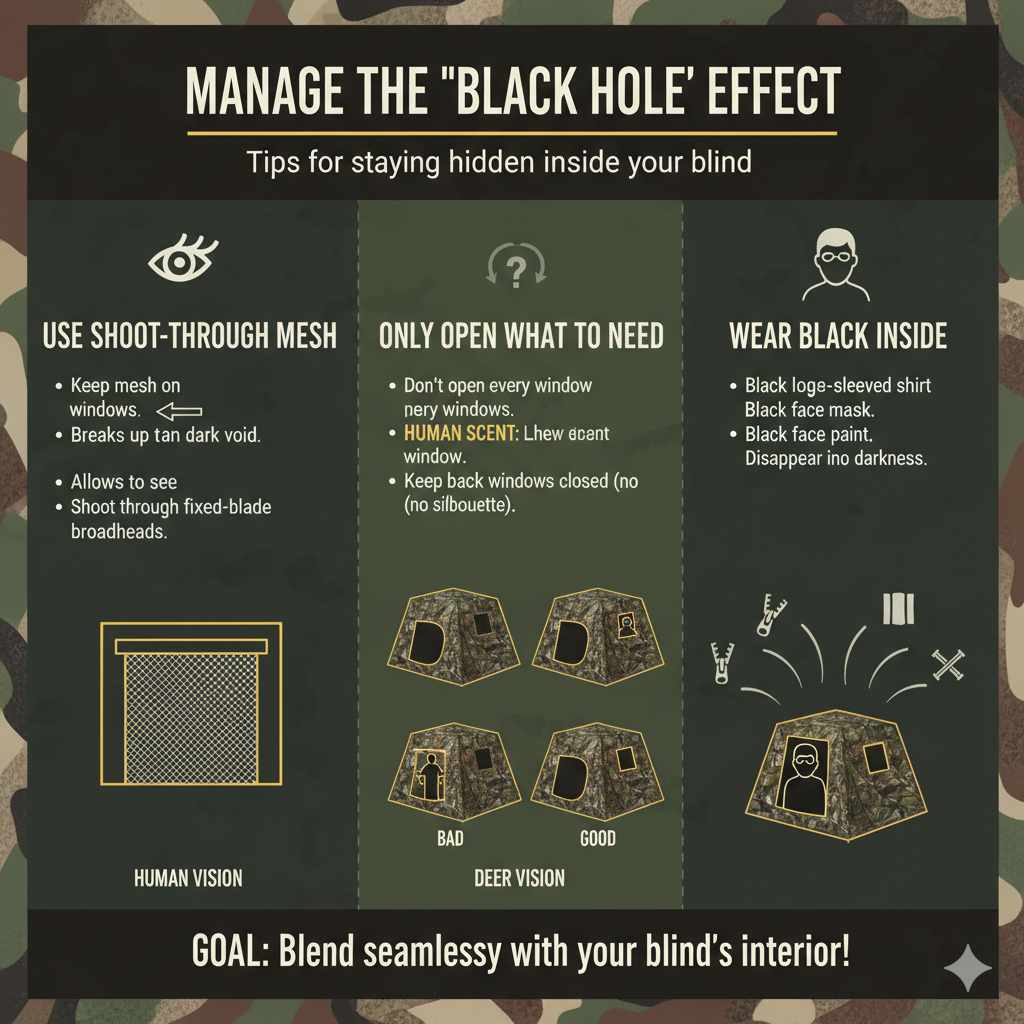
The dark, open windows of your blind can look like a black hole to deer, especially on a bright day. This dark spot can seem unnatural.
- Use Shoot-Through Mesh: Most blinds come with mesh window coverings. Keep them on! They break up the dark void while still allowing you to see and shoot through them (always use fixed-blade broadheads with mesh, as mechanicals can deploy early).
- Only Open What You Need: Don’t open every window. Only open the windows that cover your primary shooting lanes. Keep the back windows closed to prevent being silhouetted.
- Wear Black Inside: Wear a black long-sleeved shirt and a black face mask or face paint. This helps you disappear into the dark interior of the blind.
Common Ground Blind Mistakes and How to Fix Them
We all make mistakes, especially when we’re starting out. Here are some of the most common ones that lead to deer avoiding your blind.
| Common Mistake | The Easy Fix |
|---|---|
| Setting up in the middle of an open field. | Tuck your blind into a fencerow, against a cluster of trees, or in another spot with a natural backdrop. |
| Not brushing it in at all. | Always take 15-20 minutes to add local vegetation to break up the blind’s outline. |
| Facing the windows into the rising or setting sun. | Position your blind so the sun is at your back. This keeps you in the shadows and puts glare in the deer’s eyes. |
| Making too much noise inside the blind. | Lay down a piece of carpet or a foam mat to muffle sounds. Move slowly and deliberately. |
| Forgetting about the wind. | Always check the wind direction before and during your hunt. If the wind switches, deer downwind will smell you. |
According to research from institutions like the MSU Deer Lab, whitetail deer are incredibly adaptive but are also highly sensitive to sudden changes in their core area. A well-placed, well-hidden blind that has been out for a week becomes just another part of the scenery they ignore.
Frequently Asked Questions (FAQ)
1. How long does it take for deer to get used to a ground blind?
It can vary, but a good rule of thumb is to allow at least one week. In high-pressure areas, two weeks or more is even better. This gives deer enough time to encounter the blind multiple times and learn that it is not a threat.
2. Can deer see you inside a ground blind?
Yes, they can, especially if you are not careful. To avoid being seen, wear dark clothing (preferably black) to blend in with the dark interior. Keep the back windows closed to avoid being silhouetted, and limit your movement inside the blind.
3. What color ground blind is best?
The specific camouflage pattern is less important than how well you brush in the blind. Most modern camo patterns work well in a variety of environments. The most critical factor is breaking up the blind’s silhouette with natural cover so the pattern can do its job.
4. Should I leave the windows open or closed when I’m not there?
It’s best to leave the windows zipped up and the mesh on when you are not hunting. This prevents animals from getting inside and helps the blind appear as a solid, natural object. It also protects the interior from rain and sun damage.
5. Do I still need to brush in a blind with a realistic 3D camouflage pattern?
Yes, absolutely! While advanced 3D patterns are helpful, they cannot hide the unnatural boxy shape and hard edges of the blind. Brushing it in is always the most important step to make it look truly natural and break up its silhouette.
6. Can I hunt from a ground blind on public land?
Generally, yes, but regulations can vary by state and specific management area. Always check the local rules for the public land you plan to hunt. Some areas may have restrictions on how long you can leave a blind unattended.
7. Is it better to sit on a chair or a stool in a ground blind?
A comfortable, silent chair is best. A good hunting chair with a backrest will allow you to sit still for longer periods without fidgeting. A simple stool can work, but you may become uncomfortable and move around more, which can alert deer.
Conclusion: It’s Not the Blind, It’s the Hunter
So, are deer afraid of ground blinds? The answer is a clear no. They aren’t afraid of the object itself. They are afraid of what it represents: change, danger, and the presence of a predator. Your job as a hunter is to convince them that your blind is none of those things.
By putting your blind out early, brushing it in meticulously, managing your scent, and being mindful of your movements, you can make it completely invisible to a deer’s senses. It becomes just another lump in the woods, as harmless and uninteresting as any other bush. The essential secret is patience and attention to detail.
Take your time, blend in with your surroundings, and be patient. The reward—that moment when a calm, unaware deer steps into your shooting lane—is well worth the effort. Happy hunting, and shoot straight!