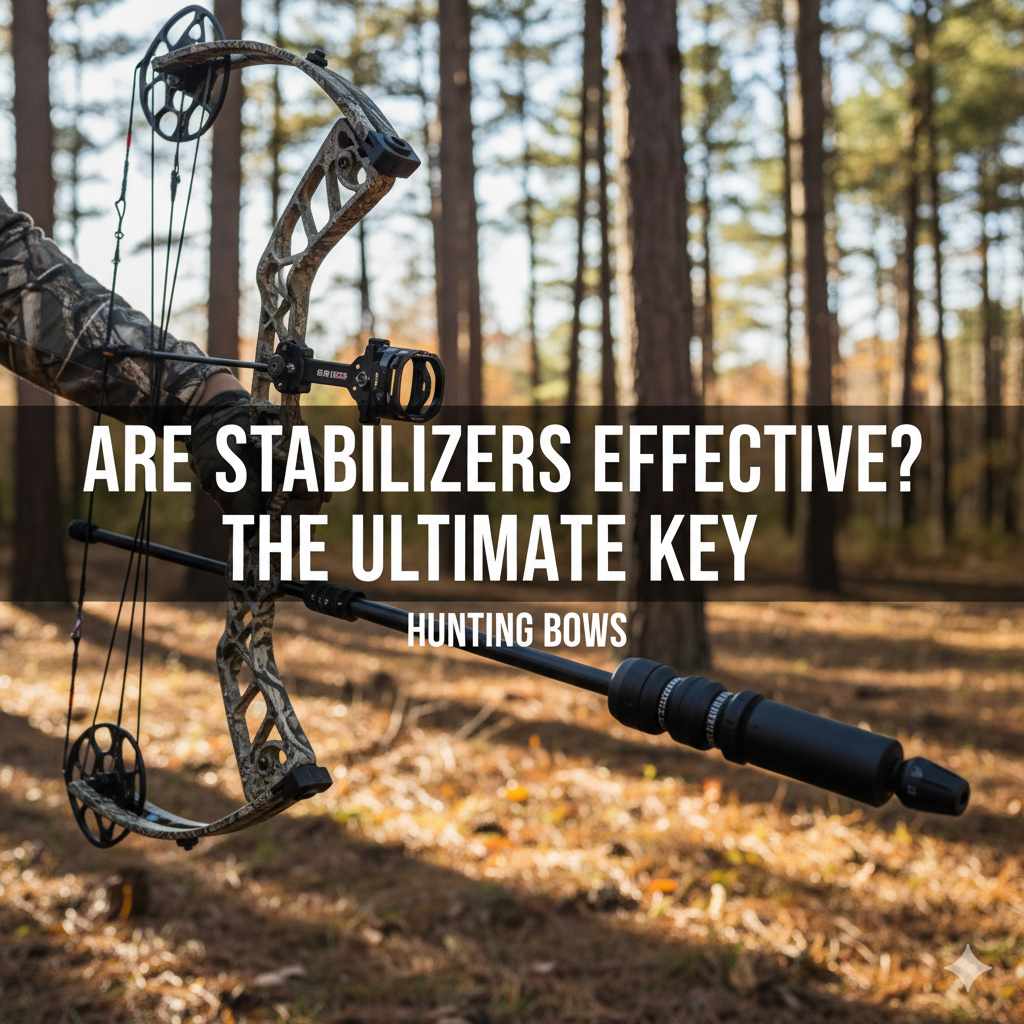
Yes, stabilizers are highly effective on hunting bows. They add forward weight to help you aim steadier, absorb shot vibration to make the bow quieter, and improve overall balance. This leads to better accuracy and forgiveness, making them a key accessory for most hunters seeking a more consistent and stealthy shot.
So, you’ve got your hunting bow, and you’re hitting the range. You line up your shot, take a deep breath, and release. But your bow jumps, and the arrow doesn’t quite land where you wanted. You might wonder, “Is it just me, or is my bow hard to hold steady?” It’s a common feeling, and you’re not alone. Many new archers struggle to keep their sight pin perfectly still.
This is where a bow stabilizer comes in. You’ve probably seen them—those rods sticking out from the front of a bow. But what do they actually do? Are they just for looks, or can they really make you a better hunter? I’m here to tell you that the right stabilizer can be a game-changer.
In this guide, we’ll break down everything you need to know about stabilizers in simple, easy-to-understand terms. We’ll cover how they work, why they help, and how to choose the perfect one for your hunting setup. Let’s get you shooting with more confidence!
What Exactly Is a Bow Stabilizer?
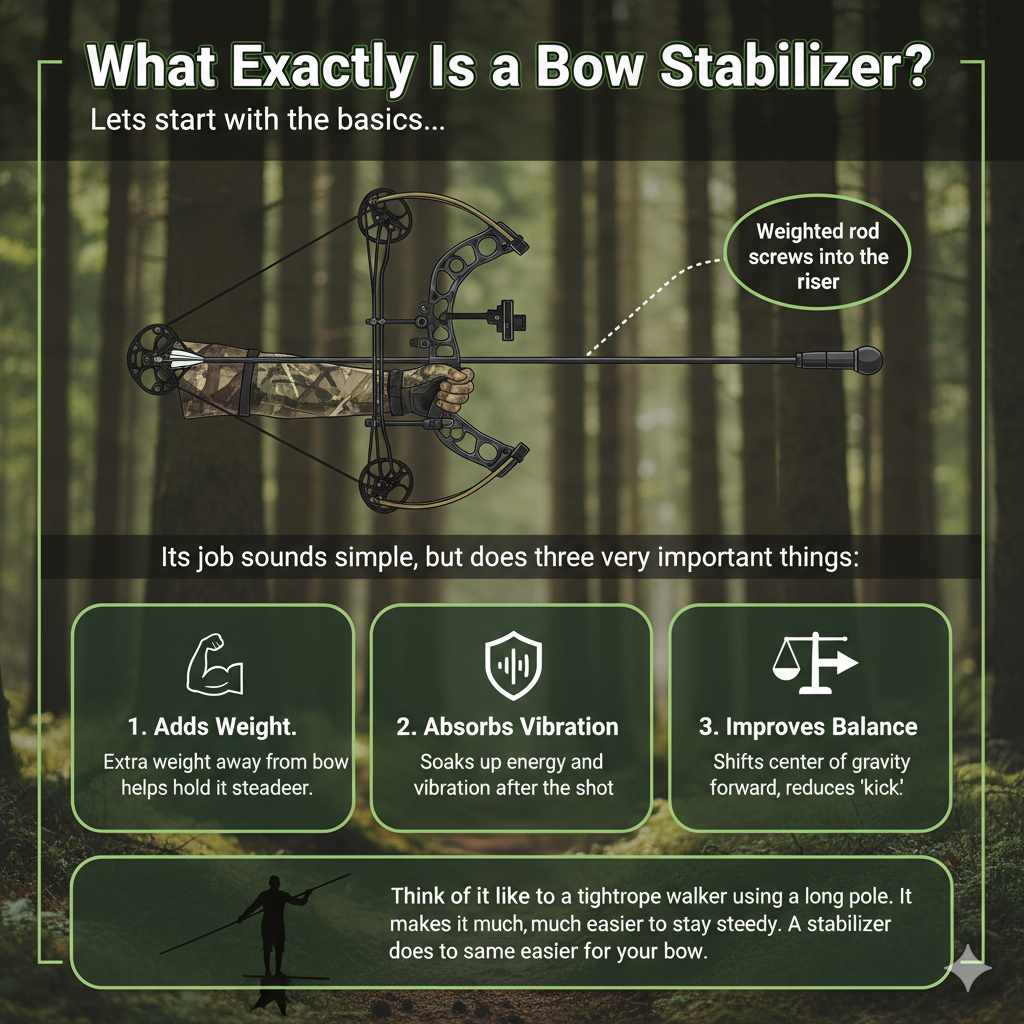
Let’s start with the basics. A bow stabilizer is a weighted rod that you screw into the front of your bow’s riser (the main handle section). Its job sounds simple, but it does three very important things:
- It adds weight. This extra weight, especially positioned away from the bow, helps you hold it steadier.
- It absorbs vibration. When you release the arrow, the bow creates a lot of energy and vibration. A stabilizer soaks that up.
- It improves balance. It shifts the bow’s center of gravity forward, preventing it from “kicking” up or down after the shot.
Think of it like a tightrope walker using a long pole. The pole doesn’t magically make them balanced, but it makes it much, much easier to stay steady. A stabilizer does the same thing for your bow.
How a Stabilizer Makes You a Better Archer
Okay, so it adds weight and absorbs vibration. But how does that translate into a successful hunt? It’s all about creating a more forgiving and repeatable shot. The science behind it is pretty straightforward, even if you’re not a physicist.
1. The Power of Inertia: Your Key to a Steady Aim
The main reason a stabilizer works is due to a principle called inertia. In simple terms, an object that is still wants to stay still. By adding weight to the front of your bow, you are increasing its inertia. This means it takes more effort for your small muscle twitches and movements to affect your aim.
The result? That little sight pin that used to dance all over the target will now “float” much more slowly and predictably. This gives you more time to settle in and make a clean, confident shot. It doesn’t eliminate movement, but it slows it down, giving you control.
2. Taming the Beast: Noise and Vibration Reduction
When you fire an arrow, your bow’s limbs release a massive amount of energy. Not all of that energy goes into the arrow. The leftover energy creates vibration and noise. For a hunter, noise is the enemy. A loud “thwack” can cause a deer to “jump the string,” meaning it reacts to the sound and moves before the arrow even gets there.
Stabilizers are often filled with rubber or other dampening materials designed to soak up that leftover energy. A good stabilizer can turn that loud “thwack” into a dull, quiet “thump.” A quieter bow is a more lethal bow.
3. Finding Your Center: Improved Balance and Follow-Through
Modern compound bows are packed with technology—cams, sights, quivers, and arrow rests. All these accessories add weight in different places, which can make a bow feel unbalanced or “top-heavy.”
A stabilizer helps counteract this by pulling the center of gravity forward. This forward balance encourages the bow to tip forward slightly after the shot, which is a key part of good shooting form called “follow-through.” A proper follow-through ensures you don’t drop your bow arm too early, which can send your arrow off course. A stabilizer makes this happen naturally.
Choosing the Right Stabilizer for Hunting
Not all stabilizers are created equal, and the perfect one for a target archer might be a terrible choice for a hunter. For hunting, you need to balance performance with practicality. You’ll be carrying this thing through woods, sitting in treestands, and moving in tight spaces.
Stabilizer Length: Does Size Matter?
Yes, it absolutely does! The longer the stabilizer, the more it will resist movement and the steadier your aim will be. However, a long stabilizer is also heavier and can get caught on every branch in the forest. For hunting, you need to find the sweet spot.
| Stabilizer Length | Best Use Case for Hunting | Pros | Cons |
|---|---|---|---|
| 4-6 Inches | Spot-and-stalk, thick brush, treestands | Very maneuverable, lightweight, reduces vibration. | Minimal stabilization effect for aiming. |
| 8-10 Inches | All-purpose hunting, ground blinds, treestands | Good balance of stability and maneuverability. | Can still feel a bit long in tight quarters. |
| 12+ Inches | Open country, Western hunting, ground blinds | Excellent stability and aiming assistance. | Heavy, bulky, and can get in the way. |
For most deer hunters who use a treestand or ground blind, an 8-inch stabilizer is often considered the perfect compromise. It gives you a noticeable improvement in aiming without being too clumsy.
Stabilizer Weight: Heavier Isn’t Always Better
Many modern stabilizers come with adjustable weights, usually in the form of threaded discs you can add or remove. This is a fantastic feature because it lets you customize the feel of your bow.
Here’s a simple way to start:
- Start with just one or two ounces of weight on the end of your stabilizer.
- Hold your bow out and see how it feels. Does it feel stable but not overly heavy?
- Shoot a few arrows. Pay attention to how your pin floats.
- Add another ounce and repeat.
You’ll reach a point where adding more weight makes the bow feel too heavy to hold comfortably, or it doesn’t seem to improve your aim any further. That’s when you know you’ve found the right amount of weight for you. The goal is to have just enough weight to steady your aim without causing fatigue.
Materials: Carbon vs. Aluminum
You’ll mostly find stabilizers made from two materials: carbon and aluminum.
- Carbon Fiber: This is the premium choice. Carbon is extremely lightweight yet very stiff, which makes it excellent at transferring vibration away from the bow and into the dampening material. It’s more expensive but offers the best performance.
- Aluminum: This is a more budget-friendly option. Aluminum is durable and does a good job, but it’s heavier and not as stiff as carbon. For a beginner, an aluminum stabilizer is a great place to start.
How to Install and Set Up Your Stabilizer
Good news! This is one of the easiest upgrades you can make to your bow. It requires no special tools and takes just a few minutes.
- Find the Stabilizer Bushing: Look on the front of your bow’s riser, usually below the grip. You’ll see a threaded hole. This is where the stabilizer screws in.
- Screw It In: Simply screw your stabilizer into the bushing by hand. It should be snug, but don’t overtighten it with a wrench. Hand-tight is perfect.
- Add Your Weights: If your stabilizer has adjustable weights, screw them onto the end. Start with a baseline configuration, like two 1-ounce weights.
- Check the Balance: Hold your bow by the grip with your hand open. Does it want to tip forward gently? That’s what you’re looking for. If it feels like it wants to fall out of your hand, you might have too much weight.
- Shoot and Fine-Tune: Head to the range! The real test is in the shooting. Pay close attention to how your sight pin moves on the target and how the bow feels after the shot. Don’t be afraid to add or remove weights until it feels just right. According to archery resources from the University of Nebraska-Lincoln, proper equipment setup is fundamental to accuracy.
Real-World Hunting Scenarios: Where a Stabilizer Makes the Difference
Theory is great, but let’s talk about how this applies in the field.
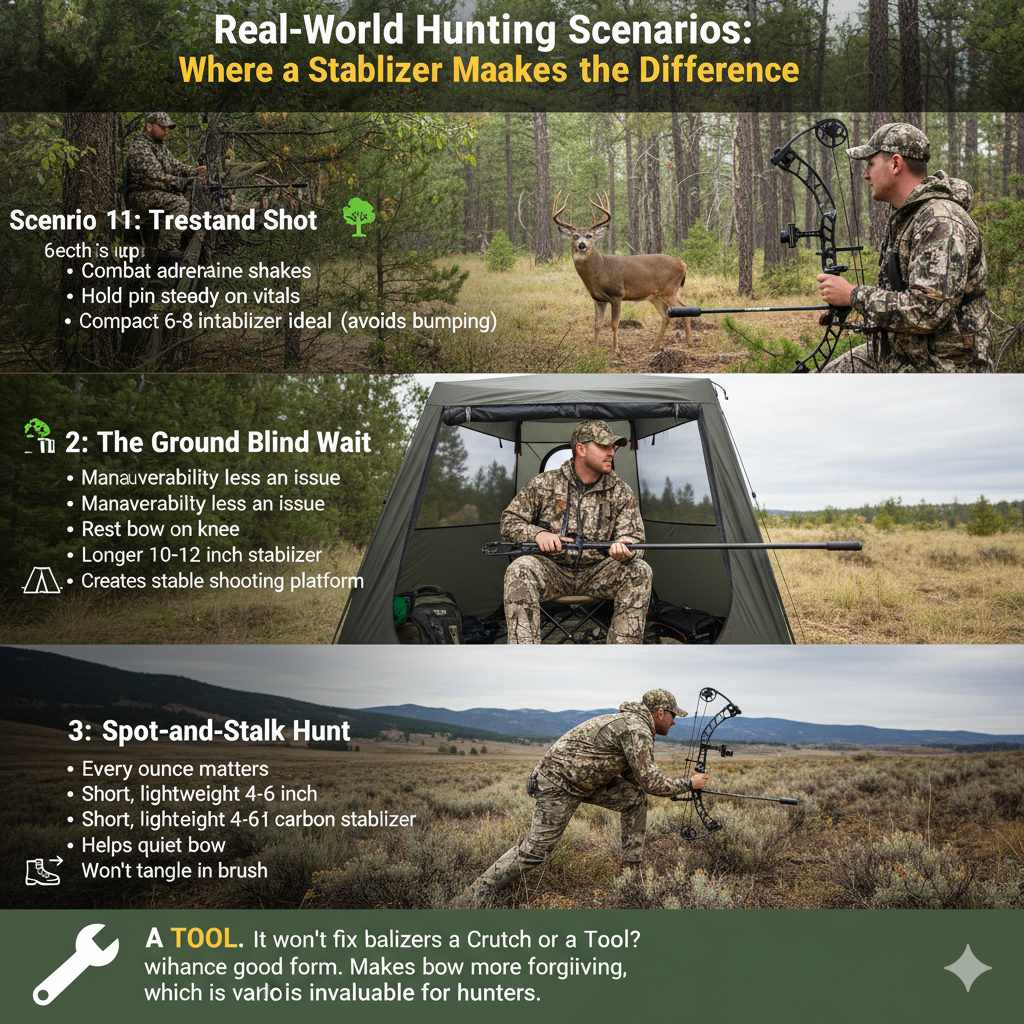
Scenario 1: The Treestand Shot
You’re 20 feet up a tree. A buck walks into your shooting lane. Your heart is pounding. This is where a stabilizer shines. The added weight helps you combat the adrenaline shakes and hold your pin steady on the vitals. However, a long 12-inch stabilizer might bump against the tree or your stand. A compact 6- to 8-inch model is ideal here.
Scenario 2: The Ground Blind Wait
When you’re sitting in a ground blind, maneuverability is less of an issue. You can often rest your bow on your knee. In this case, a longer stabilizer (10 or 12 inches) can be a huge advantage. You can rest the end of the stabilizer on your knee, creating an incredibly stable, almost bench-rest-like shooting platform.
Scenario 3: The Spot-and-Stalk Hunt
If you’re covering miles of terrain on foot, every ounce matters. This is where a short, lightweight stabilizer is king. A 4- or 6-inch model made of carbon will help quiet your bow and give you a little bit of balance without weighing you down or getting tangled in brush as you move.
So, Are Stabilizers a Crutch or a Tool?
Some people argue that you should learn to shoot without a stabilizer to develop better form. While there’s some truth to practicing with a bare bow, a stabilizer is not a crutch. It’s a tool, just like a quality sight or a drop-away arrow rest.
It won’t fix bad shooting form, but it will enhance good form. It makes the bow more forgiving, which means that small mistakes in your release or follow-through are less likely to ruin your shot. For a hunter, who often has only one chance at a difficult shot under pressure, that forgiveness is invaluable.
FAQs About Bow Stabilizers for Hunting
What’s the best stabilizer length for a beginner hunter?
An 8-inch stabilizer is a fantastic starting point. It offers a great blend of aiming stability and maneuverability, making it versatile enough for almost any hunting situation, from a treestand to a ground blind.
Can a stabilizer really make my bow quieter?
Yes, significantly. A quality stabilizer is filled with vibration-dampening materials. By absorbing the shock from the limbs after a shot, it reduces the overall noise your bow makes, which can be critical for preventing game from reacting to the sound.
Do I need a front and back stabilizer for hunting?
Almost certainly not. A front and back bar setup (also called a V-bar) is designed for precision target archery to achieve perfect side-to-side balance. For hunting, it’s too heavy, complex, and bulky. A single front stabilizer is all you need.
How much should I spend on a stabilizer?
You don’t need to break the bank. You can find excellent hunting stabilizers for anywhere from $40 to $100. More expensive models often use higher-quality carbon and more advanced dampening technology, but a well-designed mid-range option will serve you very well.
Does a heavier stabilizer mean better accuracy?
Not necessarily. A heavier stabilizer will make your bow steadier to aim, but only up to a point. If it’s so heavy that it causes you to get tired or shaky while holding it at full draw, it will actually hurt your accuracy. The key is finding the right balance for your personal strength.
Can I hunt successfully without a stabilizer?
Of course! People have been hunting successfully with bows for thousands of years without stabilizers. However, modern compound bows are designed to perform optimally with one. Using a stabilizer is about giving yourself every possible advantage for an ethical, accurate shot.
How do I know if my stabilizer is working?
You’ll feel and see the difference. Your sight pin will appear to move less and more slowly on the target. The bow will feel “deader” in your hand after the shot, with less vibration and a quieter sound. Your groups of arrows should become tighter and more consistent.
The Final Verdict: A Key to Confidence
So, are stabilizers effective on hunting bows? The answer is a resounding yes. They are not just a fancy accessory; they are a functional piece of equipment that directly contributes to a steadier aim, a quieter shot, and better overall accuracy.
For a hunter, confidence is everything. When that moment of truth arrives, you want to know that your equipment is working with you, not against you. A properly chosen and tuned stabilizer gives you that extra edge, helping you hold steady under pressure and make the most ethical shot possible.
Don’t just take my word for it. Try one for yourself. Borrow one from a friend or visit your local archery shop. Shoot your bow with and without a stabilizer, and pay attention to the difference. I think you’ll be surprised at how much this simple addition can improve your shooting and boost your confidence in the field. Happy hunting!