
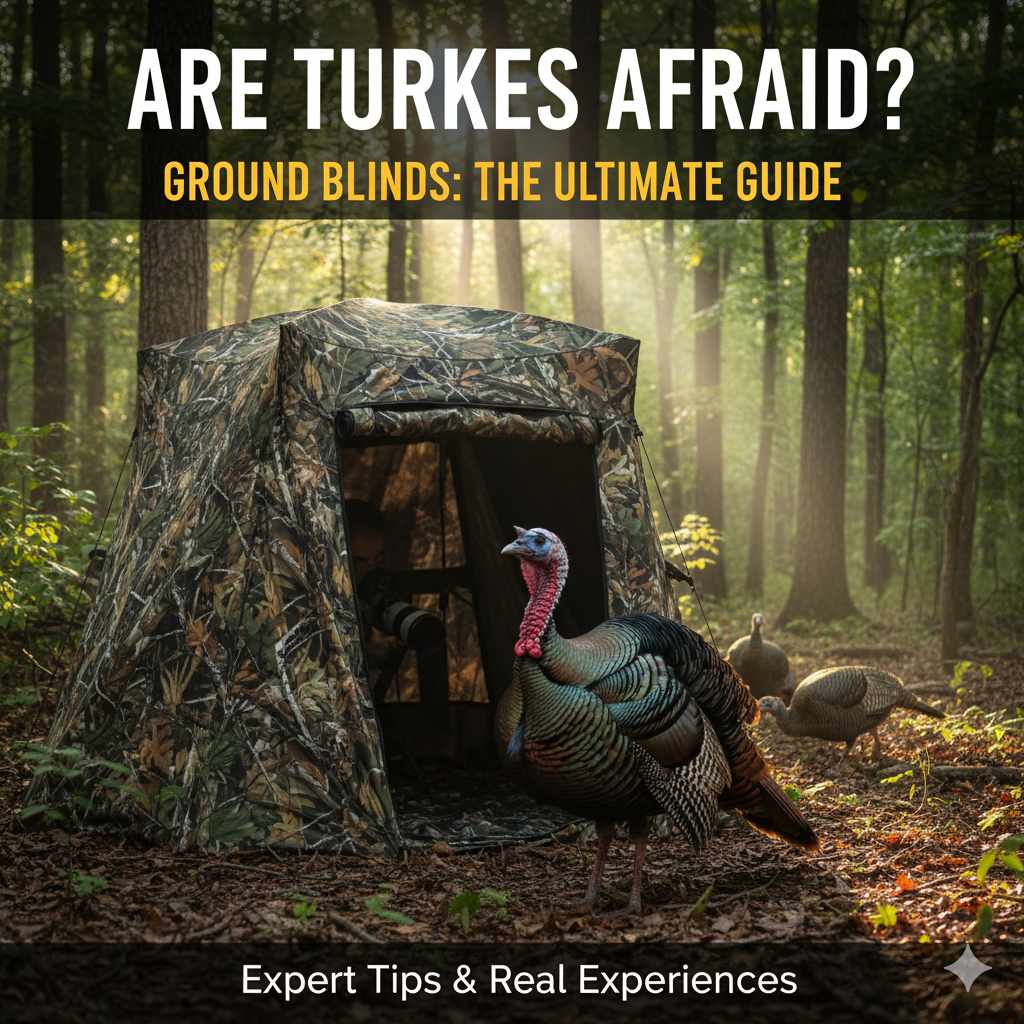
No, turkeys are not inherently afraid of ground blinds. They are afraid of new, out-of-place objects in their environment. A well-placed and properly “brushed-in” ground blind that blends seamlessly into the surroundings will be completely ignored by turkeys, allowing you to stay hidden and ready for the perfect shot.
Hello, fellow hunters! Salman Arfeen here. If you’ve ever sat in a ground blind, you’ve probably asked yourself this question. You found the perfect spot, your calls sound great, but you can’t shake the feeling that your blind is sticking out like a sore thumb. Will that big, beautiful gobbler see it and run the other way? It’s a common worry, and it can add a lot of stress to your hunt.
But I’m here to tell you to relax. The truth is, a ground blind can be your greatest asset in the turkey woods. The key isn’t the blind itself, but how you use it. In this guide, I’m going to walk you through everything you need to know to make your blind completely invisible to even the wariest old tom. Let’s get started!
Understanding a Turkey’s Super-Vision
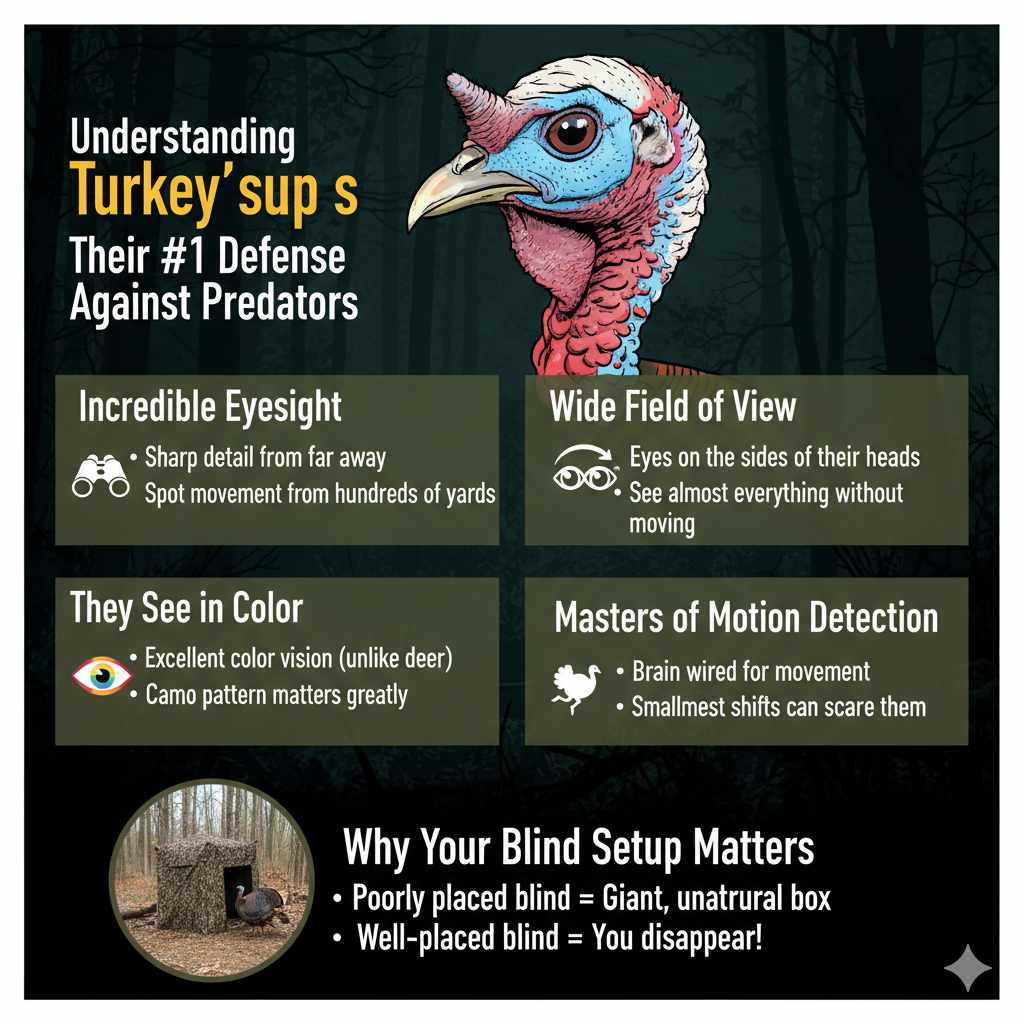
Before we can hide from a turkey, we need to understand how it sees the world. Forget what you know about human vision; turkeys are on a whole different level. Their eyesight is their number one defense against predators like us.
Here’s what you need to know:
- Incredible Eyesight: Turkeys can see things in sharp detail from much farther away than we can. Think of it like having a pair of binoculars built into their heads. They can spot the slightest movement or out-of-place object from hundreds of yards away.
- Wide Field of View: With eyes on the sides of their heads, turkeys have about a 270-degree field of view. This means they can see almost everything around them without turning their heads. This is why it’s so hard to sneak up on them.
- They See in Color: Unlike deer, turkeys have excellent color vision. They can see colors just as vividly as we can, which means your camouflage pattern really matters. A blind that doesn’t match the surrounding woods will stand out immediately.
- Masters of Motion Detection: A turkey’s brain is wired to detect movement. Even a small, slow movement like raising a bow or shifting your weight can be enough to send them running.
So, what does this all mean for us? It means we can’t be lazy with our blind setup. A poorly placed blind is a giant, unnatural box in a world a turkey knows like the back of its wing. But a well-camouflaged and strategically placed blind disappears, allowing you to get away with the small movements needed to make a shot.
Why a Ground Blind Might Spook a Turkey: The Common Mistakes
When a turkey spooks at a ground blind, it’s almost never the blind’s fault. It’s a human error. Turkeys live in the same place every single day. They know every tree, every bush, and every log. When something new and big suddenly appears, it sets off alarm bells.
Here are the most common mistakes that cause turkeys to fear your blind:
- The “Sudden Appearance” Problem: Setting up a blind in an open field the morning of your hunt is the biggest mistake you can make. To a turkey, it’s like a refrigerator suddenly appearing in your living room. It’s suspicious and screams danger.
- The Unnatural Silhouette: Ground blinds are, by nature, square or boxy. Nature doesn’t have many perfect squares. A blind’s sharp edges and flat roof can stand out against the soft, irregular shapes of the woods.
- Poor Location Choice: Placing your blind where it is exposed to sunlight makes it glow. Setting it up without any natural cover behind it makes the silhouette even more obvious.
- Movement Inside the Blind: A dark window on a blind can look like a black hole. If a turkey sees you move inside that black hole—even just a silhouette—the game is over.
- Noise and Scent: The rustle of the blind’s fabric in the wind, the loud sound of a zipper, or the human scent wafting from the windows can all alert a nearby bird that something isn’t right.
The good news is that every single one of these mistakes is easy to fix with a little bit of planning and effort.
How to Make Your Ground Blind Invisible to Turkeys: A Step-by-Step Guide
Now for the fun part! Let’s turn your ground blind into a secret weapon. Follow these steps, and you’ll have gobblers strutting by without a clue you’re even there.
Step 1: Choose the Right Blind and Set It Up Early
Success starts before you even get to the woods. The best strategy is to get your blind set up well in advance of your hunt—days or even a week beforehand if possible. This gives the local wildlife, including turkeys, time to get used to it. It becomes part of the scenery.
If you can’t set it up early, don’t worry! The next steps are even more critical. When choosing a blind, look for:
- A Camo Pattern that Matches Your Area: Is it early spring with lots of brown and gray? Or late spring when everything is green? Match your blind’s camo to the season.
- Brush Loops or Straps: Most modern blinds have these sewn onto the outside. They are essential for adding natural vegetation, which we’ll cover next.
- Shoot-Through Mesh Windows: This is a game-changer for beginners. The mesh helps hide your movement inside the blind but still allows you to shoot an arrow through it (always use a fixed-blade broadhead for this).
Step 2: The Art of “Brushing In” Your Blind
This is the single most important step. “Brushing in” is the process of using natural vegetation to break up your blind’s outline and make it melt into the environment. A well-brushed-in blind is virtually invisible.
Here’s how to do it:
- Gather Local Materials: Once your blind is set up, look around you. Gather fallen branches, dead leaves, grasses, and limbs from the immediate area. Don’t cut down live trees; use what’s already on the ground. Using local materials ensures the colors and textures match perfectly.
- Tuck and Weave: Use the brush loops on your blind to tuck in the branches and grasses. Start with the larger branches to break up the roofline and corners. Then, fill in the gaps with smaller vegetation.
- Focus on the Outline: Your main goal is to eliminate the boxy shape. You want to make the blind look like a random pile of brush, not a man-made structure. Pay special attention to the top edges and corners.
- Step Back and Check: Walk about 30-40 yards away and look at your blind from different angles. Does any part of it look unnatural? If an edge looks too sharp or a side looks too flat, go back and add more brush.
Step 3: Pick the Perfect Location
Where you put your blind is just as important as how you hide it. An expertly brushed-in blind can still feel out of place if it’s in the wrong spot.
- Use a Backdrop: Never set up your blind in the open. Always, always, always back it up against something. Tuck it into the edge of a woodline, place it in front of a large tree trunk, or nestle it into a thicket of bushes. A solid backdrop prevents you from being silhouetted.
- Find the Shadows: Turkeys have a harder time seeing into dark places. Set up your blind in a spot that will be in the shade during the time you plan to hunt. The morning sun can make your blind glow if it’s in a direct path.
- Think Like a Turkey: Position your blind along a known travel corridor, near a strutting zone, or within calling distance of a roosting area. For more tips on turkey behavior, the National Wild Turkey Federation (NWTF) offers excellent resources on hunting tactics.
Step 4: Master Your In-Blind Discipline
Once you’re set up, your job is to be a black hole. Turkeys can’t see into the dark interior of a blind very well, but they can see movement against the dark background of an open window.
- Wear Black: Do not wear camouflage inside your blind. Camo is designed to break up your outline in the woods, not in a dark blind. Wearing all black, including a black face mask and gloves, will make you disappear into the shadows of the blind’s interior.
- Minimize Movement: Move slowly and deliberately. When you need to raise your bow or binoculars, do it at a snail’s pace. Keep your windows closed or the mesh up on the sides you aren’t watching.
- Be Quiet: Get all your gear organized before the hunt begins. Unwrap snacks, open your water bottle, and get your calls ready so you don’t have to make noise when the birds are close.

Common Ground Blind Mistakes and Easy Fixes
To make it even simpler, here’s a quick cheat sheet for avoiding common pitfalls.
| Mistake | Why It Scares Turkeys | The Simple Solution |
|---|---|---|
| Setting up in an open field | It looks like a giant, unnatural box dropped from the sky. | Tuck your blind into a woodline, fencerow, or against a large tree for a natural backdrop. |
| Forgetting to brush it in | The sharp, square outline is a major red flag in nature. | Use local, natural vegetation to break up the blind’s roofline and corners. |
| Making sudden movements inside | A turkey’s eyes are built to detect even the slightest motion. | Move slowly and deliberately. Wear all black and use shoot-through mesh windows to hide movement. |
| Loud zippers or noisy gear | Unnatural sounds signal danger and will put turkeys on high alert. | Open your windows and arrange your gear before turkeys are expected to arrive. Be silent. |
| Placing the blind in direct sun | Sunlight can cause glare on the fabric and make it easier for turkeys to see inside. | Position your blind in the shade. Pay attention to where the sun will be during your hunt. |
Ground Blind Hunting: Key Do’s and Don’ts
Here’s another helpful table to keep you on the right track.
| Do This | Don’t Do This |
|---|---|
| Set up your blind several days early to let turkeys get used to it. | Set it up the morning of the hunt unless you have no other choice. |
| Wear all black or very dark clothing inside the blind. | Wear camouflage clothing inside—it actually makes you more visible against the dark interior. |
| Use plenty of natural vegetation from the area to brush in your blind. | Assume the factory camo pattern is enough to hide you. |
| Keep as many windows closed as possible to stay dark inside. | Open all the windows, which lets in light and exposes your movement. |
| Practice shooting your bow from a sitting or kneeling position inside the blind. | Take your first-ever shot from the blind on hunt day. |
Frequently Asked Questions (FAQ)
1. How long does it take for a turkey to get used to a ground blind?
It varies, but generally, turkeys will accept a blind as part of the landscape within 2-3 days. If you can set it up a week in advance, that’s even better. If you have to set it up the day of, make sure your brushing-in technique is perfect.
2. Can turkeys see through the mesh on my blind?
From a distance, no. The mesh does an excellent job of concealing movement inside while still letting you see out. However, if a turkey gets very close (within a few yards) and the sun is shining directly on the mesh, it may be able to see your silhouette. This is why wearing black is so important.
3. What color should I wear inside a ground blind?
Black. Always wear black or the darkest clothing you own. This includes a black hat, face mask, and gloves. Black absorbs light and makes you blend into the dark shadows of the blind’s interior, making you virtually invisible.
4. Do I really need to brush in a high-quality camouflage blind?
Yes, absolutely. No camouflage pattern can hide a square shape. The goal of brushing in isn’t just to match the color of the woods; it’s to break up the unnatural, boxy silhouette of the blind. This is the most critical step to fooling a turkey’s eyes.
5. Is it better to set up a blind the night before or the morning of the hunt?
Setting it up the night before is much better than the morning of. It gives the area a few quiet hours to settle down. However, setting it up days in advance is the absolute best practice.
6. Can I use a deer blind for turkey hunting?
Yes, most ground blinds work perfectly for both deer and turkey hunting. The principles are the same: stay concealed, stay quiet, and stay comfortable. Just make sure the windows are low enough for you to shoot your bow from a seated position if you’re turkey hunting.
7. What is the biggest giveaway that spooks a turkey near a blind?
Movement. Hands down, movement is the number one thing that will get you busted. A turkey might be curious about a new shape, but the second it sees movement inside that shape, it will identify it as a threat and be gone in a flash.
Conclusion: Your Blind is Your Best Friend
So, are turkeys afraid of ground blinds? The answer is a clear no. Turkeys are afraid of things that look and feel out of place. They are afraid of sloppy setups and careless hunters. Your ground blind isn’t the problem; it’s a tool. And like any tool, its effectiveness comes down to how you use it.
By taking the time to choose the right location, setting up early, meticulously brushing in your blind to erase its silhouette, and maintaining strict discipline inside, you can transform that “big box” into an invisible hunting machine. It allows you to stay comfortable, protected from the elements, and concealed, giving you the priceless advantage of being able to wait for that perfect, ethical shot.
Now you have the knowledge. Get out there, put these tips into practice, and enjoy the thrill of having a wise old gobbler walk right by, completely unaware. Happy hunting!