
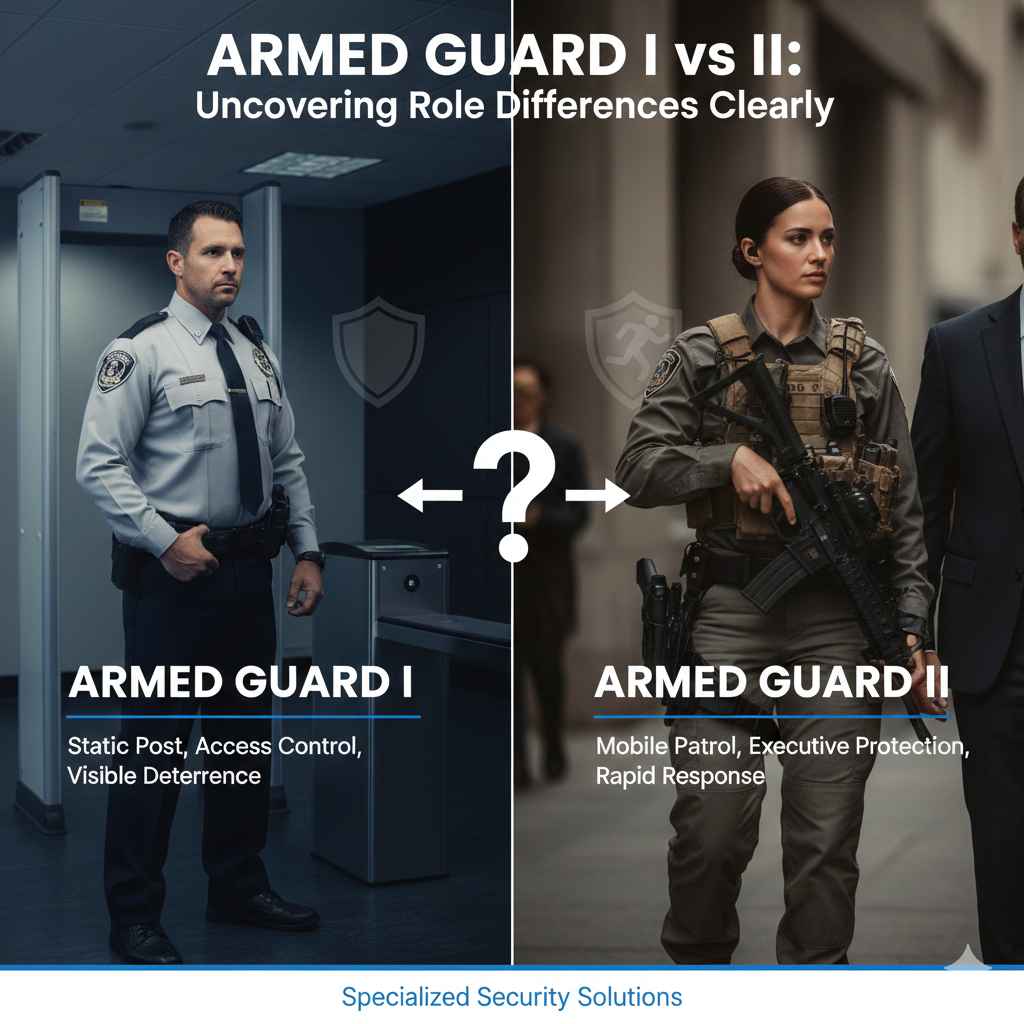
Figuring out the difference between Armed Guard I vs II: Clear Role Differences can be tricky when you’re starting. People often mix up the duties and responsibilities of each position. Don’t worry, it’s totally normal to feel a bit confused at first. This post will help you sort things out. We’ll break down the specifics in a way that’s simple to grasp. So, get ready to explore the key distinctions between Armed Guard I and II.
What Sets Armed Guard Roles Apart?
The differences between the two armed guard roles often aren’t clear right away. Each level comes with its own set of duties, skills needed, and pay grades. Armed Guard I positions usually serve as an entry point, focusing on basic security tasks. Armed Guard II jobs, on the other hand, frequently include more advanced responsibilities, such as supervising others or managing sensitive security situations. Knowing the specifics of each is the first step toward finding the perfect role.
Level I Guard Duties and Responsibilities
Armed Guard I positions are the initial step into the security field. These guards primarily focus on the basics of security and maintaining order. They are usually assigned tasks such as monitoring access points, patrolling a defined area, and responding to security alarms. Level I guards typically work under the supervision of more experienced personnel. Their duties are designed to build a strong foundation in security protocols.
- Monitoring Access Points: This involves checking identification, controlling who enters or leaves a building or property, and preventing unauthorized access. This includes using ID scanners, verifying credentials, and ensuring visitors sign in.
At a busy office building, an Armed Guard I might sit at the front desk, controlling access and directing visitors.
- Patrolling Assigned Areas: Regular patrols of the site are essential to identify and address security risks. Armed Guard Is look for suspicious activities or potential threats, ensuring the safety of people and property. They may use a checklist to maintain the patrol logs.
A typical example: patrolling a warehouse to ensure that doors and windows are secure and nothing seems out of place.
- Responding to Alarms and Incidents: When an alarm sounds, an Armed Guard I must respond quickly. This includes assessing the situation, contacting the appropriate authorities, and following security protocols. They write detailed reports of the event.
A common scenario: responding to a burglar alarm or a fire alarm, contacting the emergency services, and securing the area.
- Reporting and Documentation: Armed Guard I personnel must keep clear records of all activities, incidents, and observations. This involves writing detailed reports, logging entries and exits, and maintaining a clear record of events. Accurate reports are essential for security.
A good example of reporting: documenting any incidents, from minor disturbances to major security breaches.
Level II Guard Duties and Responsibilities
Armed Guard II positions involve more advanced security duties and require a higher level of experience and training than Level I. They often supervise other security personnel and manage complex security procedures. Level II guards frequently handle more challenging situations, such as crisis response, and can be involved in training new recruits. These roles come with increased responsibility and often, a higher salary.
- Supervising Other Security Personnel: Armed Guard II roles frequently involve overseeing and directing Level I guards or other security staff. This can include assigning tasks, evaluating performance, and ensuring that all security protocols are followed.
Example: a Level II guard managing a team of guards at a large event venue.
- Managing Complex Security Procedures: This includes handling advanced security measures and planning for unusual or high-risk events. Armed Guard II personnel often work on developing and improving security plans to address potential threats.
Example: developing and implementing security protocols for a high-profile client.
- Crisis Response and Emergency Management: Level II guards are trained to manage emergencies, including active shooter situations, natural disasters, and other urgent events. They are required to make quick decisions, coordinate response efforts, and ensure the safety of everyone on-site.
Example: leading emergency responses during a fire or other crisis.
- Training and Development: Level II guards often take part in training new personnel, imparting their knowledge and expertise. They may also be involved in creating training materials and helping others learn and develop their security skills.
Example: teaching new guards how to use security equipment or how to respond to common security issues.
Training, Skills, and Essential Requirements
Different levels of training and experience are necessary for Armed Guard I and II positions. The requirements reflect the increased responsibilities linked to each role. Understanding what is needed can assist in career planning and provide a clearer view of what it takes to excel in the security industry. Proper training and skill development are essential for any job in this field.
Training and Certification for Armed Guards
All armed security personnel must go through specific training to carry and use firearms. This training is typically provided by certified instructors and includes classroom instruction, range time, and practical exercises. Certification is essential to meet the legal requirements for carrying weapons. The type of training and certification required may vary, but the main goal is to ensure that all armed guards are skilled, knowledgeable, and competent in their duties.
- State-Specific Requirements: Training standards vary based on state laws. Most states have licensing requirements that determine the kind of training needed to get a guard card or weapons permit. These regulations include the types of courses, minimum hours of instruction, and background checks.
For example, some states require extensive background checks and psychological evaluations.
- Firearms Training and Qualification: Armed guards must complete firearms training. This training involves learning safe handling, marksmanship, and the legal aspects of using firearms. Guards go through periodic qualifications to ensure they can use their weapons safely.
Training typically involves classroom instruction and live-fire exercises on a gun range.
- First Aid and CPR Certification: Many armed security positions require certification in first aid and CPR. This training provides guards with life-saving skills. This training is beneficial in providing immediate medical care.
Certification is usually renewed every few years to keep skills sharp.
- Continuing Education: Some states require ongoing training. This ensures that armed guards stay current with best practices, new technologies, and changes in the law. Continuing education can include additional courses or refreshers to maintain certification.
This includes regular updates on legal issues and use of force policies.
Key Skills Needed for Both Roles
Certain skills are essential for both Armed Guard I and II. These skills are the foundation for safe and effective security work. Proficiency in these areas helps ensure success in any security role. From basic communication to quick decision-making, these skills enable guards to handle all types of situations effectively.
- Communication Skills: Clear communication is key for conveying information, giving instructions, and documenting events. It involves both verbal and written communication. Effective communication helps in avoiding misunderstandings.
This includes being able to clearly and concisely speak, listen, and write.
- Observation Skills: The ability to observe details and identify potential risks or threats is essential for security professionals. This includes recognizing unusual behavior, unusual events, and potential hazards. Observational skills help in making sure everything is under control.
Example: noticing a broken lock or an unattended package.
- Decision-Making Abilities: Security personnel must make decisions quickly and effectively. They must assess situations, consider the options, and take the appropriate actions. Good decision-making skills can help handle emergencies and threats.
This skill is critical in high-pressure situations, such as responding to alarms or security breaches.
- Physical Fitness: Guards need to be in good physical condition to perform their duties. This involves being able to stand for extended periods, walk long distances, and respond quickly to emergencies. Physical fitness ensures that guards can perform all job functions.
This includes being able to run, climb stairs, and manage physical confrontations.
Specific Requirements for Armed Guard II
In addition to the general requirements, Armed Guard II positions often need a higher level of experience, certifications, and skills. These extra requirements fit the more complex responsibilities of the role. Knowing what’s required can help candidates plan their career paths and show them how to prepare for this more advanced role.
- Supervisory Experience: Many Armed Guard II roles need previous experience in a supervisory position. This experience proves that a candidate can manage and direct other staff. Supervision includes delegating tasks, managing performance, and ensuring that protocols are followed.
Supervisory experience might include leading teams or managing security operations.
- Advanced Certifications: Level II guards may be required to have advanced certifications, such as those related to crisis management, specialized security equipment, or leadership. These certifications prove competence in specific areas.
These may include certifications in advanced firearms handling, crisis management, or security management.
- In-Depth Knowledge of Security Procedures: Armed Guard II personnel need an advanced knowledge of security procedures, protocols, and best practices. They must be able to develop and implement these protocols. This depth of information is vital to handling complex situations.
This includes an understanding of risk assessment and security planning.
- Conflict Resolution Skills: Armed Guard II personnel often handle conflict. They need to de-escalate confrontations, mediate disputes, and ensure the safety of everyone involved. Conflict resolution skills are key in handling difficult situations.
This includes the ability to remain calm, listen to both sides, and find peaceful solutions.
Job Market Overview and Salary Expectations
Knowing the job market for Armed Guard roles and salary expectations is essential for those exploring a career in security. Understanding employment trends and compensation packages can help in preparing for a career path and making informed decisions. Market analysis can also help when deciding to pursue higher-level roles.
Job Market Trends in Security
The security industry is always growing. The demand for security services is fueled by rising concerns about safety and security, both for businesses and people. These trends impact job prospects. Understanding these trends can help you decide if it is the job for you.
- Increasing Demand for Security Services: The demand for security services is growing due to concerns about crime, terrorism, and workplace violence. This growth is driving the need for more armed guards and security professionals. The expansion is happening in all sectors.
For example, the need for security is growing in schools, hospitals, and government facilities.
- Technological Advancements: New technologies are changing the way security is done. The growing use of surveillance systems, access control, and other security tech drives the need for guards who understand technology. Learning to use these technologies can boost a guard’s job prospects.
This includes learning about video surveillance, alarm systems, and electronic access controls.
- Impact of Economic Conditions: The security industry is affected by economic changes. During economic downturns, some industries might cut back on security spending. During times of economic growth, security needs often increase.
For example, an economic recession could reduce demand for some security services, while an economic boom might increase demand.
Salary Expectations for Armed Guards
Salaries vary depending on factors such as experience, location, and the specific job requirements. Armed Guard II positions usually come with better pay compared to Level I jobs. Pay scales show how the value of each role differs. Understanding these trends can help you negotiate pay and plan for your financial goals.
| Factor | Armed Guard I | Armed Guard II |
|---|---|---|
| Starting Salary | $30,000 – $35,000 | $38,000 – $45,000 |
| Average Salary | $35,000 – $40,000 | $45,000 – $55,000 |
| Experience | Limited experience | 2+ years of experience and supervisor experience |
Note: These figures are approximate and can vary.
- Experience Level: Experience has a big impact on salary. More experience and demonstrated skills result in better pay. With experience, guards can expect pay increases.
Guards with years of experience often earn more.
- Location and Industry: Salaries can differ based on where you work and the industry. High-cost areas or those with high security needs often offer better pay. Industries with high security needs might pay more.
Working in a large city versus a small town can lead to salary differences.
- Certifications and Skills: Additional certifications and skills can improve pay. Advanced training, skills in high-demand areas, and specialized knowledge can increase earning potential. Continuing your education can lead to pay raises.
Certifications like those in advanced firearms or crisis management can improve pay.
Real-Life Examples and Scenarios
Examining real-life examples and practical scenarios provides a clear view of how these roles work. Understanding how Armed Guard I and II positions function in day-to-day work can provide insight into their responsibilities and challenges. These examples give a detailed perspective on the practical aspects of security work.
Case Study 1: Office Building Security
In a large office building, an Armed Guard I is posted at the front desk. Their job is to manage access control, greet visitors, and monitor the lobby area. During a typical day, this guard checks IDs, directs deliveries, and answers basic inquiries. This guard’s job involves maintaining a safe environment by following security protocols. This guard keeps a watchful eye out for unusual behavior or potential threats.
Contrast this with the Armed Guard II, who oversees the building’s security. The Level II guard supervises the Level I personnel, manages security incidents, and coordinates security measures. When a security alarm sounds, the Level II guard leads the response, communicating with emergency services and making key decisions. Their responsibilities include a deeper grasp of security protocols.
Case Study 2: Retail Store Security
An Armed Guard I working at a retail store patrols the aisles, observes the customers, and checks for theft or suspicious activity. They monitor the security cameras and respond to shoplifting incidents, following store policies and interacting with local law enforcement. Level I guards typically assist in maintaining order and ensuring that the store is safe.
An Armed Guard II position at the same store might involve overseeing the security team, responding to escalated incidents, and coordinating security measures. This Level II guard could manage the store’s security plans and oversee any incidents of theft. Level II guards also take part in training and developing security procedures. Their aim is to make the store more secure.
Scenario 1: Access Control at a Government Building
- Armed Guard I: Checks IDs, operates security checkpoints, and manages building access.
This guard ensures that only authorized people can enter.
- Armed Guard II: Oversees the team, handles unusual entry requests, and coordinates with security management.
The Level II guard makes sure procedures are followed.
Scenario 2: Responding to a Workplace Disturbance
- Armed Guard I: Responds to the incident, assesses the situation, and notifies the supervisor.
The guard secures the area and reports the issue.
- Armed Guard II: Takes control of the situation, coordinates response, and communicates with all parties.
The Level II guard handles communication and provides a solution.
Frequently Asked Questions
Question: What is the main difference between Armed Guard I and II?
Answer: Armed Guard I positions are more focused on basic security duties, such as patrolling and access control. Armed Guard II roles have more advanced tasks, including supervision, crisis response, and security planning.
Question: What type of training is needed to become an Armed Guard?
Answer: Armed guards need firearms training, state-specific licensing, and often certifications in first aid and CPR. Ongoing training and continuing education are also important to stay up-to-date.
Question: Is experience important in the security field?
Answer: Yes. Experience is critical. With experience, guards take on more responsibility and typically earn higher pay. Experience also helps develop key skills.
Question: Do Armed Guard II positions pay more than Armed Guard I positions?
Answer: Yes, Armed Guard II positions usually provide higher salaries than Level I positions due to the increased responsibilities, required skills, and supervisory roles.
Question: What are the main skills needed for a successful security career?
Answer: Key skills include communication, observation, decision-making, and physical fitness. Those working in Level II often need conflict resolution and the ability to lead a team.
Final Thoughts
Finding the distinction between Armed Guard I and II can provide clarity about the security field. Armed Guard I jobs act as an entry point, providing essential security duties. Armed Guard II positions include advanced tasks, requiring more experience and knowledge. The path to promotion typically involves acquiring additional training, certifications, and skills. Understanding these differences can aid individuals as they choose career paths and work toward their professional goals. Those aiming to advance must build experience and gain supervisory skills.