
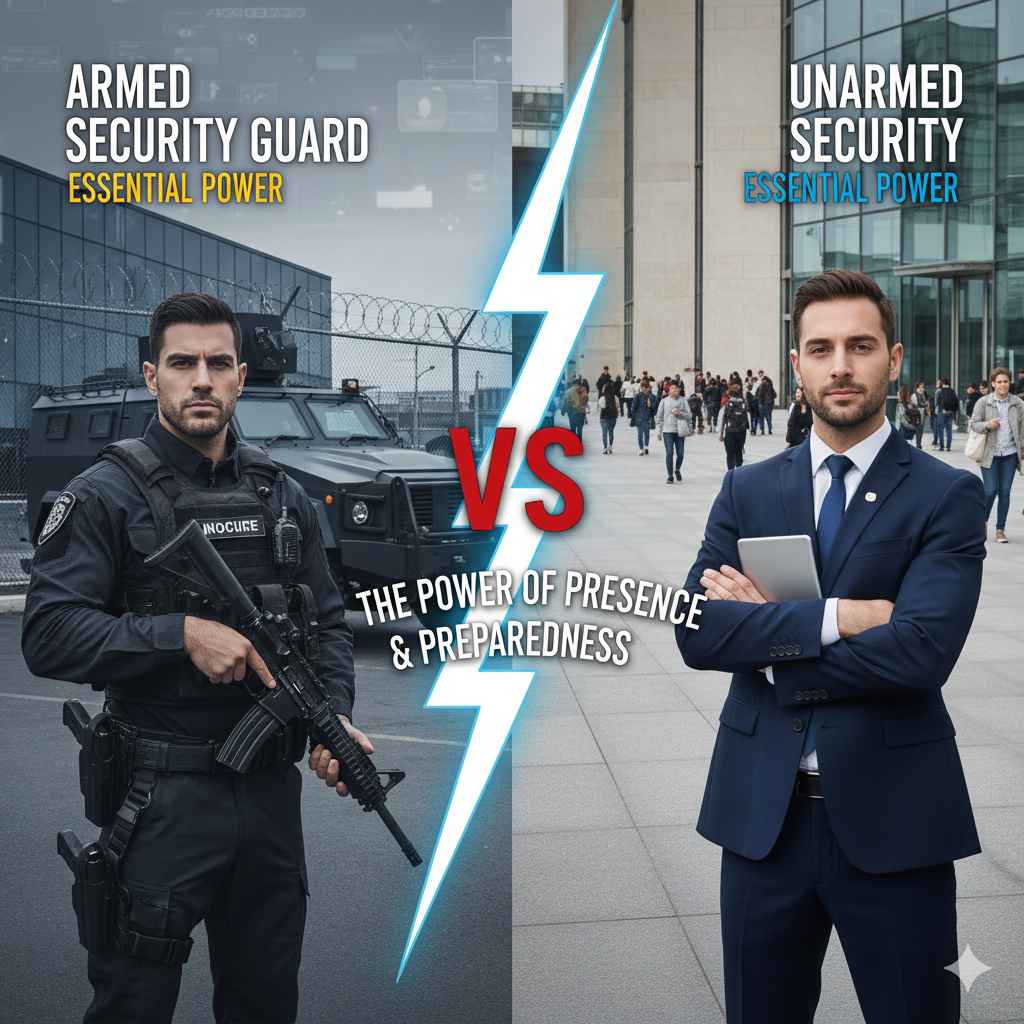
The essential power difference between an armed security guard and an unarmed guard lies in their legal authority to use force, specifically lethal force, and the deterrence factor they provide. Armed guards offer a higher level of immediate defense capability, while unarmed guards rely on presence, communication, and access control.
When you first think about hiring security, you might wonder: Does my situation really need a guard with a weapon? Or is the presence of a guard enough? It’s easy to feel confused by the options when you are just starting out. Security needs are serious, and getting the right level of protection without overspending is key. I’m Salman Arfeen, and just like choosing the right arrow setup, selecting the right security approach takes clear steps. We will break down the main differences between armed and unarmed guards simply. This guide will help you confidently decide what “essential power” you need for your peace of mind.
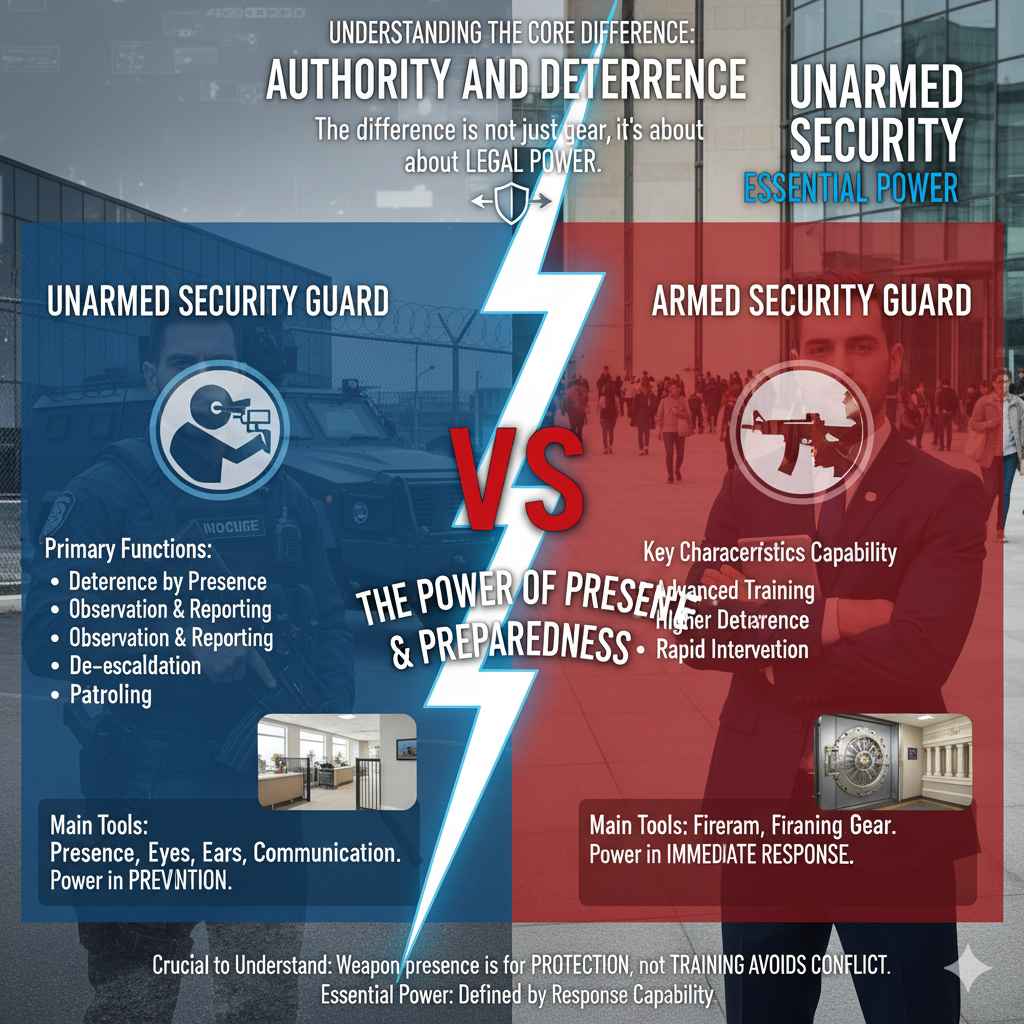
Understanding the Core Difference: Authority and Deterrence
The difference between an armed security guard and an unarmed security guard is not just about the gear they carry. It’s fundamentally about the legal power granted to them to respond to threats. Think of it like this: a bow shooter uses physical skill (unarmed), but adding specialized arrows or broadheads (armed) changes the potential impact of their actions in a crisis.
The Role of an Unarmed Security Guard
Unarmed guards are your first line of defense. Their main tools are their presence, eyes, ears, and communication skills. They are experts in visibility and prevention.
Primary Functions of Unarmed Guards:
- Deterrence by Presence: Simply seeing a uniformed guard discourages minor incidents like shoplifting or loitering.
- Observation and Reporting: They watch the area closely and report suspicious activity immediately to the police or management.
- Access Control: Checking IDs, managing entry points, and ensuring only authorized people enter.
- Patrolling: Maintaining a visible, routine presence to check for security breaches or hazards.
- De-escalation: Using verbal skills to calm down tense situations before they become physical.
In many low-risk environments, like an office lobby during business hours or a standard residential complex, an unarmed guard provides excellent, cost-effective coverage. Their power is in prevention and professional reporting.
The Role of an Armed Security Guard
Armed security guards carry a firearm (and often other less-lethal tools) and have undergone rigorous training and licensing specific to carrying that weapon in public spaces. Their primary purpose shifts slightly—they are trained to respond immediately to active, violent threats.
Key Characteristics of Armed Guards:
- Lethal Force Capability: They possess the legal authority (within strict guidelines) to use deadly force to protect life when facing an immediate and unavoidable threat of death or serious bodily harm. This is the single biggest differentiator.
- Advanced Training: Training goes far beyond basic first aid and involves high-level tactical response, legal use of force continuum, and frequent weapon qualification.
- Higher Deterrence: Their presence actively deters more serious, organized threats, such as armed robbery attempts at financial institutions or high-value asset protection.
- Rapid Intervention: In an active shooter scenario, they can engage the threat while waiting for law enforcement to arrive.
It is crucial to understand that carrying a weapon does not mean the guard is looking for a fight. The training emphasizes avoiding the need to draw the weapon at all costs. However, the potential for that response defines their essential power.
Legal and Training Requirements: The Paperwork Behind the Power
The level of responsibility and risk involved means that the legal requirements for armed guards are much stricter. For beginners looking into the industry, understanding these barriers is important.
Unarmed Guard Licensing
Licensing for unarmed guards is generally simpler. It usually involves:
- Passing a background check (often checking for felony convictions).
- Completing a state-mandated minimum number of classroom hours covering legal responsibilities, report writing, and ethics.
- Obtaining a guard card or registration from the state regulatory board.
Armed Guard Licensing: A Much Higher Bar
To legally carry a firearm on duty, an armed guard must meet all the requirements of an unarmed guard, plus extensive firearm-specific criteria. These often include:
- Firearms Permit: Specific certification proving proficiency with their assigned weapon.
- State Certification: Many states require passing a comprehensive examination specifically on laws regarding the use of deadly force.
- Ongoing Qualification: Unlike unarmed training, armed guards must often re-qualify with their firearms every few months (e.g., quarterly or semi-annually) to maintain their license. For example, in many jurisdictions, compliance with training standards set by organizations like the Consumer Product Safety Commission (CPSC) related to safety protocols surrounding weapons is often implied in state law adherence.
- Psychological Evaluation: Some jurisdictions require periodic psychological fitness checks.
This increased regulatory oversight ensures that only the most vetted and skilled individuals are entrusted with that level of authority. The complexity of the training reflects the weight of the responsibility.
Deterrence Factor: What Threat Level Matches What Guard?
Choosing between armed and unarmed protection often comes down to assessing the risk profile of your location. Think about what you are trying to stop—a petty thief or an organized, violent criminal.
When Unarmed Security is the Best Fit (Low to Medium Risk)
If your primary goal is creating a professional, welcoming atmosphere while deterring casual issues, unarmed staff is ideal. This is about visibility, not confrontation.
Best Scenarios for Unarmed Guards:
- Retail stores (non-high-value items).
- Corporate office lobbies during daytime hours.
- Event entrances (ticket checking, crowd management).
- Gated residential communities (access verification).
When Armed Security is Necessary (High Risk)
When the assets or lives you are protecting are at extreme risk of organized or violent crime, the presence of an armed guard changes the dynamic entirely. They shift from being a deterrent against misdemeanor to a defense against felony violence.
Best Scenarios for Armed Guards:
- Banks, credit unions, and jewelry stores.
- High-value cargo transport or storage facilities.
- Executive protection details requiring immediate response.
- Locations with documented threats of workplace violence or civil unrest.
- Nighttime operations at commercial properties where break-ins are common.
To help visualize this, here is a simple comparison table regarding the power dynamics:
| Feature | Unarmed Security Guard | Armed Security Guard |
|---|---|---|
| Primary Tool | Presence, Communication, Observation | Firearm, Training, De-escalation |
| Legal Power | Citizen’s arrest powers (varies by state) | Citizen’s arrest powers PLUS authorized use of force continuum, including lethal force. |
| Deterrent Level | Effective against casual or opportunistic threats. | Effective against organized crime and threats involving weapons. |
| Training Intensity | Basic state requirements (e.g., 20-40 hours). | Extensive state requirements, regular firearm qualification, use-of-force scenario testing. |
| Cost | Lower hourly rate. | Significantly higher hourly rate due to specialization and liability. |
The Concept of Force Continuum in Security Operations
Whether armed or unarmed, every security professional operates within a concept called the “Use of Force Continuum.” This is essentially a guide showing different levels of force that can be used in response to a threat, starting with the lowest necessary level. Understanding this helps frame the “essential power” each guard possesses.
The Continuum Steps (Simplified)
An unarmed guard primarily works at steps 1 through 3. An armed guard has the training and equipment to potentially escalate to step 4 or 5, but only as a last resort.
- Officer Presence: The guard simply being seen. (Applies to both armed and unarmed.)
- Verbal Commands: Giving clear instructions (e.g., “Stop,” “Show me your hands”). (Applies to both.)
- Soft Empty Hand Control: Using physical techniques to safely guide or restrain a passive subject (e.g., escorting someone out). (Applies more often to unarmed, but armed guards use this first.)
- Intermediate Control/Less-Lethal Force: This might involve using pepper spray, a baton, or takedown techniques. (Armed guards are often trained in these tools as well, but an unarmed guard might only use basic holds.)
- Lethal Force: Using a firearm only when facing an imminent threat of death or grave bodily harm to themselves or others. (Exclusive to armed guards.)
The power of the unarmed guard lies in their absolute adherence to steps 1 through 3. They are masters of de-escalation because they have no other option. The power of the armed guard is the ability to maintain safety when the threat level exceeds what verbal commands or simple restraint can handle, as seen in best practices recommended by the National Institute of Justice regarding protective service operations.
The Psychological Aspect: Perception is Reality
One of the most overlooked aspects of the armed vs. unarmed debate is the psychological impact on both potential offenders and the general public.
Deterrence Through Perception
For the average person visiting a secured area, the mere sight of a uniformed guard offers comfort. But for someone intending to commit a crime, the visual confirmation of a firearm sends a strong warning signal. Criminals often “case” locations to determine the level of resistance they might face.
Factors Influencing Criminal Choice:
- Uniform Visibility: A crisp, professional uniform always increases deterrence.
- Weapon Visibility: A clearly visible firearm shifts the risk calculation for the criminal instantly.
- Patrol Patterns: Unpredictable routes are better than predictable ones, regardless of armament.
- Reported Response Time: How quickly police or backup arrive impacts the perceived risk.
If your environment is highly visible or attracts significant foot traffic (like a public event), the public perception of security strength matters for overall comfort and safety confidence. Armed guards project maximum security readiness.
Cost Considerations: Budgeting for Essential Power
Let’s be honest: specialized training and higher liability insurance mean that armed security guards cost more than unarmed guards. This is a necessary operational expense that must be factored in.
Generally, an armed guard’s hourly rate can be 30% to 60% higher than an unarmed guard’s rate, depending on location and the specific requirements for their certification (e.g., specialized armed patrol vs. static armed post).
Cost Breakdown Example (Hypothetical)
| Security Type | Estimated Hourly Rate Range (Varies by Region) | Insurance/Training Overhead |
|---|---|---|
| Unarmed Guard | $20 – $30 per hour | Moderate (Basic liability) |
| Armed Guard | $30 – $50+ per hour | High (Includes specialized firearm liability, extensive ongoing training documentation) |
Before making a decision based purely on cost, always assess the potential cost of a security failure. If an unarmed guard is insufficient and a major incident occurs, the financial and reputational damage far outweighs the extra hourly cost of proper armed protection.
Practical Steps to Determine Your Security Needs
To move from confusion to clarity, you need to conduct a simple risk assessment. Think like a coach analyzing the target before an important match.
Step 1: Identify What You Are Protecting
What are the assets? Are they physical items (cash, inventory), or are they intangible (client data, employee safety)?
- High-Value Inventory (Gold, electronics)?
- High Traffic Volume (Public events)?
- High Potential for Violence (Banks, healthcare facilities)?
Step 2: Analyze the Environment and Time
The risk profile changes based on when people are present.
- Daytime vs. Nighttime: Nighttime security often requires a higher level of response capability due to lower visibility and slower police response times.
- Public Access: Is the area open to the general public or restricted? Open access often demands greater immediate response capability.
- Past Incident History: Have there been prior robberies, assaults, or significant threats?
Step 3: Define the Expected Response
What is the absolute minimum action you need the guard to take when a problem arises?
If the answer is “Observe, report, and politely ask them to leave,” unarmed is likely sufficient. If the answer is “Immediately stop a violent threat until police arrive,” armed protection is non-negotiable.
Training Deep Dive: The Unseen Power of Practice
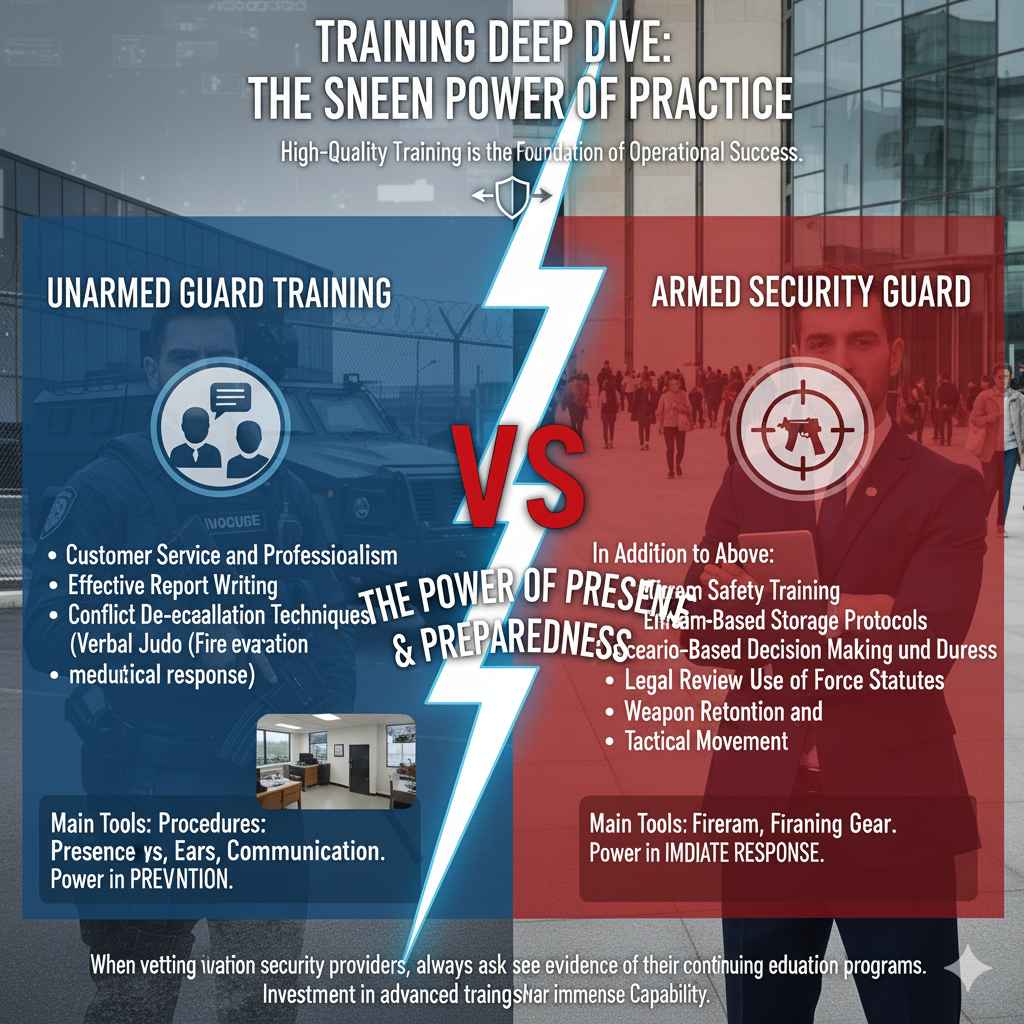
For those new to security or hiring for the first time, remember that the guard’s training is what translates their title (armed or unarmed) into actual performance. High-quality training is the foundation of operational success, just as consistent practice builds accuracy with your bow.
Focus Areas for Unarmed Guard Training:
- Customer Service and Professionalism.
- Effective Report Writing (Clarity is paramount).
- Conflict De-escalation Techniques (Verbal Judo).
- Emergency Procedures (Fire evacuation, medical response).
Focus Areas for Armed Guard Training (In Addition to Above):
- Firearm Safety and Storage Protocols.
- Scenario-Based Decision Making Under Duress.
- Legal Review of Use of Force Statutes.
- Weapon Retention and Tactical Movement.
When vetting security providers, always ask to see evidence of their continuing education programs. A security company that invests in advanced training for its armed staff shows they understand the immense liability associated with that essential power.
Frequently Asked Questions (FAQ) for Beginners
Q1: Can an unarmed security guard physically stop a criminal?
A: Yes, an unarmed guard can use physical restraint techniques (like citizen’s arrest or basic handcuffing) to detain someone suspected of a crime, provided they have the legal authority under local laws to do so. However, they must stop if the suspect uses lethal force against them.
Q2: Do armed guards receive better pay than unarmed guards?
A: Absolutely. Due to the rigorous training, higher liability insurance premiums carried by the employer, and the specialized skill set required, armed guards command a significantly higher hourly rate and salary.
Q3: Does hiring armed security automatically reduce insurance costs for my business?
A: This varies widely. While robust security can be a positive factor, some insurance carriers may actually increase premiums because of the elevated risk associated with having a firearm on the premises. You must check with your specific broker.
Q4: If I hire armed guards, are they allowed to enforce the law like a police officer?
A: No. Security guards, armed or unarmed, are private citizens. They do not have the powers of arrest granted to sworn law enforcement officers, although they may perform a citizen’s arrest. Their primary authority comes from the property owner or client they are employed by.
Q5: Which type of guard is better at preventing shoplifting?
A: An unarmed guard is often highly effective at preventing typical retail shoplifting simply through visible presence and professional observation. Armed guards are usually overkill for routine inventory loss prevention.
Q6: What happens if an armed guard misuses their weapon?
A: If an armed guard uses excessive or unjustified force, they and their employing agency face severe criminal prosecution, civil lawsuits, and immediate loss of their security license. The consequences are extremely serious for misuse.
Conclusion: Choosing the Right Level of Protection
Deciding between armed security guard vs unarmed security guard protection isn’t about picking the “stronger” option; it’s about selecting the appropriate response for the specific threat environment you face. Unarmed guards excel at establishing order, maintaining professionalism, and deterring low-level crime through consistent presence and excellent people skills. They are the backbone of daily safety management.
The essential power of the armed guard, however, is their capability to meet immediate, overwhelming, and potentially lethal force with an equally decisive, legally sanctioned response. This power mandates higher training, stricter licensing, and a greater hourly investment.
As you finalize your choice, remember the core mission: safety. If your risk assessment points toward