

Choosing between armed and unarmed security guards depends entirely on your specific risk level and environment. Unarmed guards deter low-level issues, while armed guards offer a higher level of response for serious threats, requiring careful legal consideration and site assessment before deciding which type you need.**
Deciding between armed and unarmed security guards often feels tricky when you first start planning protection for your business or event. You want the best safety without overspending, but knowing the difference can be confusing. Does every place need guns, or is a visible presence enough? This decision is crucial for effective security. Don’t worry; we will break down the roles, benefits, and legal steps clearly. By the end of this guide, you will know exactly which security posture fits your needs best.
Understanding the Core Difference: Arms vs. Presence
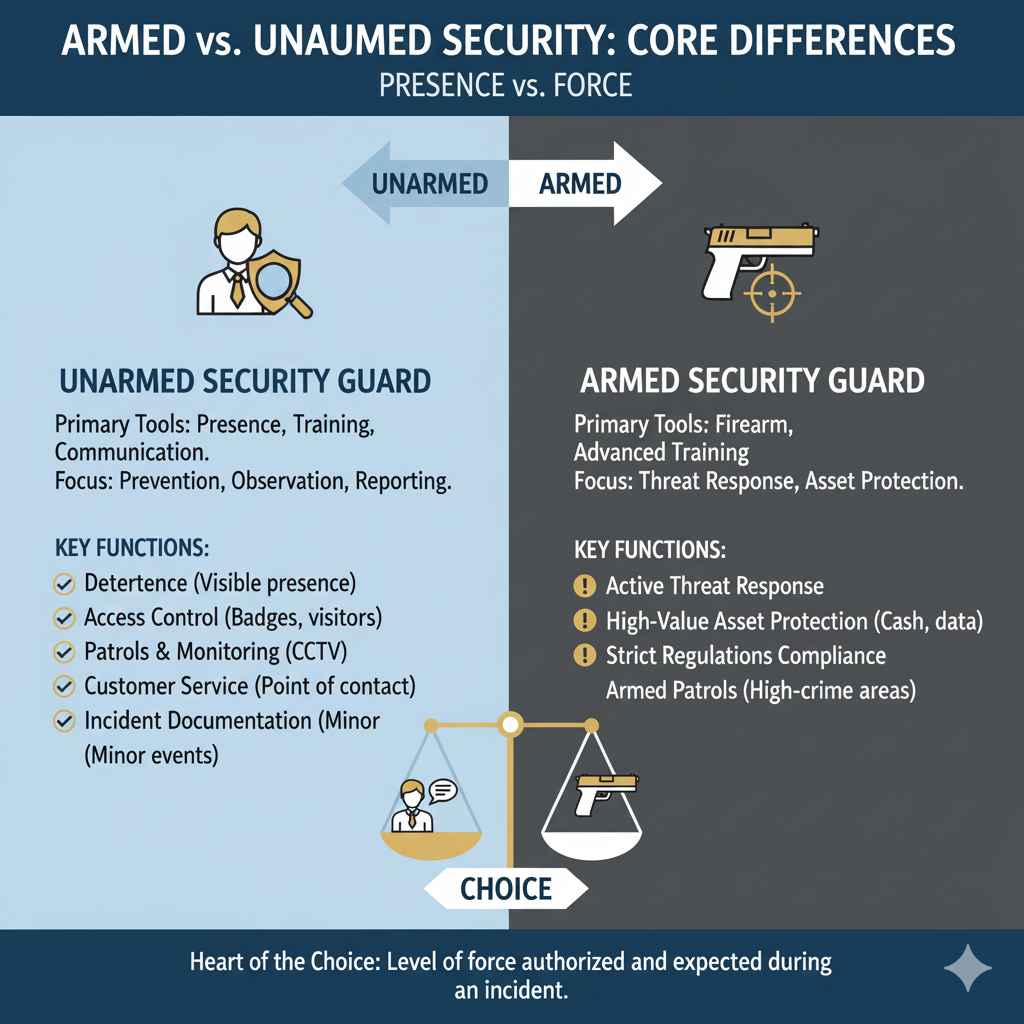
At its heart, the choice between armed and unarmed security boils down to the level of force authorized and expected during an incident. Think of it like choosing the right arrow—sometimes you need finesse, and sometimes you need serious stopping power. Both types of guards provide immense value, but they serve different primary purposes.
The Role of the Unarmed Security Guard
Unarmed guards are the frontline of deterrence. Their primary tools are their presence, training, training, and communication skills. They are focused on prevention, observation, and reporting.
Their main goal is to make sure potential problems never start. A visible, professional guard sends a clear message to anyone thinking about shoplifting, loitering, or minor vandalism: “We are watching.”
Key Functions of Unarmed Security
- Deterrence: Being seen actively discourages petty crime and trespassing.
- Access Control: Checking badges, logging visitors, and managing entry/exit points.
- Patrols and Monitoring: Regularly checking premises, reporting maintenance issues, and monitoring CCTV systems.
- Customer Service: Directing visitors and acting as an easily identifiable point of contact.
- Incident Documentation: Recording details of minor incidents (like slip-and-falls) for later review.
The Role of the Armed Security Guard
Armed security guards are deployed when the risk profile of a location suggests potential for violent crime, significant asset protection, or the need to quickly respond to an active threat. They are highly trained, licensed professionals authorized to carry a firearm to defend property and life.
Their presence is an escalation of security, usually reserved for high-value targets or volatile environments. While deterrence is still key, their readiness for immediate, decisive action sets them apart.
Key Functions of Armed Security
- Active Threat Response: Providing immediate physical defense against armed intruders or attackers.
- High-Value Asset Protection: Guarding cash transport, precious materials, or confidential data centers.
- Compliance with Strict Regulations: Often required in locations dealing with controlled substances or significant cash flow.
- Armed Patrols: Providing a higher level of assurance in high-crime areas.
Armed vs UnArmed Security Guards: Which Type Do You Need?
This is the central question. The answer depends entirely on what you are trying to protect and what threats you face. Using the wrong type of security can either leave you vulnerable (unarmed where you need armed) or create unnecessary tension (armed where you don’t need them).
Think about your location like setting up an archery target. Are you practicing at a safe range (unarmed needed), or are you defending a vital area from unpredictable elements (armed needed)?
Factors Influencing Your Decision
To make an informed choice, assess your environment thoroughly. We can use a simple risk assessment framework to guide you.
- Threat Assessment: What types of crime historically happen in your area or industry? (e.g., Shoplifting vs. Robbery attempts).
- Asset Value: Are you protecting everyday supplies, or highly valuable items like jewelry, cash, or intellectual property?
- Legal Requirements: Does local law or industry regulation mandate armed personnel for your type of facility (e.g., certain banks or government sites)?
- Public Visibility and Perception: How do you want your security presence to be perceived by customers and the public?
Comparison Table: Armed vs. Unarmed
Here is a straightforward look at how the two options compare across key areas:
| Feature | Unarmed Security Guard | Armed Security Guard |
|---|---|---|
| Primary Goal | Deterrence, Observation, Access Control | Deterrence, Observation, Active Threat Response |
| Force Level | Minimal (Verbal commands, citizen’s arrest if permitted) | Lethal/Non-Lethal Force Authorized (Firearms) |
| Cost | Lower hourly rate | Significantly higher hourly rate (due to training/insurance) |
| Training Focus | Customer service, reporting, observation skills | Firearm proficiency, advanced de-escalation, legal use of force |
| Best For | Retail stores, residential complexes, office lobbies, low-risk events | Banks, jewelry stores, executive protection, high-risk construction sites |
When is Unarmed Security the Right Fit? (The Everyday Choice)
For the vast majority of businesses, unarmed security provides excellent protection while maintaining a friendly and approachable atmosphere. If your main concerns revolve around preventing minor theft, controlling foot traffic, or ensuring site rules are followed, unarmed guards are perfect.
Ideal Scenarios for Unarmed Guards
- Office Buildings and Lobbies: Controlling who enters and signs in during business hours.
- Apartment Complexes: Providing a visible deterrent to unauthorized visitors and vehicle patrols.
- Retail Settings (Non-High-Value): Stopping petty theft (shrinkage) and managing customer flow.
- Construction Sites (Standard): Securing equipment overnight against simple theft or vandalism.
- Corporate Events: Managing ingress/egress and crowd flow in a non-confrontational manner.
When security personnel look professional and are engaged in proactive monitoring, they discourage many low-level issues before they ever become headlines. Remember, prevention is always cheaper than recovery.
When Do You Absolutely Need Armed Security? (The High-Risk Decision)
Making the decision to hire armed guards is never taken lightly, both by the client and the security company. It increases liability, cost, and changes the dynamic of the location entirely. You only choose this option when the potential loss or danger outweighs these increased factors.
Situations Requiring Armed Guards
If your operations involve risks like these, consulting with an armed provider is essential:
- High-Value Cash Handling: Banks, credit unions, armored car coordination points, and check-cashing services.
- Executive Protection (Bodyguards): Protecting individuals who have received specific threats.
- Regulated Industries: Facilities storing controlled pharmaceuticals or classified government materials.
- Areas with High Violent Crime Rates: Locations where police response times are consistently slow, requiring immediate self-defense capability.
- Critical Infrastructure: Power plants, water treatment facilities, or major transportation hubs facing national security concerns.
It’s vital to understand that carrying a weapon does not mean the guard is always looking for a fight. In fact, highly trained armed guards are often better trained in de-escalation because they know the legal risks associated with using force are much higher. They use their training to avoid force whenever possible.
The Legal Landscape: Licensing and Liability
This is where many beginners stumble. The rules for armed guards are much stricter than for unarmed guards. You must ensure the security company and its officers are fully compliant with state and local laws. Failure to do so puts your organization at massive risk.
Licensing Requirements for Security Personnel
Licensing ensures that the guard has met minimum standards for background checks, training, and fitness.
Unarmed Guard Licensing
Generally requires:
- Basic state registration or license.
- Minimum age requirement.
- Clean criminal record.
Armed Guard Licensing
This involves far more stringent requirements:
- All unarmed requirements, plus:
- Specific certification for firearm proficiency (often requiring re-qualification every few months).
- Deeper background checks, including psychological evaluations in some jurisdictions.
- Specific permits to carry a concealed or open firearm while on duty, which are tied to the employing agency’s license.
For more details on the federal standards related to security professionals, you can often consult state regulatory boards, such as those managed by the Department of Public Safety in many states. Always verify that the guards provided are licensed for the specific jurisdiction where you operate.
Understanding Liability
When an unarmed guard makes a mistake (like incorrectly denying access), the liability usually falls on the security company and potentially the client for negligent hiring. When an armed guard uses force, the liability can extend much further, potentially involving criminal charges or major civil suits if the use of force was deemed excessive or unjustified.
Tip for Beginners: Always ask your prospective security vendor for proof of their general liability insurance, and specifically, their “Errors and Omissions” (E&O) coverage. For armed teams, inquire about their “Firearm Liability Insurance.”
Cost Comparison: Budgeting for Security
Cost is a significant factor. Naturally, the added training, insurance liability, and equipment mean armed guards cost more. You must budget appropriately for the level of risk you are mitigating.
| Security Type | Estimated Hourly Rate Range (Varies by Region) | Insurance & Training Overhead |
|---|---|---|
| Unarmed Guard | $18 – $35 per hour | Low to Moderate |
| Armed Guard | $30 – $55+ per hour | High (Includes specialized firearms insurance) |
When comparing quotes, ensure the hourly rate breakdown is clear. A very low bid for armed security might indicate a company is cutting corners on required firearm training or insurance coverage—which is a massive red flag.
Enhancing Security: Integrating Both Strategies
Sometimes the most effective solution isn’t choosing one or the other, but using both strategically—a layered defense approach. This is often called a “hybrid” or “tiered” security plan.
Layered Security Example: Large Warehouse Facility
Imagine a large corporate campus with a sensitive R&D center inside.
- Perimeter/Exterior: Use Unarmed Guards for gate monitoring, vehicle logging, and patrolling the general grounds (deterrence and access control).
- Interior/Sensitive Areas: Place Armed Guards (or unarmed guards specifically trained in advanced access control) directly at the entrance to the high-security R&D lab.
- Patrol Routes: Mobile patrols might alternate, using unarmed personnel for routine checks and supervisors carrying sidearms for emergencies.
This approach maximizes your budget by placing the higher-cost, higher-risk personnel exactly where the threat level is highest, while relying on the visible presence of unarmed staff for general site management.
Tips for Hiring and Training Security (Regardless of Arms)
Once you decide which direction to go, the quality of the specific guards matters more than almost anything else. Poorly trained personnel, whether armed or not, are liabilities.
Checklist for Vetting Security Companies
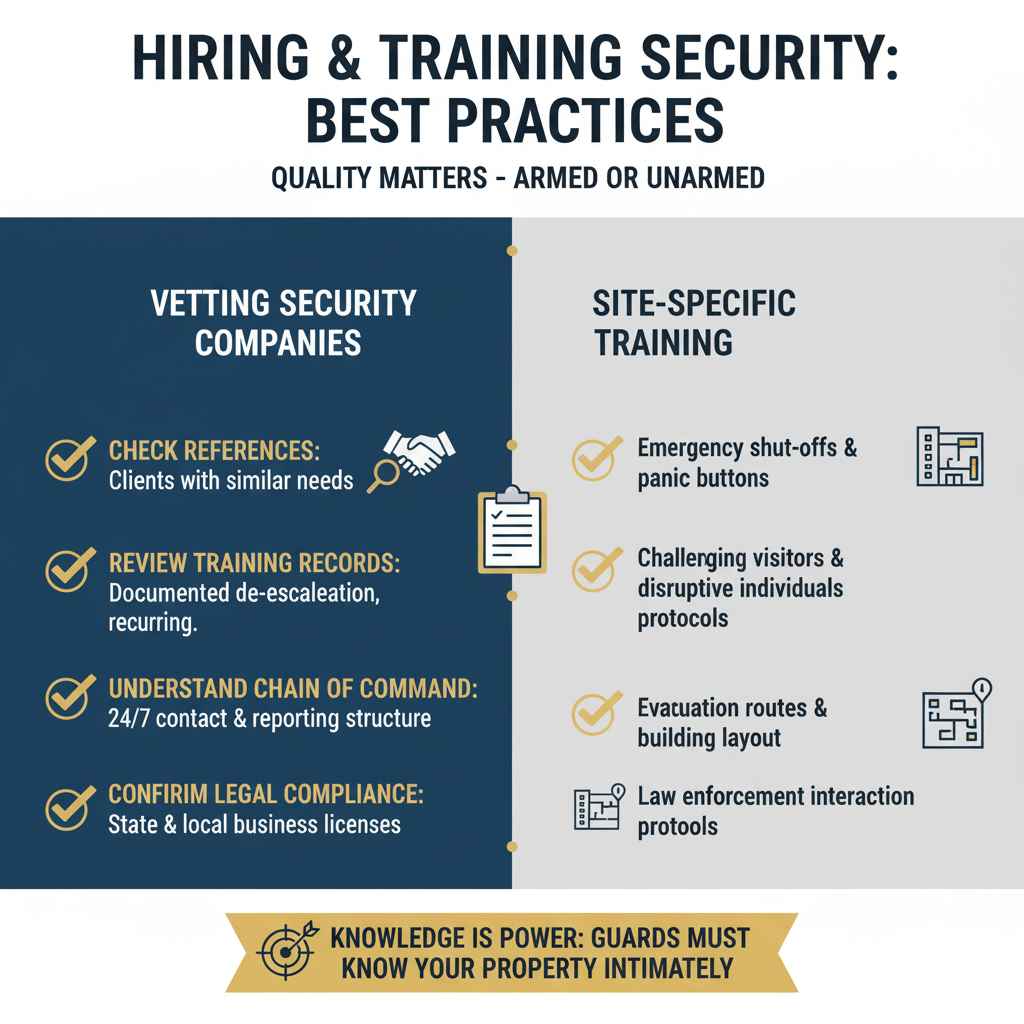
- Check References: Ask for references from clients with similar security needs (e.g., if you run a daycare, don’t take references from a jewelry store).
- Review Training Records: Ask to see documented proof of recurring training, especially de-escalation tactics.
- Understand Chain of Command: Know who the guard reports to on the security firm’s side, and who your point of contact is 24/7.
- Confirm Legal Compliance: Ensure they hold all required state and local business licenses before signing a contract.
The Importance of Site-Specific Training
No matter the armament, every guard needs to know your property intimately. A good security partner will require their guards to undergo site-specific orientation. This is like learning the nooks and crannies of your archery range before an important shoot.
This training should cover:
- Location of emergency shut-offs and panic buttons.
- Specific rules for challenging visitors or handling known disruptive individuals.
- Evacuation routes tailored to your building layout.
- Protocols for interacting with local law enforcement during an incident.
FAQ: Armed vs. Unarmed Security Decisions for Beginners
Q1: If I hire armed guards, does that mean the police won’t respond as quickly?
A: No, that is generally a myth. Armed security guards are there to manage the situation until law enforcement arrives. They are highly discouraged from engaging in drawn-out standoffs. Their goal is immediate defense, allowing police to safely take over when they get there. Local authorities often appreciate having professional, licensed responders already on the scene.
Q2: Can an unarmed guard legally detain someone if they see them stealing?
A: This depends heavily on the state and local laws, often falling under “citizen’s arrest” laws. If an unarmed guard attempts a detainment and uses physical force unnecessarily, they open themselves and your company up to liability. Most security protocols advise unarmed guards to observe, document, and report, rather than physically intervene unless someone’s life is in immediate danger.
Q3: How much more expensive are armed guards compared to unarmed guards?
A: Armed guards typically cost between 40% to 70% more per hour than unarmed guards. This difference covers the extensive specialized training, higher insurance premiums, and the cost of firearm maintenance and licensing compliance.
Q4: Will having armed guards scare away my customers?
A: This is a valid perception concern. In retail or hospitality settings, a poorly integrated armed guard can feel intimidating. However, if the guard is professional, discreet, and focused on customer service (as they should be), they often blend in effectively. If your threat profile is high, the safety provided usually outweighs the perceived intimidation factor for most reasonable patrons.
Q5: Do I need to provide the firearm or ammunition for an armed guard?
A: Almost universally, no. The licensed security guard or the employing agency is responsible for providing their own duty weapon, ammunition, and ensuring it meets all state-mandated specifications for on-duty carry. You are paying for their licensed service, not their gear.
Q6: What is the best first step if I am unsure which security level I need?
A: The best first step is to request a formal, on-site risk assessment from a reputable security consulting firm or a few licensed security providers. They can objectively analyze your location’s traffic, assets, crime history, and regulatory environment to give you a tailored recommendation.
Conclusion: Making Your Confident Security Choice
Choosing between armed and unarmed security is not about picking the ‘better’ option; it’s about selecting the correct tool for the specific job at hand. If your primary need is visible presence, access control, and deterrence against low-level threats, then professional, well-trained unarmed guards offer superb value and maintain a positive environment.
However, if you operate in an environment where the risk of armed confrontation, high-value theft, or critical infrastructure failure exists, the investment in rigorously trained armed personnel is non-negotiable. They provide the ultimate layer of immediate defense.
Take the time to conduct that honest risk assessment. Consult with professionals who prioritize compliance and training. By matching your security deployment precisely to your threat environment, you ensure maximum protection effectiveness while managing liability and budget wisely. Your confidence in your site’s safety starts with this well-informed decision.