
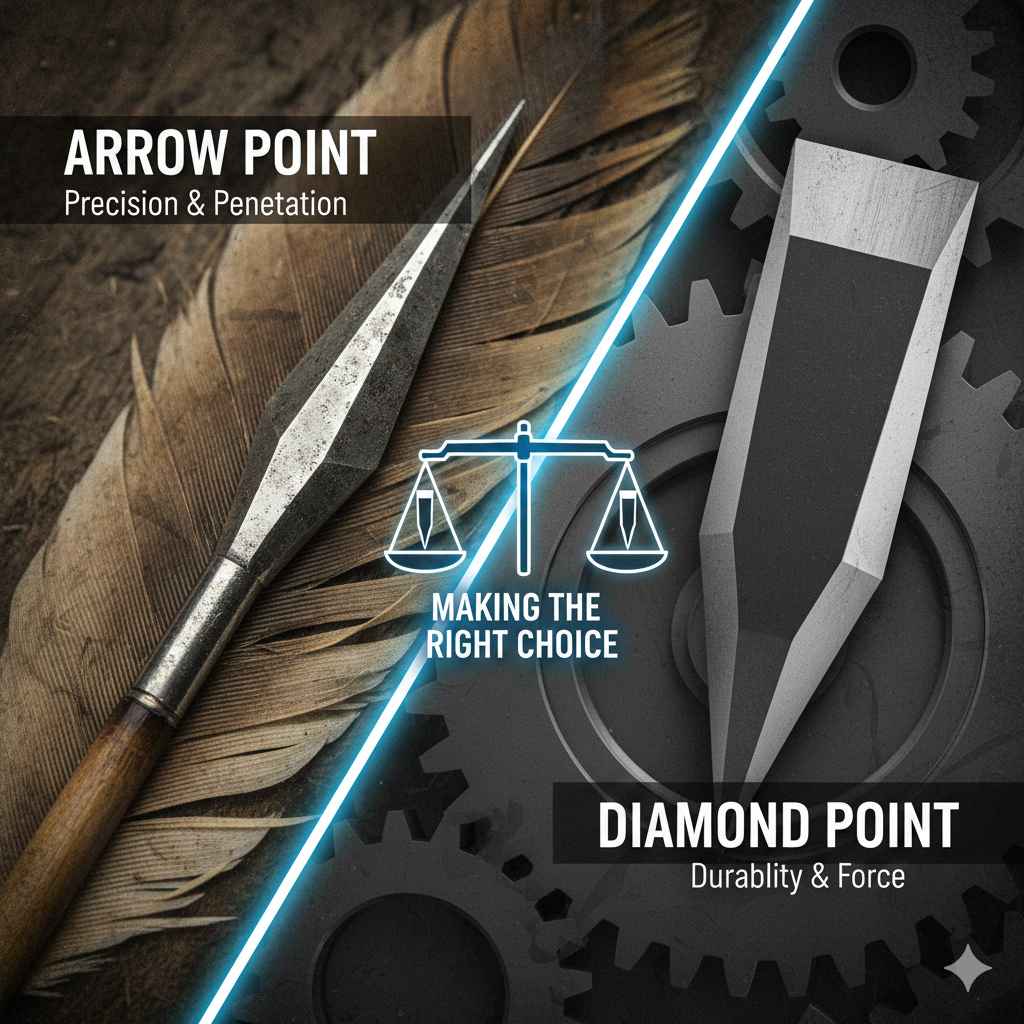
Choosing between Arrow Point vs Diamond Point: Which Is Better? is a common question, especially when you’re just starting out. It can seem tricky at first, with all the different features and options. But don’t worry! This guide will break it down in simple steps, so you can easily figure out what’s best for you. We will explore the pros and cons of each, helping you make an informed decision. Let’s get started, and you’ll become an expert in no time.
Deciding Between Shapes
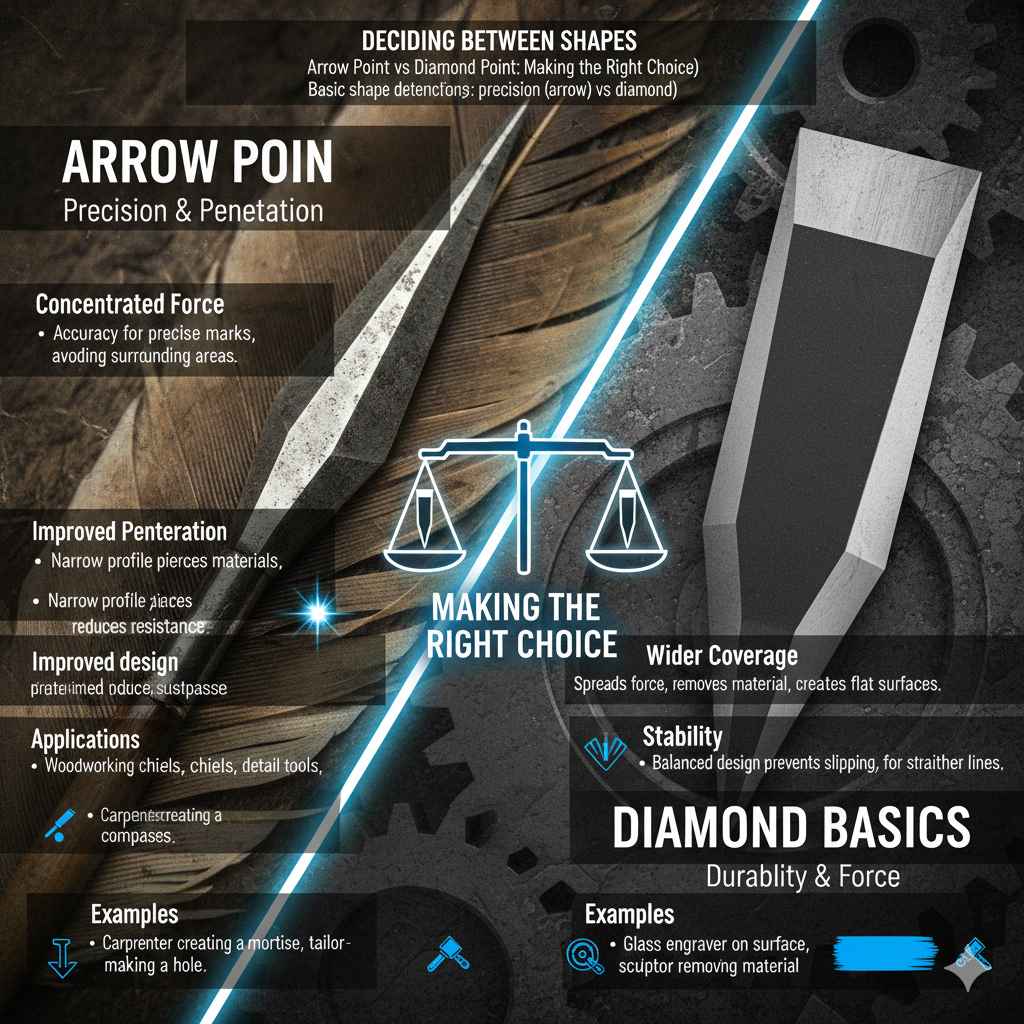
The first thing to consider is the basic shape. We’re looking at two primary choices: the arrow point and the diamond point. Both designs have their own strengths and weaknesses. The best selection depends on what you’re trying to achieve with your task or project. The arrow point offers a direct, focused approach, perfect when you need precision. On the other hand, the diamond point spreads things out a bit, which can be useful when covering more ground or dealing with a broader area. This section is all about what shapes can do.
Arrow Point Basics
An arrow point generally tapers to a sharp, focused tip. Think of an actual arrow or a sharpened pencil. This design excels when you need a concentrated effort. It is ideal when you want to make a precise mark or penetrate a specific spot. The arrow shape ensures that the force is directed right where you need it. Think of it like a laser beam. All the energy goes to one spot.
- Concentrated Force: The primary advantage is the focused application of force. This is perfect for tasks where accuracy is key.
The narrow tip allows the user to pinpoint a precise location. This is good when you want to avoid hitting anything surrounding the target area. - Improved Penetration: The narrow profile of the arrow point means it can pierce through materials. This feature makes it great for situations where you need to get through a barrier, like soft materials or layered structures.
The sharpness also reduces resistance. - Applications: Arrow points are often found in tools where accuracy is vital. They are present in woodworking tools, like chisels, and tools used for detail work. They are also common in things like compasses.
The uses are very diverse. - Examples: Imagine a carpenter using an arrow-pointed chisel to create a perfectly clean mortise for a joint in fine furniture. The precision offered by the chisel ensures the wood isn’t damaged.
Or think of a tailor using a sharp arrow-shaped tool to make a tiny hole in fabric.
Diamond Point Basics
The diamond point has a broader, more balanced shape, with four sides meeting at a point. It’s like a diamond. This shape is helpful if you need to cover more ground or distribute force over a larger area. The design often means less concentrated force. This makes it a good option when you want to spread the work over a wider area.
- Wider Coverage: A diamond point spreads the force and the work over a broader area. This is helpful when you need to cover more space with each action. It makes it perfect for removing material or creating a flat surface.
You get efficiency and more coverage. - Stability: The balanced nature of the diamond point gives stability. The design is less likely to wander or slip during use, allowing for straighter lines and better control.
It can be very useful for beginners. - Applications: Diamond points are found in tools such as engraving tools, where broad lines are required. They are also useful in grinding, where the objective is to flatten or shape a surface.
This tool is very flexible. - Examples: Think of a glass engraver using a diamond-point tool to create a smooth, wide groove on a glass surface.
Or, picture a sculptor using a diamond-point tool to quickly remove excess material.
Comparing Arrow Point and Diamond Point Features
Comparing these two styles helps you understand their differences and what they are best for. Both designs have their places, but the specific details can significantly affect how well they perform. This section helps you compare and contrast. This comparison will ensure you make the right choice.
Force Application
Force is an important element. An arrow point focuses the force into a tiny point. This is like concentrating all your energy into one spot. On the other hand, a diamond point distributes the force over a larger area. This makes it less powerful in one particular place, but it covers more ground. The choice hinges on whether you need a precise point or more spread.
- Arrow Point: High concentration of force. The design ensures that almost all the force is delivered precisely to one spot. This is helpful when you need the greatest effect at a single point.
The force helps it penetrate better. - Diamond Point: Force is spread out. Because of the broadness of the design, the force is distributed across a broader zone. This ensures that the tool doesn’t dig in too deeply.
It’s also great for creating smooth surfaces. - Real-world comparison: Imagine trying to break a thick piece of glass. An arrow point would be best for a precise crack. Meanwhile, a diamond point would be helpful for spreading the force over a larger area to make a smoother cut.
The outcome varies based on the design chosen.
Coverage and Precision
When it comes to coverage, arrow points offer excellent precision. You know exactly where the mark will go. Diamond points, on the other hand, cover more ground with each movement. The choice relies on what matters most. Do you need fine detail, or do you need to cover a larger surface quickly?
- Arrow Point: Excellent precision. The narrow shape of the tool allows for the creation of fine lines. This is excellent for detail.
It’s perfect for exact work. - Diamond Point: Broader coverage. The design of this tool allows it to cover more space faster. It is more about getting a job done quickly.
This tool is better for rough work. - Sample Scenario: You are designing a custom invitation. You need a design with perfect lines. An arrow point is the correct choice here. Now imagine you’re a sculptor who wants to remove excess clay. A diamond point would get the job done more quickly.
Both tools have their time and place.
Material Interaction
The materials you’re working with matter. Some materials need a gentle touch. Other materials can withstand more force. The tool shape directly affects how the tool interacts with what you’re working with. This can affect the result. Do you want to remove material slowly and carefully, or do you need to move a large amount?
- Arrow Point: Suited for materials that need controlled cuts, like wood or fabrics. This shape is perfect for materials that need a gentle, precise touch. The focused force is less likely to damage the surrounding area.
This provides control. - Diamond Point: Works well with materials that need a broader touch. The design spreads the force. This means that the work won’t dig in too deep and that the surface will be more uniform.
This is great for rough jobs. - Case Study: A jeweler needs to engrave a design on a watch. They would use an arrow point to ensure precision and avoid damaging the surrounding surfaces. However, an artist removing excess clay uses a diamond point to speed the process.
The material determines which is better.
Choosing for Your Needs: Case Studies
Sometimes, seeing the tools in action can help. This helps you understand how different designs work in real-world situations. Real-life examples show how these different tools do their jobs. You can see how professionals in different fields use each point. This will ensure you choose the correct tool for your project.
Case Study 1: Woodworking
Consider a woodworker. They’re making a wooden box with intricate joints. They will use both arrow and diamond points. The arrow point will make precise, clean cuts for the fine details of the joints. For tasks that require removal of excess material or general shaping, the woodworker might use a diamond point. This makes the job fast and easy. The choice depends on the task.
- Precise Cuts: For things like dovetail joints, the woodworker would select an arrow point. This will give them the control needed to make clean and precise cuts. The focused design allows the tool to make clean cuts.
These cuts ensure a perfect fit. - Shaping and Smoothing: For removing excess wood, such as smoothing down a surface, a diamond point would be perfect. This point helps to move more material efficiently. The broad shape helps for a smoother finish.
This method is good for quick work. - Result: Using both points, the woodworker can create both precise and functional parts. The mix of techniques enables them to build a high-quality project.
Both tools are important.
Case Study 2: Glass Engraving
A glass engraver creates detailed designs on glass objects. They rely heavily on the difference between the arrow and diamond points. The choice dictates the outcome. Do you want fine lines or broad strokes? Both have a time and place. The engraver’s art uses precision to create stunning designs.
- Fine Details: For the small details and fine lines, the glass engraver will use an arrow point. The precise point makes tiny lines and shapes possible.
This offers control. - Large Elements: For the background or larger parts of the design, the engraver may select the diamond point. This enables them to cover more area quickly. The broad design allows for faster work.
This makes the project go quicker. - Result: By choosing the correct design for each task, the engraver creates designs. The mix of both tools enables the engraver to make something both visually appealing and artistically significant.
The mix is key.
Beyond the Basics: Other Considerations
While shape is important, other factors also play a part. The material the tool is made from and the type of project you are working on can both impact the outcome. Your skill and project requirements also have a big influence. This part will review these other factors.
Material Matters
The material of the tool will affect its durability. Quality materials can ensure the tool lasts longer and maintains its shape. The tool should match the job. This is not only about the shape but also the material. The right material makes a difference.
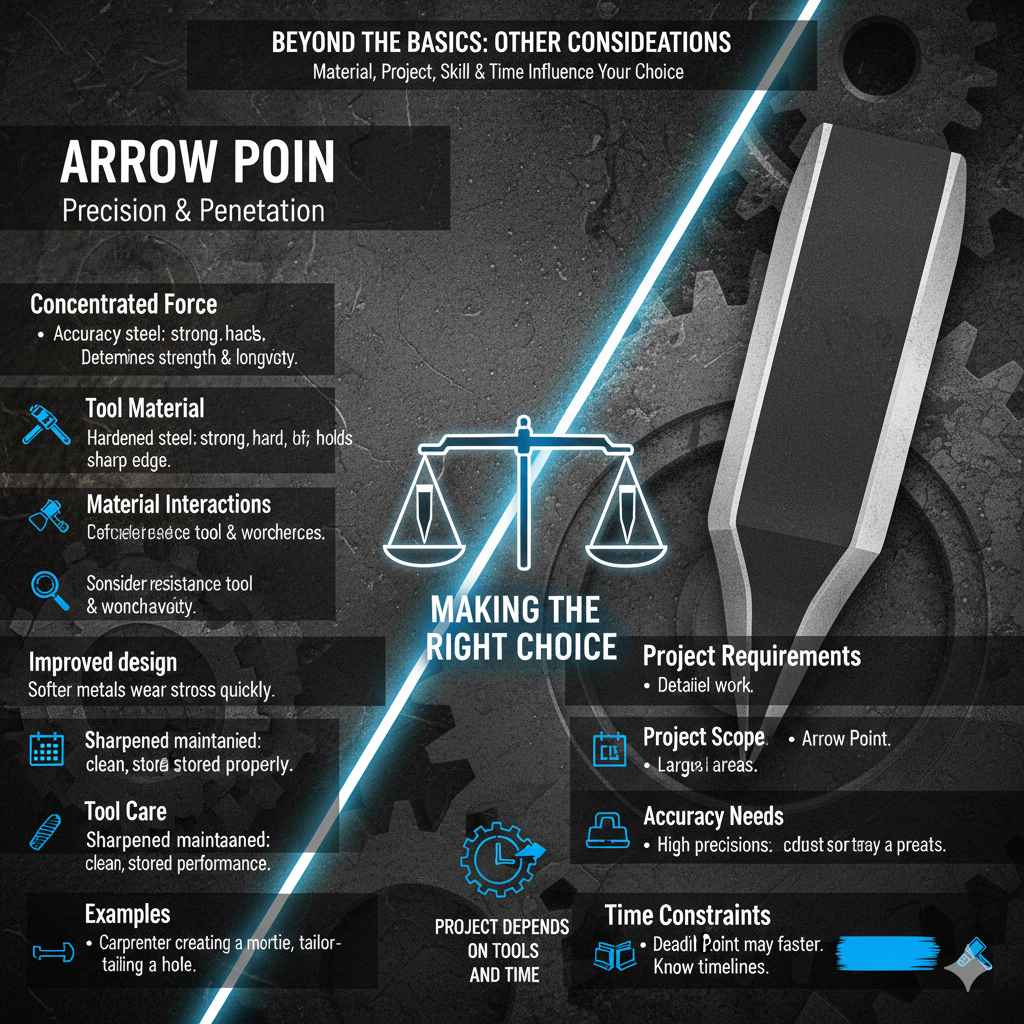
- Tool Material: The most common tools are made from hardened steel. This material is strong, hard, and can hold a sharp edge. It is important to know the material of the tool.
The material determines its strength. - Material Interactions: When the material of the tool and the material being worked on come into contact, it’s vital to consider the resistance of both. A softer metal may wear down quickly.
It’s important to choose the best one. - Tool Care: Tools need to be properly sharpened and maintained. Keep the tools clean. Store them properly. This will extend their life and improve the performance of your tools.
You will get better results.
Project Requirements
Every project has its own special requirements. What are you trying to build? How detailed does it need to be? The answers to these questions will influence your choices. The project you want to complete will determine the right tool. You can’t just choose a tool and force it to work. Always consider the requirements first.
- Project Scope: The scope of the project will influence your choices. If you’re creating detailed pieces, an arrow point is vital. For large areas, the diamond point is the better option.
Plan the project first. - Accuracy Needs: How precise do the cuts or markings need to be? High levels of accuracy call for the arrow point. The level of precision required is a key part of choosing.
Always plan for this. - Time Constraints: Consider the deadlines. If you have time restraints, the diamond point may be helpful. You may wish to think about which tool is better, arrow point or diamond point.
Know the timelines.
Frequently Asked Questions
Question: Can I use both arrow points and diamond points in the same project?
Answer: Yes, in many projects, it’s smart to use both! The arrow point is excellent for details, while the diamond point is great for covering larger areas. Combining both helps you get the best results.
Question: Are arrow points better for hard materials?
Answer: Not always. Arrow points can be used for hard materials when you need extreme precision. However, a diamond point may be useful for moving lots of material. The best choice depends on what you’re trying to do.
Question: How do I know if the tool is well-made?
Answer: Look for tools made from strong materials, like hardened steel. Check for sharp, clean edges. A well-made tool will be sturdy and feel good in your hand.
Question: Where can I get these tools?
Answer: You can find arrow and diamond point tools at most hardware stores or online. Look for specialized shops that sell tools for woodworking or engraving.
Question: Is one shape easier to use than the other?
Answer: It depends on the task and your skill. Many beginners will like the diamond point for broader work. The arrow point will be best for more experienced users.
Final Thoughts
Deciding between Arrow Point vs Diamond Point: Which Is Better? comes down to understanding the needs of your project. Arrow points excel in precision and focused force. The diamond point, on the other hand, is great for covering more ground. Each shape brings different advantages to the table. By learning the advantages of each style, you can make the right choice. Remember to also think about the material of the tool, the project’s requirements, and your own comfort level. This approach will ensure success. Start with the basics, and keep practicing. With time, you’ll become a pro at selecting the right shape for any job. Now go out there and create something amazing!