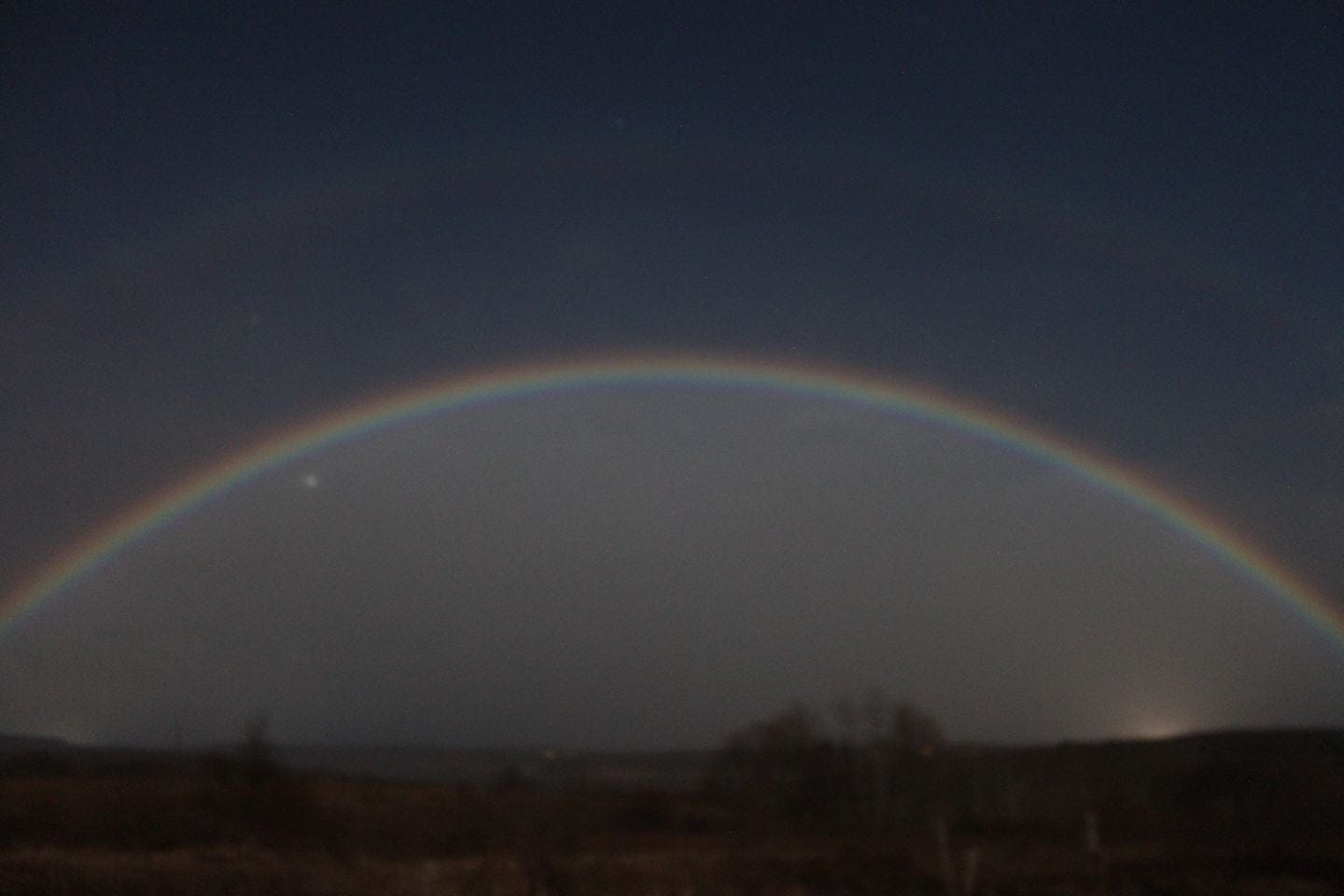
Can Rainbows Happen at Night? Yes, They’re Called Moonbows
Yes, rainbows can happen at night — they’re called moonbows, formed by moonlight instead of sunlight in the same way rain droplets bend light. Moonbows are far fainter than daytime rainbows, so faint that your eyes usually can’t detect their colors and see them as a pale white arc instead. This guide covers how moonbows form and the exact conditions you need to spot one. For more on this, see our guide on Do Rattler Grips Fit on Hoyt Target Bows? Expert Guide.

As an Amazon Associate I earn from qualifying purchases.
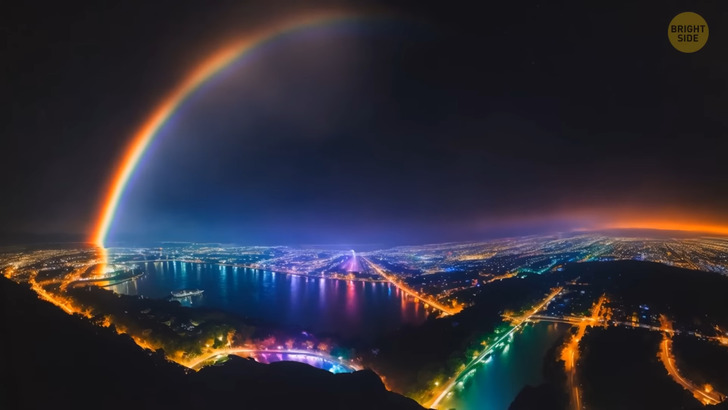
Credit: brightside.me
Nighttime Rainbows Explained
Nighttime rainbows are real and are called moonbows. These rainbows appear at night. They form when the moonlight reflects on water droplets. Moonbows are rare and hard to spot. Light from the moon is weaker than sunlight. This makes moonbows faint and often white. People need to be in the right place to see them. A clear sky and bright moon help. The moon must be nearly full. Water droplets in the air also need to be present. Moonbows can be seen near waterfalls or during rain showers. They are a special sight for those who find them.

Credit: weather.com
Lunar Rainbows
Lunar rainbowsare rare and magical. These rainbows happen at night. The moonlightcreates them. Sunlight reflects off the moon. This light is not very bright. It is often hard to see these rainbows.
The moon is like a mirror. It reflects sunlight. This light is soft and gentle. Moonlighthelps make rainbows at night. Bright, full moons are best for lunar rainbows. The sky must be dark for these rainbows. They are very special to see.
Several conditions help form a lunar rainbow. The moon must be full or near full. The sky must be very dark. Rainor mist is needed in the air. The moon should be low in the sky. These conditions are rare. Seeing a lunar rainbow is a treat.
Factors Influencing Night Rainbows
Night rainbows need the right weather. The sky must be clear. The moon should be bright, almost full. It acts like the sun, lighting up the rain. The air must be moist. This helps form the rainbow. Clouds can block the moonlight. This stops the rainbow from forming.
Some places are better for night rainbows. Areas near lakes or oceans can help. They often have moist air. Mountains can block moonlight. Flat lands are better. Wide spaces give more room for rainbows. Cities with many lights might hide the rainbow. Dark places are best for seeing them.
Historical Sightings
People long ago saw rainbows at night. They called them moonbows. These rainbows happen with moonlight. Moonbows are rare and beautiful. Ancient writings describe them. Some people thought they were magical. Others saw them as signs. Moonbows were special in stories. The moon’s light makes them faint. Only places with little light see them. Clear skies help moonbows form. Rainbows at night continue to amaze us.
People still see moonbows today. They appear near waterfalls. Hawaii is famous for moonbows. Cameras capture moonbows now. Photos show their beauty. Scientists study these rainbows. They learn about light and water. Moonbows need clear nights. They also need enough moonlight. Observers should be patient. Moonbows don’t last long. Seeing one is a special treat. More people want to experience them.
Scientific Insights
Rainbows are beautiful. They are caused by light reflection. Light bends and splits in water droplets. This creates many colors. At night, moonlight can make rainbows too. These are called moonbows. They are rare and harder to see. The moon must be full or nearly full. The sky needs to be dark and clear. Rain must be falling opposite the moon. Moonbows are fainter than day rainbows. Their colors are less bright. They often appear white to the eye.
The process of forming a moonbow is like a daytime rainbow. Light enters a raindrop and bends. It then reflects inside the drop. Finally, it exits and bends again. This bending and reflecting create the beautiful arc of colors. Understanding these optical phenomena helps us see the magic of nature.
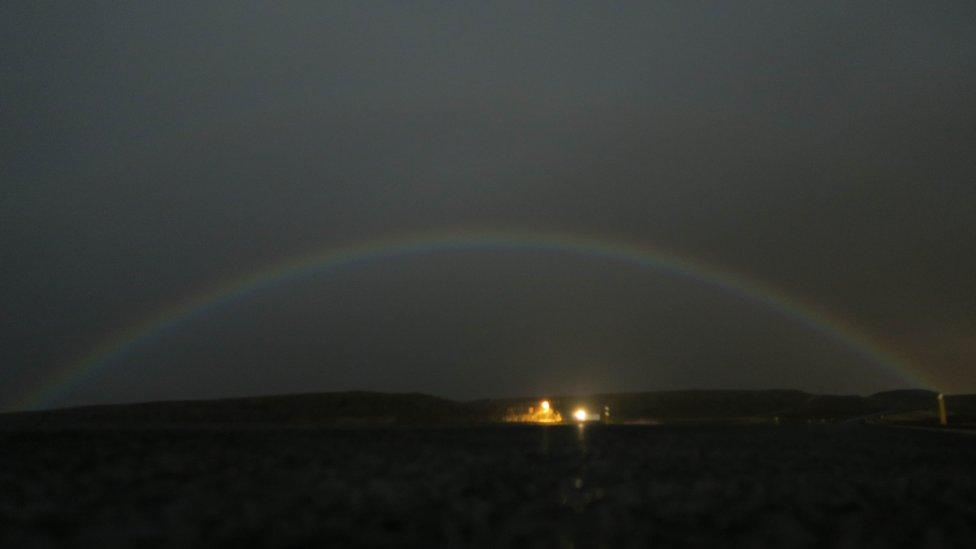
Credit: www.bbc.com
Comparing Day And Night Rainbows
Day rainbowsare bright and colorful. They show all colors of the light spectrum. Night rainbowsare much dimmer. Often, they appear white or very pale. Moonlight is weaker than sunlight. This affects the colors we see.
Day rainbows are easy to see. Sunlight makes them vivid and clear. Night rainbows need a full moon. The moon must be bright enough. Night rainbows are rare. Clouds can block moonlight. They are hard to find.
Experiencing Night Rainbows
Night rainbows, also called moonbows, are rare and magical. These rainbows need a bright moon. Only some places have the right conditions. Hawaii is a great spot. The sky is clear there. Moonbows happen often. Scotland also sees night rainbows. Rainy weather helps them form. The Appalachian Mountains have moonbows too. Cumberland Falls is famous for them. It is a special place.
Finding a night rainbow takes patience. Look for a bright moon. The moon must be low in the sky. Rain is important too. Light rain is best. Stand with your back to the moon. This helps you see the rainbow. Bring a friend. Share the wonder together. A camera can capture the moment. Take pictures without a flash. Moonbows are faint and need time to see.
Frequently Asked Questions
Can Rainbows Appear During The Night?
Yes, rainbows can appear at night and are called moonbows. They occur when moonlight, instead of sunlight, interacts with water droplets. Moonbows are often fainter than daytime rainbows due to the lower brightness of moonlight. They typically occur near waterfalls or during light rain.
What Conditions Create A Moonbow?
A moonbow needs a bright moon, usually near full, to occur. Water droplets in the air, such as those from rain or mist, are essential. The sky should be dark, and the moon should be low in the sky. These conditions make moonbows rare and special.
Are Moonbows As Colorful As Rainbows?
Moonbows are generally less colorful than rainbows. Due to the faint light from the moon, their colors are muted. They often appear white to the naked eye. Long exposure photography can capture more vivid colors in moonbows, revealing their hidden beauty.
Where Are Moonbows Commonly Seen?
Moonbows are commonly seen near waterfalls or areas with mist, like Yosemite National Park and Cumberland Falls. These locations provide the right combination of water droplets and moonlight. They are rare and require specific conditions, making them a unique natural phenomenon.
Conclusion
Night rainbows are rare but possible. They occur under specific conditions. A full moon helps create them. The moon’s light is the key. Mist or rain is essential. These factors together form a moonbow. Moonbows are fainter than day rainbows.
They appear mostly white. Less vibrant than usual rainbows. Still, they offer a magical sight. Experiencing a moonbow is special. Nature never ceases to amaze. Keep an eye out during rainy nights. You might just witness this wonder. Moonbows remind us of nature’s beauty.
A simple yet enchanting phenomenon. Enjoy the mysteries of the night sky.
Related pick: Check today's price on Amazon