
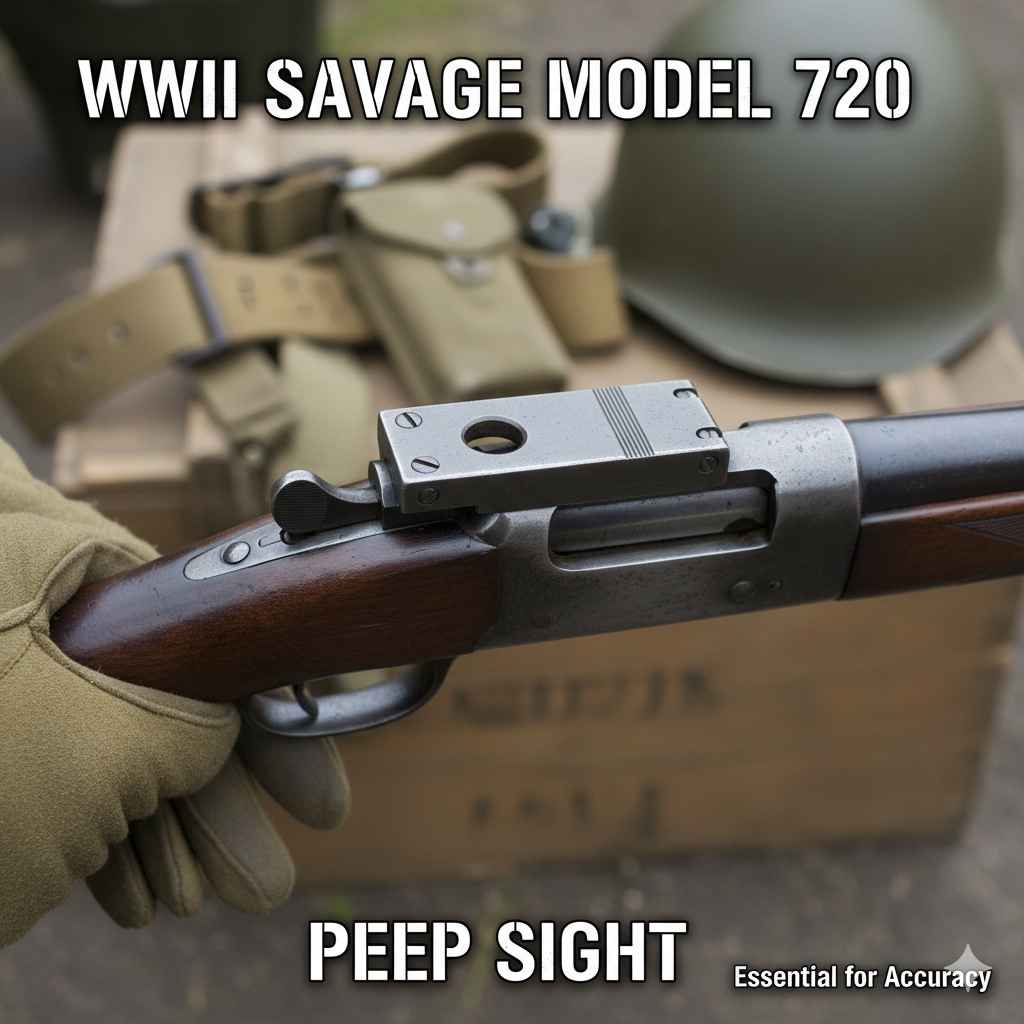
The Savage Model 720, a popular semi-automatic shotgun from the WWII era, generally came standard with a simple bead sight. While factory peep sights were not standard equipment, many owners and subsequent modifiers added aftermarket or military-style adjustable sights, including peep sights, for improved aiming.
Welcome, fellow shooting enthusiast! It’s exciting when you pick up a classic piece of history like the Savage Model 720 shotgun. Many of us wonder about the original features of these older firearms, especially when we look at sighting systems. Did this popular WWII-era shotgun come equipped with a precise peep sight right from the factory? Figuring out the original setup can be tricky, as older guns often saw many modifications over the years. Don’t worry; we are going to clear up this common question completely. We’ll look closely at what Savage put on the Model 720 originally and what possibilities existed for sight upgrades. Get ready to learn the essentials about the sights on this classic shotgun.
Understanding the Savage Model 720 Shotgun
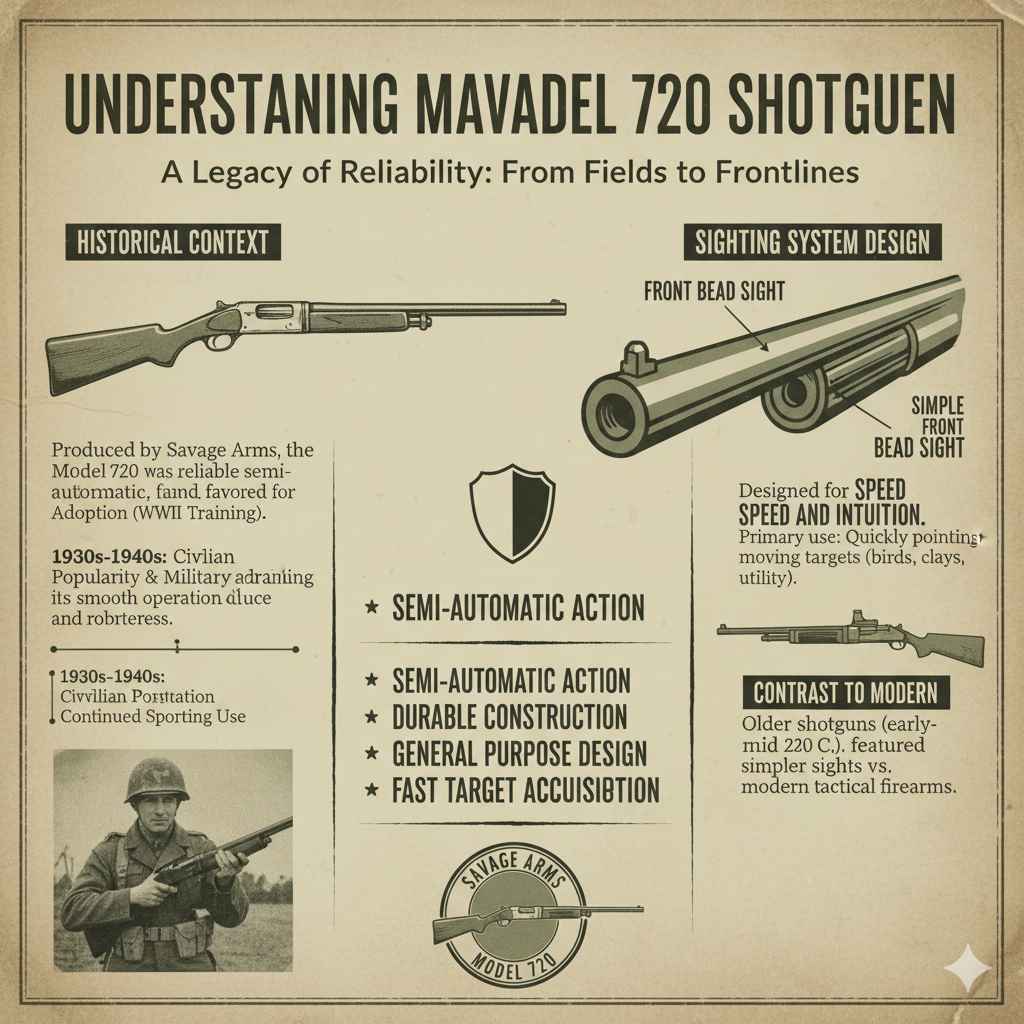
The Savage Model 720 holds a special place in American shooting history. It was a reliable semi-automatic shotgun, often used for both hunting and military training purposes during World War II. Knowing its background helps us understand its original design choices, especially regarding sights.
A Brief History of the Model 720
The Model 720 was produced by Savage Arms for many years, gaining popularity due to its smooth operation. It was often used as a civilian sporting arm but saw significant use in military roles where reliability was key. Because it was designed primarily for general use—hunting birds, clays, and general utility—the standard sighting system reflected simplicity and durability.
When we talk about older shotguns, especially those used in the early to mid-20th century, the sighting systems were generally much simpler than what we see on modern tactical firearms. Think about the primary use: pointing quickly at moving targets like ducks or upland game. This usually called for the fastest, most intuitive sight picture possible.
Did the WWII Savage Model 720 Have a Factory Peep Sight?
This is the main question many collectors and new owners ask. To give a direct and simple answer, we need to look at what Savage typically installed at the factory.
The Standard Sight Configuration
For the overwhelming majority of Savage Model 720 shotguns manufactured during the WWII period and before, the standard sighting equipment was the tried-and-true bead sight.
- Bead Sight Simplicity: This sight consists of a single small bead, usually made of brass or steel, fixed near the end of the barrel (the muzzle).
- Purpose: The bead sight system requires the shooter to align the bead with the target, using the top line of the barrel as a reference. It prioritizes speed and peripheral vision over pinpoint accuracy, which is ideal for fast-moving shotgun targets.
- No Peep Sight Factory Option: Savage did not typically equip the standard commercial or military contract Model 720s with a built-in, adjustable peep sight as standard issue. If they were sighted for military use, they usually relied on a simple fixed sight or were left bare for specialized tactical applications where the user might add a guard or sight configuration later.
If you have a Model 720 today and it has a peep sight, chances are very high that it was added by a previous owner or gunsmith after it left the factory. This is common for older firearms. People often upgraded their hunting rifles and shotguns to improve accuracy for static targets.
What is a Peep Sight (And Why Aren’t They Common on Shotguns?)
For beginners, it helps to understand the difference. A peep sight (also called a aperture sight) uses a small hole (the ‘peep’) at the rear of the receiver or barrel, forcing your eye to focus through that small aperture. You align the front sight bead or post perfectly within that rear peep.
This setup creates a very clear sight picture, leading to better precision, which is why they are extremely popular on older military rifles (like the M1 Garand or the Springfield 1903). However, for shotguns designed primarily for swing shooting (like bird hunting), the limited field of view provided by a peep sight can slow down target acquisition, making the simple bead sight preferable for most general shotgun tasks.
Investigating Aftermarket and Military Sight Options
While the factory offered the bead, the military and aftermarket quickly provided solutions for users who needed more precise sighting, especially if the shotgun was used for slug shooting or defensive purposes.
The Role of Aftermarket Modifications
During and after WWII, many gunsmiths and accessory companies recognized the need for better sighting on popular utility guns like the Model 720. If someone wanted to use their shotgun reliably with slugs (which are essentially large bullets), they needed much better alignment than a simple bead could offer.
The most common way to add a peep sight to a Model 720 was by using an adaptor system that screwed into existing holes or clamped onto the receiver. These often mimicked the popular rifle sights of the era.
Common Peep Sight Brands Used on Older Shotguns
While hard historical records linking every single sight to every 720 are scarce, certain brands were highly favored for their durability and adaptability to firearms like the Model 720. These sights were often designed for a fixed installation, meaning they didn’t rely on mounting rails common today.
| Sight Type | Primary Advantage | Typical Application |
|---|---|---|
| Factory Bead Sight | Speed and simplicity for moving targets. | General hunting (birds, clays). |
| Aftermarket Peep Sight (Screwed/Clamped) | Improved precision for fixed or slow-moving targets. | Slug shooting or target practice. |
| Simple Fixed Rear Sight | More alignment reference than a bead, but non-adjustable. | Military training variants. |
Key Takeaway: If you find a Model 720 with a peep sight, treat it as a valuable addition, but understand it is an aftermarket upgrade, not a standard factory feature from that era.
How to Identify the Sights on Your Savage Model 720
If you have inherited or purchased one of these shotguns, you need to inspect it carefully. Knowing what you have will affect its historical value and how you choose to shoot it today. Here is a simple guide to help you check the sights.
Step 1: Examine the Muzzle End (The Front Sight)
Look closely at the very front end of the barrel. What do you see?
- Just a Bead? If you see only a small metallic nub—usually brass or white plastic/ivory—that is the standard bead sight. This confirms the original basic setup.
- A Large Block or Post? If there is a larger, adjustable post, this often indicates that a previous owner modified the barrel to accept a more rifle-like front sight, perhaps to match a newly installed peep sight.
Step 2: Inspect the Receiver Area (The Rear Sight Location)
Now, look along the top of the receiver, where you would typically shoulder the gun and look down the barrel.
- Nothing Visible? If the top is smooth, or only has an original mounting point for a rib/vent, it had the bead sight.
- A Mounted Sight Assembly? Do you see a small aperture (the peep hole) attached to the receiver via screws or a clamp? If yes, this confirms the presence of an added peep sight. These sights often adjust vertically and horizontally for zeroing.
Step 3: Check for Attachment Methods
How the sight is attached tells you a lot about its history.
- Screws: If the sight is attached using small screws drilled into the metal, it is a permanent modification. Be aware that if the holes are visible, this may affect the gun’s collector value compared to an unmodified piece.
- Clamps: If the sight is held on by bands or clamps that grip the barrel or receiver, it’s a less permanent, aftermarket addition, often easy to remove without damage.
This simple inspection process will quickly tell you if your shotgun retains its basic setup or if it has been upgraded for precision shooting.
Why You Might Want to Add a Peep Sight Today (Even if It Wasn’t Original)
As a beginner, you might be wondering why you would want to install a peep sight on a classic shotgun that was designed for a bead. The answer lies in how modern shooters use these guns.
Advantages of Peep Sights for Beginners
While bead sights are great for fast action, peep sights offer significant advantages for those still developing consistent shooting form, especially when using slugs or heavy buckshot.
- Forced Focus: A peep sight naturally forces your eye to focus on the front sight, making it much easier for new shooters to achieve a clear sight picture. This is hard to do consistently with just a bead.
- Better Precision with Slugs: If you plan to use your Model 720 for shooting slugs at longer ranges (say, over 50 yards), a bead sight is insufficient for good accuracy. A peep sight allows you to “zero” the gun, meaning you can aim precisely where the slug will impact.
- Consistent Sight Picture: With a bead, you rely on judging the space between the bead and the target. With a peep, you are centering the front sight in a circle, which is a more consistent and repeatable process for training your eye.
It is worth noting that any modification to a firearm’s original configuration should be approached carefully. If your goal is preserving historical value, keep it original. If your goal is safe, enjoyable shooting, modification is acceptable.
Making an Informed Choice: Bead vs. Peep for Utility
Deciding whether to stick with the original bead or install a peep sight depends entirely on what you plan to do with your Savage 720. Here is a quick comparison to guide your decision-making process, keeping in mind the 720’s semi-automatic action.
| Feature | Bead Sight (Original) | Peep Sight (Aftermarket) |
|---|---|---|
| Speed of Target Acquisition | Very Fast | Slightly Slower |
| Accuracy Potential (Rifle Slugs) | Low to Moderate | High |
| Field of View | Wide (Good Peripheral Vision) | Narrow (Tunnel Vision) |
| Ease of Installation/Removal | None (Factory Installed) | Requires tools/gunsmithing. |
For the beginner primarily interested in learning shotgun handling for trap or skeet, sticking with the bead sight often provides a better learning curve for “pointing” the gun naturally. For those looking to use the shotgun for deer hunting with slugs, the peep sight offers superior alignment.
Safety First: Considerations When Modifying Sights
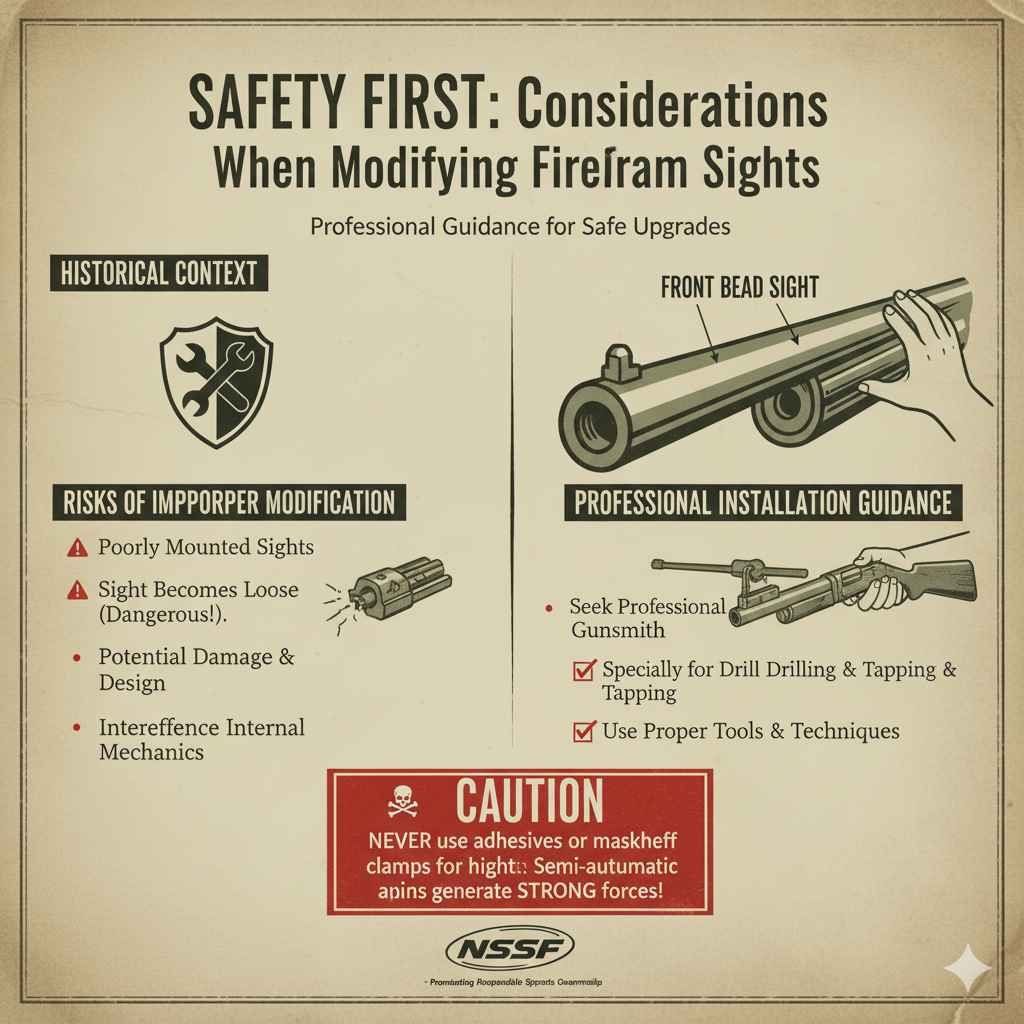
When you deal with older firearms, safety is always the number one priority. If you decide to add or change sights, you must ensure the work is done correctly. Poorly mounted sights can come loose, which is dangerous and can damage the firearm.
Professional Installation Guidance
If you are not experienced in gunsmithing, it is highly recommended that you seek professional help, especially if the installation requires drilling and tapping holes into the receiver or barrel.
For instance, when working on older firearms, you must ensure that any drilling does not interfere with the internal mechanics of the action. Information regarding safe firearm modification practices can often be found through organizations dedicated to firearms safety and education, such as resources provided by the National Shooting Sports Foundation (NSSF), which promotes responsible firearm ownership and maintenance practices.
Never attempt to secure a sight using adhesives or makeshift clamps if the sight is intended for high-recoil use, as the forces generated by a semi-automatic shotgun firing can easily dislodge poorly fitted components.
Frequently Asked Questions (FAQ) about the Savage Model 720 Sights
Q1: If my Savage 720 has a peep sight, does that mean it was a special military version?
A: Not necessarily. While military shotguns sometimes had specialized fixed sights, the adjustable peep sights commonly seen today are almost always aftermarket additions made by civilian gunsmiths or accessory companies after the gun was sold.
Q2: Is it safe to remove an aftermarket peep sight if I want to return my 720 to its original configuration?
A: It is safe if the sight was mounted using clamps or non-permanent methods. If the sight was attached by drilling and tapping new holes into the receiver, removing it will leave permanent holes, which may reduce the collector value of the piece.
Q3: How can I improve accuracy if I keep the original bead sight?
A: Accuracy with a bead sight relies heavily on consistent mounting. Practice keeping your dominant eye aligned perfectly behind the bead every time you shoulder the gun. Ensure your cheek weld (how you place your face on the stock) never changes. This consistency is more important than the sight type for close-range shooting.
Q4: What kind of sight do modern shooters usually put on a Savage 720 today?
A: For modern utility, many shooters opt for mounting a low-profile red dot sight using specialized adapter mounts that attach where a traditional peep sight might go, or by permanently installing a rail. This offers the speed of a bead with the clear aiming point of an electronic sight.
Q5: Are the barrels on the Savage Model 720 usually interchangeable?
A: The Model 720 uses a fixed barrel system that is integral to the receiver design. Barrels are generally not easily swapped out like they are on some newer modular shotguns. Any barrel change would typically require professional gunsmithing.
Q6: Why do peep sights work better on rifles than shotguns?
A: Peep sights excel when aiming at stationary or very distant targets because the small aperture maximizes the visual acuity needed for precise alignment. Shotguns are usually pointed quickly at moving targets where a wide field of view (provided by a bead) allows the shooter to track the target without the sight picture obstructing peripheral vision.
Q7: Should I use my Model 720 with slugs even if it only has a bead sight?
A: Yes, you can, but you must start at very close range (under 25 yards) and pattern the shotgun to see where the slugs hit relative to where you aim. For serious slug use beyond that
Conclusion: Your Savage 720’s Sight Story
So, to circle back to our initial question: Did the WWII Savage Model 720 have a factory peep sight? The definitive answer is no, it came equipped with a simple bead sight appropriate for its primary role as a fast-handling utility shotgun. However, the existence of many peep-sighted examples today proves that owners recognized the benefit of added precision and modified their firearms accordingly.
As a beginner or hobbyist, understanding this history allows you to appreciate the gun’s original intent while making an informed choice about its current use. Whether you keep the simple bead for quick pointing or install a reliable peep sight for slug accuracy, the Savage Model 720 remains a fantastic piece of shooting history. Enjoy the process of learning your shotgun—practice safely, aim true, and have fun making memories with this classic piece of hardware!