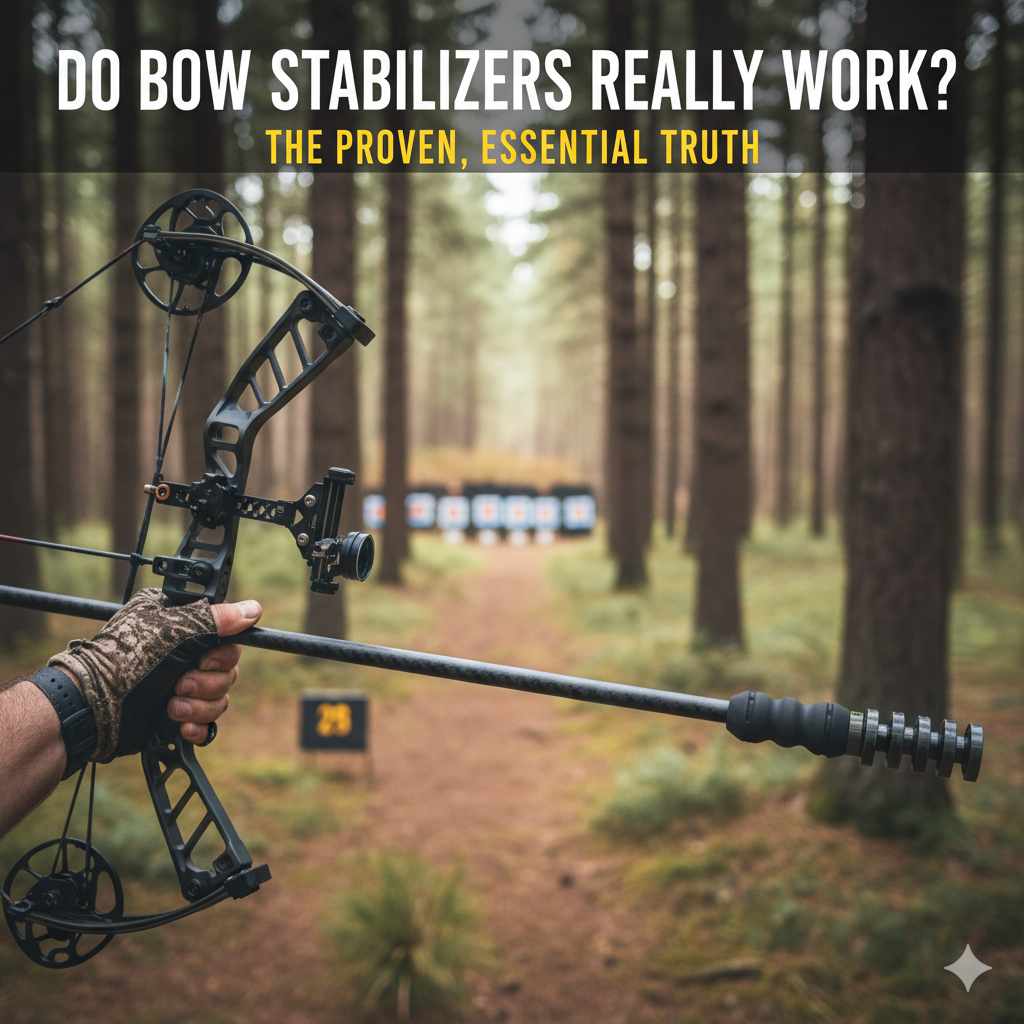
Yes, bow stabilizers absolutely work. They are proven to improve accuracy by adding balance, reducing vibration, and steadying your aim. For both beginners and experts, a stabilizer is one of the most effective accessories for achieving a quieter, smoother, and more consistent shot every time you draw your bow.
Have you ever seen an archer with a long rod sticking out from the front of their bow and wondered, “What is that thing for?” That gadget is a bow stabilizer, and it’s one of the most common accessories you’ll see. But does it actually do anything, or is it just for looks? It’s a question every new archer asks.
You’re not alone in wondering if this piece of equipment is worth it. The good news is that the answer is simple, and the benefits are real. In this guide, I’ll walk you through exactly what a bow stabilizer does, how it works, and how it can help you become a steadier, more confident archer. Let’s get started!
What Exactly Is a Bow Stabilizer?
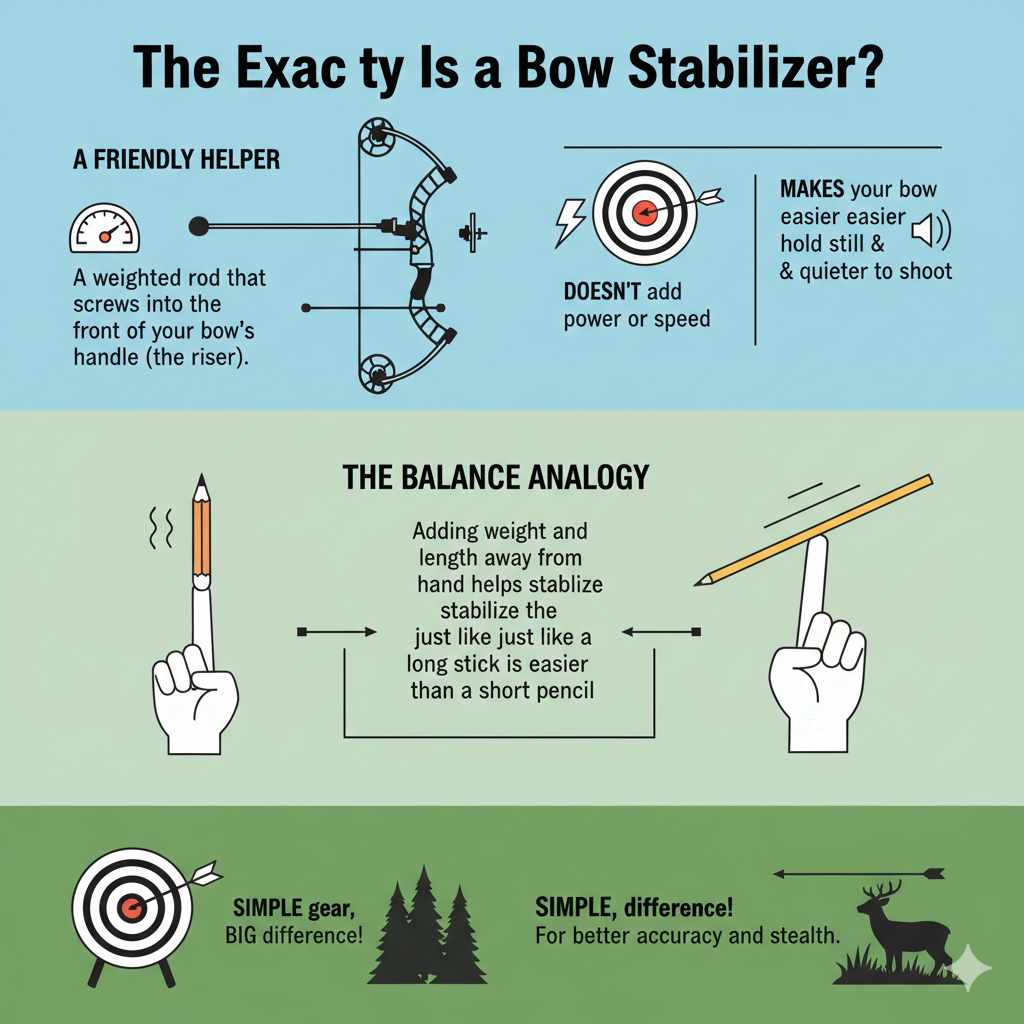
Think of a bow stabilizer as a friendly helper for your bow. At its simplest, it’s a weighted rod that you screw into the front of your bow’s handle, called the riser. It might look basic, but its job is surprisingly important. It doesn’t add power or speed to your arrows. Instead, its entire purpose is to make your bow easier to hold still and quieter to shoot.
Imagine trying to balance a pencil on your fingertip. It’s wobbly and difficult, right? Now, imagine trying to balance a long yardstick. It’s much easier because the length and weight help it stay steady. A bow stabilizer works in a similar way for your bow. It adds a little weight and length away from your hand, which helps the bow resist shaking and twisting while you aim.
It’s a simple piece of gear that makes a huge difference in your shooting experience, whether you’re aiming for a bullseye in the backyard or trying to be quiet in the woods.
How Do Bow Stabilizers Work? The Simple Science
You don’t need a physics degree to understand how a stabilizer works. It’s all about balance, vibration, and a little thing called inertia. Let’s break down the three main ways a stabilizer helps you shoot better.
1. Adding Weight and Inertia for a Steadier Aim
The most important job of a stabilizer is to increase your bow’s inertia. Inertia is just a fancy word for an object’s resistance to being moved. A heavier object is harder to move (or stop moving) than a lighter one. For a great explanation of this principle, check out this simple guide to inertia from NASA.
When you add a stabilizer, you’re adding weight away from the bow’s grip. This does two things:
- It makes the bow heavier overall. A heavier bow is less affected by your small muscle twitches, a slight breeze, or a shaky hand. It just wants to stay put.
- It moves the center of gravity forward. This makes the bow naturally want to tip forward slightly, which helps you maintain a consistent anchor point and follow-through after the shot.
The result? Your sight pin will float much more slowly and calmly over the target instead of bouncing all around it. This gives you more time to aim properly and release the arrow with confidence.
2. Dampening Vibration and Noise
When you release an arrow, the bowstring snaps forward with incredible force. This creates a lot of energy that travels through the bow’s limbs and riser, resulting in a loud “thwack” and a jolt of vibration in your hand. This is often called hand shock.
Modern stabilizers are designed to absorb this energy. They are often made with rubber or other vibration-dampening materials. When the bow fires, the stabilizer acts like a sponge, soaking up those vibrations and sound waves before they reach your hand. This leads to:
- A Quieter Shot: This is crucial for bowhunters. A loud bow can alert an animal, causing it to jump or move just as you release the arrow. A stabilizer helps make your shot stealthier.
- Less Hand Shock: A smoother, less jarring shot is more comfortable and less likely to make you flinch. Reducing flinching (target panic) is a huge step toward becoming a more accurate archer.
3. Improving Overall Bow Balance
A bare bow can feel a bit top-heavy, especially after you add accessories like a sight and an arrow rest. It might want to lean to one side or the other. A stabilizer system helps you perfect the bow’s balance in your hand.
While a simple front stabilizer helps with forward balance, more advanced archers use V-bars and side rods to achieve perfect side-to-side balance as well. For a beginner, a simple front stabilizer is all you need to get that comfortable, “locked-in” feeling when you hold your bow at full draw. A well-balanced bow feels like an extension of your arm, making it easier to hold steady and repeat your shot process every single time.
The 3 Proven Benefits of Using a Bow Stabilizer
So, we know how they work, but what results can you actually expect to see? When you add a stabilizer to your bow, you’ll notice three key improvements that directly impact your shooting.
Benefit 1: Tighter Arrow Groups and Better Accuracy
This is the number one reason archers use stabilizers. By calming your aim and reducing bow movement, a stabilizer allows you to be more precise. The small, shaky movements of your sight pin will become slow, lazy drifts. This makes it much easier to execute a surprise release while the pin is on the target.
For beginners, this is a game-changer. A stabilizer helps compensate for small mistakes in form and nerves, giving you better results faster. As you see your arrows grouping closer together on the target, your confidence will soar, and that positive feedback makes practice more fun and effective.
Benefit 2: A Quieter, More Comfortable Shooting Experience
Remember that loud “thwack” and hand shock we talked about? A stabilizer turns that into a duller, softer “thump.” The difference is noticeable right away. Your bow will feel dead in the hand—a term archers use to describe a bow with very little vibration or noise after the shot.
This benefit is huge for two groups:
- Bowhunters: Stealth is everything. A quieter bow means less chance of spooking your target.
- All Archers: Less vibration means less fatigue in your hand and arm, allowing you to practice longer without discomfort. It also helps prevent you from developing a flinch, which is a major barrier to accuracy.
Benefit 3: Improved Balance, Form, and Follow-Through
A properly stabilized bow just feels better to hold. The forward weight encourages you to use proper form, pushing the bow toward the target and pulling with your back muscles. It makes the bow feel more secure and stable at full draw.
Furthermore, the forward-leaning balance helps with your follow-through. After the arrow is released, a stabilized bow will naturally want to rock forward and down, which is exactly what a good follow-through looks like. This prevents you from dropping your bow arm too early—a common beginner mistake that sends arrows flying low.
Types of Bow Stabilizers: Finding Your Perfect Match
Stabilizers come in all shapes, sizes, and price points. For a beginner, the choices can be overwhelming. Let’s simplify it by looking at the two main categories you’ll encounter.
Hunting Stabilizers (Short & Compact)
These are typically shorter, ranging from 4 to 10 inches. Their main goal is to provide a good amount of vibration dampening and some balance without being long and clumsy. They are designed for mobility in thick woods or when shooting from a tree stand or blind.
- Pros: Lightweight, easy to move around with, excellent for tight spaces, great at reducing noise.
- Cons: Offer less stabilization for aiming compared to longer models.
Target Stabilizers (Long & Complex)
These are the long rods you see on Olympic and competitive archers’ bows, often 24 to 36 inches long. Their primary purpose is maximum stability for long-distance accuracy. They often include side rods (V-bars) for perfect 3D balancing. You can find excellent resources on competitive setups at organizations like USA Archery.
- Pros: Unmatched aiming stability, highly customizable with weights.
- Cons: Heavy, bulky, and overkill for most beginners and hunters.
For most beginners, a “hybrid” or all-purpose stabilizer between 6 and 12 inches is the perfect starting point. It gives you a great mix of stability and maneuverability.
| Stabilizer Type | Common Length | Primary Goal | Best For |
|---|---|---|---|
| Hunting Stabilizer | 4 – 10 inches | Vibration/Noise Reduction & Maneuverability | Bowhunters, archers in tight spaces |
| Hybrid/All-Purpose | 6 – 12 inches | Good balance of stability and portability | Beginners, backyard shooters, most hunters |
| Target Stabilizer | 24 – 36+ inches | Maximum Aiming Stability | Competitive target archers |
How to Choose the Right Stabilizer for You: A 4-Step Guide
Ready to pick one out? Don’t just grab the coolest-looking one off the shelf. Follow these simple steps to find a stabilizer that fits you and your bow perfectly.
Step 1: Identify Your Main Archery Goal
What will you be doing most?
- Bowhunting: You’ll want a shorter, more compact stabilizer (6-8 inches is a sweet spot) that won’t get snagged on branches. Noise and vibration dampening will be your top priority.
- Backyard Target Practice: A slightly longer stabilizer (8-12 inches) will give you a noticeable improvement in aiming without being too cumbersome.
- Competitive Target Shooting: If you plan to shoot in leagues or competitions, you’ll eventually want a long target stabilizer, but it’s still wise to start with a mid-length one to get used to the feel.
Step 2: Consider the Length and Weight
Longer stabilizers provide more stability, but they are also heavier and harder to manage. As a beginner, your muscles are still developing. Starting with a massive, heavy stabilizer can cause fatigue and lead to bad form. A good rule of thumb is to start with a stabilizer that feels comfortable to hold for an extended period.
| Stabilizer Length | Use Case | Level of Stability |
|---|---|---|
| Under 6 inches | Hunting in very thick brush, pure vibration dampening | Low |
| 6 to 10 inches | All-purpose hunting and general target practice | Medium |
| 10 to 15 inches | Open-field hunting and dedicated target practice | High |
| 15+ inches | Serious target archery | Maximum |
Most stabilizers also let you add or remove weights at the end. Start with the base stabilizer and only add weight if you feel you need more stability. Remember, comfort is key!
Step 3: Set Your Budget
You can find stabilizers ranging from $20 to over $200. As a beginner, you do not need an expensive, high-end model. There are many fantastic options in the $40 to $80 range that offer excellent performance and will serve you well for years. Focus on getting a well-made stabilizer from a reputable brand rather than one with fancy features you don’t need yet.
Step 4: Try It Out (If Possible)
The best way to know what feels right is to try it. If you have an archery pro shop nearby, go there! They will let you screw a few different stabilizers onto your bow so you can feel the difference in balance and weight. Their expert advice can be priceless in making the right choice.
How to Install a Bow Stabilizer (It’s Super Easy!)
Don’t be intimidated by adding a new accessory to your bow. Installing a stabilizer is one of the easiest things you can do. It takes less than a minute and requires no special tools.
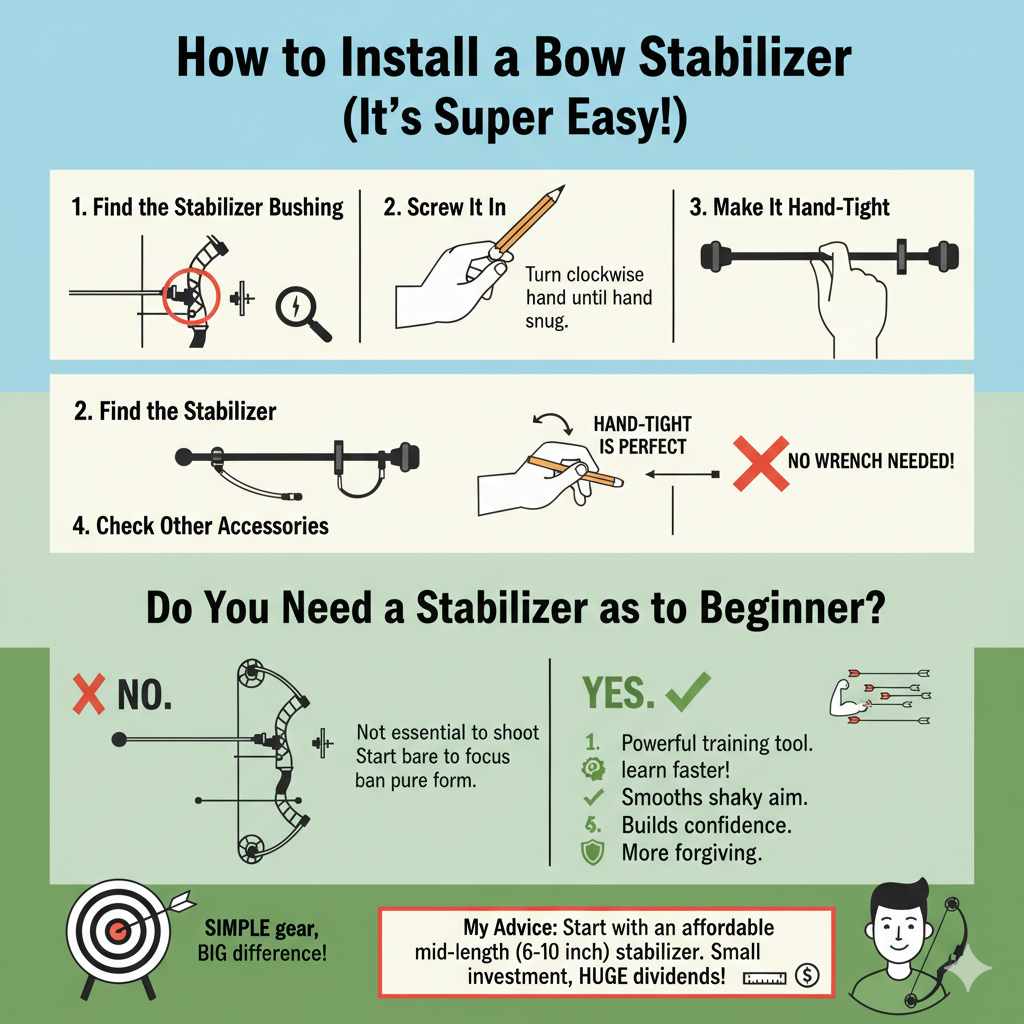
- Find the Stabilizer Bushing: Look on the front of your bow’s riser, just below the grip. You will see a small, threaded hole. This is where your stabilizer attaches. Every modern compound and recurve bow has one.
- Screw It In: Take your stabilizer and screw it into the hole by hand. Turn it clockwise until it is snug.
- Make It Hand-Tight: You want it to be firm so it doesn’t rattle loose, but there is no need to crank on it with a wrench. Hand-tight is perfect. Over-tightening can damage the threads on your bow or stabilizer.
- Check Your Other Accessories: Make sure the stabilizer doesn’t block your bow sling or any other gear you have mounted nearby.
That’s it! You’re ready to go shoot and feel the difference.
So, Do You Need a Stabilizer as a Beginner?
This is a common question, and the answer is both yes and no.
Do you physically need one to fling an arrow downrange? No. You can learn the basics of archery without one. Many introductory courses start you on a bare bow to focus purely on form.
However, will a stabilizer help you learn faster, build confidence, and have more fun? Absolutely, yes. A stabilizer is a powerful training tool. It helps smooth out the little inconsistencies in your hold that are common for beginners. By making the bow more forgiving, it allows you to focus on other parts of your shot, like your release and follow-through, without constantly fighting a shaky sight pin.
My advice to all new archers is this: start with an affordable, mid-length (6-10 inch) stabilizer. It’s a small investment that pays huge dividends in accuracy and enjoyment.
Frequently Asked Questions (FAQ)
What length stabilizer is best for a beginner?
For a beginner, a stabilizer between 6 and 10 inches is the ideal starting point. This length offers a great combination of noticeable aiming stability and vibration reduction without being too long or heavy. It’s versatile enough for both backyard practice and bowhunting.
Can I shoot my bow without a stabilizer?
Yes, you can absolutely shoot your bow without a stabilizer. However, you will likely notice more vibration, noise, and difficulty holding the bow steady. Most archers find that adding a stabilizer significantly improves their accuracy and makes shooting more comfortable.
How much should I spend on my first stabilizer?
You don’t need to break the bank. A quality beginner stabilizer can be found for between $40 and $80. These models offer excellent performance and are built to last. Avoid the cheapest options, as they may not offer much vibration dampening, but there is no need for a professional-level model when you are just starting out.
Do stabilizers help with bow torque?
Yes, they can. Bow torque is the twisting motion you apply to the bow’s grip with your hand. By adding weight forward and away from the riser, a stabilizer increases the bow’s resistance to this twisting motion, helping you maintain a more consistent and neutral grip.
What’s the difference between a stabilizer and a dampener?
A stabilizer’s main job is to add weight and inertia to improve balance and steady your aim. A dampener’s sole purpose is to absorb vibration and noise. The good news is that almost all modern stabilizers have built-in dampening technology, so you get both benefits in one package.
How do I know if my stabilizer is working?
You will feel and see the difference. Your bow will feel “deader” in your hand with less of a jolt upon release. When aiming, you’ll notice your sight pin moves more slowly and smoothly across the target. The ultimate proof is on the target: you should see your arrows grouping closer together.
Can I use a hunting stabilizer for target practice?
Yes, definitely. A good hunting stabilizer works perfectly for target practice. While it won’t offer the same rock-solid stability as a long target rod, it will still reduce vibration and help steady your aim, making it a great all-around choice for any type of archery.
The Final Verdict: A Must-Have Tool for Every Archer
So, do bow stabilizers really work? The answer is a resounding yes. They are not just fancy accessories; they are essential tools based on simple, proven physics. By adding weight, improving balance, and soaking up vibration, a stabilizer makes your bow easier to aim, quieter to shoot, and more forgiving of small mistakes.
For any beginner looking to tighten their arrow groups and build confidence, adding a stabilizer is one of the quickest and most effective upgrades you can make. It helps you build good habits, like a steady hold and a smooth follow-through, right from the start.
Don’t just take my word for it. Try one for yourself. The feeling of a well-balanced, quiet bow settling into your aim is something every archer should experience. It bridges the gap between frustration and fun, helping you get the best results from all your hard practice. Happy shooting!