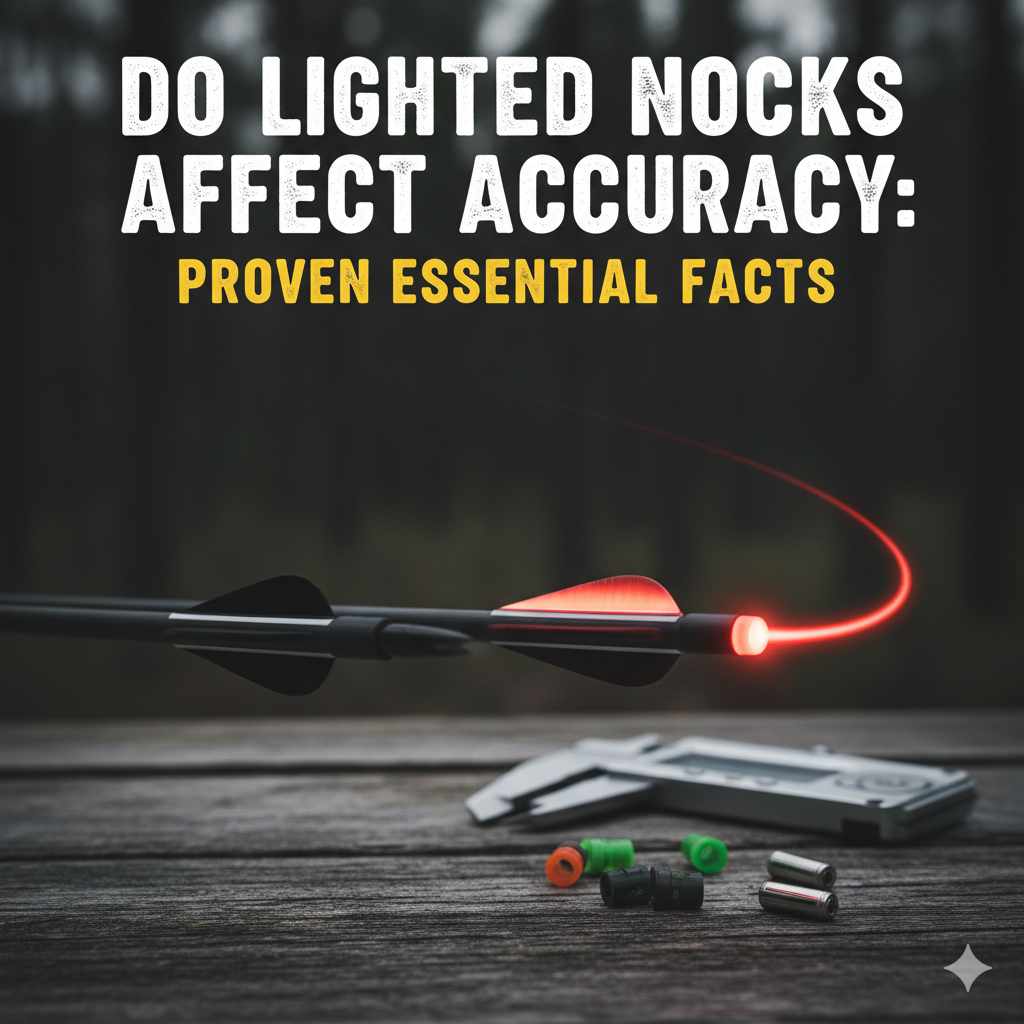
Yes, lighted nocks can affect accuracy because they add 15-25 grains of weight to the back of your arrow. This changes the arrow’s total weight and its front-of-center (FOC) balance. However, this change is predictable and can be easily corrected by re-tuning your bow and adjusting your sights for the new setup.
Hello, I’m Salman Arfeen, your guide in the world of archery. Have you ever watched a glowing arrow fly through the twilight and wondered if you should try one? Lighted nocks look amazing and are incredibly useful for finding your arrow after a shot. But a big question always comes up: will using one mess up your accuracy? It’s a common worry for archers who have worked hard to get their shots grouped tightly.
You’re not alone in asking this. Many archers, both new and experienced, hesitate before adding anything new to their arrow setup. The good news is that you don’t have to choose between a cool, visible arrow and a perfectly accurate shot. In this guide, I’ll walk you through exactly how lighted nocks work, how they can change your arrow’s flight, and the simple steps you can take to keep your accuracy sharp. Let’s get you shooting with confidence, day or night!
What Are Lighted Nocks and Why Do Archers Use Them?
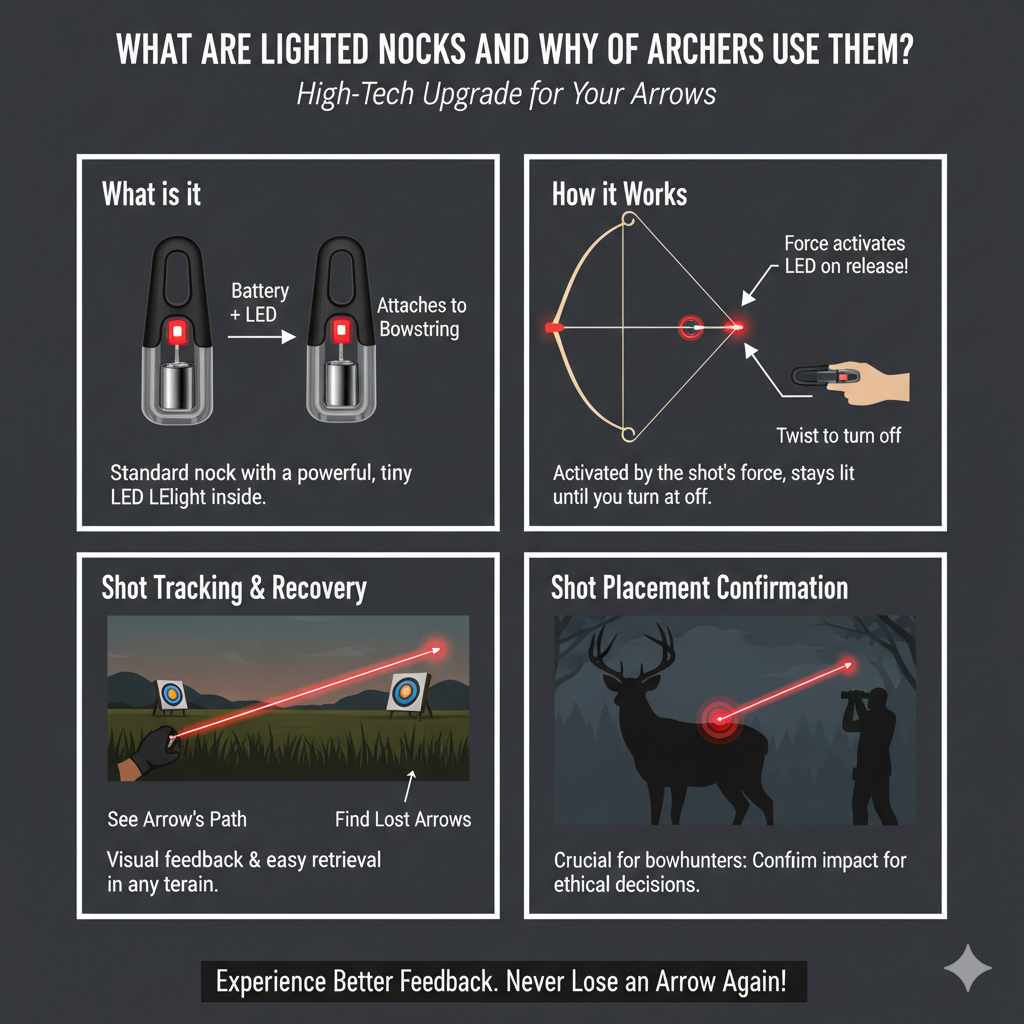
Before we dive into accuracy, let’s quickly cover what a lighted nock is. Think of it as a standard nock—the little plastic piece at the end of your arrow that clips onto the bowstring—with a tiny, high-tech upgrade. Inside its casing is a small battery and a powerful LED light.
How does it turn on? It’s activated by force. When you release the bowstring, the sudden acceleration pushes the battery into contact with the LED, and voilà—your nock lights up! It stays lit until you turn it off, which usually involves a simple twist or a special tool.
Archers love them for a few key reasons:
- Shot Tracking: Seeing a bright streak fly toward the target helps you instantly see your arrow’s path. This visual feedback is fantastic for understanding how your arrow behaves in the air.
- Arrow Recovery: This is the biggest benefit. An arrow can be tough to find, especially in tall grass, thick woods, or during low-light conditions at dawn or dusk. A glowing nock acts like a tiny beacon, saving you time, money, and the frustration of a lost arrow.
- Shot Placement Confirmation: For bowhunters, seeing the exact point of impact is critical. A lighted nock provides clear confirmation of where the arrow hit, which is vital for making ethical and effective recovery decisions.
The Core Question: How Does a Lighted Nock Impact Accuracy?
Okay, let’s get to the heart of the matter. The simple answer is yes, a lighted nock changes your arrow’s flight characteristics. Anything you change on an arrow, from the point weight to the fletching type, will alter how it flies. A lighted nock is no different. But “change” does not mean “ruin.” The effect is manageable and predictable.
The impact on accuracy comes down to two main physical factors: weight and balance.
Factor 1: The Added Weight
A standard arrow nock is incredibly light, typically weighing between 8 and 12 grains. (A grain is a unit of mass used in archery; there are 7,000 grains in a pound). Lighted nocks, with their battery and electronics, are heavier. They usually weigh between 20 and 35 grains.
This may not sound like much, but adding 15-25 grains to an arrow that weighs 350-450 grains is a significant percentage change. This extra weight at the very back of the arrow does two things:
- It Increases Total Arrow Weight: A heavier arrow flies a little slower and will drop more over longer distances. This means your sight pins will need adjustment. Your 40-yard pin might now be perfect for 38 yards.
- It Weakens the Arrow’s Dynamic Spine: “Spine” is a measure of an arrow’s stiffness. When an arrow is fired, it flexes and bends. Adding weight to either end of the arrow makes it flex more. Adding weight to the back (with a lighted nock) makes the arrow behave as if it were slightly less stiff. For a perfectly tuned bow, this can cause the arrow to fly erratically until the bow is adjusted.
Factor 2: The Shift in Balance (Front of Center – FOC)
Front of Center, or FOC, is one of the most important concepts in arrow performance. In simple terms, it’s a measure of how top-heavy your arrow is. An arrow needs to be heavier at the front to fly straight, much like a dart is weighted at its tip. A proper FOC ensures the arrow corrects itself in flight and flies point-first towards the target.
When you add a heavier, lighted nock to the back, you are shifting the arrow’s balance point rearward. This reduces the FOC percentage. A lower FOC can sometimes make an arrow less stable, especially in windy conditions or at long distances. Most experts, including the Archery Trade Association, suggest an FOC between 10% and 15% for hunting arrows for optimal flight and penetration.
Here’s a simple table to illustrate the weight difference:
| Component | Typical Weight Range (in Grains) | Impact on Arrow |
|---|---|---|
| Standard Nock | 8 – 12 grains | Baseline for tuning |
| Lighted Nock | 20 – 35 grains | Adds 12-27 grains; decreases FOC, weakens dynamic spine |
| Standard Field Point | 100 – 125 grains | Baseline for FOC calculation |
So, we’ve established that a lighted nock will change how your arrow flies. Now, let’s talk about the easy, step-by-step process to fix it and get your accuracy back on track.
How to Maintain Pinpoint Accuracy with Lighted Nocks
Think of switching to lighted nocks like putting new tires on your car. The car is the same, but you might need a quick alignment to make sure everything drives perfectly straight. The same logic applies to your bow. You just need to re-tune it for the new arrow setup.
Step 1: Commit to Consistency
This is the golden rule. If you plan to hunt with lighted nocks, you must practice with lighted nocks. Don’t practice all summer with standard nocks and then switch to lighted ones the day before a hunt. Your point of impact will shift. All the arrows in your quiver should be identical in weight and balance. Buy enough lighted nocks to outfit all your practice and hunting arrows.
Step 2: Weigh Your Components
Knowledge is power. Get a simple grain scale—they are inexpensive and a great tool for any serious archer. Weigh one of your standard nocks and one of your new lighted nocks. Then, weigh a complete arrow with a standard nock and another with a lighted nock. Seeing the exact weight difference will help you understand the change you need to account for.
Step 3: Re-Tune Your Bow
Since the arrow’s dynamic spine has changed, you need to make sure it’s leaving the bow as straight as possible. The best way for a beginner to check this is with a method called “paper tuning.” It sounds technical, but it’s quite simple.
- Set Up: Stretch a large piece of paper across a frame. You can build a simple wooden frame or even use a large cardboard box with the middle cut out.
- Shoot: Stand about 6-8 feet away from the paper and shoot an arrow (with a lighted nock and field point) through the center of it.
- Analyze the Tear: Look at the hole the arrow made. The tear tells you how the arrow is flying.
- A perfect tear: A clean hole with three small slits from the fletchings. This means your arrow is flying perfectly straight. You’re good to go!
- A “nock high/low” tear: The hole has a long vertical tear. This means your nocking point on the bowstring needs to be moved slightly up or down.
- A “nock left/right” tear: The hole has a long horizontal tear. This means your arrow rest needs a micro-adjustment to the left or right.
Paper tuning ensures your arrow is starting its flight as cleanly as possible. A quick search online for a “paper tuning guide” will give you visual charts that make interpreting the tears incredibly easy.
Step 4: Adjust Your Sights
Once your bow is tuned and the arrows are flying straight, it’s time to sight in again. Because the lighted-nock arrows are heavier, they will shoot slightly lower than your lighter, standard-nock arrows. The difference might be tiny at 20 yards but can become several inches at 40 or 50 yards.
Start at your 20-yard pin. Shoot a group of three arrows. If they are consistently low, move your sight pin down a tiny bit. Remember the rule: chase your arrow. If your arrows hit low, move the pin down. If they hit left, move the pin left. Keep making small adjustments until your groups are centered on the bullseye. Then, repeat the process for your 30, 40, and 50-yard pins.
Pros and Cons of Lighted Nocks: A Balanced View
Are lighted nocks right for you? It depends on your priorities. Let’s lay out the good and the bad in a simple table.
| Pros (The Advantages) | Cons (The Disadvantages) |
|---|---|
| Superior Arrow Visibility: You can easily track your arrow’s flight path, helping you diagnose form issues. | Higher Cost: Lighted nocks can cost significantly more than standard nocks. |
| Easy Arrow Recovery: Find your arrows in any condition, saving money and time. A single saved arrow can pay for the nock. | Requires Re-Tuning: As we’ve discussed, you must re-tune and re-sight your bow for the added weight. |
| Shot Placement Insight: Invaluable for bowhunters to confirm a hit and determine the best recovery strategy. | Potential for Failure: Though rare with quality brands, electronics can sometimes fail to light up or turn off. |
| Increased Confidence: Knowing you can find your arrow and confirm your shot can be a huge mental boost. | Battery Life: Batteries eventually die and may need to be replaced, adding another maintenance step. |
| Great for Filming: If you film your hunts or practice sessions, lighted nocks make the arrow flight show up beautifully on camera. | Legality: Some states or specific hunting areas have regulations regarding electronics on bows or arrows. Always check your local hunting laws. |
Choosing the Right Lighted Nock
Not all lighted nocks are created equal. When shopping for them, consider these factors:
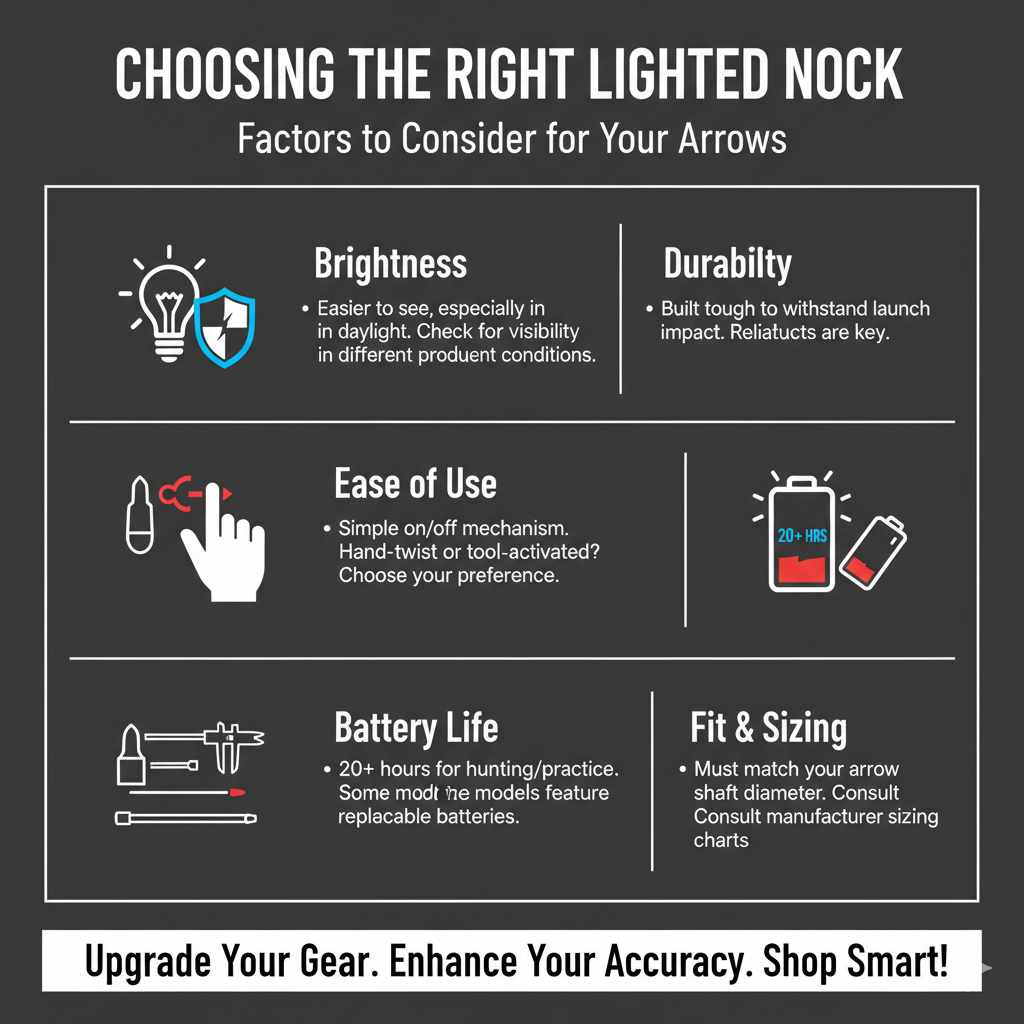
- Brightness: A brighter nock is easier to see, especially during the day. Look for reviews that comment on visibility in different lighting conditions.
- Durability: Your nock takes a lot of force. Choose a brand known for building tough, reliable products that won’t break or fail on impact.
- Ease of Use: How is the nock turned on and off? Some are simple to turn off by hand, while others may require a small tool. Pick what works best for you.
- Battery Life: Most quality lighted nocks offer 20+ hours of battery life, which is more than enough for several days of hunting or practice. Some even have replaceable batteries.
- Fit and Sizing: Arrows come in different diameters. Make sure you buy the correct size nock for your specific arrow shafts. Most manufacturers have sizing charts on their websites.
Frequently Asked Questions (FAQ)
1. What is a lighted nock?
A lighted nock is a special type of arrow nock that contains a small battery and an LED light. The force of the arrow being shot activates the light, causing the nock to glow brightly. This makes the arrow’s flight path visible and helps you find the arrow after it has been shot.
2. How much weight do lighted nocks add to an arrow?
Lighted nocks typically weigh between 20 and 35 grains. This is about 15 to 25 grains heavier than a standard plastic nock, which usually weighs around 8 to 12 grains. This added weight is the primary reason you need to re-tune your bow after switching to them.
3. Do I have to re-sight my bow after installing lighted nocks?
Yes, absolutely. The extra weight will make your arrows fly slightly slower and drop more at longer distances. You must re-sight your bow, starting at your closest distance (like 20 yards) and working your way back, to ensure your shots remain accurate.
4. Are lighted nocks legal for hunting everywhere?
No, not everywhere. While most states in the U.S. allow lighted nocks for hunting, a few have restrictions. Regulations can change, so it is crucial to check the most current hunting rulebook for your state or province before you go into the field. A quick visit to your state’s Department of Fish and Wildlife website is the best way to get accurate information.
5. How long do the batteries in lighted nocks last?
Most modern lighted nocks have a battery life of over 20 hours of continuous use. Some high-end models can last for over 40 hours. This is more than enough for a full hunting trip. After a shot, you can turn the nock off to conserve the battery until you need it again.
6. Can I use lighted nocks for target practice?
Yes, and you should! The most important rule for maintaining accuracy is consistency. If you plan to hunt with lighted nocks, you should practice with them exclusively to ensure your bow is tuned and your sights are set for that specific arrow setup.
7. How do you turn a lighted nock off?
It varies by brand. Many popular models require you to pull the nock straight back out of the arrow shaft slightly (about 1/4 inch) until you hear a “click,” which turns off the light. Others have a small switch on the side or require a special tool to reset them. Always check the manufacturer’s instructions.
Conclusion: Are They Worth It?
So, do lighted nocks affect accuracy? Yes, they introduce a change to your arrow system that you must account for. They add weight and shift the balance, which will alter your arrow’s point of impact if you do nothing.
However, the effect is far from a deal-breaker. By following a few simple steps—practicing consistently with them, re-tuning your bow, and adjusting your sights—you can achieve the same pinpoint accuracy you had with standard nocks. The key is treating your lighted-nock arrows as a new, complete system and tuning for it specifically.
The benefits they offer in terms of shot visibility and arrow recovery are undeniable. For many archers, especially bowhunters, the confidence and practicality they provide far outweigh the small initial effort of re-tuning. So don’t be afraid to give them a try. Embrace the tuning process, enjoy watching that glowing streak fly true, and never lose an arrow in the dusk again.
Happy shooting!