
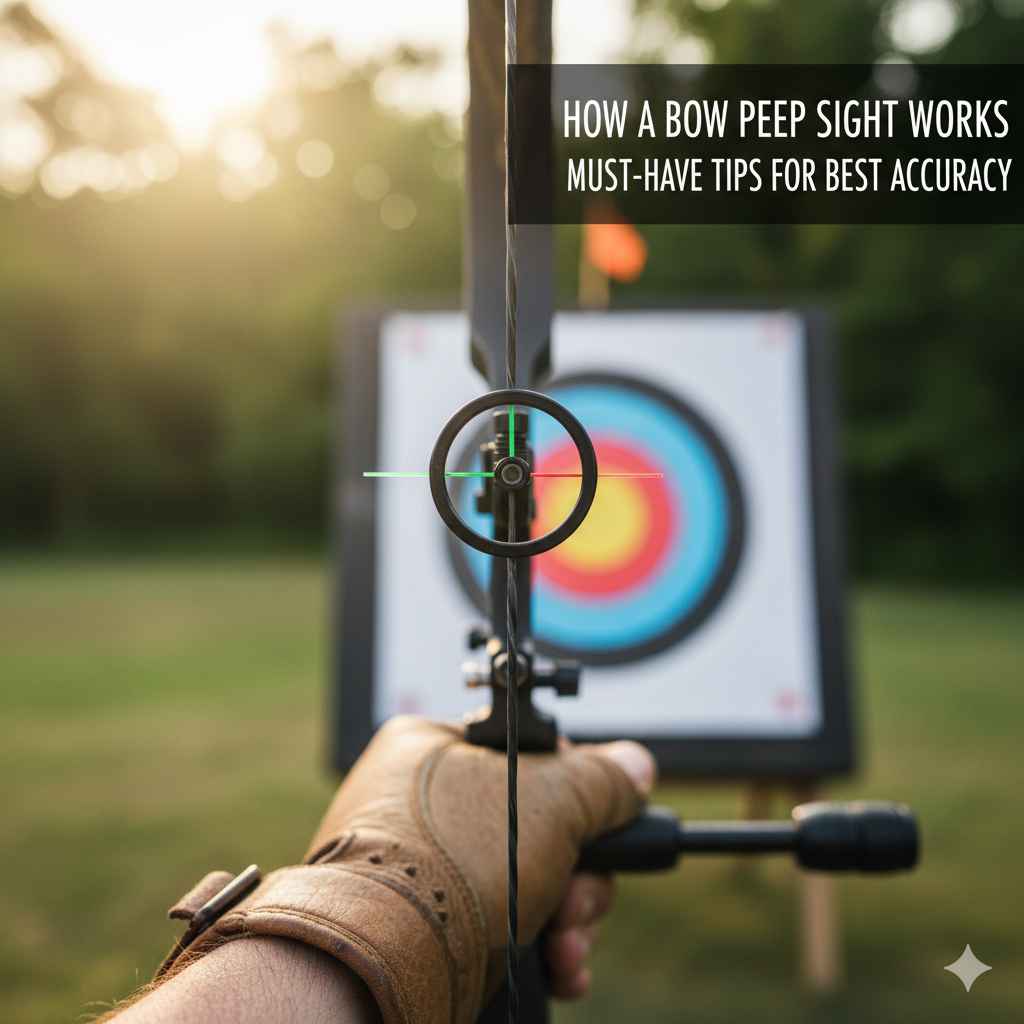
Understanding how a bow peep sight works is essential for any archer aiming to improve their precision and consistency. Whether you’re a beginner or an experienced bowhunter, mastering this small but critical piece of equipment can significantly enhance your shooting accuracy. A peep sight might appear simple—a tiny circular aperture attached to your bowstring—but its role in aiming is pivotal. In this article, we’ll explore how a bow peep sight works and share must-have tips that will help you achieve the best possible accuracy in your archery practice or hunting.
What Is a Bow Peep Sight?
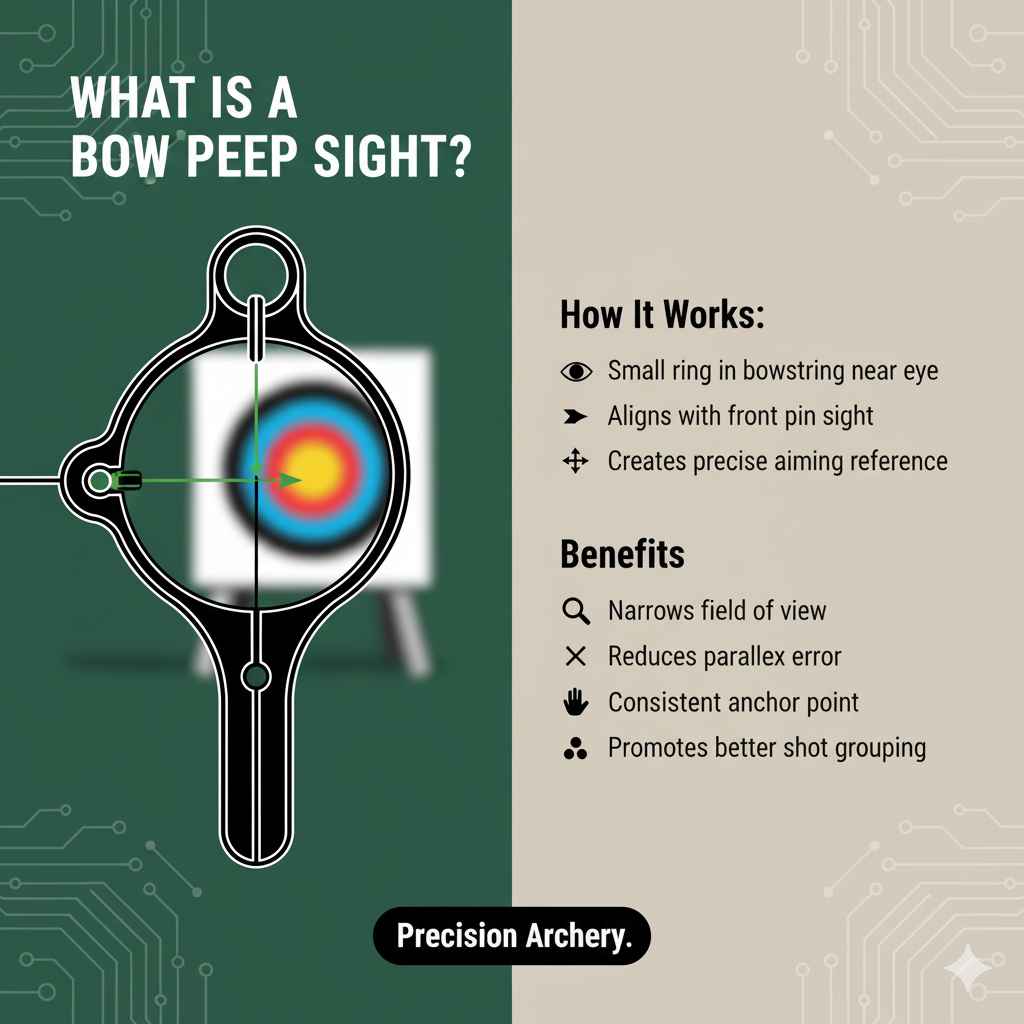
A bow peep sight is a small ring inserted into the bowstring, usually near the archer’s eye line when drawn. When the bow is fully drawn, the archer looks through this tiny aperture, aligning it with the front sight (typically a pin sight mounted on the bow’s riser). This alignment creates a more precise aiming reference, similar to looking through a rear sight on a rifle.
The peep sight effectively narrows your field of view, helping to center your eye behind the bow and reducing parallax error—the discrepancy between the sight and the target caused by misalignment of the eye. By helping the shooter maintain a consistent anchor point and eye position, it promotes better shot grouping.
How a Bow Peep Sight Works: The Science Behind It
The working principle behind a peep sight is all about eye alignment and focus. When you draw your bowstring, the peep sight pops into your line of vision. Your eye naturally centers itself in the small ring, promoting better eye-to-sight alignment. This consistency in sight picture is what allows archers to shoot accurately shot after shot.
Unlike traditional open sights or pin sights alone, the peep sight serves as a backstop to your eye’s line of vision. It forces your eye into the same position relative to the bow each time you draw, making your aiming process less variable and more repeatable. Additionally, it helps reduce distractions from your peripheral vision, allowing you to concentrate solely on the front sight and your target.
Essential Tips for Using a Bow Peep Sight for Best Accuracy
1. Proper Installation and Alignment
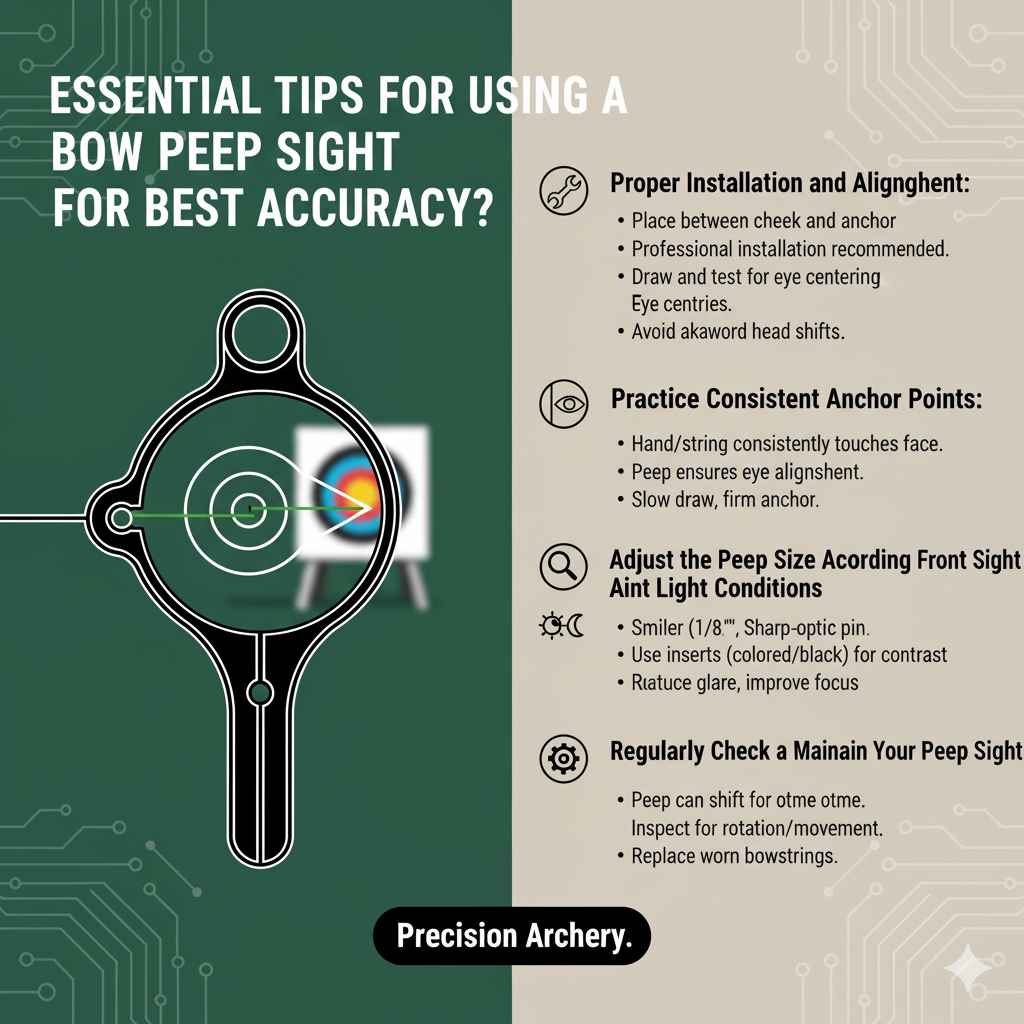
Correctly installing and aligning your peep sight is crucial. The peep needs to be placed between the cheek and anchor point, usually attached by twisting the bowstring cables temporarily or using a peep installation tool. Many archery shops offer professional installation services, which can ensure the peep is perfectly aligned.
Once installed, test the peep’s placement by drawing the bow and looking through it to ensure your eye comfortably centers in the aperture. Misalignment can cause you to shift your head awkwardly or squint through the peep, leading to inconsistent shots.
2. Practice Consistent Anchor Points
Your anchor point—the spot on your face where your hand or string consistently touches when the bow is fully drawn—should stay consistent. The peep sight helps promote this consistency by ensuring your eye aligns the same way on every shot. Practice drawing your bow slowly and anchoring firmly so that your eye always connects with the peep aperture the same way.
3. Adjust the Peep Size According to Light Conditions
Peep sights come in several sizes, typically ranging from 1/8 inch to 3/16 inch in diameter. Smaller apertures give a sharper focus and more precision but may be harder to see in low light. Larger peeps allow better visibility in dim conditions but could reduce pinpoint accuracy.
Choose a peep size based on your usual shooting environment. For example, a 1/8 inch peep may be ideal for bright daylight hunting, whereas a 5/32 inch peep might be better for dawn or dusk shots.
4. Combine with a Quality Front Sight and Peep Insert
The peep sight is only one part of the aiming system. Combining it with a well-tuned front sight, such as a fiber-optic pin, improves target acquisition. Additionally, many archers use peep inserts—various colored or black rings that reduce glare and improve contrast—making it easier to focus through the peep.
Explore different colors and materials to find what works best for your eyes and shooting conditions.
5. Regularly Check and Maintain Your Peep Sight
Because the peep sight is mounted on the bowstring, it can shift over time with use. Periodically check to make sure it hasn’t rotated or moved, which can lead to poor alignment and inaccurate shots. Inspect your bowstring for wear; replacing the string regularly keeps the peep in stable position.
Final Thoughts: Unlocking Better Accuracy with a Bow Peep Sight
Knowing how a bow peep sight works and applying these practical tips can transform your archery performance. The peep sight isn’t just a simple accessory but a key component that enhances your natural ability to aim consistently. By paying careful attention to installation, size selection, and consistent shooting form, you’ll find tighter groupings and greater confidence in every shot.
Incorporate these insights during your practice sessions, and you’ll soon appreciate the precision improvements a bow peep sight brings to your archery journey. Focus, consistency, and proper sighting create a winning combination that brings your shots closer to the mark every time.