
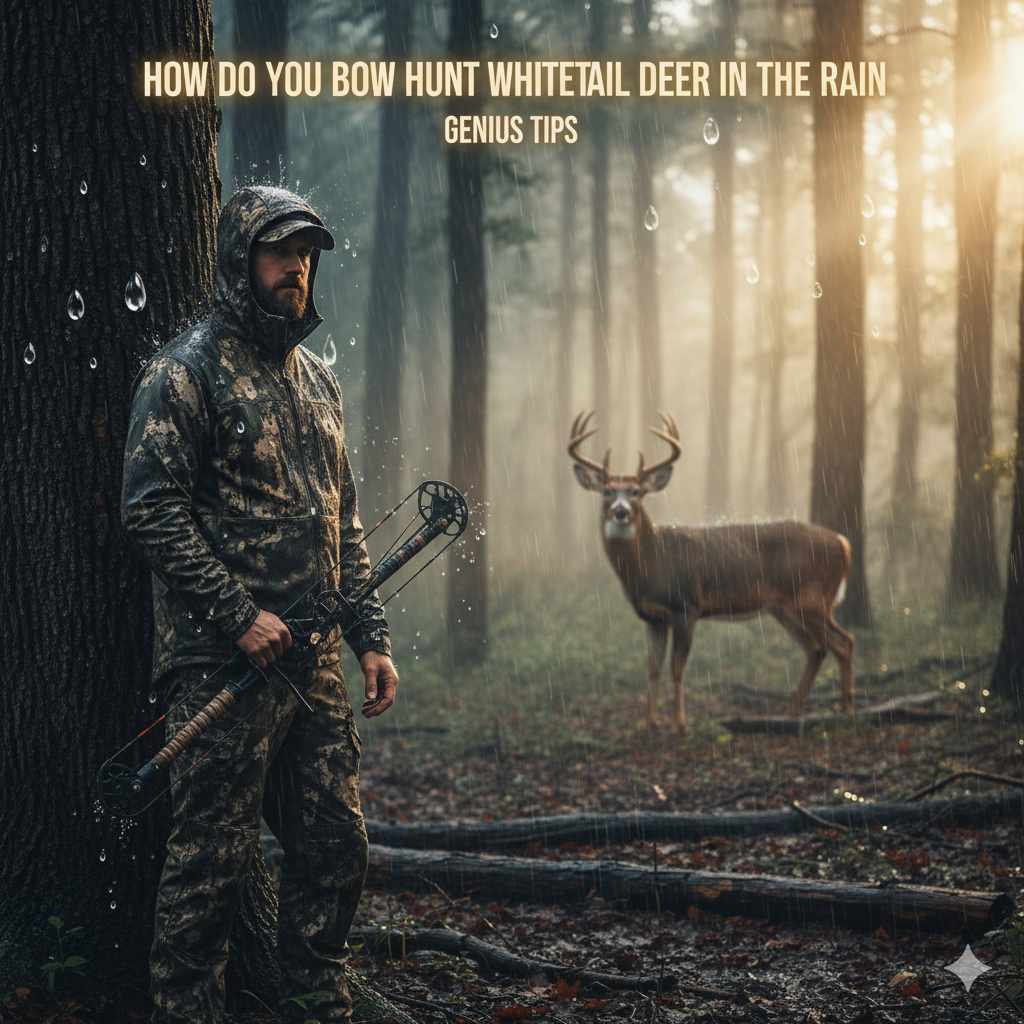
To bow hunt whitetail deer in the rain, focus on three key areas. First, wear high-quality, quiet waterproof gear to stay dry and comfortable. Second, protect your bow and arrows from moisture using string wax and waterproof fletchings. Finally, hunt near thick cover and food sources, as rain muffles your sound and scent, giving you a major advantage.
Does the sound of rain make you want to stay inside? Many hunters pack it in when the sky opens up. But they are missing out on a golden opportunity. Hunting in the rain can be one of the best times to find a whitetail deer. The woods feel different, sounds are muffled, and deer often let their guard down.
You just need to know how to prepare. It can feel tricky at first. How do you stay dry? Will your bow work right? Where do the deer even go? Don’t worry. We will walk through everything you need to know, step by step. Let’s turn that dreary day into your most successful hunt yet.
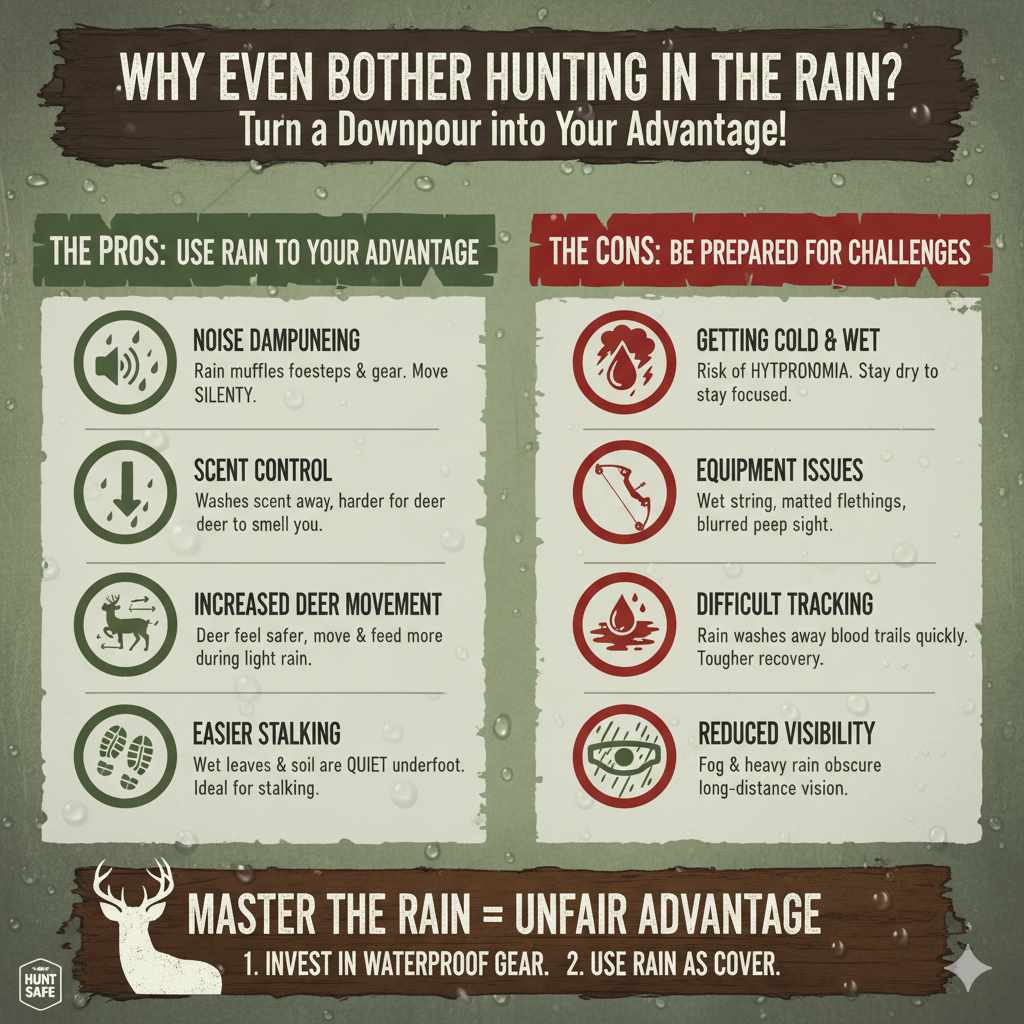
Why Even Bother Hunting in the Rain?
At first, the idea of sitting in a tree stand during a downpour might sound miserable. And without the right preparation, it can be. But savvy hunters know that a rainy day can be incredibly productive. The rain changes the entire dynamic of the woods, and if you understand how, you can use it to your advantage.
The Pros of a Rainy Day Hunt
Rain offers several unique benefits that you won’t get on a clear, sunny day. These advantages can significantly increase your chances of success.
- Noise Dampening: The constant sound of raindrops hitting the leaves and ground creates a natural sound cover. This muffles the noise of your footsteps, the rustle of your clothes, and even the sound of drawing your bow. You can move through the woods much more quietly.
- Scent Control: Rain washes your scent from the air and pushes it downward. This makes it much harder for a deer to smell you, reducing the chance of being busted by their most powerful sense.
- Increased Deer Movement: A light, steady rain often encourages deer to move. They feel safer and more comfortable moving during daylight hours when conditions are less than ideal for predators (including humans). You’ll often see them feeding in open fields right before or after a storm.
- Easier Stalking: Wet leaves and soil are quiet underfoot. If you enjoy spot-and-stalk hunting, a rainy day is the perfect time to practice your skills.
The Cons to Keep in Mind
Of course, it’s not all easy. Hunting in the rain comes with its own set of challenges that you must be prepared for.
- Getting Cold and Wet: This is the biggest challenge. If your gear fails and you get soaked, you risk hypothermia. A cold hunter is an unfocused and unsafe hunter.
- Equipment Issues: Rain can affect your bowstring, cause your fletchings to mat down, and make your peep sight difficult to see through.
- Difficult Tracking: Rain is the enemy of a blood trail. A heavy downpour can wash away blood evidence in minutes, making it extremely difficult to recover your deer.
- Reduced Visibility: Fog and heavy rain can make it hard to see long distances, and water on your glasses or peep sight can obscure your target.
Gearing Up for the Wet: Your Rain-Proof Checklist
Your success and comfort when bow hunting in the rain depend almost entirely on your gear. The old saying, “There’s no such thing as bad weather, only bad gear,” is absolutely true here. You need to invest in quality equipment that keeps you and your bow dry and functional.
Your Clothing: Stay Dry, Stay Silent
Layering is the key to staying warm and dry. Avoid cotton at all costs, as it absorbs moisture and pulls heat away from your body. Stick to moisture-wicking materials like merino wool or synthetics.
- Base Layer: This is the layer against your skin. Its job is to wick sweat away from your body to keep you dry from the inside. Lightweight merino wool is a fantastic choice.
- Mid Layer: This is your insulation layer. Fleece or a puffy synthetic jacket works well. The thickness depends on the temperature. It’s better to have an extra layer you can take off than to be cold.
- Outer Shell: This is your most important piece of gear. You need a high-quality, waterproof, and breathable rain jacket and pants. Look for materials like Gore-Tex. Equally important, your rain gear must be quiet. Avoid gear that makes a loud “swishing” sound when you move.
Don’t forget waterproof boots, a waterproof hat with a wide brim to keep rain off your face, and a good pair of waterproof gloves.
Protecting Your Bow and Arrows
Your archery equipment is not naturally waterproof. You need to take a few extra steps to ensure it performs flawlessly when the moment of truth arrives.
- Bowstring: Apply a good coat of string wax to your bowstring and cables before you head out. This helps repel water and prevents the string from absorbing moisture, which can affect its weight and your bow’s performance.
- Fletchings: If you use feather fletchings, they are a major liability in the rain. Wet feathers will mat down and lose their ability to stabilize your arrow. Switch to plastic vanes, as they are completely waterproof and unaffected by moisture.
- Peep Sight: Raindrops can collect in your peep sight, creating a blurry or completely blocked view. You can use a peep sight with a hood or insert a piece of cotton or a Q-tip head into the peep to absorb water, removing it just before you shoot.
- Rest and Sights: Most modern bow sights and rests are fairly weather-resistant, but it’s a good idea to check them for any potential issues. A simple bow cover or even a plastic bag can provide extra protection while you wait.
| Gear Category | Essential Item | Key Feature |
|---|---|---|
| Clothing | Waterproof Outer Shell (Jacket & Pants) | Quiet, breathable, and fully waterproof material. |
| Clothing | Waterproof Boots | Good traction and insulation for warmth. |
| Bow Protection | String Wax | Prevents string from absorbing water. |
| Arrow Components | Plastic Vanes | Unaffected by rain, unlike feathers. |
| Comfort | Waterproof Seat Cushion | Keeps you dry and comfortable for long sits. |
| Safety | Dry Bag | Keeps phone, keys, and extra layers dry. |
Safety First: Navigating the Woods in the Rain
Your safety is always the number one priority. Rainy conditions introduce new risks that you need to manage carefully. A successful hunt is one you come home from safely.
Tree Stand and Blind Safety
Metal and wooden surfaces become incredibly slippery when wet. This makes climbing into and out of a tree stand particularly dangerous.
- Use a Safety Harness: Always wear a full-body safety harness and stay connected to the tree from the moment you leave the ground until you are back down. This is non-negotiable.
- Check Your Steps: Before putting your full weight on any ladder step or platform, test it to make sure it’s not too slick. Clear away any wet leaves or mud.
- Use a Haul Line: Never climb with your bow or pack on your back. Use a haul line to pull your gear up once you are safely secured in your stand.
- Ground Blinds: If you use a ground blind, make sure it’s set up in a safe location, away from any areas that could flood or have dead branches overhead that could fall in high winds.
Visibility and Staying Seen
Rain and fog can drastically reduce visibility. This is a safety concern, especially if other hunters are in the area. Always follow local regulations regarding hunter orange. Many states, like those listed by the Hunter-ed.com blog, have specific requirements for archery season, but wearing an orange hat or vest when walking to and from your stand is always a smart choice.
Cold Weather Dangers
Being wet and cold is more than just uncomfortable; it can lead to hypothermia, a dangerous drop in body temperature. According to the Centers for Disease Control and Prevention (CDC), hypothermia can occur even in cool temperatures above 40°F if a person becomes chilled from rain.
Watch for early signs like shivering, confusion, or fumbling hands. If you start to feel uncontrollably cold, end your hunt immediately. Get back to your vehicle, change into dry clothes, and get warm. It’s not worth risking your health for a deer.
Finding Deer: Where Do Whitetails Go in the Rain?
Understanding how deer behavior changes in the rain is crucial for finding them. They won’t just stand out in the open getting soaked. Like us, they seek shelter, but they also need to eat.
Light Rain vs. Heavy Downpour
The intensity of the rain has a big impact on deer activity.
- Light, Steady Rain: This is the ideal scenario. Deer are often on their feet and moving, especially if the temperature is cool. The rain provides cover, and they feel secure. This is a great time to find them moving between bedding areas and food sources.
- Heavy Downpour with Wind: During a torrential downpour, deer will hunker down and seek shelter. They won’t move much at all. Your best bet is to wait it out. The moments right before the storm hits and immediately after it breaks are often periods of intense deer activity.
Prime Locations to Set Up
When the rain starts falling, deer typically move to predictable locations. Focus your efforts on these spots.
- Thick Cover: Conifers like pine, spruce, or cedar trees provide excellent cover from the rain. Deer will often bed down on the leeward (downwind) side of these thickets to stay dry and protected from the wind. Setting up on a travel corridor leading to or from these areas can be very effective.
- Food Sources Near Bedding Areas: Deer still need to eat. They won’t travel far in the rain, so look for food sources like acorns, browse, or small food plots that are located very close to thick bedding cover. A stand positioned between these two locations is a perfect ambush spot.
- Ground Blinds: A rainy day is the perfect time to hunt from a ground blind. It keeps you and your gear completely dry and comfortable, allowing you to stay out longer. The sound of the rain on the blind also helps cover any small noises you might make inside.
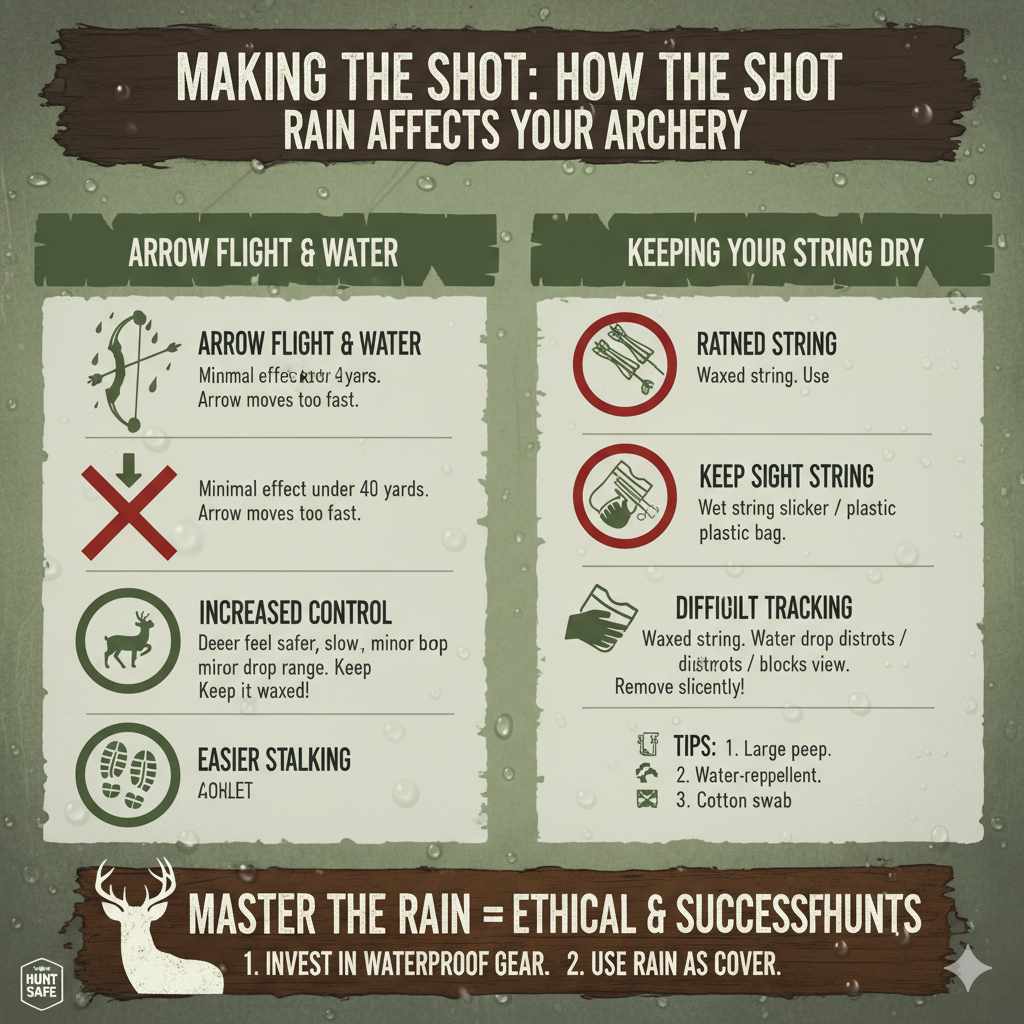
Making the Shot: How Rain Affects Your Archery
You’ve done the hard work, stayed dry, and a deer is in range. Now you have to execute the shot. Rain adds a few extra variables to consider for an accurate and ethical shot.
Arrow Flight and Water
A common question is whether rain affects arrow flight. For a typical bowhunting shot (under 40 yards), the effect of raindrops hitting your arrow is minimal and not something you need to worry about. The arrow is moving too fast for the rain to significantly alter its path. However, a water-logged bowstring can slow down your bow slightly, which could cause a very minor drop in your arrow’s point of impact at longer ranges.
Keeping Your String Dry
As mentioned, a wet bowstring is your biggest enemy. It gets heavier, which can slow it down and make your bow louder. Keep it well-waxed. Some hunters also use a “string slicker” or a simple plastic bag to cover the string and cams while waiting in the stand. Just be sure you can remove it silently when it’s time to shoot.
Aiming and Visibility
Your peep sight is the biggest challenge. A drop of water can act like a lens, distorting your view, or block it entirely. Practice shooting in your backyard during a light rain to see how your setup performs. Some helpful tricks include:
- Using a large-aperture peep sight.
- Applying a water-repellent product to the peep.
- Keeping a long, clean cotton swab handy to quickly wipe it out.
After the Shot: The Challenge of Tracking in the Rain
Successfully making the shot is only half the battle. Recovering your animal is the final, crucial step, and rain makes it significantly harder.
Why Rain Makes Tracking Hard
Rain systematically destroys the evidence you rely on to track a deer. It dilutes and washes away the blood trail, making it faint or completely invisible. Scent is also washed away, making it difficult for a tracking dog to follow a trail. This is why shot placement is more critical than ever when hunting in the rain.
Effective Tracking Techniques for Wet Ground
If you have to track in the rain, don’t panic. You just need to be more methodical and use your eyes to look for signs other than blood.
- Wait, But Not Too Long: You need to balance giving the deer enough time to expire with the risk of the trail being washed away. In a steady rain, you may need to start tracking sooner than you normally would.
- Look for More Than Blood: Search for kicked-up mud, broken twigs, overturned leaves (the underside is lighter), and tracks. Mark every last sign you find with brightly colored tape.
- Work in a Grid: If you lose the trail, start walking in expanding circles or a grid pattern from the last known sign. Look for the deer itself, not just the trail. Often, they don’t go as far as you think.
- Bring a Friend: Two sets of eyes are always better than one. Have a friend help you track.
| Tracking Clue | What to Look For | Why It’s Helpful in the Rain |
|---|---|---|
| Disturbed Leaves | Dark, wet undersides of leaves flipped over. | Stands out against the uniformly wet top layer of leaves. |
| Broken Twigs/Branches | Freshly snapped ends of branches. | A clear sign of a deer pushing through thick cover. |
| Deep Hoof Prints | Imprints in soft, muddy ground. | Can hold water and are easier to see than on dry ground. |
| Hair | Tufts of hair caught on branches or bark. | Indicates where the deer passed through and can confirm a hit. |
Frequently Asked Questions (FAQ)
Is it worth bow hunting in a light rain?
Absolutely! A light, steady rain is one of the best times to bow hunt. It dampens sound, washes away your scent, and encourages deer to move during daylight hours. It gives you a significant advantage if you are properly prepared with the right gear.
Will rain ruin my bow?
No, rain will not ruin a modern compound bow. Most bows are built to withstand harsh conditions. However, you should always dry your bow thoroughly after the hunt. Pay special attention to the cams, axles, and any screws to prevent rust. Applying a good coat of string wax before you hunt is also essential.
Do deer move in a heavy downpour?
Generally, no. During a very heavy rain with high winds, deer will bed down in thick cover and wait for the storm to pass. The best times to hunt are immediately before the storm hits and right after it breaks, as deer will be eager to get up and feed.
What kind of arrow fletchings are best for rain?
Plastic vanes are the best choice for hunting in the rain. They are 100% waterproof and will not be affected by moisture. Avoid using feather fletchings, as they will become saturated with water, mat down, and fail to stabilize your arrow properly, leading to poor flight and inaccuracy.
How does rain affect a deer’s senses?
Rain significantly dulls a deer’s two primary defenses: hearing and smell. The sound of rain on the leaves makes it hard for them to hear you approaching. The rain also washes your scent from the air, making it very difficult for them to smell you. This is a huge advantage for the bowhunter.
What is the hardest part about bow hunting in the rain?
The most challenging part is tracking the deer after the shot. Rain can wash away a blood trail very quickly. This makes a well-placed, ethical shot even more important. You will need to rely on other signs like tracks, broken branches, and overturned leaves to recover your animal.
Should I use a ground blind or a tree stand in the rain?
Both can be effective, but a ground blind offers a significant advantage in the rain. It provides excellent shelter, keeping you and your gear completely dry and allowing you to hunt comfortably for longer. It also helps contain your scent. However, tree stands placed in thick cover can also be very productive.
Conclusion: Embrace the Rain and Find Success
Hunting in the rain isn’t for everyone, and that’s exactly why you should try it. While others are at home, you’ll have the woods to yourself, with conditions stacked in your favor. The key is preparation. By investing in good waterproof gear, protecting your equipment, and understanding how deer behave in wet weather, you can turn a dreary day into an unforgettable hunt.
Don’t let a little water keep you out of the woods. Embrace the challenge, stay safe, and be patient. The quiet, rain-soaked forest holds some of the best opportunities for a close encounter with a whitetail. With these tips, you’re ready to face the elements and come home with a great story and, hopefully, a full freezer.