
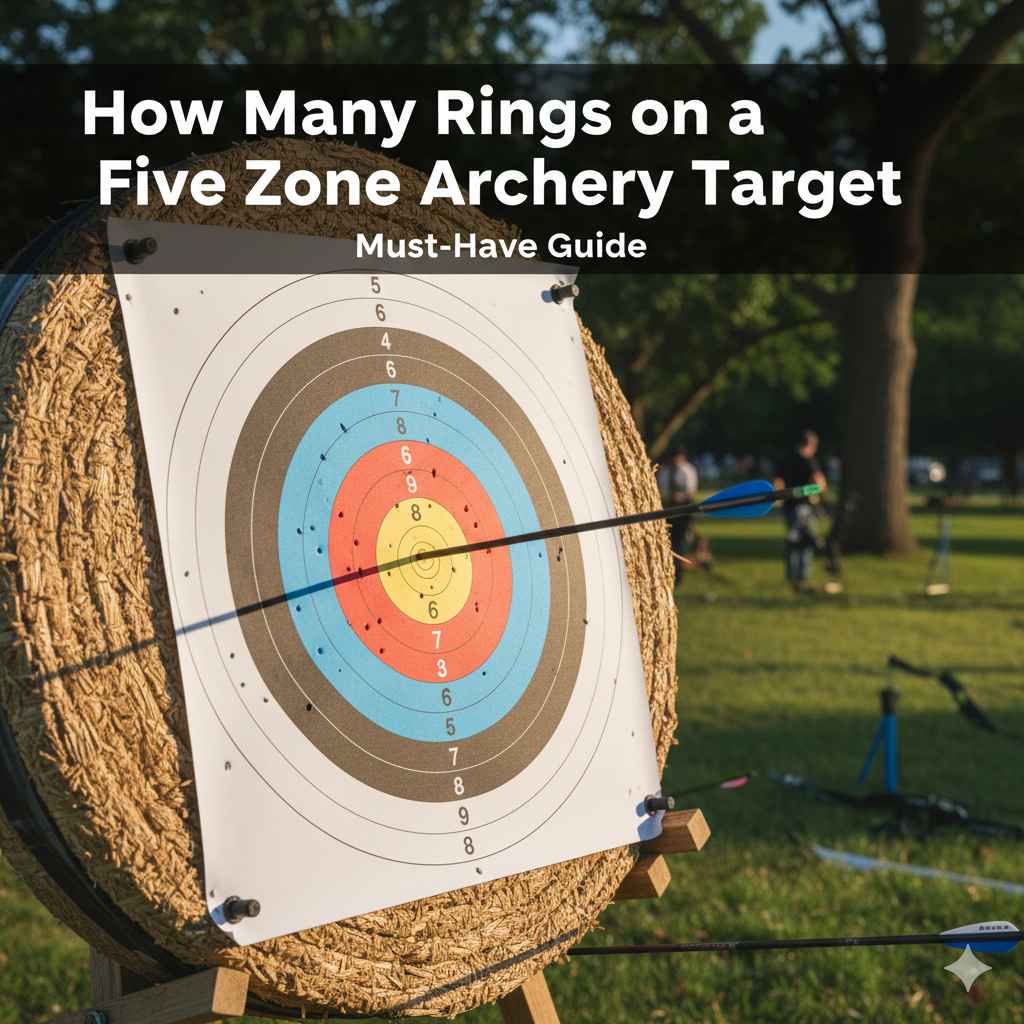
Understanding how many rings on a five zone archery target can significantly improve your archery skills and help you score better during practice or competitions. The five zone archery target is a popular design in both recreational and professional archery, known for its clear scoring system and well-defined zones. Whether you are a beginner or an experienced archer looking to refresh your knowledge, this guide will walk you through the structure of the five zone archery target, explaining the significance of each ring and how they contribute to scoring.
What is a Five Zone Archery Target?
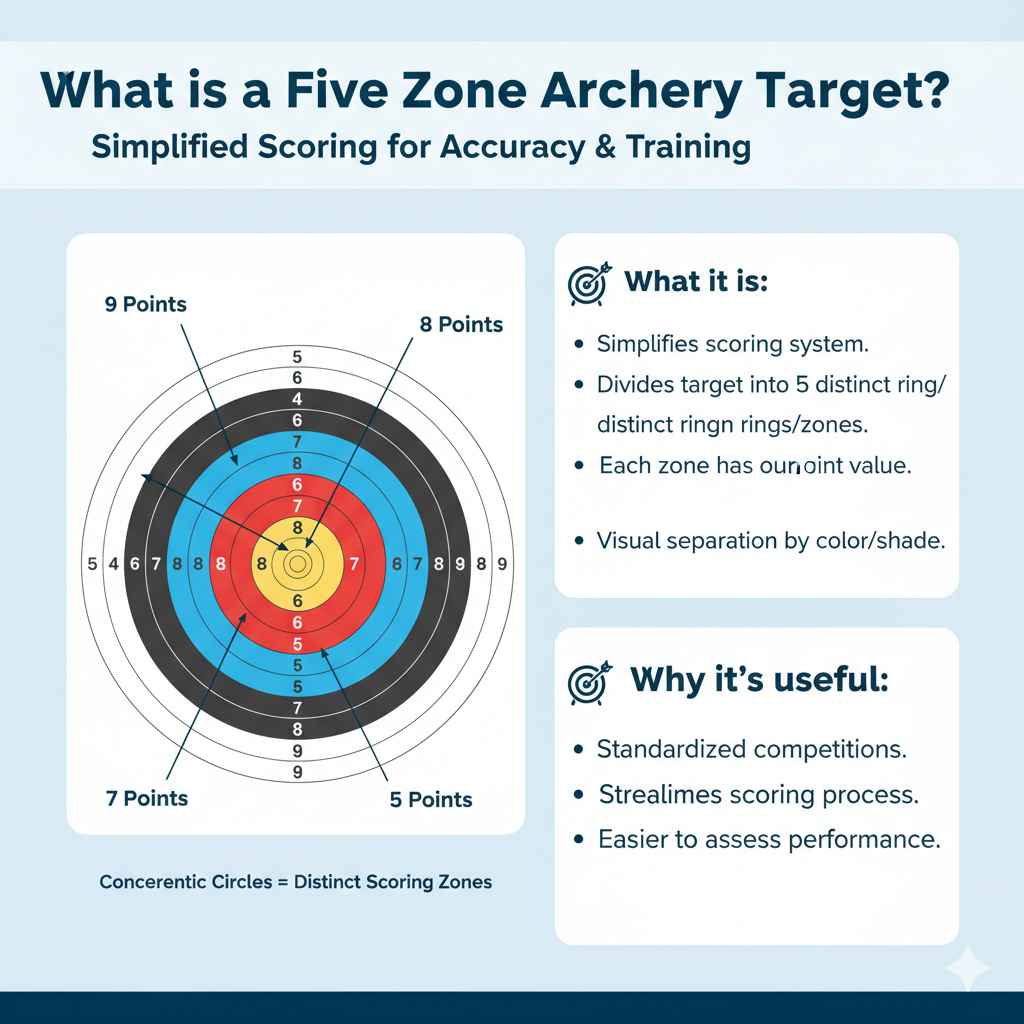
In archery, targets are designed with scoring zones to help quantify an archer’s accuracy. The five zone archery target simplifies the scoring system by dividing the target into five distinct rings or zones, each with its own point value. These zones are concentric circles painted or marked on the target face, typically with different colors or shades to visually separate one scoring ring from another.
The five zone system is especially useful in standardized competitions and training because it streamlines the scoring process. Instead of having multiple, often small scoring rings, the five zone layout consolidates the scoring into five primary sections. This makes it easier for archers, judges, and coaches to quickly assess performance and progress.
How Many Rings on a Five Zone Archery Target?
The answer to how many rings on a five zone archery target is straightforward: there are five scoring rings. These rings are usually numbered from the center outward, with each ring representing a different score value. Here’s a typical breakdown:
1. Inner Zone (Center Circle): The smallest and most valuable zone, often scoring the highest points (e.g., 10 or 9 points depending on the specific rules).
2. Second Ring: Surrounds the inner zone and carries a slightly lower score.
3. Third Ring: The middle ring with moderate scoring points.
4. Fourth Ring: A lower-value ring, providing some points but less than the inner rings.
5. Fifth Ring (Outer Ring): The largest and outermost scoring ring, awarding the lowest but still valid points.
This structure means archers aim to hit as close to the center as possible, with the goal to accumulate the highest score by consistently landing arrows in the inner zones.
Understanding Each Zone’s Importance
The five zones not only help in scoring but also in training focus areas that can improve technique:
– Inner Zone (Bullseye): Precision shooting is critical here. Hitting this ring demonstrates excellent control, aiming skills, and consistency. Archers spend considerable time perfecting their form to increase hits in this ring.
– Second and Third Rings: These zones represent controlled accuracy but with slight deviations. Consistent scoring in these zones usually means the archer has good form but might need minor adjustments.
– Fourth and Fifth Rings: Arrows landing in these outer rings indicate areas to improve, such as stance, release timing, or aiming technique.
Scoring and Competition Formats Using Five Zone Targets
The five zone archery target is often used in various formats including world archery competitions, training sessions, and beginner’s leagues. Scores from each ring are pre-assigned, usually ranging from 5 for the outermost ring to 10 or higher for the inner bullseye.
For example, in World Archery field rounds, the five zone targets follow a scoring pattern often like:
– Inner bulls-eye: 10 points
– Second ring: 8 points
– Third ring: 6 points
– Fourth ring: 4 points
– Fifth ring: 2 points
This scoring incentivizes archers to hone their aim and progress their skills incrementally. During practice, archers can analyze which zones their arrows tend to land in and adjust form or equipment accordingly.
Tips for Practicing with a Five Zone Archery Target
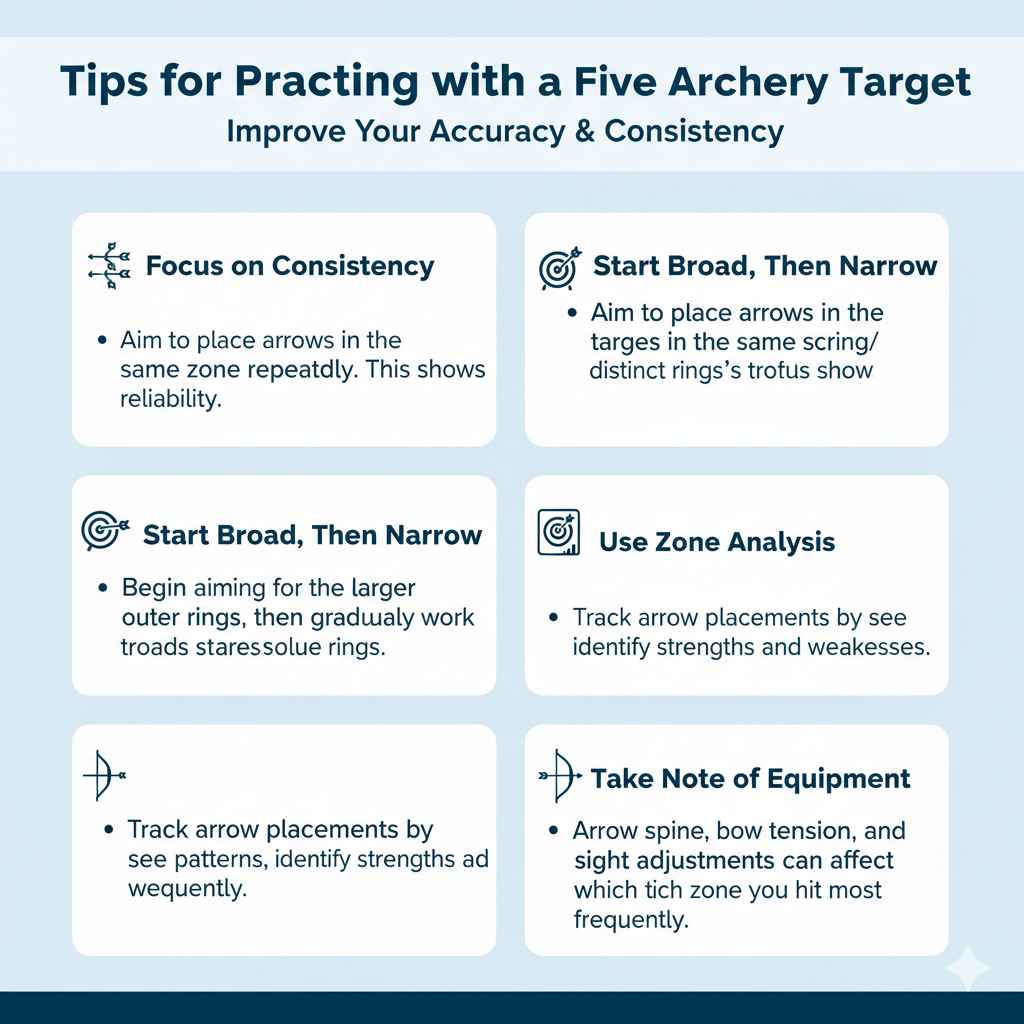
– Focus on Consistency: Aim to place arrows in the same scoring zone repeatedly. This shows reliability.
– Start Broad, Then Narrow: Begin by aiming to hit the larger outer rings steadily, then gradually work towards smaller, higher-value inner rings.
– Use Zone Analysis: Track your arrow placements by zone to see patterns, which can help you identify strengths and weaknesses.
– Take Note of Equipment: Arrow spine, bow tension, and sight adjustments can affect which zone you hit most frequently.
Conclusion: Mastering the Five Zone Archery Target
Knowing how many rings on a five zone archery target — five in total — is fundamental to understanding your performance and training needs in archery. The five zone system offers a clear, easy-to-understand scoring method that helps archers from novices to professionals sharpen their skills. By focusing on progressively hitting inner rings, archers can set measurable goals and see tangible improvements.
Whether you’re shooting for fun or preparing for competition, fully grasping the structure and purpose of the five zone archery target will give you the edge you need to excel. So the next time you stand in front of a target, remember the importance of each ring and where your arrows land—it’s the key to unlocking better scores and greater success in archery.