
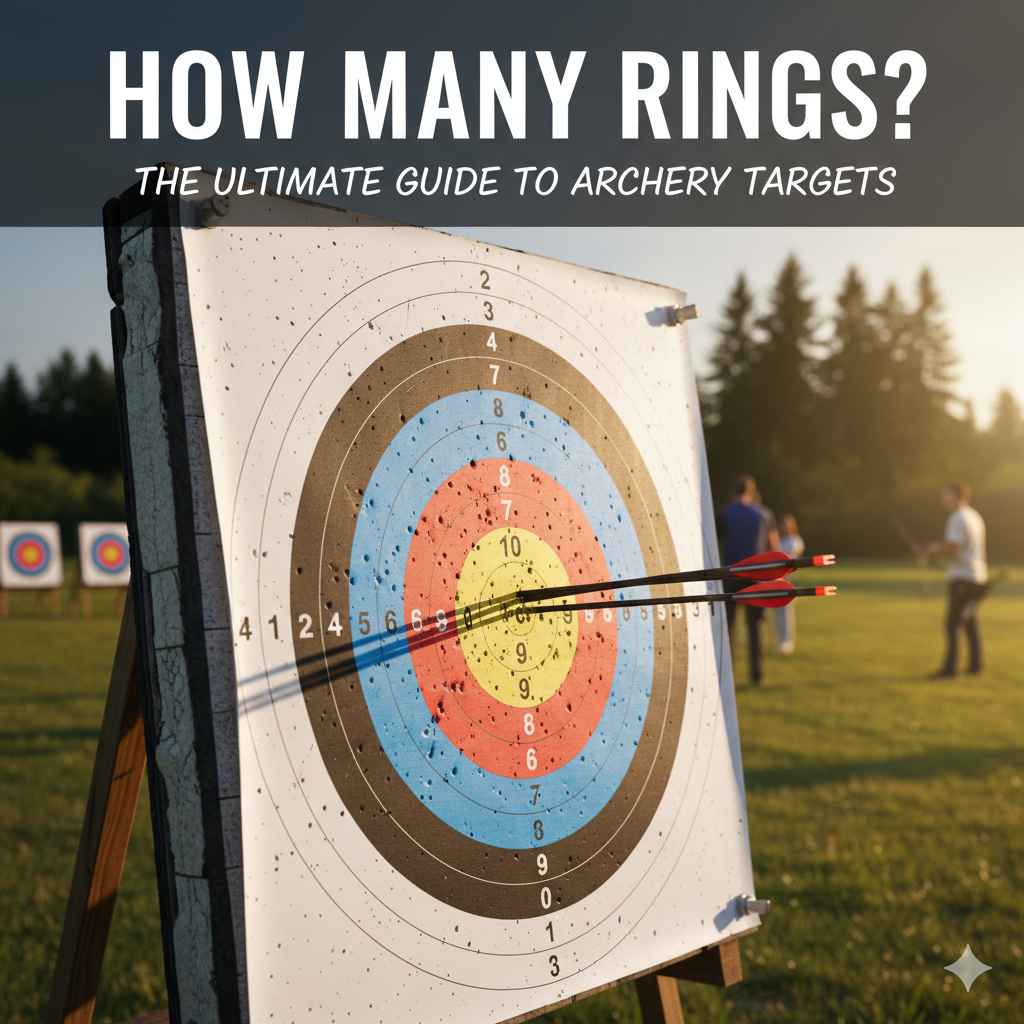
If you are new to archery or simply curious about the sport, understanding the design of an archery target is crucial. One common question among beginners is how many rings on an archery target and what each ring signifies. This guide will explore the different rings on an archery target, their scoring values, and why knowing this information is key to improving your aim and performance.
The Structure of an Archery Target
An archery target is not just a simple circle; it’s composed of several concentric rings, each with a specific point value. These rings help archers and judges easily determine how well shots are placed and assign scores accordingly. The exact number of rings and their values can vary depending on the style of archery and the competition rules being followed.
How Many Rings on an Archery Target?
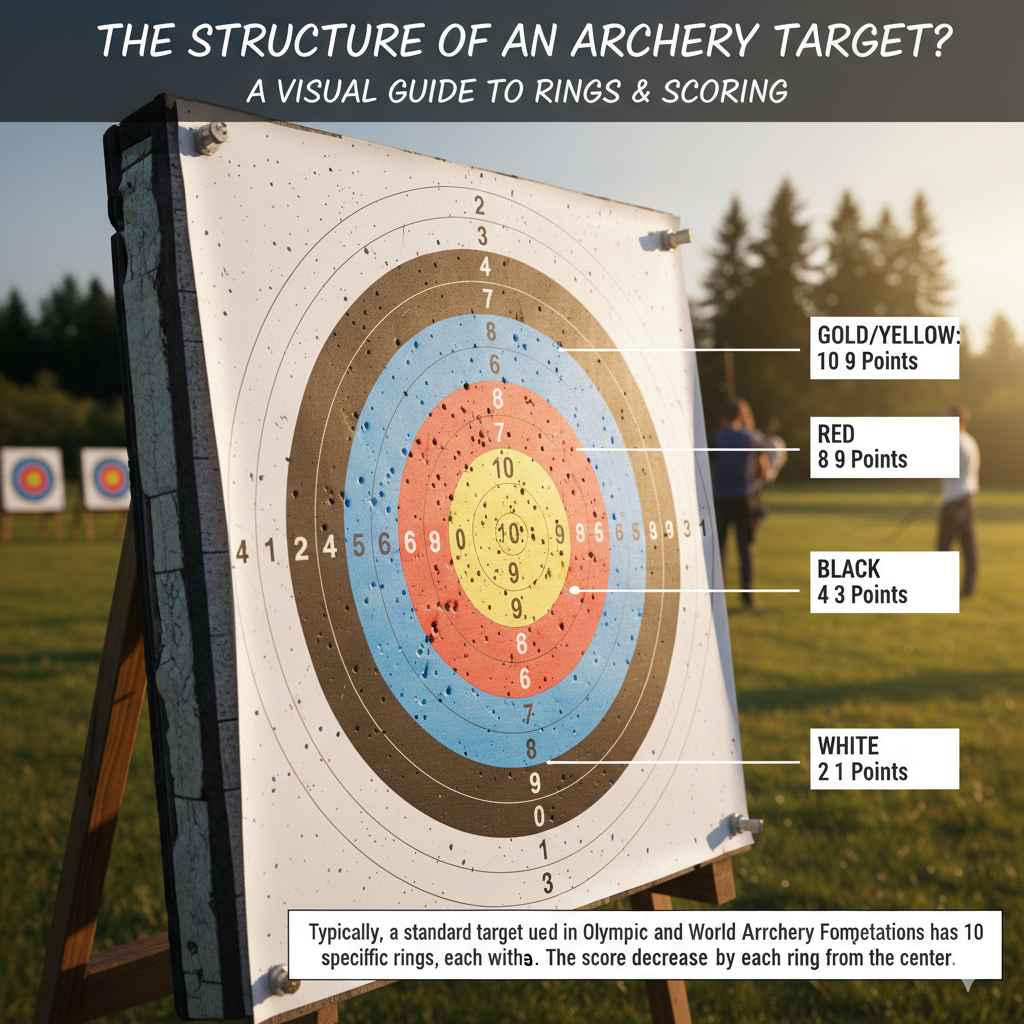
Typically, a standard target used in Olympic and World Archery Federation competitions has 10 rings. These rings are concentric circles, starting with the smallest circle at the center and increasing in diameter as they move outward. The rings are usually colored in a specific pattern for easy identification:
– Gold/Yellow: The innermost two rings (10 and 9 points)
– Red: The next two rings (8 and 7 points)
– Blue: The middle two rings (6 and 5 points)
– Black: The next two rings (4 and 3 points)
– White: The outermost two rings (2 and 1 point)
Each ring corresponds to a point score, starting with 10 points for the smallest center ring and decreasing by one point for each ring moving outward.
Why Knowing How Many Rings on an Archery Target Matters
Understanding how many rings on an archery target and their values can greatly improve your training and scoring strategy. Here’s why:
Accurate Scoring
Knowing the layout of the rings helps you accurately score your shots or those of competitors. In tournaments, these scores can determine rankings and advancement. Since the center rings yield more points, aiming for them helps archers optimize their performance.
Target Practice and Skill Development
When practicing, tracking which rings your arrows land in helps you assess your accuracy and consistency. For instance, if most of your shots fall in the blue or black rings, you know that you need to improve your precision to move closer to the gold rings.
Equipment Tuning
Archers often adjust their bows and arrows based on their grouping on the target. Knowing the ring structure helps you analyze if your arrows consistently land left, right, high, or low of the center, so you can make the necessary equipment tweaks.
Variations in Target Rings: Different Styles of Archery
The 10-ring target described above is standard for target archery, but other forms of archery use different types of targets with varying numbers of rings.
Field Archery Targets
Field archery often uses 4-, 5-, or 6-ring targets, especially if the target simulates hunting scenarios with animal silhouettes. The scoring is usually simplified and these targets can vary in size.
3D Archery Targets
In 3D archery, shooters aim at life-size foam models of animals rather than traditional rings. Instead of rings, scoring zones are marked on different vital areas of the animal target.
Traditional Archery Targets
Some traditional archery styles may use wooden targets or simpler bullseye targets with fewer rings, primarily focusing on the center for scoring.
Tips for Improving Your Aim Using the Target Rings
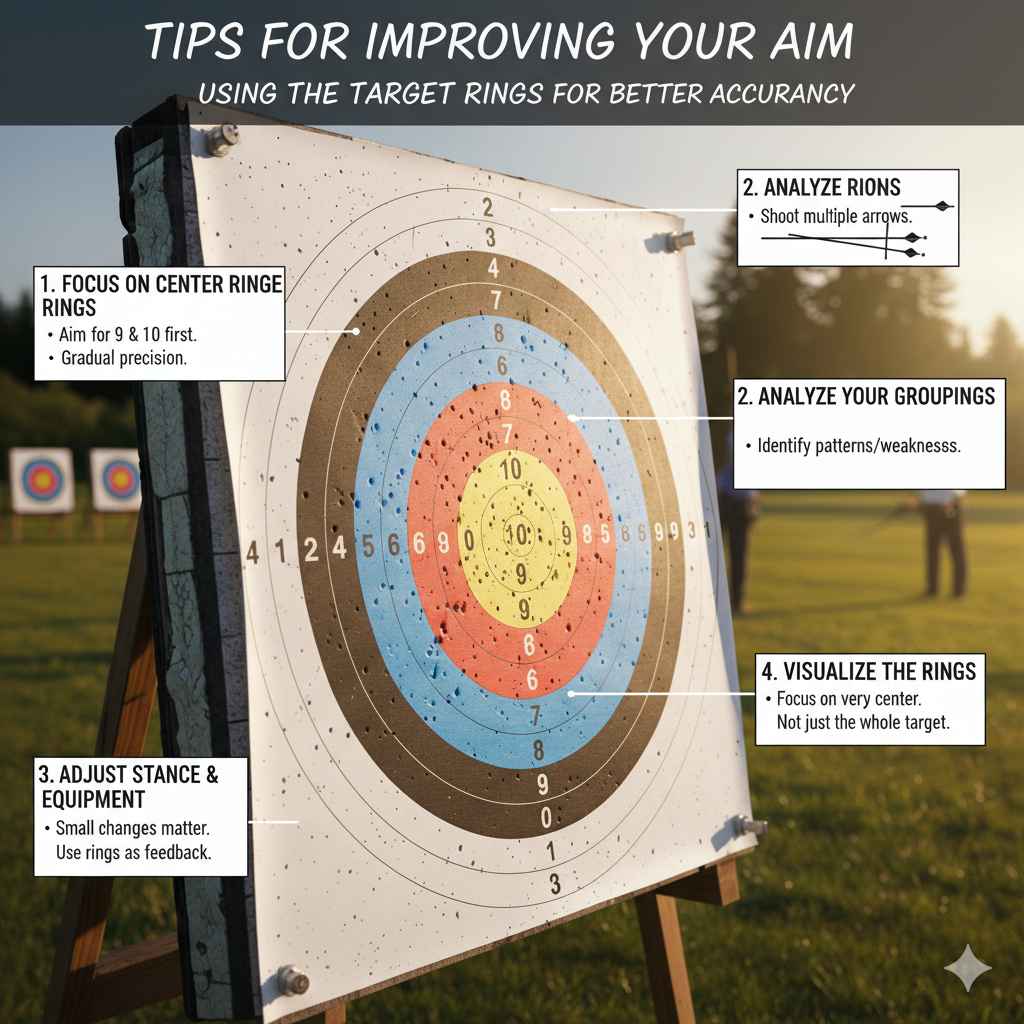
1. Focus on the Center Rings First: Aim to consistently hit the 9 and 10 rings before widening your goal to include the 7 or 8. This improves precision gradually.
2. Analyze Your Groupings: Shoot multiple arrows and note which rings they land in. This helps identify patterns and weaknesses.
3. Adjust Your Stance and Equipment: Small changes can cause your arrows to shift toward different rings on the target. Use the scoring on the rings as feedback.
4. Visualize the Rings: When shooting, visualize the rings and focus on aiming for the center rather than just the large target overall.
Conclusion
Knowing how many rings on an archery target and understanding their scoring values is fundamental for anyone serious about archery. Whether you’re a beginner or a seasoned archer, this knowledge allows you to accurately score shots, track your progress, and make informed decisions about your technique and equipment. By mastering the target structure, you set a strong foundation for improving your skills and enjoying the sport to the fullest. Whether competing or practicing, keep your focus on the rings, and your aim will become sharper with time.