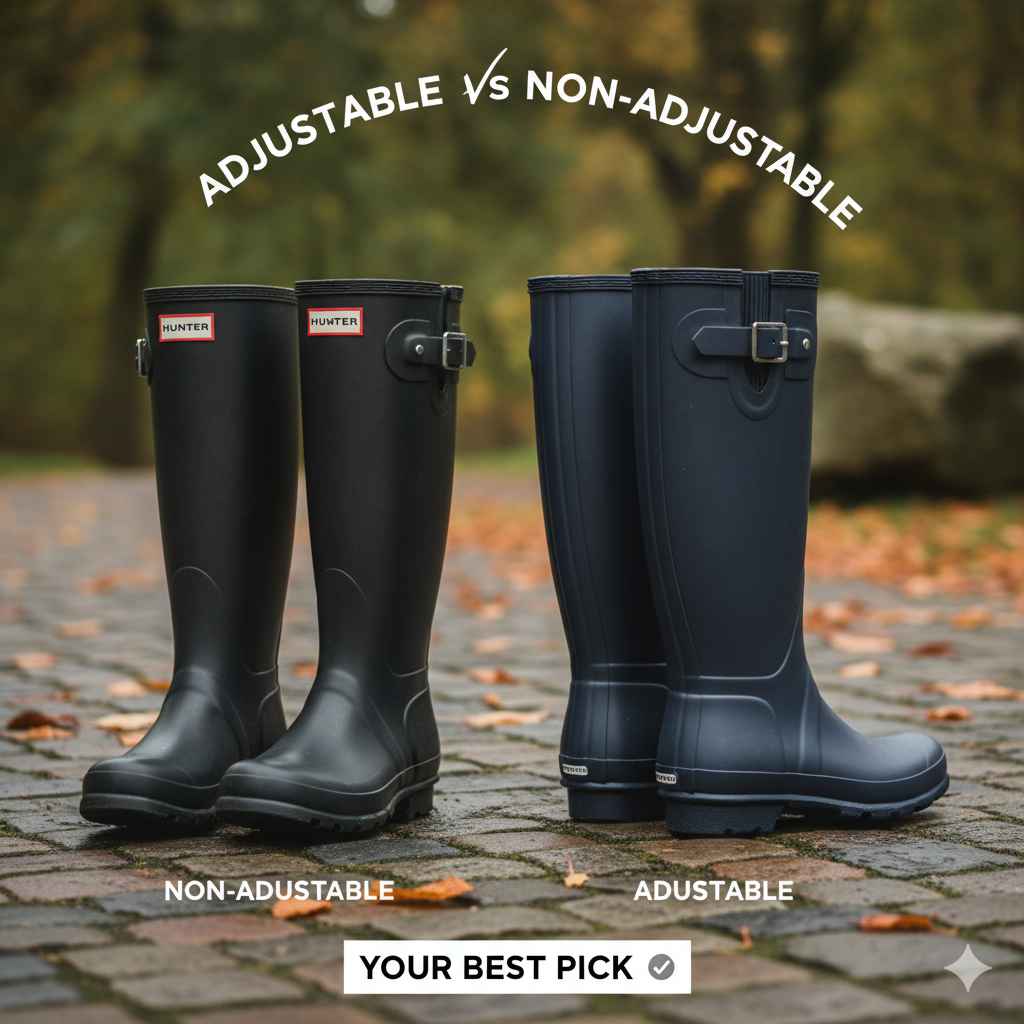
Picking the right Hunter boots can feel a little tricky at first. You might wonder about the difference between adjustable and non-adjustable styles. This is a common question for many people.
Don’t worry, we’re here to make it super simple. We’ll walk through everything you need to know. Get ready to find your perfect pair easily.
We will cover all the key points to help you decide.
Choosing Hunter Boots Adjustable vs Non-Adjustable Best Pick
Deciding between adjustable and non-adjustable Hunter boots is a key step for many shoppers. This choice affects fit, comfort, and how well the boots work for different activities. Understanding the differences helps you avoid common mistakes and pick the pair that truly suits your needs.
This guide breaks down each type, so you can feel confident in your decision. We aim to simplify this choice for everyone.
What Are Adjustable Hunter Boots
Adjustable Hunter boots offer a unique feature: a way to customize their fit around your calf. This usually comes in the form of a strap, buckle, or a cinching system at the top of the boot. This design allows you to widen or narrow the boot opening to achieve a snugger or more relaxed feel.
It’s like having a built-in way to make the boot hug your leg just right. This can be a big help if you have wider calves or prefer a more secure fit.
The Strap and Buckle System Explained
Many adjustable boots feature a strap that goes around the back of the boot and fastens with a buckle or a hook-and-loop closure. You can loosen this strap for a wider opening, making it easier to pull the boots on and off. When tightened, it creates a closer fit around your calf.
This can prevent the boot from slipping down while you walk. It also helps keep water and debris out.
Some models use a drawstring or toggle system. This works similarly, allowing you to gather the top of the boot to create a tighter seal. This is common on styles designed for more active use where a secure fit is important.
Benefits of Adjustable Hunter Boots
- Customizable Fit: The main advantage is the ability to adjust the boot’s circumference. This is great for people with different calf sizes, whether they are wider or narrower. It helps ensure a comfortable and secure feel for everyone.
- Versatility: This adjustable fit makes them suitable for various leg shapes and preferences. You can loosen them for a relaxed feel or tighten them for a more secure grip, adapting to your needs throughout the day.
- Reduced Slipping: A tighter, adjustable fit can prevent the boots from sliding down your legs as you walk. This is especially helpful on uneven terrain or during prolonged wear. It means fewer interruptions to readjust your boots.
- Keeping Debris Out: A snugger fit around the calf helps create a better seal. This is useful for keeping rain, mud, and other elements from getting inside your boots. It adds an extra layer of protection.
Who Should Choose Adjustable Boots
These boots are ideal for individuals with calves that don’t fit standard boot sizes perfectly. If you’ve ever found regular wellington boots too tight or too loose around your legs, adjustable ones are a great option. They are also good for active users who need boots that stay put during movement.
People who often wear thicker socks might also appreciate the extra room they can create.
What Are Non-Adjustable Hunter Boots
Non-adjustable Hunter boots, also known as classic or traditional Hunter boots, offer a more straightforward design. They have a fixed calf width that is consistent across the size. You choose your size, and the boot is made to that standard fit.
This simplicity is part of their appeal for many customers. They offer a clean, iconic look.
The Classic Fit Explained
The classic Hunter boot is designed with a standard calf opening for each shoe size. Hunter engineers these boots to fit a wide range of average calf sizes comfortably. The fit is intended to be relaxed enough to allow for easy on and off, but snug enough to stay up.
Many people find this standard fit works perfectly for them without any need for adjustment.
This fixed design means there are no extra parts like straps or toggles. The boot’s shape itself provides the support and fit. This contributes to their streamlined appearance and ease of use.
You just slip them on and go.
Benefits of Non-Adjustable Hunter Boots
- Simplicity and Ease of Use: The biggest draw is how easy they are to use. Just slip them on and they’re ready to go. There’s no fuss with straps or buckles, making them quick to put on and take off.
- Iconic Style: The non-adjustable design is the classic Hunter boot look. This is the style many people recognize and love. It offers a timeless and sleek appearance that fits well with various outfits.
- Durability and Fewer Parts: With fewer moving parts, there’s less to potentially break or wear out. This can contribute to the overall longevity of the boot, as there are no straps or buckles that could snag or tear.
- Consistent Sizing: For those with average calf sizes, the fit is usually very reliable. You know what to expect when ordering your size, as the fit is consistent across the board for that model.
Who Should Choose Non-Adjustable Boots
These boots are perfect for people who have standard calf sizes that fit well into typical boot designs. If you’ve worn wellington boots before and found the fit comfortable without needing extra adjustments, these are likely a great choice. They appeal to those who prefer a minimalist design and straightforward functionality.
They are also great for anyone who loves the classic Hunter aesthetic.
Adjustable vs Non-Adjustable Hunter Boots Best Pick Comparison
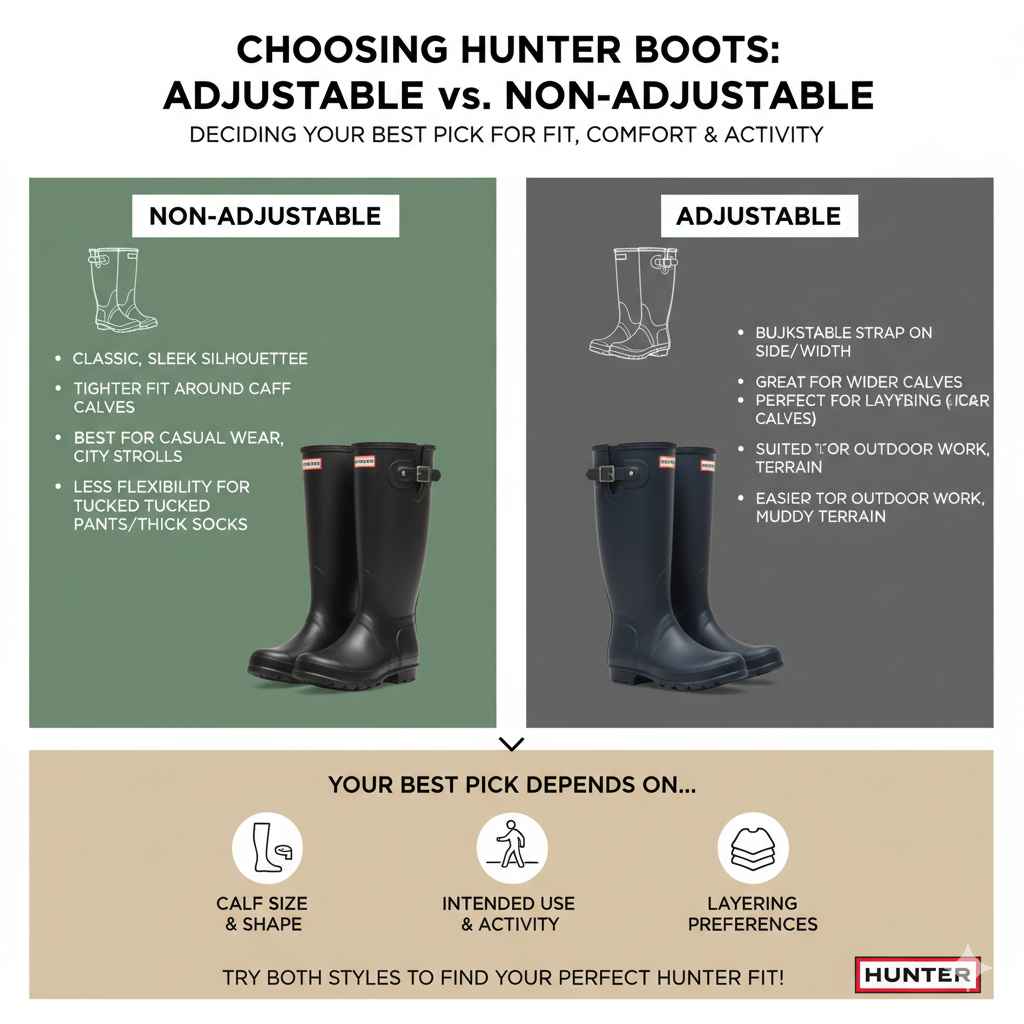
When comparing Adjustable vs Non-Adjustable Hunter Boots: Best Pick, the choice really comes down to your personal needs and preferences. Both types offer excellent quality and waterproofing that Hunter is known for. The main difference lies in how they fit around your calf and the added flexibility that adjustable boots provide.
Non-adjustable boots offer a classic, no-fuss experience.
Think about your own body shape. Do your calves tend to be a bit wider or narrower than average? If so, adjustable boots might offer a more comfortable and secure fit.
If you have an average calf size and prefer a simple, iconic look, the non-adjustable style is likely ideal. Both are built for durability and protection from the elements.
| Feature | Adjustable Hunter Boots | Non-Adjustable Hunter Boots |
|---|---|---|
| Calf Fit | Customizable with strap/buckle/toggle | Fixed standard fit |
| Ease of Use | Slightly more adjustment needed | Very simple slip-on |
| Style | Can have visible adjustment features | Classic, streamlined design |
| Best For | Varied calf sizes, secure fit needs | Average calf sizes, classic look fans |
| Durability | Adjustment mechanism could be a wear point | Fewer parts, potentially more durable |
Consider your typical activities. If you’re hiking through muddy fields or wading in water, a secure fit from adjustable boots can be very beneficial. For casual wear like gardening or walking in light rain, the classic non-adjustable style is often perfectly adequate.
Both will keep your feet dry.
Key Considerations When Choosing
Several factors should guide your decision when looking at Adjustable vs Non-Adjustable Hunter Boots: Best Pick. It’s not just about the fit, but also about how you plan to use the boots and what kind of comfort you prioritize. Thinking through these points will help you narrow down your options effectively.
Calf Width and Fit
This is perhaps the most crucial factor. Hunter boots come in different widths, and while non-adjustable boots have a standard fit, adjustable ones offer a way to fine-tune this. If you have muscular calves, slimmer legs, or anything in between, an adjustable strap can make a significant difference in how the boot feels all day.
A boot that’s too tight can be uncomfortable and restrict circulation. A boot that’s too loose can cause rubbing and blisters.
For example, someone who has developed calf muscles from cycling might find a non-adjustable boot constricting. They could benefit greatly from the extra room an adjustable strap provides. Conversely, someone with very slim calves might find a non-adjustable boot feels a bit floppy, while an adjustable strap could cinch it in for a more secure feel.
Intended Use and Activities
Where and how will you wear your Hunter boots? If your boots are primarily for standing in fields at events or for light garden work, a classic non-adjustable boot might be perfectly fine. The standard fit is generally comfortable for casual use.
However, if you plan on walking long distances, hiking on varied terrain, or need boots that can handle more strenuous activity, a more secure fit is important.
Think about muddy festivals. If the ground is uneven, boots that slide down your leg can be a real nuisance. The adjustable feature on some Hunter boots can help prevent this.
It keeps the boot in place, allowing you to focus on enjoying your experience rather than on adjusting your footwear. This is true for any situation involving a lot of movement.
Personal Comfort Preferences
Comfort is subjective. Some people prefer a very snug fit, feeling secure in their footwear. Others like a bit more room and airflow around their legs.
Adjustable boots cater to both preferences. You can tighten them for a secure hold or loosen them for a more relaxed feel. Non-adjustable boots offer a consistent, generally comfortable fit that many people find ideal.
Consider also how you put on and take off your boots. If you like a quick and easy process, a non-adjustable boot is the winner. If you don’t mind taking a moment to secure a strap, then the added customization of an adjustable boot is not an issue.
This is a personal choice about daily convenience.
Style and Aesthetics
Hunter boots are known for their iconic design. The non-adjustable models offer the quintessential Hunter look – sleek, simple, and instantly recognizable. Adjustable features, like straps or buckles, can alter this classic appearance slightly.
Some people prefer the clean lines of the traditional boot. Others don’t mind the added hardware, as it can sometimes add a utilitarian or fashionable detail.
If you are very particular about the exact silhouette of your wellington boots, you might lean towards the non-adjustable style for its pure form. If you appreciate the functionality and don’t mind a visible adjustment mechanism, then the adjustable options offer more choice without compromising the core Hunter quality.
Real-Life Scenarios and Examples
To better illustrate the differences, let’s look at a couple of scenarios. These real-life examples show how the choice between adjustable and non-adjustable Hunter boots can impact user experience.
Scenario 1: The Festival Goer
Sarah is attending a music festival. She loves dancing and walking around the site for hours. Last year, her old wellington boots kept sliding down her legs, which was annoying and uncomfortable.
This year, she’s looking for a solution.
Sarah decides to get a pair of adjustable Hunter boots. She tries them on and cinches the strap at the top to get a snug fit around her calves. During the festival, she’s thrilled.
The boots stay perfectly in place, even when she’s jumping to her favorite songs. The adjustable fit means less fuss and more fun. She also finds they help keep mud and splashes from getting inside her socks.
Scenario 2: The Casual Gardener
Mark enjoys spending time in his garden. He needs boots that are waterproof and easy to clean after working in the soil. He doesn’t do a lot of strenuous walking but needs protection from mud and dampness.
He’s always found standard wellington boots fit him well enough.
Mark opts for a pair of classic non-adjustable Hunter boots. He loves how easy they are to slip on and off before and after his gardening sessions. The simple design means there are no straps to get in the way or collect dirt.
He finds the standard fit comfortable for his needs. The iconic look also appeals to him, matching his gardening attire perfectly. He’s happy with the straightforward functionality.
Maintaining Your Hunter Boots
No matter which style you choose, proper care will extend the life of your Hunter boots. Keeping them clean is essential for both adjustable and non-adjustable models. After each use, especially if they’ve been exposed to mud or dirt, rinse them off with plain water.
For stubborn marks, a mild soap can be used, followed by a thorough rinse.
It’s important to let your boots air dry naturally. Avoid placing them near direct heat sources like radiators or fires, as this can damage the rubber. For adjustable boots, pay special attention to the strap or buckle mechanism.
Wipe these parts clean and ensure they are dry to prevent any corrosion or stiffness. Storing them in a cool, dry place away from direct sunlight will also help preserve the rubber.
Popular Adjustable Hunter Boot Models
Hunter offers several popular models that feature adjustable elements. These are designed with different users in mind, but all offer that key customization.
- Hunter Original Tall Adjustable Strap Boots: This model is a direct evolution of the classic. It features a buckle strap at the back of the calf, allowing for a wider opening. This makes them easier to get on and off and provides a more personalized fit. They maintain the iconic Hunter silhouette.
- Hunter Field Boots: While not all field boots are adjustable, some specific models incorporate adjustable elements. These boots are often designed for more rugged use and might feature a drawstring or a wider strap system to ensure a secure fit during active pursuits.
These models provide the core Hunter waterproofing and comfort. The added adjustability is a functional enhancement for specific needs. Many users appreciate the added security and personalized feel these boots offer.
Popular Non-Adjustable Hunter Boot Models
The non-adjustable range from Hunter represents the brand’s heritage and most recognizable styles. These boots are known for their consistent fit and timeless appeal.
- Hunter Original Tall Boots: This is the archetypal Hunter boot. It’s a sleek, knee-high boot with a consistent calf fit. It’s the classic design that has made Hunter famous worldwide. This is the go-to for many who want the traditional look and feel.
- Hunter Original Short Boots: A shorter version of the iconic tall boot. These also feature a fixed calf opening, making them easy to wear and offering the classic Hunter style in a more practical length for everyday use.
- Hunter Refined Boots: This line often offers a slimmer, more tailored fit compared to the Original range. While still non-adjustable in terms of calf width, the overall cut is designed to be more form-fitting for those who prefer a sleeker silhouette.
These boots embody the enduring appeal of the Hunter brand. Their simplicity is their strength. They offer reliable protection and a stylish look that never goes out of fashion.
Statistics on Footwear Fit and Comfort
Getting the right fit in footwear is more important than many people realize. Poorly fitting boots can lead to a range of issues, from minor discomfort to more serious problems. Studies have shown that a significant percentage of people wear shoes that do not fit them correctly.
For instance, a survey by the American Podiatric Medical Association found that around 72% of people reported having foot pain. While not all of this pain is directly due to ill-fitting boots, it highlights how common footwear issues are. For boots like Hunter wellingtons, which are often worn for extended periods, proper fit can make a considerable difference in overall comfort and foot health.
The ability to adjust the calf fit, as offered by some Hunter models, can directly address one common source of discomfort for many wearers.
Another aspect is the perception of value. A comfortable and well-fitting boot is more likely to be seen as a good investment. Data from consumer satisfaction surveys often show that comfort and fit are primary drivers of repeat purchases and positive brand perception.
For example, a study on outdoor footwear satisfaction found that “fit and comfort” were cited as the most important factors by over 60% of respondents when choosing their next pair of boots. This reinforces why understanding features like adjustability is key to making the Adjustable vs Non-Adjustable Hunter Boots: Best Pick.

Frequently Asked Questions
Question: Do adjustable Hunter boots feel different from non-adjustable ones?
Answer: Yes, adjustable boots can feel more secure around the calf if you tighten them, offering a more custom fit. Non-adjustable boots have a fixed fit that is generally comfortable but less adaptable.
Question: Can I wear thick socks with non-adjustable Hunter boots?
Answer: You can, but it might make the fit tighter. If you frequently wear thick socks, an adjustable pair might offer more flexibility to accommodate them comfortably.
Question: Are adjustable Hunter boots more prone to leaks?
Answer: No, both types are made with the same waterproof materials. The adjustable strap is designed to maintain the seal and doesn’t typically create a weak point for leaks.
Question: Which type is better for walking long distances?
Answer: Adjustable boots can be better for long distances if you need a very secure fit that prevents slipping or rubbing. However, if a non-adjustable boot fits you perfectly, it can also be comfortable for walking.
Question: How do I know if I need adjustable Hunter boots?
Answer: You likely need adjustable boots if standard boots feel too tight or too loose around your calf, or if you want the option to customize the fit for different activities or sock thicknesses.
Final Thoughts
Choosing between adjustable and non-adjustable Hunter boots comes down to your personal calf fit and how you plan to use them. Adjustable boots offer flexibility for diverse leg shapes and secure wear. Non-adjustable boots provide the classic, simple Hunter experience.
Both offer quality and waterproof protection. Select the style that best matches your comfort needs and intended activities to make your perfect pick.