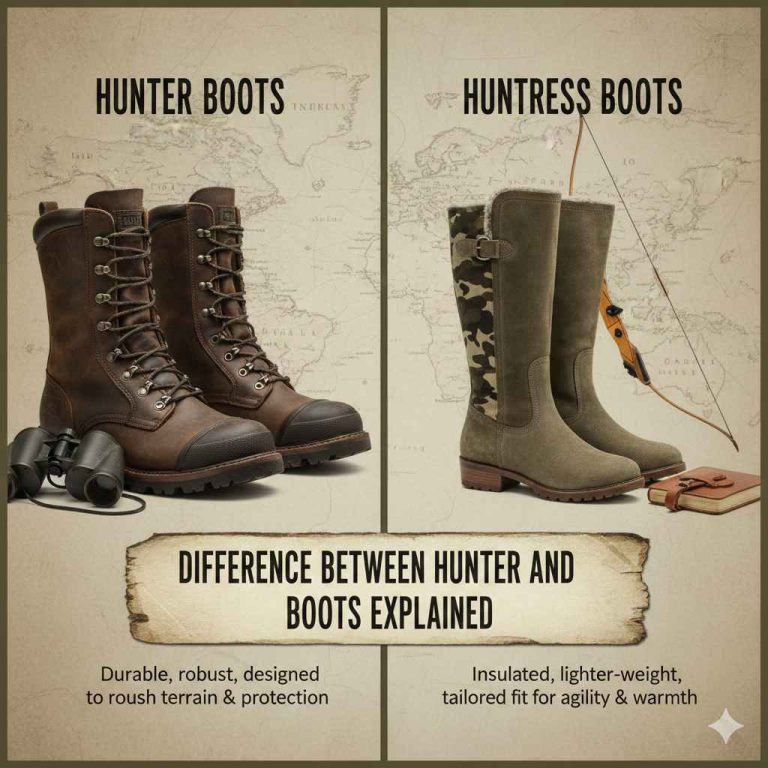
Difference Between Hiking Boots and Hunting Boots Explained
Figuring out the Difference Between Hiking Boots and Hunting Boots can be tricky when you’re just starting. It’s easy to get confused by all the different styles and features. But don’t worry! This guide will break it down in simple steps, so you know exactly what to look for. We’ll go over everything, from the materials used to the best ways to get ready for your next outdoor adventure. Let’s get started!

NORTIV 8
NORTIV 8 Men's Waterproof Lightweight Hiking Boots,Coyote,10.5W
- Waterproof Build: These men’s hiking boots feature a waterproof membrane construction that keeps your feet dry when trudging throu…
- Protection & Support: Designed with a rubber toe cap that prevents injuries to toes from collisions. Plus, the reinforced heel kee…
- Durable & Slip-Resistant: Finished with soft suede leather material for superior wear resistance. Plus, a rugged rubber outsole wi…
As an Amazon Associate I earn from qualifying purchases.
Key Features of Hiking and Hunting Footwear
The main goals of hiking boots and hunting boots are similar – protecting your feet and ankles in outdoor environments. However, the specific conditions and activities they’re created for lead to significant variations. Knowing these key differences is vital for a safe and enjoyable experience in the great outdoors. This section will explore the core characteristics you should keep in mind.
Material Matters: Boots for Different Environments
One of the first things you’ll notice is the material used. Hiking boots are often made from lighter materials like leather, synthetic fabrics, or a mix of both. These materials offer good flexibility and breathability, vital for long hikes where your feet might sweat. Hunting boots, on the other hand, usually feature heavier, more durable materials such as full-grain leather or synthetic fabrics that offer more protection and sometimes include insulation. The goal is to keep feet warm and dry in cold, wet conditions. This difference in material directly affects the boot’s weight, flexibility, and overall use.
- Hiking Boots: Leather, synthetic, or mixed materials prioritize breathability and flexibility for various terrains.
- Hunting Boots: Full-grain leather or synthetic materials offer durability and protection against harsh elements.
- Water Resistance and Proofing: Hiking boots can use water-resistant materials, while hunting boots are often fully waterproof.
- Insulation: Hunting boots frequently include insulation (e.g., Thinsulate) for warmth in colder climates.
- Weight Differences: Hiking boots are generally lighter, enhancing movement on trails; hunting boots are heavier, providing better protection and support.
The selection of materials impacts the boot’s effectiveness in its intended role. Hiking boots’ materials allow the feet to stay cooler during periods of extended physical activity. In contrast, hunting boots materials are chosen to withstand environmental challenges and maintain a hunter’s warmth. Waterproofing is critical for hunting, keeping feet dry while in wet environments.
Support and Ankle Protection in Outdoor Footwear
Ankle protection and support are crucial for both types of boots, but they’re approached differently. Hiking boots often provide moderate ankle support, focusing on flexibility to allow for a natural stride on uneven trails. Hunting boots typically offer more robust ankle support and are taller. This is necessary to help prevent injuries while hiking and hunting in tough terrains. The higher support helps stabilize your ankle when carrying heavy gear or traversing difficult landscapes. A sturdy shank inside the sole of a hiking boot gives arch support, which is different from a hunting boot’s shank for stability.
- Hiking Boots: Offer balanced ankle support, prioritizing agility and movement while hiking.
- Hunting Boots: Provide robust ankle support, crucial for rugged terrain and carrying heavier loads.
- Boot Height: Hiking boots often have a lower cut for better mobility, while hunting boots are usually taller for greater protection.
- Shank Strength: Hiking boots use shanks for arch support, and hunting boots emphasize stability.
- Terrain Considerations: Hiking boots are made for varied trail conditions, and hunting boots are made for harsh and unpredictable surfaces.
The construction influences movement and injury prevention. Hiking boots focus on agility while reducing the chances of sprains. Hunting boots are about safeguarding the ankles, which is essential when stepping over logs or wading through streams. The boot’s height is a direct answer to the activities these boots are used for.
Sole and Tread Differences for Hiking and Hunting
The soles and treads of hiking and hunting boots are made differently for different terrains and activities. Hiking boots usually have soles designed for trails, offering good grip on rocks and packed earth. The lugs, or the raised parts of the tread, are usually spaced in a way that minimizes mud accumulation. Hunting boots often have more aggressive tread patterns made for a combination of surfaces, including loose dirt, mud, and uneven ground. The sole design is made to provide stability and traction while moving through tough terrains. The sole materials and tread designs greatly affect your safety and ability to move on the ground.
- Hiking Boots: Feature treads designed for trails, prioritizing grip and preventing debris buildup.
- Hunting Boots: Designed for diverse terrains, providing stability and traction on mud, dirt, and uneven ground.
- Lug Patterns: Hiking boots have patterns for trail surfaces, and hunting boots have patterns for traction in challenging environments.
- Sole Material: Hiking boots utilize various materials for grip and flexibility, while hunting boots focus on durability and support.
- Stability Needs: Hiking boots balance flexibility and grip, and hunting boots enhance support for rugged terrain.
Sole and tread differences result from their specific uses. Hiking boots are about grip on varied trails, which makes them great for a variety of hiking environments. The soles on hunting boots are tougher for rough, challenging landscapes. The lug design and materials are key in how both boots perform, affecting balance, stability, and control, especially when carrying equipment or walking for many hours.

Choosing the Right Boot: Hiking Versus Hunting
Picking the correct boot depends on what you plan to do outdoors. For hiking, consider the type of trails and weather conditions you’ll face. Hunting demands boots that can handle rough terrain, wetness, and cold. Being aware of these needs will guide you toward the perfect choice.
Terrain and Weather Factors When Choosing Boots
Terrain is essential when picking your boots. Hiking often occurs on trails, including mountains, forests, and deserts. Choose hiking boots that are lighter, offer good grip, and are flexible for easy movement. Hunting frequently involves off-trail terrain, which can be tougher. Hunting boots should be durable, waterproof, and provide excellent support for uneven surfaces. Weather also plays a large part. Hiking boots for warm weather should be breathable, while those for cold weather should have waterproof and insulation. Hunting boots need to be waterproof and warm, since hunting often takes place in cold or wet settings.
- Hiking Terrain: Hiking trails require lightweight boots with good grip and flexibility.
- Hunting Terrain: Hunting often takes place on rough, varied ground, needing durable, supportive boots.
- Weather Conditions: Warm weather hiking boots should be breathable; cold weather boots must be waterproof and insulated.
- Warm vs. Cold Needs: Hunting boots in warm climates need breathability, but cold climates demand waterproofness and insulation.
- Seasonal Considerations: Choose boots based on whether you’ll hike or hunt in summer, fall, winter, or spring for maximum comfort.
Matching the boots to your activities assures safety and comfort. Hiking boots are designed for a variety of conditions, which makes them perfect for various trails. Hunting boots are made for rugged settings where weather and terrain can change fast.
Fit and Comfort: Importance in Both Boots
Fit and comfort are the core of an enjoyable experience. No matter if you’re hiking or hunting, ensure your boots fit well. Your foot should be secure, but your toes should be able to move a bit. Get your feet measured at a store, and try the boots on with the socks you’ll wear. If buying online, check the brand’s sizing guide and read reviews. Also, break in your boots before a major hike or hunting trip. Wear them on short walks to help the materials loosen up and form to your feet.
- Proper Fit: Ensure your foot is secure, with room for toe movement in both hiking and hunting boots.
- Socks Matter: Wear the socks you will use during hiking or hunting for a perfect fit.
- Sizing Guidance: Use brand-specific sizing charts and reviews, especially when getting boots online.
- Break-In Procedure: Walk in your boots before a long trip to avoid blisters and discomfort.
- Trial Runs: Walk short distances in new boots to adapt to the fit and feel of the boot.
Proper fit affects every aspect of your experience. Ill-fitting boots can cause blisters, pain, and instability, which can ruin your outdoor time. Take the time to discover the perfect fit for a more comfortable and enjoyable activity.
Specialized Features: Hunting and Hiking
Both hiking and hunting boots include special features made for their purposes. Hiking boots often have features that emphasize lightweight construction and breathability, such as mesh panels or lighter soles. Hunting boots might include camo patterns, scent control technology, or insulation. When you understand these specialized elements, you will be able to get boots that suit your needs.
- Hiking Boots: Feature lightweight materials, breathability, and flexible soles.
- Hunting Boots: Provide camo patterns, scent control, and enhanced insulation for specific scenarios.
- Weight Differences: Hiking boots focus on being lightweight, and hunting boots put weight second to features.
- Material Choices: Hiking boots have breathable materials; hunting boots have those plus insulation and camo.
- Functionality: Both types of boots include features for the specific needs of hiking and hunting.
These features improve performance in both types of boots. Hiking boots’ features aid in comfort and agility, especially on trails. Hunting boots are made to blend with the environment, protect against the elements, and improve the hunter’s success. Choose boots with features that support your activities for a better experience.
Advanced Boot Technologies: Hiking and Hunting
The innovation of boot technology includes special features for both hiking and hunting. These developments focus on improving comfort, durability, and performance. Knowing about these improvements will help you pick boots that meet your needs.
Modern Materials and Construction in Hiking Boots
Modern hiking boots use advanced materials and construction methods to enhance performance. Synthetic materials, like nylon and polyester, offer excellent breathability and are lightweight, great for long walks. Leather, although heavier, provides great durability and water resistance. Boot construction, using technologies like GORE-TEX, helps keep your feet dry while letting them breathe. High-quality midsoles give great cushioning and support, preventing foot fatigue. Modern hiking boots are made to balance comfort, protection, and performance to improve the hiking experience.
- Advanced Synthetics: Nylon and polyester offer breathability and lightweight performance.
- Leather Enhancements: Leather construction offers durability and water resistance.
- Waterproof Membranes: GORE-TEX technology allows breathability and keeps feet dry.
- Midsoles: High-quality midsoles provide comfort and support.
- Construction: These boots are designed for long-lasting performance and maximum comfort.
The materials and techniques provide benefits to the hiker. Lightweight fabrics and breathable designs help with comfort, while waterproof layers and sturdy midsoles help protect and support. These features improve the hiking experience.
Innovations in Hunting Boot Technologies
Hunting boots are constantly evolving with unique technologies. Insulation, such as Thinsulate or PrimaLoft, keeps feet warm in cold environments. Scent control technology helps to reduce odors, improving your ability to stay undetected. Waterproof membranes like GORE-TEX are combined with durable outsoles for traction and protection. Boots may also include features like reinforced toes and heels for additional protection. These innovations are made to improve the hunter’s performance and comfort in harsh environments.
- Insulation: Thinsulate or PrimaLoft provides warmth in cold conditions.
- Scent Control: Features to reduce odors improve your chance of success.
- Waterproof Construction: Waterproof membranes and durable outsoles protect and provide traction.
- Reinforcements: Reinforced toes and heels add more protection.
- Purpose-Built: These innovations enhance the hunter’s performance and comfort.
These advances give hunters a major advantage. Insulation keeps feet warm, scent control helps remain hidden, and rugged designs provide safety and durability. Technologies work together to create hunting boots that improve the experience of hunting.
Comparing Hiking and Hunting Boots Side by Side
A comparison can help make clear the core differences. Knowing these differences will help you make the best choice for your outdoor adventures.
Table: Boot Characteristics Comparison
Here’s a side-by-side comparison of the common features, so you can easily spot the key differences.
| Feature | Hiking Boots | Hunting Boots |
|---|---|---|
| Primary Use | Trail Hiking, Day Hikes | Hunting, Wilderness Exploration |
| Materials | Leather, Synthetic Fabrics, Mixed | Full-Grain Leather, Synthetic Fabrics |
| Ankle Support | Moderate, Balanced | High, Robust |
| Waterproofing | Water-Resistant, Some Waterproof Options | Often Fully Waterproof |
| Insulation | Typically Limited | Often Insulated |
| Tread Pattern | Trail-Specific, Good Grip | Aggressive, for Diverse Terrains |
| Weight | Generally Lighter | Generally Heavier |
| Special Features | Breathability, Lightweight Designs | Camo, Scent Control, Reinforced Construction |
The table shows the main contrasts. Hiking boots are made for agility and comfort on trails, while hunting boots prioritize protection and durability in hard conditions.
Real-Life Scenarios: Boot Selection
- Scenario 1: You are planning a weekend trip on a well-maintained hiking trail. Your focus is on long distances and speed. Choose hiking boots with a lighter weight, good breathability, and a flexible sole for easy movement.
- Scenario 2: You plan to hunt in a cold, wet forest. You need boots for walking through varied terrain. Get hunting boots that are waterproof, insulated, and have strong ankle support and durable outsoles for protection and comfort.
The scenarios show that the choice depends on your activity and environment. The right boots will enhance your comfort and enjoyment in the outdoors.

Frequently Asked Questions
Question: Can I use hiking boots for hunting?
Answer: It’s possible to use hiking boots for hunting in some cases, especially in milder weather and on easy terrain. However, they may not offer enough protection or support for rough conditions.
Question: Are hunting boots good for hiking?
Answer: Yes, hunting boots can be used for hiking. However, the extra weight and stiffness might not be ideal for every hiking situation, like long distances.
Question: What’s better for all-around use: hiking or hunting boots?
Answer: Neither boot type is perfect for every situation. It depends on your primary activity and the conditions you’ll be in. Hiking boots are made for trails, and hunting boots are made for rugged landscapes.
Question: How important is waterproof protection?
Answer: Waterproof protection is very important, especially when you’re hiking or hunting in wet or muddy conditions. It helps keep your feet dry and comfy.
Question: How do I measure my foot size for boots?
Answer: The best way is to measure your feet in the evening because they swell during the day. Measure the length and width of your feet and compare them to the brand’s size chart.
Final Thoughts
The Difference Between Hiking Boots and Hunting Boots boils down to their design and purpose. Hiking boots are built for comfort and agility on trails. Hunting boots prioritize protection and durability in difficult environments. Key differences include materials, support, and sole designs, each crafted for specific outdoor activities. Think about where you’ll be going and the challenges you’ll face. Your goal is to choose boots that suit your needs. Do research, read reviews, and consider your activities before making your final selection. Whether you’re planning a challenging hike or a hunting trip, picking the right boots means safety and fun will always be high. Now you’re well-equipped to go on your adventures!
Related pick: Check today's price on Amazon