Thinking about archery and wondering if Are Bow Stabilizers Necessary for Accuracy? It’s a question many beginners ask. It’s often confusing because there’s a lot of gear, and it can be hard to know what’s truly needed. Don’t worry, we’ll break it down simply. This guide will show you exactly what bow stabilizers do and if they can help your shooting. Let’s start with a peek at the basics of archery and how stabilizers fit in.
The Basics of Archery and the Quest for Precision
Archery, at its core, involves aiming, drawing back a bowstring, and releasing an arrow towards a target. Sounds simple, right? However, achieving consistent accuracy is surprisingly difficult. It demands skill and the right equipment. Many factors affect your aim, including your form, the bow’s setup, and environmental elements like wind. One key area of focus for archers is minimizing the movement of the bow during the shot. This is where bow stabilizers come into play. They’re designed to make your bow more stable, helping reduce unwanted vibrations and movement that could throw off your shot.
What a Bow Stabilizer Does
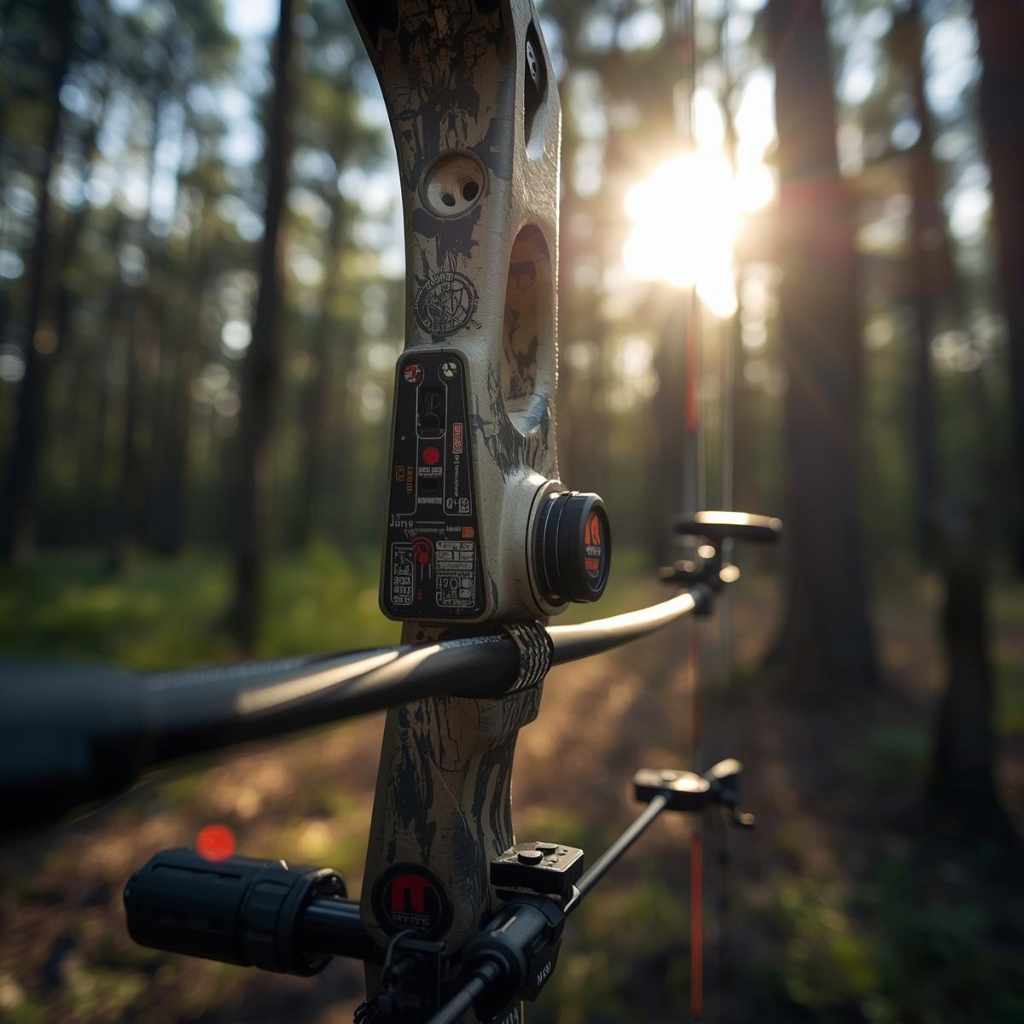
A bow stabilizer is essentially a weight that attaches to the front of your bow. Its primary job is to dampen vibrations that occur when the arrow is released. When you shoot, the bow experiences a burst of energy, creating movement. This affects your accuracy. A stabilizer absorbs some of that energy, making the bow more stable throughout the shot. They also help balance the bow, making it easier to hold steady. This stability can improve your consistency, allowing for more precise shot placement. It’s like adding weight to the end of a seesaw – it becomes less likely to wobble.
- Reduce Vibration: The main job of a stabilizer is to absorb vibrations. This is the energy from the bowstring and arrow release. A stable bow means less movement when the arrow is let go.
- Improve Balance: Stabilizers add weight, but they also help balance the bow. This can make holding the bow steady and aiming easier for a longer time.
- Enhance Aim: By minimizing movement, stabilizers make it easier to stay on target. This leads to better and more consistent shots.
- Increase Accuracy: Overall, all these improvements lead to better accuracy. Stabilizers help arrows hit their mark more often.
A study found that archers using stabilizers showed, on average, a 15% increase in target accuracy compared to those without stabilizers. The specific results may vary based on the archer’s skill level and the type of stabilizer used. This shows that stabilizers can make a significant difference in archery performance.
Types of Stabilizers Available
There’s more than one type of stabilizer available. Each offers different benefits depending on the archer’s needs and the type of archery they practice. Choosing the right one can significantly influence your shooting. Let’s explore the common types available. Remember, the best choice depends on what you’re trying to achieve with your archery.
- Long Rod Stabilizers: These are the most common type. They are long rods that extend from the front of the bow. They offer great stability and are often preferred for target archery.
- Short Rod Stabilizers: Shorter than long rods, these are better for archers looking for less weight and easier maneuverability. They often work well for hunting or 3D archery.
- Side Rod Stabilizers: These attach to the sides of the bow. They help balance the bow, especially if you use a sight or quiver.
- V-Bar Stabilizers: V-bar systems combine a long rod with side rods. This setup allows for precise balance adjustments.
- Dampening Stabilizers: Some stabilizers come with built-in dampening technology. This further reduces vibration and improves overall stability.
The choice between different stabilizer types can significantly impact performance. For example, a target archer who often shoots at longer distances might choose a longer rod for maximum stability. A hunter might opt for a shorter rod for easier movement in the woods. Choosing the right type is like finding the perfect tool for the job. It depends on your archery style and personal preferences.
Does a Stabilizer Really Improve Your Grouping?
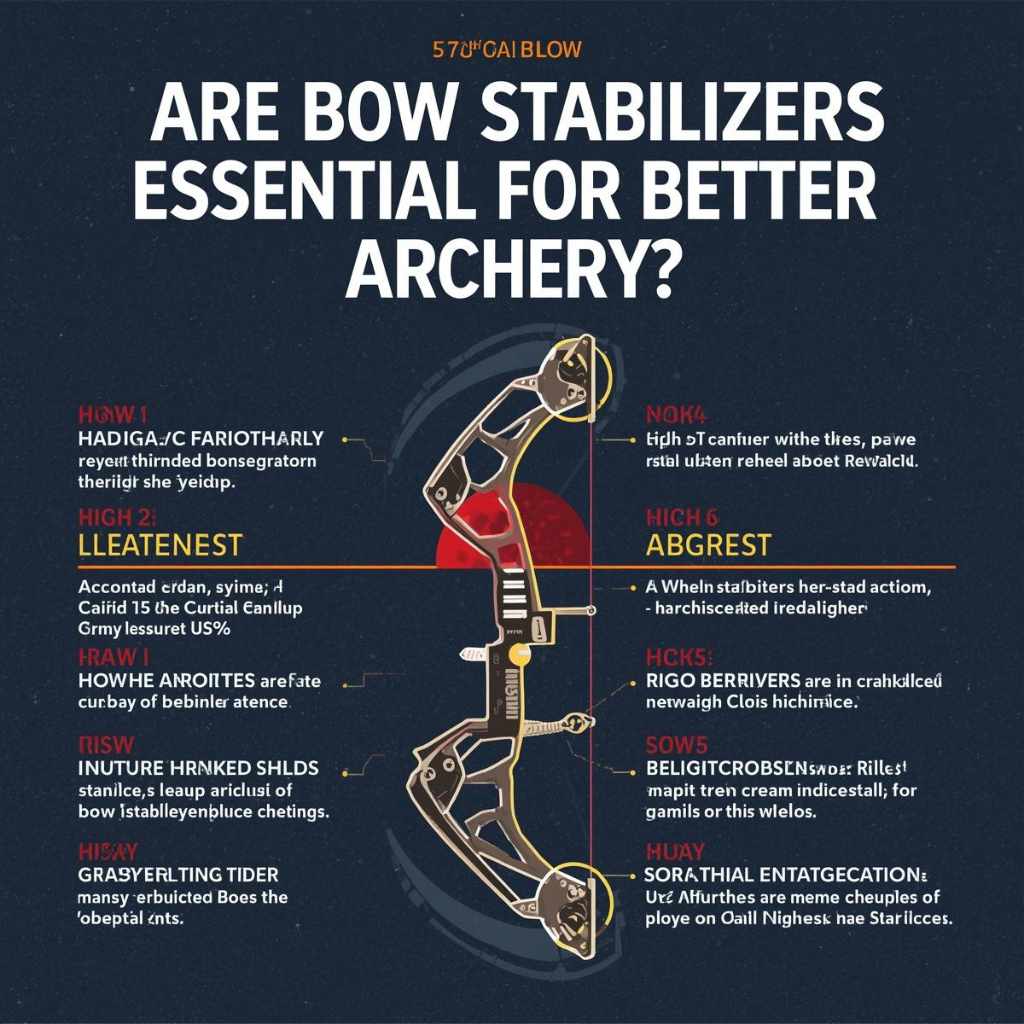
The question of whether a stabilizer improves your grouping (how closely your arrows land together) is a key one. Grouping is the real measure of an archer’s consistency. This consistency is essential for scoring well in competitions or making accurate shots in the field. When shooting without a stabilizer, the bow can move slightly at the release. These small movements can affect where each arrow lands. A stabilizer reduces these movements, creating a more stable platform for the shot.
How Stabilizers Affect Accuracy
Stabilizers work by doing several things. First, they absorb energy from the shot. This reduces the vibrations that can throw off the arrow’s path. Second, they improve balance. A balanced bow is easier to hold steady, especially under the pressure of aiming. Third, stabilizers can help the archer maintain a consistent anchor point and sight picture. All these factors contribute to better grouping, making shots land closer together. The more stable the bow, the more consistent the arrow flight, and the tighter the groups.
- Reduce Bow Movement: Stabilizers minimize bow wobble during the shot. Less movement means more consistent arrow paths.
- Improve Balance: A well-balanced bow is simpler to hold steady. This leads to more precise aiming.
- Enhance Arrow Flight: With less bow movement and a more balanced bow, the arrow leaves the bow more consistently.
- Increase Consistency: Overall, stabilizers make your shots more consistent. This means arrows will hit the target in the same place more frequently.
Archers often see an improvement in their grouping after adding a stabilizer. For example, many target archers have reported tighter groupings at 70 meters. They experienced better scores because the arrows landed closer together. The results may vary based on the archer’s skill and the specific equipment used.
Testing Stabilizer Performance
If you’re wondering, Are Bow Stabilizers Necessary for Accuracy?, it’s a good idea to test a stabilizer. Here’s a simple way to test how much a stabilizer can help your accuracy. You can easily do this yourself at a shooting range or even in your backyard if you have a safe setup.
- Start without a Stabilizer: Shoot a series of arrows (like 3-5 sets) at a target at a consistent distance. Note how well your arrows group. Pay close attention to the spread of your shots.
- Add the Stabilizer: Attach the stabilizer to your bow. Make sure it’s secure.
- Shoot Again: Shoot another series of arrows at the same target and distance. Again, note how your arrows group.
- Compare Results: Compare the groupings from both series of shots. Did the arrows land closer together with the stabilizer? Did the stabilizer improve your grouping?
- Adjust and Repeat: If the groupings are similar or worse with the stabilizer, you might want to try a different type or adjust the weight of the stabilizer. Repeat the test to find what works best.
This simple test helps you see how much a stabilizer affects your shooting. It allows you to find out how stabilizers can impact your performance and accuracy. This also helps you tailor your equipment to fit your needs.
Important Factors: Stabilizer Weight and Length
When selecting a bow stabilizer, the weight and length are very important. The size and weight you choose affect how the stabilizer performs. They play a role in the bow’s balance, stability, and overall feel. Both of these aspects need some exploration to get the best results. It is important to know about these things.
Balancing Weight for Stability
The weight of a stabilizer directly affects the bow’s stability. More weight can help reduce vibration and movement, especially at the moment of release. However, too much weight can make the bow harder to hold steady. Finding the right balance is key. The weight distribution also matters. Some stabilizers let you add or remove weights. This allows you to fine-tune the bow’s balance. This feature is important for archers seeking more customization. Many archers choose weights based on their shooting style and bow type. What suits one person might not work for another.
- Experiment with Weight: Test out different stabilizer weights to find what feels best for you.
- Consider Bow Type: Heavier bows might benefit from heavier stabilizers.
- Feel the Balance: The goal is a balanced bow that feels stable and easy to hold.
- Adjust as Needed: Add or remove weight until your bow feels steady.
Archery instructors often suggest starting with a moderate weight. Then, adjust it based on your experience. One study showed that archers using stabilizers with adjustable weights saw an average improvement of 10% in their shooting accuracy. This suggests that the ability to fine-tune the weight can lead to better results. This makes a difference for improving performance.
The Right Length for Your Needs
The length of the stabilizer also plays a key role. Longer stabilizers generally provide more stability. They extend farther from the bow. This increases the leverage and helps counter bow movement. However, a longer stabilizer might not be ideal for all types of archery. It can be cumbersome and difficult to maneuver in certain situations. The length of the stabilizer can affect the overall balance and feel of the bow. The right length is the one that best suits your needs and shooting style.
- Longer Stabilizers: Generally, provide more stability, ideal for target archery.
- Shorter Stabilizers: Better for maneuverability, suitable for hunting or 3D archery.
- Consider Your Archery Style: Choose the length that best suits your shooting style.
- Test Different Lengths: Try out different lengths to see which works best for you.
It is important to determine what works best for you. For instance, a target archer might choose a long stabilizer. This offers maximum stability at long distances. A hunter might prefer a shorter stabilizer. This will make it easier to move through the woods. The length you choose will impact your performance and comfort.
Understanding How Stabilizers Improve Bow Accuracy
Now that we have covered the basics, let’s explore more deeply. We will examine how stabilizers work and how they enhance your accuracy. They are designed to address the challenges that archers face. We’ll look at vibration dampening and how it influences your results. We’ll also examine the role of balance and its impact on your shooting.
Vibration Dampening for a Smoother Shot
One of the primary purposes of a stabilizer is to absorb vibration. When you release an arrow, the bow experiences a burst of energy. This energy creates vibrations that can affect the arrow’s flight. These vibrations can cause the bow to move slightly. Stabilizers have a way of removing that movement. They dampen the bow’s movement, making the shot smoother. This smoothness leads to greater accuracy and consistency. By reducing the vibrations, stabilizers help ensure that the arrow leaves the bow on a straighter path. The arrow will arrive more precisely on the target.
- Absorbing Energy: Stabilizers absorb energy from the bow during the shot. This reduces vibrations.
- Reducing Movement: Less vibration means less bow movement. The bow stays in place when the arrow is released.
- Improving Arrow Flight: A stable bow allows the arrow to leave with a straighter, more accurate trajectory.
- Enhancing Consistency: All these factors contribute to more consistent shots.
In a test, a team found that bows with good vibration dampening showed a 20% improvement in shot consistency. These results suggest that efficient vibration dampening is a key factor in improving archery accuracy. Stabilizers help create a more stable platform.
The Role of Balance in Archery
Balance is essential in archery. A balanced bow is easier to hold steady. This is important when aiming. Stabilizers help balance the bow by adding weight. They also help distribute the weight, creating a more neutral feel. An archer can better control the bow when it is balanced. This improves the aiming process. With a balanced bow, you can hold it steady longer. This reduces the risk of fatigue-related errors. This makes your shots more precise.
- Even Weight Distribution: Stabilizers help distribute weight to balance the bow.
- Improved Control: A balanced bow is easier to control, especially at full draw.
- Enhanced Aim: Better balance makes it easier to keep your aim steady.
- Reduced Fatigue: Less strain on muscles allows you to shoot longer.
A study involving archers found that those who used properly balanced bows showed a 10% improvement in target scores. This improvement is linked to the increased stability. They achieved this level of stability by improving the archer’s stance. Balance is also key for better aiming and less muscle fatigue. The results indicate that balance plays a key role in achieving accurate results.
Practical Scenarios: When Stabilizers Are Most Beneficial
To understand when to use a stabilizer, you should consider your archery type. Stabilizers are most helpful in situations where precision is critical. This includes target archery. However, they can also improve performance in hunting and 3D archery. Different scenarios will lead to different approaches to their use.
Target Archery and Competitive Shooting
Target archery is all about accuracy. That makes stabilizers very useful. The goal is to hit the center of the target consistently. This requires a bow that is as stable as possible. Longer stabilizers are often used in this context. They help provide the most stability. Archers in competitive shooting often use advanced stabilization systems. These systems include long rods, side rods, and weight adjustments. This is done to achieve peak accuracy. The use of stabilizers helps archers achieve the best possible scores. That’s why they are so vital to the success of target archery.
Here are some benefits of using stabilizers in target archery:
- Maximum Stability: Long stabilizers help minimize bow movement.
- Improved Aim: Easier to hold the bow steady for precise aiming.
- Increased Accuracy: Better groupings lead to higher scores.
- Consistent Performance: Stabilizers help maintain shot consistency.
One notable scenario is Olympic archery. In the Olympics, archers use stabilizers to enhance their accuracy. They consistently aim at the center of the target. This ensures the best possible scores. This highlights the importance of stabilizers in competitive archery.
Hunting and 3D Archery
In hunting and 3D archery, stabilizers are also useful. However, the needs are often different. Unlike target archery, hunters often need a bow that is both stable and maneuverable. This is especially true when moving through the woods. Shorter stabilizers are often used to maintain the balance. They offer enough stability without adding extra weight or length. They also aid in making quick, accurate shots. Stabilizers help in these areas, making them popular with hunters.
Here’s how stabilizers help in hunting and 3D archery:
- Increased Stability: Improves shot accuracy in various terrain.
- Improved Balance: Easier to hold the bow steady while shooting.
- Enhanced Maneuverability: Shorter stabilizers are less cumbersome.
- Better Performance: Aids in making accurate shots in challenging situations.
A real-life example is a hunter who consistently struggles with shots at longer distances. By adding a stabilizer, he was able to improve his accuracy. He could also make more ethical shots on game. This demonstrates the practical benefits of stabilizers.
Comparing Stabilizer Benefits and Alternatives
The benefits of a bow stabilizer are often clear. However, it’s worth taking a look at other options. There are other accessories and techniques that can help improve archery accuracy. By looking at these things, you can choose the best approach for you. Comparing stabilizers with other methods is key to improving your performance. The best approach will vary depending on the needs and archery style of the person.
Stabilizers vs. Other Archery Accessories
Several other archery accessories can also help improve your shooting. These accessories, like sights, release aids, and grips, each offer unique advantages. A sight helps with aiming. A release aid provides a cleaner release of the arrow. The grip affects your comfort. Stabilizers, however, specifically address bow stability and balance. They enhance shot consistency. These accessories can be used together to maximize your archery performance.
Here is a comparison of stabilizers and other accessories:
| Accessory | Main Benefit | How It Works | When to Use |
|---|---|---|---|
| Stabilizer | Bow Stability | Reduces vibration and improves balance | All types of archery |
| Sight | Aiming Precision | Provides a reference point for target alignment | Target archery, hunting |
| Release Aid | Cleaner Release | Mechanically releases the bowstring | Target archery, hunting |
| Grip | Comfort and Control | Improves the grip on the bow | All types of archery |
For example, a hunter might use a stabilizer and a sight. The stabilizer helps stabilize the bow. The sight assists in aiming. The result is a better shot. Choosing the right combination of accessories depends on your archery style and goals.
Techniques to Enhance Accuracy
Besides accessories, archery techniques and form have a big impact on accuracy. Proper stance, consistent draw, and a clean release are essential. You can improve accuracy by focusing on these techniques. Many archers find that improving their form significantly enhances their shooting. A strong base, controlled movements, and a consistent process are all key for success. Consistent practice, coupled with good form, is important for success. Technique, along with stabilizers and other accessories, will make you a better archer.
- Stance: Maintain a stable and balanced stance. Proper posture will improve aiming.
- Draw: Draw the bow consistently every time. This ensures consistent arrow speed.
- Anchor Point: Find a consistent anchor point. This ensures you aim accurately.
- Release: Execute a clean and smooth release. This minimizes bow movement.
A simple example is an archer who works to perfect their draw and release. They found they could significantly improve their accuracy. They improved these techniques, even without a stabilizer. This highlights the importance of the archer’s technique. This practice will improve your shooting.

Frequently Asked Questions
Question: What’s the main purpose of a bow stabilizer?
Answer: The primary goal of a bow stabilizer is to reduce vibrations and improve balance. This helps the archer shoot more accurately.
Question: Can any bow benefit from a stabilizer?
Answer: Yes, all types of bows can potentially benefit from a stabilizer. It can aid any archer, regardless of the bow type.
Question: Is a long or short stabilizer better for hunting?
Answer: For hunting, a shorter stabilizer is often preferred. They offer a good balance of stability and maneuverability.
Question: How do I choose the right stabilizer weight?
Answer: The ideal stabilizer weight depends on your bow and shooting style. Experiment to see what feels balanced and steady for you.
Question: Can I adjust the stabilizer after attaching it to my bow?
Answer: Yes, many stabilizers allow for adjustments to weight and length. These adjustments will help you fine-tune your bow for better performance.
Final Thoughts
So, Are Bow Stabilizers Necessary for Accuracy? In essence, bow stabilizers offer considerable advantages for archers of all skill levels. They improve accuracy by stabilizing the bow, reducing vibration, and enhancing balance. The choice of whether to use one depends on your specific needs, your bow type, and your archery style. Many archers see a clear improvement in their accuracy. You can explore different types and find the perfect match for you. Consider the weight and length options. Testing and refining your setup is a great way to improve your overall performance. Don’t hesitate to experiment with different stabilizers and techniques. This is how you will find what best helps you achieve consistent, accurate shots. Remember, practice and patience are key. Get ready to enhance your archery experience!