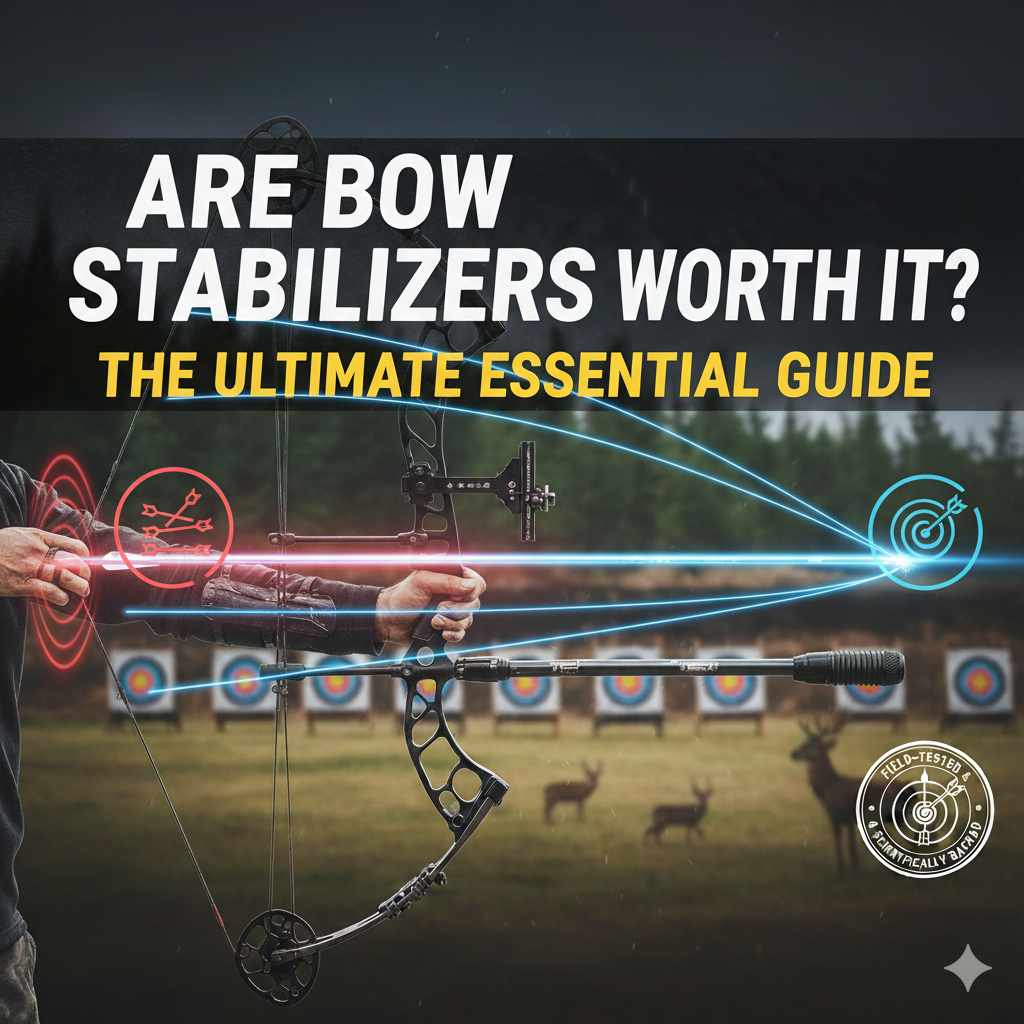
Yes, bow stabilizers are absolutely worth it for most archers. They improve accuracy by adding balance, reduce noise and vibration for a smoother shot, and decrease hand shock. For both bowhunters and target shooters, a stabilizer is one of the most effective upgrades you can make to improve consistency and confidence.
Have you ever watched a skilled archer and noticed that long rod sticking out from the front of their bow? That’s a stabilizer, and if you’re new to archery, you might wonder if it’s just for looks. It’s a common question I hear all the time. Is it a necessary piece of gear, or just another accessory to buy?
The truth is, this simple-looking rod can make a huge difference in your shooting. It’s one of the best tools for helping you hold your bow steadier and shoot more accurately. In this guide, I’ll walk you through everything you need to know, from what a stabilizer does to how to pick the perfect one for you. Let’s get started!
What Exactly Is a Bow Stabilizer?
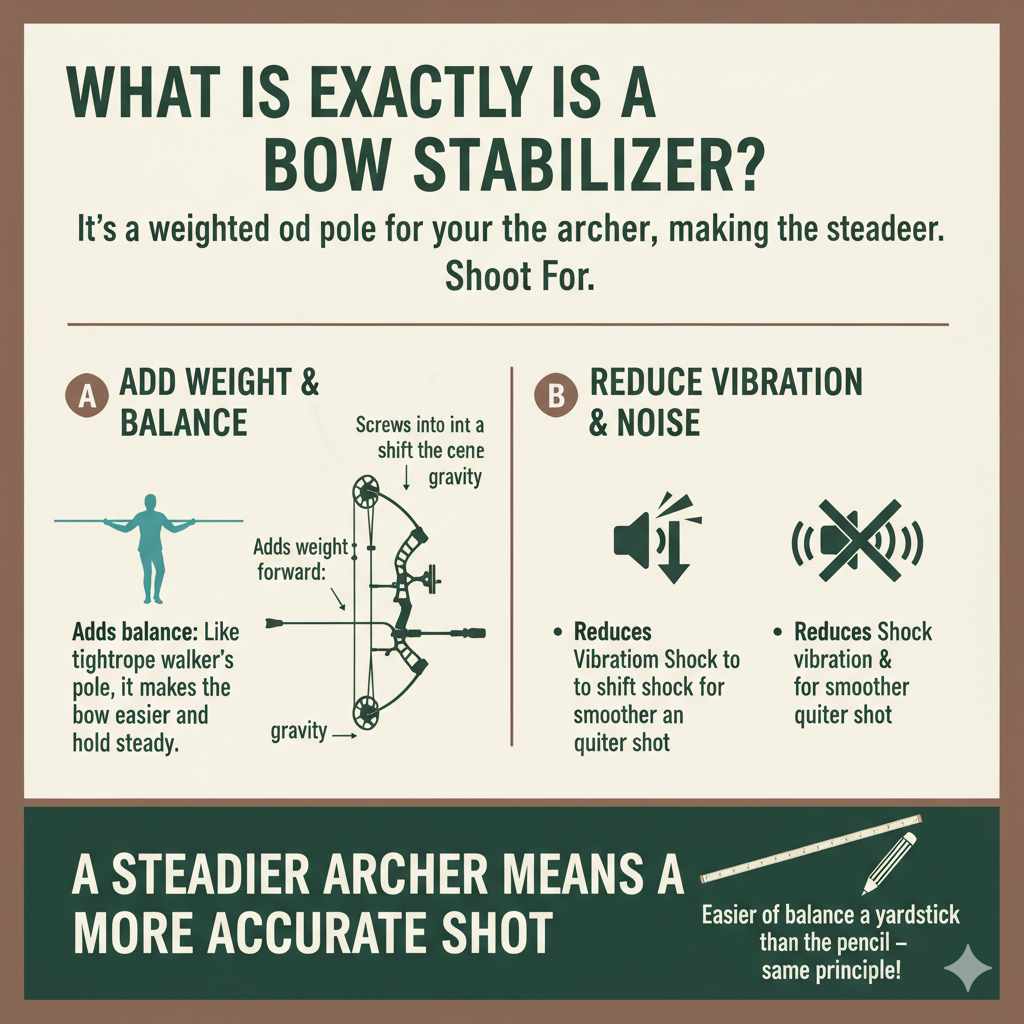
Think of a bow stabilizer as a balancing pole for your bow. In the simplest terms, it’s a weighted rod that you screw into the front of your bow’s handle, known as the riser. While it looks basic, its job is incredibly important. Its main goal is to make your bow more stable—or steady—before, during, and after you release the arrow.
When you draw a bow, it stores a massive amount of energy. When you let go, that energy explodes forward. A stabilizer helps manage that explosion. It adds a bit of weight to the front of the bow, which helps you aim more steadily. It also soaks up the shock and vibration that rattles through the bow after the shot. The result is a smoother, quieter, and more accurate shot.
Imagine trying to balance a pencil on your fingertip. It’s wobbly and difficult. Now, imagine trying to balance a long yardstick. It’s much easier because the length and weight help it stay steady. A bow stabilizer works on a similar principle, giving your bow the balance it needs to perform its best.
How Do Bow Stabilizers Actually Work?
It might seem like magic, but the way a stabilizer works is based on simple physics. It accomplishes its job in three key ways, and understanding them will help you see why they are so valuable.
1. Adding Forward Weight for Better Balance
A modern compound bow is not perfectly balanced. With a sight, quiver, and arrow rest attached, the weight is often distributed unevenly. When you hold your bow up to aim, this imbalance can cause the sight pin to wiggle and float around your target. This is often called “pin float.”
A stabilizer adds weight out in front of the bow. This forward weight acts as a counterbalance, making the entire setup much more stable. It slows down your natural movements and significantly reduces that distracting pin float. The steadier you can hold your aim on the target, the more likely your arrow is to hit its mark.
2. Dampening Vibration and Noise
When you release an arrow, the bowstring snaps forward, and the bow’s limbs flex violently. This creates a powerful shockwave of vibration that you can feel in your hand—this is called “hand shock.” This vibration also creates noise, which can be a major issue for bowhunters trying to remain stealthy.
Most modern stabilizers are filled with rubber or other dampening materials designed specifically to absorb these vibrations. Like a sponge soaks up water, the stabilizer soaks up that jarring energy. This leads to:
- A quieter shot: Less vibration means less noise. For hunters, a quiet bow can be the difference between a successful hunt and a spooked animal.
- Less hand shock: A smoother shot is more comfortable and less fatiguing, allowing you to practice for longer without your arm getting tired or sore.
3. Resisting Bow Torque
Bow torque is a subtle but accuracy-robbing mistake many beginners make. It happens when you grip your bow too tightly, causing your hand to twist the riser slightly upon release. This tiny twist can send your arrow far off its intended path.
Because a stabilizer extends forward from the bow, it makes the bow harder to twist. Think about trying to turn a short screwdriver versus a very long one. The long one is much harder to twist off-axis. The stabilizer provides this same kind of resistance, helping you maintain a consistent grip and release, which leads to more consistent arrow flight.
The Main Benefits: Why You Should Consider One
So, we know how a stabilizer works, but what are the real-world results you can expect? Adding one to your bow can lead to several noticeable improvements in your shooting experience.
Tighter Arrow Groups and Better Accuracy
This is the number one reason archers use stabilizers. By steadying your aim and reducing the impact of small movements, a stabilizer helps you put your arrows closer together. Whether you are aiming for the bullseye at a target range or the vitals on a deer, consistency is key. A stabilizer is a direct path to more consistent, accurate shooting.
A More Forgiving and Comfortable Shot
The reduction in hand shock and vibration makes shooting physically more pleasant. You won’t feel that jarring “thump” in your hand after every shot. This comfort allows you to focus more on your form and less on bracing for the recoil. A comfortable archer is a confident archer, and confidence is a huge part of archery.
Increased Confidence at Full Draw
When your sight pin is dancing all over the target, it’s easy to get anxious and rush the shot. This is called “target panic.” A stabilizer that calms your pin float also helps calm your mind. Seeing that pin settle down and stay close to the center of the target builds immense confidence, allowing you to take your time and execute a clean, controlled release.
Types of Bow Stabilizers (And Which Is for You)
Stabilizers come in a wide range of lengths, weights, and styles. The right one for you depends almost entirely on what kind of archery you do. Let’s break down the main categories.
| Stabilizer Type | Common Length | Best For | Key Advantage |
|---|---|---|---|
| Short (Hunting) Stabilizers | 4 to 8 inches | Bowhunting | Maneuverability in the woods or a blind. |
| Long (Target) Stabilizers | 10 to 36 inches | Target Archery, 3D Competitions | Maximum stability and vibration reduction. |
| V-Bar Systems | Varies (Front and side bars) | Competitive Archers | Complete, 3-axis bow balancing. |
Short Stabilizers (4-8 inches)
Often called “hunting stabilizers,” these are compact and lightweight. Their main goal is to provide a good amount of vibration dampening and some balance without being long and clumsy. When you’re tracking an animal through thick brush or sitting in a tight tree stand, you don’t want a long rod getting caught on branches. These shorter models give you the core benefits of stabilization in a practical package for hunting.
Long Stabilizers (10 inches and up)
These are the long, dramatic-looking rods you see on the bows of Olympic and competitive archers. When it comes to pure stability, length is king. The longer the stabilizer, the more effectively it resists movement and steadies your aim. These are perfect for target shooting where you have plenty of space and your only goal is to hit the bullseye as consistently as possible. However, they are far too cumbersome for most hunting situations.
V-Bar or Side Bar Setups
For advanced archers seeking perfect balance, a V-bar setup is the ultimate solution. This involves a main stabilizer pointing forward and one or two shorter stabilizers (side bars) pointing out to the side or back. This allows the archer to perfectly counteract the weight of their sight and quiver, achieving a bow that feels perfectly balanced in every direction. For a beginner, this is overkill, but it’s good to know what they are when you see them at the range.
Choosing Your First Bow Stabilizer: A Beginner’s Guide
Picking your first stabilizer doesn’t have to be complicated. Just follow these simple steps to find the right fit for your needs and budget.
- Define Your Primary Goal: Are you mainly a bowhunter or a target shooter? This is the most important question. As a hunter, you will want to prioritize a compact size. As a target shooter, you will prioritize maximum stability.
- Pick a Length Based on Your Goal: If you’re a hunter, start with a stabilizer in the 6- to 8-inch range. This size offers a great blend of performance and practicality. If you’re purely a target shooter, a 10- or 12-inch stabilizer is a fantastic starting point to see a major improvement in steadiness.
- Consider Adjustability: Many modern stabilizers allow you to add or remove weights from the end. This is a great feature because it lets you customize the feel of your bow. You can start with the base weight and add more if you feel you need more stability.
- Set a Budget: You don’t need to spend a fortune! While high-end stabilizers can cost hundreds of dollars, there are many excellent options in the $40 to $80 range that provide all the performance a beginner or intermediate archer needs. Focus on well-known brands and read reviews.
The right equipment is an important part of ethical and effective bowhunting. As explained by many state wildlife agencies, such as in this bowhunting equipment guide, having a well-tuned and balanced bow is crucial for making a clean shot. A stabilizer plays a big role in achieving that level of precision.
| Feature | Recommendation for Bowhunting | Recommendation for Target Archery |
|---|---|---|
| Length | 6-8 inches | 10-15 inches (to start) |
| Weight | Lighter, to keep overall bow weight down. | Heavier, for maximum steadiness. |
| Primary Focus | Vibration/noise dampening and maneuverability. | Reducing pin float and maximizing balance. |
| Material | Often features more rubber for dampening. | Often made of stiff carbon to best transfer weight. |
How to Install a Bow Stabilizer (It’s Easy!)
One of the best things about stabilizers is how easy they are to install. You don’t need any special tools, and it takes less than a minute. Here’s how you do it:
- Find the Mounting Hole: Look on the front of your bow’s riser, just below the grip. You will see a threaded hole. This is the stabilizer bushing.
- Screw It In: Take your stabilizer and gently thread it into the hole by hand. It should screw in smoothly.
- Make It Snug: Tighten the stabilizer until it is snug. You don’t need to crank on it with extreme force—hand-tight is perfectly fine.
- Check Your Other Accessories: If you use a wrist sling, it usually attaches at the same point, so make sure to install it along with your stabilizer.
That’s it! Your bow is now equipped with a stabilizer. The next step is to head to the range and feel the difference for yourself.
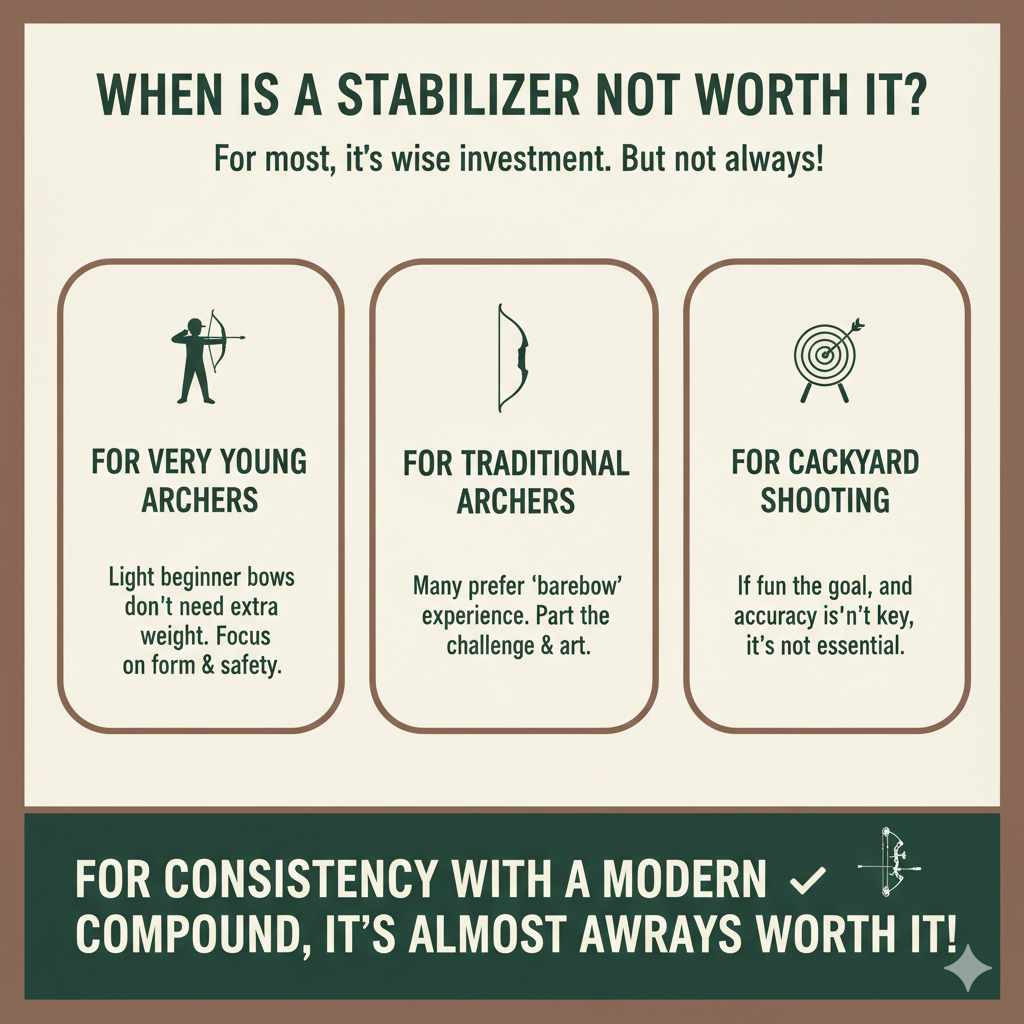
When Is a Stabilizer NOT Worth It?
While stabilizers are beneficial for most archers, there are a few situations where one might not be necessary.
- For Very Young Archers: A young child shooting a very light beginner bow doesn’t need the extra weight. At that stage, the focus should be purely on learning basic form and safety.
- For Traditional Archers: Many archers who shoot traditional longbows or recurve bows prefer the “barebow” experience. For them, the challenge and art of shooting without any accessories is part of the appeal.
- For Casual Backyard Shooting: If you just enjoy flinging a few arrows in the backyard for fun and aren’t concerned with perfect accuracy, you can certainly enjoy archery without a stabilizer.
However, for anyone using a modern compound bow and looking to improve their consistency, a stabilizer is almost always a wise investment.
Frequently Asked Questions (FAQ)
1. How do I know what length stabilizer to get?
Your archery style is the best guide. For hunting in wooded areas or blinds, choose a shorter stabilizer (6-8 inches) for better maneuverability. For open-field hunting or target shooting, a longer one (10-12 inches) will provide more stability. The longer the stabilizer, the steadier your aim will be.
2. Will a heavier stabilizer make my shooting better?
Not necessarily. While weight adds stability, too much weight can make your bow arm fatigued quickly, which hurts your form. The goal is to find a balance. Many stabilizers come with removable weights, so you can experiment to find the perfect feel for you. Start with a lighter setup and add weight gradually.
3. Do stabilizers really make a bow quieter?
Yes, absolutely. A good stabilizer is filled with sound-dampening materials that absorb the vibration created during the shot. Less vibration equals less noise. For bowhunters, this is a critical advantage, as a quieter bow is less likely to startle an animal.
4. Can I use a hunting stabilizer for target practice?
Of course! Any stabilizer is better than no stabilizer. A short hunting stabilizer will still provide benefits on the target range by reducing vibration and adding some balance. If you are both a hunter and a target shooter, using your hunting setup for practice is a great way to stay familiar with your gear.
5. Do I need a back bar or side bar stabilizer too?
For a beginner, no. A single front stabilizer is all you need to see a significant improvement. Back bars (or side bars) are for advanced or competitive archers who want to achieve perfect left-to-right balance by offsetting the weight of a quiver and sight. Master the basics with a front stabilizer first.
6. How much should a beginner spend on a stabilizer?
You can find excellent, effective stabilizers for between $40 and $80. You don’t need a top-of-the-line model to get the core benefits. Look for a reputable brand and choose one that fits your length and weight needs. It’s one of the most cost-effective upgrades you can make.
7. Will a stabilizer fix all my accuracy problems?
No, a stabilizer is a tool to enhance good form, not a cure for bad form. It can help steady your aim, but it won’t fix issues like a poor grip, an inconsistent anchor point, or a jerky release. Always focus on practicing proper archery fundamentals first and foremost.
The Final Verdict: A Worthwhile Upgrade for Almost Everyone
So, are bow stabilizers worth it? For the vast majority of archers shooting modern bows, the answer is a resounding yes. It’s not just a fancy accessory; it’s a functional piece of equipment that provides tangible benefits.
From the bowhunter who needs a quiet, vibration-free shot to the target shooter chasing the tightest possible arrow groups, a stabilizer is designed to help you perform better. It steadies your aim, quiets your bow, and dampens hand shock, making for a more accurate and enjoyable shooting experience. It’s an investment that builds confidence and helps you become a more consistent archer.
If you’ve been shooting without one, I highly encourage you to try one out. You’ll likely be surprised by how much steadier and smoother your bow feels. Find the right one for your style of archery, screw it on, and watch your confidence and your accuracy grow. Happy shooting!