
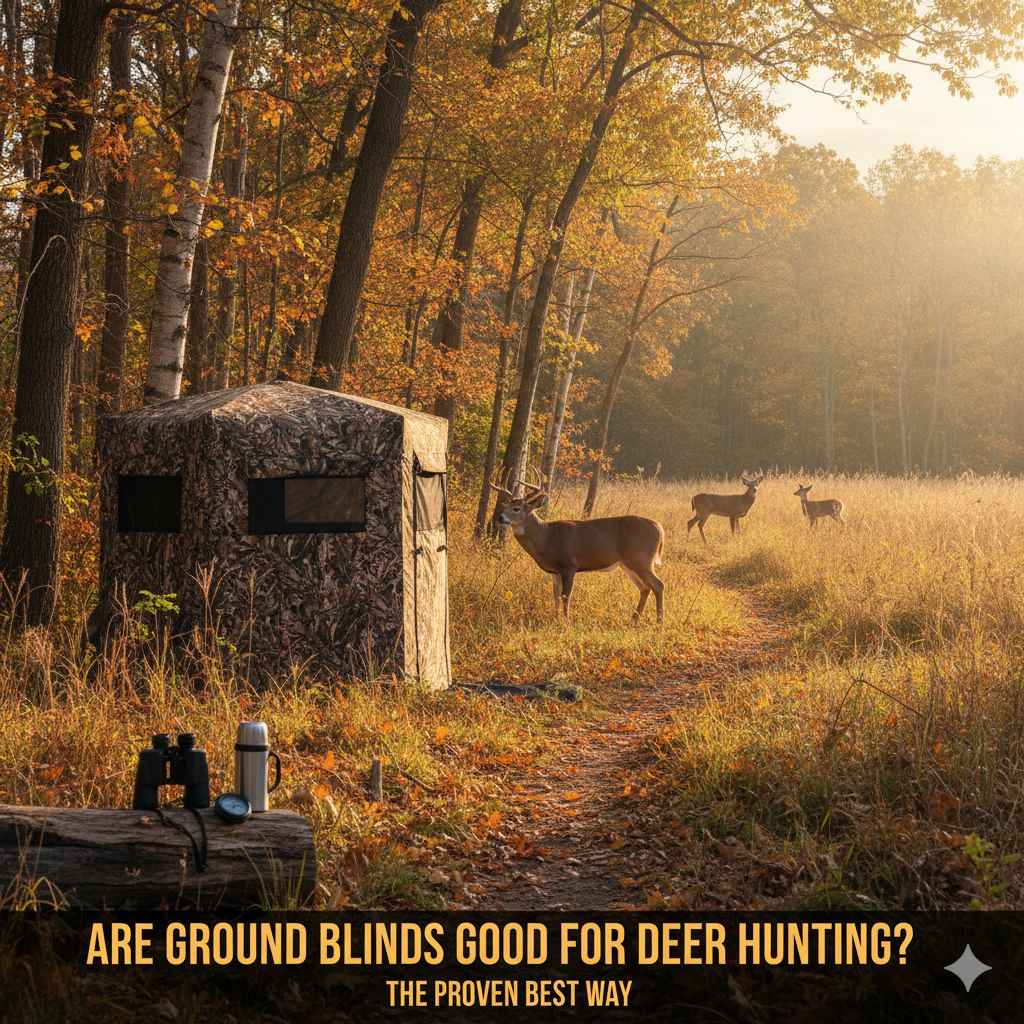
Yes, ground blinds are excellent for deer hunting, especially for beginners and bowhunters. They conceal movement, help contain scent, and offer protection from the weather. The proven best way to use one is to set it up weeks in advance, blend it perfectly into the surroundings with natural cover, and practice strict scent control.
Have you ever wondered if you could just sit on the ground and wait for a deer? It’s a nice thought, but a deer’s senses are incredibly sharp. The slightest movement or unfamiliar shape can send them running. This is where a ground blind comes in, acting as your personal invisibility cloak in the woods. But just setting one up isn’t enough.
Many new hunters feel frustrated when deer seem to avoid their blind like it’s a monster in the field. Don’t worry, this is a common problem with a simple fix. In this guide, I’ll walk you through the proven best way to use a ground blind. We’ll turn it from an obvious box into a natural part of the landscape that deer will ignore, giving you the perfect opportunity for a clean, ethical shot.
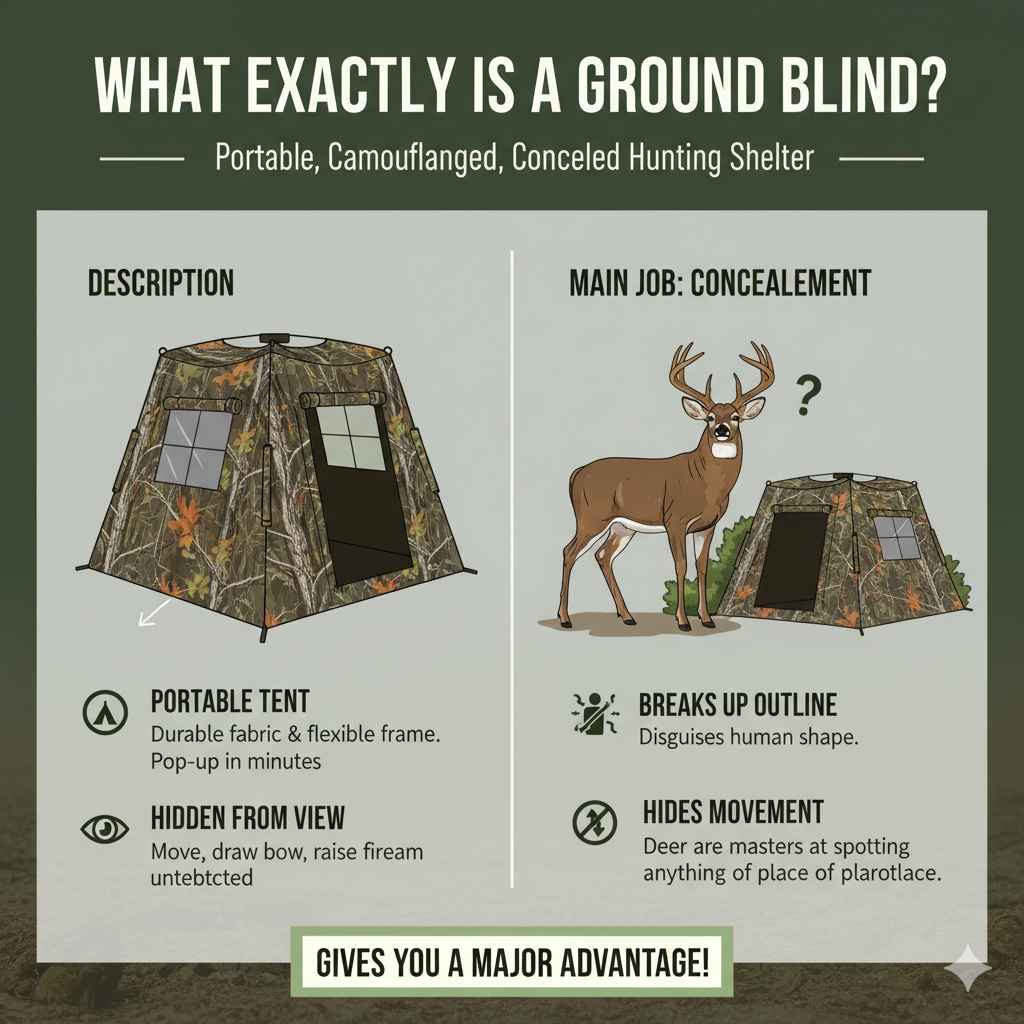
What Exactly Is a Ground Blind?
Think of a ground blind as a portable, camouflaged tent designed specifically for hunting. They are made from durable fabric and supported by a flexible frame, allowing you to “pop up” a concealed shelter in minutes. Inside, you are hidden from view, allowing you to move, draw a bow, or raise a firearm without being easily detected.
Their main job is to break up your human outline and hide your movements. Deer are masters at spotting anything that looks out of place. A well-placed and concealed ground blind helps you disappear, giving you a major advantage.
The Pros and Cons of Hunting from a Ground Blind
Like any hunting strategy, using a ground blind has its advantages and disadvantages. Knowing them helps you decide if it’s the right choice for your hunt and how to overcome the challenges. They are especially powerful for bowhunters who need to draw their bow undetected at close range.
Here’s a quick breakdown to help you see the full picture:
| Pros of Using a Ground Blind | Cons of Using a Ground Blind |
|---|---|
| Excellent Concealment: Hides movement from sharp-eyed deer, which is critical when drawing a bow or raising a rifle. | Can Be Obvious: An unblended, new blind can stick out and spook deer. This is why “brushing it in” is vital. |
| Weather Protection: Shields you from wind, rain, and snow, allowing you to hunt longer and more comfortably. | Limited Visibility: You can only see and shoot out of the windows, creating potential blind spots. |
| Scent Containment: Helps to trap and contain human scent, although it’s not a complete solution. | Can Be Noisy: Fabric can be loud in the wind, and zippers or moving inside can create unnatural sounds. |
| Great for Beginners & Kids: Allows for more fidgeting and movement, making it easier for new or young hunters to stay patient. | Requires Setup Time: For best results, blinds should be set up weeks before you plan to hunt the area. |
| Portability: Modern pop-up blinds are lightweight and easy to move to new locations as deer patterns change. | Restricted Shooting Angles: You may need to adjust your position to get a shot, which can be difficult in a tight space. |
The Proven Best Way: Your Step-by-Step Guide to Ground Blind Success
Simply buying a ground blind and putting it in the woods is a recipe for an empty freezer. Success comes from a smart, patient approach. Follow these proven steps to make your ground blind a deer-hunting hotspot.
Step 1: Choose the Right Ground Blind for You
Not all blinds are created equal. Your choice depends on your hunting style (bow or gun), how many people will be with you, and your budget. Here are the key features to look for:
- Style: Hub-style blinds are the most popular. They use a central hub system to “pop out” the walls, making setup incredibly fast. They are sturdy and offer plenty of room.
- Size: If you’re a solo bowhunter, you need enough room to draw your bow comfortably without your limbs hitting the sides. If you hunt with a partner or a child, opt for a two- or three-person model. Always check the interior dimensions.
- Window Design: This is crucial. Look for blinds with silent, slide-and-hook window systems instead of loud zippers. Shoot-through mesh is great for concealment but can slightly affect arrow or bullet trajectory, so be sure to practice with it.
- Camouflage Pattern: Choose a pattern that matches the environment you hunt in most often. A woodland pattern works in the forest, while a stubble pattern is better for open fields.
Step 2: Scout and Select the Perfect Location
A great blind in a bad spot won’t do you any good. Your location is the single most important factor. You need to set up where the deer want to be naturally.
- Find the Signs: Look for active deer trails, feeding areas (like oak flats or crop fields), water sources, and bedding areas. A spot that connects a bedding area to a food source is often a gold mine. The local regulations from your state’s game commission can also dictate how close you can be to certain areas.
- Play the Wind: Deer rely heavily on their sense of smell. Determine the prevailing wind direction for your area and place your blind downwind of where you expect deer to appear. If the wind is blowing from you to them, they will smell you every time.
- Use Natural Cover: Don’t place your blind in the middle of an open field. Instead, tuck it into a fencerow, against a large tree, or inside a cluster of brush. The goal is to use existing cover to break up the blind’s outline from the start.
- Consider the Sun: Position your blind with the sun at your back if possible. This keeps the sun out of your eyes and puts it in the deer’s eyes, making it harder for them to see into your blind’s dark interior.
Step 3: Set It Up Early (The Most Important Step!)
If you remember only one thing from this guide, let it be this: set up your ground blind weeks before you plan to hunt from it.
Deer are creatures of habit. A new, large object appearing overnight in their territory is a major red flag. By setting up your blind 2-4 weeks in advance, you give them time to get used to it. They will slowly accept it as a harmless part of the landscape. This process is called “acclimation,” and it is the secret to getting deer to walk by your blind without a second glance.
Step 4: Master the Art of “Brushing In”
Brushing in your blind is the process of using natural vegetation to erase its silhouette. This is how you make it truly invisible.
- Gather Local Materials: Use branches, tall grass, and fallen limbs from the immediate area. This ensures the camouflage is perfectly natural.
- Break Up the Outline: Your goal is not to completely cover the blind but to break up its hard, square edges. Pile brush against the sides and on top of the roof.
- Use the Brush Loops: Most ground blinds have built-in loops or straps. Use these to stick branches and grasses directly onto the blind itself.
- Create a Natural Look: Step back 50 yards and look at your blind. Does it look like a box with some sticks on it, or does it look like a natural bush? Adjust until it blends in seamlessly.
Step 5: Be Fanatical About Scent Control
A ground blind helps contain your scent, but it’s not foolproof. A deer’s nose is its greatest defense. According to a study from Mississippi State University, a deer’s sense of smell is 500 to 1,000 times more acute than a human’s. You must take scent control seriously.
- Wash Everything: Wash all your hunting clothes in scent-free detergent and store them in an airtight bag or container.
- Spray Down: Before you walk to your blind, spray your boots, gear, and yourself with a scent-eliminating spray.
- Hunt the Wind: Even with a blind, the wind is your most important consideration. Never hunt a spot if the wind is wrong.
- Keep the Blind Scent-Free: Air out your blind before the season. Spray it down with a scent eliminator, both inside and out. Avoid eating strong-smelling foods inside.
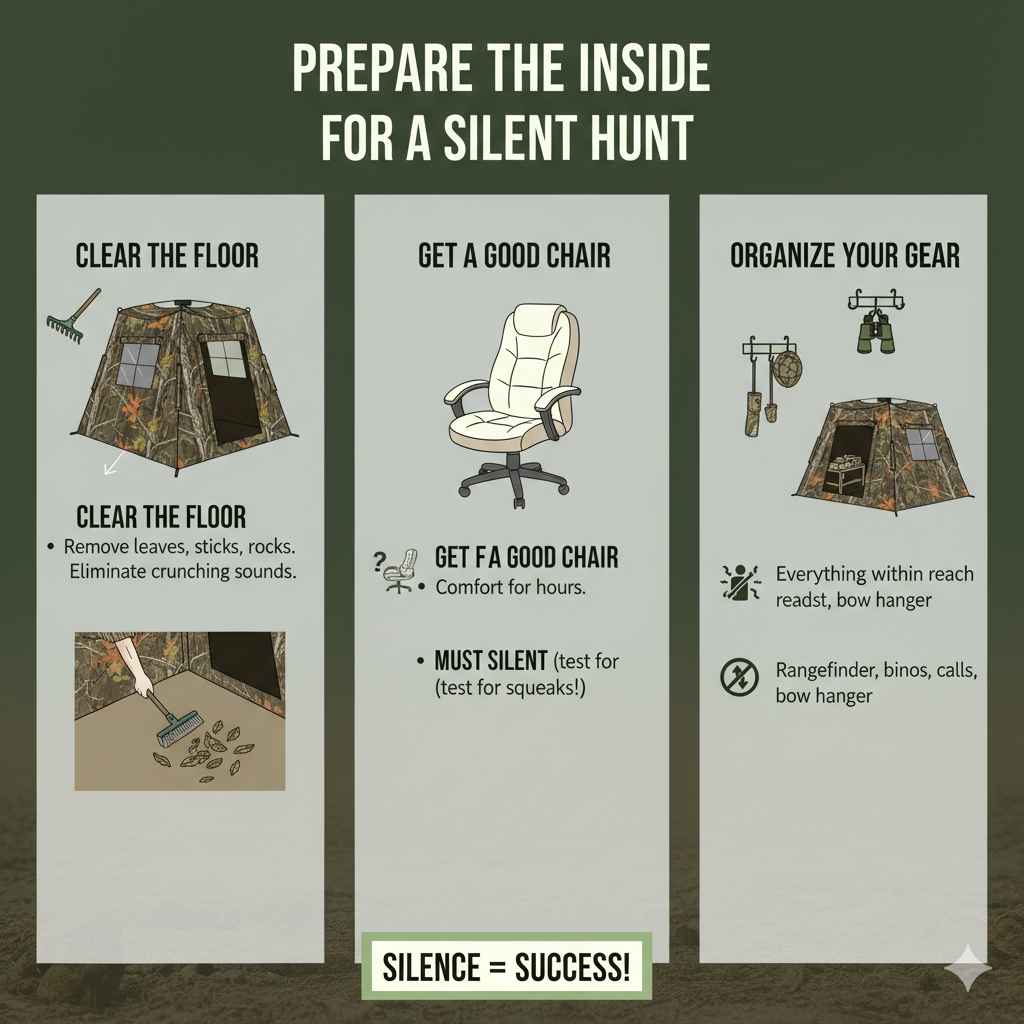
Step 6: Prepare the Inside for a Silent Hunt
What happens inside the blind is just as important as what happens outside. The goal is silence and readiness.
- Clear the Floor: Before you even set up your chair, clear the entire floor of the blind. Remove every leaf, stick, and rock. A crunchy leaf can sound like a firecracker in the quiet woods.
- Get a Good Chair: Don’t skimp on your chair. You will be sitting for hours. It must be comfortable and, most importantly, completely silent. Test it at home to make sure it doesn’t squeak.
- Organize Your Gear: Have a specific spot for everything. Your rangefinder, bow hanger, binoculars, and calls should be within easy reach so you don’t have to fumble around when a deer appears.
Step 7: Practice, Practice, Practice Shooting from the Blind
Shooting from a ground blind is different from shooting in your backyard. The confined space, lower light, and awkward angles can throw you off.
| Shooting Consideration | Bowhunter Tip | Gun Hunter Tip |
|---|---|---|
| Positioning | Practice drawing your bow from a seated position. Make sure your limbs and broadhead have full clearance through the window. | Ensure you have a steady rest. Use a shooting stick or bipod for maximum stability. |
| Low Light | The dark interior of the blind can make it hard to see your pins. Consider a lighted sight. | Your scope will gather less light inside the blind. Make sure it’s a quality scope designed for low-light conditions. |
| Window Angles | Kneeling can sometimes offer a better shot angle than sitting. Practice this beforehand. | Be mindful of the barrel clearing the window to avoid a deafening muzzle blast inside the blind. |
Set up your blind in your yard and practice shooting through the windows at different angles. This will build muscle memory and confidence for the real hunt.
FAQ: Common Questions About Ground Blind Hunting
How long should a ground blind be out before hunting?
For the best results, set your ground blind up at least two to four weeks before you plan to hunt from it. The longer it’s out, the more time deer have to accept it as a normal part of their environment.
Do deer get spooked by ground blinds?
Yes, deer will absolutely get spooked by a new ground blind that suddenly appears, especially if it’s placed in the open. This is why setting it up early and brushing it in with natural cover is so critical to your success.
Can you bow hunt from a ground blind?
Absolutely! Ground blinds are one of the best tools for bowhunting. They provide excellent concealment for the large movements required to draw a bow when deer are at close range. Just make sure your blind is tall enough for you to shoot comfortably and that your broadhead has clearance through the window.
What should I wear inside a ground blind?
Wear dark clothing, such as black or a very dark camouflage pattern. Your camo pattern doesn’t matter inside the blind. The goal is to blend in with the dark shadows of the interior so deer looking in the windows can’t see your silhouette.
How do you stay quiet in a ground blind?
First, clear the floor of any leaves or twigs. Second, use a high-quality, silent chair. Third, organize your gear so you can reach everything without making noise or excess movement. Finally, move slowly and deliberately when a deer is nearby.
Do I really need to brush in my ground blind?
Yes. This is a non-negotiable step for serious hunters. A square, manufactured blind stands out in a natural environment. Brushing it in breaks up its outline and makes it look like a pile of natural brush, effectively making it disappear.
Is it better to have the windows open or closed?
Keep as many windows closed as possible to stay concealed. Only open the windows that cover your primary shooting lanes. This creates a “black hole” effect, making it much harder for deer to see inside.
Conclusion: Your New Secret Weapon
So, are ground blinds good for deer hunting? The answer is a resounding yes. They are a fantastic tool that can dramatically increase your chances of success, especially if you’re a bowhunter or are introducing someone new to the sport.
But a ground blind is only as good as the hunter using it. Success isn’t about the blind itself; it’s about the strategy. By choosing the right location, setting it up weeks in advance, brushing it in meticulously, and remaining disciplined about scent and movement, you transform a simple pop-up tent into a perfect ambush point.
Take your time, follow these steps, and be patient. The reward of watching a deer walk calmly into range, completely unaware of your presence, is one of the most exciting moments in hunting. Now get out there, blend in, and enjoy the hunt.