Are Night Scopes Legal To Hunt With In Kentucky The Best Guide
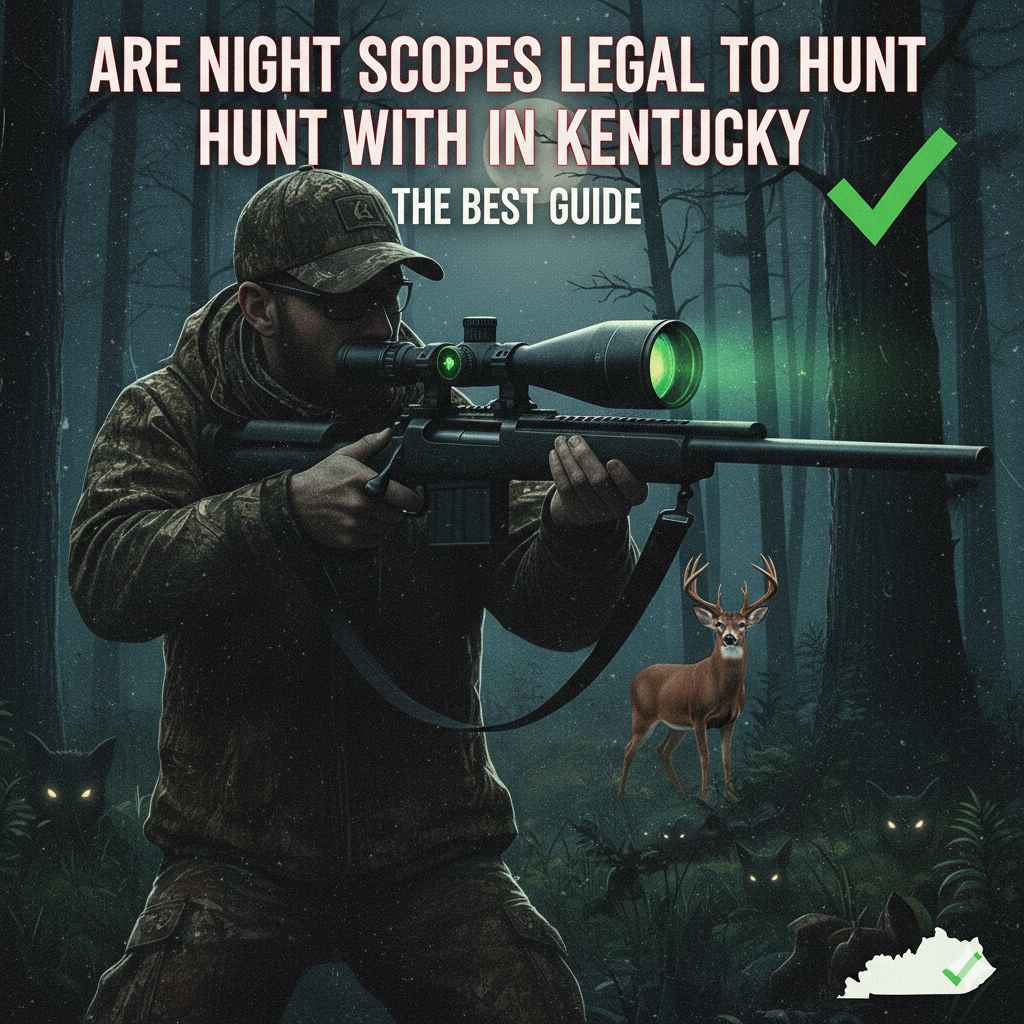
Yes, night scopes are legal for hunting certain animals in Kentucky, but they are strictly prohibited for others like deer and turkey. It is legal to use night vision and thermal scopes for hunting coyotes and feral hogs at night. Always check the current Kentucky Department of Fish and Wildlife regulations before you hunt. For more on this, see our guide on Don’T Release the Arrow Until You Master These Archery Secrets.
Hello everyone, Salman Arfeen here! As a guide, I love helping people find joy and success in the outdoors. One question I hear a lot is about night hunting. The idea of heading out after dark is exciting, but the rules can feel confusing. Many hunters wonder if they can use modern tools like night scopes.
You might worry about breaking a law without realizing it. It’s a common concern! The good news is that the rules are straightforward once you break them down. This guide will walk you through everything, step by step. We will make it simple and clear. You will learn exactly when you can and cannot use a night scope in Kentucky, so you can hunt with confidence. Let’s get started!
Understanding the Basics: What Are Night Scopes?
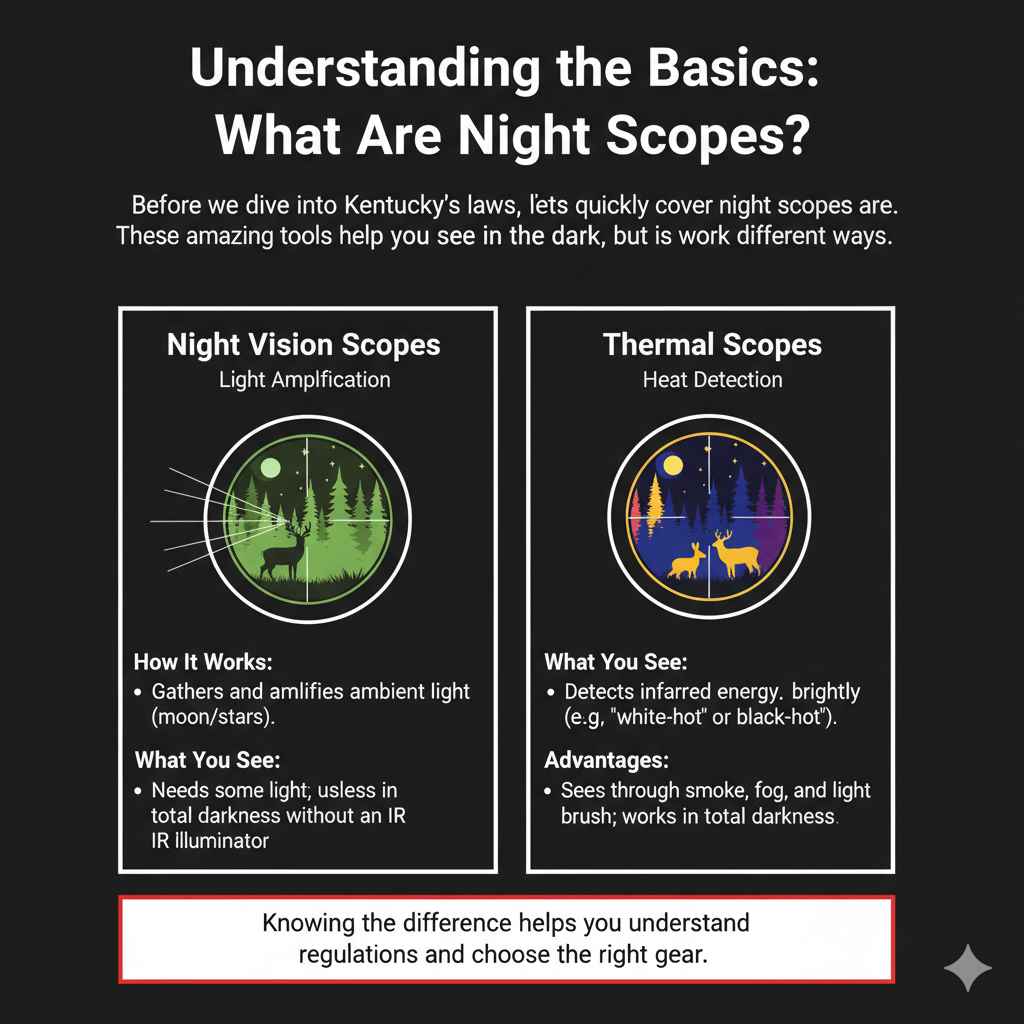
Before we dive into Kentucky’s laws, let’s quickly cover what night scopes are. These amazing tools help you see in the dark, but they work in different ways. Knowing the difference will help you understand the regulations and choose the right gear. There are two main types you’ll encounter: night vision and thermal.
Night Vision Scopes
Night vision technology works by gathering tiny amounts of existing light, like from the moon or stars, and amplifying it thousands of times. It then displays this brightened image for you to see.
- How It Works: It takes in ambient light through a lens, converts the light photons into electrons, and then multiplies those electrons.
- What You See: The image typically has a distinct green or black-and-white tint.
- Limitations: It needs some light to work. In complete darkness, like a cave or a windowless room, it won’t be effective without an infrared (IR) illuminator. An IR illuminator works like a flashlight that only night vision can see.
Thermal Scopes
Thermal scopes are completely different. They don’t need any light at all. Instead, they detect heat signatures. Every object, especially a living animal, gives off heat. A thermal scope creates an image based on these temperature differences.
- How It Works: It uses a special lens and sensor to detect infrared energy (heat) and creates a detailed temperature map called a thermogram.
- What You See: Animals and other warm objects glow brightly against the cooler background. You can often choose different color palettes, like “white-hot” or “black-hot.”
- Advantages: Thermal scopes can see through smoke, fog, and light brush. This makes them incredibly effective for spotting animals that are trying to hide.
The General Hunting Rule in Kentucky: A Simple Breakdown
To understand the rules for night scopes, you first need to know Kentucky’s general rule about hunting with artificial lights. For most traditional game animals, the law is very clear. It is illegal to hunt with any form of artificial light. This includes flashlights, spotlights, and, by extension, night vision or thermal equipment.
Why does this rule exist? It’s all about “fair chase.” Fair chase is an ethical principle that ensures the hunter does not have an improper or unfair advantage over the animal. Using powerful lights or night scopes to hunt animals like deer or turkey at night would remove this balance. These rules are in place to protect wildlife populations and preserve the sport of hunting for future generations.
So, your starting point should always be this: assume it’s illegal unless there is a specific exception. Luckily, Kentucky has made some very clear exceptions for certain animals.
The Big Exceptions: When You CAN Use Night Scopes in Kentucky
This is where it gets interesting for those who want to try night hunting. Kentucky law allows the use of night vision, thermal scopes, and other artificial lights for a select few species. These are typically nuisance animals or invasive species that the state wants to control.
Coyote Hunting at Night
Coyotes are the most popular animal for night hunting in Kentucky. They are smart, challenging predators, and hunting them helps protect livestock and other game species like deer fawns. The state gives hunters a lot of flexibility here.
- Season: Coyotes can be hunted year-round in Kentucky.
- Time: You can hunt them 24 hours a day, including at night.
- Equipment: It is legal to use night vision scopes, thermal scopes, and artificial lights (like spotlights) when hunting coyotes.
This makes coyote hunting a perfect opportunity to use advanced night-time optics. It’s an exciting challenge and a great way to help manage local predator populations.
Feral Hog Hunting
Feral hogs, also known as wild pigs, are a destructive invasive species. They damage crops, harm native wildlife, and can spread disease. Because of this, the Kentucky Department of Fish and Wildlife Resources (KDFWR) encourages hunters to remove them whenever possible.
- Season: Feral hogs can be hunted year-round.
- Permission: You must have landowner permission, as most hog populations are on private land.
- Equipment: It is legal to use night vision and thermal scopes to hunt feral hogs. This is a very effective method, as hogs are often most active at night.
Other Nuisance Species
The rules are also more relaxed for a few other species that are not classified as game animals. This includes animals like groundhogs, English sparrows, and starlings. For these species, you can typically use night vision equipment. However, the primary focus for night hunters in Kentucky remains coyotes and feral hogs.
Animals You CANNOT Hunt with Night Scopes
This section is extremely important. Using a night scope for the wrong animal is a serious violation and can lead to severe penalties. The rules are designed to be strict to protect Kentucky’s prized game animals.
Deer Hunting
Let’s be perfectly clear: it is illegal to use any artificial light, night vision device, or thermal imaging scope to hunt, spot, or locate deer in Kentucky. This rule is absolute, with no exceptions. Even using a light to look for deer after legal shooting hours can be considered an attempt to poach. The penalties are severe, including hefty fines, jail time, and the loss of your hunting license and equipment.
Turkey Hunting
The rule for turkeys is just as strict as it is for deer. It is illegal to use night vision, thermal scopes, or any artificial light to hunt wild turkeys. Legal hunting hours for turkey are during the daytime only. The goal is to ensure these popular game birds are harvested ethically and sustainably.
Other Game Animals
For most other game animals, the same logic applies. Legal shooting hours are generally from 30 minutes before sunrise to 30 minutes after sunset. This applies to animals like:
- Squirrels
- Rabbits
- Quail
- Grouse
- Doves
Using night scopes for these species is prohibited. Always stick to the legal hunting hours listed in the official Kentucky hunting and trapping guide.
Kentucky Night Hunting Regulations at a Glance
Sometimes a simple chart is the easiest way to remember the rules. Here is a quick reference table to help you keep things straight.
| Animal | Legal to Hunt at Night? | Night Scope / Thermal Legal? |
|---|---|---|
| Coyote | Yes | Yes |
| Feral Hog | Yes | Yes |
| Deer | No | No (Strictly Illegal) |
| Turkey | No | No (Strictly Illegal) |
| Squirrel | No | No |
| Rabbit | No | No |
| Bobcat | Yes (during season) | Yes |
How to Stay Legal and Safe When Hunting at Night
Hunting after dark is a unique experience, but it comes with extra responsibilities. Following these steps will help you stay safe, legal, and respectful of the sport.
- Always Check the Latest Regulations: Laws and regulations can change from year to year. The information here is a guide, but the official source is always the best. Before you go out, check the most recent Kentucky Hunting and Trapping Guide, which is available on the KDFWR website. This is the single most important step.
- Know Your Target and Beyond: Positive identification of your target is critical, and it’s much harder at night. A thermal scope might show you a heat signature, but you must be 100% sure it’s a coyote or a hog and not a neighbor’s dog or other wildlife. Also, be certain of what is behind your target.
- Understand Your Equipment: Get comfortable with your night vision or thermal scope before you go hunting. Practice using it in a safe environment to learn its capabilities and limitations. Know how to zero it properly and understand its effective range.
- Respect Property Lines: Trespassing laws are the same day or night. Always get explicit permission from landowners before hunting on private property. Let them know you plan to hunt at night so there are no surprises.
- Prioritize Safety Above All: Let someone know where you are going and when you plan to return. Carry a phone, a flashlight with extra batteries, and a first-aid kit. Navigating terrain in the dark can be tricky, so move slowly and carefully.
Choosing the Right Gear for Night Hunting in Kentucky
If you’re ready to try night hunting for coyotes or hogs, you’ll need the right equipment. The biggest decision is often between a thermal scope and a digital night vision scope.
Thermal vs. Night Vision: Which is Better for Kentucky?
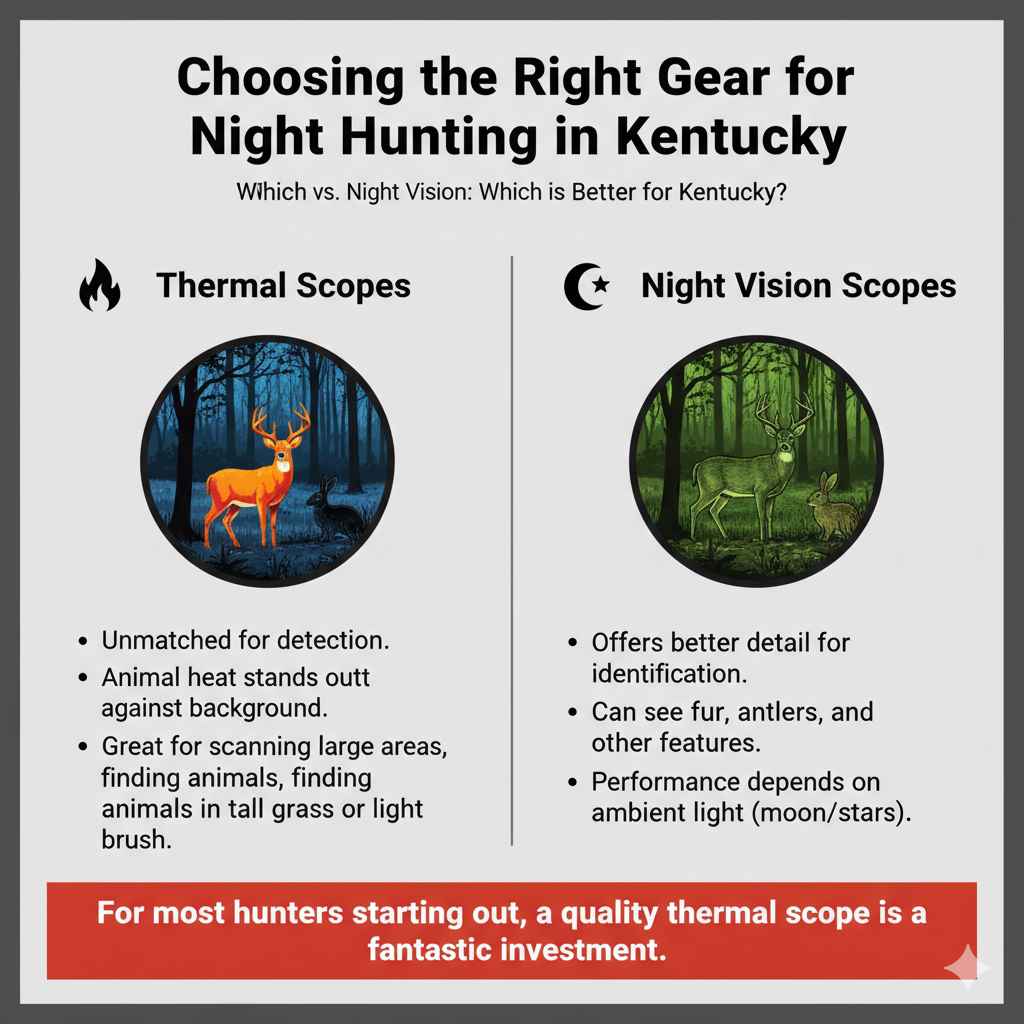
Both technologies work well, but they have different strengths. For Kentucky’s landscape, which often includes fields, woods, and rolling hills, a thermal scope usually has the edge.
- Thermal Scopes are unmatched for detection. An animal’s body heat will stand out clearly, even if it’s hiding in tall grass or behind light brush. This allows you to scan large areas quickly and efficiently.
- Night Vision Scopes can sometimes offer better detail for identification, especially higher-end digital models. You can see fur, antlers (on non-target animals), and other features more clearly than with some entry-level thermal scopes. However, their performance depends on ambient light.
For most hunters starting out, a quality thermal scope is a fantastic investment. It simplifies the hardest part of night hunting: finding the animal in the first place.
Equipment Comparison Table
Here’s a simple table to compare the two options:
| Feature | Thermal Scope | Night Vision Scope |
|---|---|---|
| Detection Method | Detects heat signatures | Amplifies existing light |
| Performance in Total Darkness | Excellent, no light needed | Poor, requires an IR illuminator |
| Ability to See Through Fog/Brush | Good | Poor |
| Identification Clarity | Good to excellent (depends on quality) | Can be better for fine details |
| General Cost | Higher | Lower to moderate |
Frequently Asked Questions (FAQ)
1. Can I use a flashlight mounted to my rifle to hunt coyotes in Kentucky?
Yes. The law allows the use of artificial lights, including weapon-mounted lights and spotlights, for hunting coyotes at night.
2. Do I need a special permit for night hunting in Kentucky?
No, you do not need a special night hunting permit. You only need a valid Kentucky hunting license for the species you are pursuing. All standard licensing requirements apply.
3. Is it legal to use night vision to simply observe wildlife, not hunt?
Yes, it is generally legal to use night vision or thermal optics to observe wildlife. The laws specifically target the act of “hunting” or taking an animal. However, if you are in possession of a firearm or bow while doing so, it could be misinterpreted by a conservation officer, so it’s best to be cautious.
4. What happens if I get caught using a night scope for deer hunting?
The penalties for poaching deer in Kentucky are very serious. You would likely face significant fines (thousands of dollars), potential jail time, confiscation of your firearm and scope, and the revocation of your hunting privileges for several years.
5. Can I hunt coyotes at night on public land in Kentucky?
It depends on the specific public land area. Some Wildlife Management Areas (WMAs) may have their own specific rules that prohibit night hunting or the use of certain equipment. Always check the regulations for the specific WMA or public land you plan to visit.
6. Are there specific seasons for night hunting coyotes or feral hogs?
No, both coyotes and feral hogs can be hunted year-round in Kentucky. There is no closed season for them, which gives you plenty of opportunities to plan a night hunt.
7. Can I use a suppressor (silencer) while night hunting in Kentucky?
Yes. It is legal to hunt with a suppressor in Kentucky, provided you have gone through the proper federal process to own one. They are highly recommended for night hunting as they can reduce noise complaints and protect your hearing.
Conclusion: Hunt Smart, Hunt Safe
So, are night scopes legal to hunt with in Kentucky? The answer is a clear yes and a firm no. It all comes down to what you are hunting. For predators like coyotes and invasive species like feral hogs, night vision and thermal scopes are powerful, legal tools that open up a whole new world of hunting.
But for cherished game like deer and turkey, these devices are strictly off-limits to protect the principles of fair chase and conservation. The key to being a responsible hunter is to know the rules inside and out. Always double-check the latest KDFWR guide before you head out, and never be afraid to ask questions if you’re unsure.
Night hunting can be an incredibly rewarding experience. The woods feel different after dark, and the challenge is unique. By following the law, prioritizing safety, and respecting the wildlife, you can enjoy this exciting sport with confidence and peace of mind. Happy hunting!