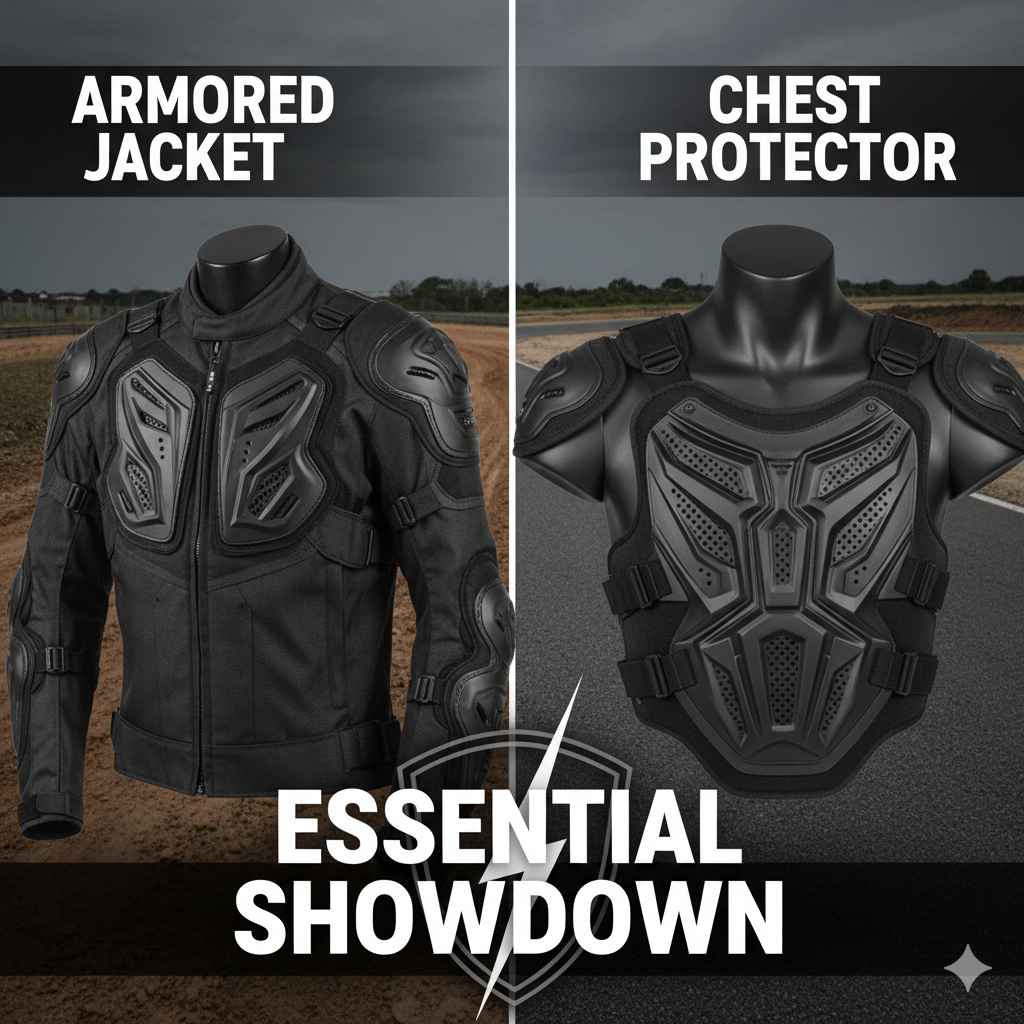
Armored jacket vs chest protector: For beginner archers, the armored jacket offers comprehensive upper body protection, while a chest protector focuses solely on preventing string slap to the chest/forearm. Choose based on your primary need: full-torso safety (jacket) or string protection (protector).
Welcome, fellow archer! Taking the leap into serious archery equipment can be confusing. You’ve mastered the basic draw, and now you hear talk about “armored jackets” and “chest protectors.” Which one do you need? It’s a common snag for new shooters. You want protection, but you don’t want to wear something bulky or confusing. Don’t worry! Choosing the right gear is simpler than it looks. We will break down exactly what these two items do, who should use them, and how to pick the perfect one for your journey toward better accuracy and safety. Let’s clear up this confusion right now!
Armored Jacket Vs Chest Protector (The String Saver)
When we talk about protection in archery, especially for new or growing archers, we are usually dealing with two different tools that solve two different problems. One is all about stopping big impacts, and the other is about stopping a small, stinging snap. Understanding the core job of each piece of gear is the first step in making a smart choice.
What is an Archery Chest Protector? (The String Saver)
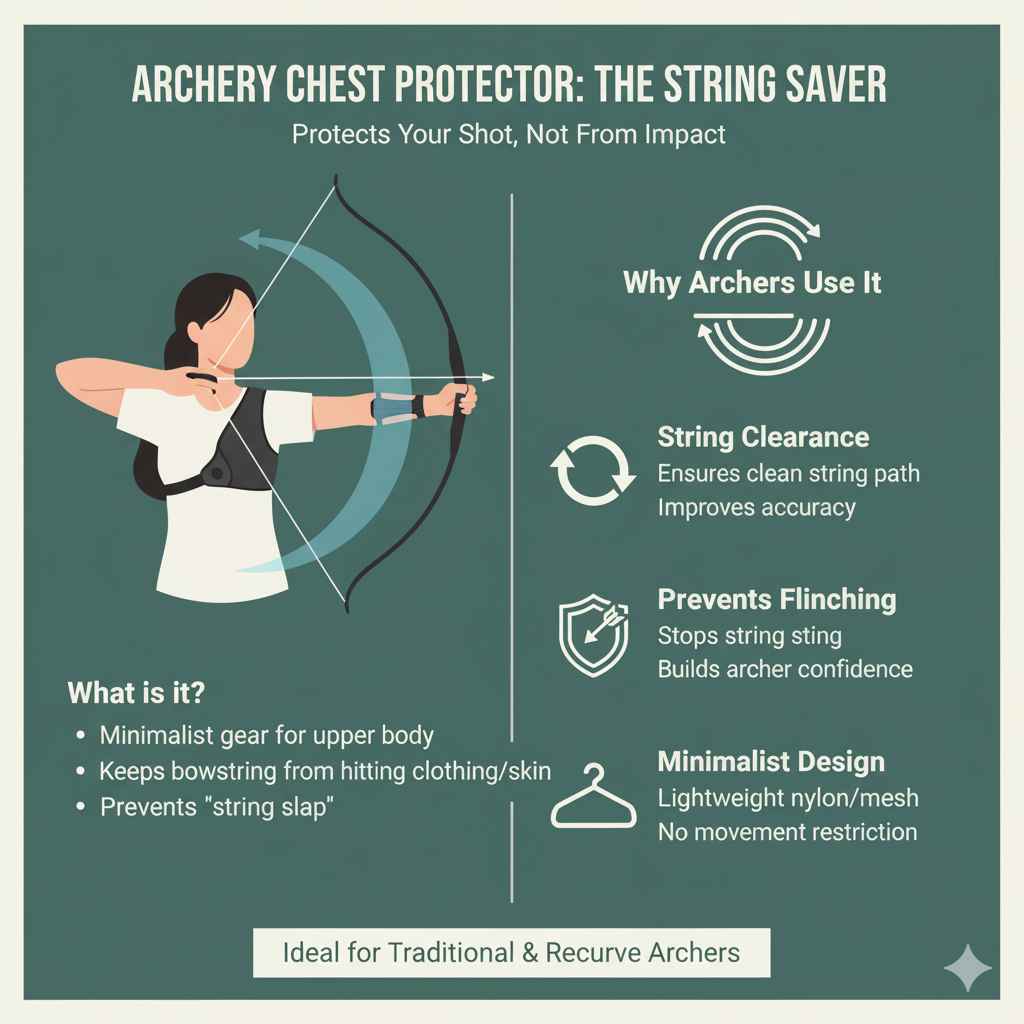
The archery chest protector is the minimalist choice for protecting your upper body. Its job is very specific: to keep the bowstring from hitting your shirt fabric, your clothing weave, or—worst case—your actual skin when you release the arrow.
Why Archers Use a Chest Protector
The main goal here is preventing “string slap.” When the string snaps forward after release, if it catches on loose clothing, it can pull your form offline, leading to a missed shot. Worse, a direct hit to the chest or arm can sting and make you flinch next time.
String Clearance: Ensures a clean, unimpeded string path.
Prevents Flinching: Stops the sting of a direct string hit, building confidence.
Minimalist Design: Usually made of lightweight nylon or mesh, it’s thin and causes almost no restriction of movement.
Chest protectors are ideal for traditional archers, recurve shooters focusing on form, and those shooting lighter-poundage bows where heavy impact protection isn’t the main concern.
What is an Armored Jacket? (The Impact Shield)
An armored jacket is a much more substantial piece of equipment. Think of it less like a piece of clothing and more like light body armor designed specifically for the archery environment, usually for disciplines like 3D target archery, bowhunting, or crossbow shooting.
What Makes an Armored Jacket Different
The key difference is the presence of protective inserts—usually made of hard plastic, specialized foam, or impact-absorbing materials—built into key areas.
1. Torso Coverage: It covers the entire chest and often the upper arms/shoulders.
2. Impact Absorption: It’s designed to absorb energy from bumps, falls, or glancing blows from dropped equipment or branches.
3. Integrity: It holds the protective padding firmly in place, ensuring consistent coverage.
Armored jackets are essential when there is a risk of falls, collisions with targets, or when using higher-poundage equipment that demands more robust protection against accidental impact.
The Great Comparison: Armored Jacket Vs Chest Protector
To make the choice clear, let’s put these two side-by-side. This comparison focuses on the primary function, fit, and typical user.
| Feature | Chest Protector | Armored Jacket |
| :— | :— | :— |
| Primary Function | Prevents string contact/slap. | Absorbs impact from falls, debris, or accidental hits. |
| Material | Thin nylon, mesh, elastic strap. | Heavy-duty fabric with integrated foam/plastic panels. |
| Weight & Bulk | Very light and thin. | Noticeably heavier and bulkier. |
| Movement Restriction | Minimal to none. | Slight restriction, especially in the shoulders/arms. |
| Ideal User | Beginner recurve/traditional shooters, target practice. | 3D archers, bowhunters, high-poundage compound shooters. |
| Cost | Generally lower. | Generally higher due to specialized materials. |
When to Choose the Chest Protector
If your main concern is consistency and form, the chest protector is your friend.
You are shooting indoor target practice regularly.
Your bow poundage is relatively low (under 40 lbs).
You hate bulky clothing and need maximum freedom of movement.
You shoot a traditional or barebow setup where clean release is critical.
When to Choose the Armored Jacket
If safety extends beyond just string slap, consider the jacket.
You are shooting 3D courses where you walk through brush and uneven terrain.
You are handling heavy compound bows or crossbows.
You participate in competitive field archery where accidental knocks are possible.
You want the added security of protecting your ribs or sternum during accidental drops.
How to Properly Fit and Use Your Chosen Protection
Owning the gear is only half the battle; wearing it correctly ensures it actually works when you need it to. Improper fit can negate the benefits of either device.
Fitting Your Chest Protector
A chest protector should feel snug but not restrictive. It needs to sit flat against your torso so the string slides cleanly over it.
- Determine Draw Hand: Identify which side of your chest the string will cross. For right-handed shooters (drawing with the right hand), the string crosses the left side of the chest.
- Positioning: The protector should cover the area from just below your collarbone down to your sternum area.
- Strap Adjustment: The elastic or Velcro straps must be tight enough to keep the material taut but loose enough that you can draw your bow comfortably without binding. If the straps are too loose, the material bunches up; if too tight, it pulls on your shoulder.
- Test Draw: Draw your bow to full anchor and release several times (safely toward a target). Notice if the string still catches or if the protector shifts significantly upon release. Adjust straps until the string passes smoothly over a flat surface.
Fitting Your Armored Jacket
An armored jacket requires more careful fitting because of the integrated padding. You want the armor to cover the vulnerable spots without hindering your draw cycle.
- Sleeve Length Check: Ensure the sleeves do not interfere with your bow arm grip or shoulder rotation. Many archers prefer shorter sleeves or no sleeves at all on an armor vest to keep the bow arm free.
- Torso Snugness: The jacket should fit firmly over your clothing but not so tight that it compresses your chest, which could restrict breathing during draw and hold.
- Armor Placement: Check that the rigid or dense foam panels sit directly over the sternum and ribs. If they shift when you raise your arms, the jacket is likely too large or poorly designed for archery movement.
- Check for Pinch Points: Raise your bow arm overhead. If the jacket pinches your armpit or restricts upward shoulder movement, it will limit your maximum draw length or anchor point stability.
Archery Safety: Beyond What You Wear
While the debate of armored jacket vs chest protector is important for comfort and performance, remember that protection starts with solid habits. Even the best gear cannot compensate for poor safety awareness. Always practice responsible shooting.
For excellent foundational safety guidelines, resources like the National Archery in the Schools Program (NASP) often provide clear rules that are great even for non-school archers. You can often find reliable, free safety protocols published by educational bodies.
Safety Tip: The Importance of Proper Anchor
Whether you use a jacket or a protector, ensuring a consistent anchor point prevents most common string contact issues. If your release hand is always in the same place (e.g., touching the corner of your mouth or jaw), the string path remains predictable. Inconsistent anchoring is a leading cause of string slap, regardless of the equipment worn underneath.
Material Matters: What’s Under the Surface?
The materials used directly affect comfort, durability, and protection level. This is a crucial consideration when looking at higher-end protective gear.
Chest Protector Materials
Nylon Mesh: Very common. It’s breathable but offers minimal protection against anything other than light fabric catching the string.
Leather: Durable and offers good friction resistance but can feel hot and stiff.
Elastane/Spandex Blends: Used in modern compression-style protectors. Offers great stretch for unrestricted movement.
Armored Jacket Materials
High-Density Foam (EVA): Excellent for absorbing blunt force without adding significant weight. Common in shoulder and upper back padding.
Polycarbonate or ABS Plastic: Used as hard shells over soft foam. This guards against punctures and sharp impacts (like hitting a sharp rock while falling).
Cordura Fabric: Often used as the outer shell due to its extreme abrasion resistance, perfect for 3D courses where gear rubs against trees and brush.
When Do Beginners Need Protection? The Poundage Rule
A common question for newcomers is: “Do I need anything at all?” The answer depends heavily on your bow’s draw weight (poundage).
Low Poundage (Under 25 lbs)
At very low weights, string slap might sting momentarily but usually won’t cause injury or severe flinching. A simple rubber tab or finger sling might be enough to guide the string away from loose sleeves. Protection is optional but recommended for form building.
Medium Poundage (25–45 lbs)
This is the sweet spot where many beginners start. String slap becomes uncomfortable and can cause poor form development (the infamous “flinch”). A basic chest protector is highly recommended here to ensure clean releases and build muscle memory without pain.
High Poundage (45+ lbs)
Once you hit this range, comfort and form preservation are critical. Higher poundage means higher string energy. A chest protector is essential for form. If you are also hiking or hunting (like in competitive field archery), an armored jacket becomes a strong safety recommendation due to the increased kinetic energy involved and the risk of rough terrain.
Understanding Specific Scenarios
The best choice often depends on where and how you shoot.
Scenario 1: Indoor Target Archery (Recurve Focus)
Recommendation: Chest Protector.
Why: The environment is controlled. You need freedom of movement to maintain consistent form over many shots. The string is the only threat.
Scenario 2: 3D Target Shooting
Recommendation: Armored Jacket (or a robust chest protector combined with elbow guards).
Why: You are walking, often carrying gear, and may be shooting from awkward positions on hillsides. The risk of tripping, falling, or brushing against rough ground or targets increases.
Scenario 3: Bowhunting
Recommendation: Armored Jacket.
Why: Hunting involves rugged terrain, low light, and the need to carry many tools. The jacket offers vital protection against branches, thorns, and accidental gear bumps when focused on tracking or waiting. Durability against the elements is also key here.
Scenario 4: Learning Compound Bows
Recommendation: Start with a Chest Protector, upgrade to a Jacket if using very high poundage cams.
Why: Compound bows, especially those with aggressive cams, release string energy very quickly and sharply. While the string may not hit you as often due to precise mechanical releases, if it does, the force is higher, necessitating good coverage.
Table: Protection Strategy Based on Discipline
To simplify decision-making based on your current archery focus, use this strategy guide:
| Archery Discipline | Primary Concern | Recommended Gear Focus | Key Benefit |
| :— | :— | :— | :— |
| Target Recurve (Indoor/Outdoor) | Form & Consistency | Chest Protector | Unrestricted Draw Cycle |
| 3D Field Shooting | Terrain & Minor Impacts | Armored Jacket (or Vest Style) | Abrasion & Bump Resistance |
| Bowhunting | Durability & Environment | Armored Jacket | Full-Body Wearability in Brush |
| Barebow/Traditional | Clean Release | Thin Chest Protector | Maximum Feel and Feedback |
Maintenance and Longevity of Your Gear
Whether you invest in a light chest protector or a full armored jacket, proper care extends its life and keeps it feeling good.
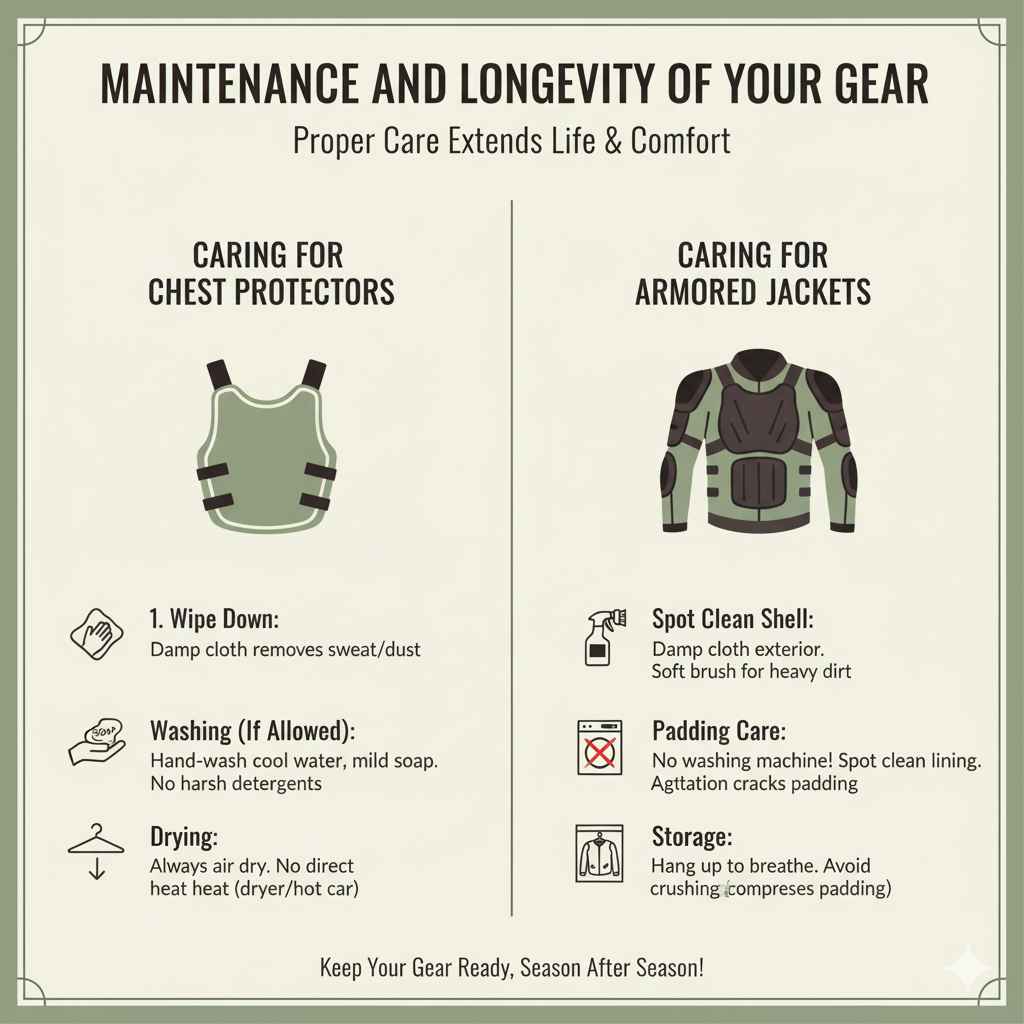
Caring for Chest Protectors
Because they are thin and often nylon-based, they are relatively easy to clean.
1. Wipe Down: After heavy use, wipe the material with a damp cloth to remove sweat and dust.
2. Washing (If Allowed): If the label permits, hand-wash in cool water with mild soap. Avoid harsh detergents that can degrade elastic straps.
3. Drying: Always air dry. Direct heat (like a clothes dryer or leaving it on a hot dashboard) will shrink or warp the material, ruining the fit.
Caring for Armored Jackets
Armored jackets require special attention due to the internal components.
1. Spot Clean Shell: Use a damp cloth to wipe down the exterior fabric. For heavily soiled areas, use a soft brush.
2. Padding Care: Never put armored jackets through a standard washing machine cycle unless the manufacturer explicitly says it is safe. The agitation can crack internal plastic plating or deform the impact foam. Spot clean any sweat areas near the lining.
3. Storage: Store them hanging up where they can breathe. Avoid crushing them in a tight gear bag for long periods, as this can compress the critical impact padding, reducing its effectiveness over time.
FAQ: Beginner Questions Answered
Here are some quick answers to common gear questions beginners have after deciding between an armored jacket vs chest protector.
Q1: Can I use my armored jacket for indoor target shooting?
A: Yes, you can, but it might be too hot and restrictive. For controlled indoor environments, a simple chest protector usually allows for better form consistency and less sweat buildup.
Q2: Does a chest protector protect against broken ribs?
A: No. A standard chest protector is designed only to stop the bowstring from contacting your skin or clothing. It offers virtually no defense against significant crushing force or high-impact collisions.
Q3: Is it okay for my chest protector straps to leave marks on my skin?
A: The straps should be snug, but if they are digging in or leaving deep red marks, they are too tight. Adjust them so the protector stays flat without cutting off circulation or restricting breathing.
Q4: Do I need an elbow guard if I wear a chest protector?
A: Yes, absolutely. A chest protector covers your torso, but it does not protect your inner elbow or forearm from the string. If you shoot consistently, an elbow guard is a vital, separate piece of equipment to prevent painful string slaps on the arm.
Q5: Are Armored Jackets safe to use with very high poundage compound bows?
A: They offer better protection than a standard protector, but no off-the-shelf archery jacket is rated for the force of a major fall or collision at high speed. They are designed to mitigate common field hazards, not act as motorcycle armor.
Q6: Which piece of equipment helps me improve my grouping the fastest?
A: The chest protector. By eliminating string interference, it allows you to focus purely on your anchor point, release mechanics, and follow-through, which are the keys to tighter grouping.
Building Confidence Through Preparedness
The decision between an armored jacket vs chest protector really boils down to anticipating the challenges you will face on the range or in the field. As an archer, your confidence grows with every successful shot, and that success is often built on the foundation of reliable equipment.
If you are just starting out—drawing your first recurve, learning the basics of form—a simple chest protector is often the perfect, lightweight partner. It handles the primary threat (the string) while keeping you cool and unrestricted. This allows you to focus 100% on aligning your sight picture and perfecting your release timing.
However, as you venture out onto 3D courses or begin bowhunting preparation, the environment demands more respect. That’s when the robust nature of the armored jacket shines. It’s peace of mind worn externally. It means you can focus on reading the terrain, judging distances, and executing the perfect shot, knowing that minor slips or bumps won’t derail your session or cause you injury.
Remember, archery is a journey of refinement. You can always start simple and upgrade later. What matters most is that you wear something* that eliminates distractions and promotes clean, safe shooting habits. Choose the gear that lets you step up to the line, draw back smoothly, and release with confidence every single time. Happy shooting!