
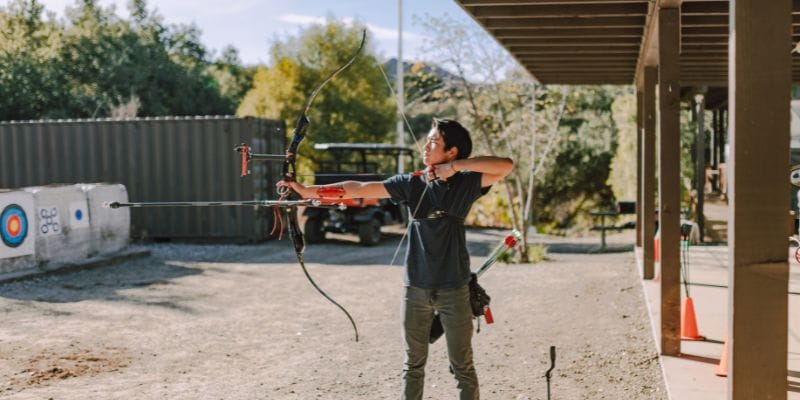
A recurve bow’s “handedness” refers to which hand you use to draw the string. It’s not about which hand feels stronger but how the bow fits your body and eyes. A right-hand recurve bow is held in your left hand, and you pull the string with your right hand. A left-hand recurve bow is held in your right hand, with your left hand drawing the string. This matters because the bow’s design, like the arrow rest and grip, is shaped for one side or the other. Picking the wrong one can make aiming tricky and feel like trying to write with the wrong hand!
Why does this matter? The right choice makes shooting comfortable and accurate. If you’re a beginner, you might not know your dominant eye or hand yet, and that’s okay! I’ll share easy ways to figure it out.
Why Handedness Matters in Archery
When I started archery, I thought being right-handed meant I’d automatically use a right-hand bow. Nope! It’s more about your dominant eye and how you aim. Your dominant eye helps you line up the arrow with the target. If you pick a bow that doesn’t match your eye, you might miss the target by a mile (like I did my first time!).
Here’s a quick breakdown of why handedness is key:
- Comfort: The bow’s grip fits one hand better, making it easier to hold steady.
- Accuracy: The arrow rest and sight align with your dominant eye for better aim.
- Safety: Using the wrong bow can strain your arms or make the string snap back awkwardly.
How to Choose Between Left and Right Hand Recurve Bows
Choosing the right bow is like picking the perfect pair of shoes—it’s got to fit just right. Here’s a simple step-by-step guide to help you decide:
- Find Your Dominant Eye: Point at a faraway object with both hands, making a triangle with your fingers. Close one eye. If the object stays in the triangle, that’s your dominant eye. Try both eyes to be sure!
- Check Your Dominant Hand: Which hand do you write or throw a ball with? This usually matches your bow-drawing hand.
- Test the Feel: If possible, hold a left- and right-hand bow at a shop or range. See which feels like a natural extension of your arm.
- Consider Cross-Dominance: If your dominant eye and hand don’t match (like being right-handed but left-eye dominant), go with your eye for better accuracy.
Pro Tip: If you’re cross-dominant, try shooting both ways at a range. I’m right-handed but left-eye dominant, and I found a left-hand bow worked best for me after testing.
Comparing Left and Right Hand Recurve Bows
To make things crystal clear, let’s compare the two types of recurve bows. This table sums up the key differences:
| Feature | Right-Hand Recurve Bow | Left-Hand Recurve Bow |
|---|---|---|
| Held In | Left hand | Right hand |
| Drawn With | Right hand | Left hand |
| Arrow Rest Position | Left side of the riser | Right side of the riser |
| Sight Position | Left side (for aiming with right eye) | Right side (for aiming with left eye) |
| Best For | Right-eye dominant or right-handed archers | Left-eye dominant or left-handed archers |
Table 1: Comparing Left and Right Hand Recurve Bows
This table shows how the bow’s design caters to one side. For example, the arrow rest on a right-hand bow sits on the left, so the arrow aligns with your right eye when you aim.
Tools and Accessories You’ll Need
Starting archery doesn’t require a ton of gear, but a few basics make a big difference. Here’s what you need for either bow type:
- Recurve Bow: Choose a beginner-friendly model like the Samick Sage (about $100-$150). It comes in both left- and right-hand versions.
- Arrows: Carbon or aluminum arrows work great. Get ones matched to your bow’s draw weight (ask at the shop!).
- Arm Guard: Protects your forearm from string slap (ouch!). A basic one costs $10-$20.
- Finger Tab: Saves your fingers from the string. Around $5-$15.
- Target: A foam target for practice is $30-$50.
You don’t need to break the bank. I started with a used bow from a local shop and saved a bundle. Check sites like Archery Talk for deals on gear.
Benefits and Drawbacks of Each Bow Type
Both left- and right-hand recurve bows have their perks and quirks. Here’s a quick look:
Right-Hand Recurve Bow
- Benefits: More common, so you’ll find more options and used bows. Great for right-eye dominant folks.
- Drawbacks: Tough for left-eye dominant archers to aim accurately without adjusting.
Left-Hand Recurve Bow
- Benefits: Perfect for left-eye dominant or left-handed archers. Feels natural if you draw with your left hand.
- Drawbacks: Fewer options available (only about 10% of bows are left-handed). Can be pricier.
Fun Fact: Only about 10% of people are left-handed, so left-hand bows are harder to find, especially used ones! [Source: ArchersHub.com]
Common Mistakes to Avoid
When I started, I made some rookie mistakes that had me laughing (and missing the target). Here are a few to dodge:
- Picking the Wrong Hand: Don’t assume your writing hand picks your bow. Test your eye dominance first.
- Ignoring the Arrow Rest: Make sure the rest is on the correct side (left for right-hand bows, right for left-hand).
- Buying Without Trying: If possible, test a bow at a range. My first bow felt great in the store but was too heavy to draw comfortably.
- Skipping Safety Gear: An arm guard saved me from a nasty bruise when the string snapped back.
My Personal Tips for Picking the Right Bow
After years of shooting, I’ve learned a few tricks to make choosing a bow easier:
- Start Light: Pick a bow with a low draw weight (20-30 lbs) to build strength and form. You can upgrade later.
- Visit a Range: Most archery shops let you try bows. It’s like test-driving a car!
- Ask for Help: Chat with pros at places like 3Rivers Archery. They’ll guide you to the right fit.
- Check Stringing: Some used bows are strung backward, making a right-hand bow look left-handed. Double-check the curve of the limbs to be sure.
Here’s a simple checklist to follow:
- Confirm your dominant eye and hand.
- Try holding both bow types if you can.
- Look at the arrow rest and sight position.
- Start with a budget-friendly bow to learn.
Visual Ideas for Better Understanding
To make this easier, here are some visual ideas (sorry, no images included, but these would help!):
- Diagram of a Recurve Bow: Show the riser, limbs, arrow rest, and string, with labels for left- and right-hand versions.
- Eye Dominance Test: A simple sketch of hands forming a triangle to spot your dominant eye.
- Arrow Rest Comparison: A side-by-side drawing of where the arrow sits on each bow type.

Cost-Saving Ideas for Beginners
Archery can be pricey, but you don’t need to spend a fortune. Here’s how to save:
- Buy Used: Check eBay for gently used recurve bows. I snagged my first one for $50!
- Start Simple: Skip fancy sights or stabilizers until you’re hooked.
- Join a Club: Many archery clubs offer rental gear or group lessons, saving you from buying right away.
This table compares costs for beginner setups:
| Item | Budget Option (Cost) | Mid-Range Option (Cost) |
|---|---|---|
| Recurve Bow | Used Samick Sage ($50-$80) | New Samick Sage ($120-$150) |
| Arrows (6-pack) | Aluminum ($20-$30) | Carbon ($40-$60) |
| Arm Guard | Basic ($10) | Padded ($20) |
Table 2: Budget vs. Mid-Range Archery Gear Costs
Frequently Asked Questions
What’s the Main Difference Between Left and Right Hand Recurve Bows?
The main difference is which hand draws the string. A right-hand bow is held in the left hand and drawn with the right. A left-hand bow is held in the right hand and drawn with the left. The arrow rest and sight are positioned to match.
How Do I Know If I Need a Left or Right Hand Bow?
Test your dominant eye by pointing at an object with both hands and closing one eye at a time. Choose a bow that aligns with your dominant eye for better aim. Your dominant hand usually draws the string.
Can I Use a Right-Hand Bow If I’m Left-Handed?
You can, but it might feel awkward and affect accuracy. If you’re left-eye dominant, a left-hand bow is usually better. Try both at a range to see what feels right.
Are Left-Hand Bows Harder to Find?
Yes, only about 10% of bows are left-handed because fewer people are left-handed. Check specialty shops or online retailers like 3Rivers Archery for more options.
Does the Arrow Rest Matter for Handedness?
Absolutely! On a right-hand bow, the arrow rest is on the left side. On a left-hand bow, it’s on the right. This helps the arrow align with your dominant eye.
Can I Switch Between Left and Right Hand Bows?
You can, but it takes practice. Some ambidextrous archers switch for fun, but most stick to one for consistency. Start with the bow that matches your dominant eye.
Are Arrows Different for Left and Right Hand Bows?
No, arrows are the same for both. The bow’s design (like the arrow rest) handles the difference. Just make sure arrows match your bow’s draw weight and length.
Wrapping It Up
Choosing between a left and right hand recurve bow doesn’t have to be tricky. It’s all about finding what fits your body—your dominant eye and hand are the key players. Test your eye dominance, try both bows if you can, and start with a simple setup to get the hang of it. My first shot was a total flop, but with the right bow, I hit the target in no time! Grab a bow, head to a range, and give it a try. Share your first bullseye story with friends or at your local archery club—it’s a blast! Happy shooting!