Choosing the right compound bow can be tough, especially when you’re just starting. The Difference Between Single Cam vs Dual Cam Compound Bow is a big decision for beginners. Don’t worry, it’s simpler than it seems! This guide will break down the differences in easy-to-understand steps. We’ll explore the main differences, so you can pick the bow that’s best for you.
What Are Compound Bow Systems?
Compound bows are a popular choice for archery, and their unique design makes them very powerful and accurate. The main feature that sets them apart is their cam system. This system uses cams, which are like wheels, to help the archer draw the bowstring back. These cams greatly reduce the holding weight at full draw, making it easier to aim and hold the bow steady for a longer period. This design allows archers to use more powerful bows with less physical effort, resulting in greater accuracy and longer shooting sessions. They’re more efficient and user-friendly compared to traditional bows.
The Role of Cams
The cams are the heart of a compound bow’s system. They’re not just simple wheels; their shape is specially designed to store and release energy. When you draw back the bowstring, the cams rotate, increasing the mechanical advantage. This helps reduce the peak draw weight, meaning the bow feels lighter at full draw. This lets you hold the bow steady for longer. This reduction in holding weight is a key benefit, allowing archers of varying strengths to use these systems effectively. The cam’s shape also impacts the bow’s draw cycle, speed, and overall performance.
- Energy Storage: Cams store a significant amount of energy when the bow is drawn. This energy is later released to propel the arrow forward. The unique shapes of the cams control this process.
- Draw Cycle: The cams determine how the draw weight changes throughout the draw cycle. Some bows have a smooth draw cycle, while others have a more aggressive one. The draw cycle affects the overall feel of the bow.
- Let-Off: Let-off refers to the percentage of the peak draw weight that is held at full draw. Cams provide a high let-off, making it easier to hold the bow steady. This is one of the main advantages of compound bows.
- Speed: The design of the cams directly impacts the speed at which an arrow is launched. More efficient cam designs can propel arrows at higher speeds. Faster arrows mean a flatter trajectory and potentially more accurate shots.
Draw Cycle and Feel
The draw cycle is what you experience when you pull back the bowstring. It’s the feel and characteristics of the bow as you draw it back. A smooth draw cycle is often preferred by beginners. It’s easy to pull back and hold, making it more comfortable to shoot for extended periods. Aggressive draw cycles, on the other hand, build up the draw weight quickly, reaching a high peak early in the draw. They might be chosen by archers looking for maximum arrow speed. The draw cycle plays a vital role in the overall feel and effectiveness of the bow.
For example, imagine two archers. One uses a bow with a smooth draw cycle. They pull back the string steadily, and it feels manageable throughout. The other uses a bow with an aggressive draw cycle. They experience more resistance as they pull back. The feel is noticeably different.
Maintenance
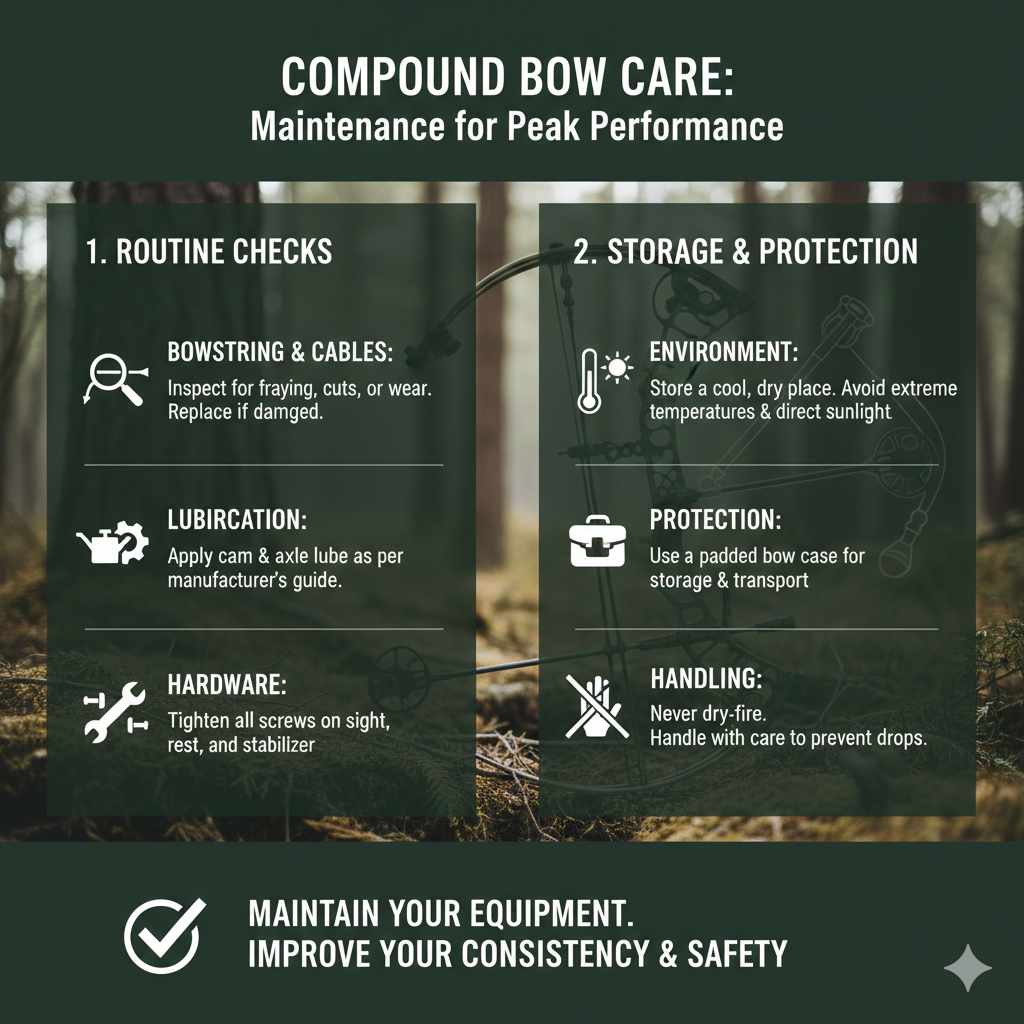
Maintaining a compound bow is important for its performance and lifespan. Regularly check the bowstring and cables for wear and tear. They need to be replaced when showing signs of damage, such as fraying. Lubricate moving parts as recommended by the manufacturer. Store the bow in a cool, dry place away from direct sunlight and extreme temperatures. These maintenance routines ensure the bow operates smoothly and safely. Regular maintenance extends the bow’s life, and helps ensure you hit your target consistently.
Single-Cam Compound Bows
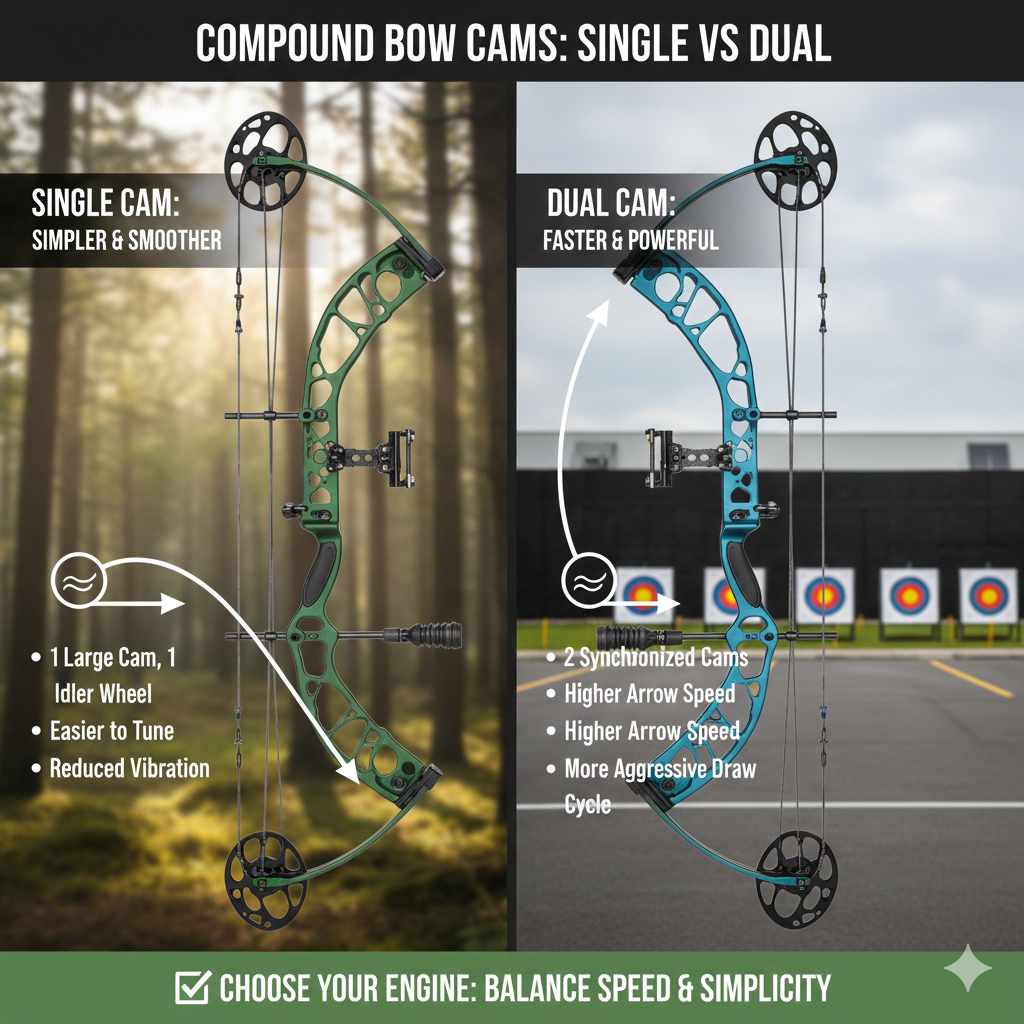
Single-cam compound bows have one cam at the bottom and an idler wheel at the top. This simple design offers several benefits, including ease of tuning and a generally smooth draw cycle. Because there is only one cam, it’s easier to synchronize and tune the bow. They are often a good choice for beginners due to their forgiving nature and ease of use. These bows typically require less adjustment and offer a user-friendly shooting experience. This simplicity can be especially helpful for those new to archery.
Advantages of Single-Cam Systems
Single-cam bows are popular for several key reasons. They often have a smoother draw cycle. They usually have fewer moving parts, which means less wear and tear and easier maintenance. Tuning is often simpler, because you only need to adjust one cam. This ease of setup is a great advantage. These bows provide a more forgiving shooting experience. This helps archers, especially beginners, achieve greater accuracy. They are considered a user-friendly option.
- Ease of Tuning: Single-cam bows are easier to tune compared to dual-cam bows. Archers only have to adjust one cam, making the process simpler and faster. This saves time and effort during setup.
- Smooth Draw Cycle: These bows often offer a smoother draw cycle. This is more comfortable for archers, especially during extended shooting sessions. It reduces fatigue.
- Fewer Moving Parts: The design involves fewer moving parts. This typically leads to reduced wear and tear. It also means less frequent maintenance.
- Forgiveness: Single-cam bows are often more forgiving. This makes them a great choice for archers who might not have perfect form. They allow for more consistent accuracy.
- Maintenance Simplicity: With fewer moving parts, maintenance tends to be straightforward. Archers can focus more on shooting and less on upkeep.
Considerations
While single-cam bows have many benefits, they also have some considerations. They may have slightly lower arrow speeds compared to some dual-cam systems. The string can wear out quicker than on other systems. It is important to consider your personal shooting style and goals. Evaluate whether the advantages of a single-cam bow, such as its smoothness and ease of use, outweigh the potential drawbacks for your archery needs.
One potential issue is the “lean” of the cam at full draw. Because the single cam is off-center, it can cause the bow to tilt slightly. Proper form and tuning are essential to counteract this and maintain accuracy. The design of these bows may produce less arrow speed than dual cam systems. Archers who want maximum speed need to consider this factor.
Dual-Cam Compound Bows
Dual-cam compound bows, also known as two-cam bows, have a cam at both the top and bottom of the bow. They are known for their high arrow speeds and generally consistent performance. These bows are favored by archers who want maximum power and speed. They require more careful tuning and may be considered a bit more complex. Dual-cam bows are a great choice for competitive shooters and those who are looking for enhanced accuracy and speed.
Advantages of Dual-Cam Systems
Dual-cam bows offer several key advantages. The biggest advantage is usually their speed. The balanced design of dual-cam systems allows for high arrow speeds. They are typically very accurate, because the balanced system creates a consistent arrow flight. Archers who want to maximize distance and accuracy often choose these bows. They are often preferred for competitive archery. They typically provide better overall performance.
- High Arrow Speed: Dual-cam bows are known for high arrow speeds. This can give arrows a flatter trajectory. It helps with increased accuracy, especially at longer ranges.
- Increased Accuracy: The balanced design promotes consistent arrow flight. This improves accuracy, leading to tighter groupings and better scores. This is very important for competitive archers.
- Efficiency: The dual-cam design can be highly efficient in transferring energy to the arrow. This results in greater power and speed.
- Performance: These bows tend to perform consistently. This is essential for competitive shooting. They provide a predictable experience.
- Balance: The balanced nature of the dual-cam system provides a more stable feel. This contributes to the overall shooting experience.
Considerations
Dual-cam bows have some potential drawbacks. They require more precise tuning, because both cams need to be synchronized. This can be more complex than tuning a single-cam bow. The draw cycle might not be as smooth, and they might require a bit more effort to draw. Archers should consider their experience level and shooting style. Those new to archery might find the tuning and draw cycle a bit challenging. The balance between benefits and drawbacks is something every archer must assess.
The tuning process can be more demanding, and archers need to ensure both cams are perfectly synchronized. An issue with timing can affect accuracy. They might feel slightly less forgiving than single-cam bows. Archers who have inconsistent form can find that dual-cam bows can be less forgiving. Archers must be aware of these characteristics to get the best results.
Single Cam vs Dual Cam: Key Differences and Comparisons
When picking between a single-cam and a dual-cam compound bow, you’ll want to think about your shooting style and archery goals. Single-cam bows often provide a smooth, forgiving experience, making them a great choice for those who are just starting out or are prioritizing comfort and ease of use. These bows generally have fewer moving parts, which can lead to simpler maintenance. Dual-cam bows provide greater speed and can offer more accuracy for experienced archers. They require careful tuning.
Draw Cycle Feel
The draw cycle greatly influences how the bow feels when you draw it back. Single-cam bows are known for their smoother draw cycles. They gradually increase in weight, making them easier and more comfortable to pull back. Dual-cam bows tend to have a more aggressive draw cycle. They build up weight more quickly and may feel heavier towards the end of the draw. Both styles have different characteristics. Choose the draw cycle that feels the best for you.
| Feature | Single Cam | Dual Cam |
|---|---|---|
| Draw Cycle | Generally Smooth | Can be Aggressive |
| Feel at Full Draw | Easier to Hold | May Require More Effort |
| Comfort | Often More Comfortable | May Vary |
Arrow Speed
Arrow speed is a critical factor in archery, determining how quickly the arrow travels to the target. Dual-cam bows frequently offer higher arrow speeds due to their design. This can be a huge benefit for archers needing maximum distance and a flatter trajectory. Single-cam bows still provide excellent speeds, though they may be slightly slower in comparison. The choice depends on the priorities of the archer. Archers looking to shoot farther often benefit from the higher speeds of dual-cam bows.
Consider the arrow speed specifications of the bow. A difference of even a few feet per second can be important. Faster arrows have flatter trajectories, making them less affected by gravity over distance.
Maintenance and Tuning
The maintenance requirements for single-cam and dual-cam bows vary. Single-cam bows are typically simpler to maintain. They have fewer moving parts, reducing the amount of wear and tear. Dual-cam bows require more detailed tuning and alignment of the cams. Regular maintenance, such as checking the bowstring and cables, is important for both types of bows. For beginners, the simplicity of a single-cam bow can be a huge plus. This simplifies the learning curve and keeps the focus on shooting.
- String and Cable Inspection: Regularly check for signs of wear and tear. Replace them if you find damage. This keeps your bow safe and effective.
- Cam Synchronization: Essential for dual-cam bows. Ensure the cams are perfectly synchronized for consistent performance.
- Lubrication: Keep moving parts lubricated to ensure smooth operation. Follow manufacturer recommendations.
- Storage: Store bows in a cool, dry place away from direct sunlight and extreme temperatures.
Choosing the Right Bow
Choosing the correct compound bow relies on a few key factors. Consider your level of experience, your shooting style, and what you aim to achieve with archery. Beginners might prefer the smooth draw cycle and forgiving nature of single-cam bows. Experienced archers looking for high arrow speeds and precision might choose dual-cam bows. Reflect on what is important to you.
Matching Your Needs
Determine your primary goal. Are you looking to have fun at the range or compete in archery events? Think about how often you plan to shoot and the time you have for tuning and maintenance. Your physical strength plays a role, too. A bow that matches your strength and feels comfortable to draw will lead to a better experience. Consider your shooting style and the kind of shots you typically take.
- Experience Level: Beginners often do well with single-cam bows due to their user-friendliness. Experienced archers might opt for dual-cam bows for their performance.
- Shooting Style: If you prefer a relaxed shooting style, a single-cam might be ideal. Archers who prefer high speeds might lean toward dual-cam models.
- Shooting Goals: Competitive archers may prioritize the speed and accuracy of dual-cam bows. Those focused on recreational shooting might prefer the ease of single-cam bows.
- Maintenance Time: Consider how much time you want to spend on maintenance and tuning. Single-cam bows are often simpler to maintain.
Testing Bows Before Buying
Test shooting different bows before purchasing is essential. Visit a local archery shop and try out both single-cam and dual-cam bows. This lets you get a feel for the draw cycle, the holding weight, and the overall feel of the bow. Pay attention to how the bow feels in your hand and whether the draw weight is manageable. Talk with experienced archers. They can offer advice based on their own experiences. Feel what works best for you. Make an informed choice based on your specific needs and preferences.
Some archery shops have indoor ranges, where you can take some shots. This gives you a true feel for how the bow performs.

Frequently Asked Questions
Question: Which type of bow is best for beginners?
Answer: Single-cam bows are generally recommended for beginners because they are easier to tune and offer a smoother draw cycle, making them more forgiving.
Question: Are dual-cam bows faster than single-cam bows?
Answer: Yes, dual-cam bows often have higher arrow speeds because their design allows for more efficient energy transfer.
Question: How often should I replace the bowstring and cables?
Answer: It depends on usage, but usually every 1-2 years, or sooner if you see signs of wear or damage.
Question: Is tuning a dual-cam bow difficult?
Answer: Yes, tuning dual-cam bows requires more precision and effort than tuning single-cam bows, as both cams need to be synchronized.
Question: Can I adjust the draw weight on a compound bow?
Answer: Yes, most compound bows have an adjustable draw weight range, allowing you to fine-tune the bow to your strength and preference.
Final Thoughts
Picking between a single-cam and a dual-cam compound bow is a personal choice. You’ve seen the major Difference Between Single Cam vs Dual Cam Compound Bow designs, and this is important. Single-cam bows are often easier to shoot, making them perfect for those starting in archery. Dual-cam bows provide impressive speeds and accuracy. Remember to assess your experience level and shooting preferences to select the best type of bow for you. Don’t rush your decision! Take your time, test some bows, and ask questions. Enjoy the archery!