
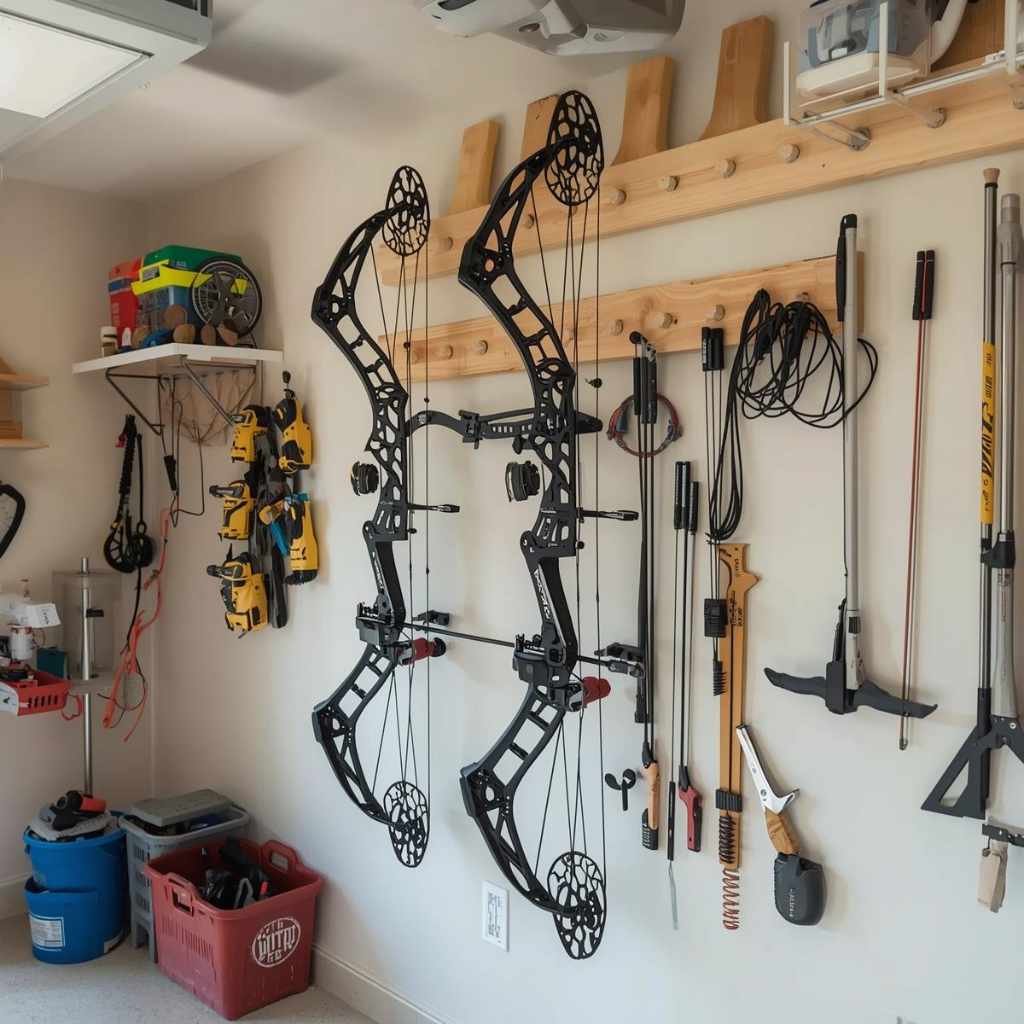
Building a DIY Wall Bow Rack: Simple Space-Saving Idea might seem tricky at first. It’s a common project, and while the idea is simple, getting the details right can be challenging for beginners. Don’t worry, though! This guide breaks down the process into easy-to-follow steps. We’ll show you exactly how to create a rack that keeps your bows safe and organized, all while saving space. Let’s get started and explore how to build your own.
Choosing the Right Materials for Your DIY Wall Bow Rack
Selecting the right materials is the first and perhaps most important step when you decide to build a DIY Wall Bow Rack: Simple Space-Saving Idea. The strength and longevity of your rack will depend on the materials you choose. Opting for sturdy, durable options ensures that your bows are securely held and protected from damage. Consider the weight of your bows, the environment where the rack will be placed, and your personal style preferences when making your decisions.
Essential Material Considerations
You need to assess the weight and type of bows you’ll be storing. Compound bows, recurve bows, and longbows have varying weights and shapes, which influence the rack’s design. The materials should be able to support the total weight of the bows without bending or breaking. Also, consider the environment where the rack will be mounted. Will it be indoors or outdoors? If outdoors, the materials should be weather-resistant to prevent damage from moisture or extreme temperatures.
Wood Type: Select solid wood for its durability and aesthetic appeal.
Solid wood options like oak, maple, or pine provide excellent support and a classic look. Oak is particularly strong and can withstand considerable weight, making it a reliable choice for heavier bows. Maple offers a smooth surface that can be easily painted or stained to match your decor. Pine is a more budget-friendly option that’s still durable if properly treated. Make sure the wood is kiln-dried to prevent warping and cracking over time. Untreated wood is prone to moisture and can rot, especially when exposed to humidity. Ensure you seal the wood with a protective finish for increased longevity.
Fasteners: Pick screws, nails, or bolts that will securely hold the rack together.
The type of fasteners you choose significantly impacts the rack’s structural integrity. Screws provide a more secure and reliable hold compared to nails, especially for load-bearing components. Use screws that are long enough to penetrate deep into the wood, ensuring a firm grip. For added strength, consider using bolts, particularly in areas where the rack will bear the most weight. Always pre-drill holes to prevent the wood from splitting and to ease the screwing process. Stainless steel or coated screws are recommended for outdoor use to prevent rust and corrosion.
Padding: Use soft material to protect your bows from scratches.
Padding prevents damage to your valuable bows. Felt, foam, or rubber tubing placed where the bow rests will protect against scratches and dings. Felt is a good option for its soft texture and cushioning properties, while foam can provide additional impact absorption. Rubber tubing is ideal for creating cradles that securely hold the bow limbs. The padding should be thick enough to provide adequate protection without being bulky or interfering with the bow’s storage. Proper padding makes the rack’s appearance more professional and ensures the longevity of your archery equipment.
Tools Needed for the Job
Aside from the materials, you’ll need the proper tools. Having the right tools makes the construction process smoother and more accurate. Basic tools combined with a few specialized ones can make your DIY Wall Bow Rack: Simple Space-Saving Idea project significantly more successful. From measuring and cutting to assembling and securing, each tool serves a specific purpose in creating a functional and attractive rack.
Measuring Tools: A measuring tape and a level are essential.
Accurate measurements are critical. Use a measuring tape to measure the dimensions of the bows and the available wall space. A level is vital for ensuring the rack is straight and secure. Mark the positions of the mounting hardware and the placement of the bow supports. Ensuring the rack is level prevents uneven weight distribution and the potential for the rack to tip. Make it perfect, making adjustments as needed during installation. Accurate measurements save time and material and contribute to a polished end product.
Cutting Tools: A saw to cut the wood to the right size.
You’ll need a saw to cut the wood pieces to the dimensions specified in your plan. A hand saw is a basic option for smaller projects, while a circular saw or a jigsaw is recommended for larger or more complex designs. If you want to create angled cuts, a miter saw is ideal. Always use safety glasses and gloves when using cutting tools. Ensure the saw blade is sharp for clean cuts and reduce the risk of splintering the wood. Accurate cutting allows for a better fit and overall stability of the rack.
Assembly Tools: A drill for driving screws and other assembly.
A drill is essential for assembling the rack. It will be used for driving screws, pre-drilling holes, and attaching the mounting hardware to the wall. Ensure the drill has the correct drill bits and screwdriver bits needed for the screws and fasteners. A power drill simplifies the process, making it easier and faster to construct the rack. Always use a drill bit that is slightly smaller than the diameter of the screws to prevent the wood from splitting. Also, consider using a screwdriver set for additional convenience.
Planning the Design for Your DIY Wall Bow Rack
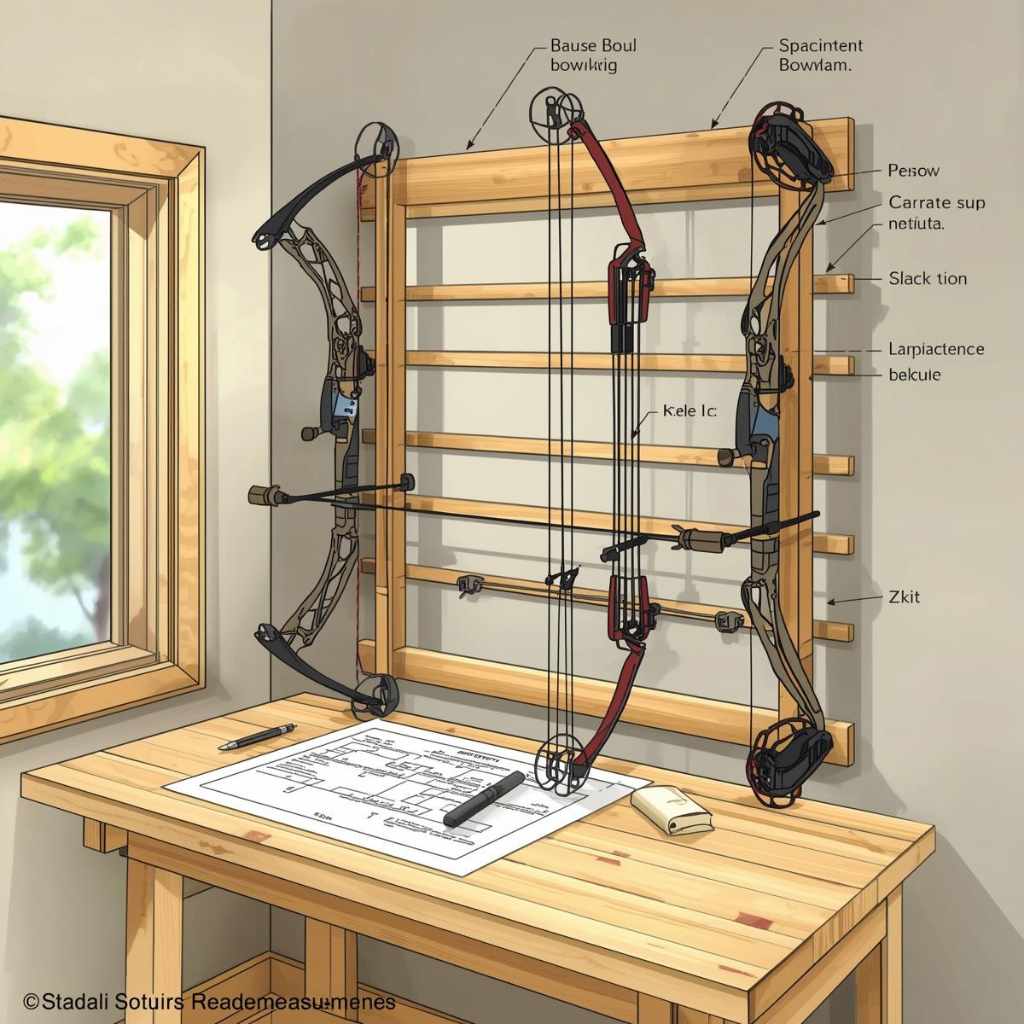
Planning is key before you begin building your DIY Wall Bow Rack: Simple Space-Saving Idea. The layout and design of your rack will affect its functionality, aesthetics, and ease of construction. The right plan will make your project smoother and more successful. This includes taking measurements, considering the number and types of bows, and visualizing the final product. A well-considered design will ensure you end up with a rack that meets your needs.
Determining the Size and Capacity
Consider the dimensions of your bows and the space available. Measure your bows and the space available on the wall. To accommodate all of your bows, calculate the rack’s capacity. Consider adding extra space to expand your archery collection in the future. Accurate measurements prevent wasted materials and ensure that your rack fits perfectly in its designated location.
Measuring Your Bows: Measure the length and width of your bows.
The length and width of your bows will determine the overall size of your rack. For a compound bow, measure from the tip of one cam to the tip of the other. For recurve and longbows, measure the length of the limbs and handle. Also, measure the thickness of the bows, especially if you plan to store multiple bows side by side. Make sure to account for any accessories attached to your bows, such as sights or stabilizers, when taking measurements.
Space Considerations: Evaluate the available wall space.
Take into account the dimensions of your bows and the space available on the wall. Measure the height and width of the wall area where you plan to mount the rack. Consider any obstacles like outlets, light switches, or other objects that may obstruct your design. Ensure there is enough space around the rack for easy access to your bows. Decide where you want to place the rack. Also, ensure there is sufficient space for bow removal and storage.
Capacity Planning: Estimate the number of bows the rack needs to hold.
Decide how many bows you want to store on the rack, and consider including extra spaces for future expansion. Also, plan for the types of bows you have, as different bow types may require different storage configurations. Take into account any accessories, such as arrows and quivers, that you want to store with the bows. Consider whether you want vertical or horizontal storage and design the rack accordingly. Make a plan for the rack’s dimensions based on its capacity, ensuring it can accommodate all of your current bows plus a few extras.
Visualizing and Sketching the Design
Sketching a design before construction helps you visualize the finished product and identify any issues. Create a basic sketch of the rack, indicating the dimensions, materials, and features. Experiment with different layouts and storage options until you come up with a design that meets your needs.
Sketching the Design: Create a basic sketch of the rack.
Sketching out your design is the starting point for your DIY project. Use graph paper or a digital design tool to draw a simple representation of your DIY Wall Bow Rack: Simple Space-Saving Idea. Include dimensions, such as the length, width, and height. Label the different components of the rack, such as the frame, shelves, and support brackets. Add details such as the location of the bow rests and any additional storage features. The initial sketches will help refine the design and avoid costly mistakes during construction.
Layout Options: Explore different storage layouts.
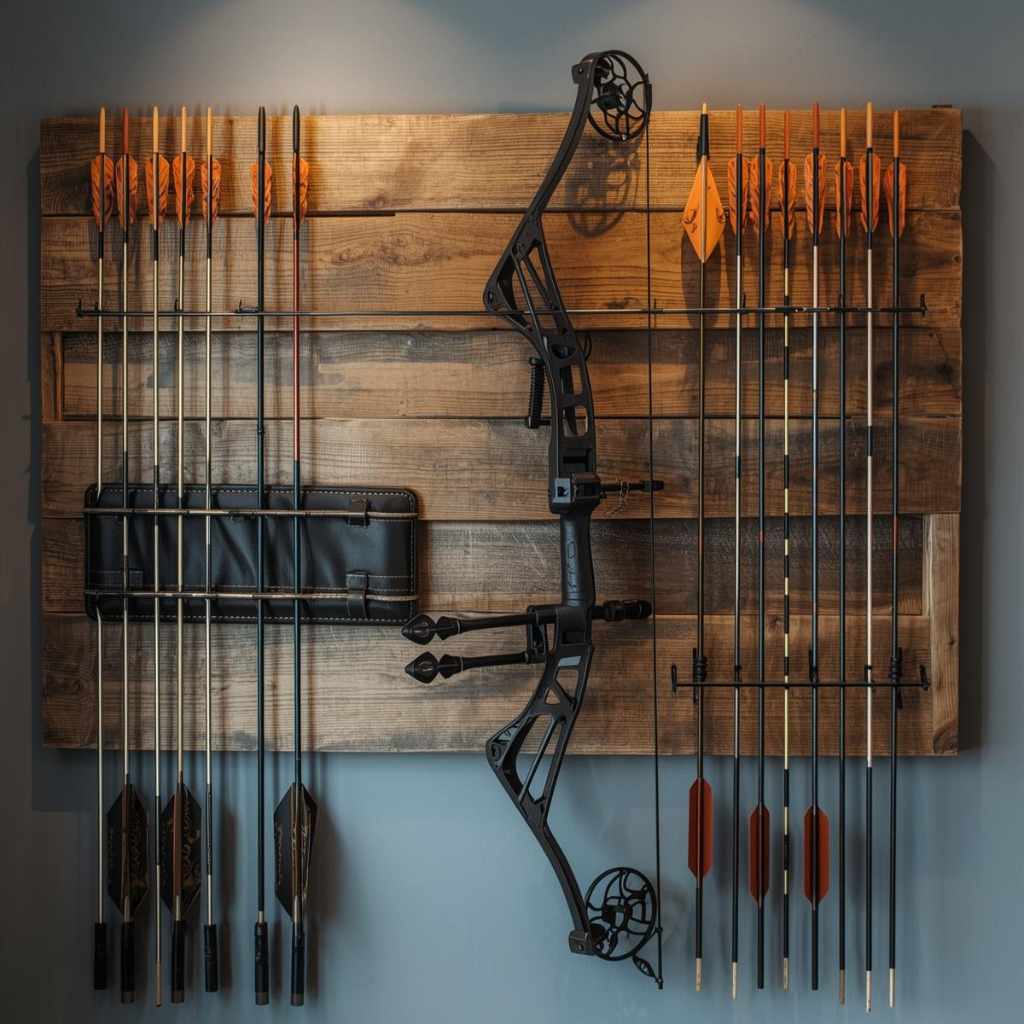
Consider different ways to store the bows, such as vertical or horizontal arrangements. Experiment with different storage layouts to maximize space efficiency and accessibility. You might choose to store your bows on hooks, shelves, or cradles. Consider incorporating arrow storage or a shelf for accessories. Consider the aesthetic appeal. Visualizing how the bows will be arranged and organized will help you find the best layout to suit your needs and style. Try multiple designs to identify the best fit.
Adding Extra Features: Consider additional storage.
Enhance your rack with shelves for accessories, arrow storage, or even a small drawer for tools. If you have extra accessories, a shelf or a small basket can be helpful. Adding these features can increase your bow rack’s value and ease of use. Consider adding a small area for bow maintenance or a hook for hanging items. Integrating these features will make your DIY Wall Bow Rack more functional and versatile.
Building the DIY Wall Bow Rack
The construction phase is where the design comes to life when building your DIY Wall Bow Rack: Simple Space-Saving Idea. Accuracy, precision, and safety are important during this step. Follow the measurements and instructions carefully to create a functional and visually appealing rack. A well-executed construction phase ensures that the final product not only stores your bows effectively but also enhances the overall look of your space.
Cutting the Wood Pieces
Accurate cutting is important to building a rack. Using a saw, cut the wood pieces according to your design. Measure each piece and make clean, straight cuts to ensure the rack assembles correctly.
Marking and Measuring: Accurately mark and measure the wood pieces.
Use a measuring tape and pencil to carefully mark the dimensions of each wood piece according to your design plan. Double-check your measurements to avoid errors. Ensure all markings are clear and accurate before cutting. Accurate marking prevents any problems when you assemble the rack. Pay extra attention to the angles and dimensions, as these measurements are important to the structure of your bow rack.
Sawing Techniques: Use appropriate sawing techniques.
Select the appropriate saw for the wood you’re using and the type of cuts needed. Use a hand saw for straight cuts, while a circular saw or miter saw gives more accuracy. Always make sure the saw blade is sharp to get clean cuts and reduce splintering. Cut at a steady pace to maintain accuracy. Practice on scrap wood to get familiar with the saw. Remember to follow safety precautions, such as wearing safety glasses and gloves.
Checking the Fit: Before assembling, double-check all cuts.
Before assembling the rack, check each cut to make sure it matches your design’s dimensions. Lay the pieces together to verify that they fit together correctly. Make any adjustments needed, like trimming small errors. This will help you identify any problems early. Ensure all cuts are straight and at the right angles, particularly the load-bearing supports. Doing this makes sure that the rack is stable and correctly assembled.
Assembling the Rack
Assembling the rack is the next stage in your DIY Wall Bow Rack: Simple Space-Saving Idea. Follow your design plan. Attaching the pieces to form the basic structure of the rack is important for a strong and functional rack.
Frame Assembly: Assemble the frame using screws.
Start by assembling the frame of your bow rack. Apply wood glue to the edges of the pieces to join them. Use screws to secure the pieces, making sure they are perfectly aligned. Use clamps to hold the pieces together while the glue dries, ensuring a sturdy frame. Make sure to screw in the screws evenly so that the frame is square. This is the foundation of your bow rack, so a solid, accurate frame is critical.
Attaching Supports and Shelves: Securely attach the supports.
If your design includes shelves or support brackets, secure them with screws. Make sure the shelves are level and positioned correctly. Apply wood glue to the joints before attaching the shelves. This increases the strength of the joints. Use a level to confirm that the shelves and supports are horizontally level. Ensure the shelves are spaced correctly to accommodate the bows. This will allow the bows to be easily placed and removed.
Adding Padding and Bow Rests: Add padding to protect your bows.
Place padding or felt on the areas where the bows will rest. Attach these materials using staples, glue, or double-sided tape. The padding should be thick enough to offer protection without being too bulky. Make sure to space the rests so the bows don’t touch each other. Doing this will prevent the bows from getting scratched or damaged. The bow rests should be placed at positions to hold the bows safely.
Mounting and Finishing
The final step involves mounting the rack on the wall and finishing touches. Correct mounting is key to ensure your rack is stable and looks great. The finishing touches enhance the rack’s appearance and protect the wood. Proper finishing and mounting will secure your DIY Wall Bow Rack: Simple Space-Saving Idea.
Locating Wall Studs: Locate wall studs for secure mounting.
Locating wall studs is crucial for safely mounting your bow rack. Use a stud finder to locate the studs behind the wall. Mark the positions of the studs to ensure the rack can be securely attached. If the rack is not attached to studs, it won’t be as stable or may not handle the bows’ weight. Attaching the rack directly to the studs ensures maximum support. Make sure the mounting hardware, such as screws, can penetrate the wall studs. This ensures that the rack is stable.
Mounting the Rack: Securely attach the rack to the wall.
Align the rack with the marked stud locations. Use the correct screws to attach the rack to the studs. Ensure the rack is level using a level. Tighten the screws securely so that the rack is firmly against the wall. To achieve a secure and stable mounting, it is essential to mount the rack to the wall studs. This is important for handling the weight of the bows. It also minimizes any risk of the rack falling. Double-check all screws to ensure the rack is safely attached.
Finishing Touches: Apply finish for protection and aesthetics.
Apply a protective finish such as paint, stain, or varnish to protect the wood. Consider using a stain that matches the aesthetic of your space. Alternatively, use clear varnish to protect the wood while showing its natural grain. Apply the finish evenly, letting it dry completely according to the manufacturer’s directions. Add decorative touches like labels, stickers, or trim to the rack to complete the project. These finishing touches help make your bow rack look polished and durable.
Real-Life Applications and Examples
Looking at real-life examples and applications gives you inspiration and ideas. Seeing how others have completed their DIY Wall Bow Rack: Simple Space-Saving Idea provides examples of what’s possible. These examples demonstrate the practical benefits and flexibility of customized bow storage.
Archers have crafted varied DIY Wall Bow Rack: Simple Space-Saving Idea solutions to meet specific requirements. These show how you can adapt the design to fit different spaces and needs. From simple, single-bow racks to elaborate storage systems, these examples show how to customize storage for archery equipment.
- The Compact Corner Rack: A small, angled rack that perfectly fits a corner.
This rack makes the most of unused space by using a corner in a room. It usually has two or three vertical posts with slots or pegs to hold the bows. It’s especially useful in smaller rooms where space is limited. The design features a stable base and is fixed to the wall for added security. It can also include a small shelf at the top for storing other accessories. This design’s clever use of space and practicality make it useful for archers with limited space.
- The Multi-Bow Storage System: A large rack that holds many bows.
For archers with a large collection, a multi-bow storage system is a solution. These racks often have multiple shelves, hooks, and slots to hold various bow types. They can be made of wood or metal. They often have built-in arrow storage and accessory compartments. Some designs include a display area, which lets archers show off their equipment. This kind of system provides an organized, attractive display. It’s useful for home and commercial archery setups.
- The Portable Archery Rack: A mobile rack for easy relocation.
A portable archery rack provides flexibility by offering easy movement. These racks typically have wheels, making it easy to move bows around. They come in various sizes and designs, from simple racks to ones with multiple shelves and compartments. They are especially useful for archers who attend events. They have a solid base and a secure locking mechanism. This ensures stability when moving and storage.
Consider the following scenarios when planning your own DIY Wall Bow Rack: Simple Space-Saving Idea:
- You have limited space and need to maximize the use of a small area, such as a closet or a corner of a room.
- You need to store multiple bows, arrows, and accessories in an organized, easy-to-access manner.
- You wish to display your archery equipment in a safe, attractive, and accessible way.
Frequently Asked Questions
Question: What’s the best wood to use for a bow rack?
Answer: Oak, maple, and pine are good choices. Oak is strong and durable, maple offers a smooth surface, and pine is more budget-friendly.
Question: How do I measure my bows correctly?
Answer: For compound bows, measure from cam tip to cam tip. For recurve and longbows, measure the total length of the bow.
Question: What kind of fasteners should I use?
Answer: Use screws. They provide a more secure and reliable hold compared to nails, particularly for load-bearing components.
Question: How do I make sure the rack is level when mounting it?
Answer: Use a level when you are attaching the rack to the wall. Adjust the mounting hardware to make sure everything is straight.
Question: Can I customize the design of my bow rack?
Answer: Yes, you can. You can add shelves, arrow storage, or customize the dimensions to suit your specific needs.
Final Thoughts
Creating your own DIY Wall Bow Rack: Simple Space-Saving Idea is achievable with some planning and effort. This guide offers a simple approach, from picking the materials to building the rack. It gives you the information and skills to build a functional and attractive storage solution. You’ve learned about choosing materials, planning the design, constructing the rack, and making the final adjustments. Remember to measure correctly, choose sturdy materials, and take your time during construction. This way, you’ll ensure that your bows are stored safely and efficiently.
Ready to start? Gather your materials, follow the steps, and get to work. Enjoy building your own bow rack that fits your space and meets your needs.