A peep sight is not strictly required for all bow shooting, especially traditional archery. However, for modern compound archers seeking maximum precision and consistency at longer distances, a correctly installed peep sight is a highly recommended tool that significantly aids aiming.
Welcome! If you’re getting into archery, you’ve likely seen those tiny circles on the bowstring and wondered what they are for. That little device is called a peep sight, and it often causes confusion for newcomers. Do you really need one to hit the target? The answer isn’t a simple yes or no; it depends on your bow, your goals, and how you like to shoot. We will break down exactly what a peep sight does, who benefits most from it, and how to decide if it’s right for your setup. Let’s clear up the mystery so you can focus on enjoying your time at the range.
Understanding the Peep Sight: What Is It and How Does It Work?
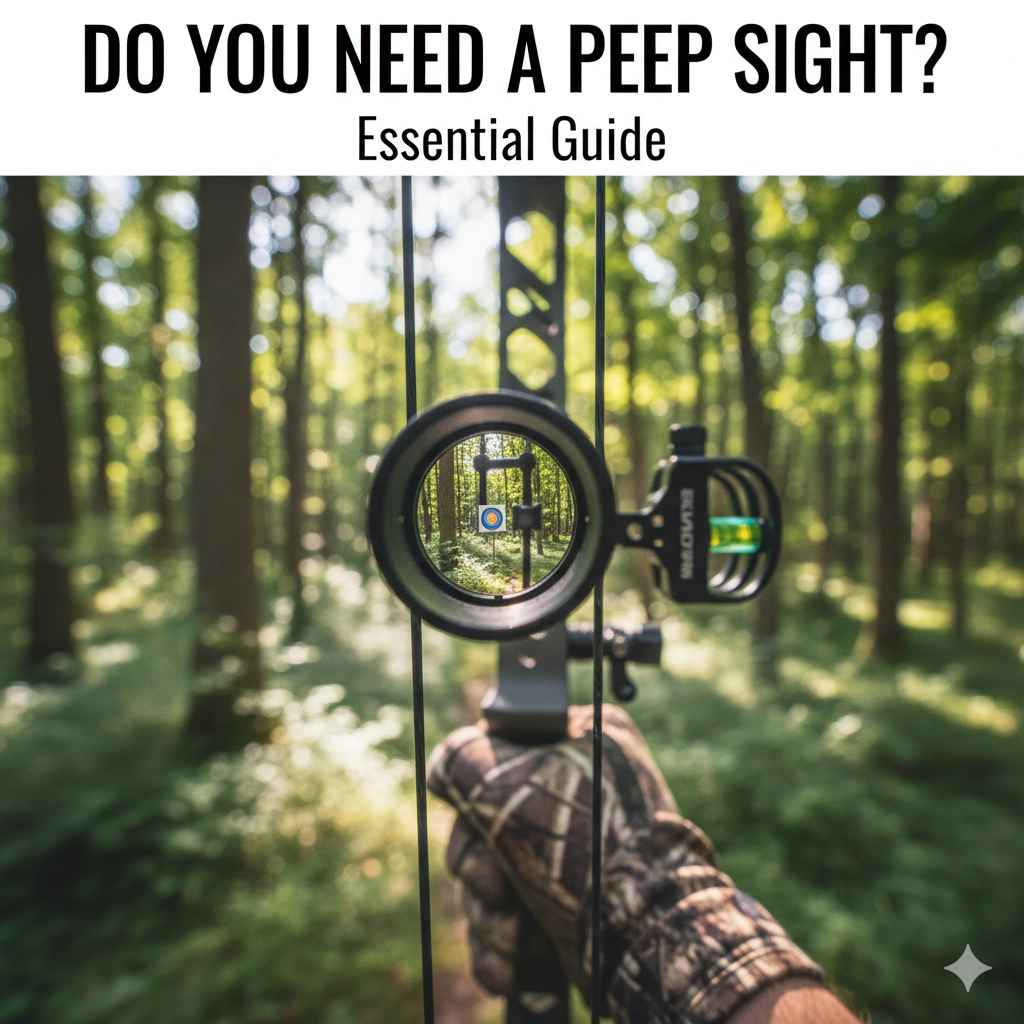
The peep sight is one of those small pieces of equipment that makes a big difference once you know how to use it. It’s a small, circular aperture or hole inserted into the bowstring, usually located near the nocking point.
The Anatomy of the Peep Sight
Think of the peep sight as the rear sight on a rifle or the rear sight on a set of iron sights on a firearm. Its job is simple: provide a consistent reference point for your eye.
When you draw your bowstring back to your anchor point (the spot where your string hand rests against your face or jaw), the peep sight rotates into alignment with your sight pin and the target.
When set up correctly, you look through the peep, and the front sight pin will appear perfectly centered within that small circle. This process forces your eye into the exact same position every single time you shoot, which is the secret sauce for accuracy.
Peep Sights vs. Traditional Archery
It is crucial to understand that peep sights are almost exclusively used on modern compound bows and sometimes on high-end recurves equipped with modern sights.
Compound Bows: Peeps are very common because these bows use sophisticated multi-pin sights that benefit immensely from the added precision a peep provides.
Traditional Archery (Barebow/Longbow): If you shoot a traditional longbow or recurve without any external sights (barebow), you absolutely do not need a peep sight. Those styles rely on instinctive shooting, using the arrow tip or the tip of the bow as a general reference.

The Big Question: Do You Need One? Weighing the Pros and Cons
For the beginner, the necessity of a peep sight often depends on the type of bow you are using and your long-term shooting aspirations.
Advantages of Using a Peep Sight (The Pros)
The primary reason archers use a peep sight is for unmatched consistency and accuracy, especially when shooting at longer yardages.
Superior Consistency: This is the biggest benefit. The peep forces your head position to be identical shot after shot. If your head moves even a tiny bit, the pin will no longer line up perfectly in the center of the peep hole, giving you immediate feedback that something is wrong.
Improved Precision at Distance: When shooting 30, 40, or 50 yards, even minute errors in alignment are magnified. A peep sight tightens that grouping significantly.
Faster Target Acquisition: Once you are accustomed to using it, aligning the pin through the peep can be faster than trying to perfectly center the pin on the target dot alone.
Better Light Gathering: In low-light situations, the peep helps funnel light directly to your eye, making the front sight pin stand out better against the background.
Disadvantages of Using a Peep Sight (The Cons)
While fantastic for precision shooting, peep sights introduce complications, especially for beginners.
Anchor Point Sensitivity: If your anchor point changes—even slightly—the peep will move relative to your sight pin. This can lead to frustrating misses that aren’t caused by poor form, but by the peep rotating out of alignment.
Installation and Setup Time: Installing a peep sight requires a bow press (a specialized tool) to safely tension and de-tension the bowstring. It also requires precise adjustment after installation, which is often best handled by a professional pro shop.
Peep Rotation Issues: If the peep twists slightly on the string during the draw cycle, it can block your view or throw off your alignment. This requires specialized rubber tubing (peep alignment tubing) to help keep it square.
Not Ideal for Instinctive Shooting: If your goal is to transition to traditional, instinctive shooting styles later on, learning to rely on a peep now might hinder that development.
Comparison Table: Peep Sight vs. No Peep Sight
This table summarizes when each approach works best:
| Scenario/Goal | Peep Sight Recommended? | Why? |
|---|---|---|
| Target shooting compound bow (30+ yards) | Yes, highly recommended | Maximizes inherent compound bow precision. |
| Hunting with a compound bow (mid-range) | Usually yes, if comfortable | Offers reliable aiming in varying light. |
| Beginner shooting 10-15 yards (learning form) | Not initially necessary | Focus should be purely on form; a peep can distract. |
| Traditional longbow or barebow shooting | No | These styles rely on different aiming methods. |
The Beginner’s Path: Should You Install One Right Away?
As a new archer, I often advise clients to hold off on installing a peep sight until they have mastered the basics. Trying to learn proper form while simultaneously learning to align a peep can be overwhelming.
Phase 1: Focusing on Form Without a Peep
For your first few months, focus entirely on these core fundamentals:
1. Stance: Keeping your feet planted correctly.
2. Grip: Holding the bow consistently without torquing the handle.
3. Anchor: Finding a solid, repeatable spot on your face or jawline where your drawing hand consistently lands.
4. Release: Executing a clean, surprise release of the string.
When you can consistently group your arrows closely at 10 or 20 yards without a peep, your form is becoming reliable. At this stage, the sight pin is your primary aiming tool.
Phase 2: Introducing the Peep Sight for Precision
Once your form is solid, adding a peep sight is the next logical step to refine your accuracy, especially if you plan to move into competitive target shooting or serious hunting where longer shots are necessary. It shifts your focus from “where is my pin aiming?” to “is my pin centered in my peep?”
How to Determine the Correct Peep Size
If you decide you want a peep sight, the size is crucial. Too large, and it defeats the purpose of precision; too small, and you won’t be able to see clearly, especially in dim light.
Peep sizes are measured in fractions of an inch. Common sizes include 3/32″, 1/8″, and 5/32″.
Factors Affecting Peep Size Choice
The ideal size is a balance between clear sight picture and aiming precision.
Shooting Distance: Longer distances benefit from smaller peeps (e.g., 3/32″) because they offer a finer sight picture.
Light Conditions: If you often shoot at dawn or dusk, a slightly larger peep (e.g., 1/8″) lets in more light, preventing tunnel vision.
Pin Guard Size: The size of your front sight housing must complement the peep. You want the sight pin aperture to comfortably fit within the peep hole, leaving a small, even ring of black around the pin.
A professional bow technician can measure your setup and recommend the best starting size. For most compound target archers, an 1/8″ peep is a great starting point.
Installation: A Job Best Left to the Experts (For Beginners)
While I love DIY projects, installing a peep sight is one area where a beginner should seek professional help. Why? Because it involves manipulating the bowstring under extreme tension.
The Risks of DIY Peep Installation
Working on modern bow strings without proper equipment is dangerous for both you and your bow.
1. Limb Damage: Without a bow press, attempting to tie in or adjust the peep can place immense, uneven pressure on the bow limbs, potentially causing them to crack or fail catastrophically when shot.
2. String Integrity: Incorrectly tying the string knots can cause the peep to slip out of position or cause string fuzzing/fraying over time.
3. Improper Alignment: The peep must be perpendicular to the string when anchored. Getting the initial tie-in location wrong means it will twist every time you draw.
You can find excellent pro shops associated with local archery ranges or sporting goods stores. This initial setup fee is a small investment in safe and accurate shooting. You can read more about safe equipment handling guidelines provided by organizations like the Archery Trade Association.
Dialing In: Aligning Your Peep Sight with Your Front Sight Pin
Once the peep is installed, the next step is marrying it to your front sight. This process ensures that when you see the pin centered in the peep, you are looking straight at the target.
Step 1: Finding the Initial Anchor and Draw Length
Make sure your draw length is perfectly set. An inconsistent draw length will cause the peep to move up and down relative to your eye, making consistent alignment impossible.
Step 2: Initial Peep Placement (The “Close Shot”)
1. Attach the peep (or have it professionally installed).
2. Set your sight to a very close distance (e.g., 10 yards).
3. Draw your bow and look through the peep at the target.
4. Have a friend lightly tape the peep in place where it naturally settles without twisting.
Step 3: Adjusting the Sight Pin
1. While holding that anchor, adjust your front sight pin until it perfectly centers the target through the taped peep.
2. Hold this alignment and verify that when you relax your anchor slightly, the pin drifts off-center within the peep, confirming the alignment is working.
Step 4: Finalizing the Peep Alignment (The “Twist Check”)
This is the most crucial step for long-term accuracy.
1. Draw the bow and anchor firmly.
2. Check the peep. Is the hole perfectly round and facing you straight on?
3. If the peep is tilted (oval-shaped), it means the string is twisting slightly as you draw.
4. If twisting occurs, the bow technician will need to adjust the peep rotation, often by installing small rubber tubing around the string inside the peep housing, or by slightly repositioning the peep up or down the string path. The goal is for the peep to be perfectly square when you reach full draw.
Peep Sights for Different Archery Disciplines
The utility of the peep sight varies depending on what you are doing with your bow.
Target Archery (FITA/World Archery Style)
In target archery, especially at longer ranges (70 meters or more), the peep sight is essential. Target shooters use very small aperture peeps (sometimes even using aperture inserts that are tiny) combined with specialized scopes on their front sights. The goal here is microscopic precision, and the peep guarantees that the sight system is perfectly registered with the eye.
3D Archery and Hunting Scenarios
For 3D archery (shooting at foam animal targets at unknown yardages) and hunting, peep sights are extremely common but slightly different.
3D Archery: Archers often use a larger peep (like 1/8″) because they need to quickly acquire the target and judge yardage. Some 3D shooters prefer not to use a peep at all when judging yardage, as the peep can make it harder to judge distance quickly, forcing them back to pin-only aiming.
Hunting: The peep is favored because it works well in the low-light conditions common during hunting hours (early morning/late evening). It provides a guaranteed aiming reference when visibility is low.
The Decision for Barebow/Instinctive Archers
If your bow setup has no sights at all, or if you are only shooting close range (under 20 yards) for fun or basic form practice, you should not use a peep. These shooting styles are about developing a “feel” for where the arrow will land based on body position and practice, not mechanical alignment. Adding a peep here creates an unnecessary dependency on a sight system you are trying to avoid.
Troubleshooting Common Peep Sight Issues
Even when installed correctly, peep sights can cause headaches if you aren’t aware of potential problems.
Problem 1: The Pin Seems to Float Outside the Peep
This usually means one of two things:
1. Inconsistent Anchor: Your drawing hand is slipping forward or backward slightly on your jawline, which changes where your head is relative to the string. Correct this by reinforcing a hard, repeatable anchor point.
2. Peep Rotation: The peep is twisting due to string torque. This needs professional re-tubing or tying adjustment.
Problem 2: I Can’t See Clearly Through the Peep at Full Draw
If the sight picture is dark, blurry, or you feel like you are straining your eye:
Peep is Too Small: Your aperture might be too tight for your eyes or the available light. Consider going up one size (e.g., from 3/32″ to 1/8″).
Anchor is Too Far Forward: If your head is too close to the string, the peep might be obscured by your nose or cheekbone. Move your head slightly back, or adjust your anchor point slightly forward.
Problem 3: The Shot Feels Slow or Hesitant
This is psychological. When you have to perfectly frame the pin in the peep, it can cause you to “stare” or “hold” the aim too long, leading to tension and a jerky release.
The Fix: Practice “shot calling.” Draw, anchor, find your sight picture quickly, and immediately tell yourself “Execute!” without waiting for perfect sight alignment. Trust that if the pin is generally near the center, you’ve done enough; the small adjustments are the final part of the release, not the aiming process.
Essential Peep Sight Maintenance Tips
A peep sight is a simple piece of plastic or metal, but the string it sits on requires care.
Key Maintenance Points:
1. Check for Fraying: Periodically inspect the string material immediately surrounding the peep. If you see broken strands or fuzziness, the peep might be rubbing or rubbing the string incorrectly.
2. Verify Tightness: Ensure the peep itself isn’t loose on the string. It should be snug enough that it requires moderate effort to rotate by hand when the bow is unstrung.
3. Tubing Inspection (If Used): If your peep uses alignment tubing, inspect this tubing every few months. UV light and friction cause it to break down. A broken piece of tubing can cause the peep to spin wildly.
For information on bowstring material and care, resources from manufacturers like those listed on official archery organization websites (check the requirements often found on pages like those maintained by USA Archery for competition standards) are excellent references.

Frequently Asked Questions (FAQ) about Peep Sights
How much does a peep sight installation cost?
Installation usually costs between $15 and $30 at a professional bow shop. This price often includes setting the correct position and tying it in securely. If you buy the peep separately, the total cost will be slightly higher.
Can I install a peep sight myself without a bow press?
No, it is strongly advised against. Trying to install or adjust a peep on a compound bow without a proper bow press can damage the bow limbs, void warranties, or even cause injury if the string snaps unexpectedly.
What is ‘peep float’? Is that bad?
Peep float is the tiny amount of movement the sight pin has inside the peep hole, even when you hold perfectly still. A very small amount of float (maybe the thickness of a hair) is normal and expected.
What size peep sight should beginners use?
Most beginners start with a 1/8-inch peep sight. It offers a good balance between visibility and precision. Smaller peeps like 3/32-inch are more precise but can be harder to see through in low light.
Why does my peep sight rotate when I draw my bow?
Peep rotation usually happens because the bowstring twists slightly during the draw cycle. Over time, string materials settle and change tension. A technician can fix this by:
- Adjusting the string twist
- Re-tying the peep
- Adding peep alignment tubing
Do hunting bows always use peep sights?
Most compound hunting setups include a peep sight because hunters often shoot in low-light conditions where precise alignment matters. However, some hunters prefer shooting without one for faster instinctive aiming at very close ranges.
How often should you check your peep sight?
You should inspect it every few shooting sessions. Look for:
- String fraying around the peep
- Loose or shifting peep position
- Damaged alignment tubing
Regular inspection prevents accuracy problems and protects your bowstring.
Conclusion: Do You Really Need a Peep Sight?
A peep sight is not absolutely required to shoot a bow, especially if you practice traditional archery styles or shoot casually at short distances. Many archers learn the fundamentals of stance, anchor point, and release perfectly well without one.
However, for modern compound bow shooters, a peep sight is one of the most valuable tools for improving accuracy. It forces consistent head position, aligns your eye with the sight pin, and dramatically tightens arrow groups—especially when shooting beyond 20–30 yards.
For beginners, the smartest approach is simple:
- Start by mastering basic shooting form.
- Add a peep sight once your anchor point becomes consistent.
- Have it installed and adjusted by a professional technician.
In the end, the peep sight is not magic—it simply helps you repeat the same alignment every single shot. Combine that consistency with solid practice, and your accuracy will improve far more than relying on equipment alone.