
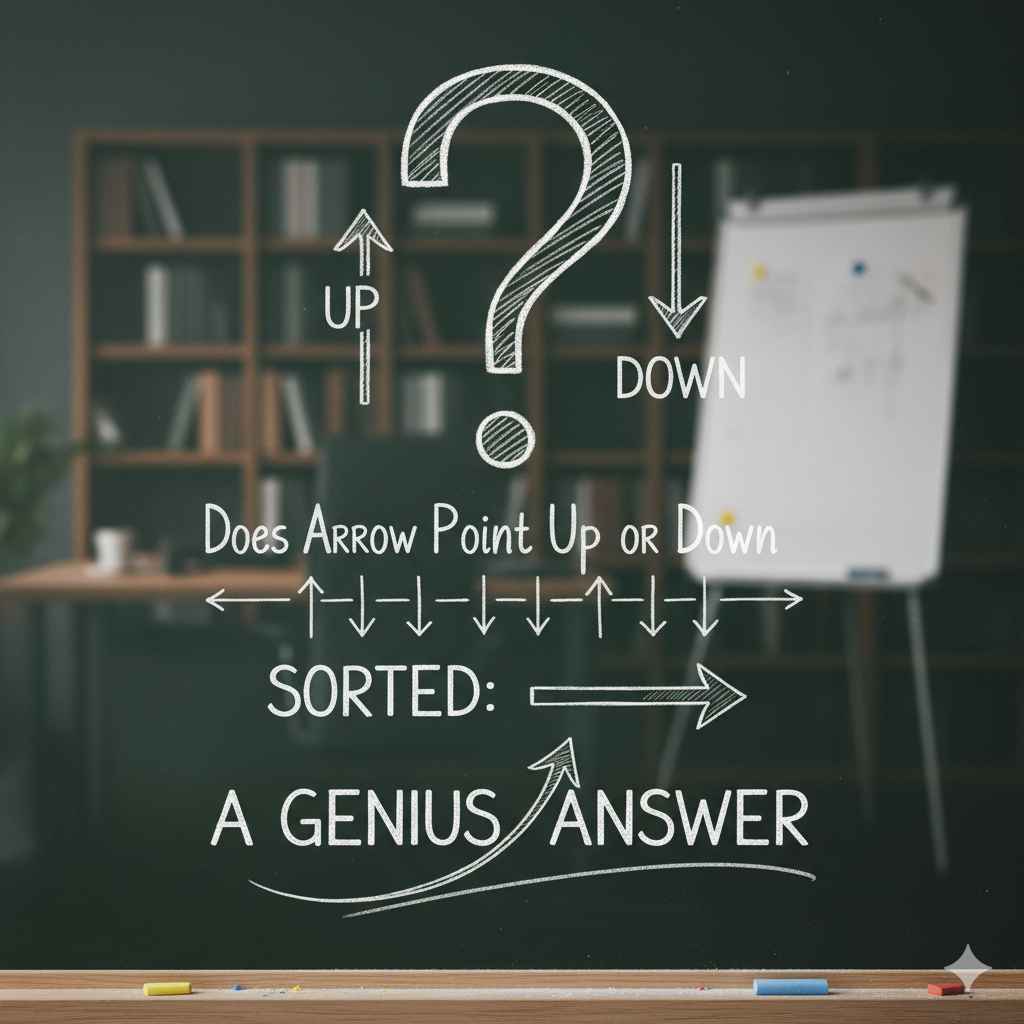
When you see a sorted list, an arrow pointing UP (↑) means ascending order (A-Z, 1-100). This shows the smallest or first item at the top. An arrow pointing DOWN (↓) means descending order (Z-A, 100-1), showing the largest or last item at the top. Think UP for “growing up” from small to big.
Hello, fellow archers! Salman Arfeen here. It’s great to have you back. Today, we are tackling a question that might seem a little off the shooting range, but it’s one you see all the time. You see it when you shop for gear online, check competition scores, or use a scoring app. You click a column to sort it, and a little arrow appears. But what does it mean? Does arrow point up or down when sorted correctly?
It can be a bit confusing. You just want to see the highest scores or the cheapest arrows, but that little icon can leave you scratching your head. Don’t worry! This is a super common question, and the answer is actually very simple once you see it. I’m going to break it down for you in a way that will stick. Let’s make sense of those arrows so you can get back to what matters: shooting straight!
What Do Sorting Arrows Really Mean?
Before we dive into which way the arrow points, let’s get on the same page about sorting. Sorting is just organizing a list in a specific order. Think about lining up your arrows from shortest to longest. That’s sorting! In the digital world, we mostly use two types of order:
- Ascending Order: This means “going up.” It arranges items from the smallest to the largest. For numbers, it’s 1, 2, 3. For letters, it’s A, B, C. For dates, it’s oldest to newest.
- Descending Order: This means “going down.” It arranges items from the largest to the smallest. For numbers, it’s 10, 9, 8. For letters, it’s Z, Y, X. For dates, it’s newest to oldest.
Those little arrows are simply visual clues to tell you which order your list is in. They are a universal symbol, so once you learn the rule, you’ll understand it everywhere, from your favorite archery shop’s website to your bank statement.

The Up Arrow (↑): Aiming High with Ascending Order
When you see an arrow pointing up (↑), think of something rising or growing. This arrow tells you the list is sorted in ascending order. The smallest, earliest, or first item in the alphabet is at the top of the list, and it grows from there.
Imagine you’re stacking targets. You start with the smallest one at the bottom and work your way up to the largest. That’s the idea here. The list “ascends” or “climbs” from the top down.
When You’ll See the Up Arrow
You’ll want to sort in ascending order when you are looking for:
- The Lowest Price: When shopping for a new bow, sorting by price with the arrow up will show you the cheapest options first.
- Alphabetical Lists: If you’re looking for a brand name like “Hoyt,” sorting the brand column alphabetically (A-Z) will help you find it faster. The up arrow will be showing.
- Lightest to Heaviest: If you’re comparing arrow shafts, you might sort by grain weight to see the lightest ones first.
- Chronological Order: Looking at your training log? Sorting by date with the arrow up will show your oldest sessions first, so you can see your progress over time.
Here’s a simple table to help you visualize it.
| What You’re Sorting | Ascending Order (Arrow Up ↑) Looks Like… | Why It’s Useful |
|---|---|---|
| Archer Names |
| Quickly finding a specific name in a long list. |
| Arrow Price |
| Finding the most affordable gear to fit your budget. |
| Scores (Lowest to Highest) |
| Identifying who needs the most improvement or tracking your own starting point. |
The Down Arrow (↓): Hitting the Mark with Descending Order
Now, let’s talk about the down arrow (↓). When you see this arrow, think of something coming down or being ranked from the top. This arrow tells you the list is sorted in descending order. The largest, latest, or last item in the alphabet is at the top of the list.
This is probably the sort order you’ll use most often when it comes to scores. You want to see the winner—the person with the highest score—right at the top. The list “descends” or “steps down” from the highest value.
When You’ll See the Down Arrow
You’ll want to sort in descending order to find:
- The Highest Score: At a competition, you always sort scores with the arrow down to see the leaderboard, with the winner in first place.
- The Newest Items: When browsing a blog or news section, sorting by date with the arrow down shows you the most recent articles first.
- The Most Expensive Gear: Just curious about the top-of-the-line equipment? Sort by price with the arrow down to see the premium bows first.
- Highest Rated Products: When shopping, sorting by customer rating this way shows you the 5-star items at the top.
Let’s look at another table for descending order.
| What You’re Sorting | Descending Order (Arrow Down ↓) Looks Like… | Why It’s Useful |
|---|---|---|
| Competition Scores |
| Seeing the winner and top performers instantly. |
| Bow Draw Weight |
| Finding the most powerful bows available. |
| Recent Orders |
| Quickly finding your most recent purchase or training entry. |
A Genius Trick to Remember Forever
Okay, you understand the difference now. But in the heat of the moment, you might forget. So, here is a genius little trick to lock it in your memory for good. I call it the “Triangle Tip.”
Look at the arrow as a small triangle.
- The UP Arrow (↑): The narrow, pointy end is at the top, and the wide base is at the bottom. Think of it as pointing to the smallest value at the top of the list. The list then gets “wider” or larger as you go down.
- The DOWN Arrow (↓): The wide base is at the top, and the narrow, pointy end is at the bottom. Think of it as representing the largest value at the top of the list. The list then gets “narrower” or smaller as you go down.
So, just look at the shape. The pointy end of the triangle always points toward the “smaller” end of the data spectrum. If it points up, the small numbers are at the top. If it points down, the small numbers are at the bottom.
Why This Matters for You, the Archer
You might be thinking, “Salman, this is interesting, but how does it help my shooting?” That’s a fair question! While knowing about sorting arrows won’t tighten your groups directly, it makes you a smarter, more efficient archer off the range. And being efficient off the range gives you more time and energy to focus on what happens on the range.
Here’s how this simple knowledge helps you in your archery journey:
- Smarter Shopping: When you’re buying arrows, a new sight, or a release aid, you are constantly sorting. You sort by price (low to high ↑), by brand name (A-Z ↑), or by customer reviews (high to low ↓). Understanding these arrows saves you time and frustration, ensuring you find exactly what you need without getting lost on the website.
- Better Score Tracking: Almost every modern archer uses an app to track scores. To see if you’re improving, you might sort by date (oldest to newest ↑). To see your personal best, you sort your scores (highest to lowest ↓). Knowing how to do this lets you analyze your performance with just a click.
- Understanding Competition Results: When you look at official tournament results online, they are always in a table. The default view is almost always descending by score (↓) to show the winner. But you might want to find your own name quickly by sorting the name column alphabetically (↑). This is a crucial skill for navigating the competitive side of archery. Experts in user interface design, like the Nielsen Norman Group, confirm that clear sorting icons are essential for helping users find information quickly, which is exactly what you’re doing.
Mastering this small detail is like learning how to properly wax your bowstring. It’s a small maintenance task, but it keeps everything running smoothly and prevents bigger problems down the line.
What If There’s No Arrow?
Sometimes, a website or app won’t show an arrow until after you’ve clicked a column header for the first time. This is called the “default sort order.” Often, lists are presented in the order they were entered, or in what the designer thought would be most useful.
For example, a product page might be sorted by “Featured” or “Most Popular” by default. A list of archers at a club might be sorted by last name by default. If you’re ever unsure, just click the header of the column you want to sort. The first click usually sorts it one way (often ascending), and the second click reverses the order to descending.
Don’t be afraid to click! You can’t break anything. Clicking on column headers is the best way to explore the data and find what you’re looking for.

Frequently Asked Questions (FAQ)
1. So, an up arrow always means sorting from A-Z or 1-10?
Yes, that’s exactly right. An up arrow (↑) consistently stands for ascending order, which means organizing a list from the smallest value to the largest. This applies to letters (A-Z), numbers (1, 2, 3…), and dates (oldest to newest).
2. What is the most common way to sort competition scores?
The most common and useful way to sort competition scores is in descending order (arrow down ↓). This puts the archer with the highest score at the top of the list, making it easy to see the winner and the current rankings at a glance.
3. Do the sorting arrows ever look different?
Yes, sometimes. While the single up (↑) and down (↓) arrows are most common, you might also see a triangle (▲/▼) or a chevron. Some designs show both arrows at once, with one highlighted, to indicate that you can sort in either direction.
4. Why don’t websites just use the words “Ascending” and “Descending”?
Icons like arrows are used because they are universal and take up less space than words. They make for a cleaner, less cluttered design and can be understood by people who speak different languages. It’s a simple way to communicate an idea visually.
5. Can I sort by more than one column at a time?
In more advanced interfaces like spreadsheets (Excel, Google Sheets), you can. This is called a multi-level sort. For example, you could sort a list of archers by score (descending) and then by name (ascending) to handle tie-breakers. On most websites, however, you can usually only sort by one column at a time.
6. Is this sorting rule the same on my phone and my computer?
Yes, this is a standard convention across almost all digital platforms. Whether you’re on a laptop, tablet, or smartphone, the meaning of the up and down sorting arrows remains the same. This consistency makes it easier for users everywhere.
7. What if I click a column and nothing happens?
If you click a column header and the list doesn’t reorder, it likely means that particular column is not sortable. This is a design choice by the website or app developer. Typically, key columns like name, date, price, and score are made sortable, while descriptive text columns might not be.
Conclusion: Your Aim is Now True, On and Off the Range
So, does the arrow point up or down when sorted? The answer is simple: it depends on how you want to see the information!
Just remember this:
- Arrow UP (↑) = Ascending. From A to Z, or 1 to 100. The smallest value is at the top.
- Arrow DOWN (↓) = Descending. From Z to A, or 100 to 1. The largest value is at the top.
This little piece of digital literacy is a powerful tool in your archery toolkit. It helps you shop smarter, track your scores better, and follow competitions with ease. It’s one of those small things that, once learned, makes your entire archery experience just a little bit smoother.
Now, when you see that little arrow, you won’t hesitate. You’ll know exactly what it means and how to get the information you need. Keep practicing, stay safe, and may your arrows—and your data—always fly true.