
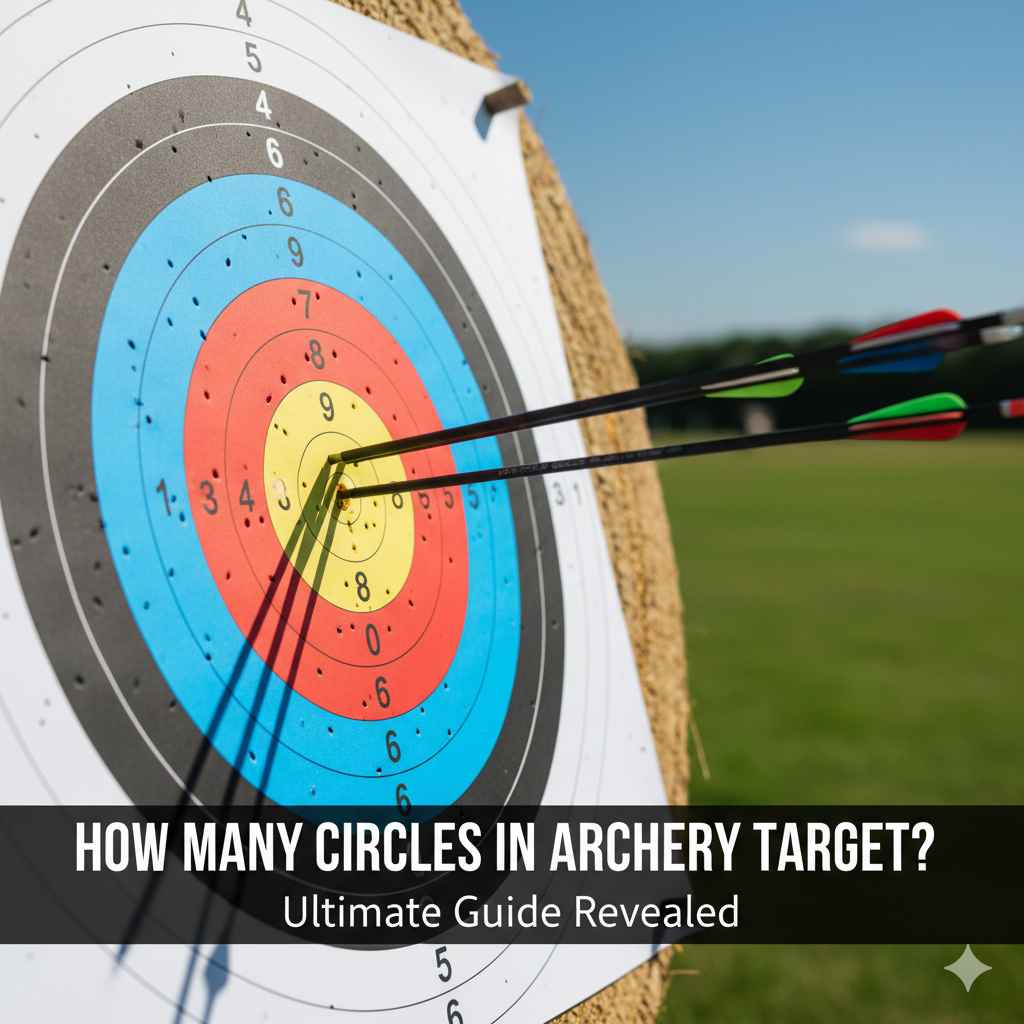
When it comes to understanding the fundamentals of archery, one common question that often arises is how many circles in archery target? Whether you’re a beginner eyeing your first bullseye or an enthusiast keen to learn about scoring systems and target design, this ultimate guide will unravel everything you need to know about the structure and significance of the circles in an archery target.
Understanding the Archery Target Circles
Archery targets are traditionally designed with concentric circles that serve as scoring zones. Each circle corresponds to a specific point value, with the innermost circle granting the highest points. The precise number of circles on an archery target can vary depending on the type of competition or the target being used, but the most common configuration includes 10 circles.
Standard Archery Target: How Many Circles in Archery Target?
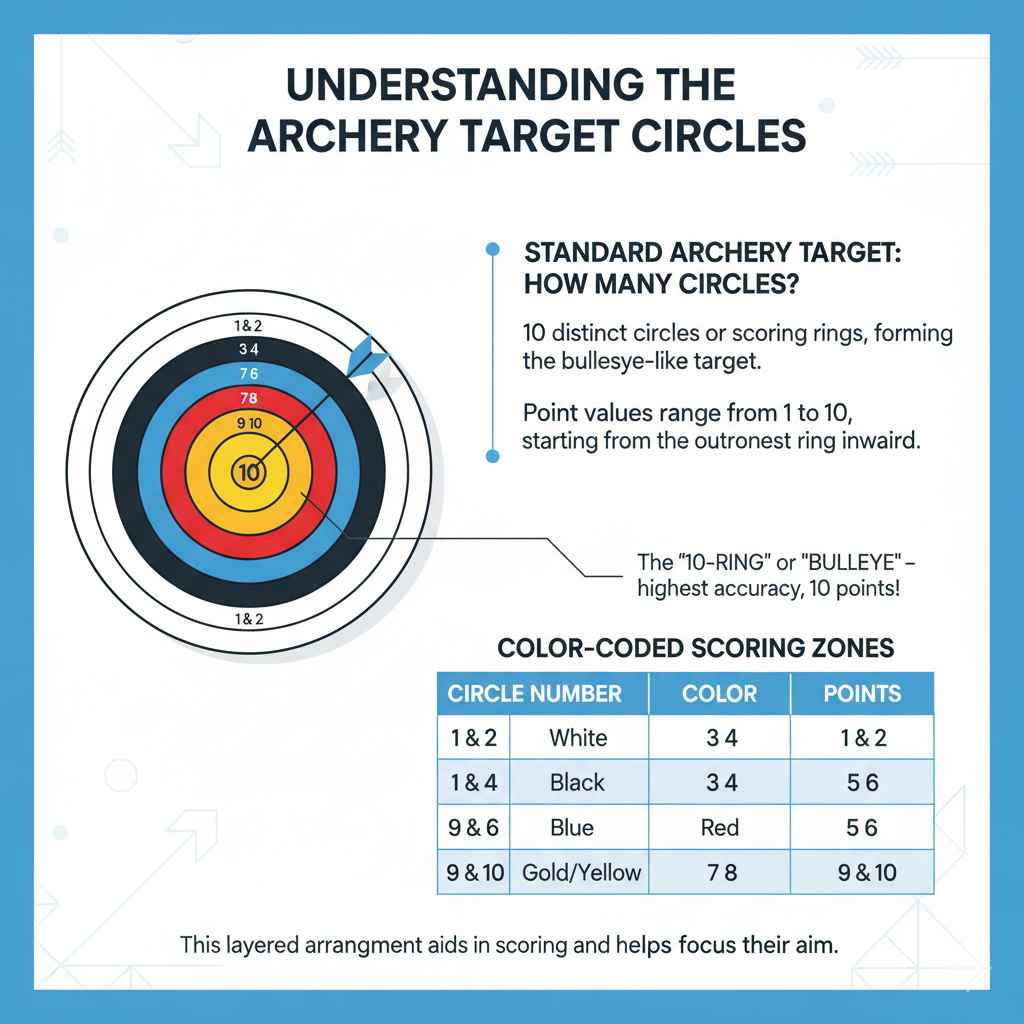
In most outdoor and indoor competitions, including those recognized by World Archery Federation rules, an archery target consists of 10 distinct circles or scoring rings. These rings form a bullseye-like target where the archer aims to shoot their arrows.
– The target is usually a flat, round surface with concentric rings painted in contrasting colors.
– Each ring has specific dimensions, and the point values range from 1 to 10, starting from the outermost ring going inward.
– The smallest circle in the center is known as the “10-ring” or “bullseye,” which scores 10 points, rewarding the highest level of accuracy.
The circles are usually color-coded to assist archers and judges:
| Circle Number | Color | Points |
|—————|—————|——–|
| 1 & 2 | White | 1 & 2 |
| 3 & 4 | Black | 3 & 4 |
| 5 & 6 | Blue | 5 & 6 |
| 7 & 8 | Red | 7 & 8 |
| 9 & 10 | Gold/Yellow | 9 & 10 |
This layered arrangement not only aids in scoring but also helps archers focus their aim.
Variations in Archery Targets: Does the Number of Circles Change?
While the 10-ring target is the most common, there are variations depending on purpose and style.
5-Ring Target for Beginners and Fun Shoots
Some practice targets, especially for beginners and recreational shooting, simplify scoring by using only 5 rings instead of 10. These often focus on making entry-level archery less intimidating and scoring easier to understand.
3D Archery Targets
3D archery, where archers shoot at life-size animal models, usually does not feature concentric circles. Instead, the scoring zones are often areas marked on the animal target, such as vital organs or heart/lung spots, making the concept of “how many circles in archery target” inapplicable.
Why Knowing the Number of Circles Matters
Learning how many circles in archery target is fundamental for anyone involved in archery for several reasons:
1. Scoring Accuracy: Understanding the different rings and their values helps archers monitor their improvement.
2. Practice Focus: Knowing which circle you’re aiming for helps tailor practice sessions. Beginners may aim for the larger outer rings before gradually focusing on inner circles.
3. Competition Rules: Different events use standard target sizes and scoring rings. Familiarity with the circles ensures compliance with official standards.
4. Equipment Selection: Target face sizes, bow types, and sight settings often correspond to the ring size. Knowing the layout assists in making appropriate gear choices.
How Are the Circles Measured?
The diameter of the entire target and each circle can vary.
– For example, a standard 122 cm outdoor target face has the 10 concentric rings scaled proportionally, with the 10-ring typically being around 12.2 cm in diameter.
– Indoor targets are often smaller, such as 40 cm or 60 cm faces, but maintain the same general ring structure for consistency.
Consistency in circle size and layout allows archers to train effectively in various conditions.
Tips for Mastering the Archery Circles
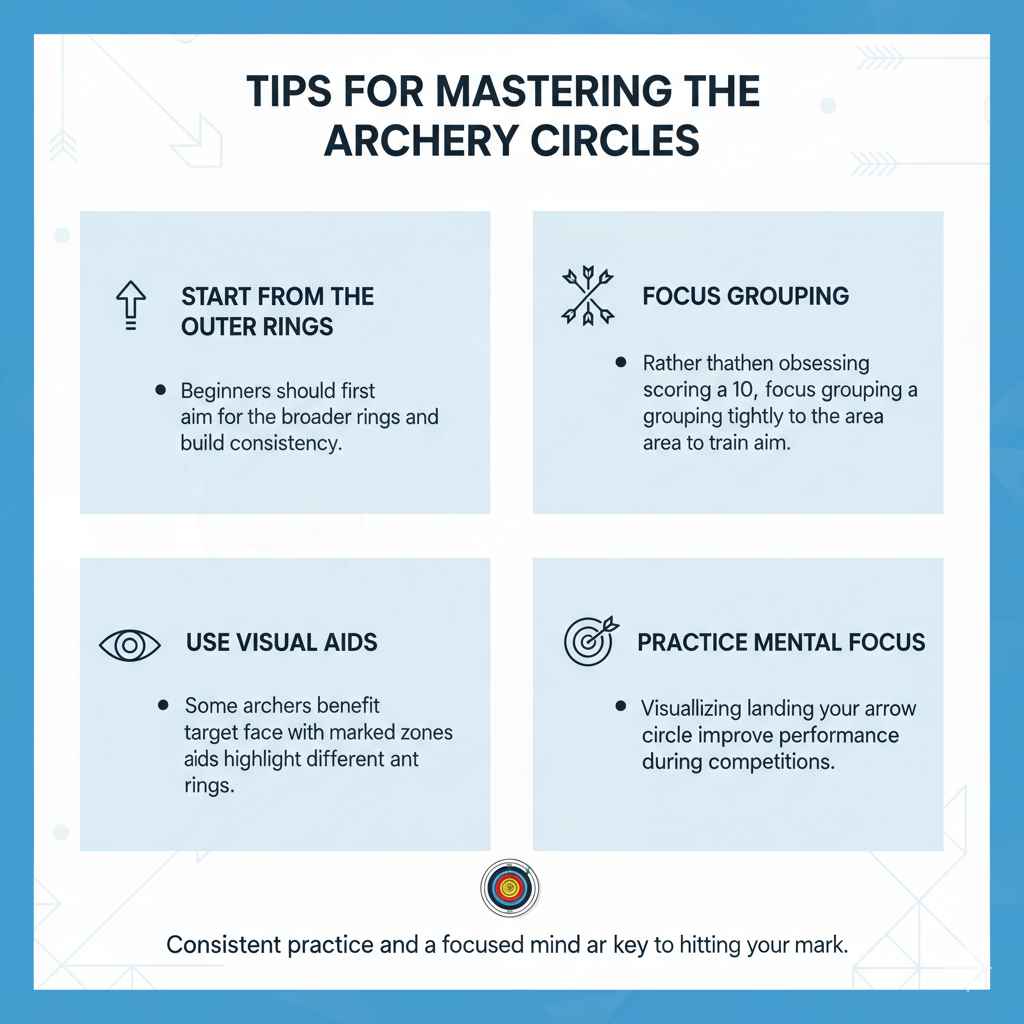
– Start from the Outer Rings: Beginners should first aim for the broader rings and build consistency.
– Focus on Grouping: Rather than obsessing over scoring a 10 every time, focus on grouping arrows tightly in one area to retrain your aim.
– Use Visual Aids: Some archers benefit from target faces with marked zones or aids that highlight different rings.
– Practice Mental Focus: Visualizing landing your arrow inside the bullseye circle can improve performance during competitions.
Conclusion
So, to answer the central question, how many circles in archery target?—the standard competition archery target features 10 concentric circles. These circles correspond to specific scoring values and are color-coded to assist archers of all levels in aiming and tracking their scores. While variations exist for different types of targets or shooting styles, the 10-ring system remains the foundational format in target archery worldwide.
Understanding this structure is crucial for developing accuracy, improving your scoring potential, and fostering a deeper appreciation of the sport. Whether you’re shooting for fun or competition, mastering how the circles operate can dramatically elevate your archery experience.