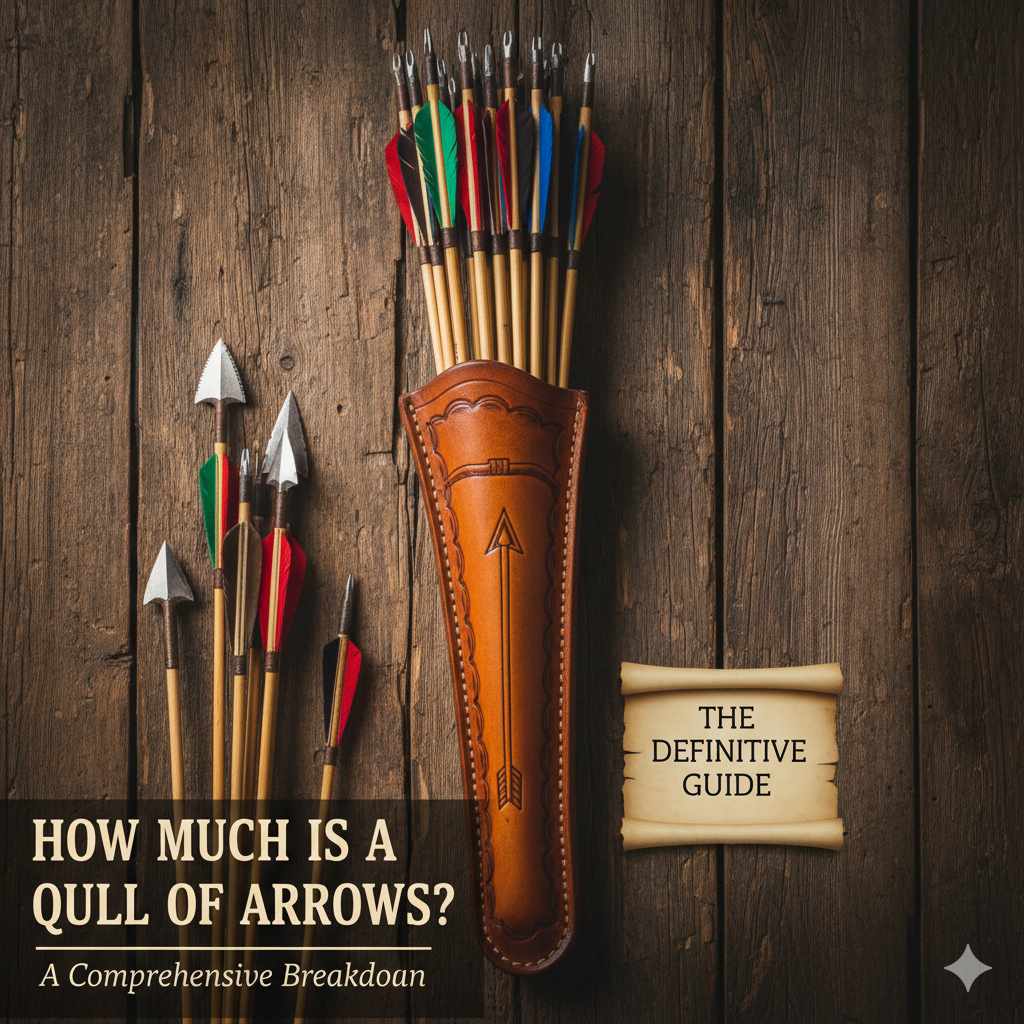
A quiver full of arrows can cost anywhere from $75 to over $400. A quality beginner setup, including a simple quiver and a dozen carbon arrows, typically costs between $100 and $175. The final price depends on the style of your quiver, the material of your arrows, and their overall quality.
Welcome to the world of archery! If you’re just starting, you’ve probably wondered about equipment costs. One of the most common questions I hear is, “How much is a quiver full of arrows?” It seems simple, but the answer has a few parts. It can be confusing to see so many prices for quivers and arrows.
Don’t worry, I’m here to help. We are going to break it all down in a simple, clear way. I will guide you through the different types of quivers and arrows. You will learn what affects their price and how to choose the right gear for your budget. By the end, you’ll know exactly what to expect and feel confident about your first purchase. Let’s get you set up for success on the range!
When we talk about a “quiver full of arrows,” we are talking about two separate items: the quiver itself and the arrows that go in it. Think of it like a pencil case and the pencils. You buy them separately, and the cost of each can vary a lot. The phrase “a quiver full” isn’t a standard number, but most archers carry between 6 and 12 arrows for practice or hunting.
First, we’ll look at the quiver, which holds your arrows. Then, we’ll dive into the arrows, which are the most important part of the equation for accuracy. Understanding both will help you build the perfect setup for your needs and budget.
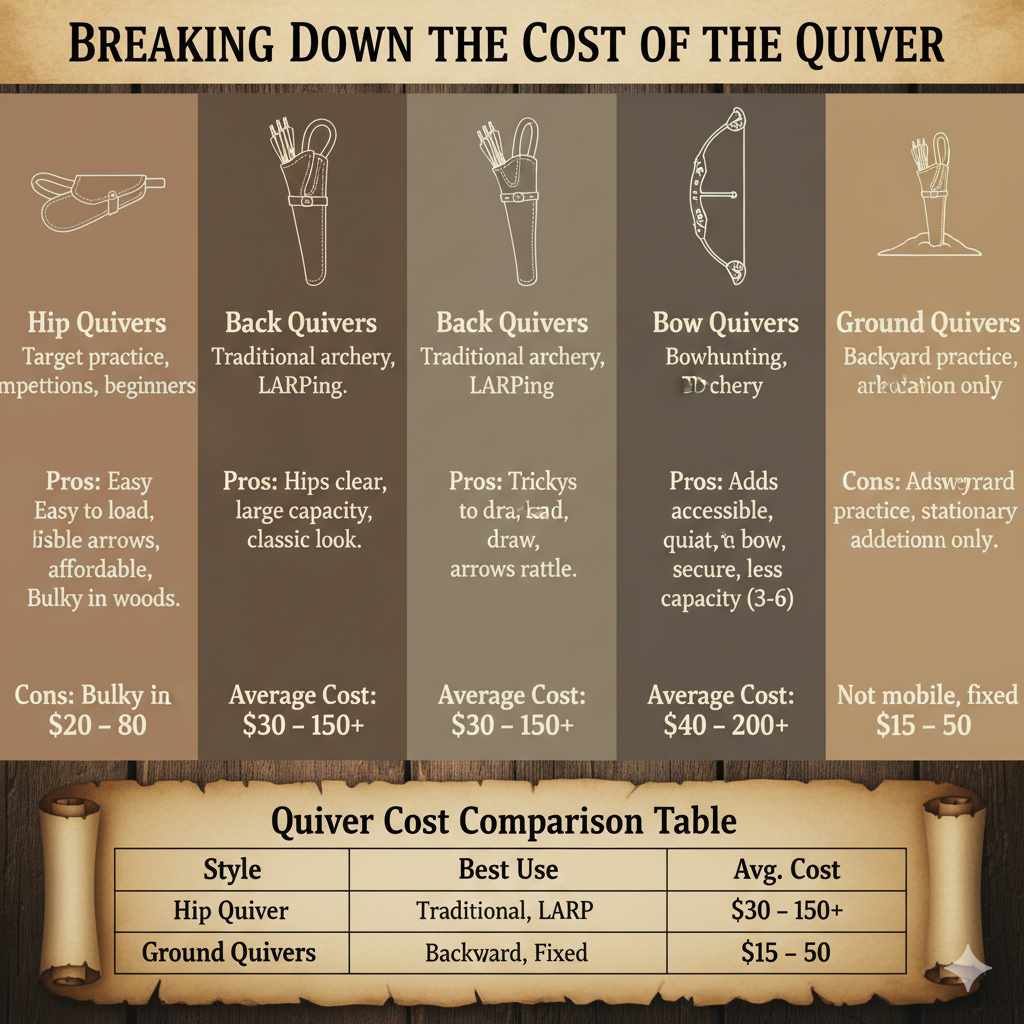
Breaking Down the Cost of the Quiver
The quiver is your arrow holder. Its job is to keep your arrows safe, secure, and easy to grab. There are several styles, each designed for a different purpose. The style you choose will be the biggest factor in its price.
Hip Quivers (or Belt Quivers)
This is the most popular style for beginners and target archers. A hip quiver clips onto your belt or waistband and hangs on your side. They are easy to use, comfortable, and offer quick access to your arrows.
- Best For: Target practice, competitions, and beginners.
- Pros: Very easy to load and draw arrows from. You can always see your arrows. They are generally affordable.
- Cons: Can feel a bit bulky when walking through woods.
- Average Cost: $20 – $80
Back Quivers
The back quiver is the classic style you see in movies like Robin Hood. It’s a tube or bag worn over the shoulder, so the arrows rest on your back. They look great and are favored by many traditional archers.
- Best For: Traditional archery, LARPing (Live Action Role Playing), and archers who prefer an unobstructed waist.
- Pros: Keeps your hips and legs clear. Can hold many arrows. Has a classic, cool look.
- Cons: It can be tricky for beginners to draw an arrow smoothly without looking. Arrows can rattle or fall out if not designed well.
- Average Cost: $30 – $150+
Bow Quivers
A bow quiver attaches directly to the bow’s riser (the handle). It’s the top choice for bowhunters because it keeps arrows secure and ready at a moment’s notice. They are compact and make moving through thick brush much easier.
- Best For: Bowhunting and 3D archery courses.
- Pros: Arrows are always within reach. Very quiet and secure. Doesn’t add anything to your body.
- Cons: Adds weight directly to your bow, which can affect balance. Usually holds fewer arrows (typically 3 to 6).
- Average Cost: $40 – $200+
Ground Quivers
A ground quiver isn’t worn at all. It’s a stand that you stick into the ground beside you. It’s a simple and effective tool for when you are shooting from one spot, like in your backyard or at a fixed shooting line.
- Best For: Backyard practice, teaching, and stationary target shooting.
- Pros: Very inexpensive. Keeps arrows clean and organized. Puts zero weight on you or your bow.
- Cons: You can’t move around with it. Only useful in a fixed location.
- Average Cost: $15 – $50
Quiver Cost Comparison Table
Here is a simple table to help you compare the different quiver types at a glance.
| Quiver Type | Primary Use | Beginner Friendly? | Average Price Range |
|---|---|---|---|
| Hip Quiver | Target Archery | Excellent | $20 – $80 |
| Back Quiver | Traditional Archery | Good, with practice | $30 – $150+ |
| Bow Quiver | Bowhunting | Good | $40 – $200+ |
| Ground Quiver | Backyard Practice | Excellent | $15 – $50 |
Figuring Out the Cost of Arrows
Arrows are where the details really matter. The price of an arrow is determined by its material, straightness, and the quality of its components. For a beginner, buying arrows in a set of six or a dozen is the most common and cost-effective way to start.
Arrow Materials Make a Big Difference
The material an arrow is made from is the biggest factor in its cost and performance. Here are the four main types you’ll encounter.
Fiberglass Arrows
These are the cheapest arrows available. They are heavy and durable, making them a good choice for youth bows or low-poundage beginner bows. However, they are not as straight or consistent as other materials and can splinter when damaged, so they must be inspected often.
- Price per Dozen: $30 – $60
Carbon Arrows
This is the go-to choice for most archers today, from beginners to pros. Carbon arrows are extremely durable, straight, and offer fantastic performance for their price. They can withstand a lot of abuse and remain consistent, which is key to learning and improving your accuracy.
- Price per Dozen: $60 – $180+
Aluminum Arrows
Aluminum arrows are known for their exceptional straightness and consistency, making them a favorite for indoor target archery. They are very precise but can bend on impact with hard targets. A bent aluminum arrow will never fly straight again, unlike a carbon arrow that flexes back into shape.
- Price per Dozen: $70 – $150
Wood Arrows
For the traditional archer using a longbow or recurve, wood arrows offer a classic feel. They require more maintenance and are less durable than modern materials. Each arrow can be slightly different, which is part of their unique charm but also makes them less consistent for beginners.
- Price per Dozen: $80 – $200+
What Else Affects Arrow Price?
Beyond the material, a few other factors can increase the cost of arrows:
- Straightness Tolerance: Arrows are measured for straightness, often shown as a number like ±.006″ or ±.001″. The smaller the number, the straighter the arrow, and the more expensive it will be. For a beginner, a ±.006″ tolerance is perfectly fine.
- Spine Consistency: Spine is the arrow’s stiffness. More expensive arrows have a more consistent spine from one arrow to the next, which helps them fly the same way every time.
- Components: The quality of the nocks (the plastic tip that clips to the string), inserts (for the arrowhead), and fletchings (the “feathers”) can also add to the cost.
Arrow Cost Comparison Table
This table summarizes the different arrow materials to help you decide.
| Arrow Material | Best For | Pros | Cons | Average Price (Dozen) |
|---|---|---|---|---|
| Fiberglass | Youth / Beginners | Very cheap, durable | Heavy, inconsistent, can splinter | $30 – $60 |
| Carbon | All-Around Use | Durable, straight, fast | Can be expensive | $60 – $180+ |
| Aluminum | Indoor Target | Very straight, consistent | Bends easily, not for hunting | $70 – $150 |
| Wood | Traditional Archery | Classic feel, biodegradable | Less durable, requires tuning | $80 – $200+ |
Putting It All Together: Sample “Quiver Full” Costs
Now that you understand the costs of quivers and arrows, let’s build a few common setups to see how much a quiver full of arrows really is. For these examples, we’ll assume “a quiver full” means one dozen (12) arrows.
Scenario 1: The Budget-Friendly Beginner
This setup is perfect for someone just starting out who wants reliable gear without a big investment. It’s focused on learning the fundamentals of good shooting form at the local range or in the backyard. Many local archery ranges receive support through programs like the Wildlife and Sport Fish Restoration Program, ensuring safe places to practice.
- Quiver: Simple Hip Quiver ($25)
- Arrows: 12 Beginner Carbon Arrows (e.g., Victory VForce Sport) ($75)
- Total Estimated Cost: $100
Scenario 2: The Avid Hobbyist
This archer shoots regularly and is focused on improving accuracy. They are willing to invest a bit more in gear that offers better performance and consistency for target leagues or 3D archery.
- Quiver: Quality Target Hip Quiver with pockets ($60)
- Arrows: 12 Mid-Range Carbon Arrows (e.g., Easton 6.5) ($120)
- Total Estimated Cost: $180
Scenario 3: The Aspiring Bowhunter
This setup is for someone gearing up for hunting. The focus is on durability, silence, and reliability in the field. The equipment needs to be rugged and efficient.
- Quiver: 5-Arrow Bow Quiver ($80)
- Arrows: 12 Durable Hunting Carbon Arrows (e.g., Gold Tip Hunter) ($150)
- Total Estimated Cost: $230 (Note: This does not include broadheads, which can add another $40-$60 per pack of three.)
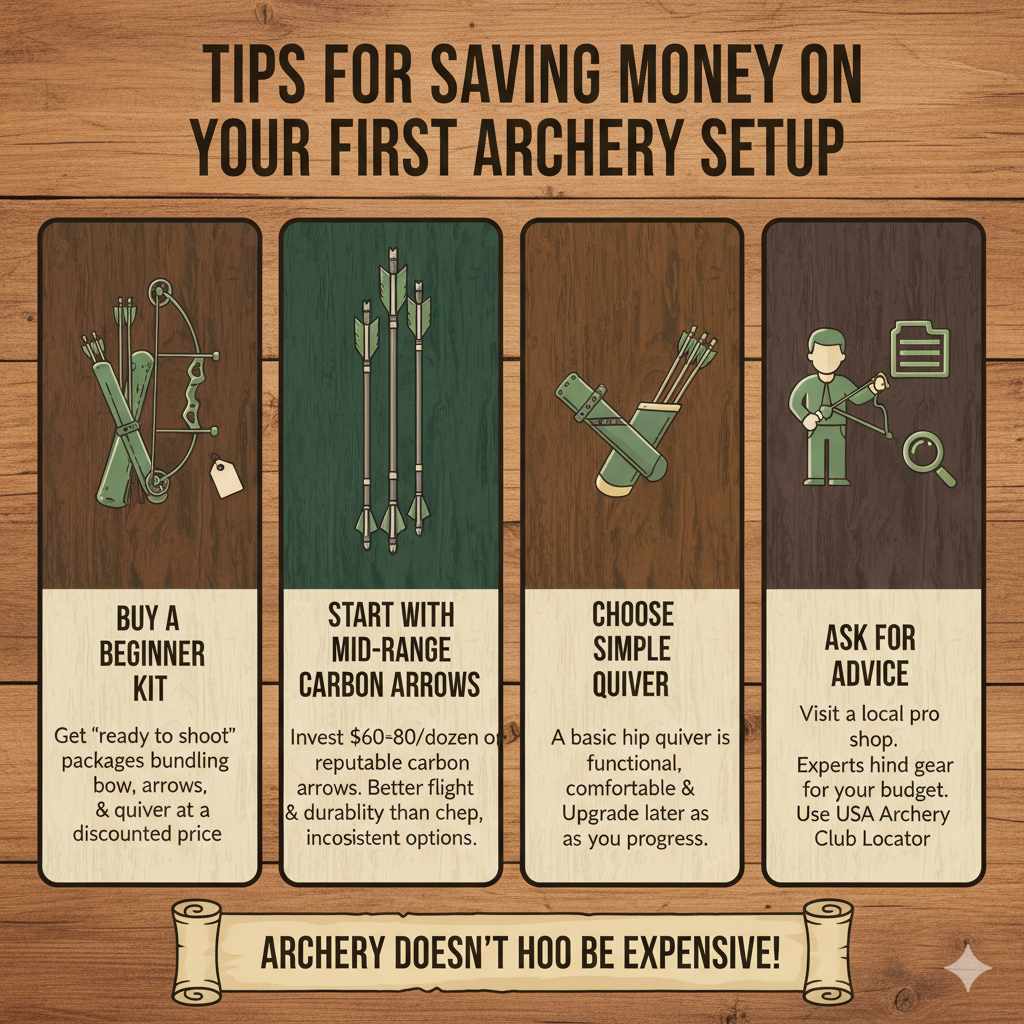
Tips for Saving Money on Your First Setup
Archery doesn’t have to be expensive. Here are a few tips to get the most value for your money:
- Buy a Beginner Kit: Some archery shops and online stores offer “ready to shoot” packages that bundle a bow, arrows, and a simple quiver for a discounted price.
- Start with Mid-Range Carbon Arrows: Don’t buy the cheapest arrows you can find. Inexpensive, low-quality arrows are inconsistent and frustrating. Spend a little more ($60-$80 a dozen) on a reputable brand of carbon arrows. They will fly better and last much longer.
- Choose a Simple Quiver: You don’t need a fancy, expensive quiver to start. A basic hip quiver is functional, comfortable, and affordable. You can always upgrade later.
- Ask for Advice: Visit a local archery pro shop. The experts there can help you find the best equipment for your budget and make sure your arrows are cut to the right length and matched to your bow. You can find a nearby shop or club through the USA Archery Club Locator.
Frequently Asked Questions (FAQ)
How many arrows should a beginner start with?
A dozen (12) arrows is the perfect number to start with. This gives you enough arrows to shoot in groups (called “ends”) of 3 or 6 without having to walk back and forth to the target constantly. It also gives you a few spares in case you lose or break one.
What is the best type of quiver for a beginner?
A simple hip quiver is the best choice for most beginners. They are affordable, easy to use, and versatile enough for almost any type of recreational shooting. You can easily see your arrows and pull them out without any awkward movements.
Do I need expensive arrows to learn archery?
No, you do not need expensive arrows. However, you do need consistent arrows. The cheapest fiberglass or off-brand arrows can have slight differences that will make it hard to group your shots. A good set of entry-level carbon arrows from a trusted brand will provide the consistency you need to learn and improve.
Can I mix different types of arrows in my quiver?
It’s best not to. Arrows of different materials, weights, or stiffness (spine) will fly differently, even if shot from the same bow with the same form. For good accuracy, you want every arrow in your quiver to be identical so they all fly to the same spot.
Are back quivers like in the movies practical for beginners?
While back quivers look incredibly cool, they can be challenging for new archers. It takes practice to draw an arrow from your back smoothly and safely. For learning, a hip quiver is much more practical and lets you focus on your shooting form.
What is more important: a good quiver or good arrows?
Good arrows, without a doubt. The quiver’s job is simply to hold your arrows. The arrows, on the other hand, are the single most important piece of equipment for determining your accuracy (after the bow itself). Always prioritize getting a consistent set of arrows over a fancy quiver.
Your Journey Starts Here
So, how much is a quiver full of arrows? As you can see, the answer is “it depends.” But now you have a clear roadmap. You know that a practical and reliable setup for a beginner is well within reach, often for around $100 to $175. You understand that the choices you make with your quiver style and arrow material will shape your total cost.
My best advice is to start simple. Choose a functional hip quiver and a dozen quality carbon arrows matched to your bow. This combination will serve you well as you learn, build confidence, and discover what you love most about this amazing sport. Don’t get caught up in having the most expensive gear. Focus on safety, good form, and having fun. Welcome to archery—I’m excited for you to get started!