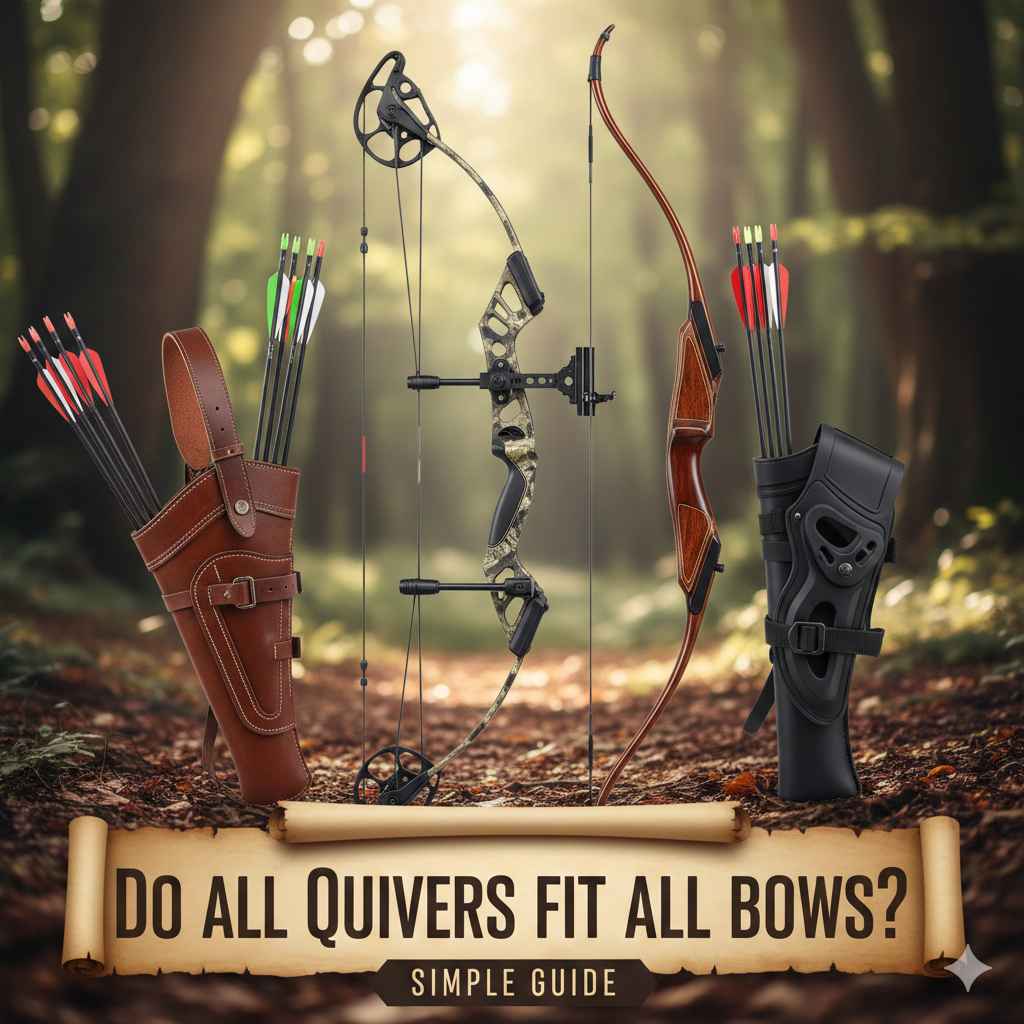
Do All Quivers Fit All Bows? Simple Guide
Getting started in archery is exciting, but also confusing. One of the first questions many archers ask is: Do All Quivers Fit All Bows? Honest Answer. This seems simple, right? Well, the truth can be a little tricky! Don’t worry, you’re not alone in wondering this. We’ll break down everything in a super easy way, and you’ll become an expert in no time. Next, we will explore the different types of quivers and bows and how they connect!

BALLISTA
BALLISTA Crossbow Quiver, 4 Arrow Holder, 20mm…
- Wide Arrow Compatibility. Designed to hold arrows from 5.5 mm micro-diameter to 8.8 mm standard diameter and accommodate different…
- Quick-Detach 20 mm Picatinny Mount. Attaches to crossbows with a 20 mm Picatinny rail and removes quickly without proprietary adap…
- Holds 4 Arrows Securely. The compact quiver holds up to 4 arrows, while the foam insert helps keep most broadheads and field point…
As an Amazon Associate I earn from qualifying purchases.
Quiver and Bow Basics: Matching Up
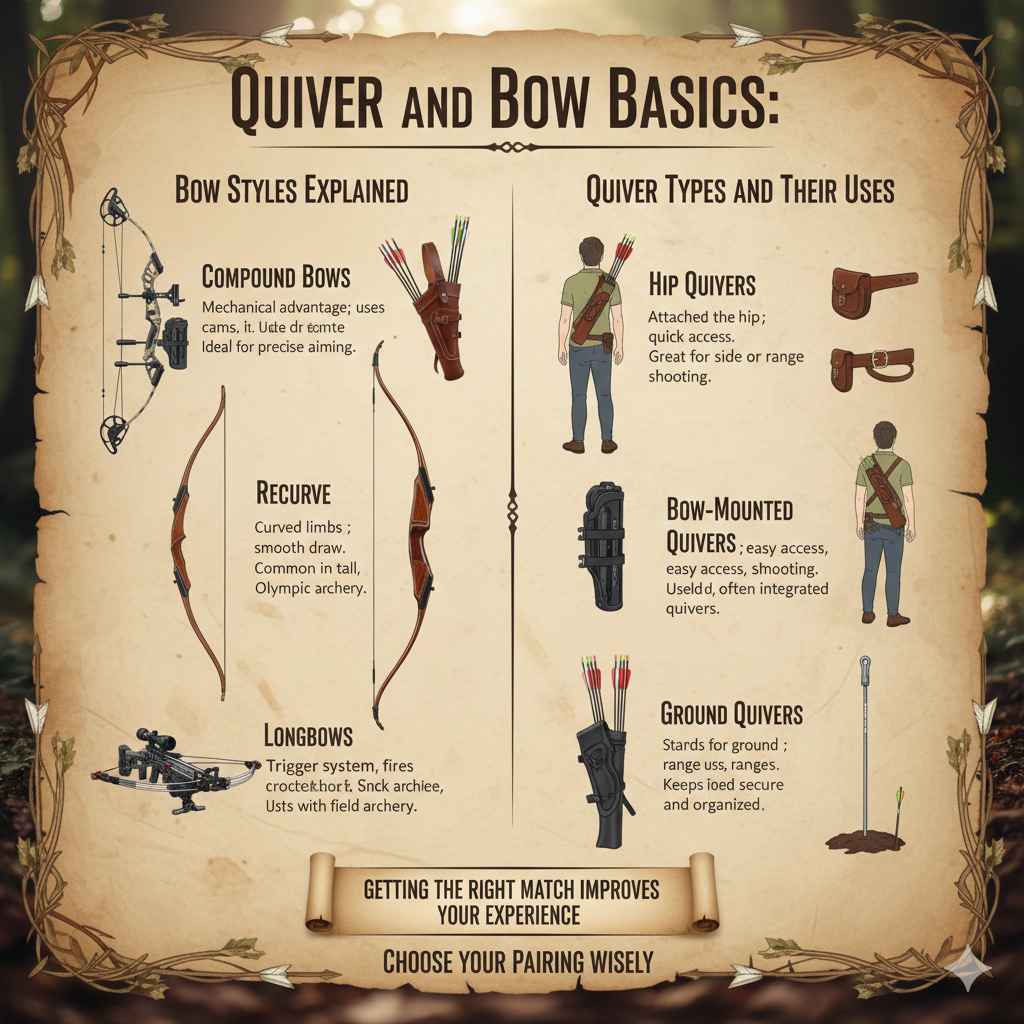
Before exploring compatibility, let’s begin with a crash course on bows and quivers. A bow’s primary job is to launch arrows towards a target. There are different styles, each with distinct features. A quiver, on the other hand, is a container designed to hold arrows. It makes carrying arrows safe and easy, whether you’re at the archery range or in the field. There is a huge range of quivers on the market, from simple hip quivers to more elaborate back quivers or bow-mounted options.
Getting to know the basic types of bows and quivers is the first step toward getting the right match. Choosing the correct pairing can improve your shooting experience and make archery more enjoyable.
Bow Styles Explained
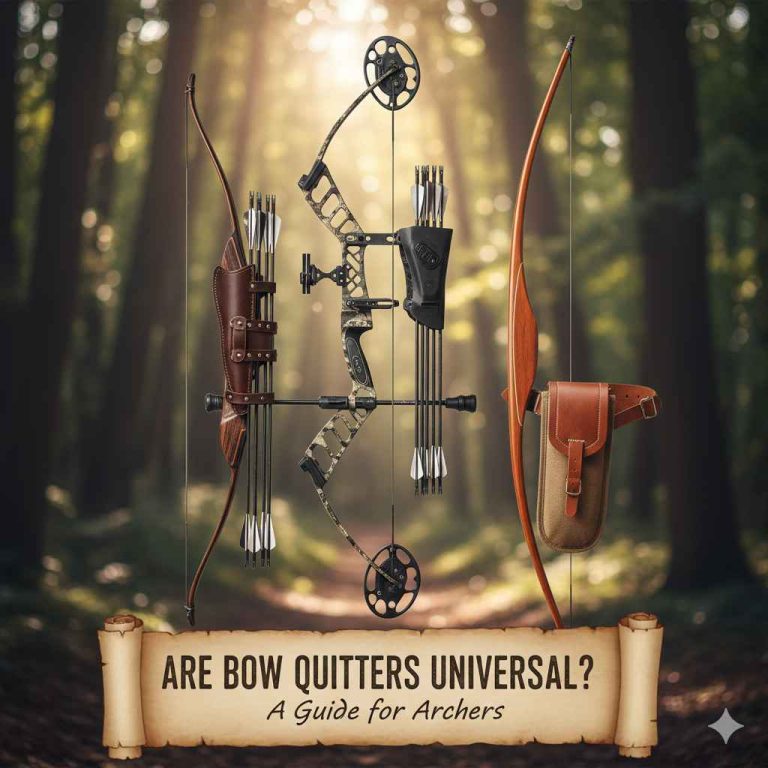
Bows come in several styles, each best suited for particular archery disciplines. Compound bows are known for their mechanical advantage; pulleys and cams reduce the holding weight, making it easier to aim and hold the draw. Recurve bows have limbs that curve away from the archer, storing energy efficiently and delivering a smooth shot. Longbows, typically tall and one-piece, offer a traditional feel. Then we have crossbows, which are a different beast altogether, shooting arrows with a trigger system and often requiring specialized quivers. Understanding your bow style is essential, as certain quivers work better with specific types.
- Compound Bows: These bows use a system of pulleys and cams, which reduces the draw weight at full draw. This allows archers to hold the bow at full draw for longer periods and aim more precisely. Because of their design, compound bows can often accept a wide variety of quiver types, including those mounted directly on the bow itself.
- Recurve Bows: Recurve bows feature limbs that curve away from the archer when unstrung. This unique design gives recurve bows a smooth draw and good energy storage. These bows are commonly used in Olympic-style archery and often pair with quivers that attach to the archer’s belt or back.
- Longbows: Longbows are generally tall, single-piece bows. They are known for their traditional appearance and the skill required to shoot them accurately. Longbows often use a side quiver or back quiver. These options are chosen for their simple design, providing a classic archery experience.
- Crossbows: Crossbows use a trigger mechanism to fire bolts, a type of arrow. Crossbows typically have their own dedicated quiver systems, often built into the bow itself or designed to attach directly. They offer a more powerful shot and are popular for hunting.
Quiver Types and Their Uses
Just as there are different bow styles, several quiver designs fit various archers and activities. Hip quivers are worn on the hip, providing easy access to arrows. Back quivers hang over the shoulder, common in traditional archery, and bow-mounted quivers attach directly to the bow, holding arrows within easy reach during the shot. There are also ground quivers for range use. Each design serves a different purpose, affecting ease of use, arrow protection, and archery style. Choosing the right quiver means considering your archery discipline, the type of bow you use, and your shooting preference.
- Hip Quivers: These quivers attach to the hip, offering quick arrow access. Hip quivers are perfect for range shooting and target practice, making them great for any kind of archery practice.
- Back Quivers: Back quivers are worn over the shoulder, providing a traditional look. They are often used in field archery and traditional archery styles. These quivers hold arrows securely and are easy to access.
- Bow-Mounted Quivers: Bow-mounted quivers attach directly to the bow. They offer easy access to arrows and are common in hunting situations. These quivers come in designs that can hold a certain number of arrows, and they provide easy access during hunts.
- Ground Quivers: Ground quivers are designed to stand on the ground, keeping arrows readily available at the shooting range. This type of quiver is great for target practice, keeping arrows secure and organized.
Compatibility Challenges: Does It Always Fit?
The short answer to the question “Do All Quivers Fit All Bows? Honest Answer” is: no, not always. The truth is, there can be some compatibility problems. Some quivers are designed to work well with specific bow types or shooting styles. For example, a bow-mounted quiver may not suit a recurve bow because the design can interfere with the bow’s performance. Similarly, the size and shape of the arrows and the quiver’s construction also matter.
Arrow length, fletching size, and the quiver’s design all play a role in how well the arrows fit and are protected. Understanding these differences and how they work will help you find the best match for your gear.
Factors That Impact Compatibility
Several factors affect quiver-bow compatibility. The primary issue is the mounting system. Bow-mounted quivers need specific attachment points, which aren’t available on all bow types. Arrow compatibility is another thing to think about; arrow length, diameter, and fletching size must fit the quiver’s interior. The type of archery also influences quiver choice. Target archers might choose hip quivers, while hunters frequently use bow-mounted options. Considering all of these points will help ensure you select the right quiver for your bow.
- Mounting Systems: Bow-mounted quivers are often tailored to fit compound bows. Recurve bows may not have the required mounting points. Back quivers and hip quivers avoid the mounting issue entirely, as they are worn independently.
- Arrow Size and Type: The arrow’s length and diameter are critical. The quiver must be large enough to hold the arrows securely without damaging fletchings. Some quivers include adjustable arrow dividers to accommodate different arrow sizes.
- Archery Style: Target archers often use hip or ground quivers for convenience. Hunters usually prefer bow-mounted quivers for easy access to arrows in the field. The best choice depends on the activity.
- Quiver Construction: The materials used in a quiver can influence compatibility. Stiff materials like hard plastic might limit the types of arrows it can hold, while flexible materials like fabric may accommodate different sizes.
Specific Examples of Compatibility Issues
Real-world examples illustrate the problems that can arise. For instance, putting a longbow-mounted quiver on a recurve bow would be very odd, potentially interfering with how you shoot. Using a quiver designed for a hunting-weight arrow on a target arrow can cause the target arrow to fall out. Another example is a crossbow quiver; those designs are often very specific to the make and model of the crossbow. Being aware of such scenarios prevents buying gear that will not work. These examples underscore the importance of thinking about all your equipment’s functionality before making a purchase.
- Example: Recurve Bow and Bow-Mounted Quiver: A recurve archer purchases a bow-mounted quiver. When attempting to use it, they find that the quiver interferes with the sight picture, making it impossible to aim correctly. The quiver’s design is not compatible with the recurve’s balance and shooting style.
- Example: Incorrect Arrow Size in Quiver: An archer uses a quiver designed for arrows with 5-inch fletchings. If they put in arrows with larger fletchings, the fletchings catch on each other, causing the arrows to sit incorrectly in the quiver and be damaged.
- Example: Crossbow and General-Purpose Quiver: A crossbow owner buys a general quiver, hoping it will suit their needs. Because of the size and balance of the crossbow bolts, the standard quiver can’t hold them securely. The owner needs a crossbow-specific quiver.
Choosing the Right Match: Finding the Perfect Pair
Choosing the right bow and quiver setup needs careful consideration. First, know your bow style and the mounting options it has. Then, check the quiver’s dimensions to ensure it’ll hold your arrow size and type. Think about what you’ll use the equipment for (target practice, hunting, etc.). The ease of use also matters. You’ll want a quiver that allows you to access arrows quickly and comfortably. Reading product reviews and seeking advice from experienced archers can also help. A well-chosen bow-and-quiver combination improves your archery experience and makes your time on the range more enjoyable.
Matching Bows and Quivers
To pair a bow and quiver successfully, begin by understanding your bow type and whether it accepts bow-mounted quivers. For compound bows, bow-mounted quivers work well, and they’re great for hunters. Recurve and longbow archers often go for hip or back quivers, focusing on ease of access and traditional appeal. Always check the quiver’s specifications to ensure it can accommodate your arrow size. Check online reviews. See what other archers are saying about the compatibility and durability of different setups. With a little homework, finding the right bow and quiver will be a breeze.
- Compound Bows and Bow-Mounted Quivers: Compound bows are often used with bow-mounted quivers. These quivers easily attach to the bow, providing easy access to arrows. Bow-mounted options are popular among hunters.
- Recurve Bows and Hip/Back Quivers: Recurve bows frequently combine with hip or back quivers. These quivers enhance the traditional feel and make the archer look good. They enable the archer to move freely and quickly draw arrows.
- Longbows and Side/Back Quivers: Longbows often look great with side or back quivers. These designs preserve the classic style and make for a nice look.
- Crossbows and Specialized Quivers: Crossbows always use special quivers built directly into the crossbow or specifically made to fit. The quiver needs to be able to securely hold crossbow bolts.
Key Features to Consider
When selecting a quiver, think about its features. Consider storage capacity, which determines how many arrows you can carry. Look for adjustable straps for comfort and a secure fit. The material is important; durable materials like nylon or leather last longer and protect your arrows better. Look for features like arrow dividers, which prevent fletching damage. Look at the quiver’s balance, and see if it feels comfortable while shooting. With features like these, you can be sure you’ve selected a quiver that fits your needs.
- Capacity: Consider the number of arrows you need to carry. A quiver’s capacity should fit your shooting style. For hunting, you might need a quiver that holds more arrows.
- Adjustability: Look for quivers with adjustable straps. These straps ensure a comfortable fit. They will accommodate different body sizes and shooting styles.
- Material: The material greatly affects durability. Choose a quiver made from durable materials like nylon or leather. Such materials stand up to wear and protect your arrows.
- Arrow Dividers: These help to keep arrows separate. They prevent damage to fletchings and keep arrows organized.
- Balance and Comfort: The quiver’s design should balance well. The quiver should be comfortable while shooting and easy to use.
Frequently Asked Questions
Question: Can I use any quiver with my compound bow?
Answer: Not necessarily. While compound bows are often compatible with various quivers, the quiver must fit your arrow size, the bow’s mounting system (if you’re using a bow-mounted quiver), and your shooting style. Some quivers are designed to fit only specific types of compound bows.
Question: How do I know if my arrows will fit in a specific quiver?
Answer: Check the quiver’s specifications. The manufacturer provides the size of arrows it can accommodate. Consider the arrow’s length, diameter, and the size of the fletchings. Ensuring a proper fit prevents arrow damage and ensures the arrows are secure in the quiver.
Question: Are bow-mounted quivers better than hip quivers?
Answer: It depends on the situation. Bow-mounted quivers offer quick access to arrows. They’re great for hunting. Hip quivers are easier to manage and less obtrusive. They’re excellent for target practice. The best choice depends on your shooting style.
Question: Can I use a back quiver for hunting?
Answer: Yes, but it has some disadvantages. Back quivers look good and allow for easy arrow retrieval. But, they might not be the best choice for hunting because drawing an arrow from behind is more difficult and can be slow. Hunters often prefer bow-mounted quivers for quicker access.
Question: What’s the best way to test if a quiver fits my arrows?
Answer: Try loading a few of your arrows into the quiver. They should slide in easily without being forced. Fletchings shouldn’t get squished or damaged. The arrows should be held securely enough that they won’t fall out when you move around but should be easy to remove. If any of these points are not true, the quiver may not be a good fit.
Final Thoughts
So, Do All Quivers Fit All Bows? Honest Answer: usually, but not always. Compatibility depends on factors like bow type, quiver style, arrow size, and even your shooting preferences. Getting this right is very important. By exploring bow and quiver basics, you can tell the difference and identify potential issues. Learning about the different types, mounting systems, and arrow sizes is key. Consider what you are looking for in the product. You are on the right path to putting together the right archery gear. Keep exploring, keep asking questions, and you’ll find the perfect match for your archery setup. Happy shooting!
Related pick: Check today's price on Amazon